



La Baule Villa District: A Heritage Walk
La Baule-Escoublac
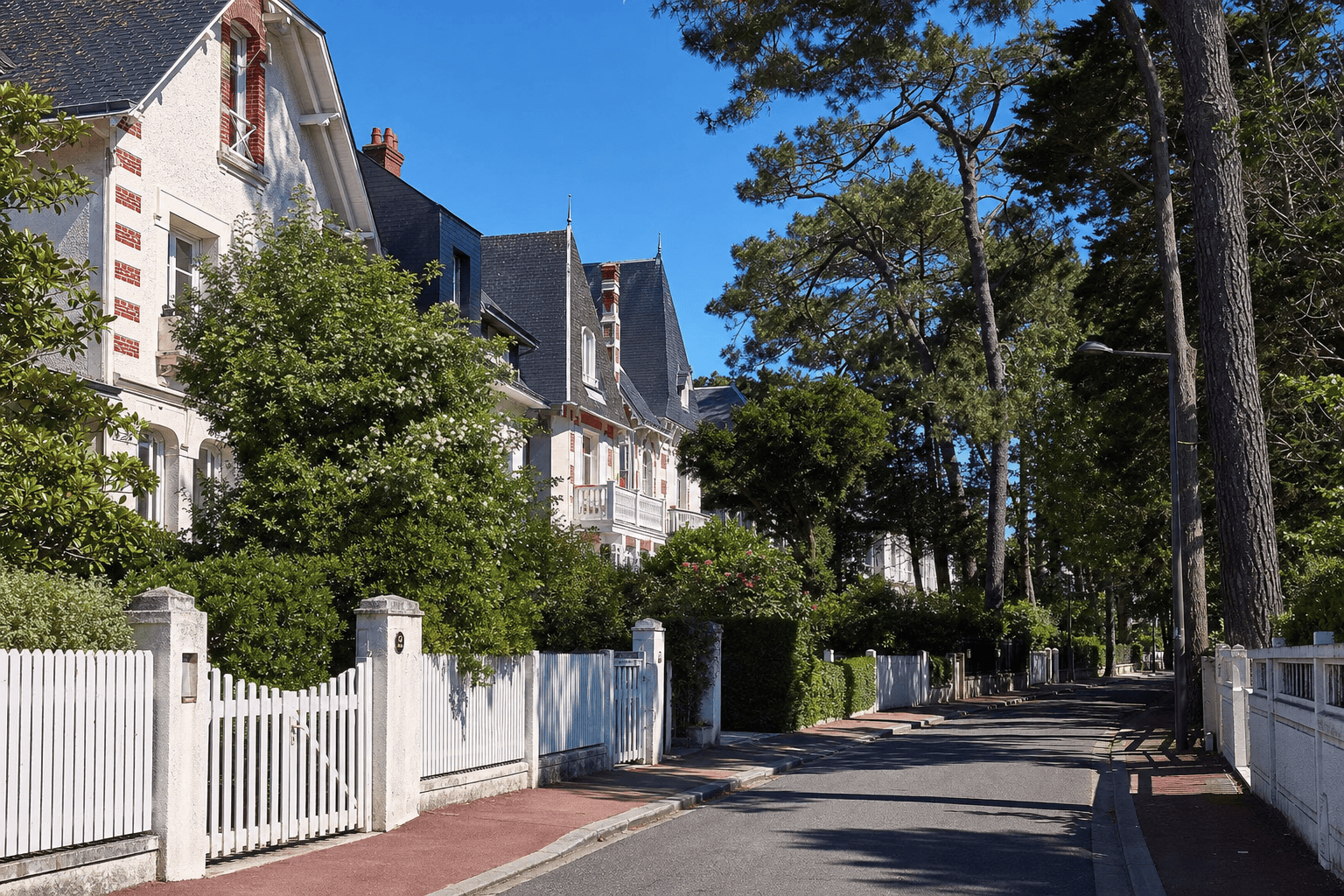
La Baule’s villa district is best explored on foot, along tree-lined avenues dotted with maritime pines, gardens, and seaside homes in a variety of styles. This walk offers insight into how La Baule-Escoublac became a sought-after resort, thanks to the appeal of sea bathing, improved transportation, and the gradual development of the coastline. Facades may combine stone, brick, slate, ceramic, half-timbering, or bow windows, while gardens play an essential role in the urban landscape. However, the term “villa district” refers to a dispersed collection of homes rather than a single monument or defined area. To plan a precise route, consult City of La Baule-Escoublac documents, heritage resources, and the tourism office’s program. Since most homes are privately owned, the visit consists of viewing them from public spaces while respecting local residents.
Practical information
Look up at the gables, roof overhangs, railings, ceramics, and mosaics: details often reveal a villa’s history better than its entire facade.
Getting to La Baule from Paris
To avoid managing a long road journey, Booking Paris Transfer can arrange private transportation from Paris, a Paris hotel, Charles de Gaulle Airport, or Orly. The service may suit a round trip to La Baule-Escoublac or an itinerary that begins in the Île-de-France region. It does not include admission tickets or a local guided tour, and Booking Paris Transfer is not presented as an operator based in La Baule. Drop-off near your accommodation or a convenient location may be arranged depending on the agreed itinerary.
Private transportation from Paris, a Paris hotel, CDG, or ORY, with a return to Paris according to your itinerary.
A Resort Born Between Beach, Dunes, and Pine Forest
The villa district bears witness to La Baule’s beginnings as a seaside resort. From the late 19th century onward, enthusiasm for sea bathing, improved transportation, and the gradual development of the coastline encouraged the construction of seasonal residences. The town grew in an environment shaped by dunes, pine trees, and large areas that were still largely undeveloped. This setting explains the feeling of space and greenery that remains along several residential avenues.
The villas were designed for holidays, entertaining, and outdoor living. Their owners sought proximity to the beach, natural light, ventilation, and an attractive landscape. Homes were often set back behind a garden or fence rather than aligned directly with the street. The district has never been completely uniform, however: it brings together buildings from different periods, of varying sizes and influences. This historical layering is precisely what makes it interesting.
Understanding the Heritage Area
La Baule-Escoublac has a Site patrimonial remarquable, a designation intended to protect and enhance an area of architectural, urban, or landscape significance. It is important to distinguish this regulated area from the commonly used expression “villa district.” The latter may refer to several streets and areas where seaside homes can be found without corresponding exactly to a single administrative boundary. A street known for its villas may therefore lie within a different heritage area or near one.
Before building an itinerary around an address, consult the planning documents and heritage resources published by the City. They can help you verify boundaries, applicable regulations, and any protections in place. For an ordinary walk, this distinction does not diminish the pleasure of exploring: facades, gardens, rows of trees, and vistas create a cohesive landscape to enjoy from public spaces. Tourist information should nevertheless be checked against official sources, which may be updated.
Walking Along the Tree-Lined Avenues
Walking is the best way to appreciate the relationships between the villas, streets, and vegetation. In residential areas, the pines create a different atmosphere from the seafront. The homes are not always fully visible: some appear behind a hedge, while others are marked by a gable, turret, distinctive roofline, or unusual facade color. Take time to observe the sequence of streets rather than looking only for one spectacular house.
A route can begin near the town center, gradually move away from the shopping streets, and then continue toward the areas associated with La Baule-les-Pins. Avenue Lajarrige is an important urban landmark in this part of the resort, which developed in the 20th century. There is no single route that suits every visitor: adjust the distance to your pace and check a local map before setting out. Returning toward the beach provides a pleasant contrast between shaded streets, built-up areas, and views across the bay.
Identifying Architectural Influences
The villas’ diversity is one of the walk’s main attractions. Some homes draw on the chateau style, with turrets, prominent gables, vertical compositions, or complex rooflines. Others evoke Anglo-Norman architecture through steep roofs, balconies, contrasting materials, and half-timbering. Regionalist influences can also be found, including Neo-Breton, Basque-Landes, and Mediterranean styles. These categories provide visual reference points, but a single facade may combine several influences.
Later buildings sometimes introduced Art Deco or modern forms: more geometric volumes, simplified metalwork, larger windows, and less ornamentation. It is better to speak of architectural vocabulary than to assign a definitive style too quickly to each house. Seaside resorts encouraged eclecticism, allowing owners to create a personal image of resort life. The exact date, architect, and any heritage protection should be verified through a reliable heritage source rather than inferred from a simple visual impression.
Observing Facades, Gardens, and Materials
Small details often provide as much information as the grand homes themselves. Look for villa names, ceramic plaques, mosaics, colored brickwork, window surrounds, and awnings. Railings, porches, and balconies show how residents enjoyed the light and sea air. Roof overhangs, gables, chimneys, and dormer windows also deserve close attention, as they may remain visible behind the vegetation.
Gardens are a major part of the landscape. Maritime pines, hedges, flower beds, and mature trees create a setting that shelters the homes and softens the urban density. To preserve this atmosphere, stay on the sidewalks, never enter private property, and avoid intrusive photography. Since the villas are private buildings, some areas may be hidden or inaccessible. This limitation is part of the experience: observe the street as a whole, including fences, tree lines, and the relationship between architecture and vegetation.
Choosing a Guided Tour or a Self-Guided Walk
A self-guided walk lets you take your time looking at the facades and absorbing the atmosphere of the avenues. A guided tour, however, provides historical context that can be difficult to reconstruct alone: the resort’s development, the evolution of its neighborhoods, the role of transportation, the architects’ choices, and the place of vacationing families. A guide may also point out understated homes whose decoration is partly concealed by trees or fences.
The City of La Baule-Escoublac and the tourism office offer tours devoted to the villas, architecture, or town center, depending on the season. Dates, times, routes, prices, and booking requirements may change, so consult their official schedule before your trip. A narrated tour helps distinguish Belle Époque, regionalist, Art Deco, and modern influences without turning the walk into a catalog of styles. Without a guide, municipal and national heritage resources are useful additions for learning more about what you see.
Planning an Outing Around the District
Wear comfortable shoes: the district’s appeal lies in a succession of streets and detours rather than a single monument. One to two hours is enough for a first visit, while a half-day allows you to extend your outing toward the seafront, beach, town center, or La Baule-les-Pins. Distances vary depending on your starting point and chosen streets; allow extra time for stops, photos, and changes of pace.
Morning often offers soft light and quieter streets. Toward the end of the day, the pines’ shadows highlight the buildings’ forms, but some details become harder to make out. In hot weather, the tree-lined avenues may be more comfortable than the more exposed coastal areas. Check local information if you would like to join a guided tour or heritage event. Exploring outdoors does not require an admission ticket: it depends on respecting public spaces, private property, and the peace of the neighborhood.
Useful sources
Frequently Asked Questions
Does the villa district correspond to a single official boundary?
Can you visit the interiors of the villas?
How much time should I allow?
What architectural styles can you see?
Where can I check guided tours and practical details?
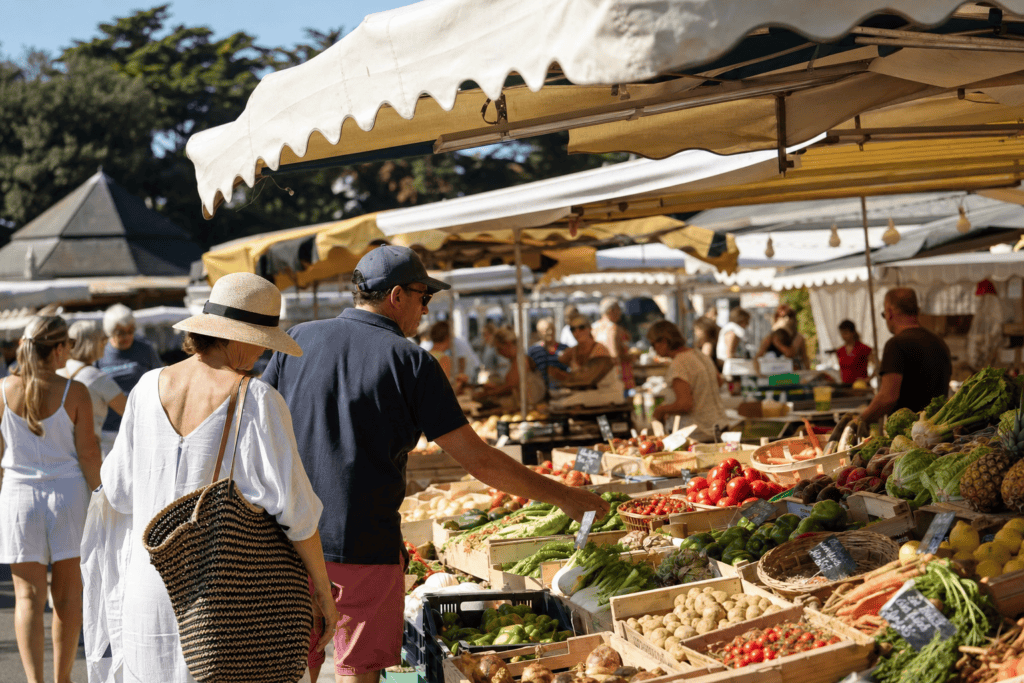 La Baule Market A lively market in the heart of La Baule-Escoublac, featuring fish, regional products, farmers, artisans, and a neighborhood atmosphere…
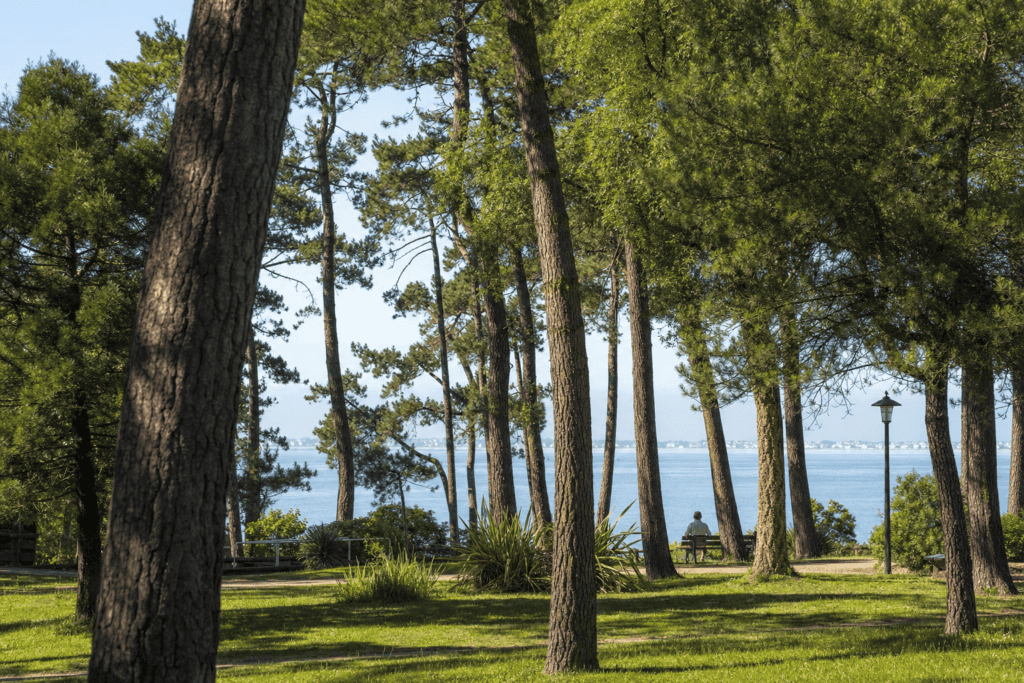 Dryades Park A leafy public park for families, ideal for a peaceful walk among plantings, a playground…
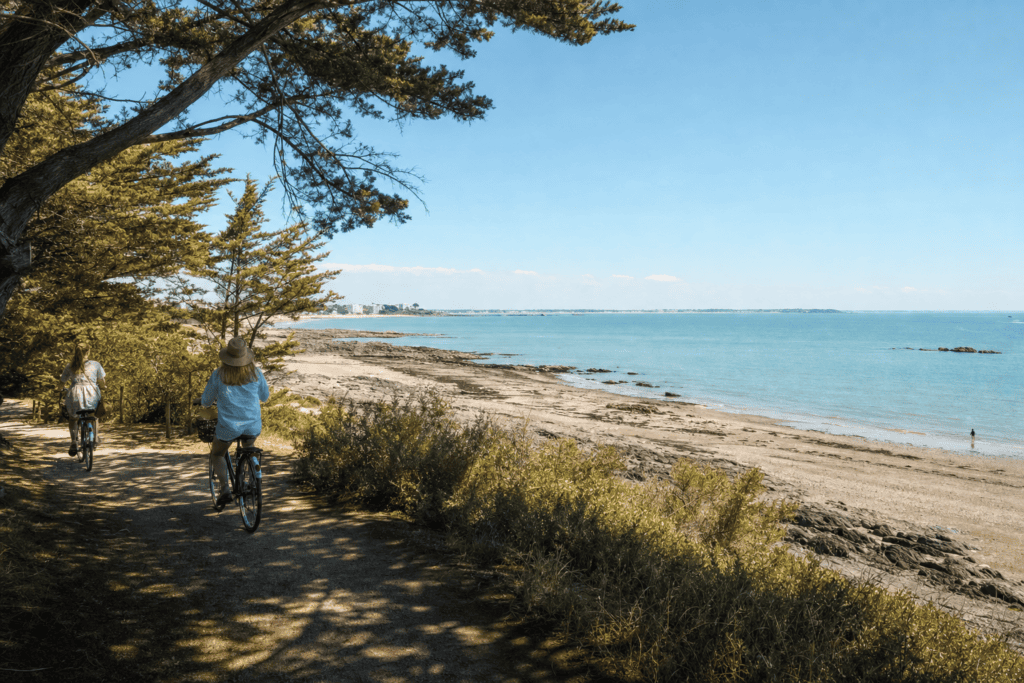 Cycling Between the Beach, Pine Forest and Wild Coast From the bay to the Escoublac pines and the wild coast, plan a bike outing suited…
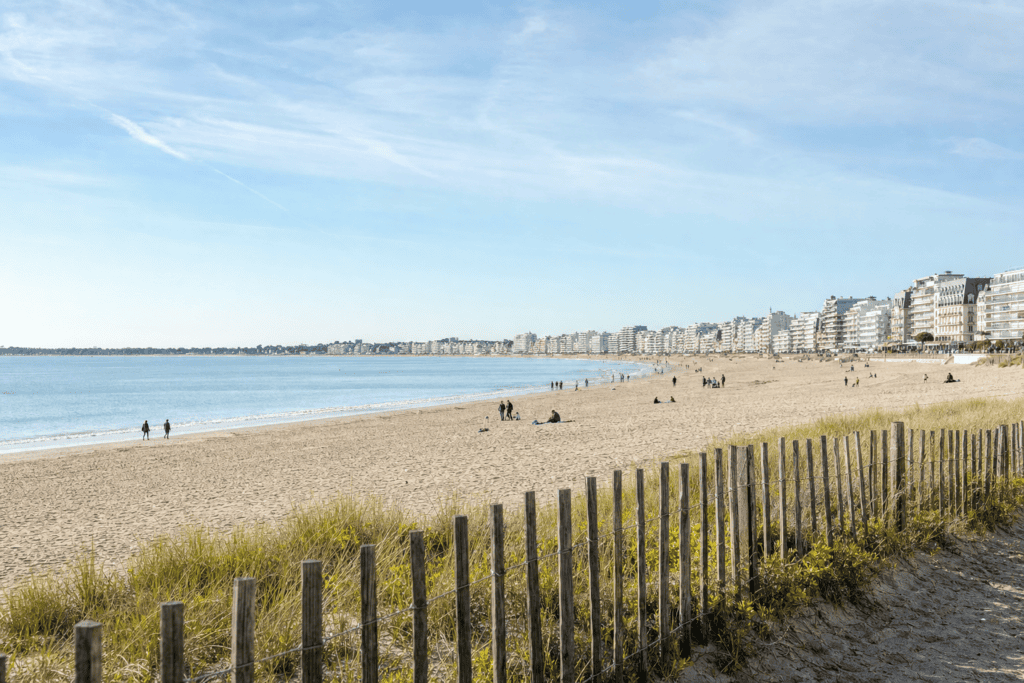 La Baule’s Main Beach A broad Atlantic beach for swimming, walking, enjoying the bay, and experiencing the seaside atmosphere…
Online booking · Paris → Residential areas of La Baule-Escoublac, particularly around the town center, tree-lined avenues, and La Baule-les-Pins.
Choose your pickup date and time
Your departure and arrival details are already pre-filled. You can adjust them in the fare calculator before viewing the vehicles and fare.