



Mont-Saint-Michel Abbey: A Medieval Masterpiece Between Sky and Sea
Mont-Saint-Michel
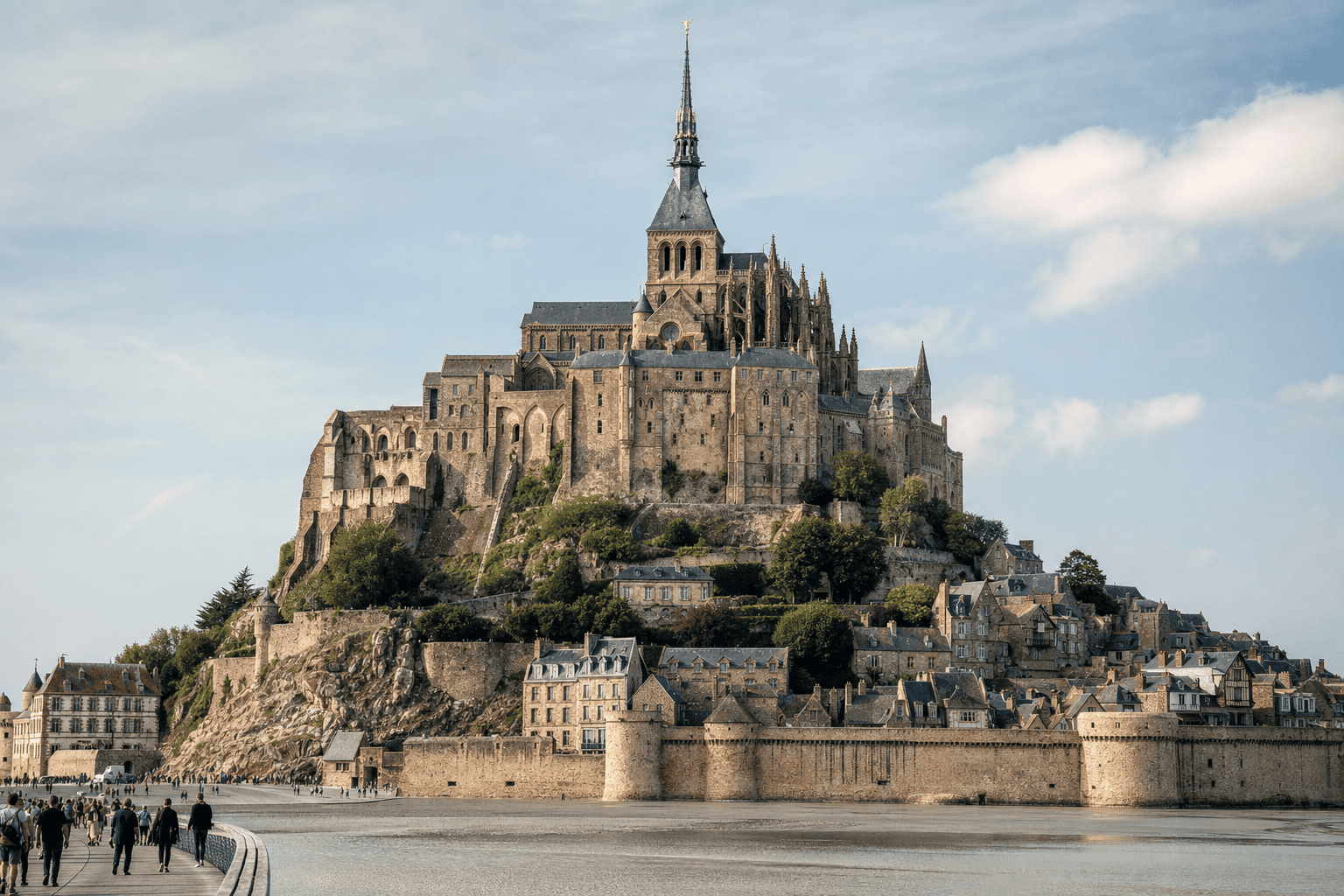
Perched atop the rock, Mont-Saint-Michel Abbey towers over the bay like an apparition. A visit reveals far more than a beautiful silhouette viewed from the mainland: it takes you through more than a thousand years of religious, architectural, and political history, from the abbey church and suspended cloister to monastic rooms, crypts, and former prison spaces. It is also one of the best places to understand the inseparable connection between the monument and the bay’s landscapes, which have been listed with Mont-Saint-Michel as a UNESCO World Heritage Site since 1979. ([whc.unesco.org](https://whc.unesco.org/en/list/80/?utm_source=openai))
Practical information
Wear comfortable shoes, bring water, and allow extra time for the many stairs. Be sure to check opening hours, exceptional closures, accessibility conditions, and booking procedures on the official website before your visit.
Getting to Mont-Saint-Michel from Paris
To visit the abbey as part of a private excursion, book round-trip transportation from Paris, your Paris hotel, Charles de Gaulle Airport, or Orly Airport. Your driver will take you to Mont-Saint-Michel, then bring you back to Paris according to the agreed itinerary. The service covers transportation only and does not include abbey admission.
Private transportation from Paris, a Paris hotel, CDG, or ORY. Abbey admission tickets not included.
Why visit Mont-Saint-Michel Abbey?
The abbey is the highest point of Mont-Saint-Michel and the key to understanding the entire site. From its terraces, you can take in the fortified village, the causeway, the salt marshes, and the ever-changing expanse of the bay. But its appeal goes far beyond the view. The monument preserves traces of a Christian shrine that became a Benedictine abbey, a pilgrimage center, a place of learning, a symbolic fortress, and eventually a prison.
Construction continued for several centuries, from the 11thth to the 16ththcentury, adapting to a steep rock and an environment shaped by the tides. This constraint explains the spectacular layering of the buildings: the rooms and crypts support the spaces above them, while the church and cloister seem to extend naturally from the mountain. UNESCO describes this combination of architecture and natural setting as an exceptional aesthetic and technical achievement. ([whc.unesco.org](https://whc.unesco.org/en/list/80/?utm_source=openai))
For a first visit, allow at least a good hour and a half. The monument is best explored without rushing, however: the spaces constantly shift from narrow, shadowy passages to vast rooms opening onto the bay.
A History That Began in the Early Middle Ages
According to tradition, the story of Mont-Saint-Michel began in 708, when Bishop Aubert of Avranches is said to have received an order from the archangel Michael to establish a shrine on the rock. A first place of worship was then developed, and Benedictine monks settled at Mont-Saint-Michel in 966. The founding of the abbey marked a new chapter: the rock became a major religious center and a pilgrimage destination visited throughout the Middle Ages. ([montsaintmichel.gouv.fr](https://www.montsaintmichel.gouv.fr/le-mont-et-sa-baie/une-abbaye-millenaire?utm_source=openai))
Construction of the great Romanesque church began in the 11thth century. To build it at the top of the rock, builders had to create supporting structures and make use of every available ledge. Over the centuries, the complex gained new buildings, including La Merveille, a vast monastic complex built on several levels beginning in the 13thth century.
The abbey later went through periods of transformation and decline. After the French Revolution, it was used as a prison until the 19thth century. This function left traces in certain spaces and is a reminder that Mont-Saint-Michel was never confined to a single role. Its designation as a historic monument in 1874 began a long period of restoration. Religious life returned in the 20thth century, and a community still gives the site a spiritual dimension today. ([montsaintmichel.gouv.fr](https://www.montsaintmichel.gouv.fr/le-mont-et-sa-baie/une-abbaye-millenaire?utm_source=openai))
Must-See Areas Along the Route
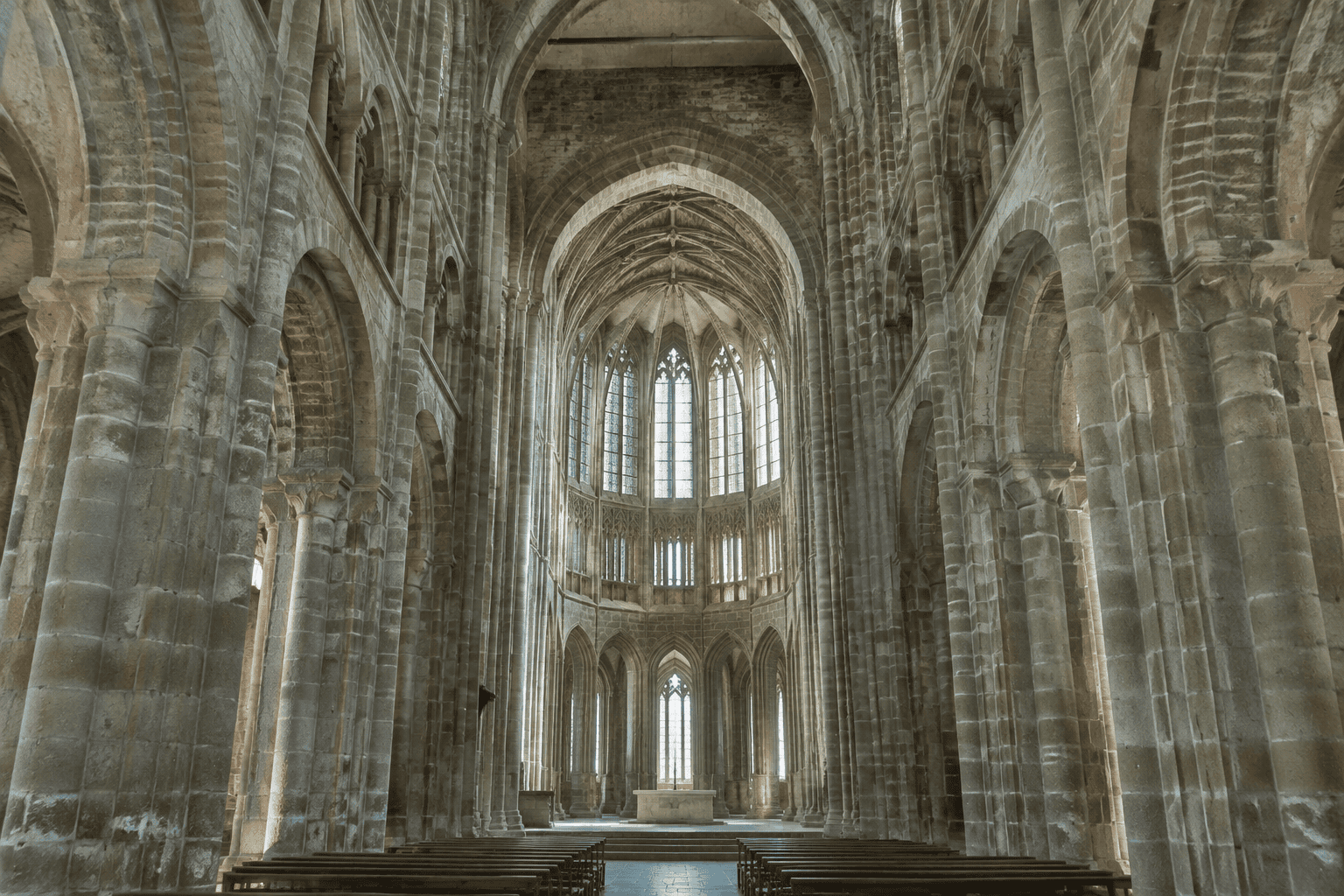
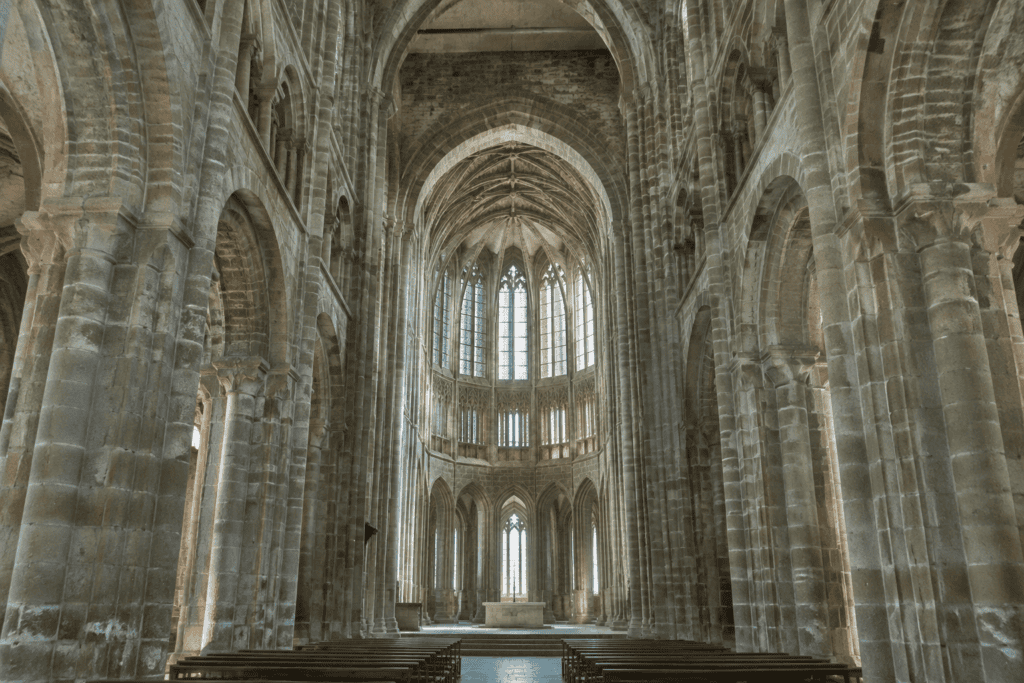
The visit takes you through several remarkable areas. The abbey church forms the monumental heart of the summit. Its Romanesque nave contrasts with the Gothic choir, reflecting the different phases of construction. Its height immediately conveys the scale of the architectural challenge posed by the rock.
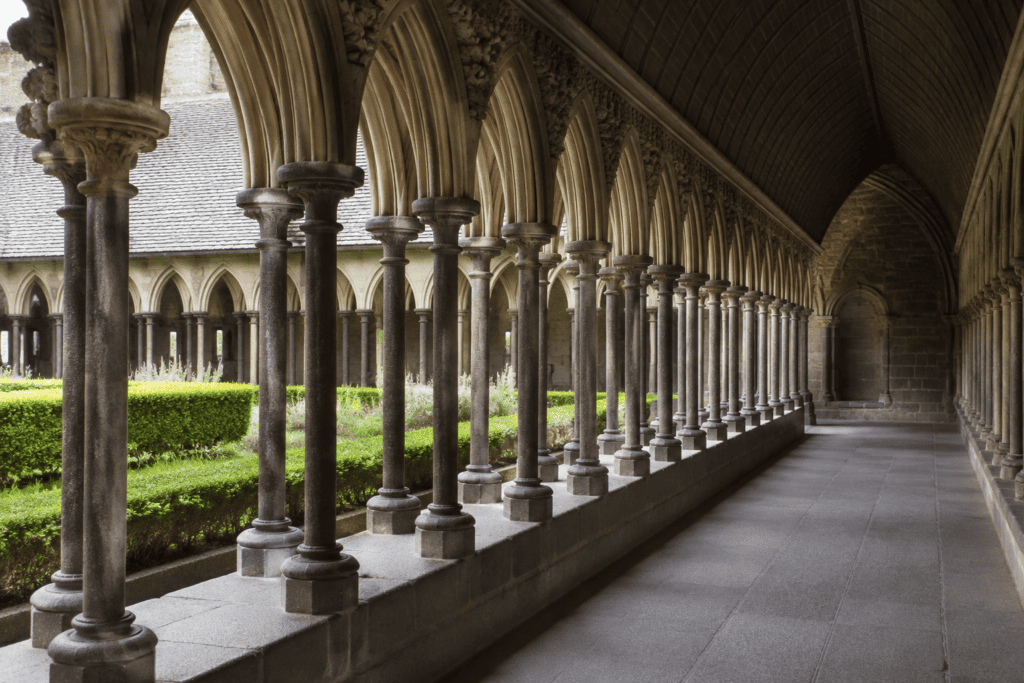
The cloister is often one of the most memorable parts of the visit. Its alternating columns and carved arcades create a space that is both light and contemplative. Open to the bay, it was designed to facilitate movement and prayer while offering the religious community a peaceful place. The perspective changes with the viewing angle and the light, which is why it is worth taking your time here.
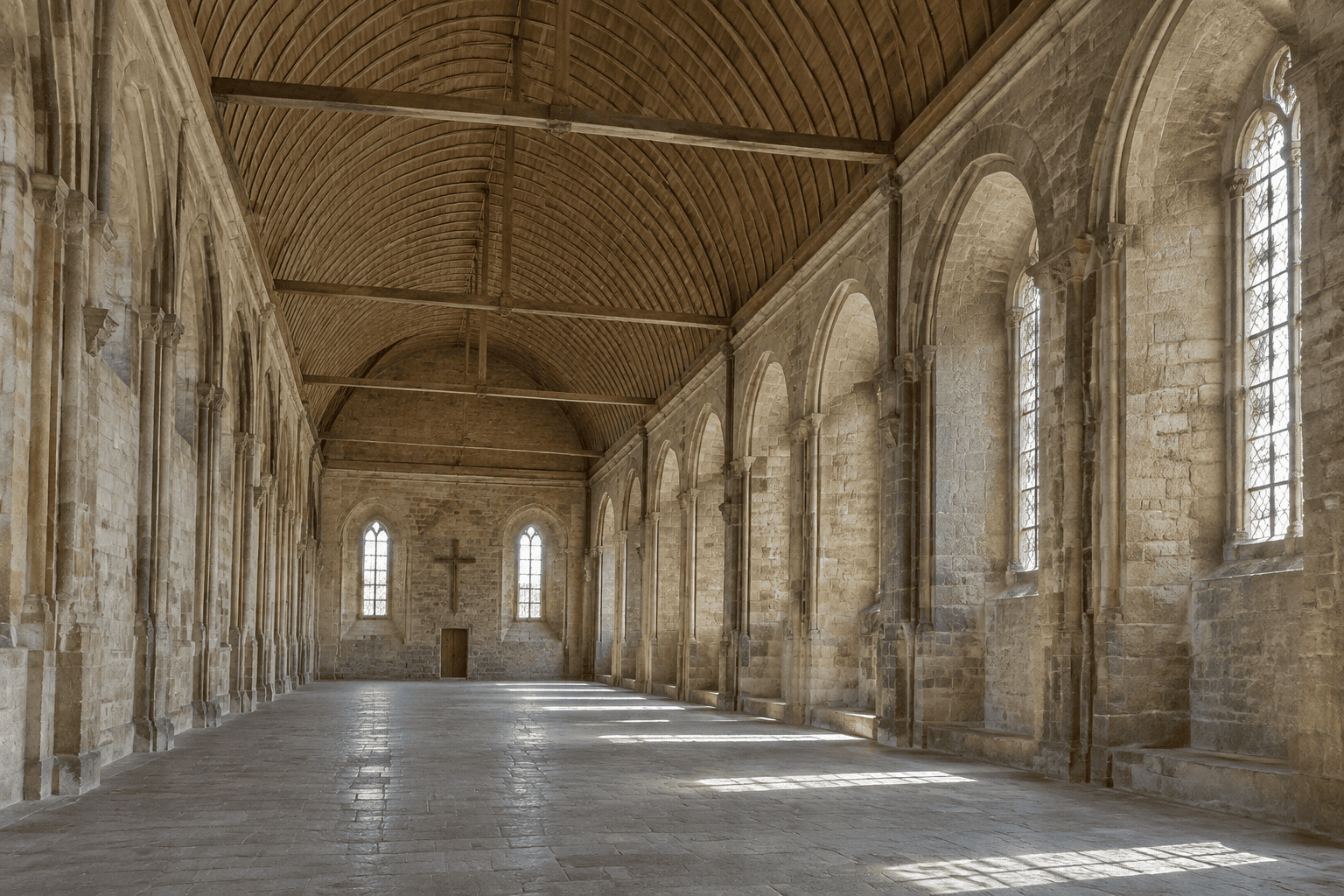
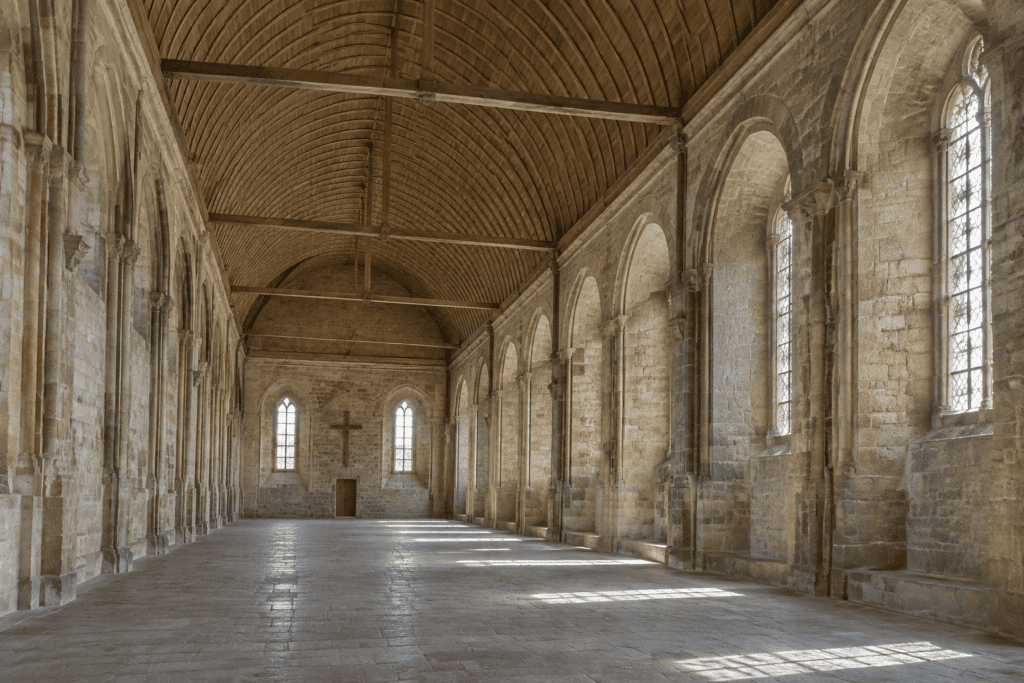
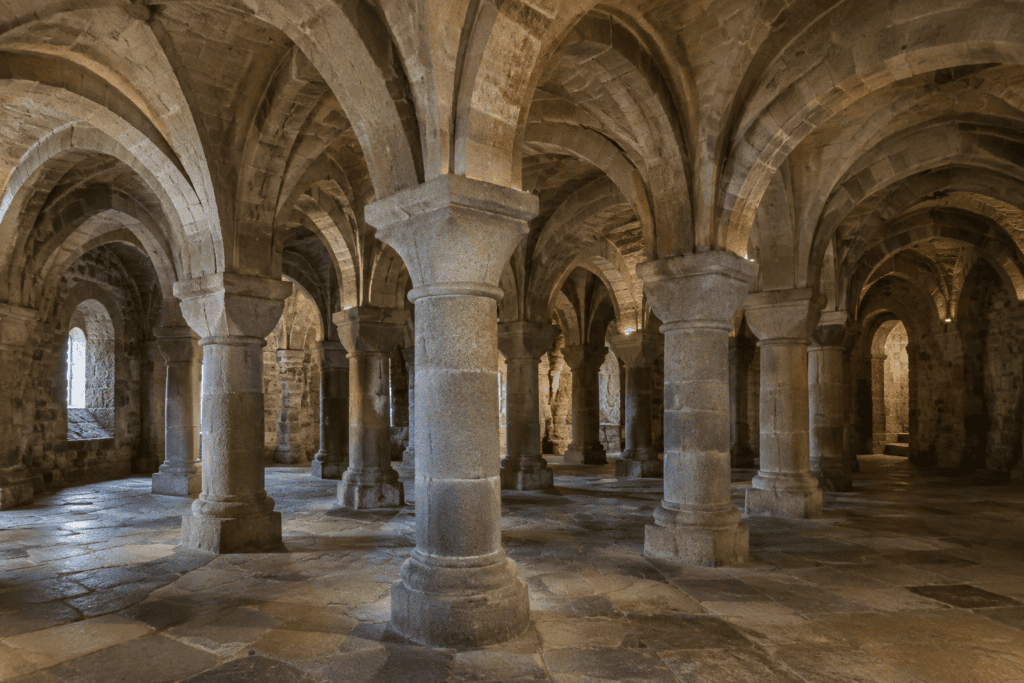
La Merveille includes the refectory, the Guests’ Hall, the Knights’ Hall, and other spaces connected with community life. These rooms illustrate the separation of functions: welcoming visitors, feeding the religious community, working, studying, and praying. The crypts, including the Saint Martin Crypt and the Notre-Dame-des-Trente-Cierges Crypt, also play an essential structural role by supporting the upper parts of the abbey. ([montsaintmichel.gouv.fr](https://www.montsaintmichel.gouv.fr/le-mont-et-sa-baie/une-abbaye-millenaire?utm_source=openai))
Romanesque and Gothic Architecture, and Technical Ingenuity
The abbey’s originality lies in the way it fits into the terrain. Rather than spreading horizontally, it rises in layers around the summit. This vertical arrangement creates an almost theatrical experience: every staircase reveals a new room, a new perspective, or a change in light.
The contrast between the styles is particularly clear in the church. The Romanesque sections are characterized by more massive volumes and a sense of stability, while the Gothic choir reaches for greater height and light. The spaces of La Merveille show how monastic architecture could combine practicality, representation, and aesthetic ambition.
The Grand Stairway, the broad staircase connecting the lower town with the upper sections, recalls the physical effort required of pilgrims and visitors. Higher up, the Lace Staircase leads to the terraces and the church. The spire, topped by a statue of Saint Michael, completes the monument’s present-day silhouette; it belongs to the additions and restorations of the 19thth century. ([montsaintmichel.gouv.fr](https://www.montsaintmichel.gouv.fr/le-mont-et-sa-baie/une-abbaye-millenaire?utm_source=openai))
Views Over the Bay and the Best Vantage Point
The abbey terraces offer one of the most breathtaking viewpoints on Mont-Saint-Michel. From the West Terrace, the bay stretches out in its full breadth, with sandbanks, channels, and a constantly changing horizon. On a clear day, this elevated viewpoint helps you understand the site’s island character and the relationship between the rock, the village, and the landscape.
The view takes on a special quality during the highest tides, when the sea quickly returns around Mont-Saint-Michel. It is essential, however, to consult official information and follow safety instructions: the bay remains a complex natural environment, with quicksand, currents, and areas that should not be explored without qualified guidance.
To round out your visit, also take in the abbey from outside, particularly from the footbridge and the approach paths. Its silhouette changes with distance: from the mainland, it appears compact and vertical; at the foot of Mont-Saint-Michel, the ramparts and lower buildings gradually reveal the power of the rock. Restoring the site’s maritime character has reinforced this impression, notably through the replacement of the former causeway-road with a footbridge and the introduction of shuttles. ([whc.unesco.org](https://whc.unesco.org/en/list/80/?utm_source=openai))
Plan Your Visit: Access, Hours, and Comfort
Access to the village is free, but the abbey has its own opening hours and admission conditions. Seasonal hours, closure days, last admissions, and any guided tours may change: check the official page of the Centre des monuments nationaux or the Mont-Saint-Michel institutional website before setting out. The official website currently indicates different hours for the period from May 1and to August 31 and from September 1and to April 30, with a final admission before closing. ([montsaintmichel.gouv.fr](https://montsaintmichel.gouv.fr/visite-du-mont-et-de-sa-baie/abbaye-du-mont-saint-michel?utm_source=openai))
The visit involves numerous stairs and uneven surfaces. Facilities may be available for some visitors, but accessibility depends on the areas and the layout of the monument; those concerned should request specific information from the official service before visiting.
Allow time to reach the abbey from the arrival area. Depending on your starting point, you can walk from La Caserne or use a shuttle when it is operating. Transportation schedules, parking conditions, and any restrictions may vary with the season and visitor numbers. Booking abbey admission in advance can be useful on very busy days, but do not confuse it with free access to the village.
Tips for a More Rewarding Visit
Start by viewing Mont-Saint-Michel from the mainland before entering the village. This first perspective helps you understand the silhouette and spot the spire, ramparts, and summit of the abbey. Once inside Mont-Saint-Michel, make your way leisurely along the Grande Rue, then save enough energy for the stairs leading to the monument.
Inside, take time to read the information panels or choose a guided tour when one is available. The monastic rooms are easier to understand when you know their original purpose. The cloister and terraces are best visited without a tightly packed group: a few minutes of observation are enough to notice the play of light, sculptural details, and changing perspectives.
Finally, do not plan the abbey as a quick stop between two destinations. A day trip from Paris can be long, especially if you want to enjoy the village and the surrounding landscapes. For a private trip, Booking Paris Transfer can arrange round-trip transportation from Paris, a Paris hotel, Charles de Gaulle Airport, or Orly Airport, with a return to Paris according to the agreed itinerary. Transportation does not include abbey admission: this must be checked and booked through the official ticket office.
Frequently Asked Questions
Do you need a ticket to enter Mont-Saint-Michel Abbey?
How much time should you allow to visit the abbey?
Is the abbey difficult to access for people with reduced mobility?
Can you see the highest tides from the abbey?
How do you get to the abbey from the parking area or arrival zone?
Does Booking Paris Transfer sell abbey tickets?
Online booking · Paris → Mont-Saint-Michel Abbey, at the top of Mont-Saint-Michel, 50170 Le Mont-Saint-Michel, France. For administrative and practical information, the public institution also lists a contact address in Beauvoir.
Choose your pickup date and time
Your departure and arrival details are already pre-filled. You can adjust them in the fare calculator before viewing the vehicles and fare.