



What to Do in Ouistreham in One Day
Ouistreham
For a first visit, this itinerary provides a practical answer to the question of what to do in Ouistreham in one day. Start at the port and explore its maritime activities, then head to Riva-Bella beach before setting aside time for the Grand Bunker and the N°4 Commando Museum. After lunch, explore the town center and the Caen Canal to the Sea before finishing on the Promenade de la Paix. Ouistreham is a seaside resort, a marina, the French terminal for the ferry service to Portsmouth, and a town directly associated with the Sword Beach sector. Distances between the main sites are reasonable, but the route is not entirely uniform: the walk from the port to Riva-Bella depends on your starting point, the sidewalks you take and your mobility. Check museum opening hours, transportation and maritime conditions before your visit.
Practical information
Visit the Grand Bunker and the N°4 Commando Museum during the same part of the day, but check their calendars separately. If you are traveling by ferry, do not confuse the ship’s departure time with the check-in deadline. For the walk between the port and Riva-Bella, allow extra time and choose a route suited to your mobility rather than relying on a fixed duration.
Paris–Ouistreham Transfer
If your itinerary begins in Paris, Booking Paris Transfer can arrange private transportation from Paris, the Île-de-France region, CDG or ORY to Ouistreham, with a return to Paris or onward travel in Normandy depending on the agreed route. Admission, meals and visits must be booked separately.
Transportation service departing from Paris, the Île-de-France region, CDG or ORY; return to Paris available depending on the itinerary.
1. Start at the Port of Ouistreham
Start your day around the port of Ouistreham, ideally in the morning. This area immediately reveals the town’s different functions: fishing, boating, boat traffic, commercial activities and passenger transport. When open, the fish market offers a firsthand look at the connection between the town and the sea. The stalls depend on arrivals and the season, so you may find fish, shellfish or crustaceans, with the selection varying from day to day. The appeal lies not only in making a purchase, but also in observing everyday maritime activity.
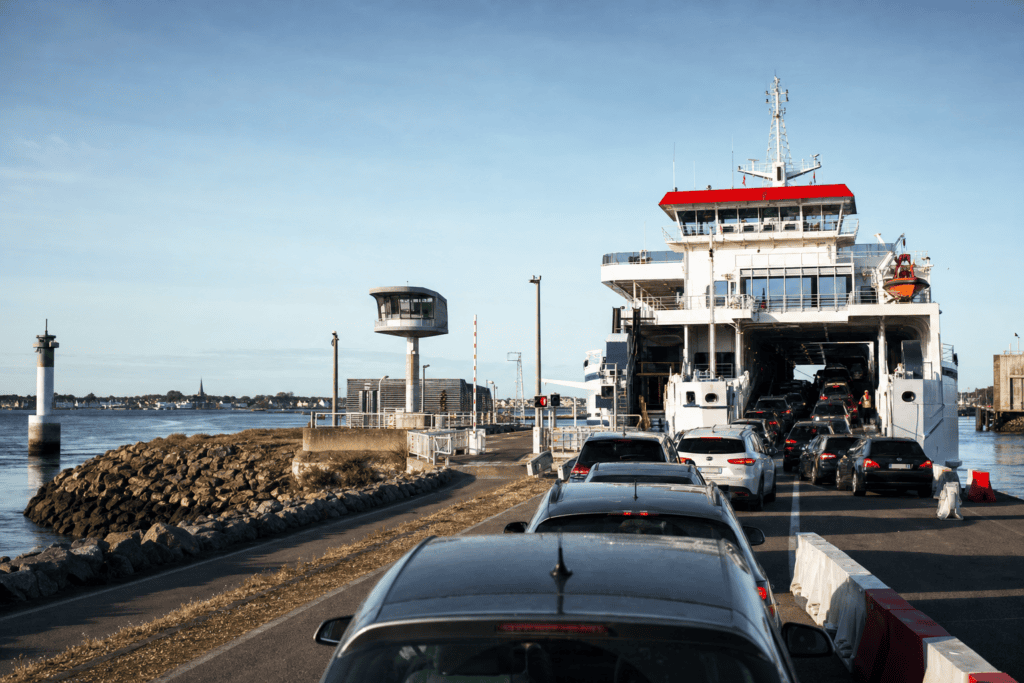
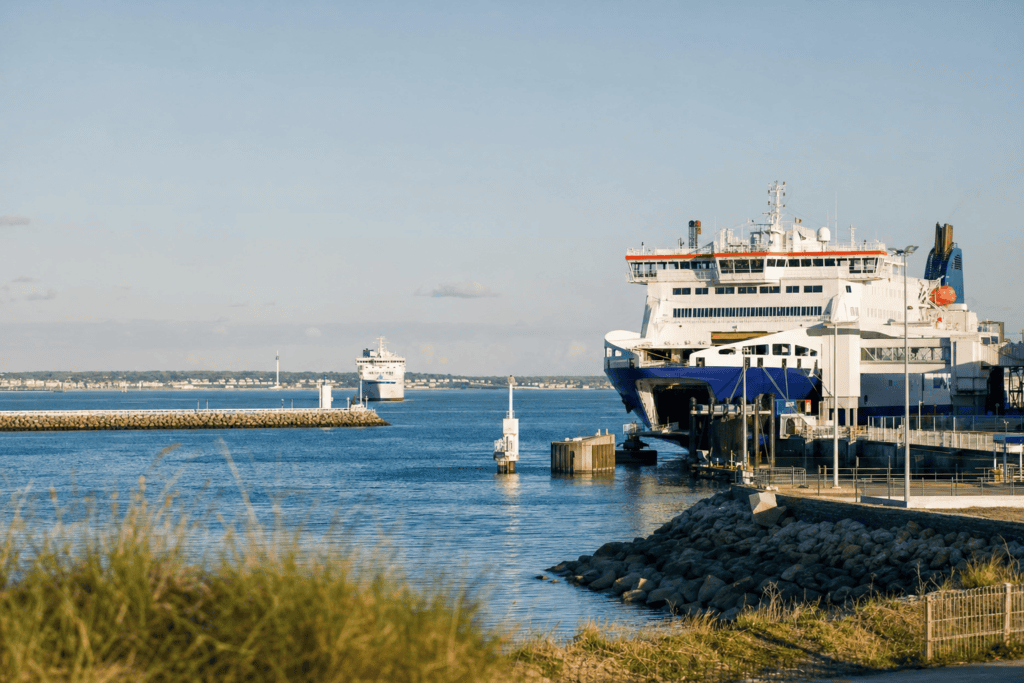
Continue along the quays and basins, keeping clear of areas reserved for professionals. The lighthouse is a useful visual landmark, and the ferry terminal reflects Ouistreham’s international role. The service to Portsmouth is operated by Brittany Ferries, but the terminal is not an ordinary tourist area: access, traffic and security checks may depend on that day’s operations. If you are boarding, follow only the instructions provided with your reservation.
From the port, it is possible to continue to Riva-Bella on foot, but the actual distance varies depending on the quay or bus stop you choose. The route passes through urban areas and along busy roads; visitors with reduced mobility or young children should check the exact route before setting out. For a more comfortable visit, a bus, taxi or bicycle can supplement the walk.
2. Head to Riva-Bella and the Beach
Next, head to Riva-Bella, Ouistreham’s seaside district. From the port, the walk generally follows urban roads toward Avenue de la Mer and the beachfront. This route should not be presented as one perfectly direct promenade: your starting point, any roadworks, crossings and your pace can all significantly affect the experience. Allow extra time rather than planning down to the minute. Visitors looking for a route without walking can check local transit or take a taxi.
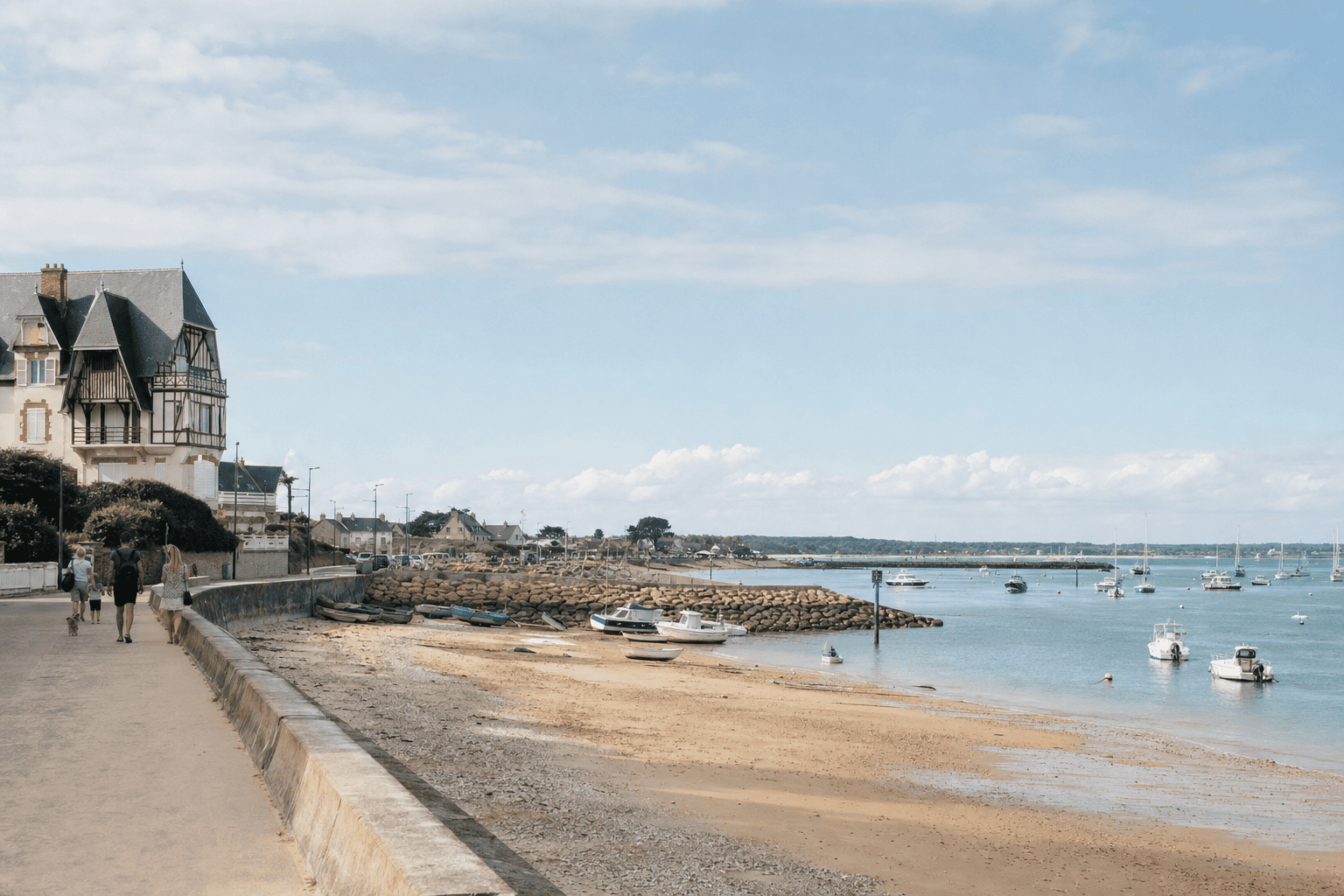
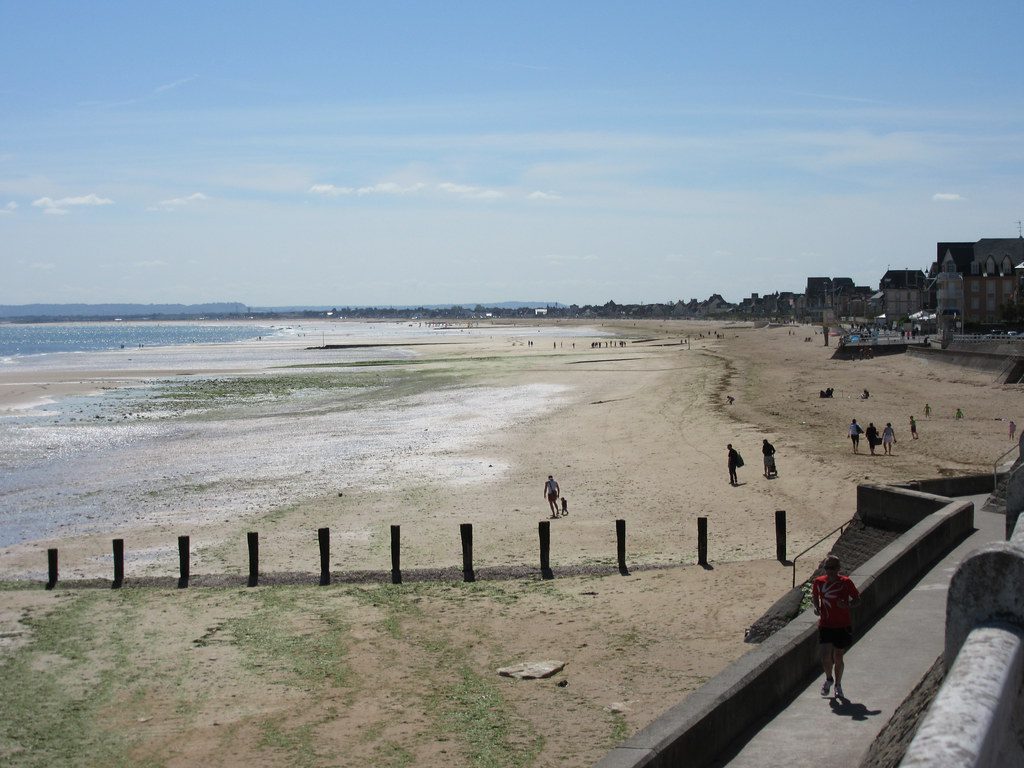
In Riva-Bella, the atmosphere gradually changes. Functional quays give way to villas, shops, terraces and an esplanade overlooking the Bay of Seine. The sandy beach is suitable for a break, a walk or family time, but conditions depend on the wind, tide and season. In summer, bring water and sun protection, and pay close attention to the swimming advisories posted on site. Out of season, the seafront can be very exposed.
The beach is part of the historic Sword Beach sector, the Allied code name for the eastern area of the Normandy landings. The monuments and signs along the Promenade de la Paix take on greater meaning after visiting the museums. Take time to read them and respect the memorial sites: today’s seaside landscape should not erase the violence of the fighting on June 6, 1944.
3. Visit the Grand Bunker
The Grand Bunker – Atlantic Wall Museum is one of Ouistreham’s most distinctive sites. Housed in a former German fire-control post, it offers a look inside a concrete structure preserved across several levels. The visit covers coastal observation, communications, the organization of a military position and how the Atlantic Wall defense system operated. The narrow spaces, staircases and reconstructions make the experience highly tangible, far beyond a simple display of documents.
The site also helps explain the local geography. From this position, you can connect the beach, port, Orne estuary and other fortified points along the coast. The bunker should therefore not be viewed as an isolated monument: it formed part of a broader defensive system whose traces can still be read in the Normandy landscape. An attentive visit generally requires time to explore the rooms and read the displays.
Opening periods, hours, admission fees and visitor arrangements may change. Check the museum’s official information directly before traveling, especially in the low season, on public holidays and around June 6 ceremonies. Visitors who have difficulty using stairs or moving through confined spaces should inquire with the museum. If you need to catch a ferry, do not schedule this visit immediately before check-in: security checks and time requirements are set by the company.
4. Understand the Role of the Kieffer Commando
The N°4 Commando Museum complements the Grand Bunker with a story focused more closely on the soldiers. It notably covers the 177 French naval riflemen of the Kieffer Commando, who fought alongside British forces on June 6, 1944. Objects, uniforms, documents and testimonies help explain the operation’s preparation, the landings in the Sword Beach sector and the fighting in Ouistreham. This approach gives a human dimension to a history often reduced to maps and dates.
The museum’s proximity to the beach makes it possible to alternate between the exhibition and observing the terrain. After your visit, return to the seafront and try to place the access routes, buildings and open spaces within the topography of 1944. The aim is not to recreate the battlefield exactly, but to understand why this area was strategically important. This combination suits visitors who want to explore D-Day in greater depth without spending the entire day on long journeys.
The museum has its own calendar, so check its information separately from that of the Grand Bunker. If you have more time, several sites in the area can extend your visit, including the Pegasus Memorial in Ranville, Bénouville Bridge, the Merville-Franceville battery and Radar Station 44 in Douvres-la-Délivrande. They are generally easier to reach by car or bicycle than on foot from Ouistreham.
5. Have Lunch Between the Port and the Seafront
For lunch, stay in the area between the port, Avenue de la Mer and Riva-Bella. Depending on the season, you will find brasseries, crêperies, seafood restaurants and places serving moules-frites or Normandy specialties. Rather than presenting a fixed selection as a guarantee, check the establishments’ recent listings, service days, menus and reservation policies. Hours may change, particularly in the low season, and summer weekends are often busier.
The fish market may inspire a meal focused on seafood. Local cuisine can also be discovered through dairy products, apples, cider and Normandy desserts. Choose your meal according to the rest of your plans: a brasserie near the beach works well for a quick break, while a seafood restaurant may require more time. Allow some flexibility if you have booked a timed visit.
Travelers taking the ferry should treat lunch as a separate stop, not as something to fill the time before boarding. The check-in deadline, security checks, terminal traffic and vehicle flows may vary. Check your Brittany Ferries reservation and allow plenty of extra time. For a typical sightseeing excursion, it is better to remain flexible and avoid planning the entire day around a ferry departure.
6. Discover the Town Center and Canal
After lunch, head into central Ouistreham. Its atmosphere differs from that of Riva-Bella: shops, services, residential streets and local life play a greater role. This part of the itinerary lets you see the town beyond its tourist seafront. Depending on the day, a market or event may add to the visit, but check the days and hours with the town hall or tourist office. In the low season, the range of activities may be more limited than during school holidays.
Continue to the Caen Canal to the Sea. The quays, locks and boats remind you that Ouistreham belongs to a river and maritime network linking the coast with Caen. The area is interesting for observing boat maneuvers, riverside landscapes and use of the waterway. Cyclists can consider a longer route along the greenway toward Caen, provided they have enough time and suitable equipment.
For a day focused on Ouistreham, limit yourself to a section near the port and locks. A full round trip to Caen would completely change the pace of the itinerary. If you use public transportation, check return times in real time and look for any service disruptions. A bicycle can make it easier to travel between districts, but check rental options and equipment availability in advance.
7. Finish on the Promenade de la Paix
End the day on the Promenade de la Paix and along the Riva-Bella seafront. This final walk brings together Ouistreham’s main dimensions: seaside resort, maritime landscape and the memory of the Normandy landings. It is enjoyable in clear weather, but remains appealing in autumn or winter when the coast is quieter. Adjust the length of your walk to the wind, tide, light and your energy level. You do not need to continue far into neighboring towns to enjoy the view.
The promenade’s memorial features take on particular significance after visiting the Grand Bunker and the N°4 Commando Museum. You can then connect the historical information with the spaces you have seen: the beach, access routes, coastline and port. The promenade also suits families who would like to finish with a break on the esplanade. Respect the monuments and ceremonies, especially around June 6, when visitor numbers and traffic may differ.
Before leaving, check your transportation arrangements. Travelers heading to Caen should consult the day’s Twisto route; ferry passengers should follow the instructions and check-in deadline in their reservation. For an itinerary beginning in Paris, Booking Paris Transfer can arrange private transportation from Paris, the Île-de-France region, CDG or ORY to Ouistreham, with a return to Paris according to the planned route. This service covers transportation only: museums, meals and activities must be arranged separately.
Frequently Asked Questions
Can you visit Ouistreham without a car?
Is the walk between the port and Riva-Bella easy?
What order should you follow for a day in Ouistreham?
Is Ouistreham part of the D-Day beaches?
Can you visit Ouistreham before taking the ferry?
 Ouistreham: Ports and Cruise Transfers Ferry to Portsmouth, Grand Bunker, Sword Beach and marina: prepare for your arrival in…
 Port of Ouistreham: Ferry, Crossings, and Transfers Discover the port of Ouistreham, its ferry connection to Portsmouth, and access from Caen, Riva-Bella and…
 Ouistreham: Ferries and Cross-Channel Connections Ferry port, Sword Beach, the Grand Bunker, and No. 4 Commando Museum: Ouistreham combines a cross-Channel connection…
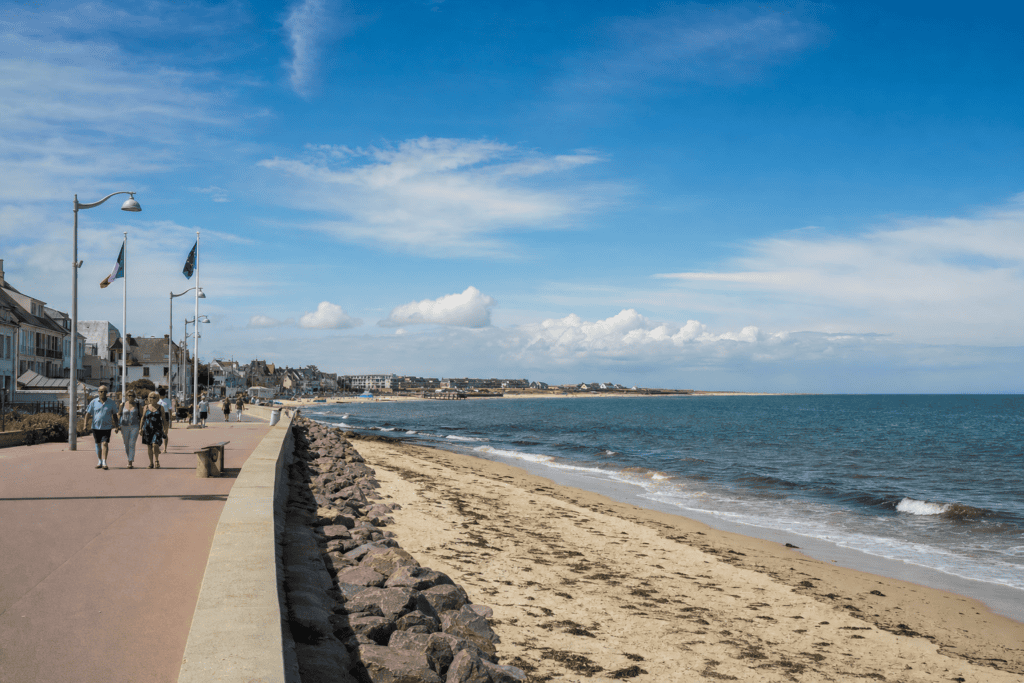 Riva-Bella Beach and Seafront Promenade The family-friendly Riva-Bella beach combines sand, a seafront promenade, Sword Beach history, and proximity to the…
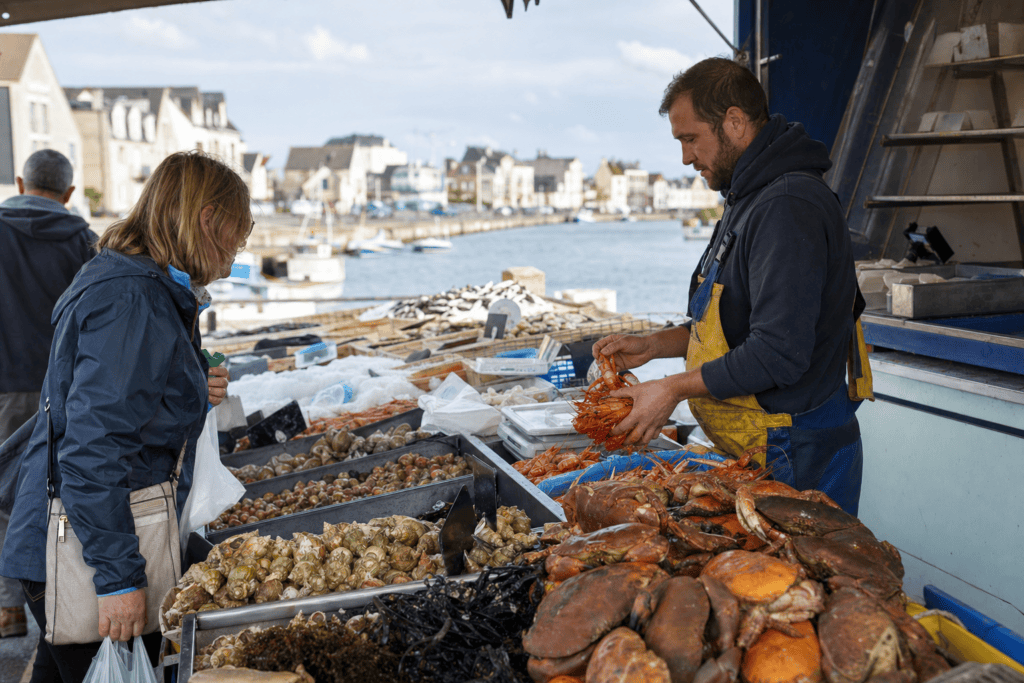 Ouistreham Market and Seafood A gourmet discovery of Ouistreham’s harbor, with fish, shellfish, Riva-Bella, and the history of Sword Beach.
Online booking · Paris → Ouistreham, 14150, Calvados, Normandy
Choose your pickup date and time
Your departure and arrival details are already pre-filled. You can adjust them in the fare calculator before viewing the vehicles and fare.