



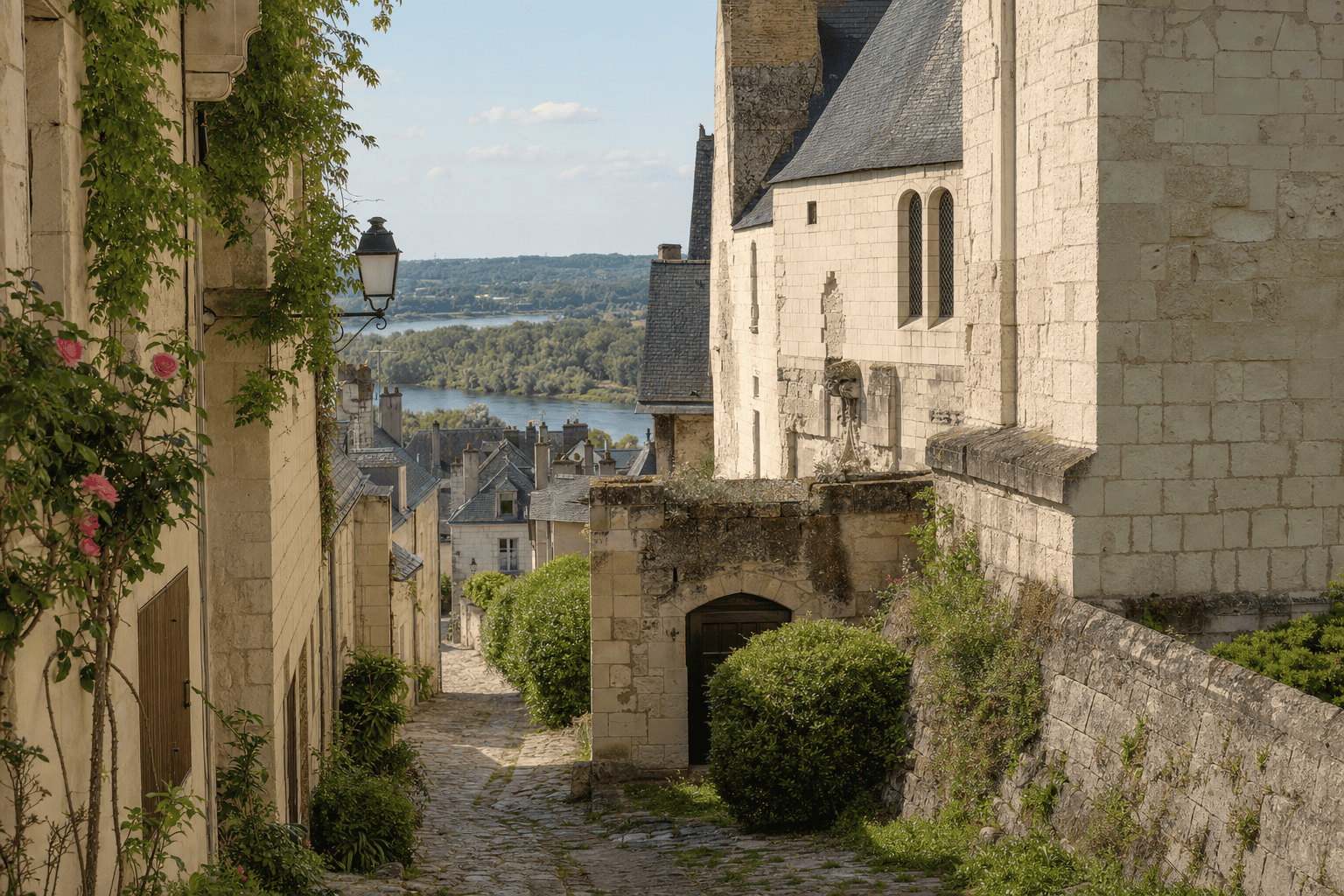
Chinon Old Town: Narrow Streets and Historic Houses
Chinon
Chinon Old Town unfolds along the hillside between the Vienne River, historic houses, and the royal fortress. Its sometimes-steep streets reveal half-timbered façades, private mansions, cellars carved into tuffeau stone, and squares where the town’s history can still be read in the stone. The walk naturally complements a visit to the fortress: it helps explain how Chinon developed around its rocky promontory, commercial activities, and former parishes.
Practical information
Start near the tourist office, look up to admire the façades, and allow time for the streets at the foot of the fortress.
Getting to Chinon from Paris by Private Car Service
For a day trip or a multi-day excursion, Booking Paris Transfer can arrange private transportation from Paris, a Paris hotel, CDG, or ORY to Chinon, with a return to Paris or continuation of an itinerary through the Loire Valley. The service covers transportation only: fortress tickets, guided tours, and activities on site must be booked separately with the relevant providers.
Departure from Paris, a Paris hotel, CDG, or ORY; return to Paris available. Transportation only, without admission tickets.
A Historic Center Dominated by the Fortress
Chinon Old Town occupies a distinctive position in the landscape: it stretches between the Vienne River and the limestone hillside crowned by the royal fortress. This topography explains the character of the district. The streets do not form a perfectly regular layout; they follow the slopes, former urban boundaries, and natural routes to the rocky promontory. Walking through the historic center makes it possible to understand the close relationship between the lower town, the commercial districts, and the higher areas near the castle.
The fortress remains the main visual landmark, but the town should not be seen merely as an entranceway to the monument. Its façades, lanes, squares, and cellars tell an independent urban story. Chinon also benefits from heritage protection and forms part of the UNESCO-listed cultural landscape of the Loire Valley. To plan your walk, consult the information from theChinon Tourist Office and the heritage resources of the City of Chinon.
Narrow Streets, Slopes, and Scenic Walking Routes
The best way to discover Chinon Old Town is to walk without trying to cover everything too quickly. From the areas near the Vienne, the route gradually reaches the historic streets and the surroundings of the fortress. Some streets are lively and lined with shops, while others become quieter as they move away from the busiest routes. This contrast gives the district the atmosphere of a small historic town rather than a frozen-in-time setting.
Wear comfortable shoes: some slopes can be demanding, particularly on the streets linking the lower town to the hillside. Walking lends itself well to frequent stops, as interesting details are sometimes above eye level: window surrounds, dormer windows, beams, signs, cornices, and variations in materials. A local heritage trail can help place each street within the town’s development. Visitors looking for an easier route can favor the lower-town paths and check accessibility conditions with the tourist office in advance.
Half-Timbered Houses and Urban Architecture
Half-timbered houses are among the most evocative features of the historic center. Their exposed structures, overhanging upper floors, and proportions recall the construction techniques used in medieval and early modern towns. They are only one part of Chinon’s built heritage, however. As you walk through the streets, you will also see stone façades, rendered walls, altered openings, and more imposing buildings from different periods.
This diversity is precisely what makes the walk interesting. A single stretch of street may bring together a narrow house, a former shop, a private mansion, and a more recent façade integrated into the street frontage. Documents on Chinon’s heritage area emphasize the importance of preserving not only notable monuments but also the buildings that shape the streetscape. Take time to compare window patterns and façade heights. Traces of former businesses, carriage entrances, and ironwork details often help you imagine daily life behind the walls.
Private Mansions, Squares, and Overlooked Monuments
The Old Town is more than a collection of picturesque houses. It also includes private mansions, religious buildings, squares, and public buildings that testify to Chinon’s former importance. Some features are immediately visible; others require careful observation or a guided visit to understand. The route may lead to the Grand Carroi, the area around Saint-Maurice Church, the districts associated with the former Saint-Mexme collegiate church, and the streets near the Caves Painctes.
These places offer several ways to understand the town. Squares reveal patterns of trade and gathering, religious buildings recall the organization of former parishes, and larger residences indicate the presence of privileged families or institutions. The city’s historical overview offers resources on Saint-Maurice, Saint-Mexme, the Grand Carroi, and figures associated with Chinon. For a first visit, alternate between the main streets and quieter detours: it is often in the latter that the district’s medieval scale is most apparent.
Tuffeau Stone, Cellars, and the Memory of Rabelais
The underground world plays an essential role in Chinon’s identity. The hillside is made of tuffeau, a limestone widely used in regional architecture and formerly extracted from quarries. This geology encouraged the presence of cellars and underground spaces that extend beyond the houses’ façades. It also explains certain urban forms, pale walls, and the strong relationship between the built environment and the terrain.
The Caves Painctes, located beneath the fortress, are associated with the local wine-growing tradition and the memory of François Rabelais. They are currently open for visits according to a schedule that may change; consult the information from the Maison des vignerons et vigneronnes de Chinon before setting out. Do not attempt to enter an unmarked cellar or passage: underground cavities are subject to monitoring and specific safety rules. The tuffeau is best discovered first by observing the façades, foundations, and openings built into the hillside.
Practical Tips for a Successful Visit
To make the most of Chinon Old Town, plan a flexible walk rather than a tightly scheduled itinerary. An hour and a half is enough to cover the main streets and reach the surroundings of the fortress; two hours or more is preferable if you add a guided tour, monument, cellar, or café break. Morning light brings out the details of the façades, while late afternoon often offers beautiful views over the rooftops and hillside.
The district includes slopes, cobblestones, and uneven surfaces. Visitors who need a route without steep inclines should ask the tourist office for advice, as the most direct route is not always the most comfortable. During busy periods, arrive early for a more relaxed walk. Also check monument opening hours and conditions before your visit, as they vary by season. Finally, respect local residents: some beautiful façades belong to private properties and can only be viewed from public areas.
Combining the Old Town with the Fortress and the Vienne
The Old Town reveals its full depth when included in a broader day in Chinon. Begin with a walk through the historic streets to understand the town’s layout, then spend time at the royal fortress to discover the site’s political and military role. After your visit, descend to the lower town: the change in scale and perspective helps connect the ramparts, houses, and activities that once took place at the foot of the hillside.
Another option is to extend your walk toward the quays and the surrounding area of the Vienne. The landscape opens up there, offering a pleasant contrast with the narrow streets of the historic center. Heritage enthusiasts can also look for traces of Rabelais, cellars, and places connected with Chinon wine, checking which visits are available during their stay. For an excursion from Paris, a private transfer can arrange the Paris–Chinon journey, departure from a Paris hotel, CDG, or ORY, followed by the return to Paris, without including admission tickets or a local guided tour.
Useful sources
Frequently Asked Questions
Where is Chinon Old Town located?
How much time should I allow to visit the historic center?
Is Chinon Old Town easy to explore on foot?
Can the Caves Painctes be visited year-round?
Is the Old Town close to the royal fortress?
 Chinon Wine Tasting Explore the red, rosé, and white wines of the Chinon appellation, meet the winemakers, and discover the region’s terroirs…
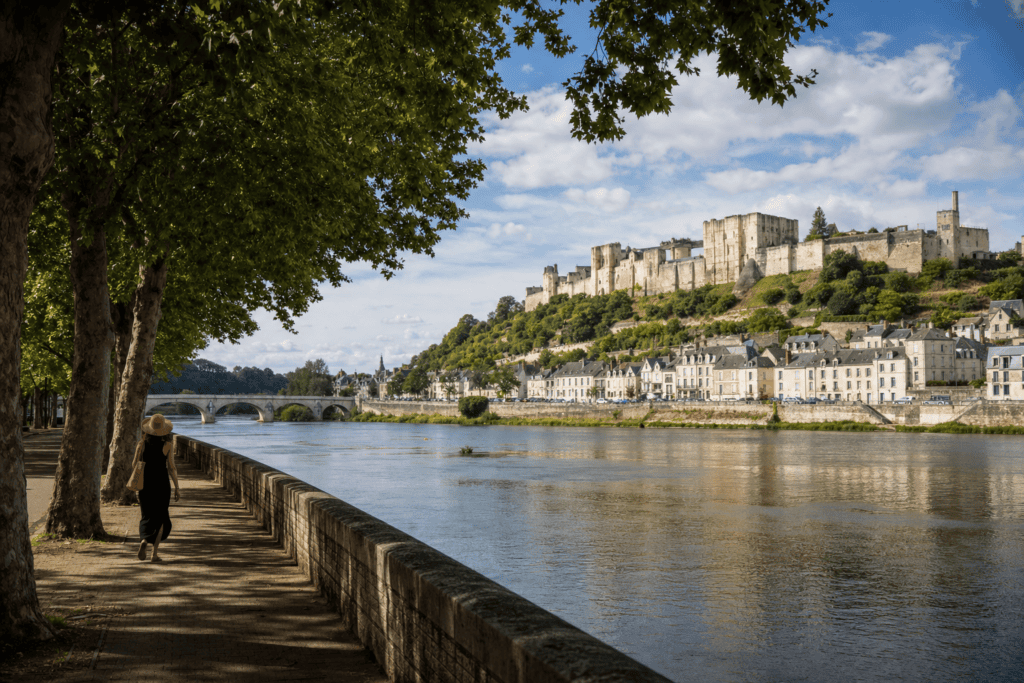 Vienne River Quays and Chinon Promenade A riverside walk along the Vienne offering beautiful views of the fortress…
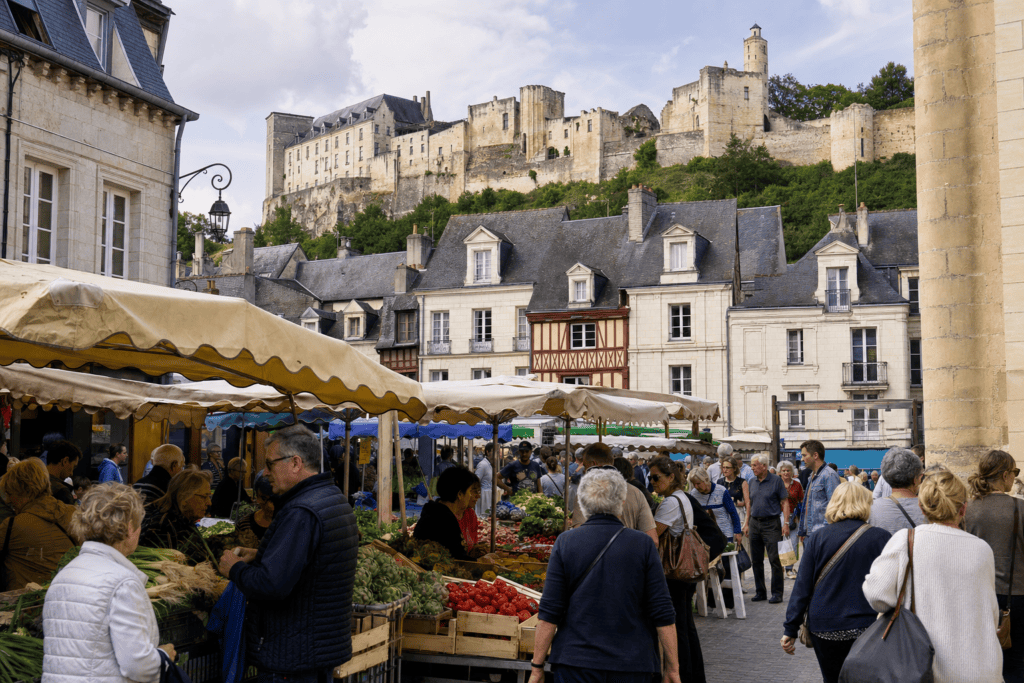 Chinon Market A Thursday morning market where you can sample Touraine products and continue your stroll through…
 Chinon Royal Fortress A spectacular medieval fortress connected to the Plantagenets, Charles VII, and Joan of Arc, with…
Online booking · Paris → Historic center of Chinon, 37500 Chinon, Indre-et-Loire, France
Choose your pickup date and time
Your departure and arrival details are already pre-filled. You can adjust them in the fare calculator before viewing the vehicles and fare.