



Things to Do in Fourvière: Basilica, Roman Theaters and Panoramic Views of Lyon
Lyon
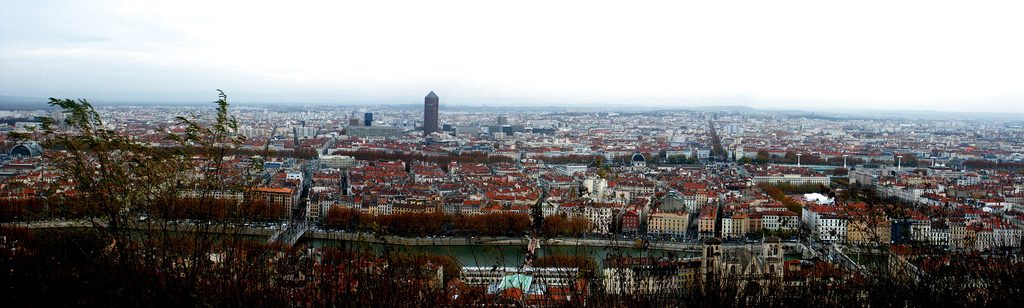
Overlooking Lyon from the right bank of the Saône, Fourvière Hill is home to some of the city’s most iconic landscapes and monuments. In just a few hours, you can go from a 19th-century sanctuary to the remains of Lugdunum, walk through sloping gardens, and enjoy several viewpoints over Vieux Lyon, the Presqu’île, Croix-Rousse and the rivers. This itinerary is ideal for a first introduction to Lyon, but Fourvière also deserves a slower visit because it is much more than its basilica: it is a remarkable historic, religious, archaeological and scenic site.
Practical information
Wear comfortable shoes and bring water. For a smoother route, start with the basilica and esplanade, then walk down through the Rosary Garden before continuing to the Roman theaters and the Lugdunum museum. This order avoids unnecessary climbs back up the hill.
Getting to Lyon from Paris with a private driver
Are you staying in Paris or arriving at CDG or ORY and hoping to include Fourvière in a Lyon itinerary? Booking Paris Transfer can arrange private transportation from Paris to Lyon, departing from a Paris hotel, Charles de Gaulle Airport or Orly, with the option of returning to Paris. Transportation takes you to Lyon; tickets, guided tours and monument admission must be booked separately through the official sites.
Transportation service departing from Paris, the Île-de-France region, CDG or ORY; no ticketing or independent local chauffeur service based in Lyon.
Why visit Fourvière in Lyon?
Fourvière is one of the few places in Lyon where several periods of the city’s history can be read in a single landscape. The hill was the heart of Lugdunum, founded by the Romans in 43 BCE, before becoming an important religious center and later a major urban lookout. Today, the basilica’s silhouette, the remains of the Roman theaters and the gardens descending toward Vieux Lyon form an exceptionally rich ensemble.
The visit appeals equally to heritage enthusiasts and travelers simply looking for a beautiful view. From the esplanade, you can see the rooftops of Vieux Lyon, the Saône, the Presqu’île and, on clear days, the hills surrounding the metropolitan area. Below, the old streets of Saint-Jean naturally extend the experience.
Fourvière is part of Lyon’s historic site, listed as a UNESCO World Heritage Site since 1998. This recognition highlights the exceptional continuity of Lyon’s urban development, from Roman remains to medieval and Renaissance neighborhoods. The hill is therefore an ideal gateway to understanding the city’s long history without having to explore all of Lyon in a single day. ([lyon.fr](https://www.lyon.fr/lieu/contemporaine-19eme-20eme/quartier-fourviere?utm_source=openai))
Notre-Dame de Fourvière Basilica: What to See Inside
Notre-Dame de Fourvière Basilica is the hill’s most recognizable monument. Designed by architect Pierre Bossan, it was inaugurated in 1896. Its massive silhouette, flanked by four octagonal towers, overlooks Lyon and has become a major visual landmark in the cityscape.
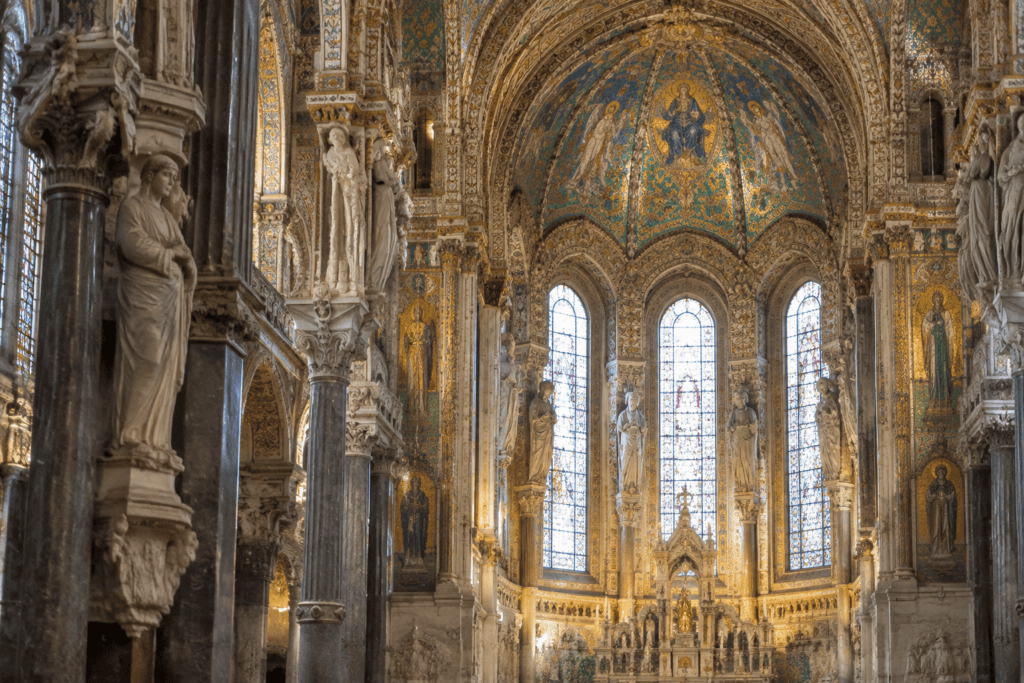
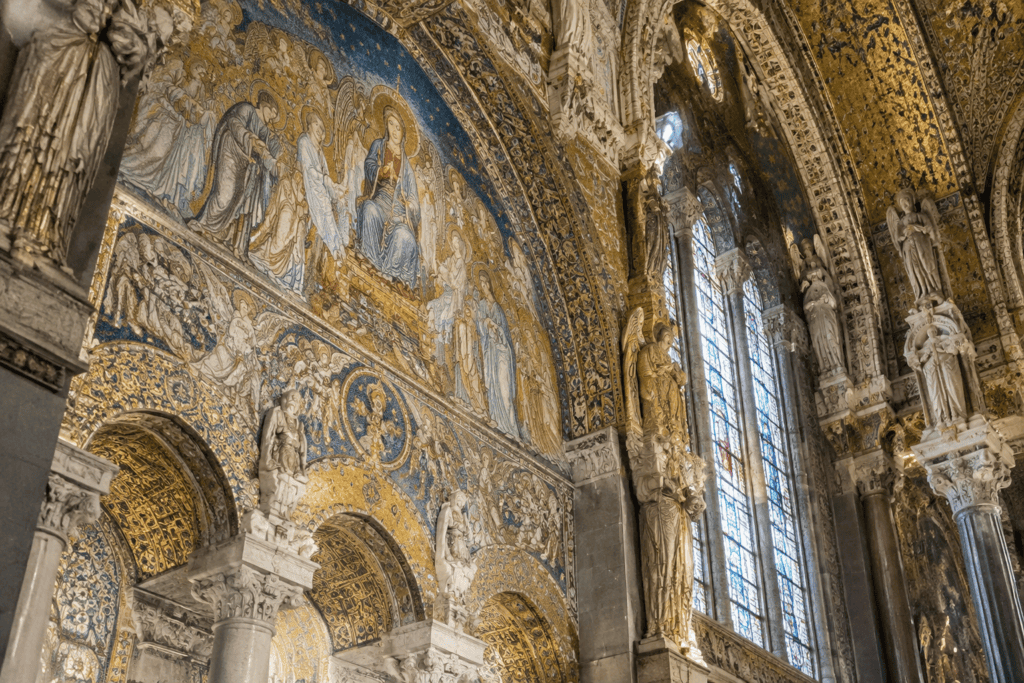
Inside, take time to admire the mosaics, sculpted decoration, marble and interplay of light. The abundant ornamentation reflects the eclectic, symbolic aesthetic of the 19th century. Designed as a more intimate space, the crypt has a different atmosphere from the upper church. The site is first and foremost a place of worship, so visitors are asked to respect the silence, religious services and people who come to pray.
The Fourvière Foundation publishes updated information about opening hours for the basilica, crypt, museum, reception pavilion and gardens. Hours may change during religious services, so it is best to check the official page on the day before or the day of your visit. ([fourviere.org](https://www.fourviere.org/fr/visiter-notre-dame-de-fourviere/?utm_source=openai))
From the forecourt, be sure to admire the exterior view of the basilica’s towers and roofs. The best photos are not always taken facing the façade: move slightly farther away on the esplanade or in the gardens for more balanced perspectives of the sanctuary as a whole.
The Fourvière Esplanade and Panoramic Views of Lyon
The Fourvière esplanade is the hill’s great balcony. From here, you can take in Lyon’s main neighborhoods at a glance: Vieux Lyon in the foreground, the Presqu’île between the Rhône and Saône, and then the Croix-Rousse hill to the east. It’s an excellent starting point for understanding Lyon’s geography before heading down into the streets.
To fully enjoy the panorama, take time to notice the differences in shape and color between the neighborhoods. Vieux Lyon is recognizable by its rooftops and historic façades; the Presqu’île has a more regular urban layout; and Croix-Rousse stands out for its slopes and buildings associated with Lyon’s silk-making history. The rivers give the entire scene a clear structure.
The light changes quickly on the hill. In the morning, views to the east can be especially bright; in the late afternoon, the city’s façades often take on warmer hues. On hazy or very hot days, visibility may be reduced, but the atmosphere remains interesting for observing the successive layers of the urban landscape.
Don’t limit your visit to a single photo taken from the edge of the esplanade. A few minutes’ walk through Parc des Hauteurs reveals other viewpoints that are quieter and sometimes less crowded.
The Rosary Garden: Walking Down from Fourvière to Saint-Jean
The Rosary Garden is one of the most beautiful routes between the basilica and Vieux Lyon. Located on the hillside, it offers a tree-lined walk made up of paths, terraces, viewpoints and stairways. Its atmosphere contrasts with the open esplanade: here, the visit becomes shadier and quieter.
The garden includes botanical collections of heirloom roses and hydrangeas. Depending on the season, the blooms can completely transform the atmosphere of the route. Tall trees and wooded areas also provide a welcome break on hot days, although the descent is uneven in places.
The City of Lyon states that the garden connects the basilica with the Saint-Jean neighborhood along an easily identifiable route, but accessibility depends on the route chosen and each person’s mobility. In 2026, restoration work is being carried out in phases, so some areas or paths may change. Check municipal information before setting out and follow any posted detours.
For a complete walk, descend slowly to Montée Saint-Barthélemy, then continue toward Saint-Jean. This direction naturally leads to the cathedral, Renaissance streets and the traboules of Vieux Lyon. ([lyon.fr](https://www.lyon.fr/sortir-et-decouvrir/profiter-de-la-nature-en-ville/le-parc-des-hauteurs-et-le-jardin-du-rosaire?utm_source=openai))
Parc des Hauteurs and the Metallic Tower
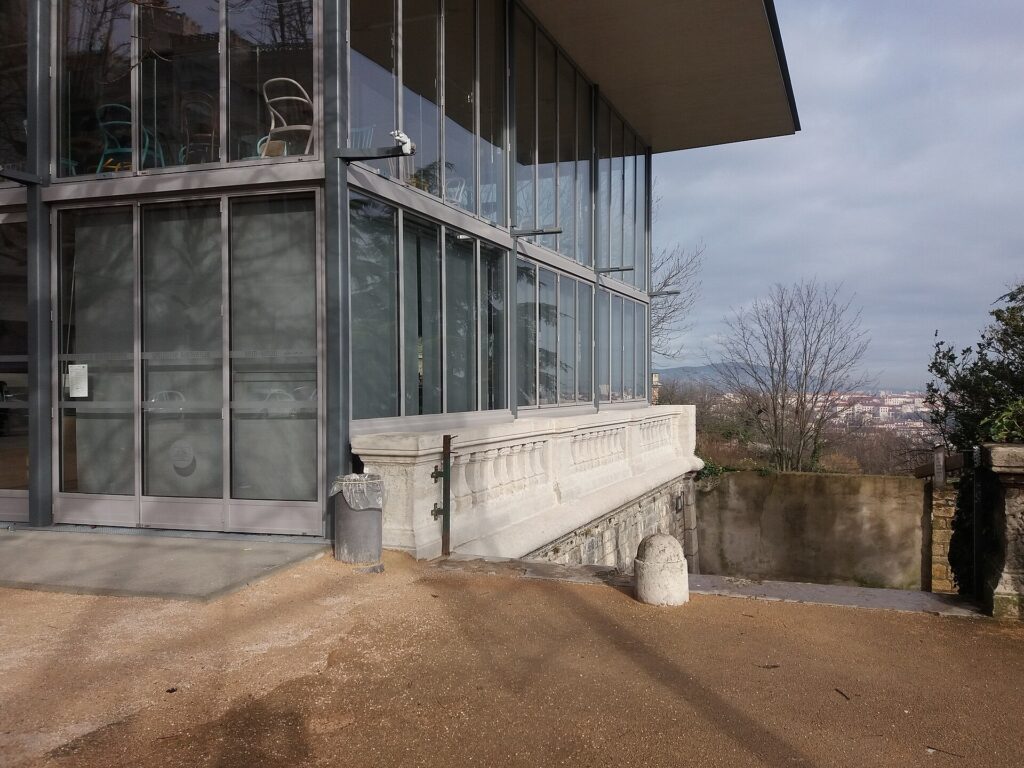
Parc des Hauteurs is not a traditional park centered around a large lawn; it is primarily a network of walks and viewpoints along Fourvière’s slopes. It connects several scenic and historic areas, from the surroundings of the basilica to Loyasse Cemetery, with footbridges and more wooded sections.
This walk offers another way to discover Lyon. Rather than going directly from one monument to the next, you move through a sloping landscape with regular openings onto the city. Families appreciate the open spaces, while photographers find numerous views of rooftops, bell towers and hills.
Fourvière’s metallic tower, sometimes compared with a local version of the Eiffel Tower, is one of the hill’s visual landmarks. It should not be confused with a freely accessible observation deck: its primary role is as an antenna and landscape feature. The area’s main appeal lies in the perspectives from the nearby paths.
The City of Lyon states that the park is open year-round, but walking conditions may vary depending on construction, weather or the condition of the paths. Allow extra time if you plan to continue to Saint-Just or Loyasse. ([lyon.fr](https://www.lyon.fr/sortir-et-decouvrir/profiter-de-la-nature-en-ville/le-parc-des-hauteurs-et-le-jardin-du-rosaire?utm_source=openai))
The Roman Theaters of Lugdunum
A few minutes from the basilica is one of Lyon’s most impressive archaeological sites: the Roman theaters of Lugdunum. The site includes the Grand Theater and the Odeon, built on the hillside and listed as historic monuments since 1905.
Lugdunum presents the Grand Theater as the oldest theater in Roman Gaul. Its diameter is approximately 108 meters. Initially made up of two tiers of seating, it was enlarged to accommodate approximately 10,000 spectators. Performances included theater, music and dance. The Odeon, smaller and originally covered, was probably intended for musical performances or more specialized uses.
Look at the seating, the natural slope of the land and the features of the orchestra, whose pavement combines several colored marbles from different regions of the Roman world. Even when the site is quiet, it is easy to imagine the importance of this public space in the ancient city.
Access to the theaters and the museum is not always through the same entrance. Lugdunum lists two access addresses: 17 rue Cléberg and 6 rue de l’Antiquaille. Seasonal theater hours, visiting conditions and reservations for activities should be checked on the official website. ([lugdunum.grandlyon.com](https://lugdunum.grandlyon.com/fr/venir-a-lugdunum/acces?utm_source=openai))
Recommended Itinerary and Practical Tips
For a first visit, start at Vieux Lyon station and take the F2 funicular to Fourvière. You’ll arrive near the basilica, allowing you to explore the monument and esplanade before heading downhill. If you prefer to walk, the Rosary Garden provides a historic uphill or downhill route between Saint-Jean and the sanctuary, but it requires more effort.
A well-balanced itinerary can follow this order: basilica, esplanade, Parc des Hauteurs, Rosary Garden, Roman theaters, then the Lugdunum museum. This route combines views, nature and archaeology while minimizing changes in direction. For a shorter visit, stick to the basilica, esplanade and theaters.
Lugdunum is accessible from Vieux Lyon station by the F1 or F2 funicular, depending on the entrance and direction selected. The museum has its own hours, separate from those of the theaters. Since hours, prices, possible reservations and access conditions may change, consult the official page before your visit. ([lugdunum.grandlyon.com](https://lugdunum.grandlyon.com/fr/venir-a-lugdunum/acces?utm_source=openai))
Those traveling with a stroller, young children or a person with reduced mobility should plan the route carefully: Fourvière is a hill, and the scenic routes do not all offer the same level of comfort. Finally, if you visit during a festival or religious celebration, expect larger crowds around the theaters and basilica.
Frequently Asked Questions
How Much Time Do You Need to Visit Fourvière?
How do you get to Fourvière from Vieux Lyon?
Is Notre-Dame de Fourvière Basilica free to visit?
Can you visit Lyon’s Roman theaters without a ticket?
Can you walk to Vieux Lyon from Fourvière?
What should you bring for a visit to Fourvière?
Online booking · Paris → Basilica of Notre-Dame de Fourvière, 8 place de Fourvière, 69005 Lyon. For Lugdunum – Museum and Roman Theaters: 17 rue Cléberg and 6 rue de l’Antiquaille, 69005 Lyon.
Choose your pickup date and time
Your departure and arrival details are already pre-filled. You can adjust them in the fare calculator before viewing the vehicles and fare.