



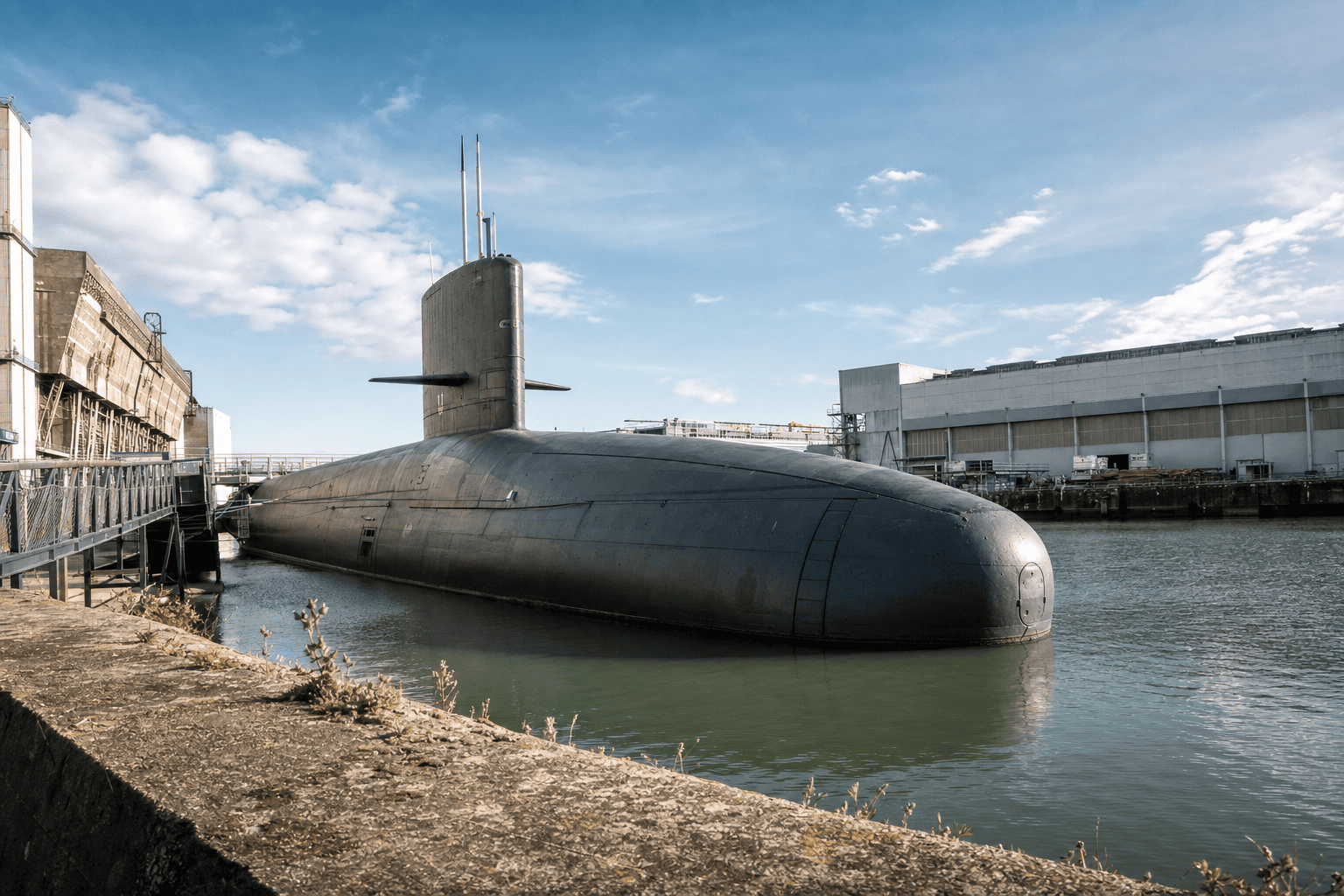
Espadon Submarine: an immersive experience in Saint-Nazaire
Saint-Nazaire
In Saint-Nazaire, the Espadon submarine offers a fascinating visit inside a former French Navy vessel. Commissioned in 1960, it sailed for twenty-five years before being preserved in the former fortified lock where it is now on display. Its 1964 Arctic mission, life on board, and technical spaces are brought to life through an audio and audiovisual tour. The visit offers a better understanding of submariners’ daily lives, the challenges of underwater navigation, and the Espadon’s importance to France’s maritime heritage.
Practical information
Take time to listen to the audio sequences and read the information in each compartment: they help explain the purpose of the equipment and the crew’s daily lives.
Getting to Saint-Nazaire from Paris with a chauffeur
To include the Espadon submarine in a Loire-Atlantique itinerary, Booking Paris Transfer can arrange private transportation from Paris, a Paris hotel, CDG, or ORY, with a return trip to Paris based on your schedule. The service covers transportation only and does not include museum admission. Check available time slots directly and book your visit through the official Saint-Nazaire website.
Private transportation from Paris, a Paris hotel, CDG, or ORY; return to Paris available. Museum admission not included.
A submarine preserved in a lock
The Espadon submarine is one of Saint-Nazaire’s most unusual heritage attractions. It is displayed in a former fortified lock near the port facilities, rather than in a conventional museum gallery. This setting maintains a direct connection with the city’s maritime surroundings. From the quays, first observe the hull, conning tower, and exterior equipment: this provides a better sense of the vessel’s length and the concentration of functions inside.
The official Saint-Nazaire website presents it as the only submarine displayed afloat in France. This wording should be understood as a heritage characteristic attributed to the site by its operator, not as a general commercial promise. The Espadon is part of the collections of the Saint-Nazaire Ecomuseum and provides an authentic testimony to the French Navy in the second half of the 20th century. The visit appeals both to technology enthusiasts and to families who want to discover a tangible, visible, and human story.
The history of the Espadon and its service career
The Espadon is a Narval-class submarine built in Le Havre by Chantiers Augustin Normand. Commissioned in 1960, it was designed for surveillance, training, and observation missions during the Cold War. Its career lasted twenty-five years, serving in a French Navy that was modernizing its submarine capabilities and training crews able to remain submerged for long periods.
The vessel is not presented as the setting of one specific battle. Its interest lies instead in understanding a complex military tool and the daily work required to operate it. The navigation stations, communications equipment, technical installations, and torpedo tubes recall its missions without reducing its history to weaponry. After being decommissioned, the Espadon arrived in Saint-Nazaire in 1986 and opened to the public the following year. Detailed information about its construction, career, and preservation should be checked on official pages before publication or visiting.
The 1964 Arctic mission
The 1964 mission is the best-known narrative thread of the visit. The Espadon, accompanied by the Marsouin submarine, sailed toward the high latitudes and crossed the Arctic Circle. Local tourism sources describe the operation as the first incursion by a French submarine beneath the ice pack. For accuracy, it is preferable to refer to official historical information for the exact dates, route, and various stages of the mission.
This expedition had both technical and strategic significance. It made it possible to test the vessel, its equipment, and its crew in an environment very different from temperate regions. Beneath the ice pack, light, navigation, communications, and the ability to surface created particular challenges. The tour evokes this experience through testimonies, soundscapes, and visual displays. However, these scenographic effects should not be treated as scientific measurements: the exact temperature on board, as well as the precise conditions encountered, should be verified in the museum’s documents.
Daily life aboard a submarine
Inside, the narrow passageways immediately convey the cramped conditions imposed on the crew. Sailors worked, rested, and moved through a space where every square meter was used. Berths, storage areas, control stations, and living facilities form a compact whole designed for the mission rather than comfort. Visitors can thus understand that the vessel’s performance also depended on collective discipline and precise movements.
The tour includes the listening station, navigation areas, officers’ quarters, and various technical rooms. The presence of a shower, stacked equipment, and communication systems gives the story a highly tangible dimension. The audioguide accompanies visitors through the discovery and, according to the operator’s stated arrangements, offers content adapted for adults and younger visitors. For children, the character Jean, nicknamed “le Bidou,” serves as a guide throughout the tour. This approach makes the story easier to understand without concealing the demands of a submariner’s profession.
An immersive soundscape and presentation
The visit is not based solely on display panels. Soundscapes, projections, and narrative sequences recreate certain aspects of underwater navigation. A signal, announcement, or machine noise draws attention to a function on board and helps visitors imagine the crew’s work. These effects do not replace the vessel itself; they make spaces that might otherwise be difficult to interpret easier to understand.
Conservation work and the presentation have evolved over successive preservation campaigns. Official information notably mentions work on the exterior and on certain submarine components to preserve their condition and legibility. It is preferable to speak of restoration and enhancement rather than claim that every element is original. Available languages, audioguide materials, and children’s facilities may change, so check these details on the official page before your visit. Also take time to observe the Espadon from the lock: the contrast between its confined spaces and the open port enriches the experience.
Practical tips for planning your visit
The onboard tour is generally presented as lasting about 45 minutes, but this duration may not include time spent in the surrounding area, at reception, or in other heritage spaces. Opening hours, prices, time slots, and booking arrangements vary by season and program. Check the official Saint-Nazaire Tourism website or information from Saint-Nazaire Agglomération directly before setting out. Booking is especially advisable during school vacations, long weekends, and busy periods.
The hull requires visitors to navigate narrow passageways, stairs, and low areas. People prone to claustrophobia should take this into account and ask reception for detailed conditions. Strollers and some large bags are not allowed inside the submarine; storage options depend on the site’s rules. Wear comfortable shoes, follow the instructions, and allow extra time if you have another appointment. When visiting as a family, explain to children that this is a genuine former military vessel, with a more restricted route than a conventional museum.
What can you discover around the Espadon?
The Espadon is part of a group of attractions dedicated to Saint-Nazaire, its port, and its shipbuilding industries. The Ecomuseum places the submarine in the city’s urban and maritime history. Escal’Atlantic offers another perspective on the naval world, focusing on ocean liners and passengers’ lives. These sites tell different stories: combining them can make for a well-rounded day, provided you allow enough time between tours.
Nearby viewpoints over the port basins, Chantiers de l’Atlantique, the Loire estuary, and the Saint-Nazaire Bridge naturally extend the experience. The seafront and beaches then offer a welcome change of scale after visiting an enclosed space. If you have half a day, start with the Espadon and then choose just one additional activity so you do not rush from one visit to the next. For a full day, ask about the port and industrial tours available during your stay, as their schedules and conditions may vary.
Frequently Asked Questions
Is the Espadon a real submarine?
Why is the Espadon famous?
How much time should I allow?
Is the visit suitable for children?
Can I bring a stroller?
Do I need to book?
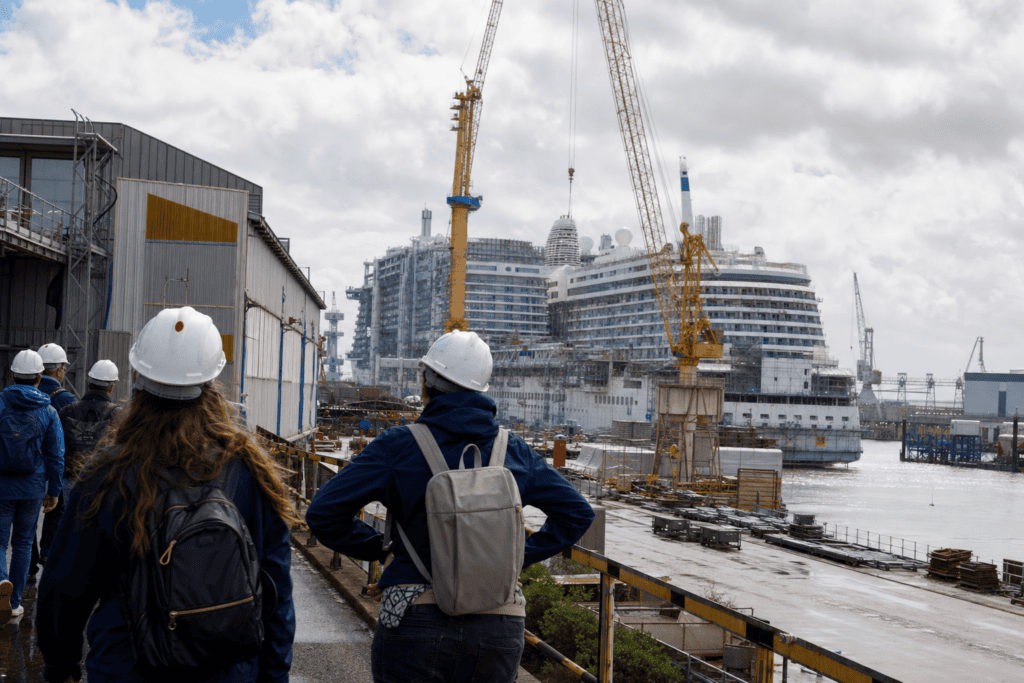 Chantiers de l’Atlantique Tour A guided tour at the heart of shipbuilding, combining maritime history, industrial expertise, and the port…
 Saint-Nazaire Central Market Saint-Nazaire’s central market halls bring together fresh produce, Loire-Atlantique specialties, and postwar Reconstruction architecture.
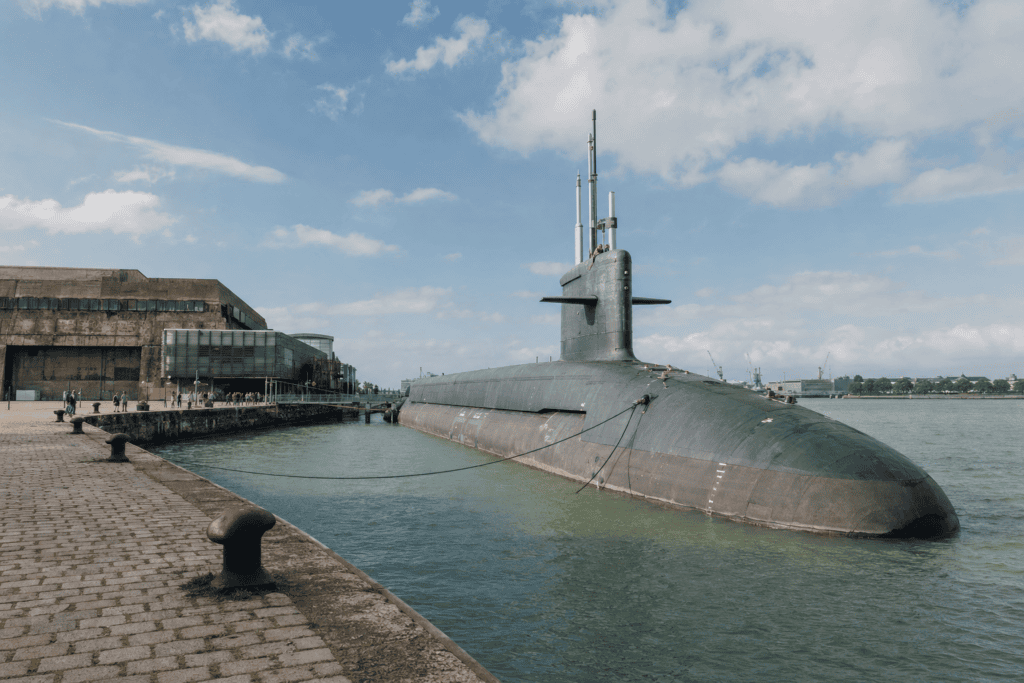 Escal’Atlantic A maritime experience in Saint-Nazaire featuring ocean-liner interiors, authentic objects, the history of crossings, and interactive exhibits…
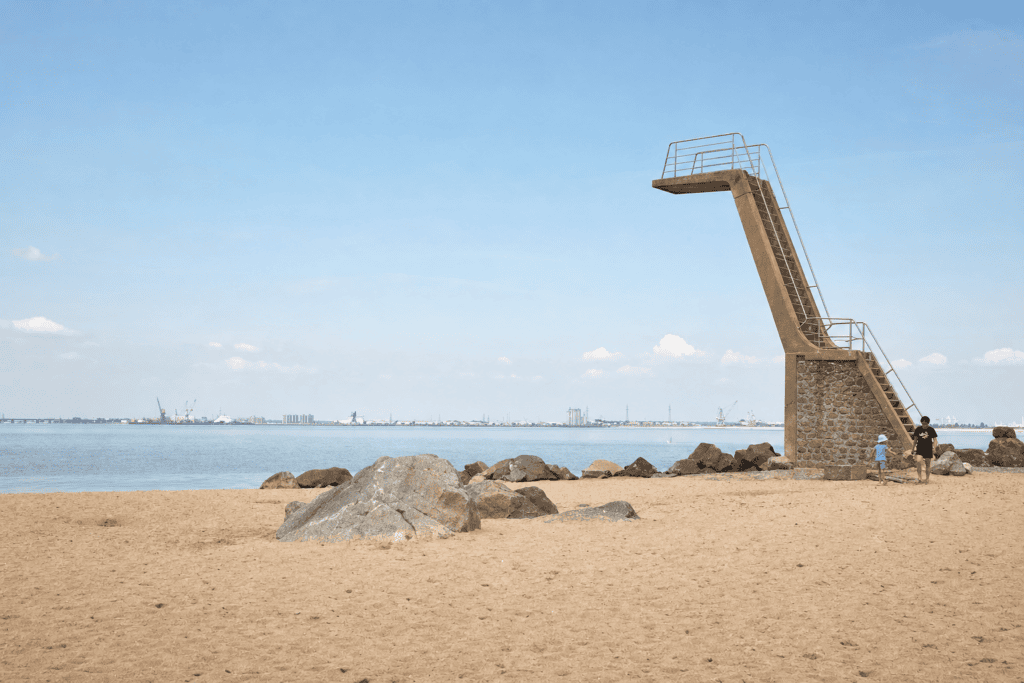 Monsieur Hulot’s Beach A family-friendly, cinematic beach in Saint-Nazaire, ideal for swimming, a walk along the coast…
Online booking · Paris → Fortified lock, avenue de la Forme Écluse, 44600 Saint-Nazaire, France
Choose your pickup date and time
Your departure and arrival details are already pre-filled. You can adjust them in the fare calculator before viewing the vehicles and fare.