



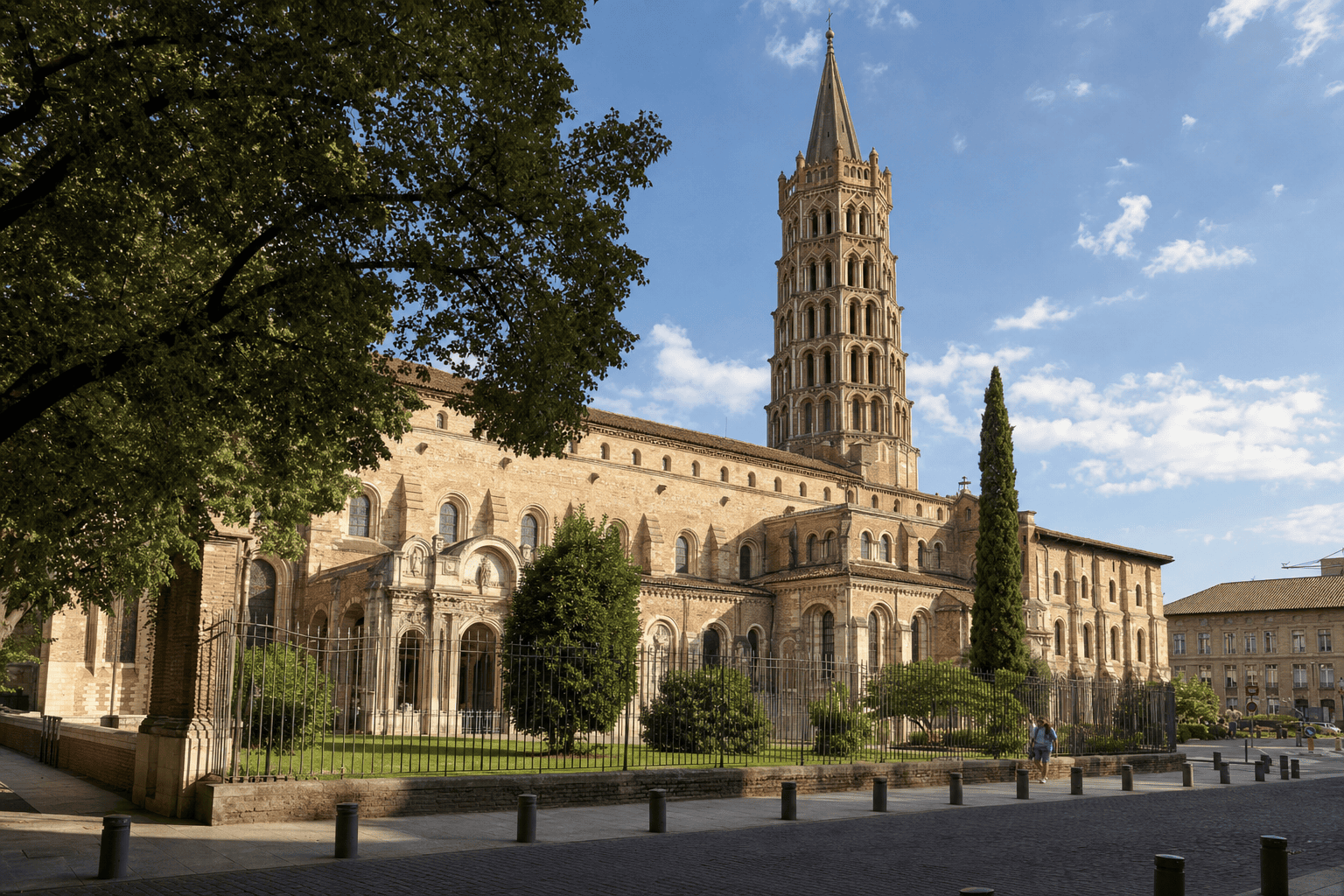
Basilica of Saint-Sernin in Toulouse: Visitor’s Guide
Toulouse
The Basilica of Saint-Sernin in Toulouse is one of the Pink City’s most iconic landmarks. Built mainly between the 11th and 13th centuries around the tomb of Saint Saturnin, Toulouse’s first bishop and martyr, it is impressive for its size, octagonal bell tower, sculptures, and role in the history of pilgrimages to Santiago de Compostela. Listed as a UNESCO World Heritage Site as part of the Routes of Santiago de Compostela in France, it deserves a careful visit, both for its architecture and for its crypts, relics, and spiritual atmosphere.
Practical information
Start by viewing the east end from the square, then go inside and follow the ambulatory around the choir. Wear clothing appropriate for a place of worship.
Getting to Toulouse from Paris by Private Chauffeur
Planning a cultural trip to Toulouse from Paris, your Paris hotel, Charles de Gaulle Airport, or Orly? Booking Paris Transfer can arrange private long-distance transportation to Toulouse, with the option of returning to Paris or incorporating the journey into a broader itinerary in France. The service covers transportation only and does not include admission to the basilica.
Departure is available from Paris, a Paris hotel, CDG, or ORY, with a return to Paris depending on your itinerary.
A major Toulouse landmark
The Basilica of Saint-Sernin dominates the neighborhood that bears its name, north of Toulouse’s historic center. Its brick-and-stone silhouette is one of the Pink City’s most recognizable images. The present building began to take shape in the 11th century on a site associated with the memory of Saint Saturnin, Toulouse’s first bishop and a major figure in local Christianity. Construction continued over several generations, explaining the richness of its volumes and the presence of different architectural phases.
With its tall nave, aisles, transept, ambulatory, and radiating chapels, Saint-Sernin belongs to the great family of Romanesque pilgrimage churches. It was designed to accommodate large crowds without interrupting services. Even today, a visit helps explain how liturgy, pilgrim circulation, and the preservation of relics influenced the architecture. The monument can be experienced both as a living church and as an exceptional testament to Toulouse’s medieval history.
Understanding the connection to Santiago de Compostela
Saint-Sernin is listed as a UNESCO World Heritage Site as part of the Routes of Santiago de Compostela in France. This recognition highlights the role of the great sanctuaries that marked medieval pilgrimage routes. Toulouse stood on one of the routes leading toward the Pyrenees and the Iberian Peninsula, helping drive the growth of the basilica and its neighborhood.
Pilgrims came here to venerate the relics of Saint Saturnin and other saints before continuing on their journey. The interior layout directly reflects this purpose: the ambulatory allowed visitors to circulate around the choir, while the chapels provided spaces for prayer and sacred objects. By observing the building’s plan, it becomes clear that Saint-Sernin was not merely a large church intended for Toulouse residents. It was also a place of welcome, passage, and remembrance, integrated into a European network of sanctuaries. This dimension gives the visit particular depth, even for visitors who are not following the Camino de Santiago today.
Architectural features to look for
The first view often comes from Place Saint-Sernin, looking toward the east end and the tiers of chapels surrounding the choir. This layered composition gives the building a highly legible silhouette and highlights its role as a pilgrimage basilica. The octagonal bell tower, built over several levels, is one of its defining features. It combines the vertical presence of an urban landmark with the powerful simplicity of Romanesque architecture.
Inside, the nave impresses with its proportions and the continuity of its volumes. The barrel vault, arches, pillars, and carved capitals gradually draw the eye toward the choir. Take time to compare the brick, stone, and marble used in different parts of the monument. The light changes significantly depending on the time of day and the weather, revealing sometimes the depth of the aisles and sometimes the details of the decoration. For a closer look, step a few yards away from the sculptures: the distance makes it easier to understand their place within the overall architectural design.
Portals, sculptures, and medieval decoration
The basilica preserves several remarkable sculptural ensembles, including the Miègeville Door on the building’s south side. Its tympanum depicts the Ascension of Christ and forms part of a decorative program characteristic of Romanesque sculpture. The figures, reliefs, and capitals are not mere ornaments: they conveyed religious narratives at a time when images played an essential role in understanding the faith.
Inside, the capitals deserve a slow, attentive look. Some feature plant motifs, while others show figurative scenes or stylized creatures. Reading them can take some adjustment because of their height and the dim light. The choir, with its gilded wood and marble baldachin, forms a spectacular focal point at the end of the nave. Paintings and traces of earlier decoration also remind us that Romanesque churches were not designed as uniformly bare spaces. Depending on the restoration work and the areas open to view, the basilica reveals a history shaped by successive transformations, preservation, and reinterpretation.
The crypt, relics, and ambulatory
When these areas are open, the crypt and ambulatory add another dimension to the visit. They help explain the central place of relics in Saint-Sernin’s history. The basilica notably preserves the memory of Saint Saturnin, to whom the building is dedicated, along with several objects and reliquaries associated with the veneration of saints. These spaces should be visited respectfully: they are both historic heritage and places of prayer.
The ambulatory is particularly interesting for understanding the layout of large pilgrimage churches. It circles the choir and facilitates continuous movement around the holy sites. The radiating chapels complete the route and offer more intimate places for reflection than the nave. However, crypt visibility, access conditions, and opening hours may vary depending on ceremonies, restoration work, or site operations. Before setting out, check the latest information from the tourist office or parish. Once there, allow a few extra minutes to take in the details rather than quickly passing through the underground spaces.
Tips for planning your visit
The basilica is located in central Toulouse, on Place Saint-Sernin, immediately near the Saint-Raymond Museum and a few minutes’ walk from Place du Capitole. It therefore fits easily into a half-day devoted to the heritage of the historic center. A coherent itinerary could begin at the Capitole, continue along Rue du Taur, reach the basilica, and then proceed to the Jacobins Convent or the banks of the Garonne.
Published hours may distinguish between the opening of the church and that of the crypt and ambulatory. They may change, particularly in the event of a service or religious event. Check the official page before your visit and avoid celebration times if you would like to explore in peace. As in any place of worship, wear respectful clothing and behave appropriately, keep noise to a minimum, and check the rules concerning photography. Visitors with reduced mobility may encounter accessibility limitations due to the building’s age; it is best to ask for detailed access information before traveling.
What to see around Saint-Sernin in Toulouse
The Saint-Sernin neighborhood is a particularly rich heritage area. Right next to the basilica, the Saint-Raymond Museum displays archaeological collections that shed light on the ancient history of Toulouse and its region. This stop usefully complements a visit to the church by taking you further back in time, to the Roman era. Heading toward the center, Rue du Taur connects the basilica with the Capitole and recalls the historic importance of this urban route.
The Jacobins Convent, with its southern French Gothic architecture and famous stone palm tree, then offers a striking contrast with Saint-Sernin’s Romanesque volumes. You can also head to Place du Capitole and continue toward the Garonne for an evening stroll. For a deeper exploration, the tourist office occasionally offers guided tours of the neighborhood and basilica. Dates, prices, and booking arrangements vary according to the program, so check the official source before booking. This combination brings together religious heritage, urban history, architecture, and Toulouse’s cultural life without requiring multiple journeys.
Useful sources
Frequently Asked Questions
Where is the Basilica of Saint-Sernin in Toulouse located?
Is the Basilica of Saint-Sernin listed by UNESCO?
How much time should I allow for the visit?
Can the crypt be visited year-round?
What can you see near the basilica?
 Cité de l’espace An immersive, family-friendly site for discovering astronomy, space missions and great spacecraft and vehicles…
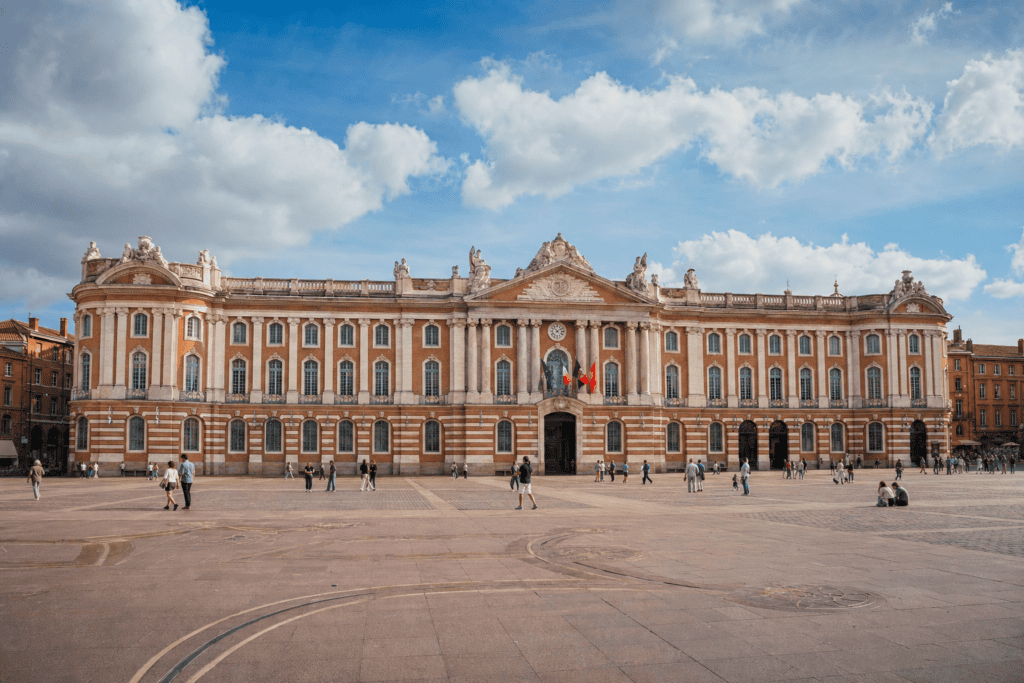 Place du Capitole and the Capitole of Toulouse The historic heart of Toulouse, with its monumental façade, Hall of the Illustrious, Occitan cross and narrow streets of…
 What to Do in Toulouse Along the Garonne and Canal du Midi A walk between the Garonne, Brienne Canal, and Canal du Midi, ideal for exploring…
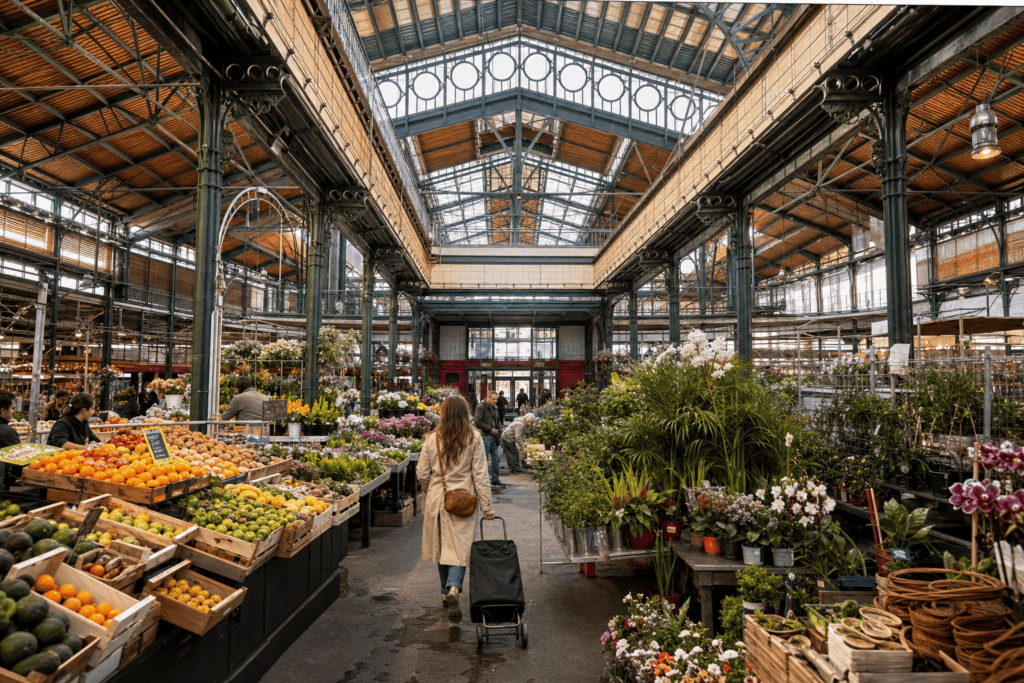 Victor Hugo Covered Market A gourmet immersion in the heart of Toulouse, featuring products from southwestern France, passionate vendors and restaurants above…
Online booking · Paris → Place Saint-Sernin, 31000 Toulouse, France
Choose your pickup date and time
Your departure and arrival details are already pre-filled. You can adjust them in the fare calculator before viewing the vehicles and fare.