



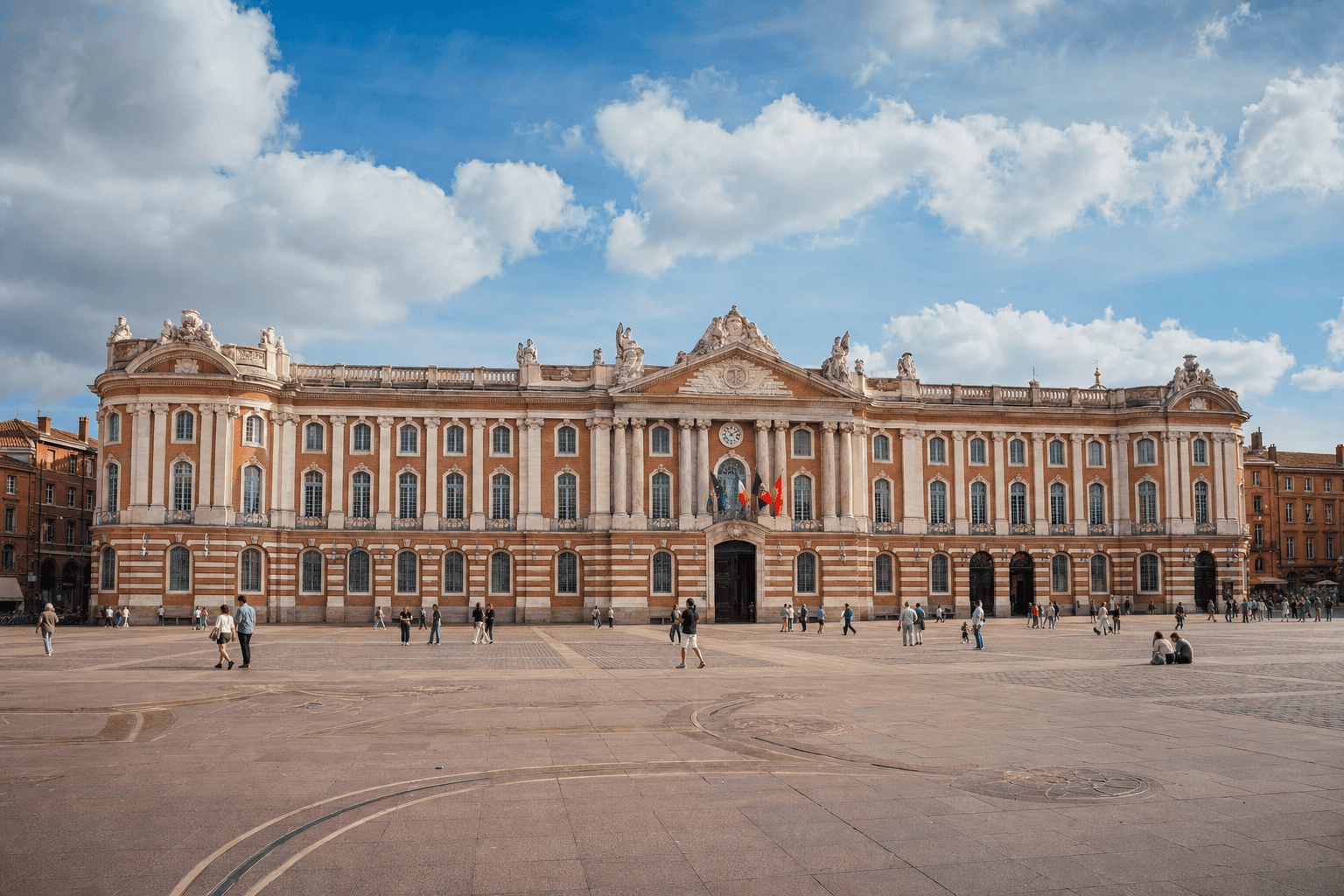
Place du Capitole in Toulouse: Visitor's Guide
Toulouse
In the heart of Toulouse, the Place du Capitole brings together the city hall, the Théâtre du Capitole, remarkable architecture, and one of the city’s main centers of activity. Its brick-and-stone façade, the Salle des Illustres, and the Occitan cross set into the pavement make it a must-see in the historic center. The square is also an excellent starting point for walking to the Basilica of Saint-Sernin, the Jacobins Convent, the shopping streets, and the banks of the Garonne.
Practical information
Start by walking around the square before entering the Capitole. Check the city hall’s official website on the day of your visit for updated hours and any access restrictions.
Arrange transportation from Paris
Booking Paris Transfer can arrange private transportation from Paris, the Île-de-France region, Paris-CDG, or Paris-Orly to Toulouse, with a return to Paris or continuation of an itinerary in mainland France. The service covers transportation only and does not include admission tickets.
Departure from Paris, the Île-de-France region, CDG, or ORY; return to Paris according to the agreed itinerary.
A Square at the Heart of Toulouse’s History
Place du Capitole is the main civic space in central Toulouse. It developed gradually around the seat of municipal government and took on a monumental character in the 18th century. The improvements carried out at that time created a vast open space in front of city hall, then known as Place Royale. The Capitole façade, designed by architect Guillaume Cammas and built in the mid-18th century, gives the ensemble its orderly, theatrical character.
The monument’s name recalls the capitouls, magistrates responsible for administering Toulouse during the Middle Ages and under the Ancien Régime. The Capitole therefore refers at once to a building, an institution, and a long municipal history. Looking at the buildings around the square, you’ll notice the use of brick, light-colored stone, and arcades. This combination, common in Toulouse architecture, partly explains the city’s nickname, the Ville rose.
Today, the square remains a lively public space. It hosts gatherings, events, and substantial tourist activity while retaining its administrative function. This coexistence of heritage and everyday use gives the site a different atmosphere from that of an isolated monument.
Understanding the Capitole Façade
The main façade is the first feature to examine. It combines local brick with stone elements that emphasize the windows, pilasters, pediments, and central section. This composition does not attempt to conceal the region’s materials; instead, it incorporates them into an official architecture inspired by Classicism. Take a few minutes to compare the shades depending on the sun’s direction, as the façade changes noticeably throughout the day.
The central colonnade structures the building and gives it the appearance of a civic palace. It is best not to reduce its interpretation to a single symbolic explanation: heritage sources primarily describe an architectural device intended to monumentalize the entrance and organize the façade. The coats of arms, sculptures, and decorative elements complete this presentation of municipal authority.
The Capitole still houses city hall. Its south wing also contains the Théâtre du Capitole, associated with opera and ballet. The building is therefore not simply a monument to visit; it remains an active institutional and cultural venue. This function explains why some areas may be temporarily inaccessible, particularly during official ceremonies or performances.
The Salle des Illustres and the Interior Spaces
The Salle des Illustres is the Capitole’s main interior attraction. This grand gallery brings together monumental paintings, sculptures, columns, and decorative elements created to celebrate Toulouse, its history, and its notable figures. The ensemble was completed in the late 19th century in a highly distinctive decorative style. Works by Henri Martin, Jean-Paul Laurens, Paul Gervais, and other artists create a dense tour in which historical scenes stand alongside allegories and local figures.
The visit may also include other ceremonial rooms, depending on the day’s opening conditions. The Gervais Room and Henri-Martin Room feature different decorations, while the Henri-IV Courtyard provides a more restrained transition. Observe the ceilings, framing, and relationships between the paintings rather than focusing only on the best-known works: the site’s appeal lies in the coherence of its overall décor.
The Toulouse city government lists access to the historic rooms as free. However, this information does not guarantee that they are always open. Ceremonies, meetings, receptions, or security measures may alter the route. The Capitole’s official page should therefore remain your reference for the hours and conditions in effect when you visit.
The Occitan Cross and the Arcades
At the center of the square, a monumental Occitan cross is set into the ground. Created in 1995 by artist Raymond Moretti, it consists of twelve colored branches. Explanations commonly associated with the work refer to the signs of the zodiac, the months of the year, and the hours of the day. This contemporary composition engages with regional history without being confused with a simple piece of historic decoration.
To view it properly, step back a few yards and stand aligned with the façade. The perspective then allows you to see the cross, arcades, and Capitole at the same time. However, remain aware of how the square is being used: temporary installations, events, and pedestrian traffic may change the available viewpoints.
The covered galleries bordering the square are also worth exploring. They provide shelter from the weather and house cafés, restaurants, shops, and works connected with the city. Under the arcades, take time to observe the proportions of the façades, then continue into the adjacent streets to discover more varied architecture. The square is especially photogenic after a rain shower, when the stone and brick reflect the light.
Walking Tours Around the Capitole
Place du Capitole is a convenient base for planning a first walk through Toulouse. Heading north, you can reach the Basilica of Saint-Sernin on foot via the central streets. This Romanesque building is one of the city’s great religious monuments. To the southwest, the Jacobins Convent reveals remarkable southern Gothic architecture, particularly in its columns and interior light.
The Capitole Dungeon, located behind city hall, houses the tourist office and naturally complements a visit to the site. Continuing south, the shopping streets lead toward the Carmes and Dalbade neighborhoods. Visitors interested in Renaissance heritage can make a detour to the Hôtel d’Assézat. Toward the Garonne, the Pont-Neuf and riverbanks offer another perspective on the city.
For a half-day, start at the square and historic rooms, continue to Saint-Sernin or the Jacobins, then finish with a break in the Carmes neighborhood or along the riverbanks. The center is easy to explore on foot, but the streets may be cobbled, busy, or partly pedestrianized. Comfortable shoes and a flexible itinerary will make the walk more enjoyable.
Access, opening hours, and practical tips
The Capitole is located on Place du Capitole, in the heart of Toulouse. Capitole metro station, on Line A, is the most direct public transportation option. From Matabiau Station, the center can also be reached by metro or on foot, depending on how much time you have. By car, it is best to look into parking garages on the outskirts or in the center, as the square itself is in a very busy urban area.
Don’t rely on a generic schedule for the historic rooms. Check the official Capitole listing on the Toulouse Métropole website just before your visit to verify the day’s hours, opening days, current access conditions, and any exceptional closures. Municipal ceremonies, weddings, council meetings, and events may change the visitor route even while the square itself remains open and active.
Admission to the historic rooms is listed as free, but free admission does not mean that every area is accessible at all times. Visitors with reduced mobility can also check the detailed conditions with the city government before arriving. For a first visit, allow about an hour indoors and add two hours if you want to connect several nearby monuments.
Why Visit the Capitole During a Stay in Toulouse?
The Capitole captures several facets of Toulouse. Here, you can discover the history of municipal power, the use of brick and stone, decorative painting, Occitan culture, and the everyday life of a major city in southwestern France. The visit works well for travelers with limited time, but it can also serve as the starting point for a longer itinerary through the historic center.
The experience varies depending on the time of day. Morning is ideal for observing details and enjoying a more leisurely interior visit, while afternoon and evening reveal more of the activity around the terraces, shops, and theater. Before setting out, check the official municipal schedule and information: they help distinguish public areas from spaces reserved for city hall activities.
To make the most of the site, vary your viewpoints: begin in the center of the square, move closer to the façade, walk through the arcades, then continue toward Saint-Sernin, the Jacobins, or the Garonne. This approach gives the Capitole its proper place: that of a major monument, but also of a fully active urban heart.
Useful sources
Frequently Asked Questions
Is admission to the Capitole’s historic rooms free?
What hours should I keep in mind when visiting the Capitole?
How do I get to Place du Capitole?
What can I see inside the Capitole?
How much time should I allow for a visit?
 What to Do in Toulouse Along the Garonne and Canal du Midi A walk between the Garonne, Brienne Canal, and Canal du Midi, ideal for exploring…
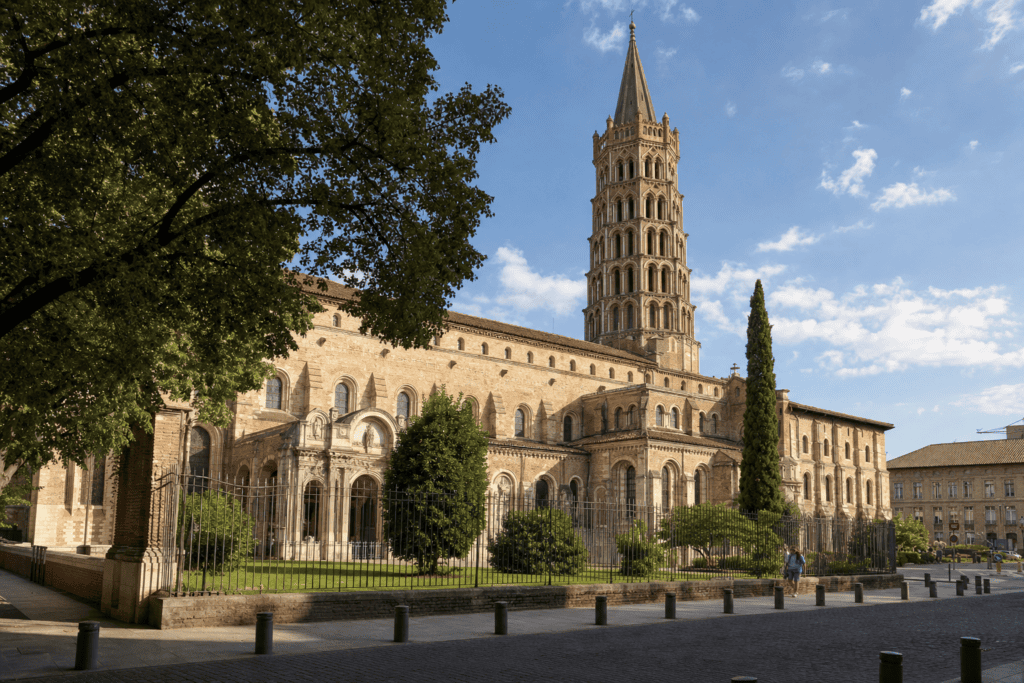 Basilica of Saint-Sernin in Toulouse A Romanesque masterpiece featuring a monumental nave, medieval sculptures, relics and the memory of pilgrims to…
 Cité de l’espace An immersive, family-friendly site for discovering astronomy, space missions and great spacecraft and vehicles…
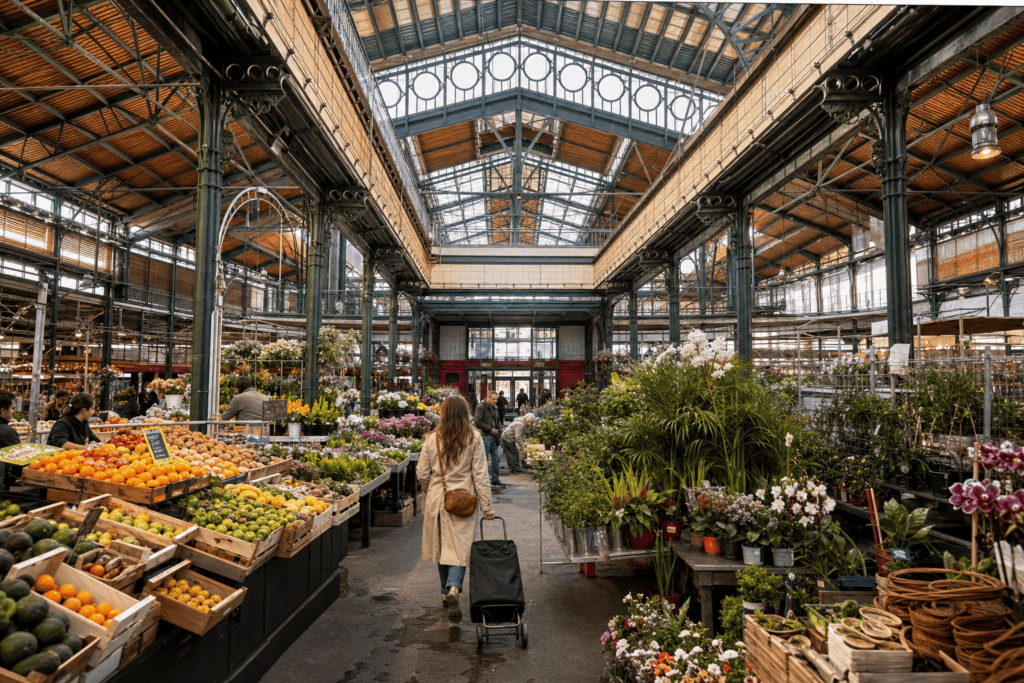 Victor Hugo Covered Market A gourmet immersion in the heart of Toulouse, featuring products from southwestern France, passionate vendors and restaurants above…
Online booking · Paris → Place du Capitole, 31000 Toulouse, France
Choose your pickup date and time
Your departure and arrival details are already pre-filled. You can adjust them in the fare calculator before viewing the vehicles and fare.