



Palais de l’Île in Annecy: History and Visiting Guide
Annecy
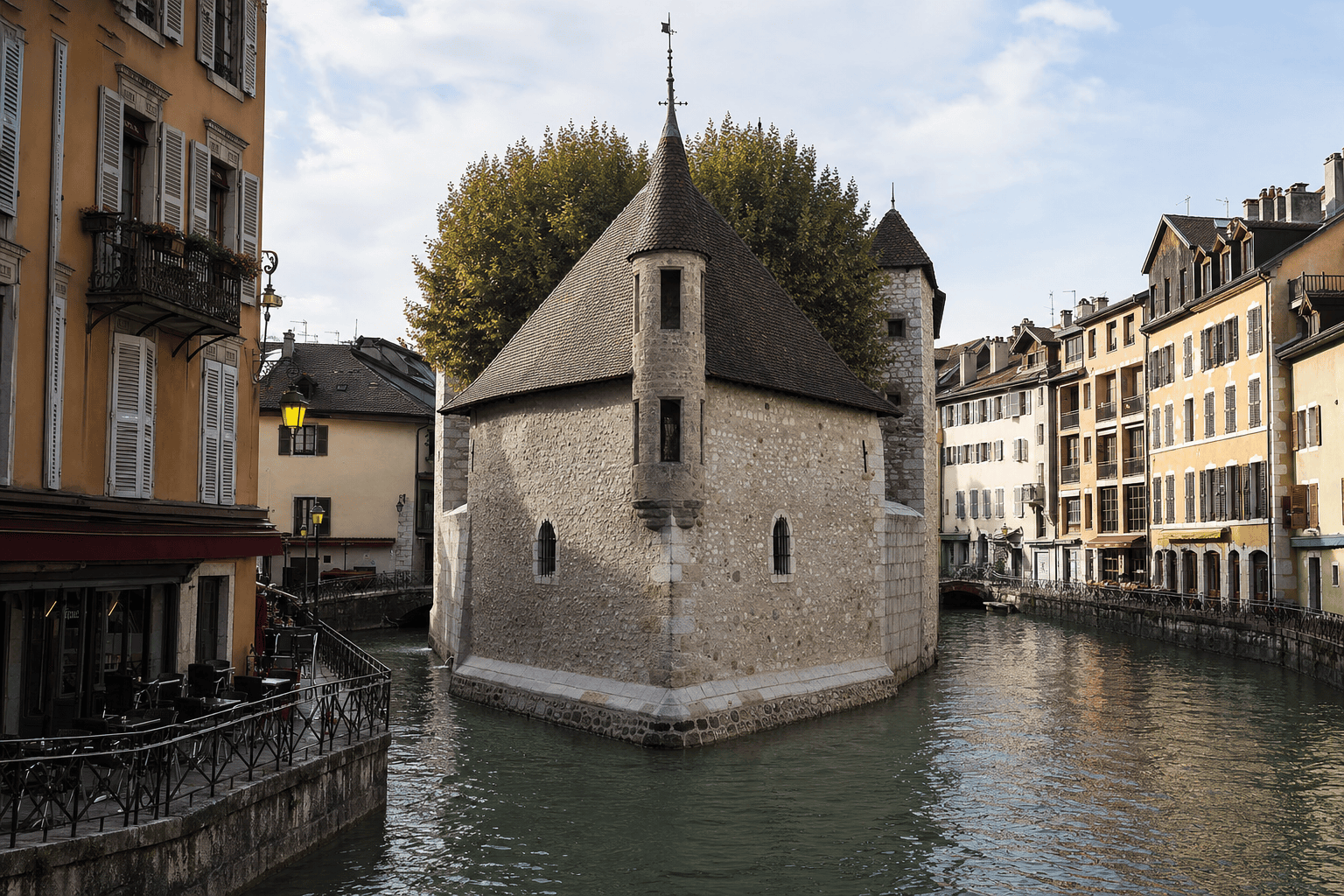
Set on an island in the Thiou River at the heart of Annecy’s old town, Palais de l’Île is one of Haute-Savoie’s most recognizable landmarks. Its stone silhouette, tightly framed by canals, evokes a fortress, an administrative building, and a former courthouse all at once. Today, the site houses an interpretation center dedicated to the history of Annecy and its heritage. A visit reveals how the city developed around water, bridges, artisanal activities, and religious or judicial authorities. It is also an excellent starting point for exploring the narrow streets, the Thiou riverbanks, and the main landmarks of the historic center.
Practical information
Take in the landmark from the bridges and riverbanks before going inside: these vantage points help you understand its strategic position in the middle of the Thiou and offer the best photographic views.
Travel from Paris to Annecy with a private driver
To include Palais de l’Île in an Alpine getaway, Booking Paris Transfer can arrange private transportation from Paris, a Paris hotel, Charles de Gaulle or Orly Airport to Annecy, with the option of returning to Paris or creating an itinerary from the capital. The service covers transportation only; monument admission and tours must be booked separately with the relevant organizations.
Pickup available from Paris, a Paris hotel, CDG, or ORY; return to Paris or a custom itinerary from the capital.
A landmark set in the middle of the Thiou
Much of Palais de l’Île’s character comes from its location. It occupies a natural or man-made island in the heart of the Thiou, the river that crosses Annecy before flowing into the lake. From the small bridges in the old town, the building seems almost to float between the canals. This setting also explains its unusual shape, often compared to the bow of a ship. The walls follow the island’s compact geometry, giving the landmark a presence very different from that of a traditional castle.
Before your visit, take a few minutes to walk around the outside of the building. The riverbanks offer several viewpoints, especially from the passages framing the island. The light changes quickly across the façades, particularly when the sun reflects off the water. This first look helps explain why Palais de l’Île has become one of Annecy’s visual symbols, alongside the canals and colorful houses of the old town.
A history linked to judicial functions
Palais de l’Île is more than a picturesque backdrop. Over the centuries, it housed various administrative and judicial functions. Its position at the center of the city made it a strategic place for exercising authority, keeping records, and administering justice. The building was notably associated with a courthouse and spaces linked to local administration. This history gives the interior rooms a distinctive character: they were not arranged like those of an aristocratic residence.
The visit places the landmark within Annecy’s political evolution. The city experienced periods of Genevan, Savoyard, and religious influence, while its institutions changed over time. The panels and interpretation displays help distinguish the building’s successive uses. To fully appreciate this historical dimension, look beyond photographs of the façade: Palais de l’Île is also interesting for the traces left by the people who worked there, appeared before the court there, or were detained there.
Architecture adapted to an urban island
Palais de l’Île’s architecture is especially interesting because it responds to a confined space. Thick walls, limited openings, and narrow passageways recall the site’s defensive and administrative purposes. The central section, recognizable from the riverbanks, gives the building its characteristic silhouette. Inside, the rooms are not designed for grandeur; instead, they show how a medieval building was transformed and reused over the centuries.
This layering of periods is one of the highlights of the visit. A masonry detail, vault, window, or vaulted room can reveal information about an earlier function. The landmark should therefore be viewed as an evolving complex rather than a building frozen in a single era. Visitors interested in architecture will particularly appreciate the relationship between the interior volumes and the island’s triangular or elongated shape. From outside, the bridges make it possible to appreciate the thickness of the walls and the water immediately surrounding them.
What the interpretation center reveals
The interpretation center dedicated to Palais de l’Île places the landmark within Annecy’s broader history. The visit explores the city’s transformations, the organization of the old town, and the importance of waterways in daily life. The Thiou was not merely decorative: it provided energy for artisanal activities and shaped movement through the city. The displays therefore help visitors better understand the connection between built heritage, the local economy, and the city’s development.
Depending on the spaces and displays available, visitors can also discover the different uses of Palais de l’Île and the stages of its preservation. The appeal lies in bringing the building’s history into conversation with that of its residents and institutions. This approach works well for adults and families alike, offering simple ways to read the city after the visit. Take time to examine the maps, models, and documents on display: they make the evolution of a neighborhood that is now highly visited much more tangible.
How to organize your visit in Annecy
Palais de l’Île is easy to visit as part of a walking route through the historic center. A pleasant loop can begin near the lake, continue through the Jardins de l’Europe, cross the canal district, and then head up toward Annecy Castle. The landmark is in a very busy area, where streets can be narrow and walking surfaces uneven. Wear comfortable shoes and avoid scheduling your visit too tightly between other activities.
Opening hours, closing days, admission fees, and access conditions may change depending on the season, exhibitions, or public holidays. It is best to check the official Musées d’Annecy website before setting out, particularly if you are traveling outside the summer season. For a first visit, allow about an hour on site, then add time for the Thiou riverbanks. The nearby castle and shopping streets make it easy to plan a half-day cultural outing without getting back in the car.
The best viewpoints around the landmark
Palais de l’Île is photogenic from almost every angle, but certain viewpoints better reveal its setting. From the bridges over the Thiou, you can frame the façade with the canals, flower-filled balconies, and historic houses. The riverbanks provide a more open perspective on the building’s overall shape. Early morning light is often softer and the walkways less crowded; toward the end of the day, the façades may take on warmer tones.
However, avoid stopping in the middle of narrow passages or inconveniencing residents and other visitors. For a more complete photograph, step slightly farther away from the landmark and compose the image with the water in the foreground. Reflections change with the water flow and the light, making every season different. A walk toward Annecy’s other canals allows you to compare Palais de l’Île with the surrounding architecture and understand why the old town is so often associated with the image of a city built around water.
What to see after Palais de l’Île?
Your visit can naturally continue with an exploration of other sites in central Annecy. The castle, perched above the old town, complements Palais de l’Île with a more military and residential perspective on local history. The old streets then lead to Saint Peter’s Cathedral, the Thiou riverbanks, and squares lined with terraces. Toward the lake, the Jardins de l’Europe and Le Pâquier offer a pleasant change of atmosphere after the landmark’s interior spaces.
If you have more time, continue to the lakeshore or follow part of the cycling path around Annecy. The Alpine scenery provides a striking contrast with the density of the old town. For heritage enthusiasts, a day combining Palais de l’Île, the castle, and a walk along the water offers a balanced view of Annecy: a city that is at once historic, lakeside, and mountainous. Remember to check the opening conditions for each site separately.
Useful sources
Frequently Asked Questions
Where exactly is Palais de l’Île located?
How long should I allow to visit Palais de l’Île?
Is Palais de l’Île open year-round?
Can Palais de l’Île be visited with children?
Which sites can be combined with Palais de l’Île?
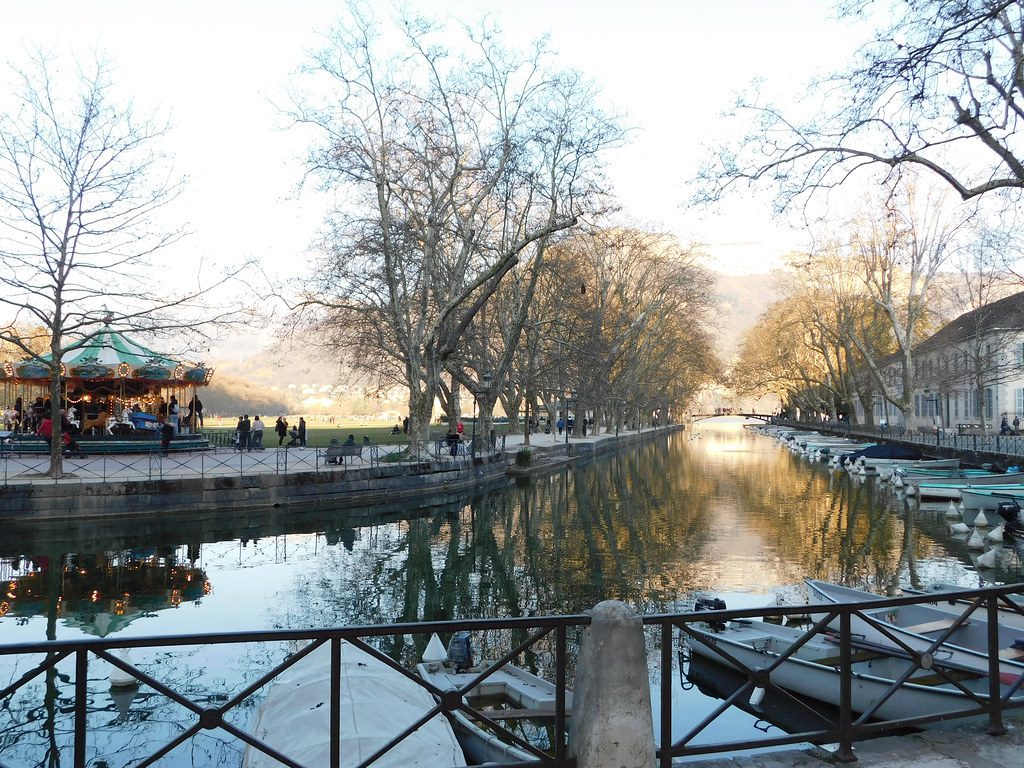 Annecy Old Town and its canals Medieval lanes, the Thiou waterfront, the Palais de l’Île, and colorful façades create an unmissable walk through…
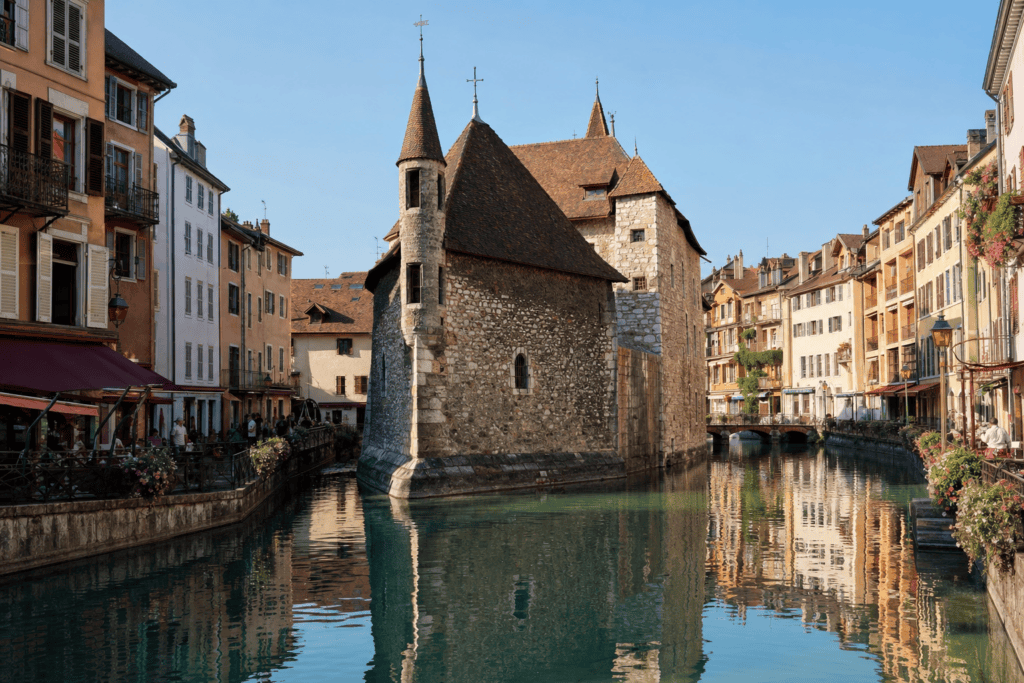 Annecy Castle An iconic château museum above the old town, combining medieval heritage, Alpine collections, and views over…
 Cycling Around Lake Annecy A scenic loop around Lake Annecy, passing greenways, villages, beaches, and Alpine landscapes.
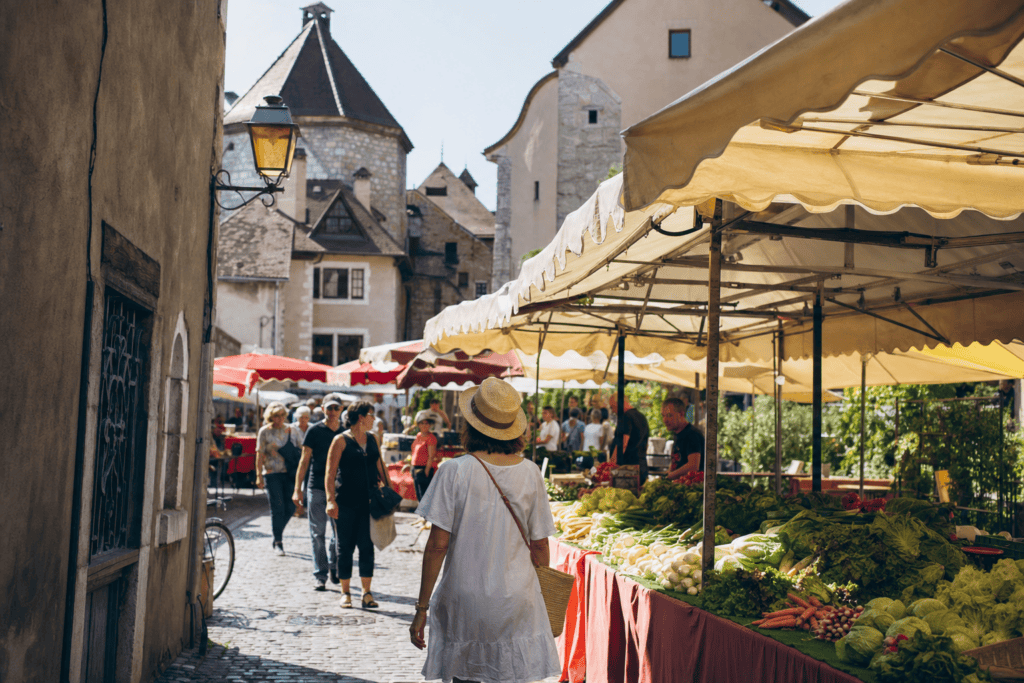 Annecy Old Town Market A market in the heart of Annecy where you can discover Savoyard flavors and the streets of the historic center.
Online booking · Paris → Passage de l’Île, 74000 Annecy, France
Choose your pickup date and time
Your departure and arrival details are already pre-filled. You can adjust them in the fare calculator before viewing the vehicles and fare.