



Annecy Old Town: Lanes, Canals, and Heritage
Annecy
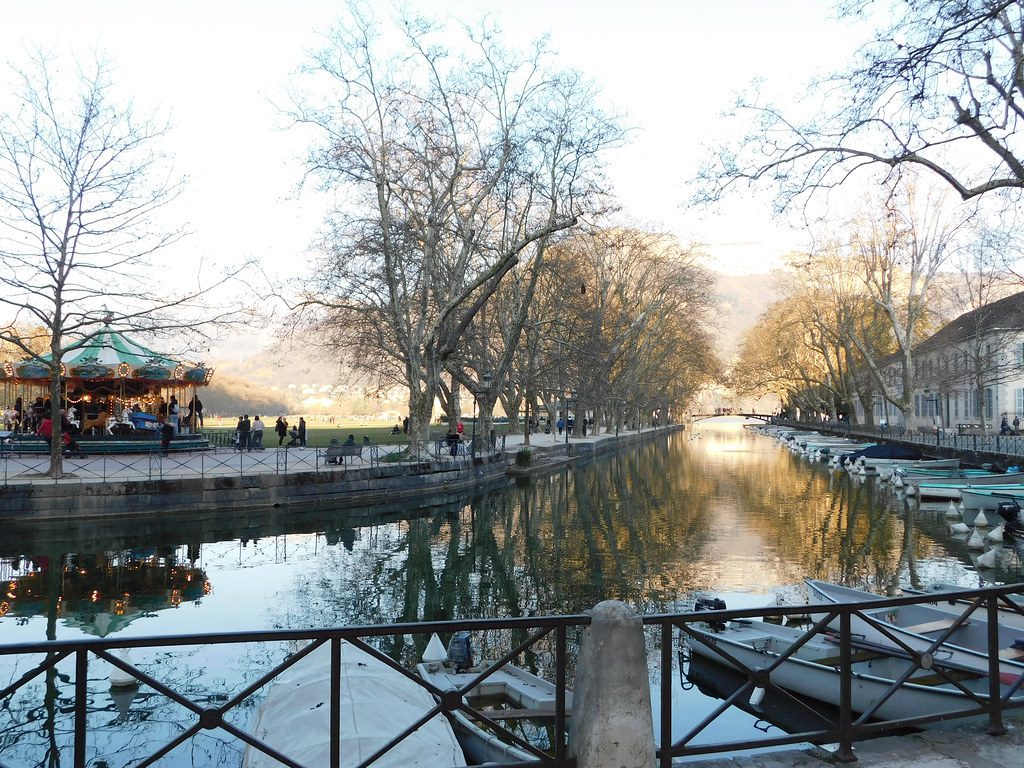
Annecy Old Town is the best starting point for exploring the city on foot. Within just a few streets, you’ll find colorful houses, vaulted passages, the banks of the Thiou, lively squares, and iconic landmarks. The area is easy to explore at your own pace, taking time to leave the busiest routes behind and notice the architectural details, doors facing the water, and reflections of the façades in the canals.
Practical information
Start near the Vassé Canal and Pont des Amours, continue to the Palais de l’Île, then explore Rue Saint-Claire, Rue Perrière, Rue Filaterie, and Rue Jean-Jacques Rousseau.
Travel from Paris to Annecy with a private driver
To explore Annecy Old Town without arranging multiple connections, Booking Paris Transfer can arrange private transportation from Paris, a Paris hotel, Charles de Gaulle, or Orly, with travel to Annecy and a return to Paris according to your itinerary. The service covers transportation only: monument tickets and tours must be booked separately through the official sites.
Pickup is available from Paris, a hotel in the Île-de-France region, CDG, or ORY; return travel to Paris or a round-trip itinerary can be arranged on request.
Why start with Annecy Old Town?
Annecy Old Town is an especially convenient starting point for a first visit because the main historic landmarks are concentrated within a compact area. Within minutes, you can go from a waterside quay to a shopping street, then from a lively square to an old gate or a staircase leading up to the château. This proximity makes it easy to create a flexible walk without following a rigid route.
The charm of the district lies in its contrasts. Warm-toned façades, arcades, and colorful shutters give some streets an Alpine character, while the Thiou reflects the city’s artisanal and industrial past. The river once powered mills and workshops. Today, it offers a succession of peaceful viewpoints that are ideal for walking, taking photos, and understanding how the historic center is laid out.
The Thiou Canals and the Vassé Canal
The canals are one of the main threads of any visit. The Thiou is the natural outlet of Lake Annecy: it passes through the historic center before continuing toward the Fier. The Vassé Canal, visible near Pont des Amours and the Jardins de l’Europe, completes this network, which has profoundly shaped the city’s layout.
In the Middle Ages and the centuries that followed, the water served local crafts, mills, and certain forms of trade. Several old houses still have openings facing the water, reminders of a time when the riverbanks served an economic purpose. To appreciate this history, follow the quays rather than limiting yourself to the most photographed view of the Palais de l’Île. The quieter passages often reveal interesting details, such as arches, old doors, and changes in the canal’s level.
The Palais de l’Île, Annecy’s Iconic Landmark
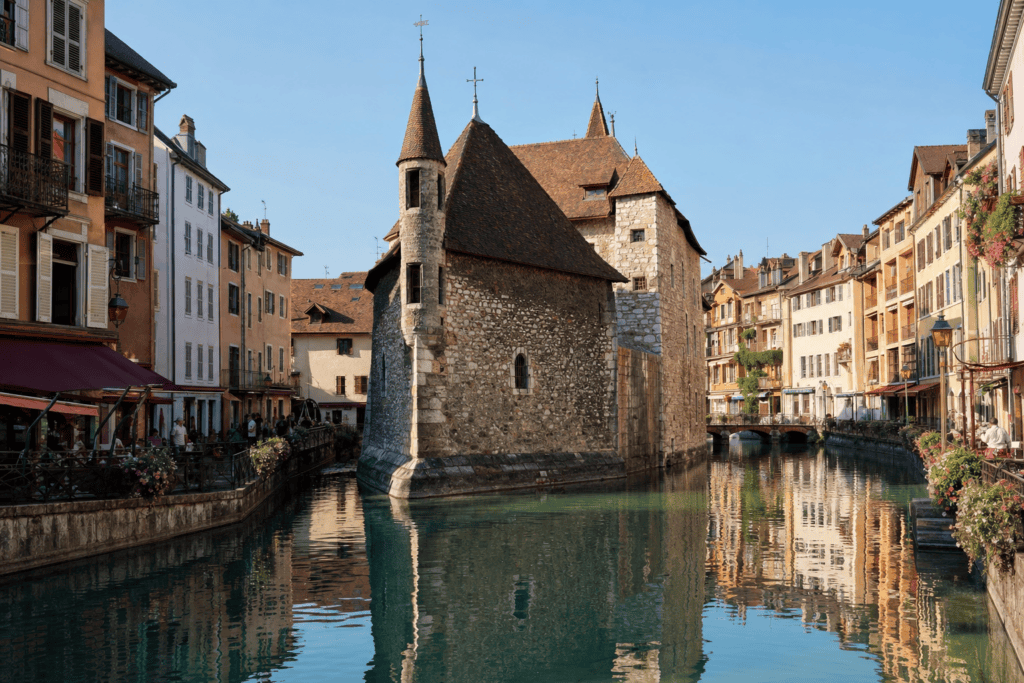
Set in the middle of the Thiou, the Palais de l’Île is the monument that best captures the image of Annecy Old Town. Its triangular silhouette resembles a stone ship between the quays. Over the years, the building served several purposes, including as a courthouse, chancery, and prison. This history explains the bars and narrow openings visible at water level.
The best viewpoint is generally from Pont Perrière and the neighboring quays. Take time to observe the building’s volumes, the arches, and the way the light reflects on the canal. The site houses an area devoted to architecture and heritage. Since its hours, prices, and access conditions may change, check the official information before planning an interior visit. Even from the outside, the Palais de l’Île is worth a stop, especially early in the morning or when the streets grow quieter.
Lanes, Arcades, and Old Gates
After exploring the quays, spend some time in the streets of the Old Town. Rue Saint-Claire is popular for its arcades, colorful façades, and terraces, but it does not represent the entire district on its own. Rue Perrière, Rue Filaterie, and Rue Jean-Jacques Rousseau, along with the passages near the cathedral, offer a fuller view of the area’s heritage. Look at the door frames, old signs, and differences in height between the houses.
Porte Perrière and Porte Sainte-Claire recall the former boundaries of the city. They also highlight the close relationship between the fortified town, the château, and the activities established around the Thiou. Move slightly away from the central routes to find quieter views of the rooftops and bell towers. The visit is therefore worth punctuating with detours. Comfortable shoes are recommended, as cobblestones and uneven passages are part of the district’s character.
A Walking Route to the Lake
For a first loop, start in the area around the Vassé Canal and the Pont des Amours. This bridge offers a lovely view toward the canal, the Jardins de l’Europe, and the lake. Then follow the waterfront toward the Pont Perrière and the Palais de l’Île. Continue through the streets of the historic center, then head back toward the Notre-Dame Canal or Place Notre-Dame, depending on what you feel like.
The walk can be extended through the Jardins de l’Europe, a planted area between the Old Town and the lake, and then on to the Pâquier. This extension completely changes the atmosphere: after the narrow lanes and closely spaced façades, you can enjoy an open horizon over the water and mountains. The duration depends on how many breaks you take and whether you visit sites indoors. With children, this more open area also provides a welcome break after the center’s busy cobbled streets.
When to Visit and How to Enjoy the Atmosphere
The Old Town can be visited year-round, but the experience varies depending on the time of day and how busy it is. Morning is ideal for visitors who want to photograph the canals in greater tranquility and hear the sound of water between the buildings. In the late afternoon, the façades and bridges often benefit from softer light, while the quays become pleasant places to pause.
On market days, the atmosphere is livelier and some streets may be crowded. It is a good opportunity to observe local life, but less suitable for a quick walk or groups with strollers. In summer, the shaded streets can offer some relief from the heat, while the areas around the lake are more exposed. In rainy weather, the cobblestones can become slippery, so slow down near the banks and stairs. Check the official information for monument hours and seasonal events.
Practical Tips for a Successful Visit
The best way to explore the district is to alternate well-known landmarks with spontaneous detours. Keep a map or offline route on hand, but leave yourself room to cross a bridge, look into a courtyard, or follow the Thiou for a few extra yards. Most of the center is easy to explore on foot; however, cobblestones, narrow bridges, and the incline toward the château can make some routes more challenging.
The Palais de l’Île is a popular photo spot, so move a little farther along the quays to vary your angles and avoid blocking the way. Be considerate of residents, terraces, and the waterfront. Swimming in the canals is not permitted. If you’re traveling with children, the Jardins de l’Europe and the Pâquier offer a pleasant break. Finally, don’t confuse Annecy Old Town, in the heart of Annecy, with Annecy-le-Vieux, a separate delegated municipality and district of the city center.
Useful sources
Frequently Asked Questions
How long does it take to visit Annecy Old Town?
Is walking around Annecy Old Town free?
Is Annecy Old Town suitable for strollers?
Where can you see Annecy’s most beautiful canals?
Can the visit be extended to the lake?
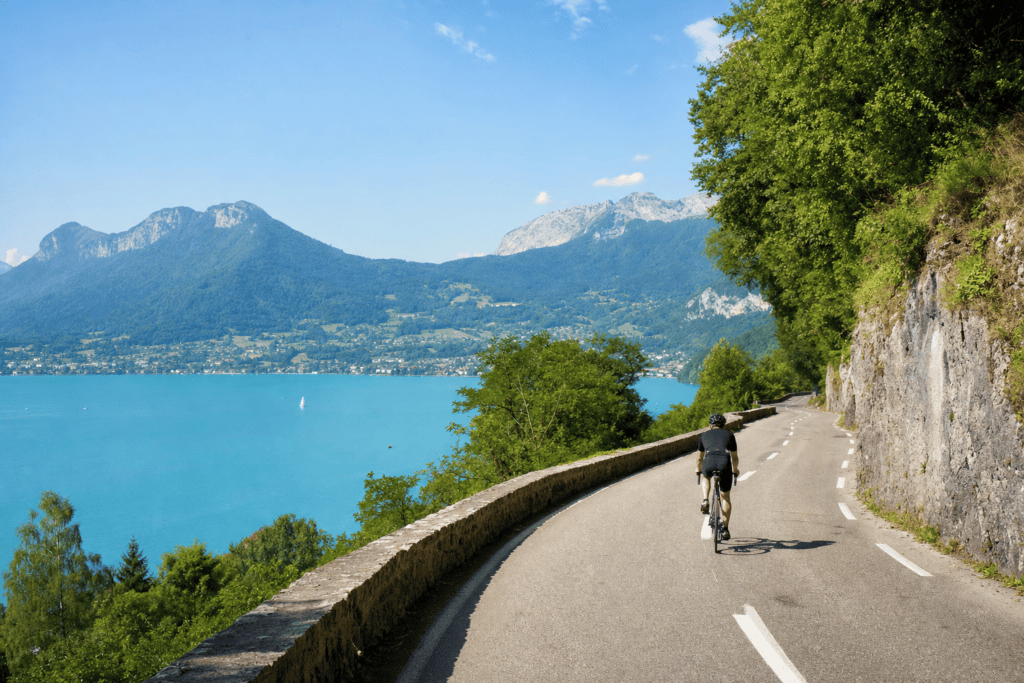 Cycling Around Lake Annecy A scenic loop around Lake Annecy, passing greenways, villages, beaches, and Alpine landscapes.
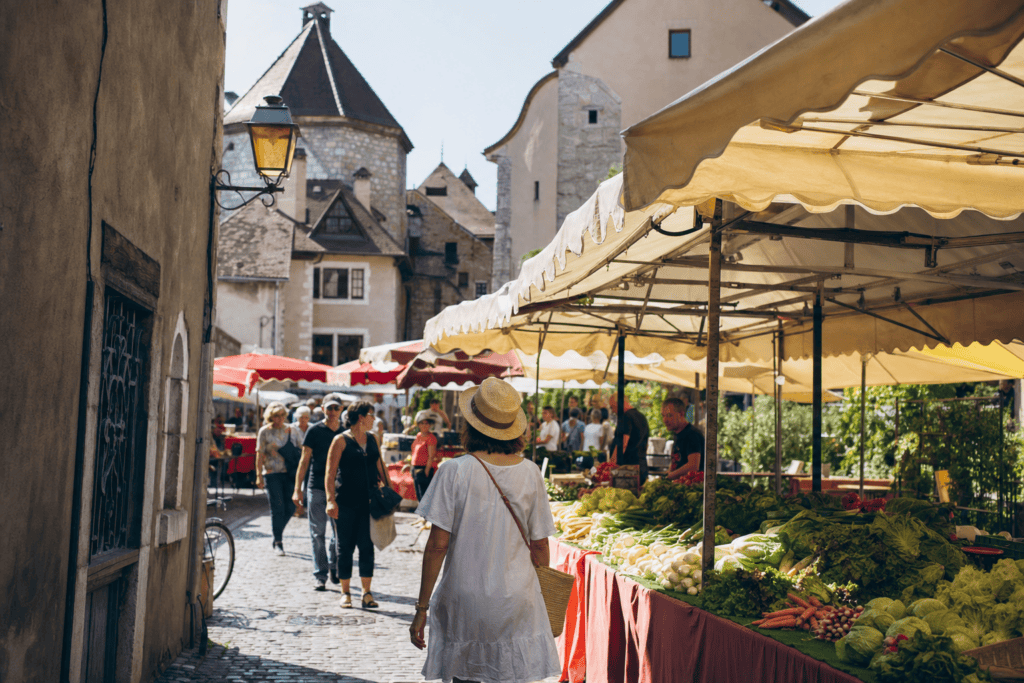 Annecy Old Town Market A market in the heart of Annecy where you can discover Savoyard flavors and the streets of the historic center.
 Annecy Castle An iconic château museum above the old town, combining medieval heritage, Alpine collections, and views over…
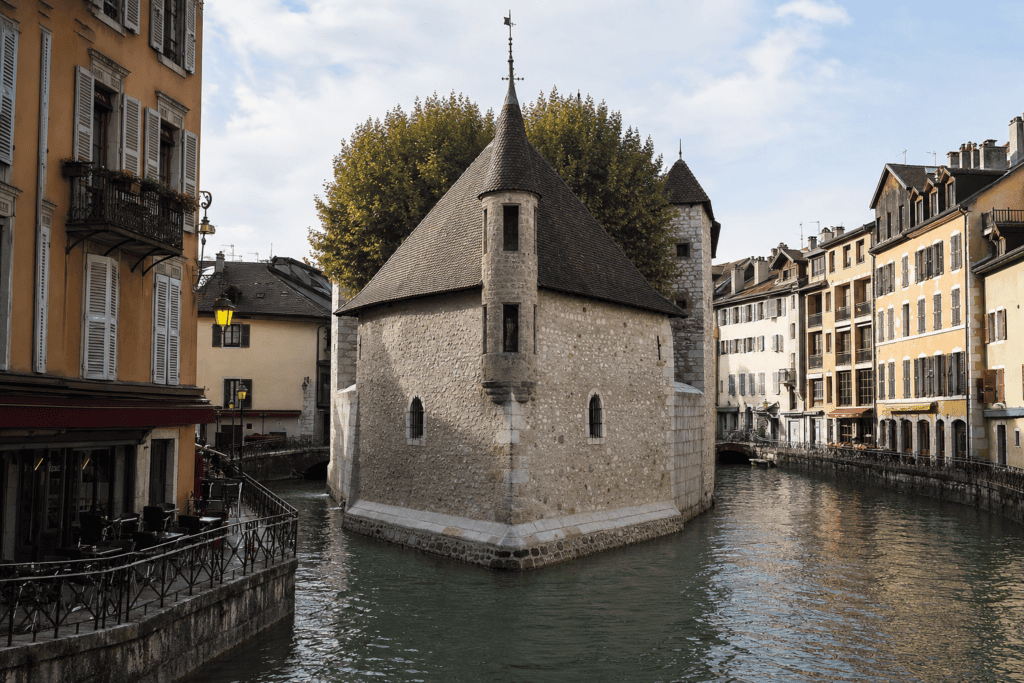 Palais de l’Île An iconic Annecy monument set on the Thiou, telling the story of the old town’s judicial, urban, and heritage…
Online booking · Paris → Old Town, 74000 Annecy, Haute-Savoie, France
Choose your pickup date and time
Your departure and arrival details are already pre-filled. You can adjust them in the fare calculator before viewing the vehicles and fare.