



Palais des Papes in Avignon: Visitor’s Guide
Avignon
In the heart of Avignon, the Palais des Papes combines a papal residence, Gothic fortress, and major cultural site. Visiting it offers insight into the city’s role in the history of the papacy during the 14th century, while revealing vast halls, chapels, apartments, and painted interiors. The monument is best understood in its surroundings: Notre-Dame des Doms, the Rocher des Doms, the ramparts, the Petit Palais, and the Pont Saint-Bénézet form a remarkable historic ensemble.
Practical information
Start by viewing the façade from the square, visit the palace, then continue to Notre-Dame des Doms and the Rocher des Doms garden. This loop provides a coherent view of the historic district.
Planning a Paris–Avignon Journey
If Avignon is part of a trip that began in Paris, Booking Paris Transfer can arrange private transportation from Paris, your hotel in the Île-de-France region, Charles de Gaulle Airport, or Orly Airport. The trip can include a return to Paris or be part of a broader itinerary starting in the capital. This service covers transportation only; admission to the Palais des Papes must be arranged separately through the official site.
Departure from Paris, the Île-de-France region, CDG, or ORY; return to Paris or an itinerary starting in Paris, according to your plans.
Why Visit the Palais des Papes?
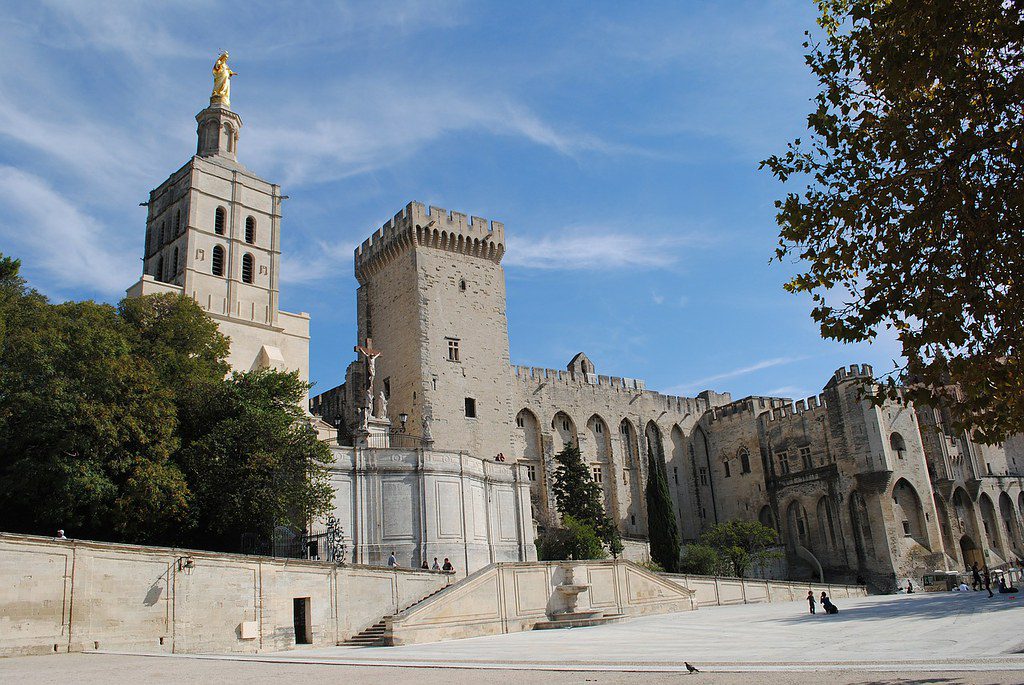
The Palais des Papes is one of the great Gothic monuments of the 14th century. Its imposing silhouette dominates the Place du Palais and immediately recalls the political and religious importance Avignon acquired when the papal court settled there. Thick walls, towers, and battlements give the building the appearance of a fortress, while the interior also reveals a residence designed for ceremonies, governance, and the daily life of a large court.
The visit takes you through ceremonial rooms, chapels, apartments, and passageways that reflect a wide range of functions. The palace forms part of Avignon’s historic center, listed as a UNESCO World Heritage Site along with the Pont Saint-Bénézet and the episcopal ensemble. This is therefore not a standalone listing for the building alone, but recognition of the value of an urban and monumental ensemble.
For a first introduction to Avignon, the monument offers an especially rich starting point. Also take time to look at the square, Notre-Dame des Doms Cathedral, and the contours of the Rocher des Doms to understand how the palace fits into the fortified city.
The History of the Papacy in Avignon
At the beginning of the 14th century, the papacy moved to Avignon amid a complex political climate. The papal presence gradually transformed the city: the court, administrative services, clergy, diplomats, and artisans required new spaces. The palace thus became much more than a private residence: it housed the Church’s governing activities and the life of an international court.
The current building is the result of several construction campaigns. Benedict XII commissioned the Palais Vieux, whose architecture retains a relatively austere, defensive character. Clement VI later undertook the Palais Neuf, which was larger and more representative. This expansion reflected the court’s changing needs and affirmed the power of the papacy established in Avignon.
After the papacy left, the monument served various purposes and went through periods that were less favorable to preserving its interiors. Restoration work, historical research, and interpretive resources now make it easier to understand these transformations. Each part of the palace should therefore be viewed as the result of a long history, rather than as a building constructed in a single phase.
Rooms, Chapels, and Interiors to Look For
The route includes several spaces that shed light on how the papal residence was organized. The Consistory Hall was used for official meetings and important decisions. The Tinel, also known as the Banqueting Hall, reflects the ceremonial dimension of the court. The Great Audience Hall, meanwhile, evokes the administrative and judicial functions carried out in this center of power.
The chapels are another highlight. The Saint John Chapel and Saint Martial Chapel preserve important examples of 14th-century painting. The interiors associated with Matteo Giovannetti reflect the artistic quality sought by the popes. The Stag Room is particularly known for its scenes of nature and hunting, which contrast with the monumental scale of the official halls.
How these spaces are presented may depend on the route open on the day of your visit, restoration work, exhibitions, and interpretive resources. Some rooms or sections of the interiors may be temporarily covered or presented differently. Information provided on site is therefore the best reference for knowing what is accessible when you visit. Look at the vaults, frames, and traces of color rather than moving through the rooms too quickly.
Understanding the Palace’s Gothic Architecture
The Palais des Papes illustrates Gothic architecture adapted to an exceptional purpose. Builders had to create large rooms, support substantial vaults, organize the movement of a large court, and protect a residence of the highest rank. The building therefore combines massive walls, buttresses, towers, carefully controlled openings, and ceremonial spaces.
Comparing the Palais Vieux and the Palais Neuf helps explain how the site evolved. The former appears more compact and defensive, while the latter develops larger volumes and greater monumental ambition. This difference reflects the court’s gradual expansion and the changing liturgical, administrative, and diplomatic needs. The towers and elevations also help place the palace within Avignon’s defensive system.
From the square and surrounding streets, observe the relationship between the palace, Notre-Dame des Doms, the rock, and the ramparts. For photography, the contrasts between the pale stone, battlemented walls, and the cathedral’s vertical lines are especially interesting in softer light, in the morning or late afternoon. Exterior viewpoints are a useful complement to the indoor visit.
Suggested Itinerary in Central Avignon
Start at the Place du Palais. It offers enough distance to observe the façade, towers, and Notre-Dame des Doms right next door. This initial exterior view helps you understand the monument’s proportions before entering. After the visit, head to the cathedral and take time to view the episcopal ensemble from the area around the palace.
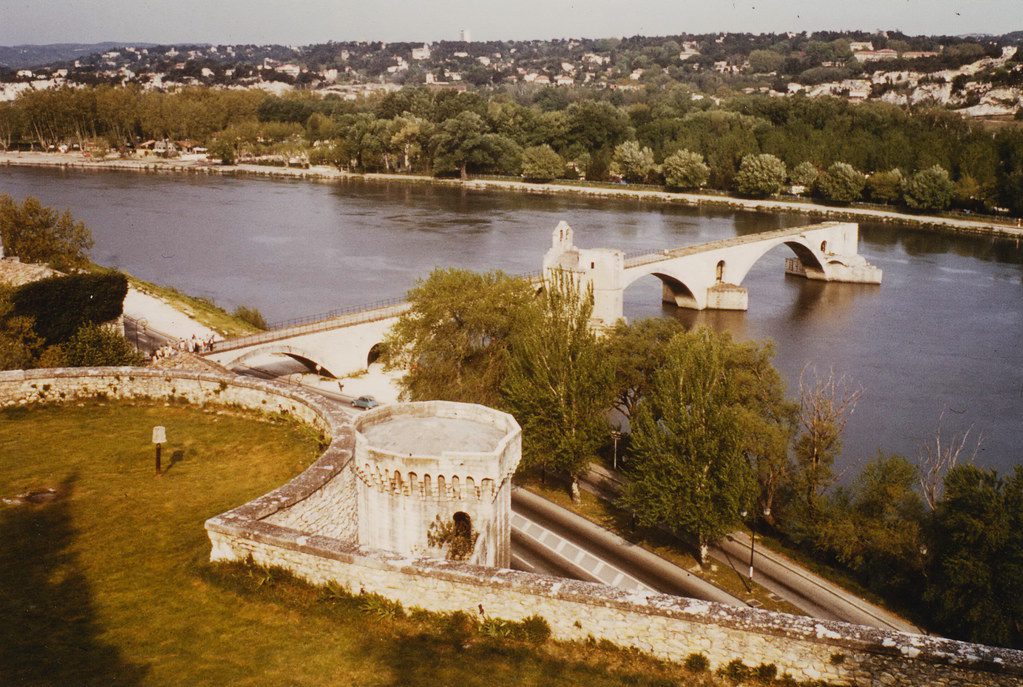
Continue to the garden and promenade on the Rocher des Doms. The view of the Rhône, Avignon’s rooftops, and the Pont Saint-Bénézet makes for a pleasant break after the indoor route. Depending on the time available and opening conditions, you can add the Petit Palais, a former episcopal palace, then descend toward the streets within the city walls and their private mansions.
The Pont Saint-Bénézet is visited separately and provides further insight into the Rhône’s strategic role. For a first visit, a half-day offers a comfortable pace, with time for breaks and photographs. Wear suitable shoes: the route combines indoor spaces, old streets, paved areas, and an uphill walk to the rock. Naturally adjust the itinerary to the abilities of each member of your group.
Practical Tips Before Your Visit
Opening hours, prices, reservation requirements, and access arrangements may change depending on the season, events, construction work, and cultural programming. Consult the official Palais des Papes website before you leave. It provides up-to-date information about the route, accessibility, and any restrictions, which is more reliable than outdated details published in guides or articles that have not been updated.
The monument is historic, and the route may include stairs or changes in level. If you need specific accessibility information, contact the site before your visit. In summer, bring water for outdoor walks and avoid planning the entire outing during the hottest hours. Arriving early or visiting late in the day can be pleasant, but does not guarantee shorter waits.
With children, a few simple explanations about the popes, knights, artists, and construction of the palace can make the rooms more engaging. Whether photography, bags, and other items are permitted may depend on the spaces visited or exhibitions. Follow posted instructions and staff guidance, especially when delicate interiors are on display.
What to See Around the Palais des Papes
The Palais des Papes is located in an area where several major sites are within walking distance. Notre-Dame des Doms forms an immediately recognizable historic ensemble with it. The Petit Palais enriches the visit with its collections and architecture, subject to its opening conditions. The Rocher des Doms provides a scenic break and helps place Avignon in its riverside setting.
The Pont Saint-Bénézet recalls the importance of crossings over the Rhône. Its surviving arches bear witness to the history of movement between the riverbanks, even though the bridge is no longer complete. The ramparts and gates of the old city then invite you to continue walking within the city walls, among shopping streets, squares, and civic buildings. The contrast between fortifications, religious monuments, and residential architecture makes for a varied route.
Art and history enthusiasts can round out their day with the city-center museums and private mansions, checking their opening days and hours. Avignon’s appeal lies in this concentration: within a few streets, you move from the papacy to episcopal institutions, from art collections to Rhône landscapes. The palace is therefore best discovered as the heart of a historic district rather than as an isolated monument.
Useful sources
Frequently Asked Questions
How Much Time Should You Allow to Visit the Palais des Papes?
Is the Palais des Papes a UNESCO World Heritage Site?
Are the Stag Room and Matteo Giovannetti’s interiors always visible?
Can you visit the palace with children?
What Places Can You Visit Near the Palais des Papes?
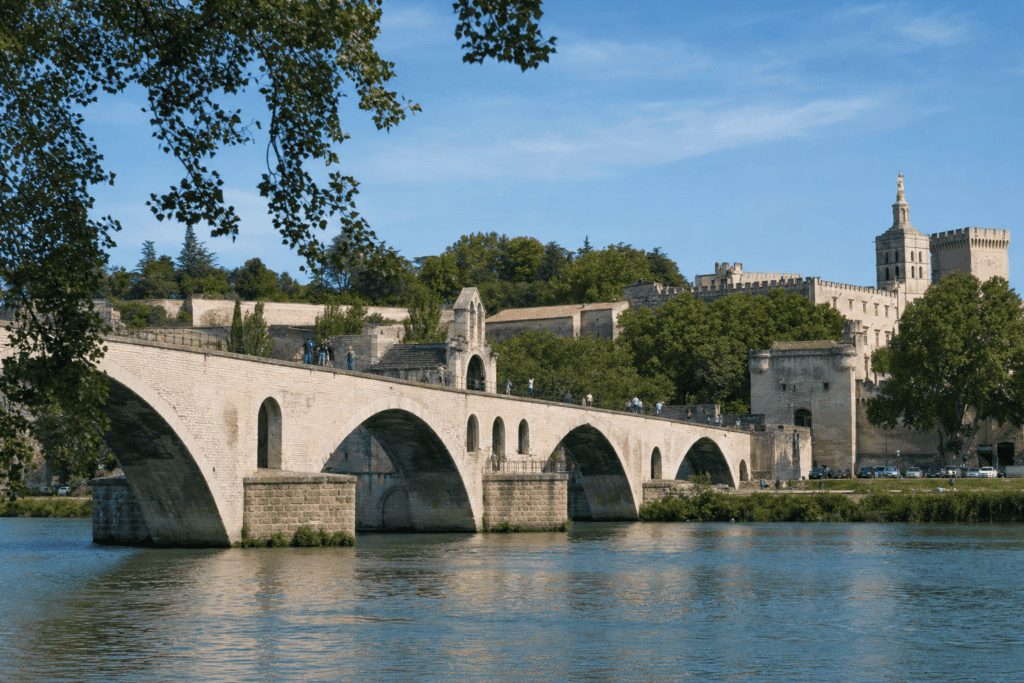 Pont Saint-Bénézet An iconic medieval monument offering a short visit and superb views over the Rhône, the…
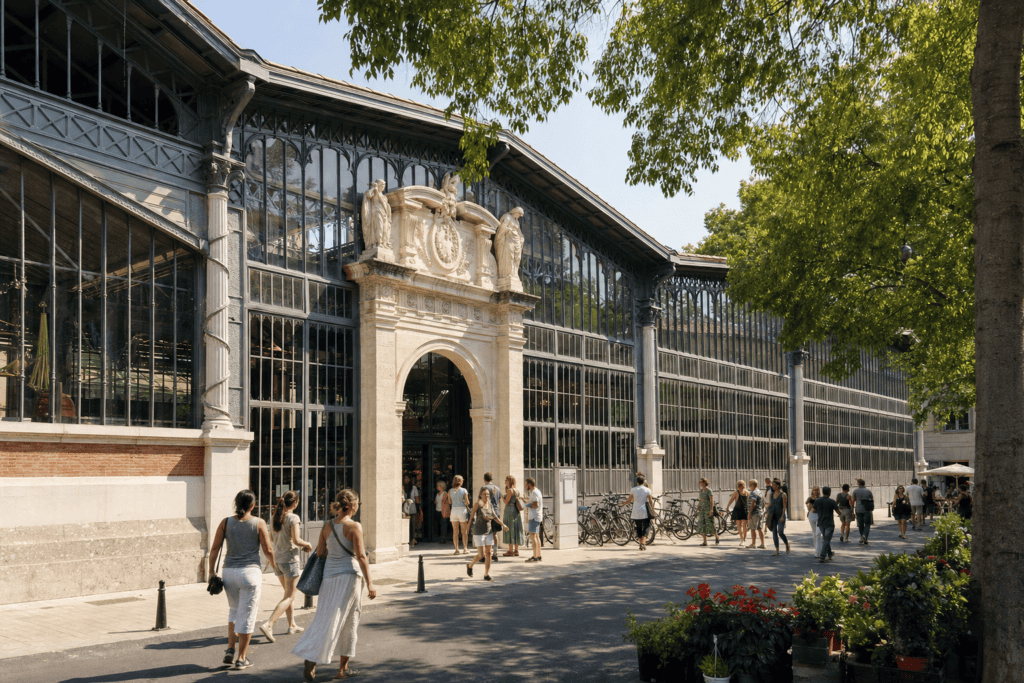 Avignon Market Halls A lively covered market where you can discover fresh produce, Provençal specialties and local life…
 Explore Avignon’s historic center on foot A walking route through Avignon’s ramparts, the Palais des Papes, historic lanes, squares and gardens…
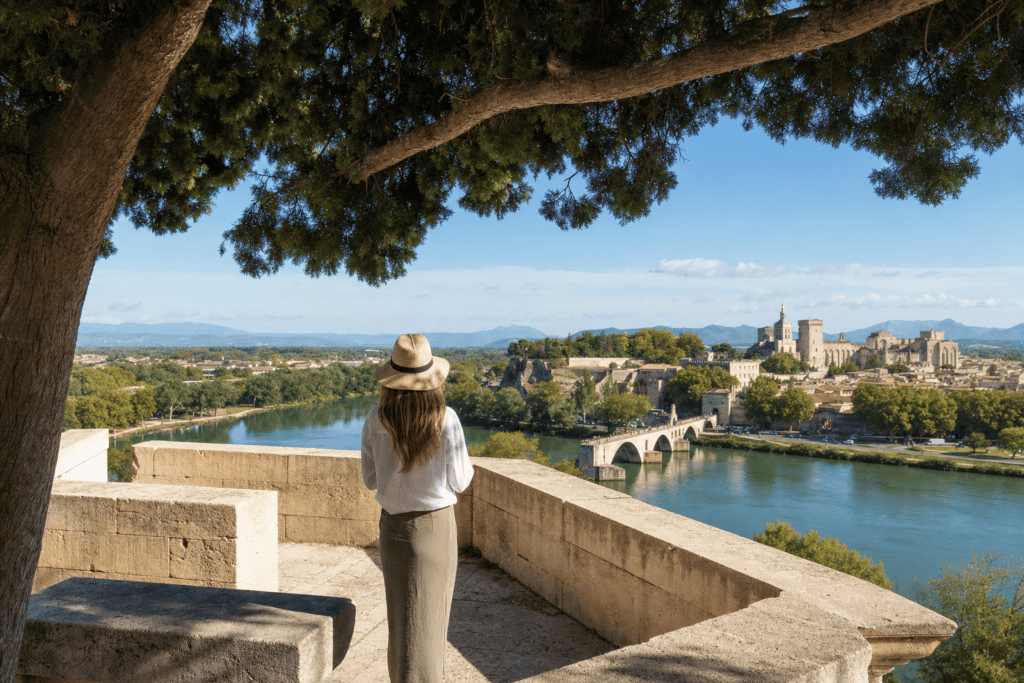 Rocher des Doms A historic hilltop garden, ideal for taking in views of the Rhône, Pont Saint-Bénézet and the surrounding scenery…
Online booking · Paris → Place du Palais des Papes, 84000 Avignon, Provence-Alpes-Côte d’Azur
Choose your pickup date and time
Your departure and arrival details are already pre-filled. You can adjust them in the fare calculator before viewing the vehicles and fare.