



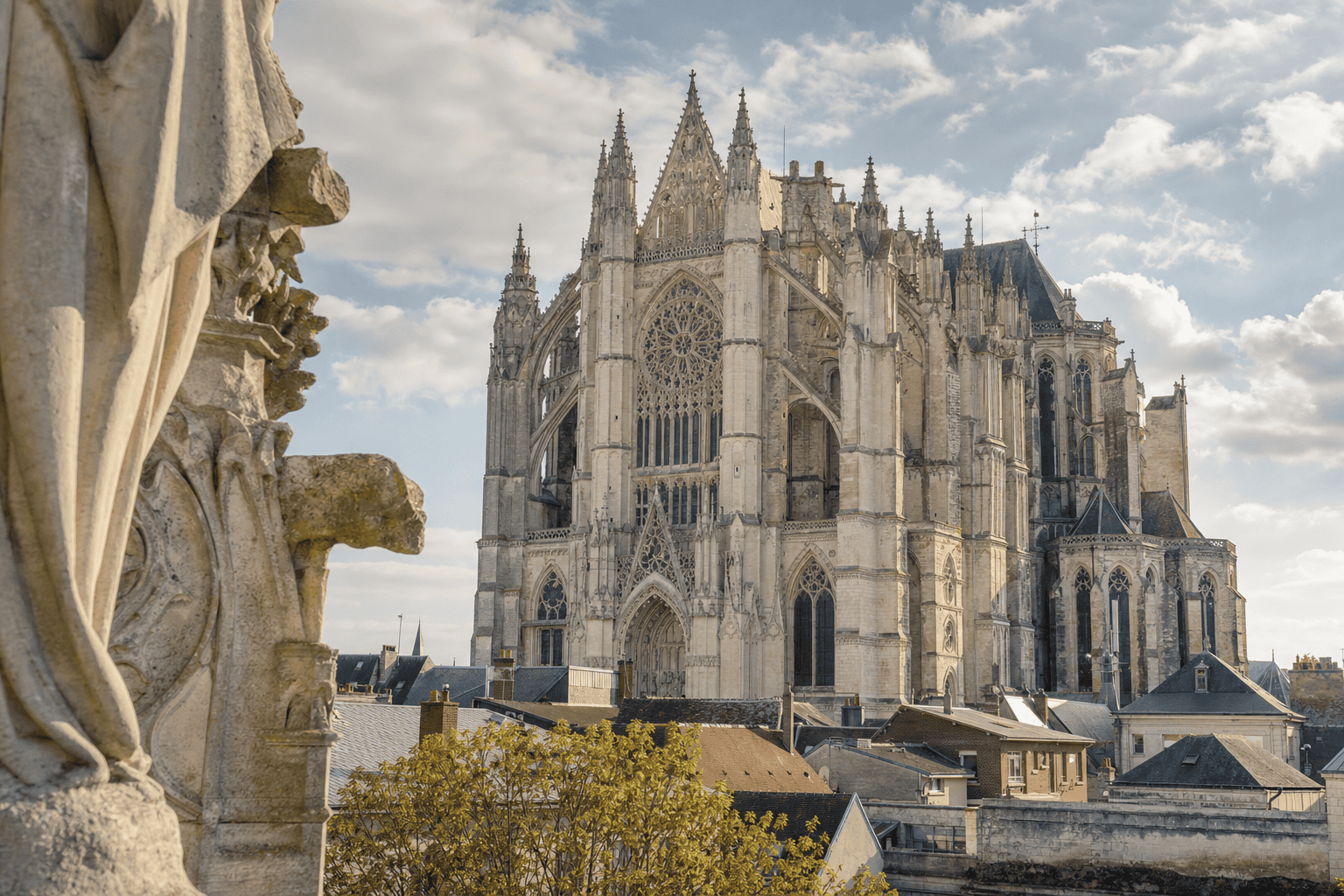
Saint-Pierre Cathedral in Beauvais: Visitor Guide
Beauvais
In the heart of Beauvais’s historic center, Saint-Pierre Cathedral impresses with the height of its choir, its stained glass, and its eventful history. Built from the 13th century onward as part of an especially ambitious Gothic project, it now forms a heritage complex with the Basse-Œuvre, the cloister, and the former chapter buildings. This visit is ideal for a first discovery of the Oise department, a day trip from Paris, or a stop between the capital and Paris-Beauvais Airport. Opening hours, clock presentations, and access conditions may vary depending on services, ceremonies, construction work, or events: check the official information before your visit.
Practical information
First, take in the choir as a whole from the entrance to appreciate its verticality. Then move closer to the stained glass and carved details, adding the Basse-Œuvre and cloister if their opening conditions match your date.
Getting to Beauvais from Paris
From Paris, a Paris hotel, CDG, or ORY, a private transfer to Beauvais can be arranged as part of an itinerary departing from the Île-de-France region, with a return to Paris or onward travel planned. The service covers transportation, not admission tickets or a guided visit of the landmark.
Service departing from Paris, the Île-de-France region, CDG, or ORY. Booking Paris Transfer is not a local chauffeur service based in Beauvais and does not sell admission tickets.
Why visit Saint-Pierre Cathedral
Saint-Pierre Cathedral is the most spectacular landmark in Beauvais’s historic center. Its uniqueness is apparent from the entrance: visitors do not discover the complete nave of a great French cathedral, but rather a vast Gothic choir rising directly before them. The medieval project was never completed, and the absence of a nave is an integral part of the landmark’s identity.
Saint-Pierre can therefore be experienced as an ambitious architectural work, but also as the visible result of several centuries of construction, accidents, and restoration. The pillars, arches, windows, and successive building campaigns tell this story more effectively than a simple chronology. The cathedral complex broadens the experience with the Basse-Œuvre, the cloister, and the former spaces associated with the chapter.
The visit will appeal to enthusiasts of architecture, religious history, stained glass, and photography. It can be combined with a walk taking in Place Jeanne Hachette, the MUDO-Musée de l’Oise, and Le Quadrilatère, all located in central Beauvais.
A History Shaped by Gothic Ambition
Beauvais’s great Gothic construction project began after the fire that damaged the former cathedral in 1225. Work on the new choir began in the 13thth century, at a time when episcopal cities in northern France competed through the height and richness of their buildings. Builders sought to create an exceptionally tall sanctuary, requiring bold technical solutions.
The choir was consecrated in 1272, but structural problems soon led to rebuilding. The vaults notably collapsed in 1284, and the reconstruction altered the original design. The transept, built later, displays features of Flamboyant Gothic. In the 16thth century, a very tall lantern tower was added above the crossing before collapsing in 1573. The planned nave was ultimately never built.
These episodes explain the coexistence of several styles and the impression of a monumental yet unfinished landmark. Modern restoration work continues to secure and preserve the building. To find out the current status of the work and which areas may be temporarily closed, check the official information before your visit.
The Choir, Stained Glass, and Architecture
The choir is the best starting point for understanding Saint-Pierre’s proportions. From the entrance, take a moment to observe the alignment of the pillars, the succession of arches, and the rise of the large windows. This overall view conveys the building’s verticality before you focus on the details.
The stained glass introduces colors and scenes that appear different depending on the outdoor light. Overcast skies often create a soft, even impression, while direct sunlight can intensify certain reds, blues, or yellows. The window tracery, sculptures, liturgical furnishings, and signs of restoration also deserve careful attention.
The south portal, characterized by Flamboyant Gothic and Renaissance elements, adds to the architectural interest when it is visible and accessible. As the cathedral remains a place of worship, please respect the quiet, services, and restricted areas. Construction work may temporarily alter circulation or conceal certain works, so an old photograph may not reflect the landmark’s condition on the day of your visit.
The Astronomical Clock of Beauvais
The astronomical clock is one of the most original features of the visit. Designed in the 19thth century by Auguste-Lucien Vérité and installed in the cathedral in the late 1860s, it takes the form of a monumental cabinet containing numerous dials and mechanisms. Its interest lies not only in telling the time: the whole mechanism represents several cycles of time, the calendar, and astronomy.
The cathedral also preserves a medieval carillon clock dating from the late 14thth century, according to presentations devoted to the landmark. It recalls the long-standing clockmaking tradition in Beauvais. An audiovisual presentation provides a better understanding of how the large clock works and allows visitors to observe its moving elements.
Sessions, their duration, and their conditions may vary depending on the season, services, construction work, or events. If the clock is the main reason for your trip, check the official schedule for your date. Do not rely on an old time listed in a guide or outdated listing.
The Basse-Œuvre and the Cathedral Complex
Notre-Dame de la Basse-Œuvre naturally complements a visit to Saint-Pierre. This building predates the great Gothic project and is generally associated with the Carolingian period, with sections dating from the 10th and 11th centuries. Its simpler, more horizontal architecture makes it possible to compare two periods in Beauvais’s religious and building history.
The presence of the Basse-Œuvre beside the cathedral shows how a monumental project transformed the site without completely erasing the earlier building. The cloister and former buildings of the cathedral group, meanwhile, evoke chapter life, the organization of religious spaces, and the successive uses that developed around the sanctuary.
Access to these areas may depend on the hours and conditions at the time. To extend your walk, head to Place Jeanne Hachette and the cultural venues in the center, notably the MUDO-Musée de l’Oise or Le Quadrilatère. La Maladrerie Saint-Lazare, farther from the historic center, offers another perspective on Beauvais’s heritage and requires more time.
Access from Paris, the Train Station, and the Airport
From Paris, regional trains connect Gare du Nord with Beauvais. The cathedral is then about a 15-minute walk from the station, depending on the route and your pace. Check the day’s schedule before setting out, as frequency, connections, and possible disruptions may change.
Paris-Beauvais Airport is located in the town of Tillé, northwest of Beauvais. A Corolis network service may connect the airport with Beauvais and the train station, subject to the schedule published for your date. Check the route directly on the network’s website before relying on this connection, especially if you have little time between a flight and a visit.
By car, look for parking outside the old town and finish on foot: some streets are pedestrian-only or poorly suited to through traffic. From Paris, the Île-de-France region, CDG, or ORY, Booking Paris Transfer can arrange a private transfer to Beauvais as part of an itinerary beginning in the Île-de-France region, with a return to Paris or onward travel planned. Transportation is separate from access to the landmark and does not include an admission ticket.
Practical Tips and Accessibility
For a first visit, allow at least one hour inside the cathedral. Add time for the clock presentation, followed by the Basse-Œuvre and cloister if these areas are open. Visitors interested in architecture will enjoy comparing the different construction campaigns; families can point out the dials, mechanisms, and choir’s unusual height to children.
Visiting outside service times makes observation and photography easier, but the cathedral may still be subject to worship-related restrictions. Check the cathedral’s official information and the instructions posted on-site regarding photography, quiet, accessible areas, and any ongoing work.
For visitors with reduced mobility, the practical conditions may depend on the entrance used, temporary routes, construction work, and ceremonies. Before traveling, consult the cathedral’s official practical information page and contact its reception desk or the Association Beauvais Cathédrale directly to confirm a route without difficult walking, the available facilities, and whether the intended areas can be accessed. This direct verification is preferable to undated general information.
Frequently Asked Questions
How much time should I allow to visit the cathedral?
How do I get to the cathedral from Beauvais train station?
How do I get to Beauvais from Paris-Beauvais Airport?
Is the cathedral accessible to people with reduced mobility?
Do clock presentations take place every day?
 Paris-Beauvais Airport Everything you need to know to reach Beauvais, Paris, or your accommodation from the airport located in Tillé.
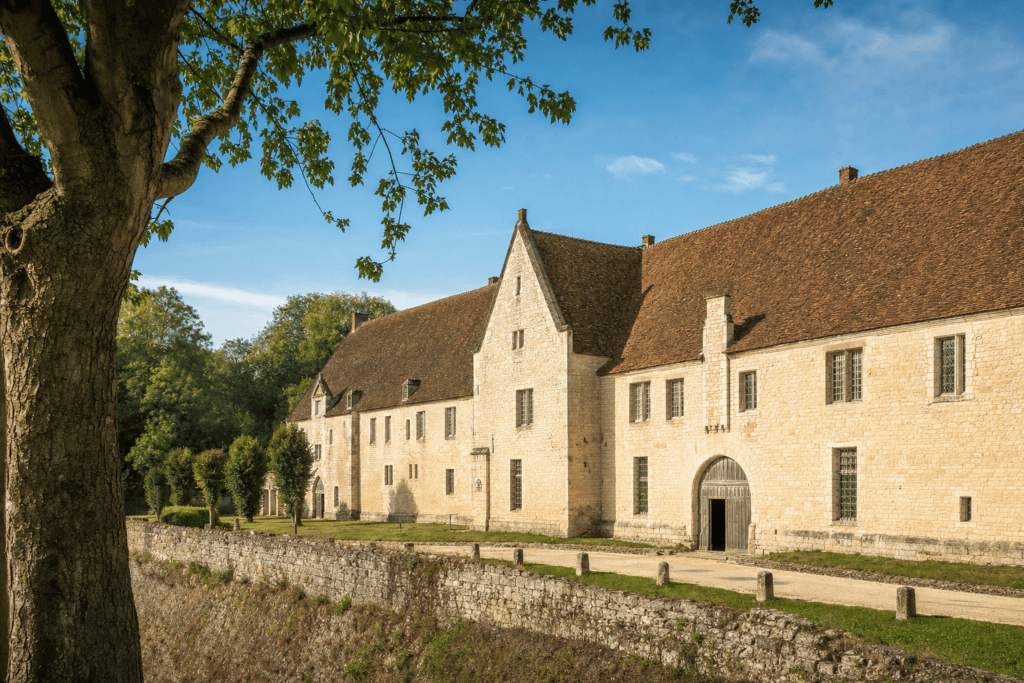 Maladrerie Saint-Lazare A former medieval hospital in Beauvais, with a chapel, large barn, garden, and cultural programming.
 MUDO – Musée de l’Oise Across from Beauvais Cathedral, the MUDO combines art collections, the history of Oise, and the discovery…
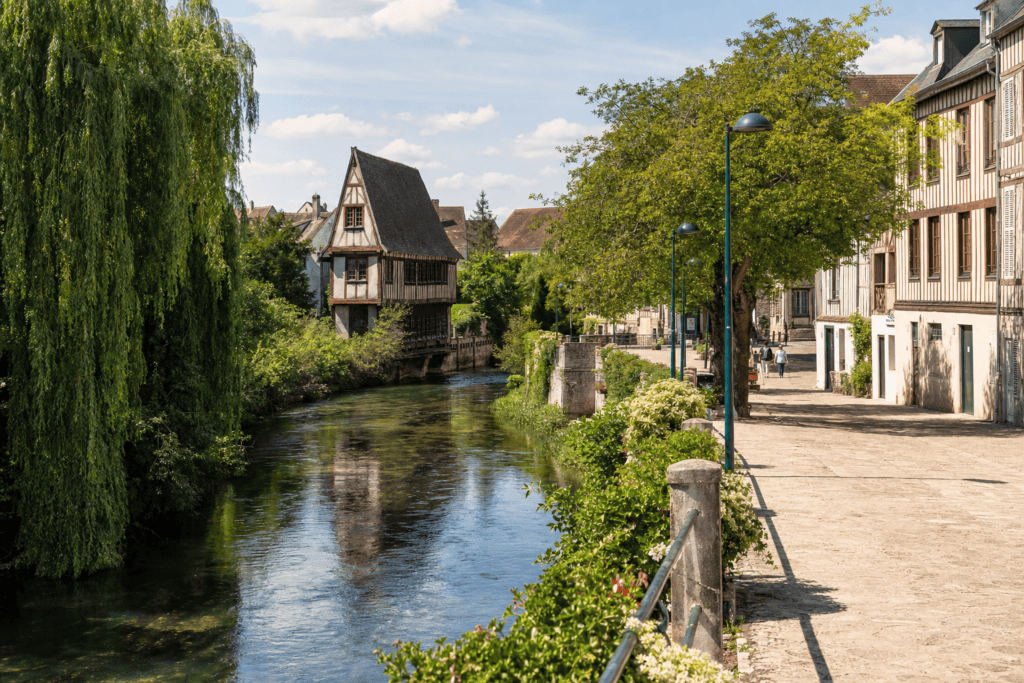 What to do in Beauvais: historic center and walk along the Thérain A walking route through Beauvais covering Saint-Pierre Cathedral, the episcopal quarter, Place Jeanne-Hachette, Boileau Tower, and…
Online booking · Paris → Rue Saint-Pierre, 60000 Beauvais, Hauts-de-France, France
Choose your pickup date and time
Your departure and arrival details are already pre-filled. You can adjust them in the fare calculator before viewing the vehicles and fare.