



Calais Belfry: Guide, History, and Visit
Calais
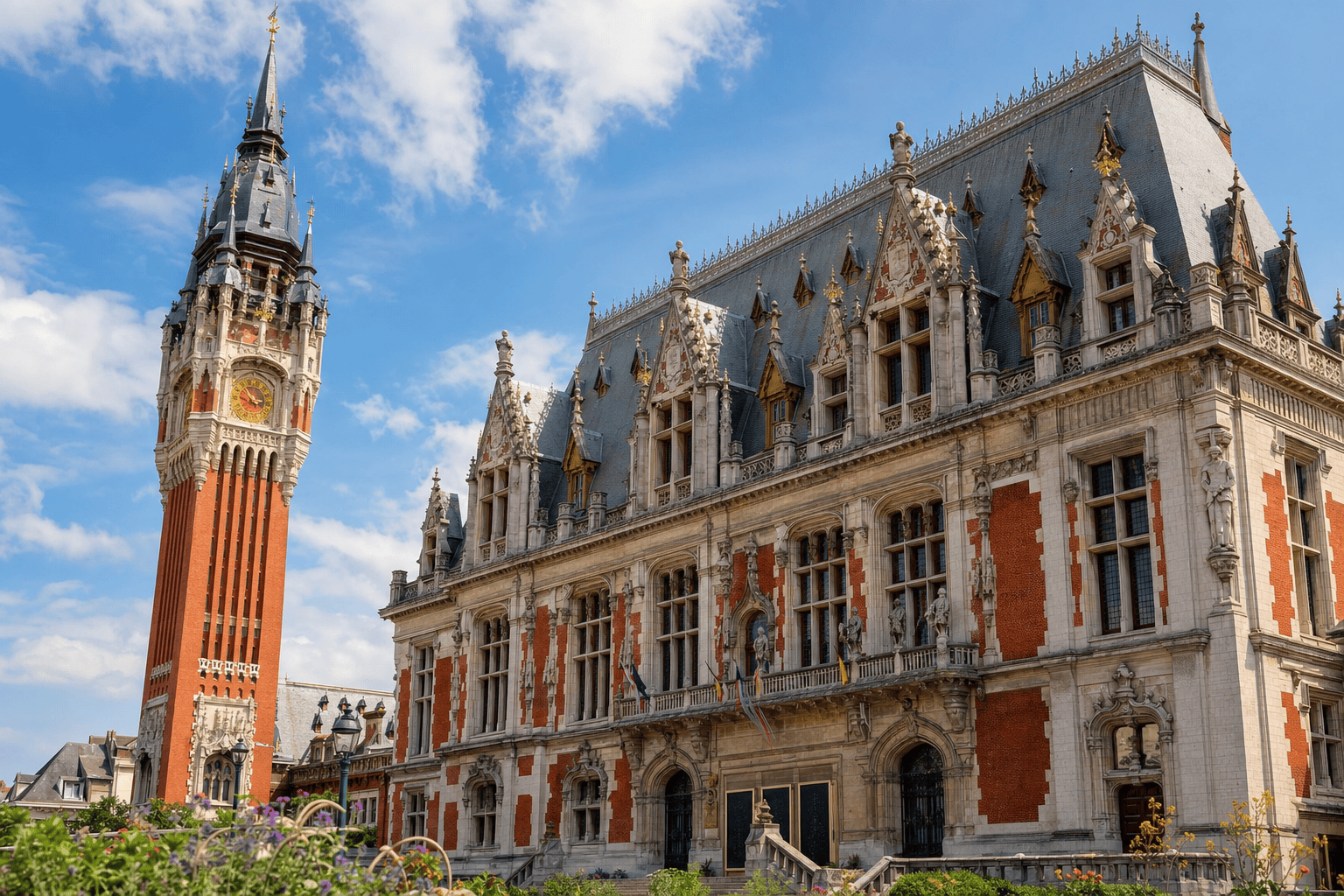
In the heart of Calais, the town hall and its belfry form one of the Côte d’Opale’s most remarkable architectural ensembles. The tower is part of the serial property of the Belfries of Belgium and France, listed as a UNESCO World Heritage site. Its brick, stone, and sandstone silhouette dominates the city center and reflects Calais’s administrative, maritime, and industrial role. A visit begins with the façades and the Place du Soldat Inconnu, then may continue inside certain areas when the schedule allows. The panorama is not permanently accessible for independent visits: access to the tower depends on time slots or tours organized by local operators and should be confirmed before you travel. From Calais-Ville, allow about 800 meters on foot to reach the town hall, near Rodin’s Six Burghers, Notre-Dame Church, and several urban walking routes.
Practical information
Start with the façade from the Place du Soldat Inconnu, continue to the Six Burghers monument, then check on-site or online whether an interior visit and tower climb are scheduled.
Getting to Calais from Paris
For a day trip from Paris, a Paris hotel, Charles de Gaulle, or Orly, Booking Paris Transfer can arrange transportation to Calais, with a return to Paris or onward travel depending on your itinerary. The service covers transportation only and does not include admission to the belfry, a guided tour, or reservations with local attractions.
Departure from Paris, a Paris hotel, CDG, or ORY; return to Paris or onward travel according to your itinerary.
A UNESCO Belfry in the Heart of Calais
Calais Belfry is part of the serial property of the Belfries of Belgium and France, listed as a UNESCO World Heritage site. These civic towers bear witness to the rise of cities, their institutions, and municipal freedoms in northwestern Europe. In Calais, the tower is directly integrated into the town hall, so it cannot be understood separately from the civic building surrounding it.
From the Place du Soldat Inconnu, take in the overall composition before looking for the details. The belfry’s verticality, brick and stone façades, gables, and openings create an architectural style representative of the urban revival of the early 20thth century. The ensemble emphasizes Calais’s role as a port and industrial city facing the strait.
UNESCO recognition reflects historical and heritage value; it does not mean that every area is accessible at all times. The exterior remains freely accessible, while the rooms, stained-glass windows, and tower depend on the building’s actual opening hours and scheduled programming. This distinction is important when planning a realistic visit.
The Town Hall and the Unification of Calais
The town hall is connected to the history of the unification of Calais and Saint-Pierre-lès-Calais in 1885. The merger of the two municipalities took place during a period of profound transformation: port development, industrial growth, urban expansion, and increased exchange with the opposite shore of the English Channel. The new building was intended to represent this unified, modernized city.
Built in a regionalist style, it combines brick, light-colored stone, gables, and a strong visual emphasis on the tower. The architecture draws on references from northern France while giving the building a civic and monumental presence. The impression changes depending on your vantage point: the square highlights the façade, while the area around the garden and Rodin’s monument makes it easier to appreciate the belfry’s height.
The town hall remains an active public building. Ceremonies, meetings, construction work, or events may restrict access to the interior. It is therefore best to consider the interior spaces an optional addition subject to conditions, rather than a guaranteed part of the visit. The exterior alone already conveys the ensemble’s urban and political ambition.
Stained-Glass Windows and Interior Décor
The stained-glass windows are among the town hall’s most interesting features. Local sources associate them with the Dagrant workshops and place them within the effort to give the building decoration worthy of a major municipal edifice. Their appeal lies as much in their artistic quality as in their narrative function: they help represent Calais’s history and identity.
The city’s memory can be read through references to its figures, historical episodes, and strategic position facing the sea. The recapture of Calais in 1558, after the long period of English rule, is one key to understanding the historical narratives associated with the city. These themes take on particular significance in a building that embodies the continuity of the local community.
Natural light changes the appearance of the colors and details. If the rooms are open, take time to examine the leadwork, outlines, any inscriptions, and the relationship between the windows and the architectural volumes. Visiting and photography conditions may vary; check the information from Ville de Calais and Calais XXL Tourisme before your arrival.
Climbing the Belfry and the Panorama
Climbing the belfry is not currently available as a permanent self-guided visit. It may be offered during scheduled time slots or organized tours, but availability depends on the arrangements announced by the City of Calais or Calais XXL Tourisme. Before traveling, explicitly check whether a climb is available on your chosen date, at what time, under which access conditions, and to what extent the route is suitable for your circumstances.
When the tower is accessible, the panorama provides a useful perspective on Calais’s geography. The city center, neighborhoods, port facilities, and coastline unfold around a city shaped by the Strait of Dover. In clear visibility, the view highlights the proximity of maritime routes and the passageway role that has marked local history.
If the climb is not available, the visit is still worthwhile from ground level. Photograph the façade from the Place du Soldat Inconnu and the area around the Six Burghers monument. Maritime mist can reduce contrast; choose side lighting to distinguish the brick from the stone. Comfortable clothing suitable for the wind is enough for the outdoor walk.
The Six Burghers and the Historic Center
The Six Burghers monument, created by Auguste Rodin, stands immediately beside the town hall. It commemorates the siege of Calais in 1346-1347 and the story of the residents who reportedly appeared before the King of England to save the population. Rodin gives each figure a distinct presence, far removed from a rigid, uniform representation. The sculpture group thus adds a human dimension to a visit to the belfry.
From the square, continue to Notre-Dame Church, another witness to Calais’s urban history, then on to the Tour du Guet, a landmark associated with the city’s former landscape. The Cité de la Dentelle et de la Mode offers insight into another aspect of the area: textile expertise, industry, and the trades that helped shape the local economic identity.
This route works well for a few-hour stopover and can be adapted according to the day’s opening hours. It is best to check each site’s schedule separately, since a town hall, museum, and church follow different access rules. On foot, the distances between these places make it possible to connect architecture, sculpture, and history without adding unnecessary travel.
Getting to the Landmark from Calais or Paris
Calais-Ville station is the most convenient arrival point for exploring the center without a car. The town hall is about 800 meters away, roughly a 10-minute walk under normal conditions. Actual travel time may vary depending on the pedestrian route, construction work, and walking pace. Follow local signs or use an up-to-date mapping app to reach the Place du Soldat Inconnu.
The port, ferry terminals, and Channel Tunnel terminal are separate from the city center. If the belfry is part of a cross-Channel journey, allow plenty of extra time and follow the carrier’s instructions. A ferry or train reservation is not the same as a reservation to visit the landmark: the two steps must be arranged separately.
From Paris, the train is suitable for a trip focused on urban heritage. A private transfer can also connect Paris, a Paris hotel, Charles de Gaulle Airport, or Orly with Calais, with a return to Paris or onward travel planned as part of your itinerary. This transportation does not include admission, a guided tour, or reservations with the city or tourist office.
Planning Your Visit and Extending Your Exploration
Before setting out, consult the official pages dedicated to the belfry and town hall. In particular, confirm whether a tower-climb time slot is available, access to the interior, accessibility conditions, photography rules, and any temporary restrictions. This check is essential if you have limited time between trains or before departing from the port.
Spring and early fall often make it possible to combine heritage and a walk in pleasant conditions. In summer, the coast can complement the visit, but visitor numbers and travel times may increase. Comfortable shoes are sufficient for the landmark; a light jacket is useful if you continue toward the waterfront or if part of the route takes place outdoors. Visibility from the tower, when it is open, depends on mist and the day’s weather.
To extend your outing, combine the belfry with the Six Burghers, Notre-Dame Church, and the Cité de la Dentelle et de la Mode. With more time, head to Cap Blanc-Nez and the landscapes of the Côte d’Opale, allowing for distances and traffic conditions. Calais can therefore serve as a standalone heritage stop or the beginning of a day devoted to the Pas-de-Calais coast.
Useful sources
Frequently Asked Questions
Is Calais Belfry listed by UNESCO?
Can you currently climb Calais Belfry?
Are the town hall’s stained-glass windows always visible?
How long does it take from Calais-Ville?
What places can you visit around the belfry?
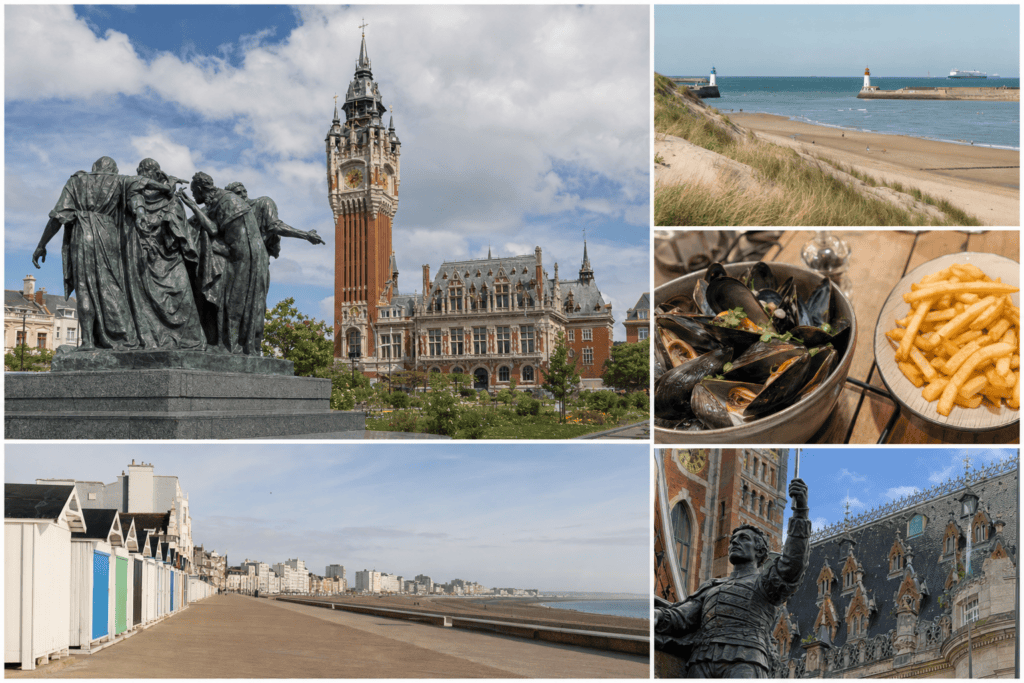 What to Do in Calais Between Ferry Crossings or the Channel Tunnel A timed local itinerary for making the most of Calais between the ferry port, city center, Calais…
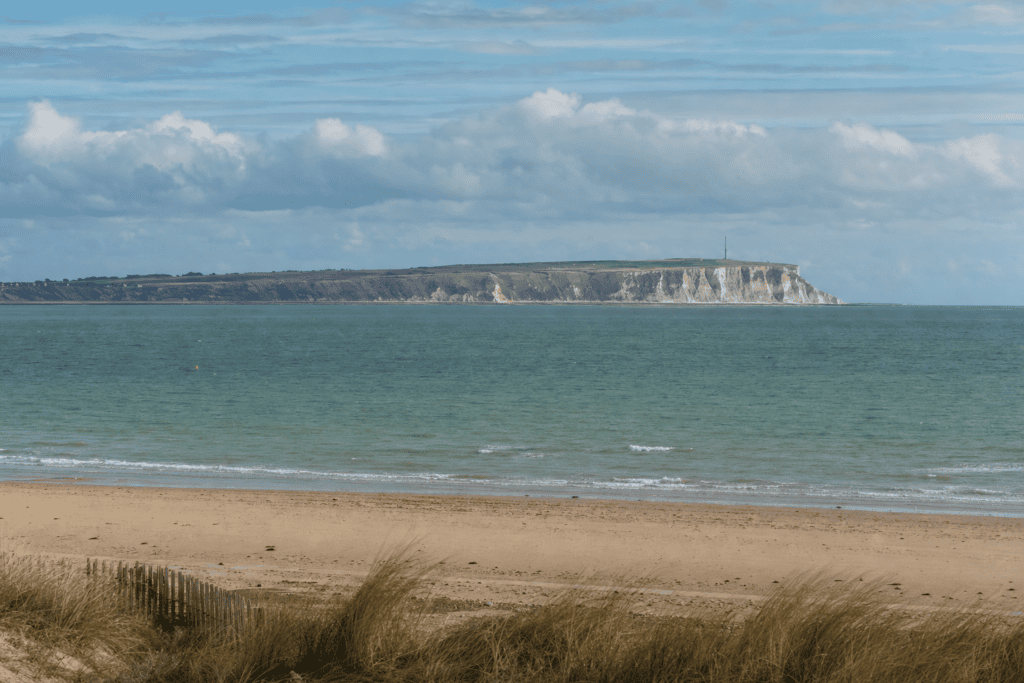 Cap Blanc-Nez from Calais An essential seaside escape from Calais, with chalk cliffs, coastal trails, and views over the…
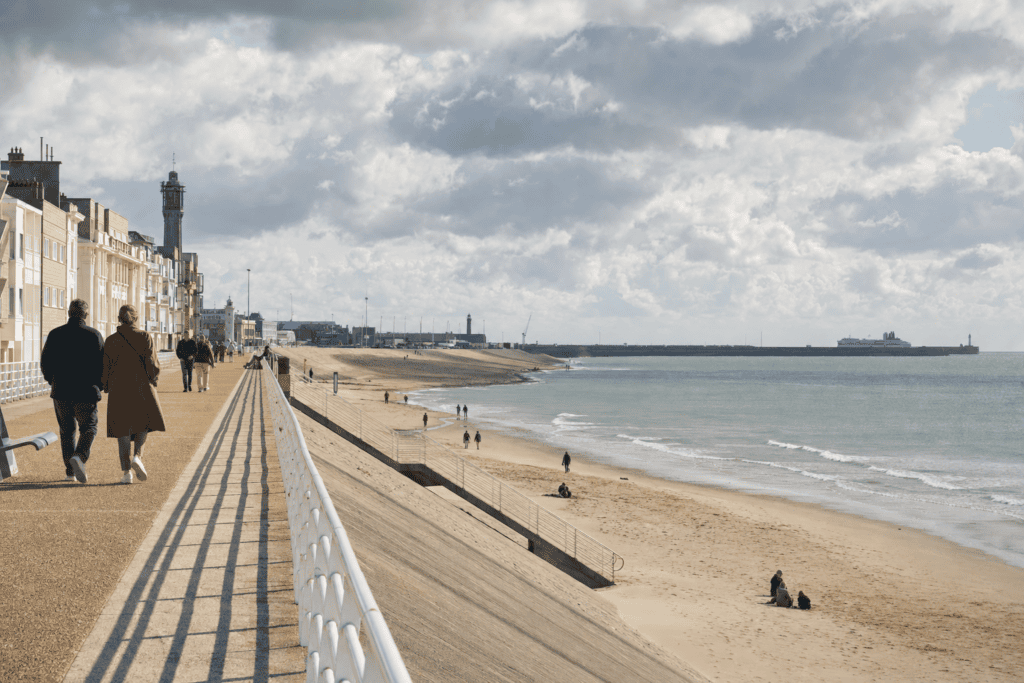 Calais Beach and Seafront Promenade A wide-open beach overlooking the strait, with its seawall, ferries, Calais Dragon, and family-friendly promenade.
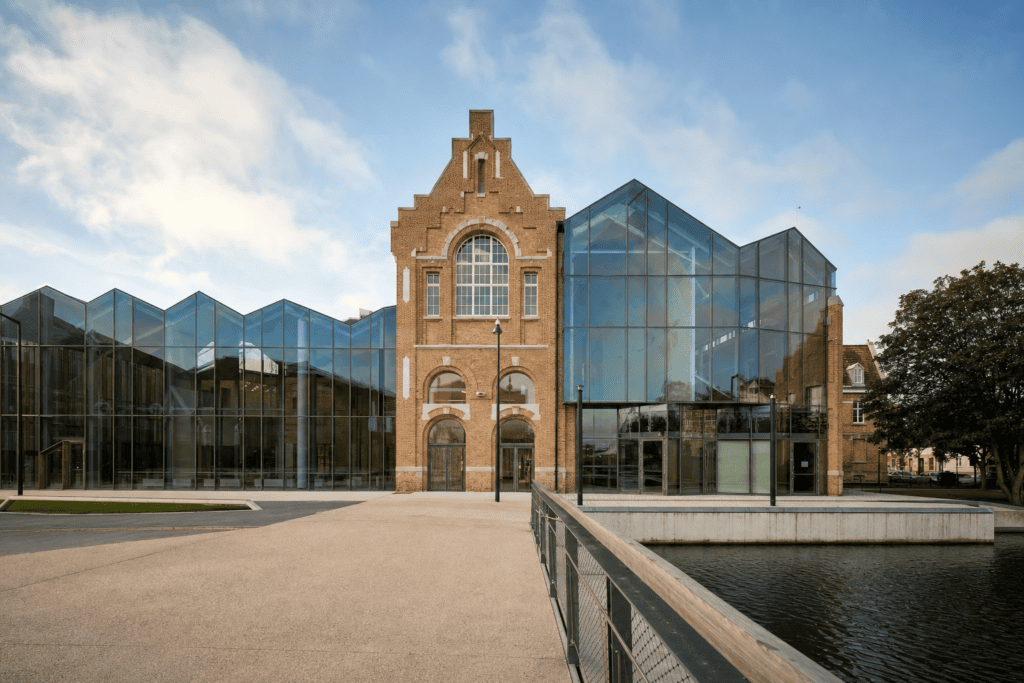 Cité de la Dentelle et de la Mode A former factory, working Leavers lace machinery, and a fascinating dialogue between local expertise, fashion…
Online booking · Paris → Hôtel de Ville, Place du Soldat Inconnu, 62100 Calais, France
Choose your pickup date and time
Your departure and arrival details are already pre-filled. You can adjust them in the fare calculator before viewing the vehicles and fare.