



Musée du Cheval in Chantilly: Guide to the Grandes Écuries
Chantilly
Located in the Grandes Écuries of the Chantilly estate, the Musée du Cheval explores the history, uses, and representations of the horse. The visit combines collections, princely architecture, and contemporary equestrian culture. Depending on the schedule and ticket selected, it can be complemented by a demonstration or show by the Chantilly Castle Equestrian Company. From Paris, Chantilly makes for a rich day trip, bringing together heritage, art, forest, and horse-racing traditions.
Practical information
Tickets for the museum, château, and shows may be offered as separate packages. Check the official ticketing site, schedule, and accessibility information before your visit, especially if you are traveling with a stroller or wheelchair.
Getting to the Grandes Écuries from Paris
Booking Paris Transfer can arrange private transportation from Paris, your hotel, CDG, or ORY to Chantilly, with a return to Paris or continuation of an itinerary begun in the Île-de-France region. Transportation is separate from tickets for the museum, château, and shows.
Service departing from Paris, the Île-de-France region, CDG, or ORY; admission tickets are not included.
A Monument Designed for Horses
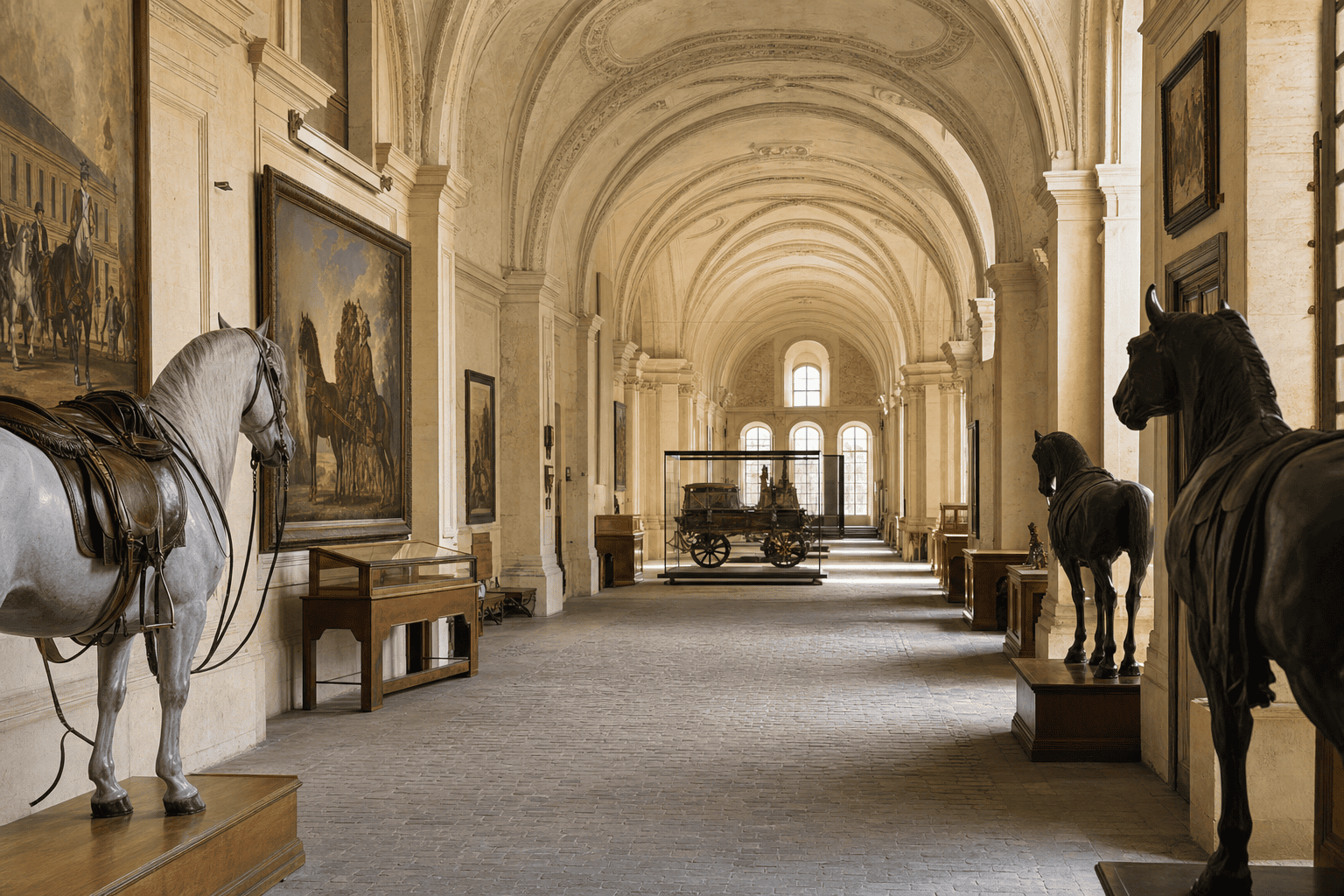
The Grandes Écuries are one of the most remarkable monuments on the Chantilly estate. Built between 1719 and 1735 by architect Jean Aubert for Louis-Henri de Bourbon, the seventh Prince of Condé, they reflect the importance of horses in aristocratic life under the Ancien Régime. Hunting, travel, pageantry, breeding, and ceremony required facilities that were spacious, orderly, and worthy of a palace.
The building is not simply a backdrop added to a museum: it was designed to house, care for, and organize numerous horses. The Cour des Remises, stables, and grand dome give the visit a distinctive sense of cohesion. The objects on display are presented in an environment that genuinely knew the work of stable hands, equerries, and horses.
Before going inside, take time to observe the façades, the proportions of the courtyard, and the monumental perspective of the dome. This architectural reading helps explain the prestige accorded to the stables. Information provided by the estate, or a guided tour when scheduled, can usefully complement this first impression.
The Musée du Cheval Collections
The Musée du Cheval, also presented by the estate as the Living Horse Museum, explains the animal’s place in European civilizations and societies. The exhibits bring together objects, works of art, equipment, and interpretive displays. It is therefore not intended only for people who ride: everyone can discover the relationship between humans and horses throughout history.
Topics may include breeds, anatomy, saddlery, specialized trades, dressage, racing, hunting with hounds, and artistic representations. A saddle, bit, harness, or outfit reveals both a technique and the social status of the person who used it. The works also show how the horse has evolved—as a working animal, means of transportation, military partner, artistic subject, sporting companion, and more.
The visit suits curious travelers who want to understand Chantilly as well as enthusiasts interested in examining the details of the equipment. As the galleries and interpretive materials may change, consult the official description of the route available on your chosen date rather than assuming every exhibit is permanent.
Chantilly, a Region Shaped by the Horse
The museum takes on its full significance when viewed within the landscape of Chantilly. The town retains an equestrian identity linked to the princely stables, hunting, breeding, and flat racing. The Chantilly Racecourse, near the estate, highlights the continuity between historic heritage and today’s racing activity. The forest and training tracks reinforce the impression of a region shaped by horses.
Here, the animal appears in many forms: source of labor, sporting partner, subject of paintings, element of princely ceremony, and performer in shows. The museum connects these aspects without conflating them. It provides useful context before exploring the château, gardens, grounds, racecourse, or surrounding area.
This context makes the visit accessible to people who do not ride. It helps explain the movements, trades, and equipment seen in the display cases or during a demonstration. Experienced riders, meanwhile, will find a historical perspective on the disciplines and on the relationship between equerries and their mounts. The site can therefore stand as a cultural destination in its own right, not merely an addition to a walk around the estate.
Equestrian Demonstrations and Activities
Equestrian demonstrations offer a close look at the work of horses and equerries in a practical setting. Depending on the official schedule, they may cover horse training, dressage, riding, or groundwork. Their appeal lies in observing the movements: listening, balance, progression, and trust are developed with precision, rather than reduced to a simple spectacle.
A demonstration naturally complements a visit to the collections. After seeing a saddle, harness, or historical depiction, visitors better understand the function of these objects in the arena. Beginners can follow the relationship between the equerry and the horse, while riders will notice the quality of the aids, the consistency of the work, and the horses’ preparation.
A demonstration is not guaranteed on every date, however. Times, content, duration, capacity, and access conditions depend on the estate’s schedule. Consult the official event listing before planning your day. The dome may also host a rehearsal or performance, so the areas open to the public may vary depending on the program.
Shows by the Equestrian Company
Shows by the Chantilly Castle Equestrian Company give the Grandes Écuries a theatrical dimension. Depending on the season, productions combine dressage, music, costumes, storytelling, and staging. The aim is not simply to present a technical feat: each show creates a world that helps the audience understand the relationship between artists and horses.
The dome provides a unique setting—monumental yet close enough to the arena to follow the movements and interactions. Those discovering equestrian arts can focus on trust, precision, and the progression of the exercises. Experienced viewers will appreciate the quality of the equestrian work, the presentation of the horses, and the production’s overall dramatic coherence.
Titles, dates, times, durations, and booking arrangements change according to the schedule. Consult the listing for the show you have chosen rather than relying on an old announcement. The ticket may be separate from the museum or château ticket. Also check the rules regarding photography, children, accommodations for visitors with specific needs, and any venue-related restrictions before the performance.
Getting from Paris: Train, Walk, or Taxi
Without a car, the journey generally begins with a train from Paris-Gare du Nord to Chantilly-Gouvieux. Schedules, travel times, and service conditions depend on the date and service selected: check the updated route with the carrier before departure. From the station, the Grandes Écuries are about 2.5 kilometers away. The walk may take around 30 minutes, but the actual time depends on your pace, the weather, and which access points are open.
To make the journey easier, check the walking route in advance on a mapping app, allow extra time, and do not rely on a shuttle without official confirmation. If you have a stroller, luggage, or reduced mobility, a local taxi may be preferable, subject to availability. Ask the driver to drop you at the Grandes Écuries and check the day’s access conditions.
By car, consult the estate’s official directions regarding access and parking, especially on weekends, during school breaks, and for equestrian events. Internal distances, cobblestones, and the estate’s spaces should also be taken into account. Booking Paris Transfer can arrange a private trip from Paris, the Île-de-France region, CDG, or ORY, with a return to Paris; this service does not include admission tickets.
Planning a Day Around the Grandes Écuries
The Musée du Cheval fits easily into a day devoted to the estate. Start with the Grandes Écuries if you would like to visit the museum during a quieter period, then attend a demonstration or show when the schedule allows. Continue to the château and the Condé Museum, checking exactly which areas are included in your package. The grounds then provide a break among formal gardens, broad vistas, and more natural areas.
If you are attending a performance, leave enough time to reach the dome and avoid making the day too hectic. With young children, choose a limited number of stops and plan breaks. Art history enthusiasts will enjoy comparing the château’s princely collections with the equestrian world of the Grandes Écuries. Racing fans can explore the area around the racecourse, without assuming that the facilities can be visited freely.
Comfortable shoes are helpful, as is protection from rain or sun. Before setting out, check opening hours, partial closures, booking rules, and accessibility information. A little preparation makes it easier to fully enjoy a destination where architecture, art, nature, and equestrian traditions come together at an unhurried pace.
Useful sources
Frequently Asked Questions
Where is the Musée du Cheval located?
How do you get to the Grandes Écuries from the train station?
Can you visit only the museum?
Is the museum suitable for children?
Do you need to book an equestrian show?
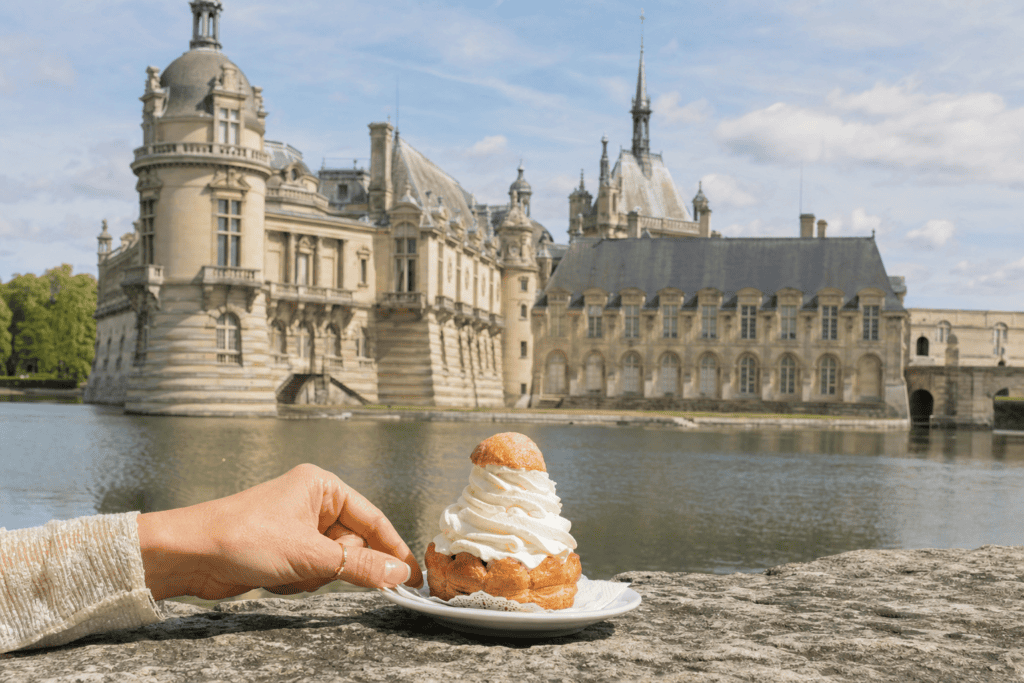 Chantilly Cream and Local Cuisine A food guide to tasting Chantilly cream, exploring the estate and planning an excursion from…
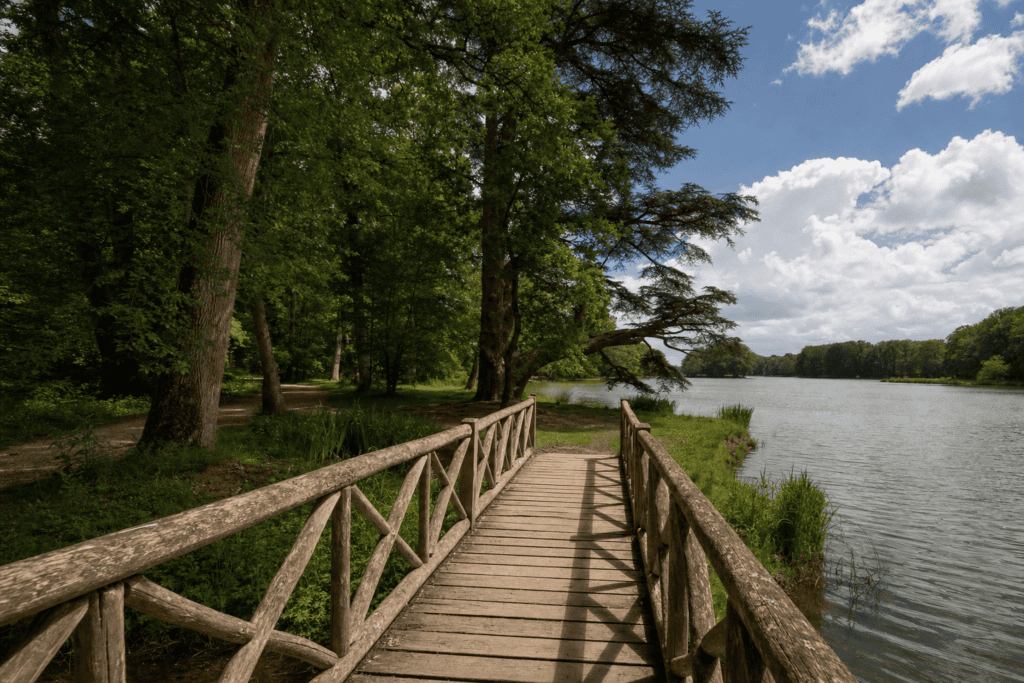 Chantilly Forest and Its Ponds A nature escape among grand forest avenues, the Commelles ponds, equestrian heritage, and the landscapes of Oise.
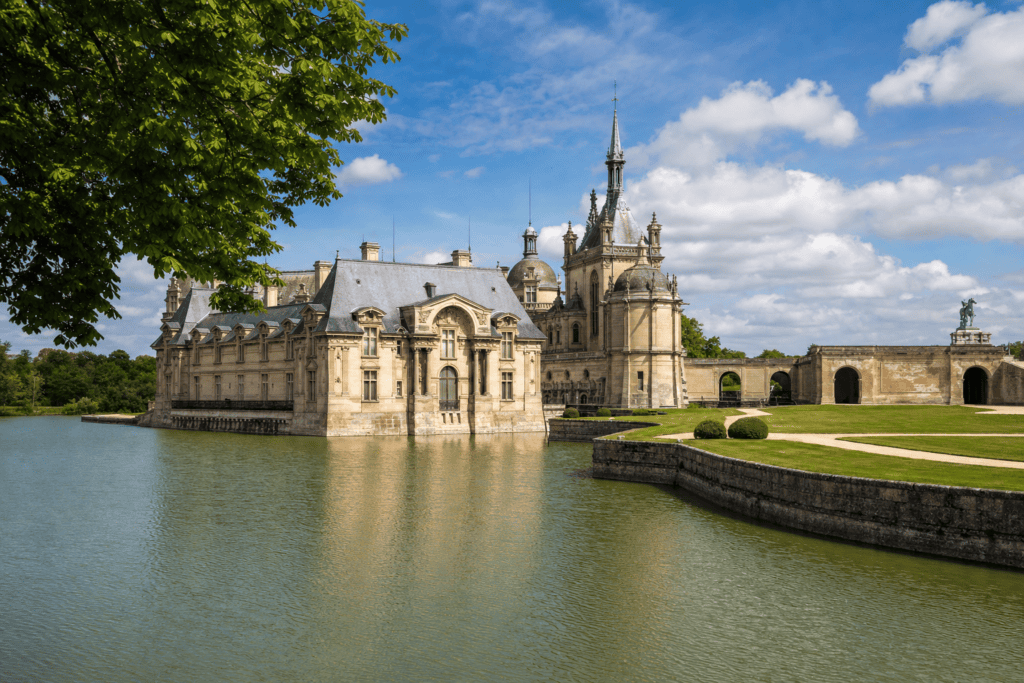 Chantilly Castle A unique princely estate near Paris, featuring masterpieces from the Condé Museum, historic gardens and equestrian culture…
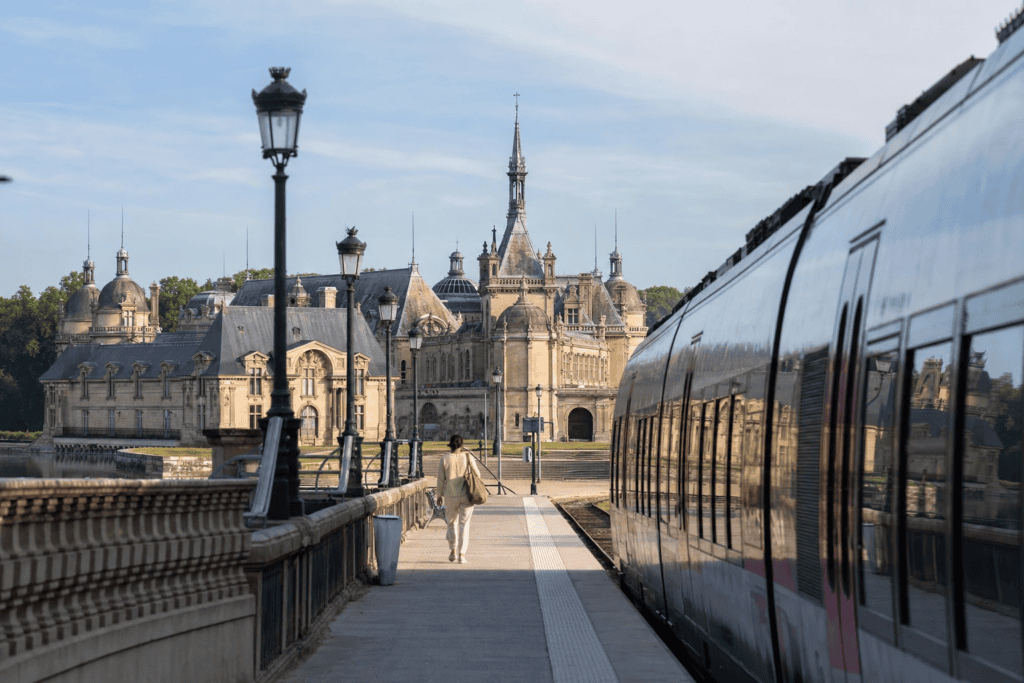 Getting to Chantilly from Paris by train Travel to Chantilly-Gouvieux from Paris-Gare du Nord, then reach the château on foot, by bus or taxi…
Online booking · Paris → Grandes Écuries of Chantilly château, 60500 Chantilly, Hauts-de-France
Choose your pickup date and time
Your departure and arrival details are already pre-filled. You can adjust them in the fare calculator before viewing the vehicles and fare.