



Musée Eugène Boudin: The Art and Light of Honfleur
Honfleur
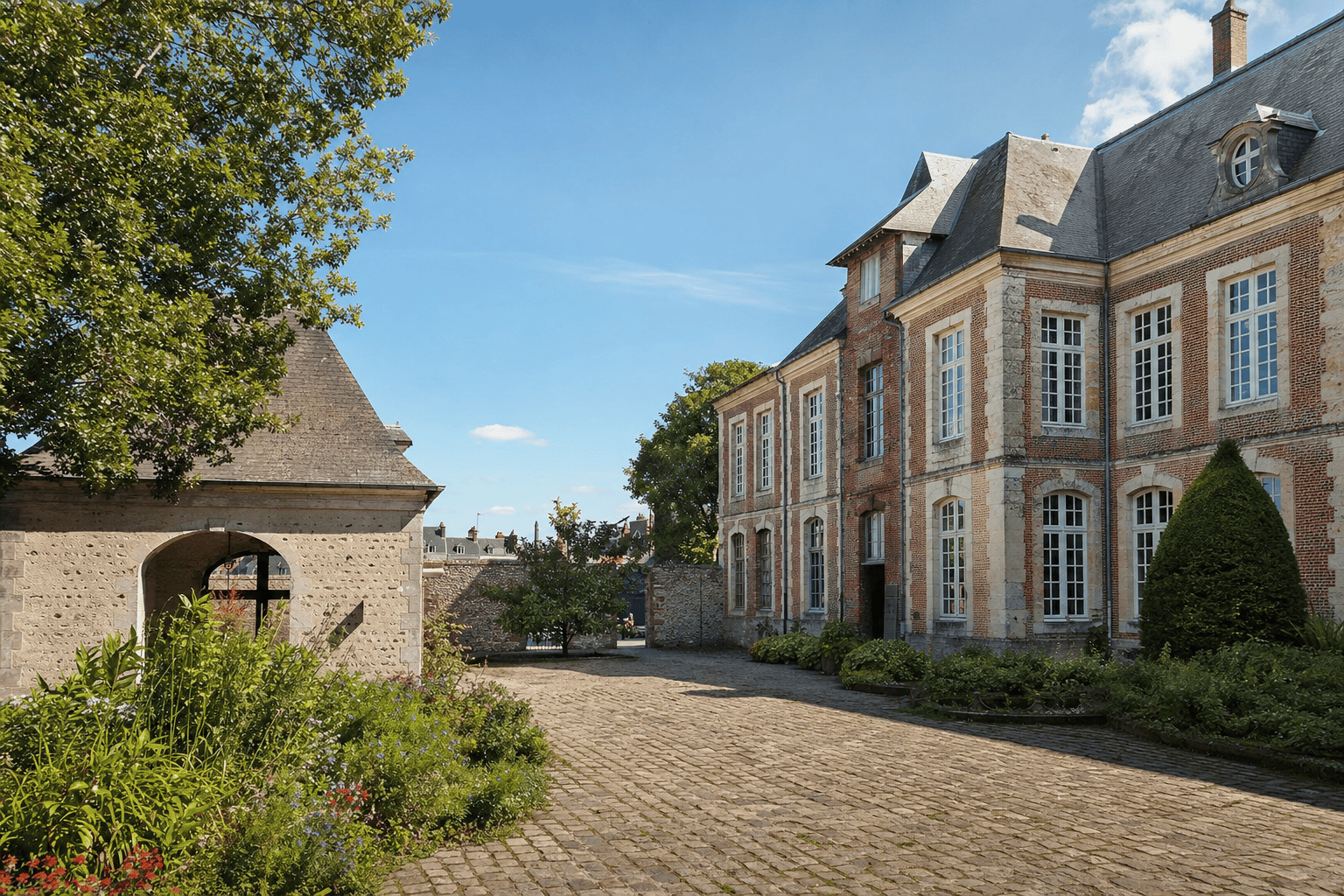
Located on Rue de l’Homme de Bois, the Musée Eugène Boudin is one of Honfleur’s leading cultural attractions. Founded in 1868 on the initiative of Alexandre Dubourg, with the support of Eugène Boudin, it displays works connected with Honfleur, Normandy, and the landscapes of the Seine estuary. A visit helps explain why the town attracted so many painters, from Romantic artists to the Impressionists and the Fauves.
Practical information
Combine your visit with the Old Harbor, Sainte-Catherine Church, and the Maisons Satie. A Honfleur cultural pass may be worthwhile if you plan to visit several sites.
Getting to Honfleur from Paris with a private driver
To visit the Musée Eugène Boudin without dealing with the drive, Booking Paris Transfer can arrange private transportation from Paris, a Paris hotel, Charles de Gaulle Airport, or Orly Airport. The trip can be planned as a same-day round trip or incorporated into a Normandy itinerary departing from Paris. This service covers transportation only; museum admission and visits are paid for separately with the relevant sites.
Departure is available from Paris, a Paris hotel, CDG or ORY, with a return to Paris depending on the itinerary selected.
Why visit the Musée Eugène Boudin?
The Musée Eugène Boudin offers a particularly clear introduction to Honfleur’s artistic history. Rather than presenting only one painter’s work, it tells the story of the development of a distinctive Norman artistic landscape. Eugène Boudin is central to the collection, but he is surrounded by artists who observed the same harbors, skies, beaches, and shifting light.
The visit is therefore worthwhile even if you are not very familiar with 19th-century paintingth century painting. The collections show how Honfleur became a place of passage, inspiration, and artistic exchange. They also shed light on the links between painting, emerging tourism, and the discovery of the Normandy coast.
The museum is an ideal complement to a stroll through town. After viewing the paintings, you can revisit the Old Harbor, quays, slate roofs, and views over the estuary. This continuity between the artworks and the real landscapes accounts for much of the site’s appeal.
Eugène Boudin, a native of Honfleur
Born in Honfleur, Eugène Boudin is one of the essential figures of Norman painting. He is often described as a forerunner of Impressionism, particularly for his attention to atmospheric effects, skies, and rapid changes in light. His work does more than describe a landscape: it seeks to capture a fleeting sensation, a particular kind of weather, or a maritime atmosphere.
The museum preserves a collection connected with his career and his attachment to his hometown. His support for the museum’s creation, followed by the bequest of works intended for Honfleur, explains his special place in the institution’s history. The museum has officially borne his name since 1960.
As you study his beach scenes, skies, and coastal views, notice how human figures sometimes become small dabs of color within the space. In Boudin’s work, the sky is not merely a background: it often structures the entire composition and sets the rhythm of the landscape.
A collection featuring Honfleur’s painters
One of the museum’s greatest strengths is the diversity of its collections. Alongside Eugène Boudin, visitors will find works by Louis-Alexandre Dubourg, Johan Barthold Jongkind, Claude Monet, Gustave Courbet, and other artists who came to work in Normandy. The selection makes it possible to compare different perspectives on the same region.
The tour also extends to 20th-century artists who lived or worked in Honfleur and the surrounding areath century artists who lived or worked in Honfleur and the surrounding area. Works associated with Raoul Dufy, Henri de Saint-Delis, Albert Marquet, Félix Vallotton, and the painters of the Rouen School show that Honfleur’s artistic history did not end with Impressionism.
This chronological breadth is valuable for understanding how artistic perspectives changed. Painters did not all depict the harbor in the same way: some favored precision, while others emphasized color, texture, or simplified forms. The visit is best approached as a comparison of sensibilities rather than simply a succession of famous names.
Galleries and themes not to miss
The museum brings together several collections that go beyond landscape painting alone. An ethnographic gallery notably presents costumes, accessories, lace, furniture, dolls, and traditional Norman headdresses. This section reminds us that the territory observed by the painters was also a social world, with its own occupations, customs, and ways of life.
The tour also includes spaces devoted to contemporary artists from Honfleur, as well as 20th-century painters who worked in Normandyth century painters who worked in Normandy. The Hambourg-Rachet donation offers another perspective, with works connected to several generations of artists and collectors. The drawings cabinet completes the collection with works on paper displayed according to themes and rotation possibilities.
The chapel hosts temporary exhibitions, generally presented as part of a changing program. Since the content of these exhibitions changes, it is best to consult the official schedule before traveling. A visit may therefore differ depending on the season, even though the permanent collections remain the central thread.
Understanding Honfleur and the estuary through painting
The museum helps you read Honfleur as a landscape shaped by water, tides, and port activities. The Old Harbor, boats, beaches along the Côte Fleurie, and views toward the estuary form a setting that attracted artists through its constant movement. The light changes with the time of day, season, mist, and cloud cover.
This quality is especially apparent in Boudin and Jongkind, but it also runs through the works of painters who came to Normandy seeking an alternative to academic landscapes. Painting outdoors, shore scenes, and weather effects became subjects in their own right. The museum therefore helps place Honfleur within the genealogy of modern painting.
To continue this exploration, head out toward Quai Sainte-Catherine, walk through the old streets, and look for openings toward the harbor. Comparing today’s landscape with the paintings is not about finding exactly the same views, but about understanding what continues to hold the eye in the site’s light and geography.
Tips for planning your visit
The Musée Eugène Boudin is located in central Honfleur, on Rue de l’Homme de Bois. A self-guided visit generally lasts about one to one and a half hours, but allow more time if you want to see the temporary exhibitions or take notes. The Tourist Office lists audioguides in French and English.
Hours vary depending on the time of year. Available information indicates that the museum is usually closed on Tuesdays and for an annual closure period in January, with possible exceptions depending on the program. Public holidays, seasonal hours, and exhibitions may alter the usual schedule: always check the official page before setting out.
The museum can be visited with children thanks to family-friendly materials, including games and a small space for younger visitors. For a first introduction to Honfleur, plan a half-day including the museum, the Old Harbor, Sainte-Catherine Church, and a walk toward the higher parts of town.
What to see around the museum in Honfleur
The museum’s location makes it easy to create a cultural itinerary on foot. Start with the collections, then head to the Old Harbor to see one of Honfleur’s most iconic landscapes. The narrow façades, tall houses, and reflections on the water provide a tangible continuation of the scenes viewed in the galleries.
Nearby, Sainte-Catherine Church is worth a stop for its wooden architecture and distinctive atmosphere. The Maisons Satie offers a route devoted to the composer born in Honfleur, while the Vieux Honfleur museums focus more on maritime history and local life. Depending on your plans, a Duo Pass or Multi Pass may cover several sites, subject to the current terms.
To fully appreciate the relationship between Honfleur and its painters, finish at an unobstructed viewpoint over the estuary or with a walk along the quays. From Paris, a private transfer can be arranged as transportation to Honfleur, departing from a Paris hotel, CDG, or ORY, followed by a return to Paris according to your itinerary.
Useful sources
Frequently Asked Questions
Where is the Musée Eugène Boudin located?
How much time should I allow for the visit?
Is the museum family-friendly?
Are the opening hours the same year-round?
Can the museum be combined with other visits?
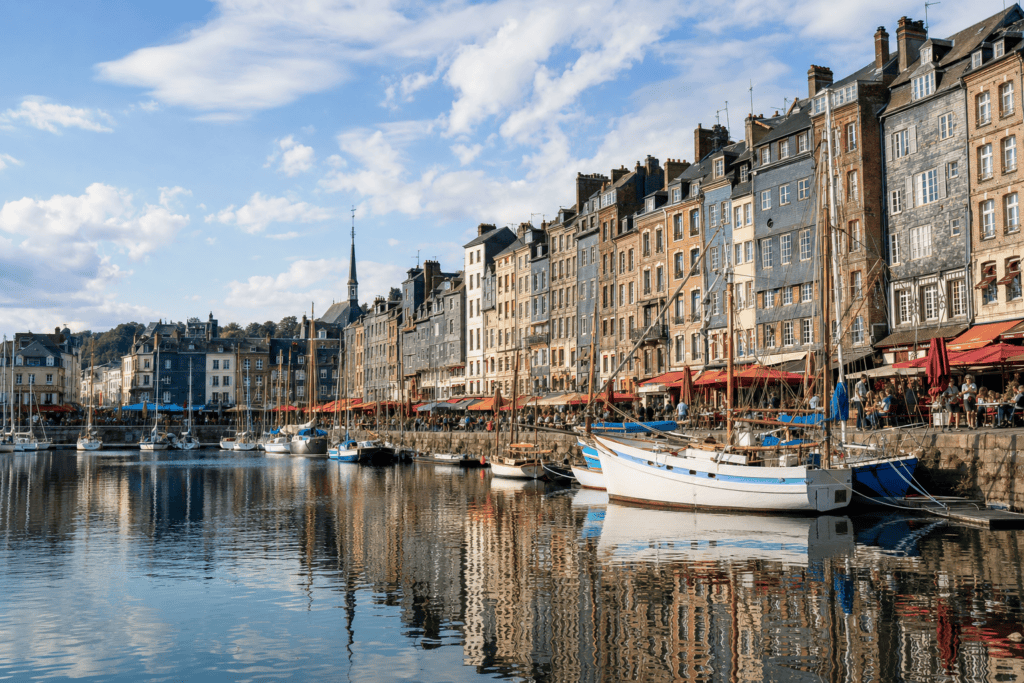 Honfleur’s Vieux Bassin and historic district A walking itinerary linking the historic harbor, slate-roofed houses, galleries, churches, and iconic lanes of…
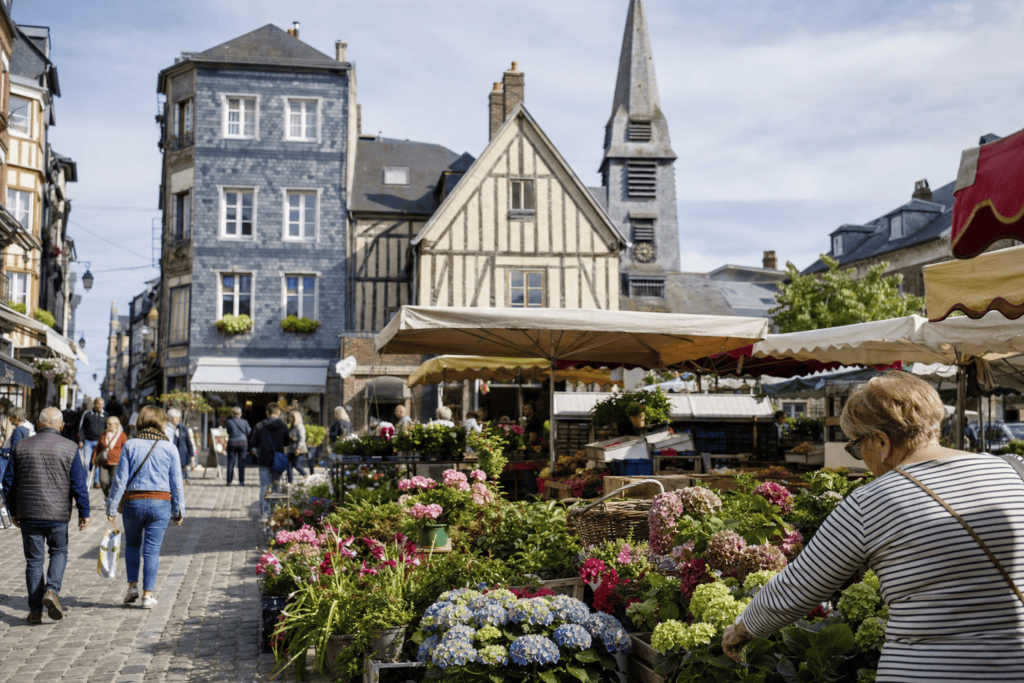 Honfleur Market On Saturday mornings, discover Norman products and local activity around Place Sainte-Catherine.
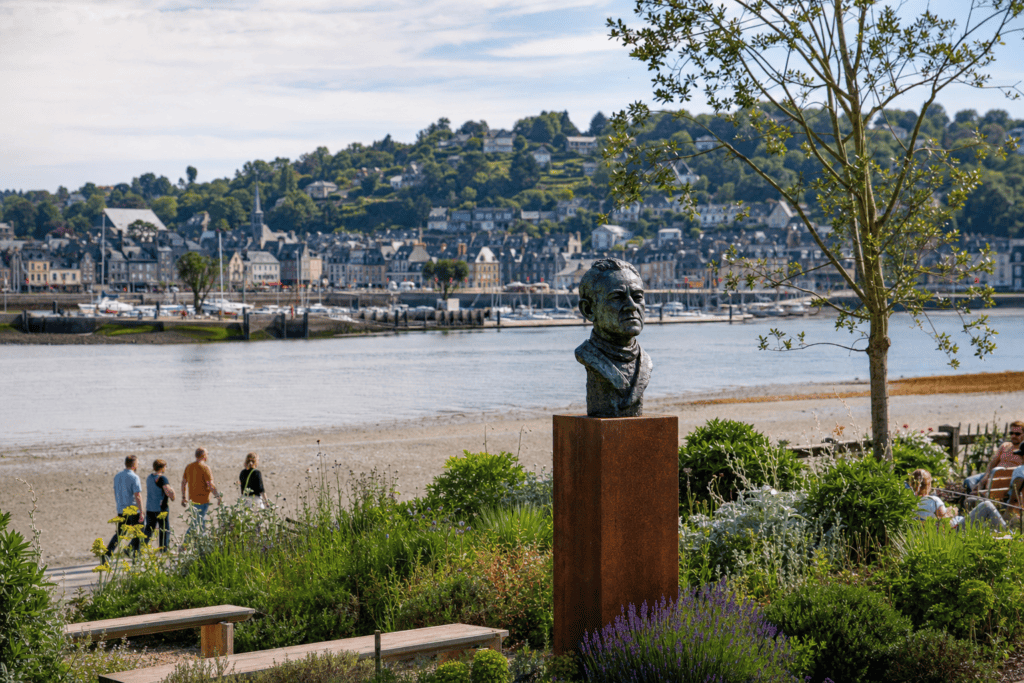 Butin Beach and Jardin des Personnalités A bracing seaside walk between the beach, landscaped gardens, and Honfleur’s iconic figures.
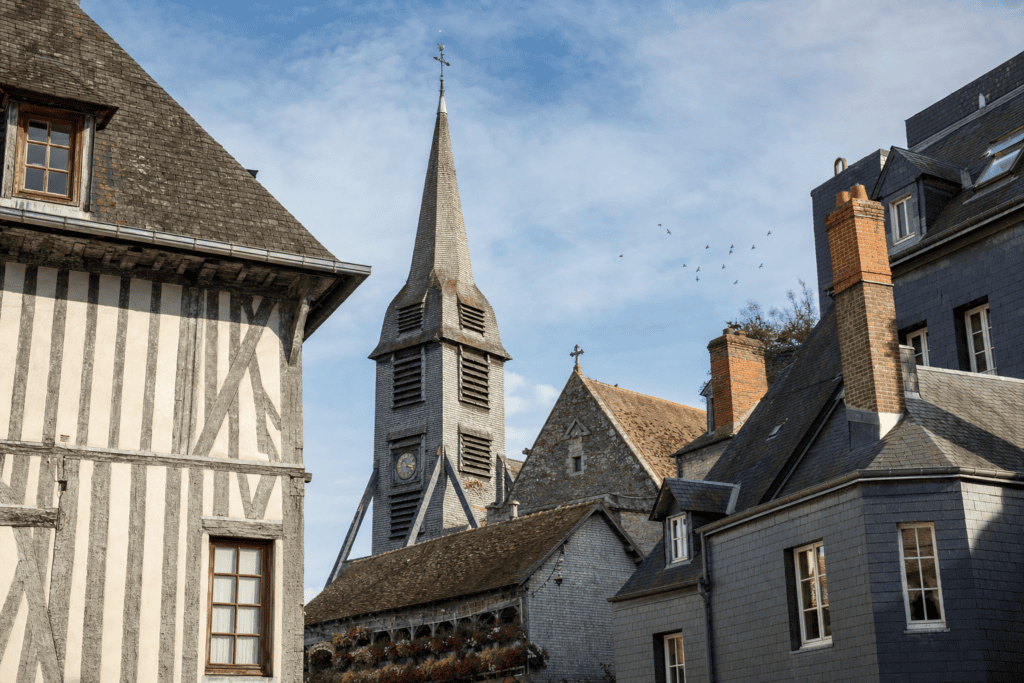 Saint Catherine’s Church A unique wooden church in France, located in the heart of Honfleur’s historic district…
Online booking · Paris → Rue de l’Homme de Bois, 14600 Honfleur, France
Choose your pickup date and time
Your departure and arrival details are already pre-filled. You can adjust them in the fare calculator before viewing the vehicles and fare.