



Normandy · Calvados · Maritime Heritage · Normandy
Visiting Honfleur: A Guide to Normandy Heritage
Visiting Honfleur means discovering a historic port where half-timbered houses, the quays of the Vieux Bassin, and Sainte-Catherine Church create one of Normandy’s most recognizable landscapes. With its maritime heritage, artistic legacy, and preserved lanes, the town is ideal for anything from a few hours to a more in-depth cultural stay.
Explore Honfleur
Honfleur’s must-see attractions
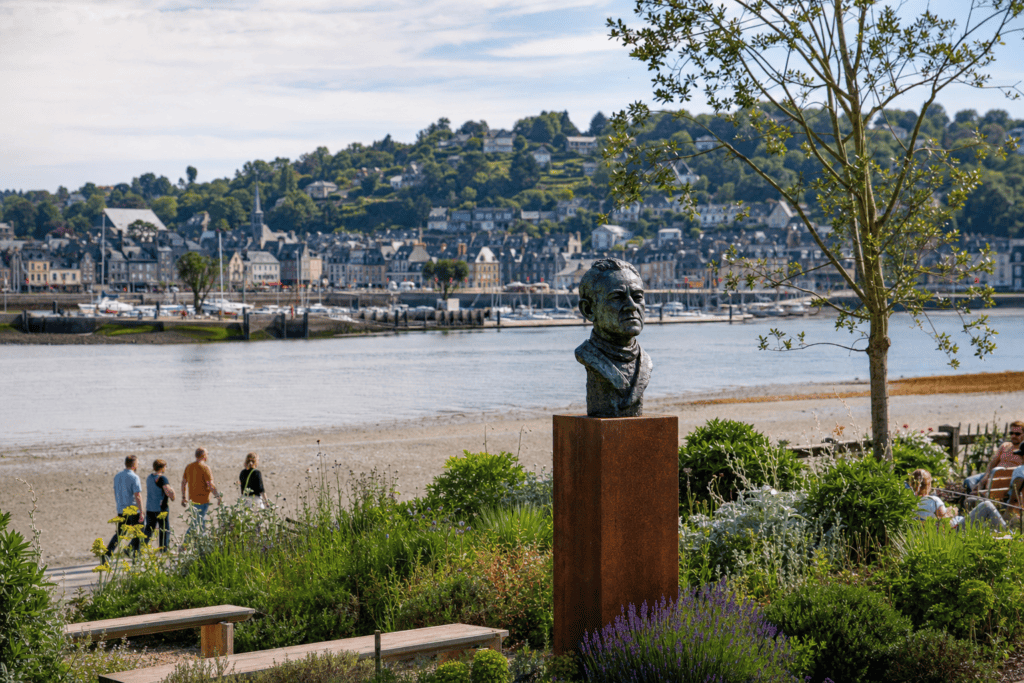 Nature
Butin Beach and Jardin des Personnalités
A bracing seaside walk between the beach, landscaped gardens, and Honfleur’s iconic figures.
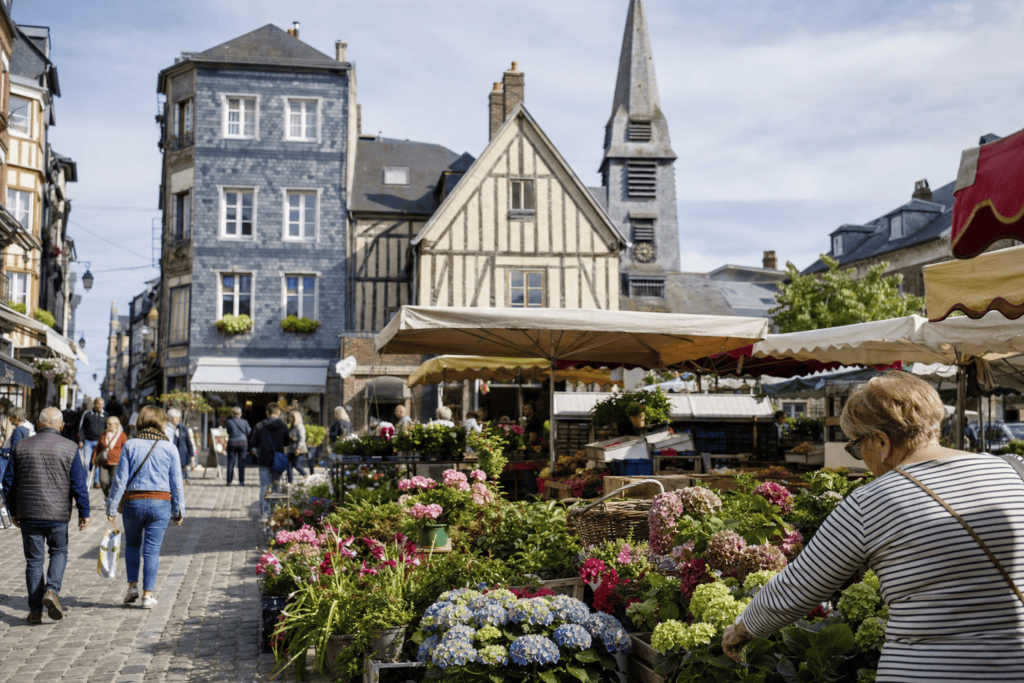 Markets
Honfleur Market
On Saturday mornings, discover Norman products and local activity around Place Sainte-Catherine.
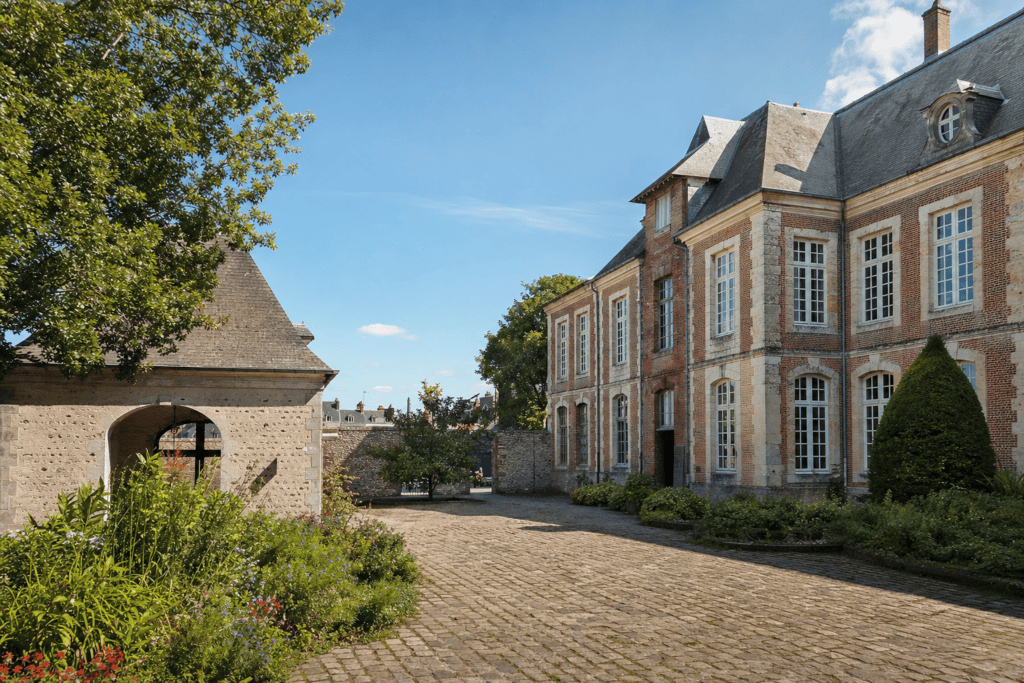 Must-see
Musée Eugène Boudin
A must-see museum for discovering Eugène Boudin, the painters of Honfleur, and the light of the Normandy estuary.
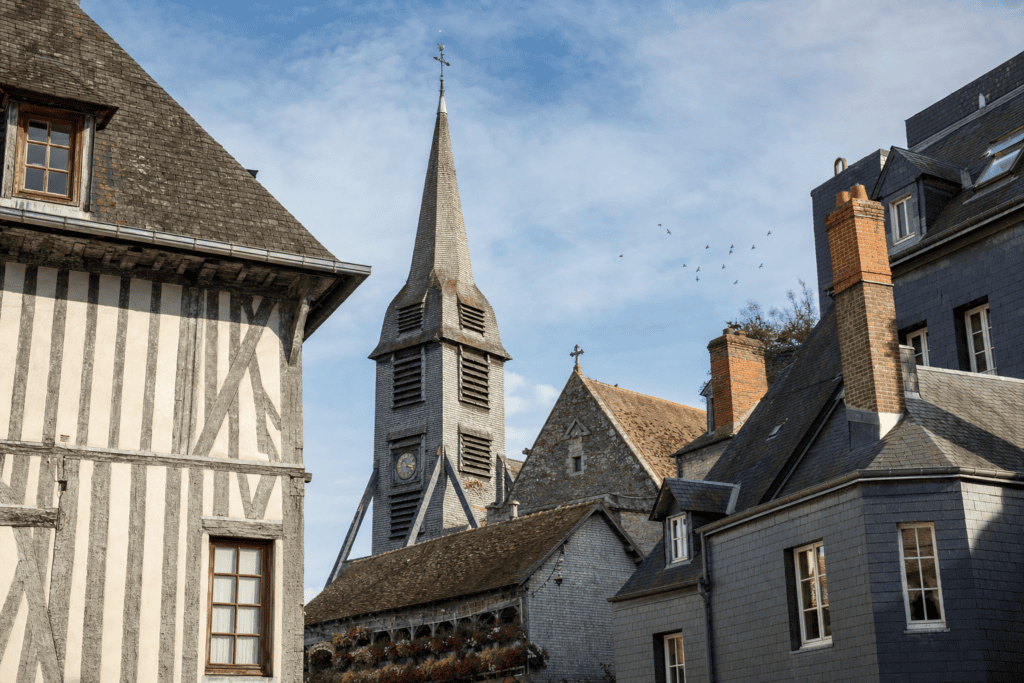 Must-see
Saint Catherine’s Church
A unique wooden church in France, located in the heart of Honfleur’s historic district, near the…
 Must-see
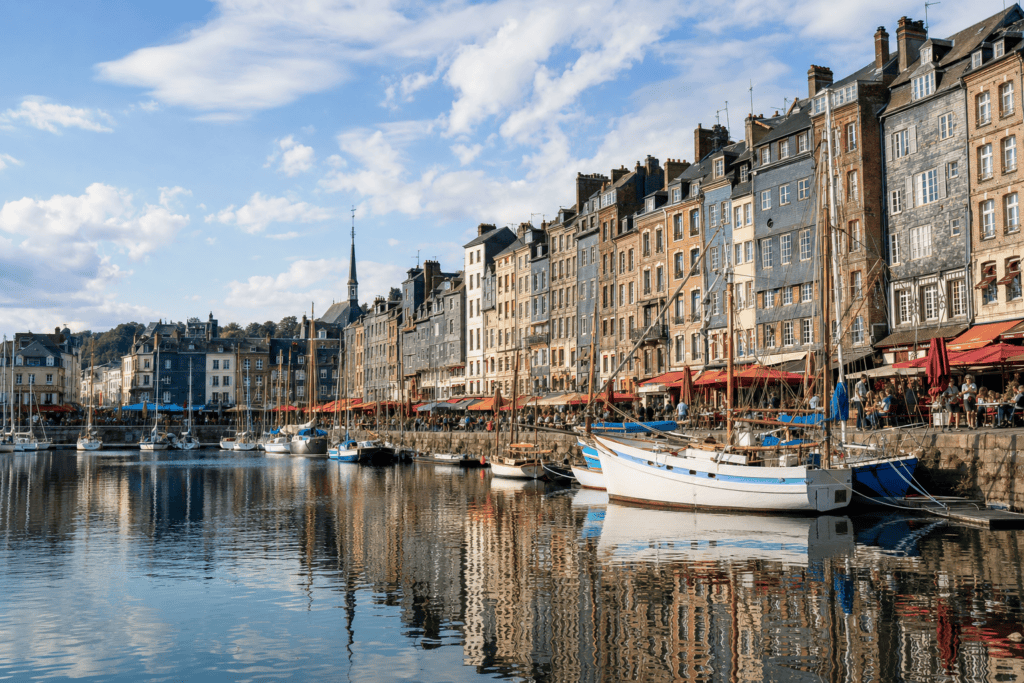
Honfleur’s Vieux Bassin and historic district
A walking route among the historic harbor, slate-clad houses, galleries, churches and iconic lanes of Honfleur.
Other destinations to discover
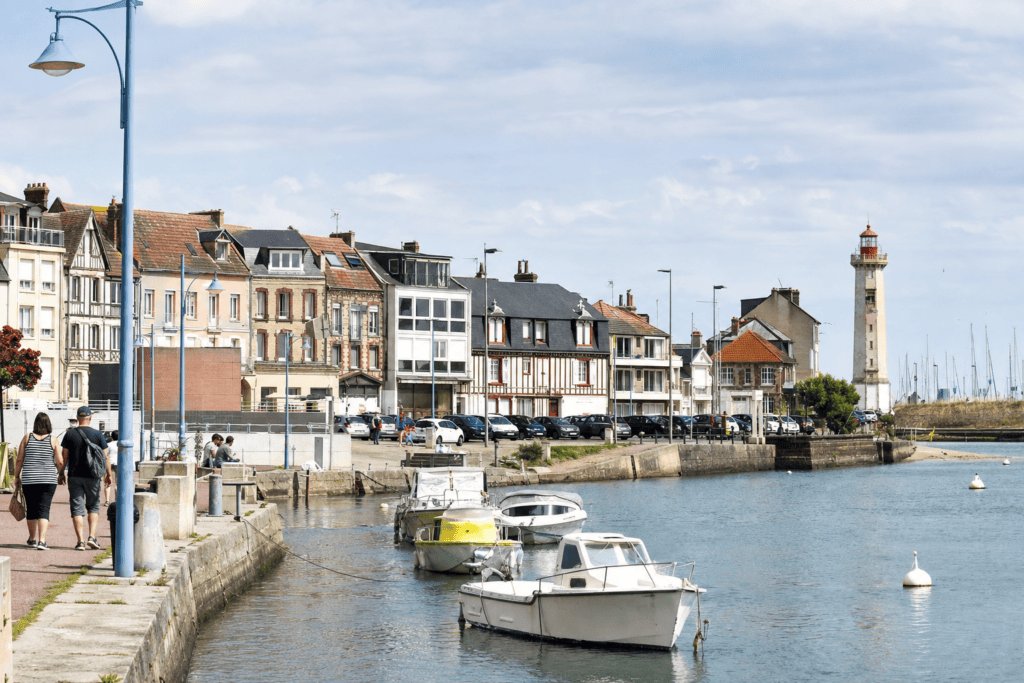
Ouistreham
Discover Riva-Bella Beach, Sword Beach, the Grand Bunker, the harbor and D-Day sites…
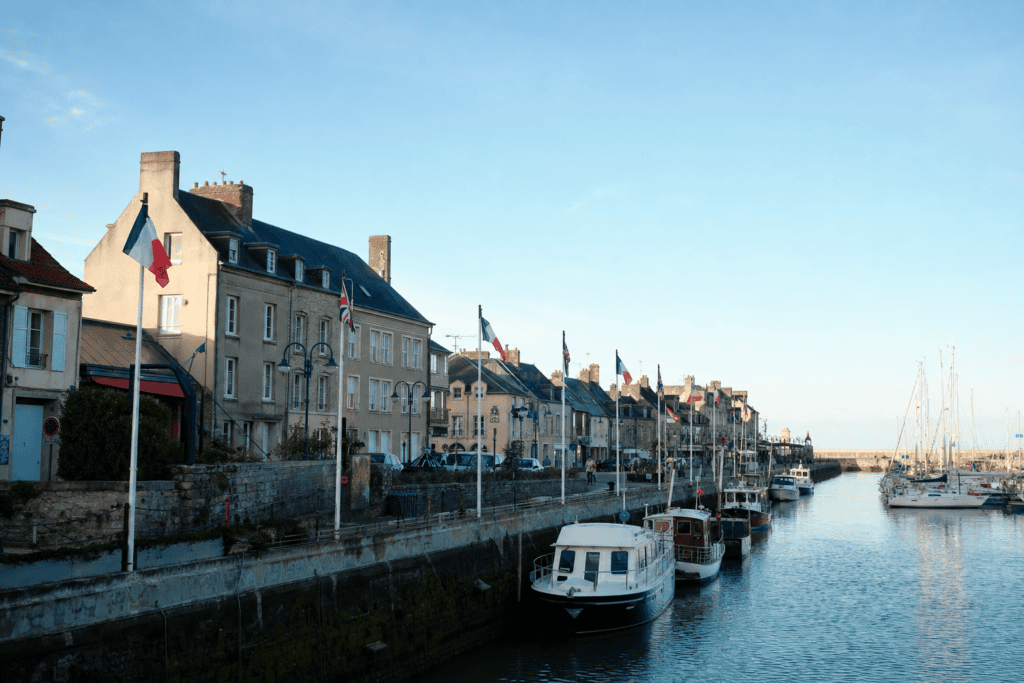
Courseulles-sur-Mer
A Côte de Nacre resort with beaches, a harbor, seafood and Canadian heritage…
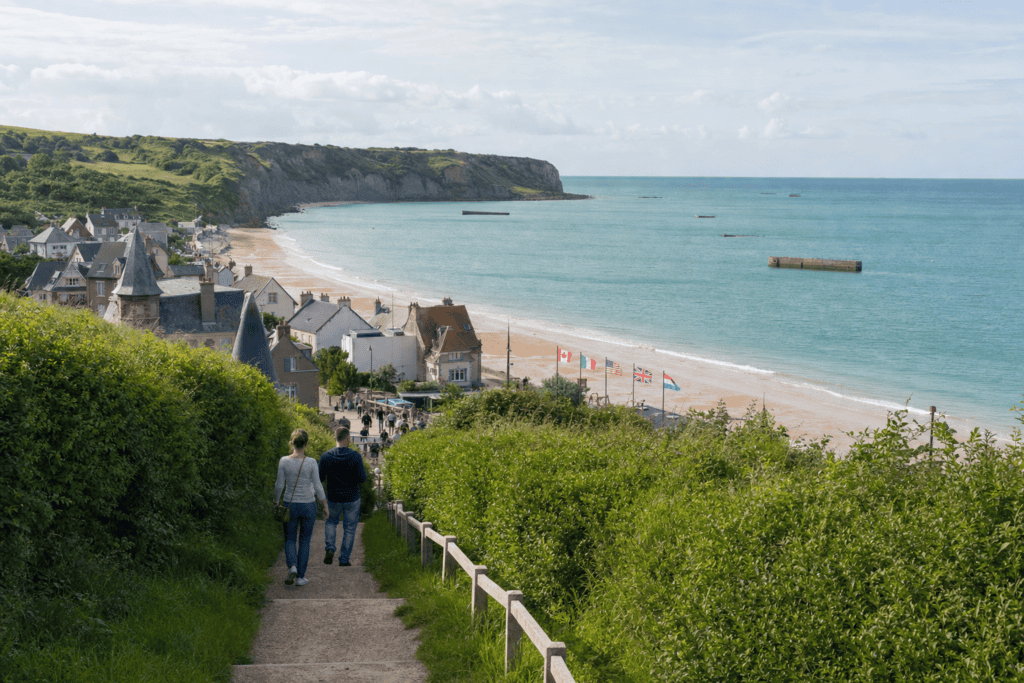
Arromanches-les-Bains
A major D-Day site featuring Mulberry B harbor, Gold Beach, a museum, and remembrance routes from Bayeux.

Sainte-Mère-Église
Discover the Airborne Museum, John Steele’s church, La Fière, and Utah Beach from Sainte-Mère-Église.
Évreux
A charming Norman town where the cathedral, belfry, museum and banks of the Iton make for a rich and…
Alençon
Alençon charms visitors with its historic heritage, exceptional needle lace, religious legacy and landscapes…
DESTINATION GUIDE
Honfleur Travel Guide
Understanding Honfleur’s Identity
Located on the southern bank of the Seine estuary, Honfleur is a former port town in Calvados. Its history was shaped by fishing, maritime trade, shipbuilding, and voyages toward distant horizons. This connection to the sea explains the town’s distinctive character: a compact port, narrow quays, tall houses, and an old center best explored on foot.
Honfleur’s historic district forms a cohesive heritage area, but the town is more than a succession of monuments. Much of the appeal lies in the details: an inner courtyard, a wooden façade, a former shipowner’s house, a cobbled alley, or the changing view of the boats in the harbor. Wear comfortable shoes, as several streets in the center are cobbled and sometimes uneven.
The Vieux Bassin: The Heart of the Visit
The Vieux Bassin is the natural starting point for a first walk. Created in the 17th century, it is lined with narrow, colorful façades reflected in the water. Quai Sainte-Catherine offers the most famous view, with its tall houses packed closely together. On the opposite side, Quai Saint-Étienne provides views of the Lieutenance, the former Saint-Étienne Church, and activity in the port.
The light changes quickly around the harbor. Mornings often bring a calmer atmosphere, while late afternoon highlights the façades and the silhouettes of the boats. The terraces around the port are pleasant for a break, but it is also worth walking a few streets away to find a more residential atmosphere.
- Walk all the way around the harbor before visiting the museums.
- Notice the differences in height and materials between the houses along the quays.
- Return to the same spot at another time of day to appreciate the changing light.
Sainte-Catherine Church and the Sailors’ Quarter
The Sainte-Catherine district is home to one of Honfleur’s most distinctive monuments. Built mainly of wood by shipwrights, Sainte-Catherine Church has a nave reminiscent of an upturned ship’s hull. Its separate bell tower reflects safety requirements and forms an instantly recognizable architectural ensemble with the church.
Place Sainte-Catherine is a good starting point for exploring the surrounding streets. The neighborhood retains half-timbered houses, narrow passageways, workshops, galleries, and several places devoted to creative work. Rue Haute, Rue des Lingots, Rue de l’Homme de Bois, and Rue des Capucins let you extend your walk without following a rigid route.
When the area around the Vieux Bassin is crowded, this district offers a more peaceful way to experience Honfleur’s layers of history. Take time to look at doorframes, signs, and façade details rather than focusing only on the best-known viewpoints.
The Lieutenance, the Salt Halls, and Maritime History
At the entrance to the Vieux Bassin, the Lieutenance recalls the town’s former fortification system. This defensive remnant now houses an interpretation center devoted to Honfleur’s architecture and maritime heritage. A visit is a useful complement to a walk through the old center, helping explain the development of the port, ramparts, and urban landscape.
The Salt Halls reflect another aspect of local history. These buildings were used to store salt, particularly under the gabelle salt tax. Their simple, sturdy architecture contrasts with the more colorful façades along the quay. Depending on the cultural program, they may host exhibitions, concerts, or events; it is best to check opening information before visiting.
The former Saint-Étienne Church, located beside the harbor, houses the Maritime Museum. It places Honfleur within the history of maritime trade and navigation. Other institutions belonging to the Museums of Old Honfleur explore local traditions, artists, and the town’s memory.
Honfleur: A Town of Painters and Music
The town is closely associated with Eugène Boudin, who was born in Honfleur and became known for his studies of skies and coastal scenes. The Eugène Boudin Museum holds a collection connected to Norman painting and the atmosphere of the estuary. A visit is especially worthwhile if you want to understand why changing light attracted so many painters to the region.
The Satie Houses pay tribute to Erik Satie, the composer born in Honfleur. Their tour combines music, objects, set design, and biographical elements. The experience differs from that of a traditional museum and can complement a day devoted to architectural heritage.
To follow this artistic thread, look at Honfleur as a subject for painting: the lines of the quay, reflections, sky, sails, colorful façades, and silhouettes of passersby. Not all the best compositions are around the harbor; some quieter streets set back from it offer more understated views.
A Day or a Weekend: How to Plan Your Visit
For a half-day, focus on the Vieux Bassin, the Lieutenance, Quais Saint-Étienne and Sainte-Catherine, then continue to Sainte-Catherine Church and the lanes of the old center. This itinerary lets you see the main landmarks without packing in too many indoor visits.
With a full day, add one or two museums based on your interests: maritime heritage, painting, music, or local history. Leave time for lunch, strolling, and reaching a viewpoint in the hills, such as the Côte de Grâce or Mont-Joli area, when conditions and your mobility allow.
- For architecture enthusiasts: prioritize a walking circuit through the old town and the Salt Halls.
- For painting enthusiasts: combine the Eugène Boudin Museum with a walk around the port.
- With children: alternate short visits, quays, open spaces, and food breaks.
- In changeable weather: plan museum visits between walks, checking official information on the day of your visit.
Practical Tips for a Responsible Visit
Honfleur is very busy at certain times, especially on weekends and during school vacations. Arriving early lets you enjoy the Vieux Bassin more peacefully and take a closer look at the architectural details. The historic center is primarily explored on foot; visitors with reduced mobility should plan for cobblestones, slopes, and any temporary route adjustments.
Construction work or safety zones may occasionally change access to certain streets or sections of the quay. Before you leave, check the updated route from the Honfleur Tourist Office and the official pages of the monuments. Respect local residents, keep passageways clear, and avoid leaning against historic façades or entering private property.
Finally, Honfleur can also be explored around the estuary. A walk toward the Côte de Grâce, a guided outing on the water, or an excursion to the Normandy Bridge can extend your visit, provided you check operators, weather conditions, and availability directly with the relevant organizations.
Useful sources
Getting to Honfleur from Paris
Booking Paris Transfer can arrange a private transfer from Paris, Île-de-France, or airports CDG and ORY to Honfleur, with the option of returning to Paris or including the town in a Normandy itinerary that began in Paris. The service covers transportation; tickets for museums, monuments, and activities must be booked separately through the official websites.