



Perret Architecture in Le Havre: Exploring the Rebuilt City Center on Foot
Le Havre
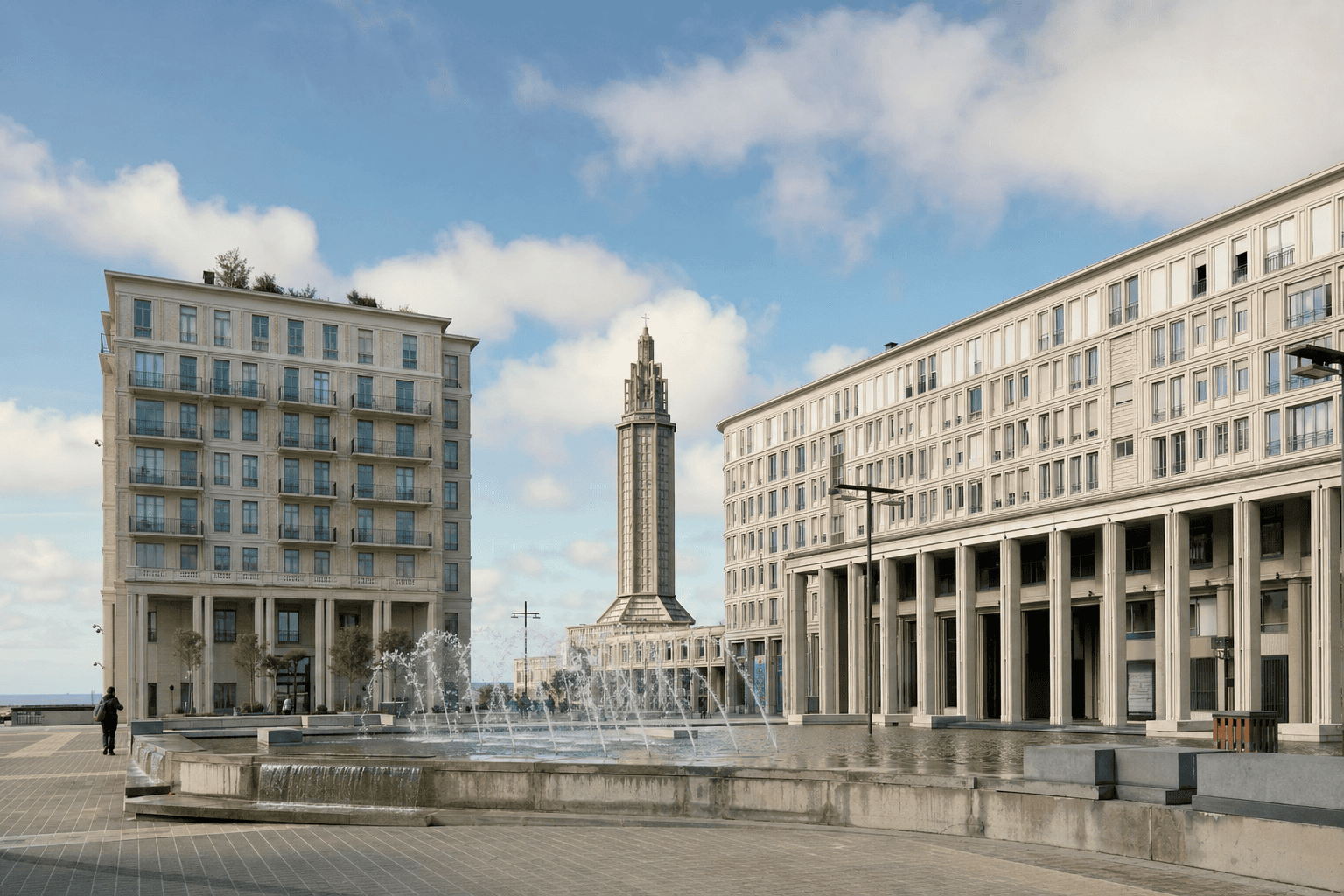
Le Havre’s rebuilt city center is much more than a collection of postwar buildings: it is a carefully designed urban composition, conceived by Auguste Perret and his studio as a coherent, bright and functional city. Bombed during World War II, the city center was rebuilt between 1945 and 1964. Listed as a UNESCO World Heritage Site since 2005, the area is best explored on foot, taking in the façades, vistas, squares and details of the concrete. Perret architecture in Le Havre gradually reveals itself between the show apartment, City Hall Square, Rue de Paris, Porte Océane and Saint-Joseph Church. Allow time to look up: the site’s richness lies as much in its ordinary residential buildings as in its iconic monuments.
Practical information
Start at the Heritage House, then follow a route linking the show apartment, City Hall Square, Avenue Foch, Saint-Joseph Church and Porte Océane. Wear comfortable shoes and have a backup plan in case of rain.
Getting to Le Havre from Paris Made Easy
For a day trip to Le Havre, Booking Paris Transfer can arrange private transportation from Paris, a Paris hotel, Charles de Gaulle Airport or Orly, with a return to Paris or onward travel through Normandy. The service covers transportation only; tours, reservations and any tickets must be arranged with the official sites.
Departure is available from Paris, the Île-de-France region, CDG or ORY; return to Paris or onward travel from Paris depending on your itinerary.
Understanding the Reconstruction of Le Havre
To understand the identity of the rebuilt city center, it is important to remember the scale of the destruction Le Havre suffered during World War II. Much of the city center was destroyed, leaving urban planners with the task of rebuilding an entire city while restoring its administrative, commercial and residential functions. Auguste Perret led a team of numerous architects and urban planners, with an ambition that went beyond simply restoring what had been lost: to create a modern, orderly and lasting whole.
The work took place from 1945 to 1964. The result is not a succession of isolated buildings, but a section of the city designed as a whole. The streets, squares, blocks, public facilities and housing all follow a shared logic. UNESCO recognized this coherence by inscribing the site in 2005 under criteria relating to urban planning, modern architecture and construction methods. As you walk through the neighborhood, you are therefore seeing a collective work in which monumental buildings and more ordinary apartment blocks contribute to the same composition.
Reading Perret’s Grid and Concrete
The best way to visit the rebuilt city center is to look at the details that recur from one street to the next. The plan is based in particular on a 6.24-meter square modular grid. This measurement determines the dimensions of buildings, blocks and many public spaces. It streamlines construction and prefabrication while giving the neighborhood a regular rhythm. This repetition does not eliminate variety: proportions, surface treatments, balconies, entrances and patterns of light and shadow change from one building to another.
Here, concrete is a true architectural material in its own right. It may be washed, bush-hammered, polished or left rougher, creating different textures and tones. Columns, capitals, railings and frames are all details worth examining up close. The structure is not always hidden behind decoration; it contributes to the expression of the façades. By comparing several buildings, you will begin to see a shared visual language of vertical lines, bays, repetition and carefully controlled variation.
A Walking Route Through the UNESCO-Listed City Center
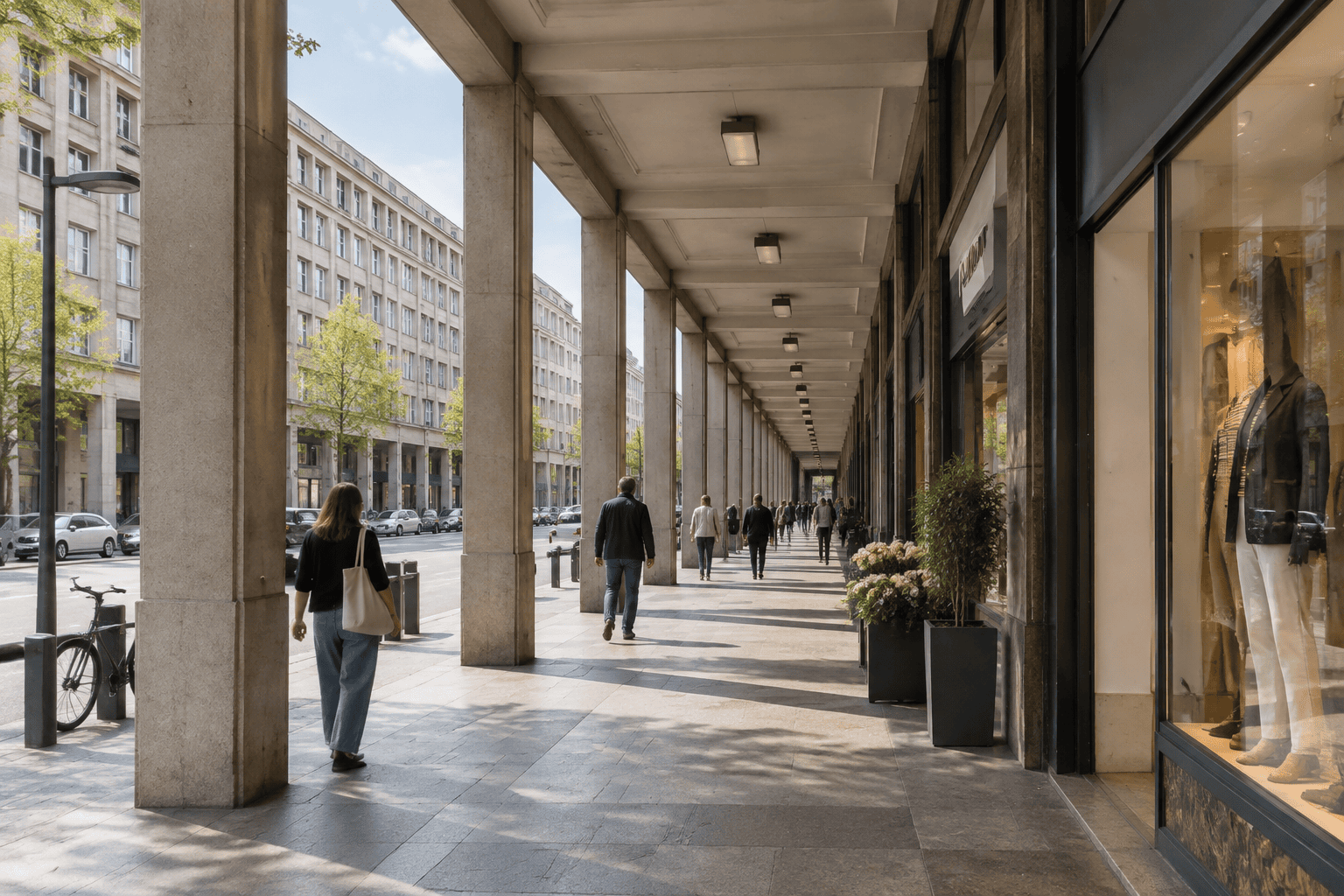
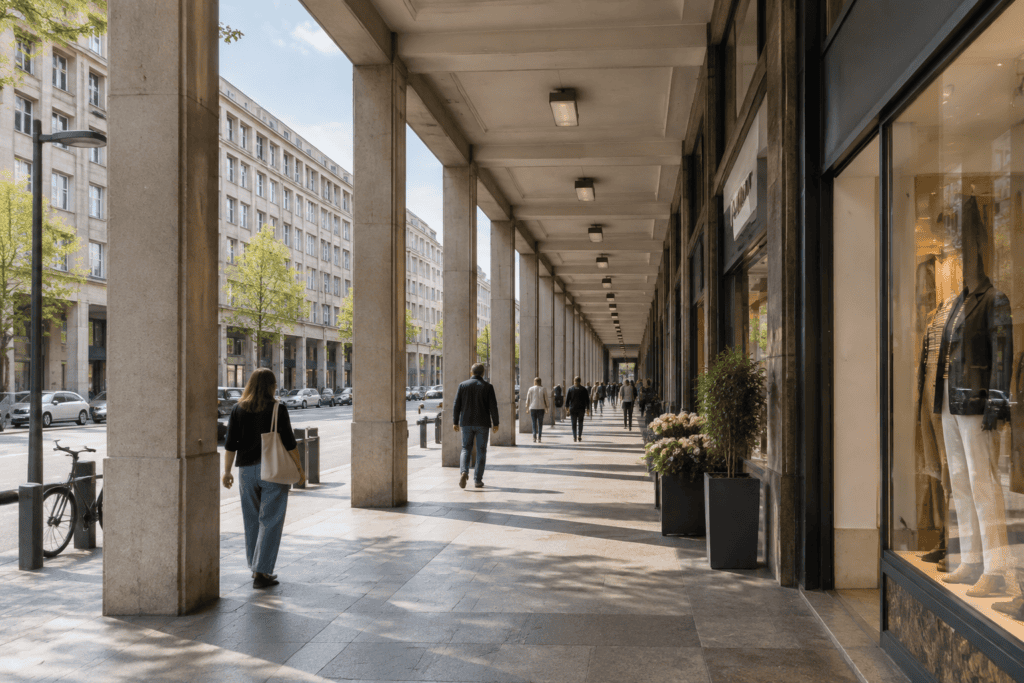
A straightforward route can begin at the Heritage House on Rue de Paris, where the Perret show apartment offers practical insights into the housing of the Reconstruction. Continue along Rue de Paris and its arcades, then head toward City Hall Square. This progression takes you from commercial spaces and apartment buildings to one of the major civic ensembles designed by Perret.
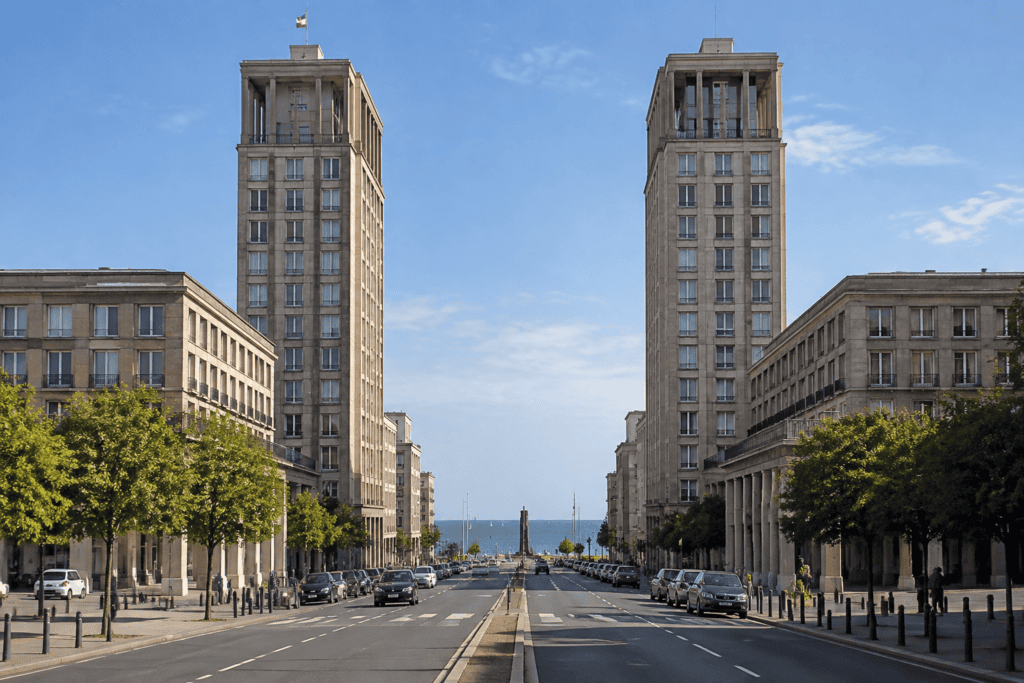
Continue along Avenue Foch, a broad vista connecting the city center to the sea and leading to Porte Océane. Depending on your pace, detour to the seafront before returning toward Saint-Joseph Church. The route can also include the Central Market Halls, Place Perret and the area around the Bassin du Commerce. This is not one single marked walking trail: the appeal lies precisely in the freedom to wander through a lively neighborhood. A recent tourist map and the program of the Pays d’art et d’histoire can help you check access details and scheduled events.
Must-See Buildings and Landmarks
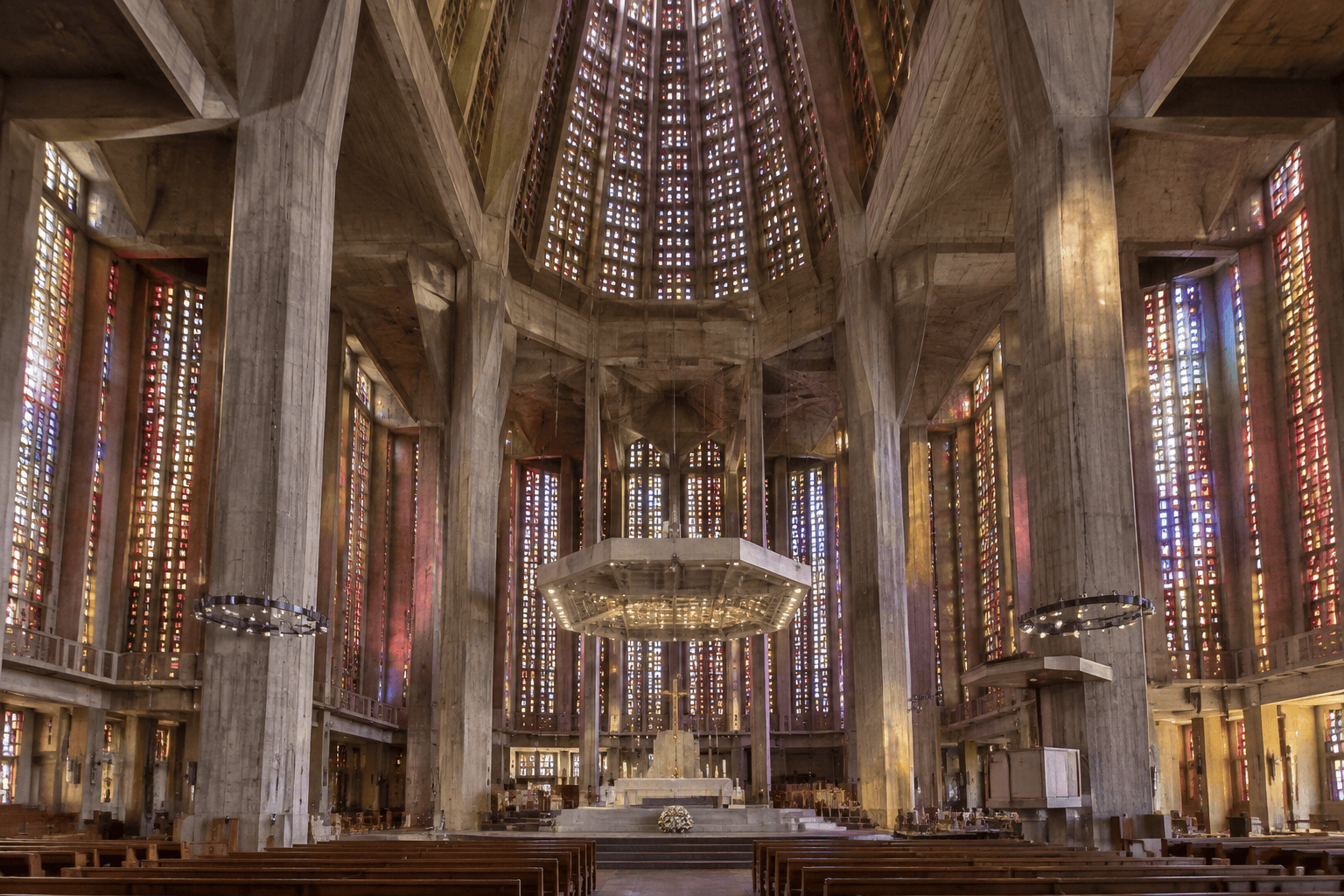
Saint-Joseph Church is one of the key landmarks of the rebuilt city center. Its lantern tower dominates the city, while its interior combines the monumentality of concrete with a vast collection of stained-glass windows designed with master glass artist Marguerite Huré. The light changes throughout the day, giving the building an almost abstract quality. As visiting conditions may vary, it is best to check the official information before you go.
City Hall is another highlight of the route. Its long façade and tower structure the square and offer a particularly clear reading of the city’s geometry. At the end of Avenue Foch, Porte Océane acts as a monumental gateway to the beach and seafront. Le Volcan, designed later by Oscar Niemeyer, is not part of Perret’s work, but shows how Le Havre continued to make contemporary architecture an essential part of its identity.
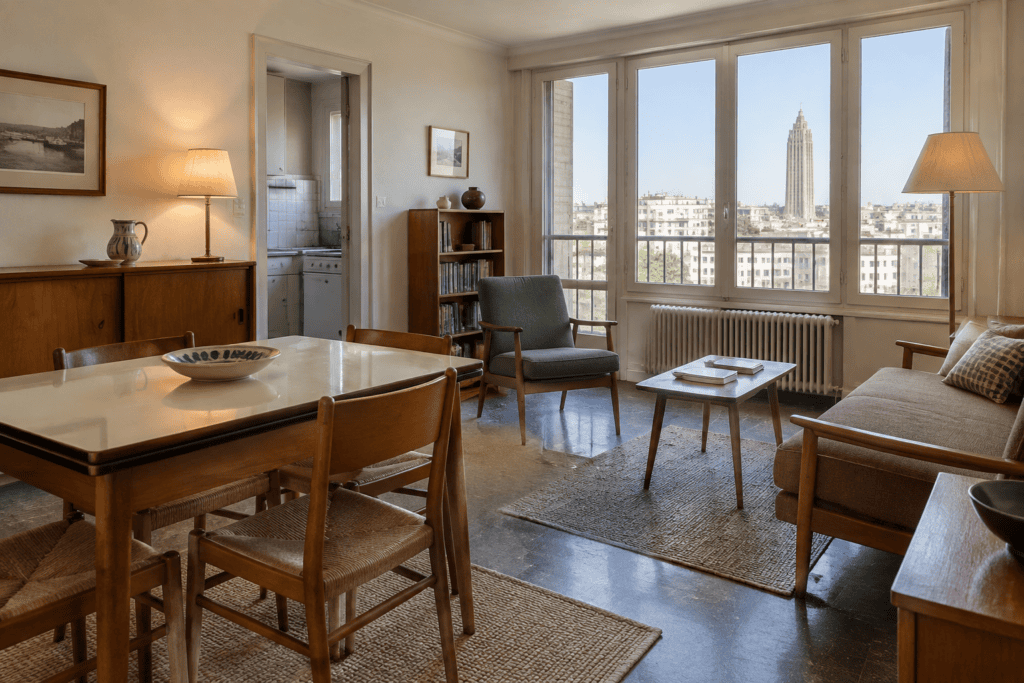
The Show Apartment: Stepping Into the 1950s
The Perret show apartment is especially useful for understanding the Reconstruction from a resident’s perspective. Located at the Heritage House, it recreates the layout and furnishings of a home designed to rehouse the people of Le Havre after the war. The visit moves beyond the façades’ exterior appearance to reveal the ideas about comfort behind the project: better orientation, a focus on natural light, functionally arranged rooms and modern-for-the-time appliances.
The furnishings notably evoke the work of designers such as René Gabriel, Marcel Gascoin and André Beaudoin. A refrigerator, stove, vacuum cleaner, typewriter and record player place the apartment in the everyday life of France’s postwar boom years. This stop is recommended before exploring outside: it helps you recognize the continuous balconies, layouts, window dimensions and practical logic of the floor plans. Visits may be limited in number and require reservations. Check the latest information from the Heritage House or tourist office before you go.
Practical Tips for Enjoying Your Visit
The rebuilt city center is easy to explore on foot, but understanding it requires a little attention. Wear comfortable shoes: although the main sites are relatively close together, the appeal lies in taking detours through the streets, passageways and squares. A guided tour can be very helpful on a first visit, explaining the 6.24-meter grid, the different concrete finishes and the urban planning choices that are not always immediately visible.
Days with soft light are ideal for photographing façades and vistas. In overcast weather, the show apartment, museums and public buildings offer interesting alternatives; however, check their visiting conditions and any reservation requirements. The wind can be noticeable near the seafront, even when the weather seems pleasant in the city center streets. For families, alternate periods of observation with breaks around the Bassin du Commerce or the beach. Finally, respect the residential areas: this site is also an everyday neighborhood.
Continue Exploring Around the Rebuilt City Center
The Perret center is an excellent base for discovering Le Havre’s other sides. After Avenue Foch and Porte Océane, continue to the beach to appreciate the relationship between the city and the English Channel. The seafront also helps explain why the major vistas of the Reconstruction are oriented toward the sea. In another direction, the Saint-François neighborhood preserves a maritime history and a distinct atmosphere, shaped by a reconstruction carried out around the same time as the city center’s but led by different architects.
Art lovers can continue to the André Malraux Museum of Modern Art, which is notable for its connections to Normandy’s light and the Impressionist tradition. Le Volcan and the library then offer a counterpoint to Perret’s more classical lines. If you have a full day, combine the architectural route with a harbor walk or an exploration of the Côte d’Albâtre coastline. Le Havre then reveals itself as a city of layers: the memory of destruction, the modernity of concrete, maritime activity, contemporary creativity and openness to the sea.
Useful sources
Frequently Asked Questions
Is Le Havre’s rebuilt city center UNESCO-listed?
How much time should I allow to see Perret architecture?
Can I visit the Perret show apartment without a guide?
What are the main landmarks to see in the rebuilt city center?
Is the route suitable for a family visit?
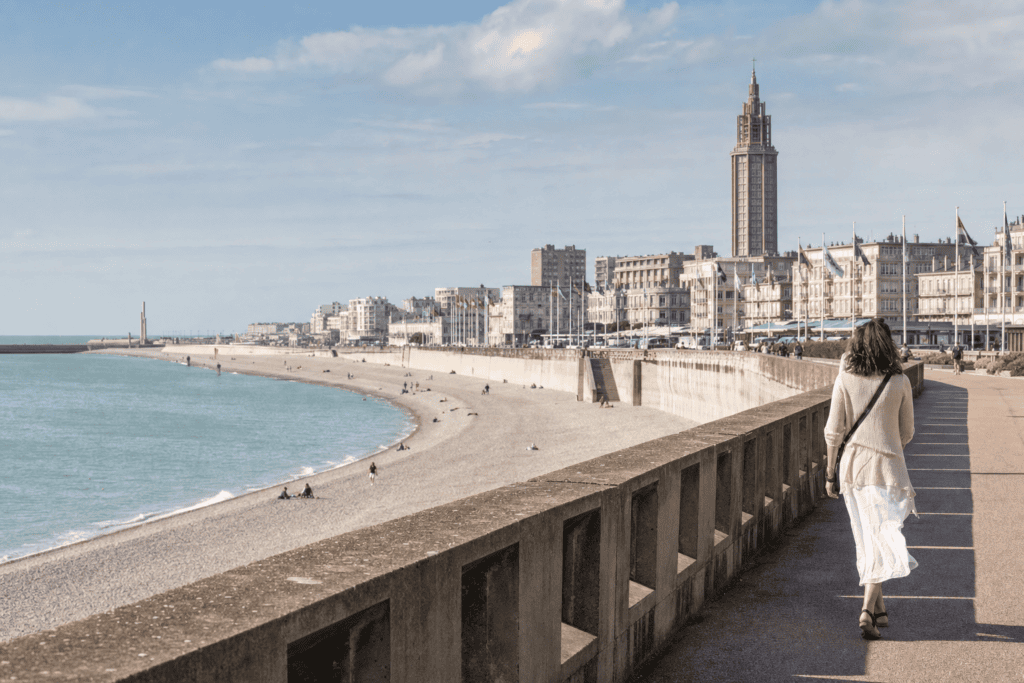 Le Havre Beach and Seafront Promenade An urban beach open to the English Channel, ideal for walking, swimming in season, and enjoying…
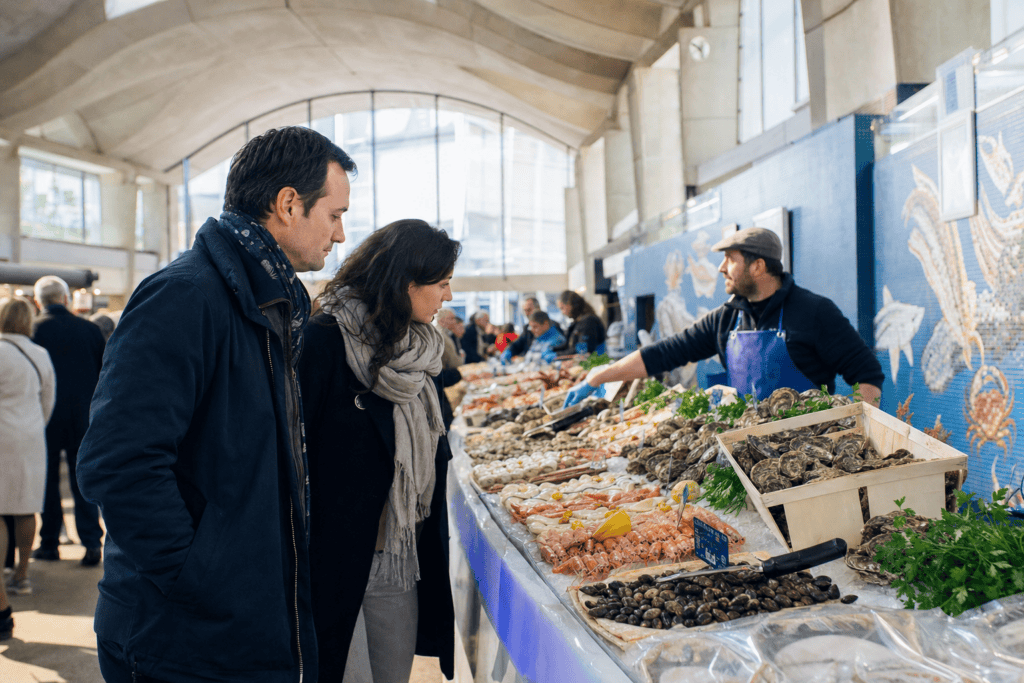 Central Market Halls and Norman Specialties A gourmet stop in the heart of Le Havre to discover the Central Market Halls, Norman products and…
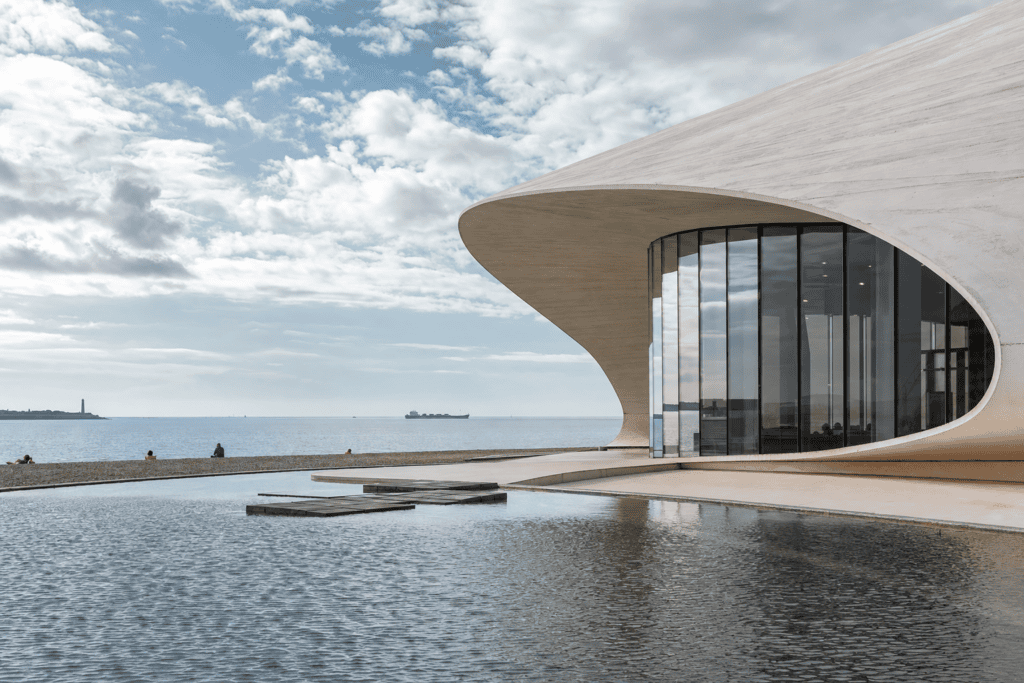 MuMa – André Malraux Museum of Modern Art A major cultural landmark in Le Havre, ideal for discovering Impressionism, modern art and the artistic history of a…
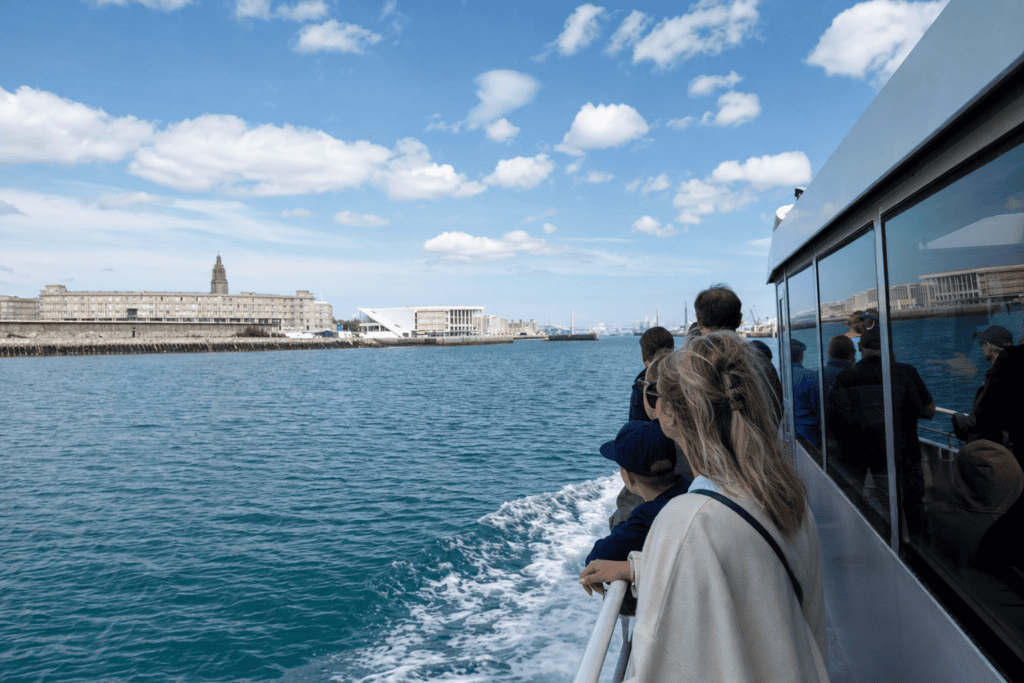 Le Havre Harbor Cruise and Coastal Discovery Set out on a unique discovery of Le Havre’s port, its basins, the estuary and the…
Online booking · Paris → Rebuilt City Center of Le Havre, 76600 Le Havre, Normandy, France
Choose your pickup date and time
Your departure and arrival details are already pre-filled. You can adjust them in the fare calculator before viewing the vehicles and fare.