



Vieux-Lille: Walking Itinerary, Monuments, and Local Favorites
Lille
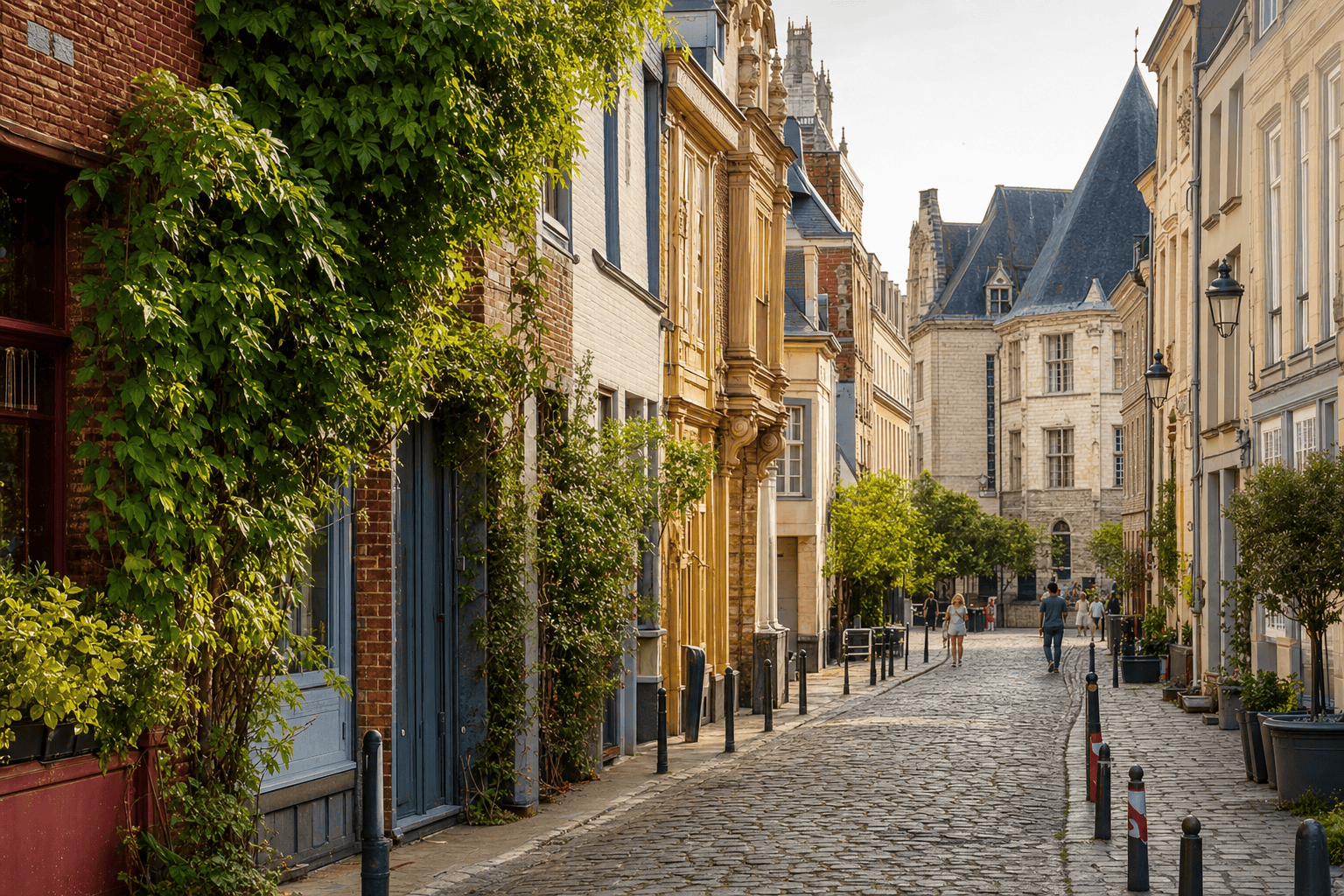
With its brick and stone façades, cobbled streets, independent shops and traditional estaminets, Vieux-Lille is the best starting point for exploring Lille on foot. The Vieille Bourse, Notre-Dame-de-la-Treille Cathedral, Îlot Comtesse, and the streets of Rue de la Monnaie and Rue de la Grande-Chaussée create a rich route that is easy to adapt to the time available. Grand’Place and Quai du Wault lie just outside the district itself, but fit naturally into a first walk through the historic center.
Practical information
Start near the Grand’Place, then head to the Vieille Bourse, Rue de la Monnaie, Îlot Comtesse, and the cathedral. Wear comfortable shoes and leave extra time for detours, shops, and food breaks.
Paris → Lille: Getting to Vieux-Lille with a Private Driver
For a getaway from Paris, Booking Paris Transfer can arrange a private ride from Paris, the Île-de-France region, CDG, or ORY to Lille, with a return to Paris depending on your itinerary. Once there, Vieux-Lille is easy to explore independently on foot. Transportation does not include admission tickets or a local guided tour.
Private driver service departing from Paris, a location in the Île-de-France region, CDG, or ORY. Return to Paris available depending on the agreed itinerary. No admission ticket included.
Why Visit Vieux-Lille?
Vieux-Lille embodies much of the city’s architectural and commercial identity. Within just a few streets, you move from monumental squares to Flemish façades, historic residences to religious buildings, and contemporary shops to estaminets inspired by Northern French cuisine.
The neighborhood is worth visiting as much for its monuments as for its atmosphere. Gable details, signs, carriage entrances, and inner courtyards reveal themselves as you walk. Some streets are very busy, but simply stepping a little away from the main routes often brings a more relaxed pace.
For a first introduction to Lille, half a day allows you to combine walking, heritage, and gastronomy without rushing. Visitors with less time can focus on the Vieille Bourse, Rue de la Monnaie, Îlot Comtesse, and Notre-Dame-de-la-Treille Cathedral.
Walking Itinerary Through the Historic District
For a straightforward loop, start at Place du Général-de-Gaulle, commonly known as the Grand’Place. This large square sits where the city center meets Vieux-Lille, making it a good starting point even though its boundaries do not strictly match those of the historic district.
Next, head to the Vieille Bourse and Place du Théâtre, then take Rue des Manneliers or Rue de la Grande-Chaussée. Continue along Rue de la Monnaie to admire the historic façades and reach Îlot Comtesse, home to the former Hospice Comtesse.
Continue to Notre-Dame-de-la-Treille Cathedral and Place Gilleson. The colorful houses around the square make a particularly appealing setting for photography. Rue de la Barre and Rue de Gand then extend the walk toward restaurants and estaminets.
If you would like to walk farther, add an extension toward Quai du Wault and the citadel. These areas lie outside Vieux-Lille in the strict sense, but they complement an exploration of the historic center and its public spaces.
Monuments and Places to See
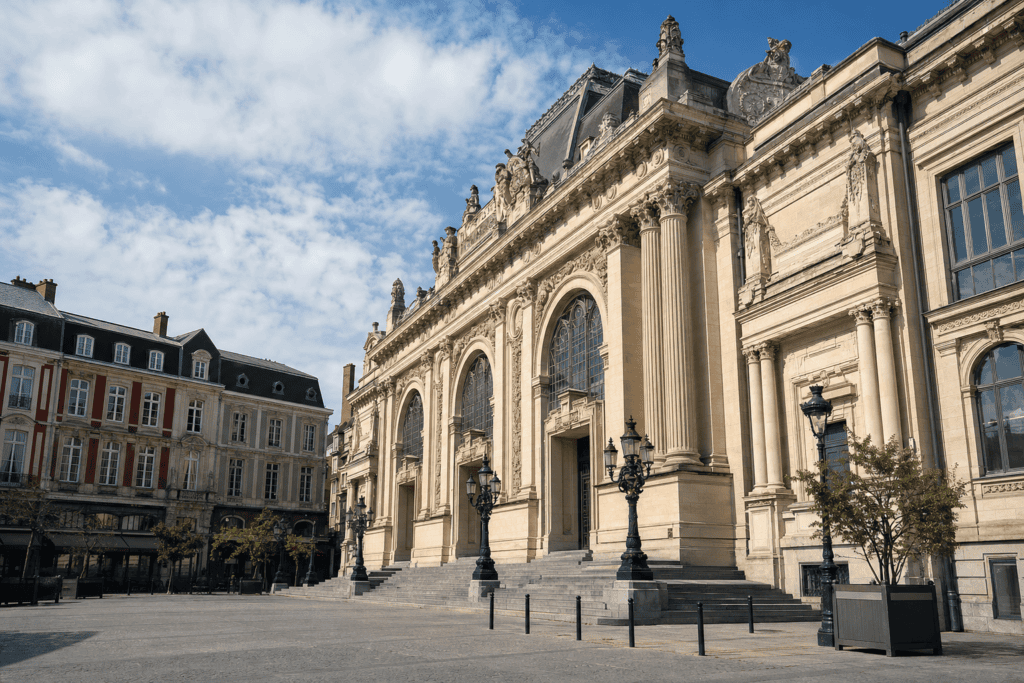
The Vieille Bourse is one of Lille’s most recognizable buildings. This 17th-century complex brings together several façades around a richly decorated inner courtyard.th Take time to admire the sculptures, the contrasts between brick and stone, and the details of the gables. Access to the courtyard and any events held there may vary, so check the official information before planning your visit.
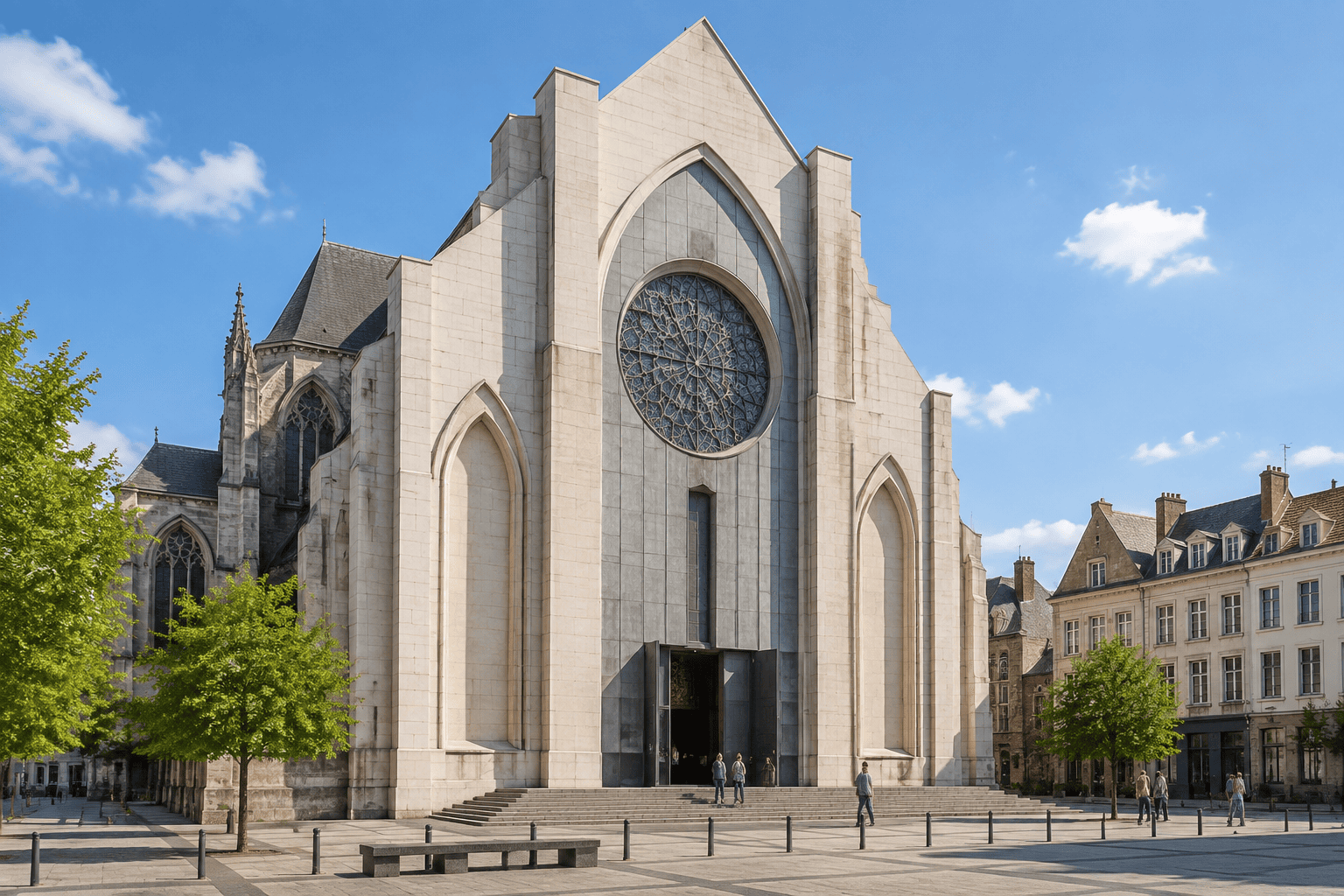
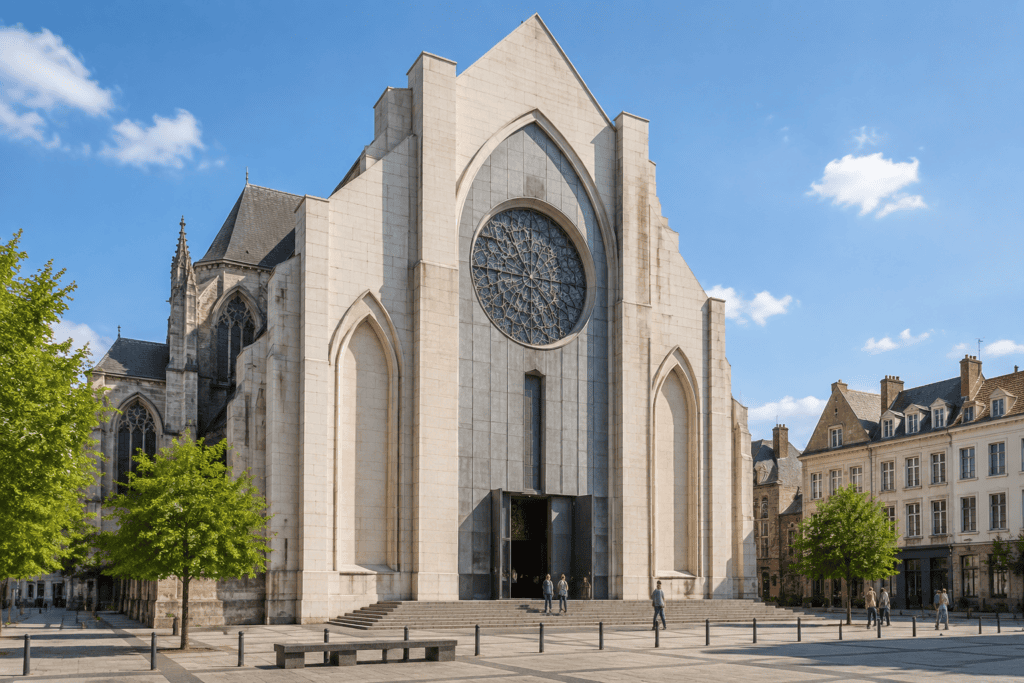
Notre-Dame-de-la-Treille Cathedral stands out for its pale façade and contemporary appearance, the result of a long and complex construction history. The interior has a different atmosphere from older cathedrals, notably because of the light filtering through the façade. Access conditions may change due to services, ceremonies, or religious events; check the information provided by the cathedral.
The former Hospice Comtesse on Rue de la Monnaie reflects Lille’s hospital and social history. The site houses a museum; check its opening days, hours, and visiting arrangements on the official source before setting out.
The Grand’Place, Place du Théâtre, and shopping streets round out the route. Even without entering a monument, observing the aligned façades, signs, and materials is enough to understand how Lille’s city center has evolved.
What to Eat in Vieux-Lille
Vieux-Lille’s estaminets are a good introduction to regional specialties. Depending on the menus and establishments, you may find carbonnade flamande, Welsh rarebit, Maroilles-based dishes, potjevleesch, or other recipes associated with Northern French traditions. Menus change, so check the day’s offerings and make a reservation when a restaurant is especially popular.
Rue de Gand is home to numerous restaurants and estaminets, making it a convenient stop for lunch or dinner. It can be lively at mealtimes; the neighboring streets are sometimes quieter, but it is best to check hours directly with each establishment.
For a sweet break, look for Lille-style filled waffles, pastries, and regional confectionery. The shops on Rue Esquermoise and nearby shopping streets fit easily into a sightseeing route. If you buy cheese or a fresh preparation, ask for advice on storage and transportation.
Beer is part of the region’s food culture, but restaurants and cafés generally also offer nonalcoholic drinks. Options vary by establishment.
Shopping, Crafts, and Atmosphere
Vieux-Lille is home to numerous fashion, home décor, accessories, gourmet food, and independent designer shops. Rue de la Grande-Chaussée, Rue de la Monnaie, Rue de la Barre, and the surrounding streets are particularly well suited to shopping, often in historic buildings that add character to the walk.
The atmosphere changes noticeably throughout the day. In the morning, the streets are more pleasant for observing architectural details and photographing façades. In the afternoon, shops and tearooms bring more activity to the main routes. In the evening, Rue de Gand and its surroundings center on restaurants and bars.
The Vieille Bourse courtyard may host secondhand booksellers or events depending on the season. Markets, temporary installations, and seasonal events do not always follow a fixed schedule, so check the local calendar before making a special trip for one.
Because the neighborhood is residential, respect building entrances and keep noise down in the narrow streets, especially in the evening.
Practical Tips Before Your Visit
Vieux-Lille is within walking distance of Lille’s central areas. Rihour metro station can be a convenient starting point depending on your route. From Lille-Flandres or Lille-Europe, walkers can make the journey on foot; travel time depends on your starting point and chosen route.
The cobblestones make sturdy, comfortable shoes especially useful. With young children, a stroller designed for uneven surfaces or a baby carrier may be more comfortable. People with reduced mobility should plan their route street by street, as sidewalks, curbs, and crossings do not all have the same conditions.
For the Vieille Bourse, the former Hospice Comtesse, and the cathedral, check the official websites before your visit. Hours, closing days, and access conditions may change due to construction, events, or religious ceremonies.
Plan a flexible route. Cobblestones can become slippery in rainy weather, and during busy periods the central squares and Rue de Gand require more patience. Cafés, shops, and museums make it possible to alternate between time outdoors and indoors.
Planning a Getaway from Paris
Vieux-Lille works well for a day trip or weekend from Paris. Once you arrive in Lille, spend the morning in the historic center, then plan a regional lunch before continuing toward Quai du Wault, the citadel, or other parts of the city.
For door-to-door transportation, Booking Paris Transfer can provide a private driver service departing from Paris, a hotel in the Île-de-France region, Charles de Gaulle Airport, or Orly Airport, with arrival in Lille and a return to Paris depending on the agreed itinerary. The service covers transportation only and does not include admission tickets or a local guided tour.
A vehicle can be convenient for a group, luggage, or an itinerary combining Lille with another stop in Hauts-de-France. In Vieux-Lille, however, walking remains the best way to appreciate the façades, squares, and narrow streets.
Useful sources
Frequently Asked Questions
How Much Time Should You Allow to Visit Vieux-Lille?
Is Vieux-Lille Easy to Explore on Foot?
Which Places Should You Prioritize?
Where Can You Try Northern Specialties?
What is the best time to visit?
Can a Private Driver Take Visitors from Paris to Vieux-Lille?
 Palais des Beaux-Arts de Lille A major Lille museum, known for its European masters and exceptional collection of relief maps.
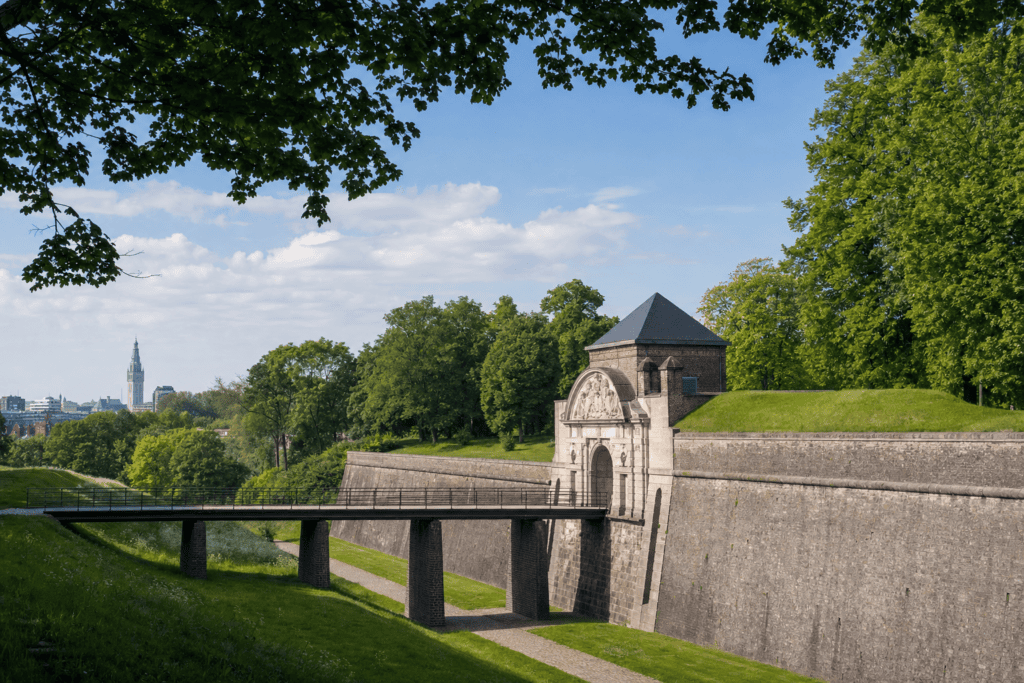 Lille Citadel and Citadel Park An iconic Lille site combining military heritage, waterfront walks, nature, and recreation in…
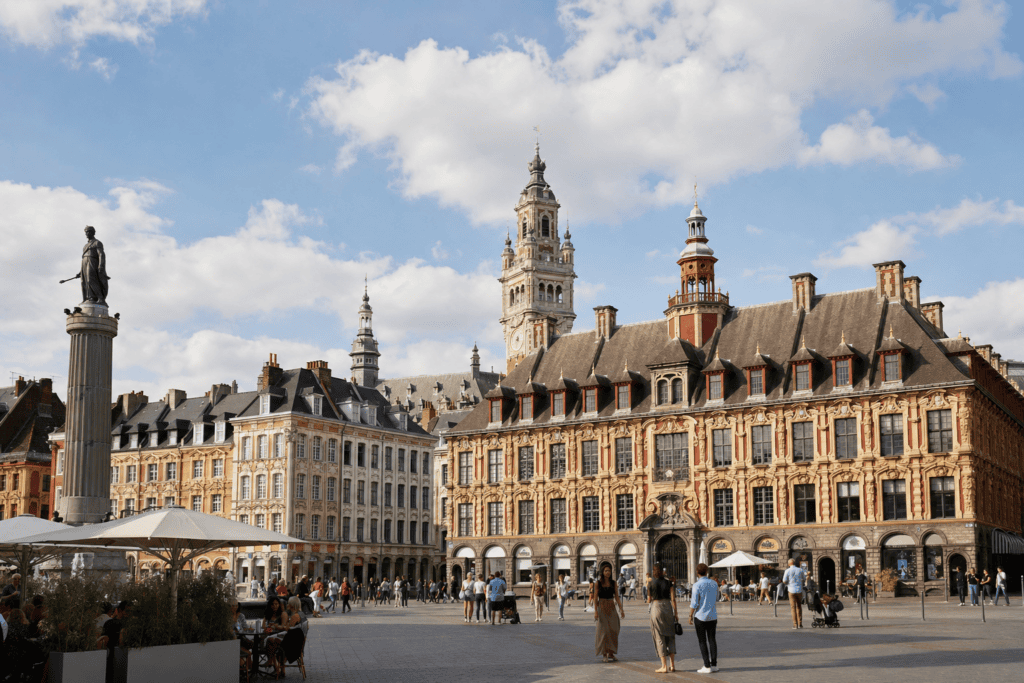 What to Do in Lille in a Weekend A two-day itinerary through Vieux-Lille, Flemish heritage, museums, local gastronomy, and the park of la…
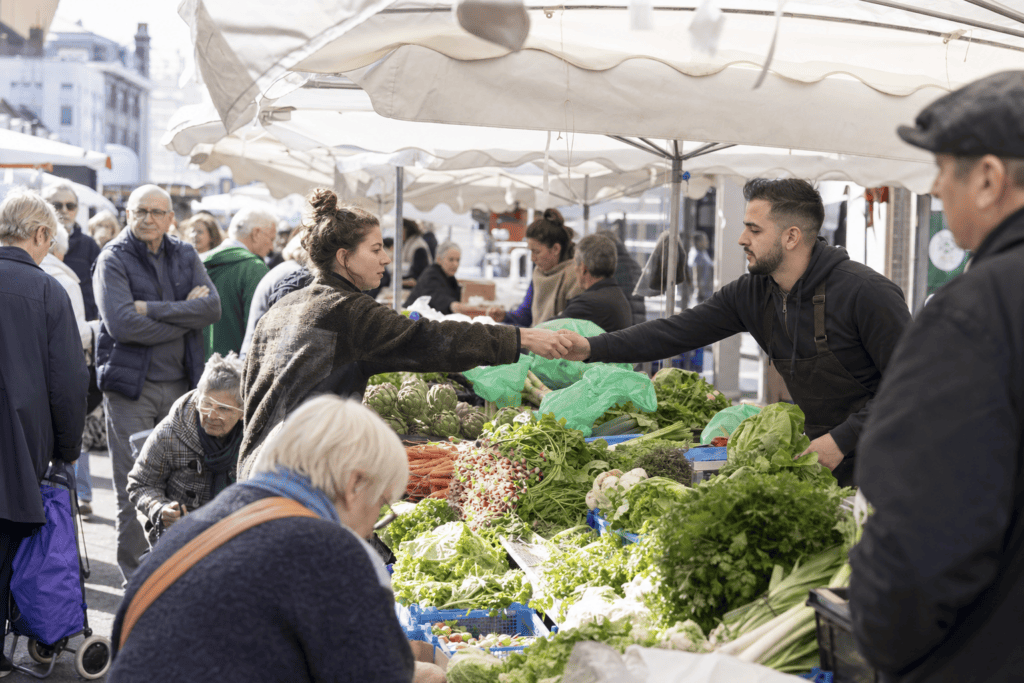 Wazemmes Market An iconic Lille market, known for its varied stalls, covered halls, and welcoming atmosphere…
Online booking · Paris → Vieux-Lille, 59000 Lille, France
Choose your pickup date and time
Your departure and arrival details are already pre-filled. You can adjust them in the fare calculator before viewing the vehicles and fare.