



Clos Lucé: Discover the World of Leonardo da Vinci
Amboise
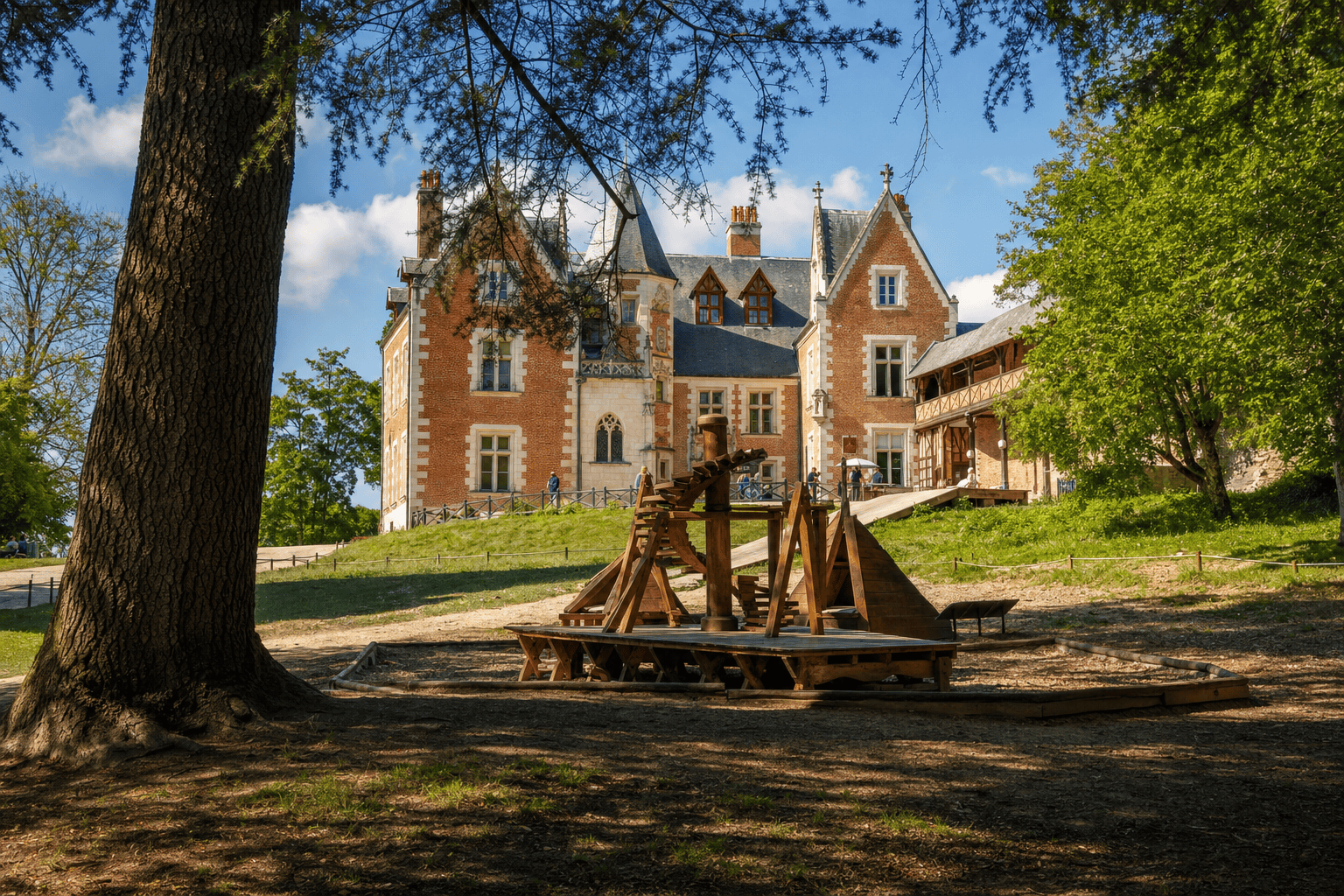
In Amboise, Clos Lucé immerses visitors in the final years of Leonardo da Vinci’s life. Invited to France by Francis I in 1516, the artist, engineer, and thinker spent the last three years of his life here. The visit combines the historic residence, spaces dedicated to his research, and a park where several inventions are presented as scale models. This combination makes it a major stop in the Loire Valley, appealing to history enthusiasts and families alike. The site is located at 2 rue du Clos Lucé, just a few minutes’ walk from the Royal Château of Amboise. Since opening hours, access conditions, and booking arrangements may change, check the official information before your visit.
Practical information
For a family visit, start with the residence and galleries, then allow plenty of time for the park. Wear comfortable shoes and bring protection from the sun or rain.
Getting to Clos Lucé from Paris
To include Amboise in a Loire Valley trip, Booking Paris Transfer offers private transportation from Paris, a Paris hotel, Charles de Gaulle Airport, or Orly Airport. The journey can include a return to Paris or be part of an itinerary starting in Paris. The service covers transportation only; admission to Clos Lucé must be arranged separately through the official website.
Book your tickets and check opening hours, access, and visiting conditions directly with official sources before departure.
A Residence Connected to Leonardo’s Final Years
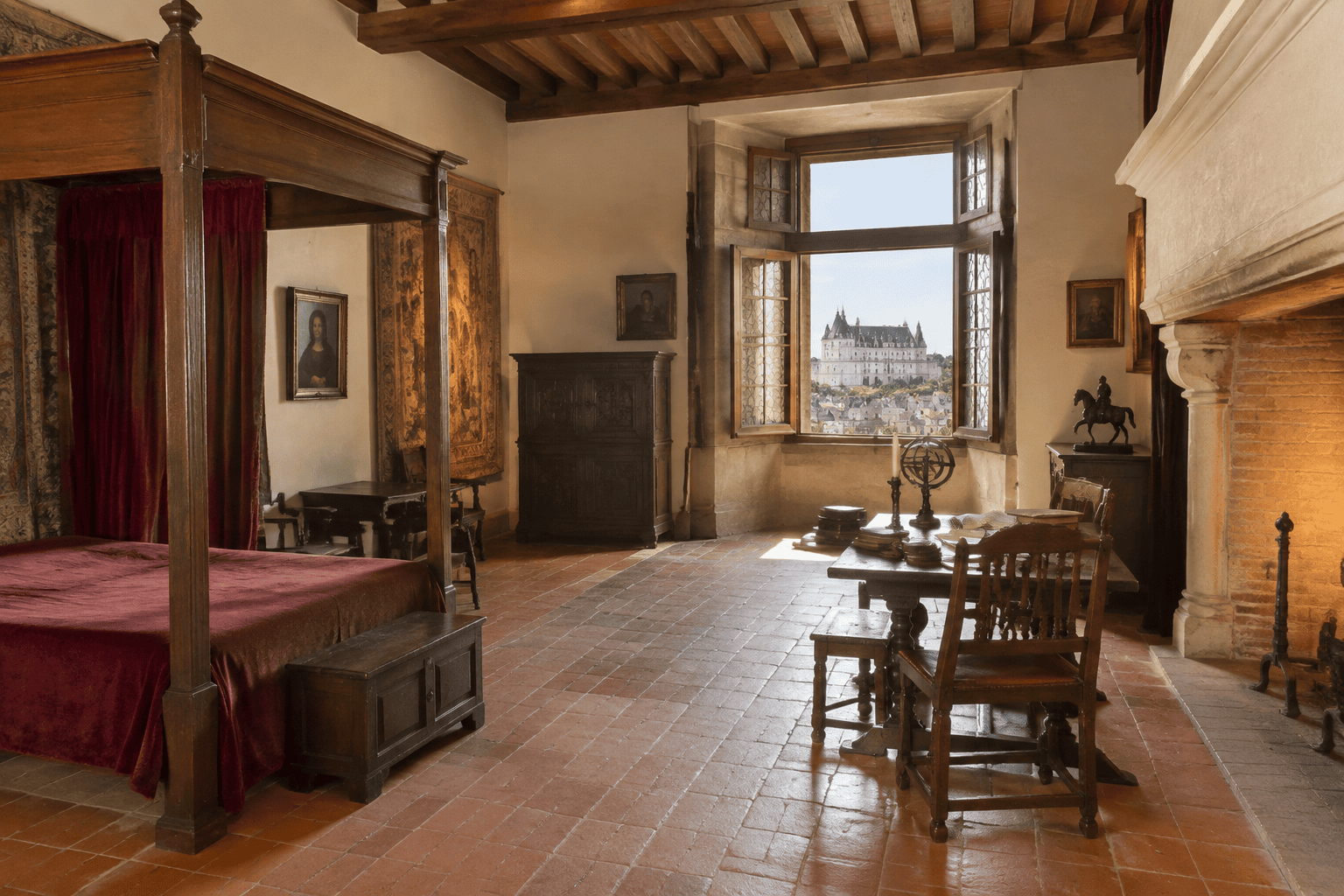
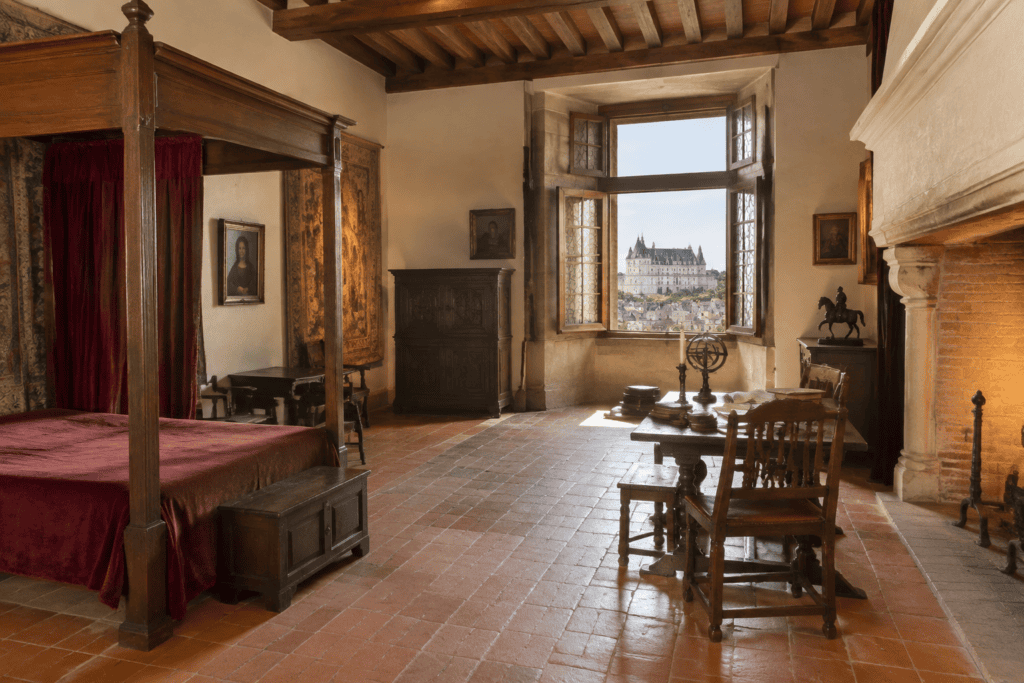
Clos Lucé is above all a house associated with the final period of Leonardo da Vinci’s life. When Francis I invited him to France in 1516, the Italian master settled in Amboise with several paintings and numerous workbooks. He was given Clos Lucé as his residence and continued working there as a painter, engineer, architect, and adviser to the court.
This history gives the site a distinctive atmosphere. The visit presents more than reproductions or inventions: it evokes the environment in which Leonardo thought, drew, and exchanged ideas with his contemporaries. The rooms of the residence offer a better understanding of his daily life and status under Francis I. To place this residence within the political and artistic landscape of the Renaissance, ideally combine Clos Lucé with the Royal Château of Amboise, a short walk away.
The two monuments tell the story of the same period from two complementary perspectives: royal power on one side, and Leonardo’s place of work and life on the other. Together, they make an excellent introduction to Amboise’s heritage.
An Indoor Visit Blending History and Imagination
Inside, the tour explores Leonardo’s life as much as the diversity of his work. The restored or recreated rooms provide insight into his arrival in Amboise, his habits, and his relationships with the court. Take time to observe the proportions, architectural details, and objects that help recreate the setting of this residence.
The galleries continue the visit with a more thematic presentation of his research. Painting, anatomy, architecture, urban planning, mechanics, the study of flight, and observation of nature appear as parts of a single approach. Leonardo did not clearly separate art and science: he drew to understand, measured to build, and observed movement to represent the world more precisely.
This approach makes the site accessible to visitors who are not art-history specialists. It also provides many opportunities to engage with children. A simple question can guide the visit: how can an idea sketched in a notebook become a machine, bridge, or device that can be observed at full scale?
Leonardo da Vinci Park, an Open-Air Museum
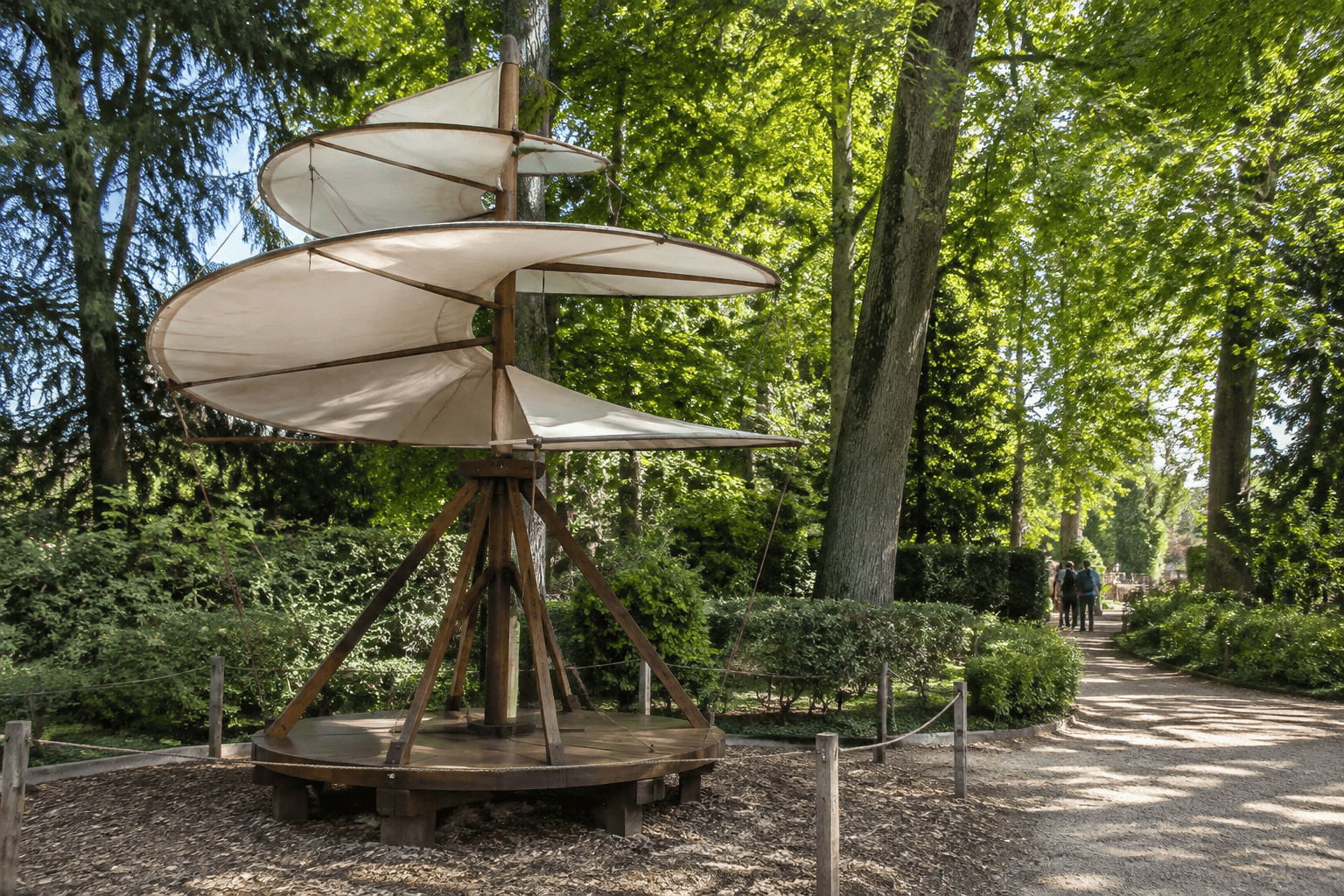
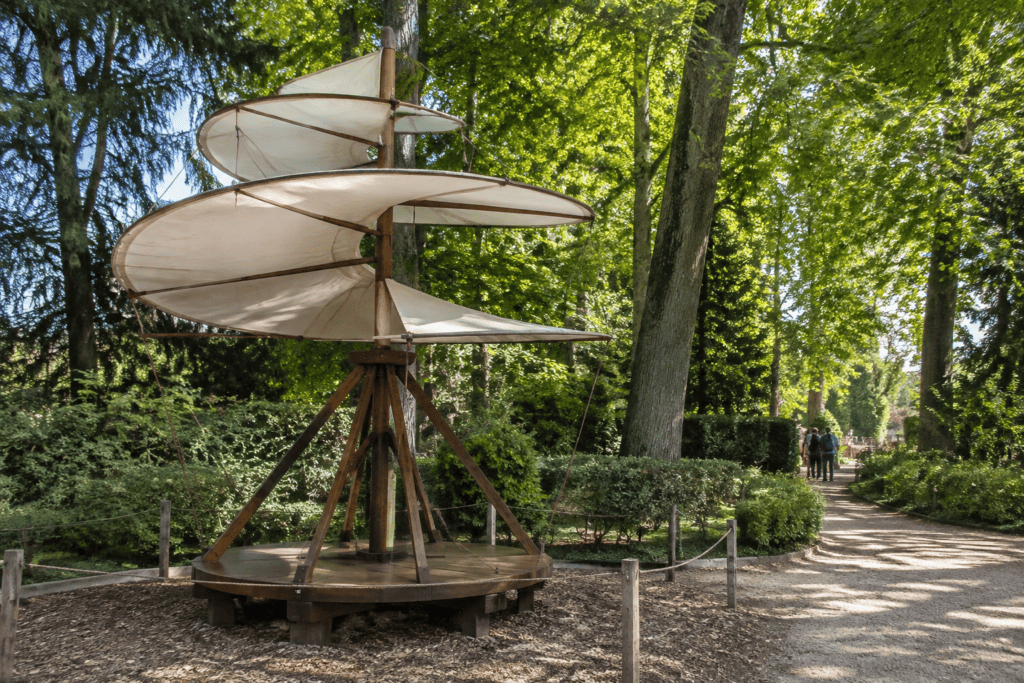
The park is one of Clos Lucé’s main attractions. In a wooded setting, the route features scale models inspired by Leonardo’s drawings and research. Some are designed to be viewed, while others help visitors understand a movement or mechanism. The aerial screw, paddle wheel, Archimedes’ screw, bridge, and various construction machines make his ideas more tangible than a simple page in a notebook.
The walk works especially well for children because it alternates walking, observation, and experimentation. They can compare shapes, imagine the forces needed to move an object, and discuss the possible use of each invention. Visual installations devoted to painting, the human body, botany, and technology complement this outdoor route.
The park deserves time rather than a quick walk-through. Visitors will get more from the experience by stopping to read the explanations, observing the relationship between the machines and the landscape, and taking a break before continuing. Comfortable shoes are recommended, especially when the ground is wet.
Leonardo’s Garden and the Landscape Experience
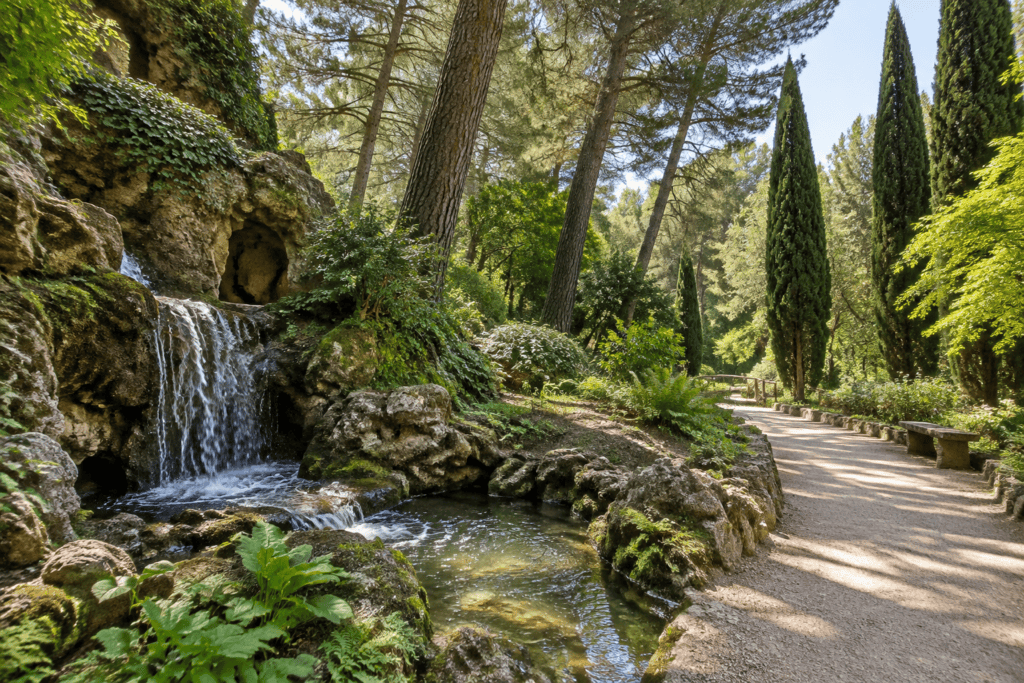
The visit is not limited to mechanical inventions. Leonardo’s Garden offers a more landscape-focused perspective on his world, inspired by his paintings and constant attention to natural phenomena. Trees, rocks, water, and vistas create a setting that recalls the importance of landscape in his artistic and scientific work.
This part of the estate provides a calmer pace after the residence and park installations. It invites visitors to observe the plants, play of light, contours, and movement of water. These elements echo Leonardo’s studies of geology, plants, movement, and the forms of living things. History-garden enthusiasts will find it an interesting stop, even if their main goal is to discover the artist.
The atmosphere changes with the seasons. Foliage, blossoms, shadows, and moisture alter the way the paths and planted areas are perceived. When visitor numbers are high, this area can also offer a moment to breathe. Check the available facilities and conditions for the day if you plan to take a break or have a picnic there.
A Family-Friendly Outing
Clos Lucé is well suited to a multigenerational outing because each area offers several levels of interpretation. Adults will appreciate the historical context, Leonardo’s time in France, and the richness of his research. Children are more likely to remember the machines, bridges, structures, and interactive displays. To avoid an overly dense visit, alternate indoor time with visits to the park and regular breaks.
Families should nevertheless anticipate certain practical constraints. According to information provided by the site, the residence can be visited with a baby carrier, while strollers must remain outside the château. Since rules concerning animals, activities, and accessibility may change, consult the official FAQ before your visit.
School groups also have access to educational resources and activities focused on air, flight, and inventions. For a self-guided visit with young children, prepare a few simple questions rather than an overly packed schedule. Trying to understand how a machine works is often more engaging than attempting to read or see everything.
Planning Your Visit to Amboise
Clos Lucé is located at 2 rue du Clos Lucé in Amboise. From the town center or the Royal Château, walking there lets you pass through historic streets and easily include the site in a day of sightseeing. Arriving by train is also an option; check the railway network’s updated schedules before finalizing your plans.
Drivers should check parking options nearby, as conditions may vary by season and visitor numbers. Opening hours change throughout the year, and ticket sales may end before the site’s general closing time. It is therefore wise to consult the official access and opening-hours page when planning your visit.
For a full day in Amboise, combine Clos Lucé with the Royal Château, a walk along the Loire, or an exploration of the historic center. If you are traveling with children, avoid visiting too many monuments back-to-back without a break. The Clos Lucé park provides a pleasant transition between a cultural visit and time outdoors.
Tips for Making the Most of Your Visit
Half a day is a suitable amount of time to discover Clos Lucé without rushing. Start by checking the practical information, then visit the residence and galleries before allowing enough time for the park. Visitors who enjoy reading the displays, listening to the available content, or examining every scale model may want to allow additional time.
In hot weather, bring water, a hat, and sunscreen for the outdoor areas. In wet weather, suitable shoes will make the walk more enjoyable. The park installations make excellent photographic subjects, but their main interest lies in their connection to Leonardo’s drawings and methods. Try to understand the problem each invention addresses rather than comparing it only with modern technology.
Finally, leave some flexibility in your schedule. A visit to Clos Lucé lends itself to breaks, conversation, and observation. It can be historical in the residence, scientific beside the machines, artistic in the galleries, and landscape-focused in the gardens. This variety explains why the site works so well both for a first introduction to Amboise and for a return visit to the Loire Valley.
Frequently Asked Questions
Where exactly is Clos Lucé located?
How much time should I allow to visit Clos Lucé?
Does the ticket include Leonardo da Vinci Park?
Can I visit Clos Lucé with a stroller?
Is Clos Lucé suitable for children?
 Things to Do in Amboise Along the Loire Loire riverbanks, views of the château, cycling routes, and peaceful breaks: our ideas for…
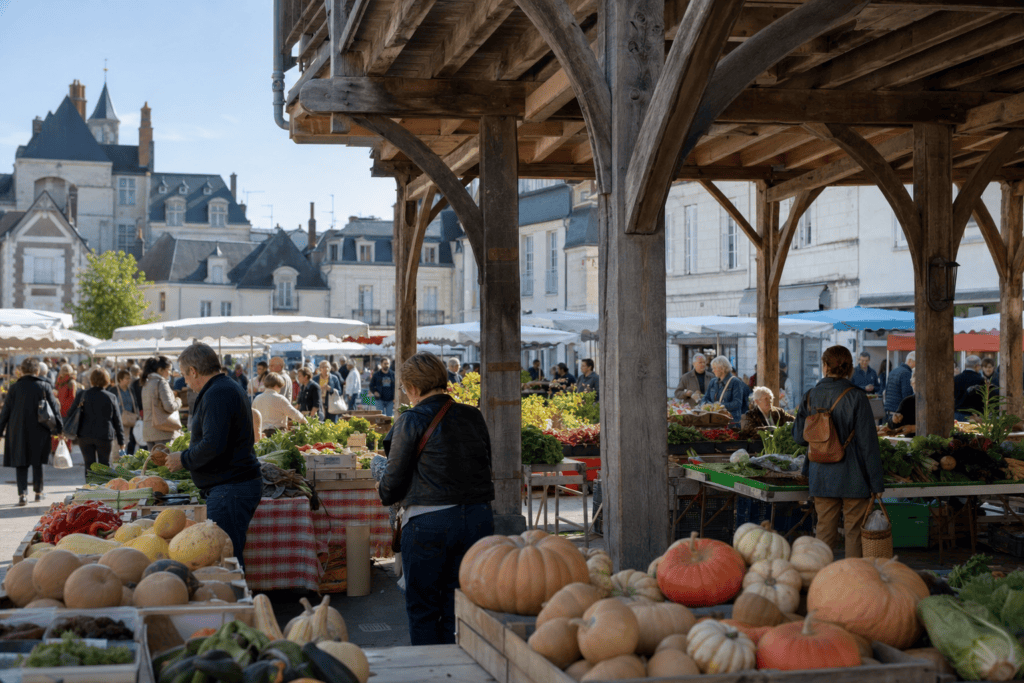 Amboise Market A lively market on the banks of the Loire, ideal for sampling Touraine products and discovering…
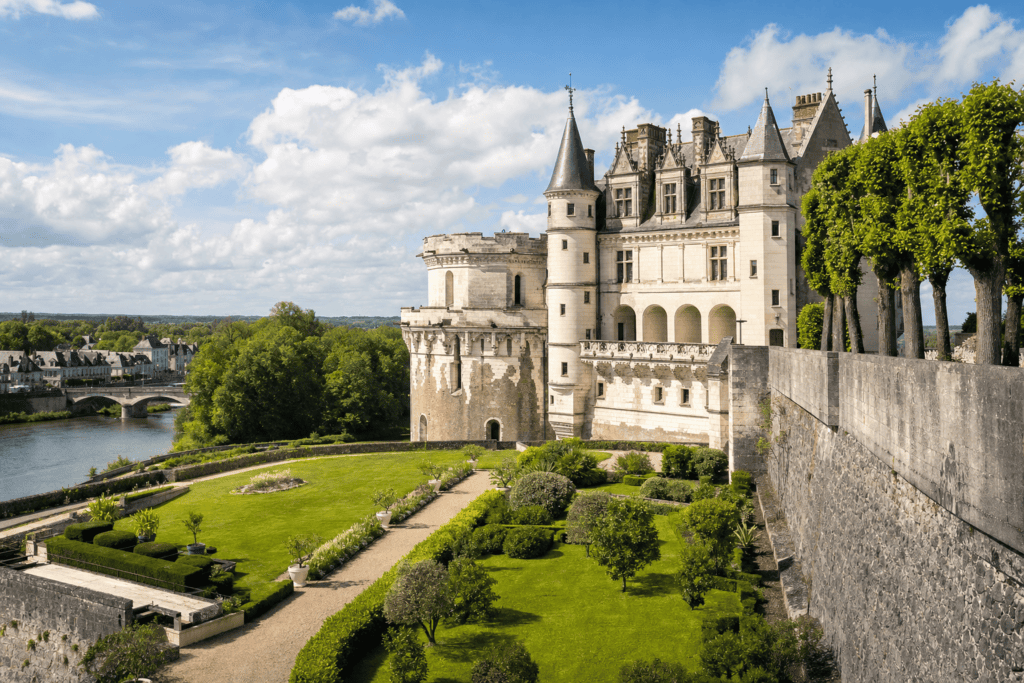 Royal Château of Amboise A spectacular royal château, combining French history, views over the Loire, and Leonardo’s tomb…
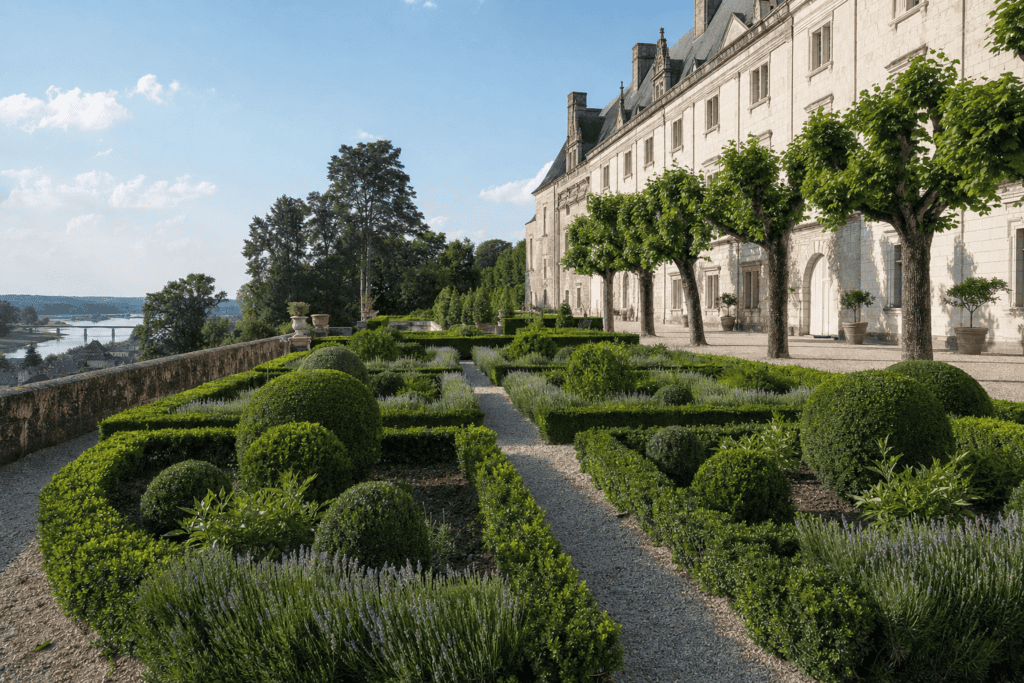 Château Gaillard and its Renaissance Gardens An intimate Renaissance estate in Amboise, known for its Italian-inspired gardens, orangery, and…
Online booking · Paris → 2 rue du Clos Lucé, 37400 Amboise, France
Choose your pickup date and time
Your departure and arrival details are already pre-filled. You can adjust them in the fare calculator before viewing the vehicles and fare.