



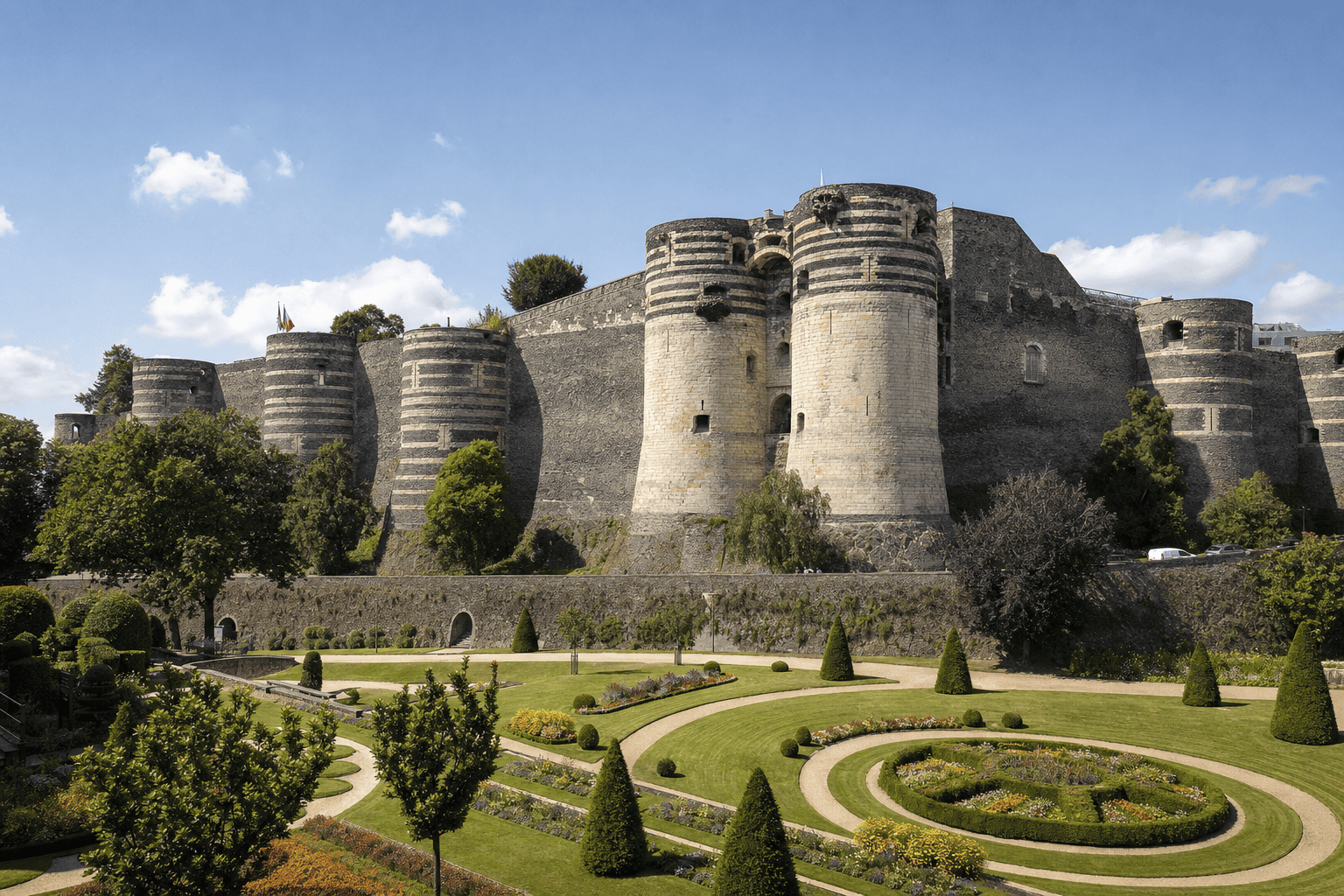
Château d’Angers and the Apocalypse Tapestry
Angers
In the heart of Angers’ historic center, Château d’Angers combines a spectacular fortress, gardens, ramparts offering beautiful city views, and one of the most remarkable masterpieces of medieval art: the Apocalypse Tapestry. Commissioned in the 14th century by Louis I, Duke of Anjou, this monumental textile artwork is displayed in a specially designed gallery. The visit takes you from military architecture into a richly detailed world of knights, cities, animals, and biblical symbols.
Practical information
Start with the ramparts and gardens, then set aside some quiet time for the tapestry. If you would like to join a guided tour, book or collect your spot as soon as possible, as capacity may be limited.
Getting to Château d’Angers from Paris
For a private excursion, Booking Paris Transfer arranges your journey from Paris to Angers from a Paris hotel, CDG or ORY, followed by your return to Paris according to the itinerary selected. The service covers transportation only: admission and any tour reservations for Château d’Angers must be arranged directly with the monument.
Private transportation from Paris, the Île-de-France region, CDG, or ORY. No admission tickets are sold.
An iconic fortress in the heart of Angers
Château d’Angers first impresses with its defensive profile. Its tall walls, marked by massive towers, recall the site’s strategic role in the history of Anjou. Yet the visit goes beyond a military enclosure: the monument brings together several centuries of architecture, power, and princely life. Once inside, visitors discover a vast complex where the ramparts shape the walk and the gardens soften the fortress’s austere appearance.
The route also offers views of the Porte des Champs, the chapel, the royal residence, and the châtelet, all associated with the history of King René and the dukes of Anjou. The site’s appeal lies precisely in this contrast between defense, residence, and representation. The château is at once an urban viewpoint, a historic monument, and the setting for an exceptional textile artwork. For a first introduction to Angers, it is an especially fitting place to begin.
The ramparts and city views
The walk along the ramparts is one of the most memorable parts of the visit. From the curtain walls, the view opens over Angers’ rooftops, bell towers, historic neighborhoods, and the landscapes of the Maine Valley. This elevated vantage point helps explain the château’s position within the city: far from isolated, it overlooks a dense urban area and recalls the political importance of Angers.
Take time to observe the differences in materials, the towers, and the defensive features. The light changes quickly across the façades, making the walk worthwhile even for visitors who already know the site. The gardens then provide a pleasant transition before exploring the interiors. Some sections include steps or may be less accessible; visitors with specific needs are encouraged to consult the official accessibility map before arriving. The château also notes that visiting conditions may change depending on the weather or security measures.
The Apocalypse Tapestry: a monumental work of art
The Apocalypse Tapestry is the monument’s greatest treasure. Commissioned by Louis I, Duke of Anjou, and created at the end of the 14th century, it translates the text of the Book of Revelation into images. Its scale is spectacular, but it is above all the richness of its scenes that captures attention: figures, horses, fantastical creatures, architecture, plants, and battle scenes form a narrative that is both religious and political.
The work also reflects its time. The costumes, weapons, cities, and details of everyday life offer a valuable glimpse into medieval society. The tapestry should therefore not be viewed solely as a biblical illustration: it also expresses a prince’s power, the anxieties of a century marked by the Hundred Years’ War, and the international ambitions of the House of Anjou. Preserved in a gallery with carefully controlled lighting, it rewards slow observation. Avoid moving through it too quickly—each scene contains details to decipher.
How to read the medieval scenes
The tapestry can seem overwhelming at first glance. To approach it more easily, begin by identifying the overall narrative: prophetic visions, confrontations, symbolic figures, and the depiction of the final triumph. Figures can often be recognized by their attributes, gestures, or position within the composition. The colors, even though altered by time, also help organize the reading and distinguish groups or episodes.
Then look at the secondary elements. The cities depicted, animals, foliage, and objects tell us as much about the Middle Ages as they do about the religious text. Some plants can be identified, and several architectural details draw inspiration from the artists’ contemporary surroundings. A visitor guide is available at the entrance, and the monument also provides interpretation materials and an audioguide, depending on current conditions. Families can prepare for the visit by asking children to look for an animal, a weapon, a tower, or a recurring figure in the different scenes.
A visit suited to different audiences
Château d’Angers can be visited independently, with an accompanying guide available at the entrance. This option suits visitors who want to explore the ramparts, gardens, and tapestry at their own pace. An audioguide can also provide a more structured introduction, with a version for younger visitors when available. For a deeper experience, the monument regularly organizes guided tours devoted to the Apocalypse, its techniques, colors, cities, or botanical motifs.
Families will find several opportunities along the route to connect history with direct observation. The tapestry gallery is accessible to people with reduced mobility and to strollers according to official guidance, but the château as a whole includes changes in level and stairways. Facilities adapted for visitors with visual impairments or who are blind are also available as part of the accessibility services. Before visiting, check the monument’s current information to choose the most comfortable route.
Practical tips for planning your visit
The château is located in central Angers, in a pedestrian zone. It is best to plan your arrival in advance, especially if you are carrying luggage: the monument states that it does not offer storage for suitcases, bicycles, scooters, or bulky items. Security conditions may also affect access or the route. For this reason, check the ticketing information and official guidelines on the day of your visit rather than relying on outdated information.
The tapestry is included in admission to the monument, but some guided tours require a reservation or collection of a specific free ticket, even when admission has already been paid. The gallery may close before the rest of the château, and its temperature is kept cool to help preserve the artwork, so bring a light layer. Finally, bad weather or extreme heat may lead to changes to the route. Comfortable shoes are recommended for the ramparts, gardens, and occasionally uneven surfaces.
Extend your discovery of Angers
Château d’Angers fits easily into a day devoted to Angers’ heritage. After your visit, continue on foot toward the historic center to explore its old streets, half-timbered houses, and religious buildings, which reflect the city’s development. The nearby Maine River also offers a change of atmosphere and the chance to view the château from the quays, where its defensive profile appears from a different angle.
To give your visit greater context, you can devote half a day to the monument and spend the rest of the day exploring the city. History enthusiasts will appreciate the connection between the fortress, the dukes of Anjou, and the region’s political influence. Textile-art enthusiasts can round out their visit by reading about weaving techniques and tapestry conservation. From Paris, Angers also lends itself to an organized excursion with an early departure, a château visit, and a return at the end of the day, provided you allow enough time to truly enjoy the site.
Useful sources
Frequently Asked Questions
How much time should I allow to visit Château d’Angers?
Is the Apocalypse Tapestry included in the château visit?
Can I visit the château with a stroller?
Are bags allowed inside the château?
Can I travel from Paris to Angers with a private driver?
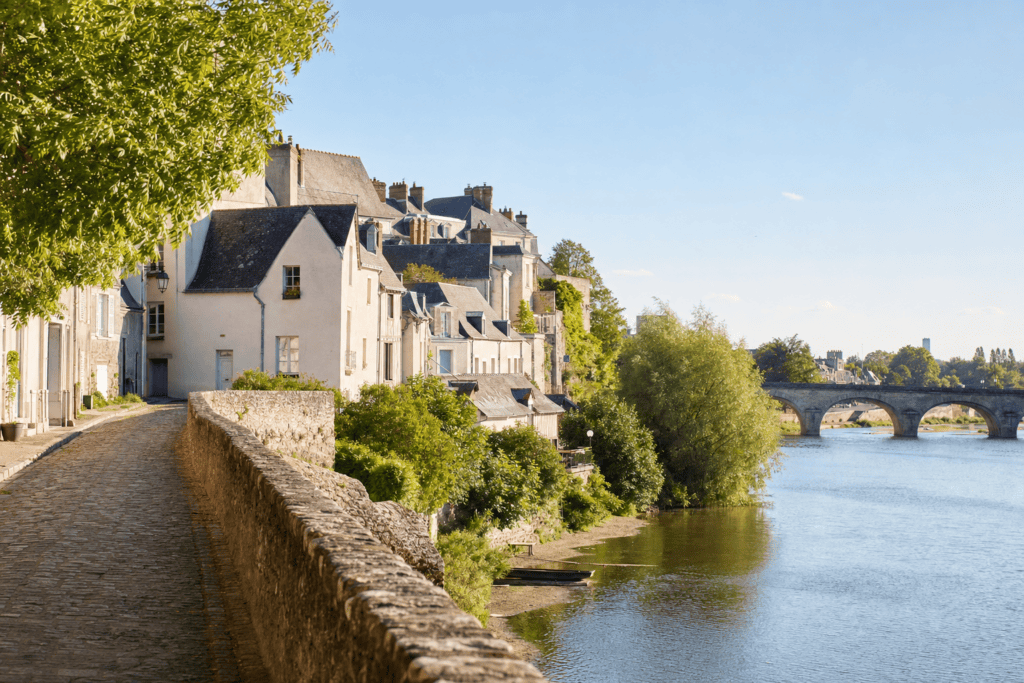 La Doutre A peaceful walk through Angers, passing the Ronceray Abbey, half-timbered houses, private mansions, and more…
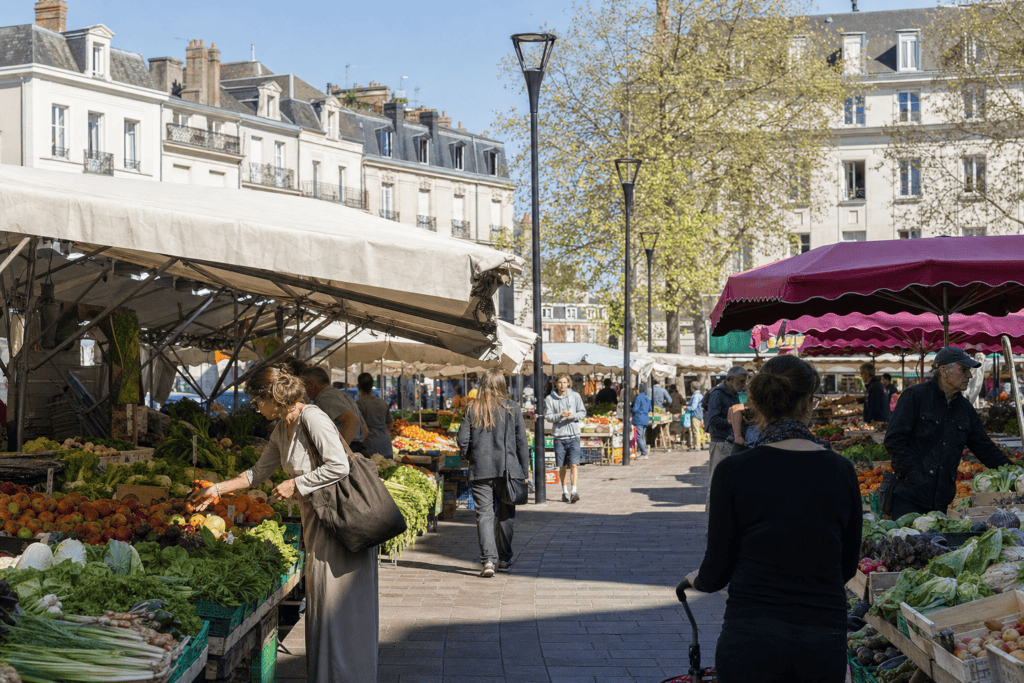 Place Leclerc Market Angers’ large Saturday market brings together a varied selection of fresh produce and…
 Terra Botanica A family-friendly, immersive park dedicated to plants, gardens, and great explorations—come discover it…
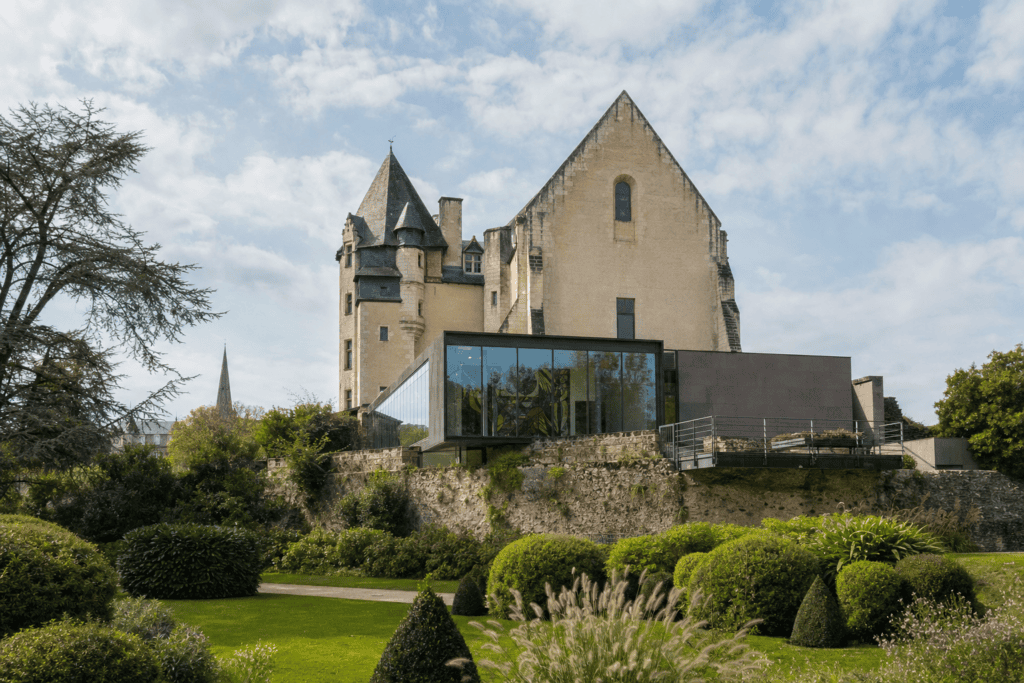 Jean-Lurçat Museum and Contemporary Tapestry In the former Saint-Jean Hospital, discover Jean Lurçat’s Le Chant du monde and a major collection…
Online booking · Paris → 2 promenade du Bout-du-Monde, 49100 Angers, France
Choose your pickup date and time
Your departure and arrival details are already pre-filled. You can adjust them in the fare calculator before viewing the vehicles and fare.