



Pey-Berland Tower and Saint-André Cathedral: the Historic Heart of Bordeaux
Bordeaux
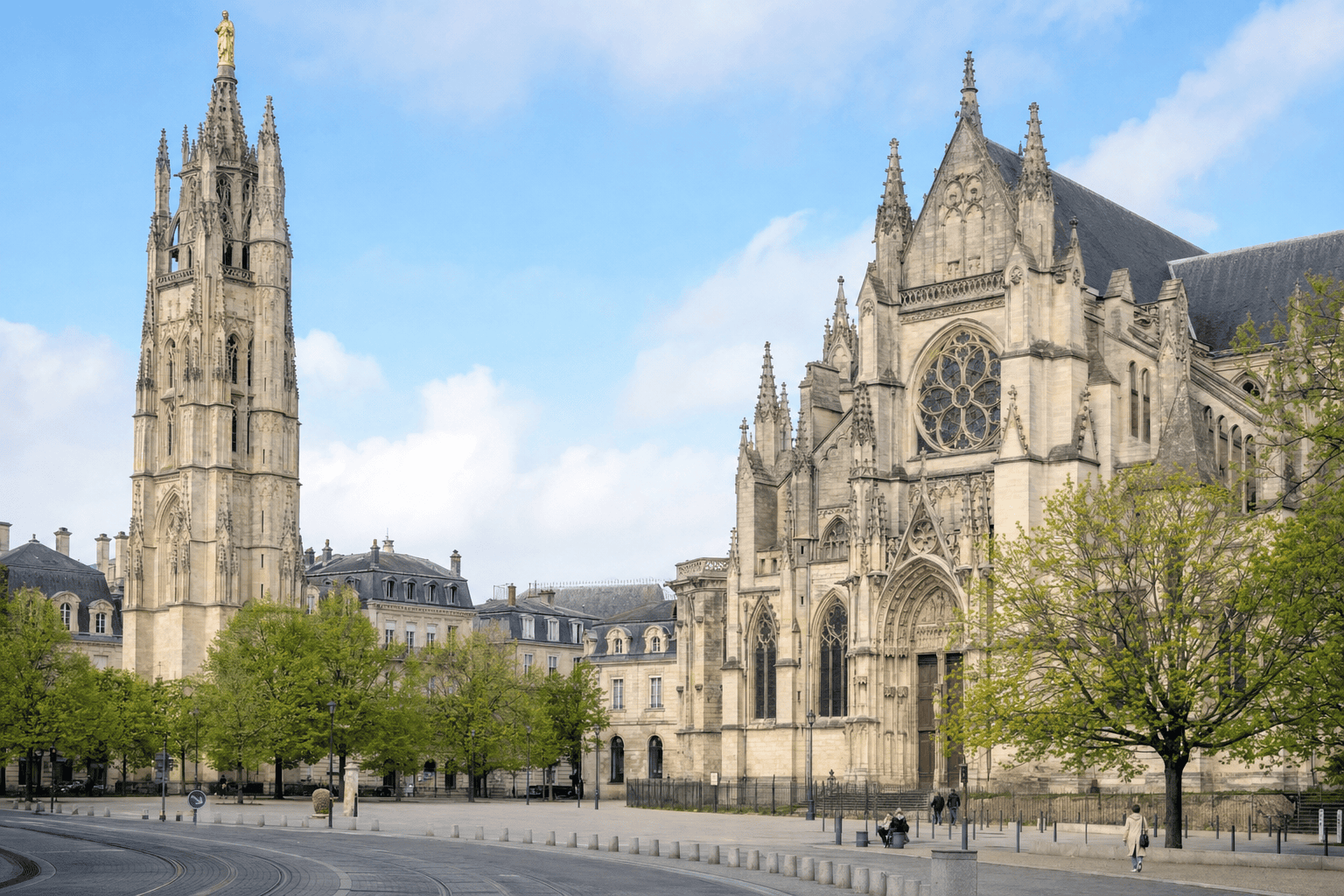
On Place Pey-Berland, in the center of Bordeaux, three monuments tell a significant part of the city’s history: Saint-André Cathedral, Pey-Berland Tower and Palais Rohan, now home to Bordeaux City Hall. The complex is as appealing for its Gothic architecture as for its location in the heart of historic Bordeaux. A visit takes you from the cathedral’s quiet, contemplative atmosphere to the ascent of a former bell tower turned lookout point, with unobstructed views over the rooftops, spires and central neighborhoods of the city.
Practical information
The tower is reached via a narrow staircase with 233 steps, according to Bordeaux Tourism. Wear comfortable shoes and avoid scheduling this visit immediately after a heavy meal. The square is in a central area served by public transportation, but it is also easy to reach on foot from Rue Sainte-Catherine, the Grand Théâtre or the Saint-Pierre district.
Getting to Bordeaux from Paris by private chauffeur
Booking Paris Transfer peut organiser un trajet privé depuis Paris, un hôtel parisien, l’aéroport Charles-de-Gaulle ou Orly vers Bordeaux, avec possibilité de prévoir ensuite un retour vers Paris. Le transport vous dépose à Bordeaux ; les visites de la cathédrale, de la tour et du palais Rohan restent indépendantes et doivent être préparées auprès des sites officiels.
Transportation service departing from Paris, Île-de-France, CDG or ORY; admission tickets not included.
A Monumental Complex in the Center of Bordeaux
Place Pey-Berland is one of the main landmarks in central Bordeaux. It brings together Saint-André Cathedral, Pey-Berland Tower and Palais Rohan, three nearby buildings constructed for different purposes. The cathedral remains an active place of worship and the seat of the Archbishop of Bordeaux. The tower, separate from the main building, is its former bell tower. Palais Rohan, with its understated Louis XVI-style façade, is now home to City Hall.
This proximity gives the visit real coherence: within a few dozen meters, you move through several centuries of religious, political and urban history. Take time to look at the square as a whole before going inside. From certain angles, the tower seems to echo the cathedral’s volumes vertically, while Palais Rohan adds a more horizontal, classical element to the composition.
The complex lies within Bordeaux’s historic area, associated with the Port of the Moon district, a UNESCO World Heritage site. It is also an excellent starting point for exploring the city center on foot, toward the Musée d’Aquitaine, Rue Sainte-Catherine, the Grosse Cloche or the Garonne quays.
Understanding the History of Saint-André Cathedral
Saint-André Cathedral was built and transformed from the 12th to the 16th century. This long period explains the richness of its architecture and the noticeable differences between its sections. It primarily reflects the Gothic style, recognizable by its emphasis on height, pointed arches, large openings and the role given to light.
The monument has hosted major events in French history. Bordeaux Tourism notably recalls the marriages of Eleanor of Aquitaine to the future Louis VII, and later of Anne of Austria to Louis XIII. These episodes give a political dimension to a building often viewed solely from a religious perspective.
Inside, take note of the height of the nave, the side chapels, the stained-glass windows and the sculpted elements. The silence and simplicity of some areas contrast with the monumentality of the architecture. The cathedral also houses a particularly imposing historic organ, highlighted by the tourism office as one of the site’s notable features.
As in any religious building, visits must respect services in progress. Opening hours and visitor arrangements may change: check the cathedral’s official website before arriving.
Pey-Berland Tower, a Separately Built Bell Tower
Pey-Berland Tower is not attached to the cathedral: it was built separately in the 15th century, beginning in 1440. This solution addressed a technical constraint. The cathedral’s medieval bell tower could not easily support additional bells and a large bourdon bell. An independent bell tower was therefore erected a few meters from the religious building.
The tower is named after Pey Berland, the Archbishop of Bordeaux who initiated its construction. A spire was intended to accentuate its height, but a storm tore it down in 1617. It was later replaced by a cross. Installed in 1853, the bourdon bell weighs 11 tons, making it one of the largest in France.
From the ground, notice the slender buttresses, openings and the gilded statue of Notre-Dame d’Aquitaine crowning the tower. The monument appears slender, almost airy, even though its original purpose was very practical: to house the bells and shape the city’s soundscape.
The View from the Top
Climbing Pey-Berland Tower is one of the highlights of the visit. According to Bordeaux Tourism, the staircase has 233 steps and leads to a central viewpoint over Bordeaux. The climb requires some effort, but it also helps you understand the layout of the old city center as you gain height.
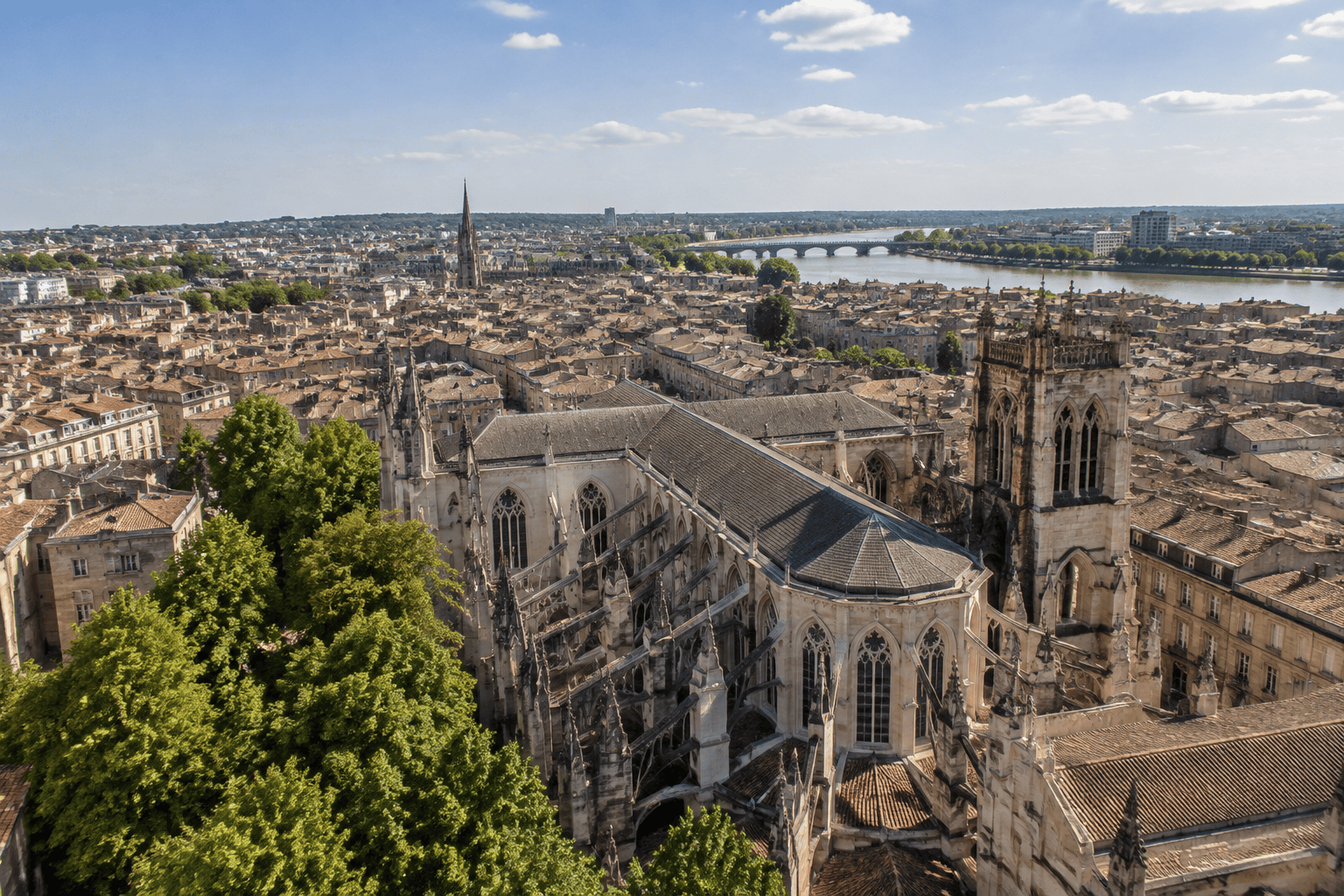
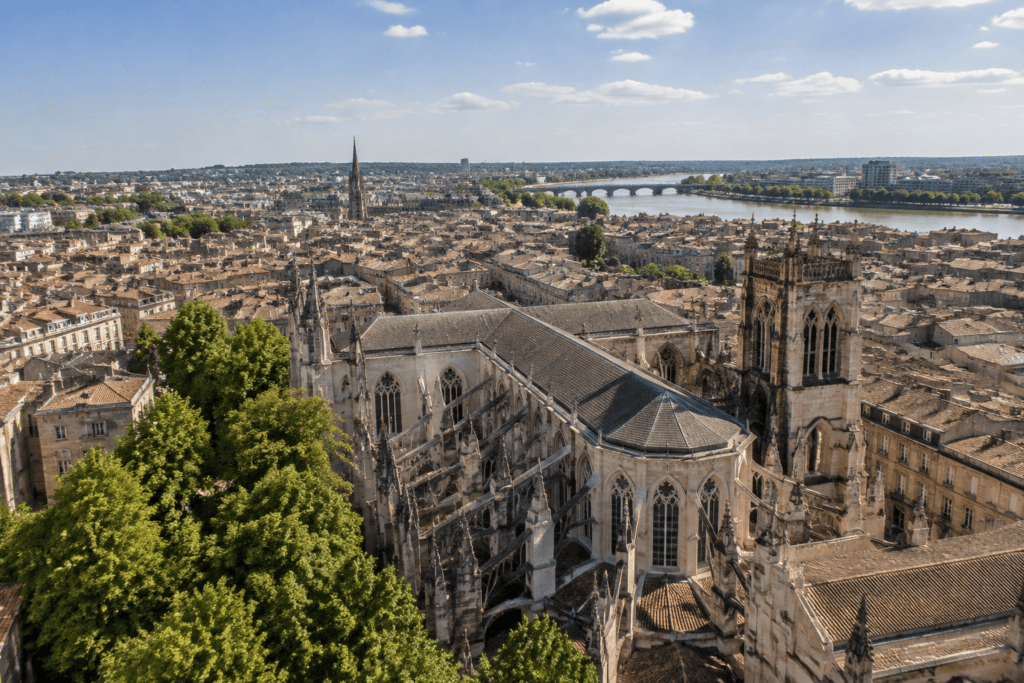
At the top, you can see Bordeaux’s rooftops, church spires, the main routes through the center and, depending on visibility, landscapes farther across the metropolitan area. The cathedral appears from an unusual angle: its volumes, buttresses and roofs are easier to appreciate from the tower than from the forecourt.
The panorama is particularly useful for locating the main neighborhoods. You can then continue your walk toward the Grand Théâtre and Place de la Bourse, or head down toward Saint-Pierre and the quays. For photography, check the weather and choose a clear day; haze or high temperatures can reduce visibility.
Access to the lookout is subject to the monument’s conditions, including visitor capacity and any temporary restrictions. Information from the Centre des monuments nationaux is authoritative for time slots and reservations.
Palais Rohan and Further Cultural Attractions
Across from the cathedral, Palais Rohan provides a remarkable architectural contrast. Its Louis XVI-style façade is more regular and austere than the neighboring Gothic elevations. Built as an archiepiscopal palace in the 18th century, it served several purposes before becoming Bordeaux City Hall in 1837.
The interior is known for its monumental staircase, regarded by Bordeaux Tourism as one of France’s masterpieces of stone carving. Some rooms also reflect the building’s administrative development, including the municipal council chamber fitted out at the end of the 19th century.
Visiting Palais Rohan does not necessarily follow the same arrangements as visiting the cathedral or tower. Guided tours and available time slots may change; check with Bordeaux Tourism and do not assume that unrestricted access is available at all times.
Nearby, the Musée des Beaux-Arts and the Musée d’Aquitaine offer opportunities to learn more about Bordeaux. The area is therefore well suited to a half-day of cultural sightseeing, especially if the weather makes outdoor walks less enjoyable.
Tips for Planning Your Walking Visit
To make the most of the site, begin with an exterior tour of Place Pey-Berland. This initial look helps distinguish the buildings’ functions and construction periods. Then enter the cathedral if it is open to visitors, and set aside a separate time slot for the tower, as the climb and security checks can make the experience longer than a simple exterior visit.
From Rue Sainte-Catherine, the square fits easily into a walk through the city center. One pleasant route starts at the Grand Théâtre, crosses the shopping streets, reaches the cathedral, then continues toward the Grosse Cloche or the Saint-Pierre district. Place de la Bourse and the Miroir d’eau are also within walking distance if you continue northwest.
Visitors who have difficulty climbing stairs should focus on the cathedral, the square and ground-level views, as reaching the tower’s lookout requires a significant ascent. Accessibility conditions may differ between buildings: check the official information before your visit.
Finally, wear respectful clothing inside the cathedral and pay attention to the posted instructions. A successful visit depends as much on observing the details as on photographing the panorama.
When to Visit and What to Check Before You Leave
The cathedral, tower and Palais Rohan do not operate as a single site with one schedule. The cathedral’s hours depend on liturgical activity; Pey-Berland Tower is managed as a visitable monument with its own conditions; Palais Rohan offers guided visits at specific times. It is therefore best to check each official source separately before planning your day.
Hours, reservation procedures, prices, possible closures and temporary restrictions may change depending on the season, ceremonies, construction work or visitor numbers. The Centre des monuments nationaux publishes information about Pey-Berland Tower, while the cathedral’s website provides details about religious services and its calendar. Bordeaux Tourism supplements this information for Palais Rohan and city walking routes.
For a first visit, allow at least an hour around the square. Add time if you climb the tower, visit Palais Rohan or continue to other monuments in the city center. During peak season, plan to arrive early and check time-slot availability rather than relying on outdated information found online.
Frequently Asked Questions
Where are Pey-Berland Tower and Saint-André Cathedral located?
Is Pey-Berland Tower attached to the cathedral?
How many steps are there to reach the top?
Can you visit the cathedral during Mass?
Do you need to book to visit Pey-Berland Tower?
What can you see around Place Pey-Berland?
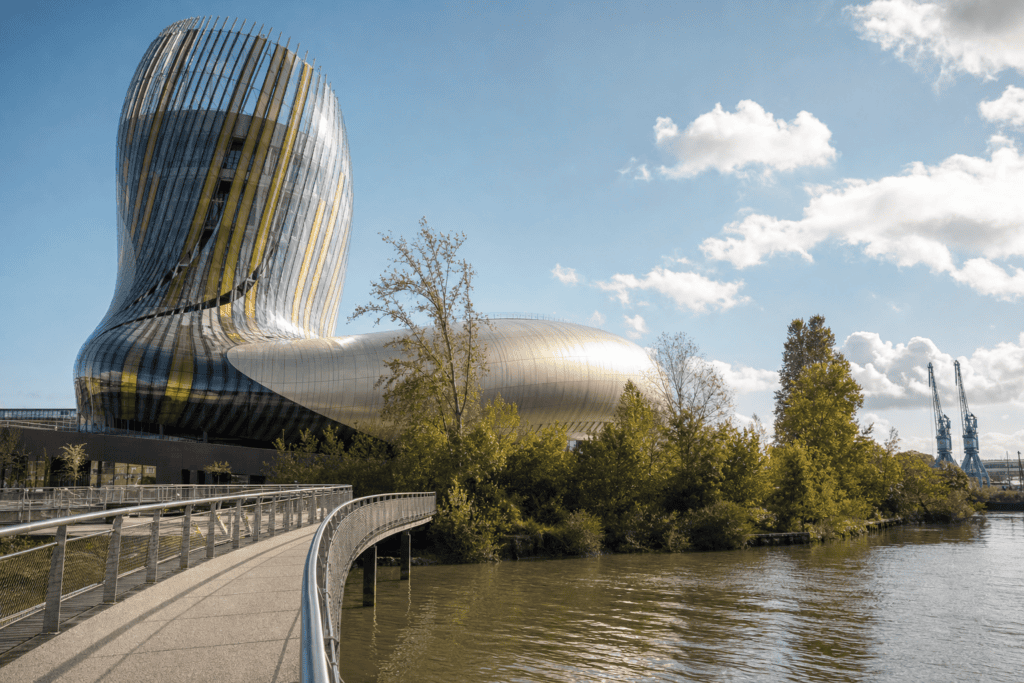 Cité du Vin An interactive cultural journey through the civilizations of wine, housed in an iconic building in Bacalan,…
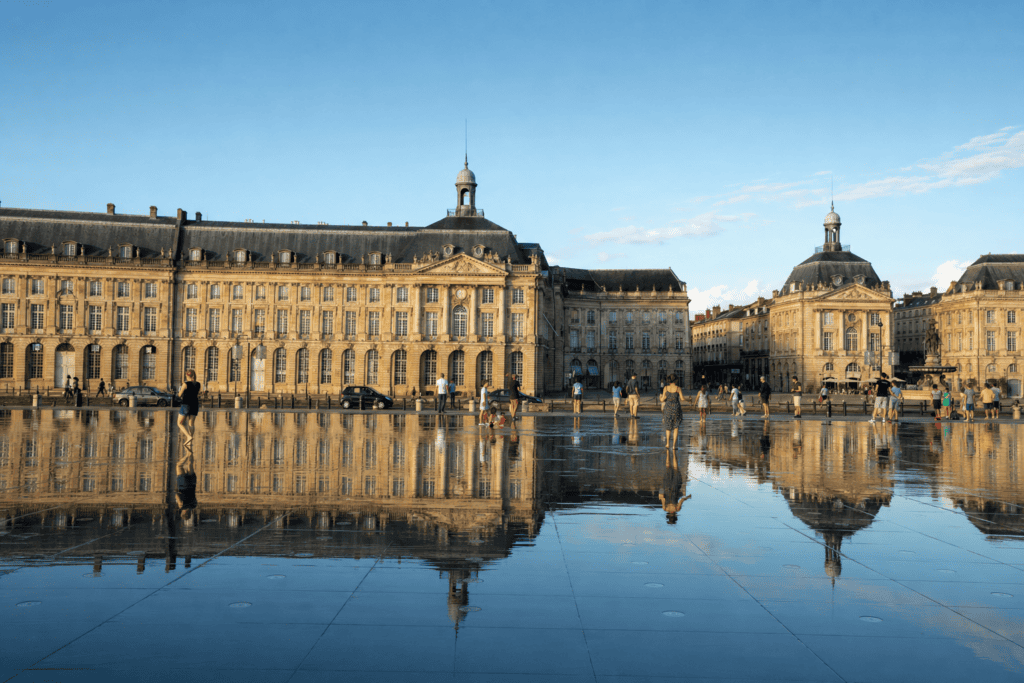 Bordeaux’s Water Mirror and quays Facing Place de la Bourse, the water mirror offers a spectacle of reflections and…
 Marché des Capucins In the Saint-Michel neighborhood, the Capucins Market brings together fresh-produce stalls, seafood,…
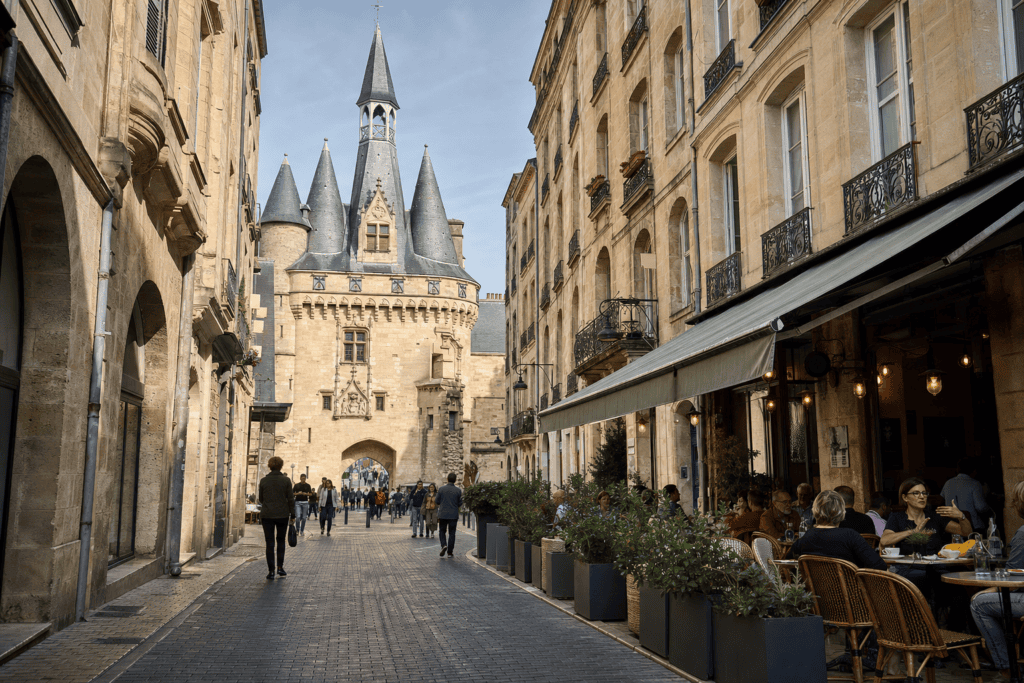 Historic Bordeaux and the Saint-Pierre district Classical façades, historic lanes, terraces and the Garonne quays: the Saint-Pierre neighborhood is a…
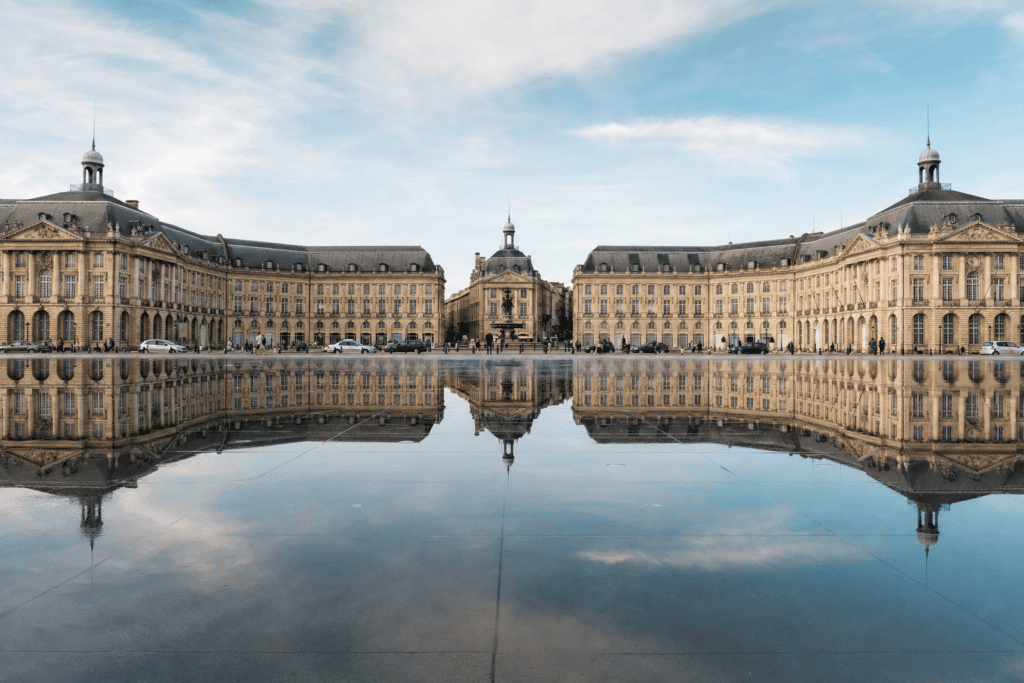 Water Mirror and Place de la Bourse 18th-century architecture, reflections along the quays, and views of the Garonne: the Water Mirror…
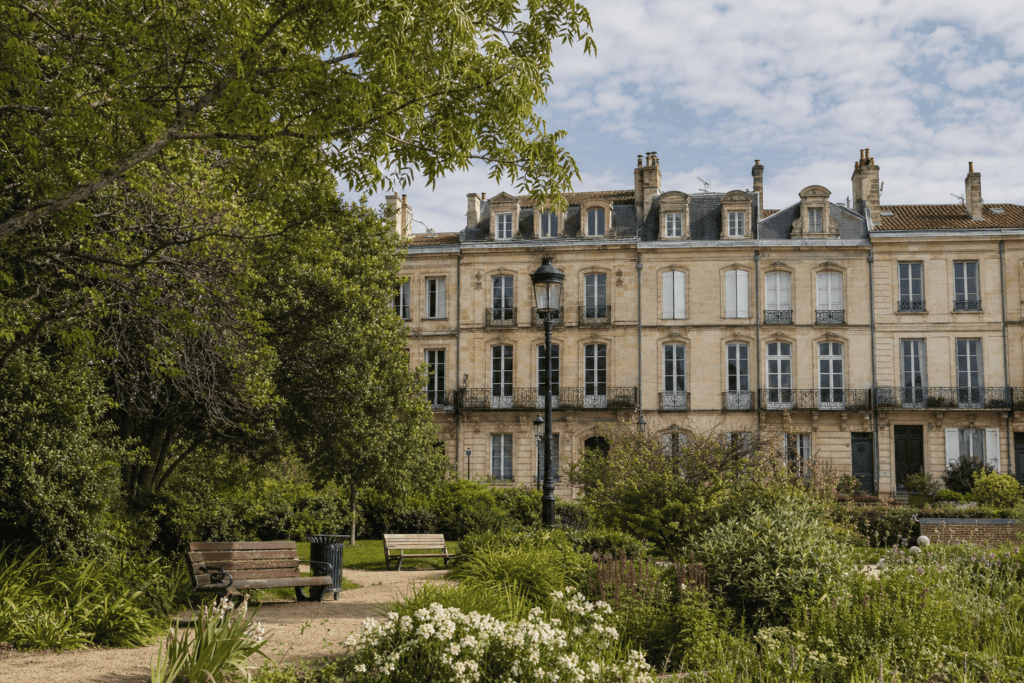 Jardin Public and the Chartrons district A Bordeaux stroll through the paths of Jardin Public, the streets of Chartrons and the quays…
Online booking · Paris → Place Pey-Berland, 33000 Bordeaux, France
Choose your pickup date and time
Your departure and arrival details are already pre-filled. You can adjust them in the fare calculator before viewing the vehicles and fare.