



Old Bordeaux and the Saint-Pierre District: Itinerary and Visit Tips
Bordeaux
Old Bordeaux and the Saint-Pierre district are among the best starting points for exploring the city on foot. With its honey-colored stone façades, historic narrow streets, lively squares, and Garonne riverfront, this part of the historic center brings together several of Bordeaux’s most iconic sights. Place de la Bourse and the Water Mirror naturally attract visitors, but the district also deserves a closer look around Saint-Pierre Church, Porte Cailhau, the shopping streets, and the terraces. For a first visit, allow half a day and leave time for detours.
Practical information
Start at Place de la Bourse, follow the riverfront, then make your way to Place du Parlement, Place Saint-Pierre, and Porte Cailhau. You can then return toward the Garonne or continue to Pont de Pierre, depending on the time you have available.
Paris → Bordeaux: Reaching the Historic Center by Private Transfer
If your itinerary begins in Paris, Île-de-France, Charles de Gaulle Airport, or Orly Airport, a private transfer to Bordeaux can be incorporated into your trip. The route and drop-off point should be determined based on traffic and access conditions. Booking Paris Transfer provides transportation between the Paris region and Bordeaux; it does not sell admission tickets and does not present itself as a local sightseeing operator.
Private transfer from Paris, Île-de-France, CDG, or ORY. Return to Paris available depending on the itinerary.
Understanding Old Bordeaux and Saint-Pierre
The term “Old Bordeaux” refers to a broad part of the historic center, rather than a district with precisely defined boundaries. Saint-Pierre is one of the most interesting areas for a first visit, between the Garonne, Place de la Bourse, and the center’s shopping streets.
The walk reveals several periods of Bordeaux’s history. The layout of some streets recalls the old city, while the regular façades, grand squares, and sculpted decorations reflect the urban transformations of the 17thth and 18th centuries.
This area forms part of Bordeaux’s urban ensemble, listed as a UNESCO World Heritage Site under the name “Port of the Moon.” Its concentration of landmarks and relatively compact size make it particularly well suited to exploring on foot.
Place de la Bourse and the Water Mirror
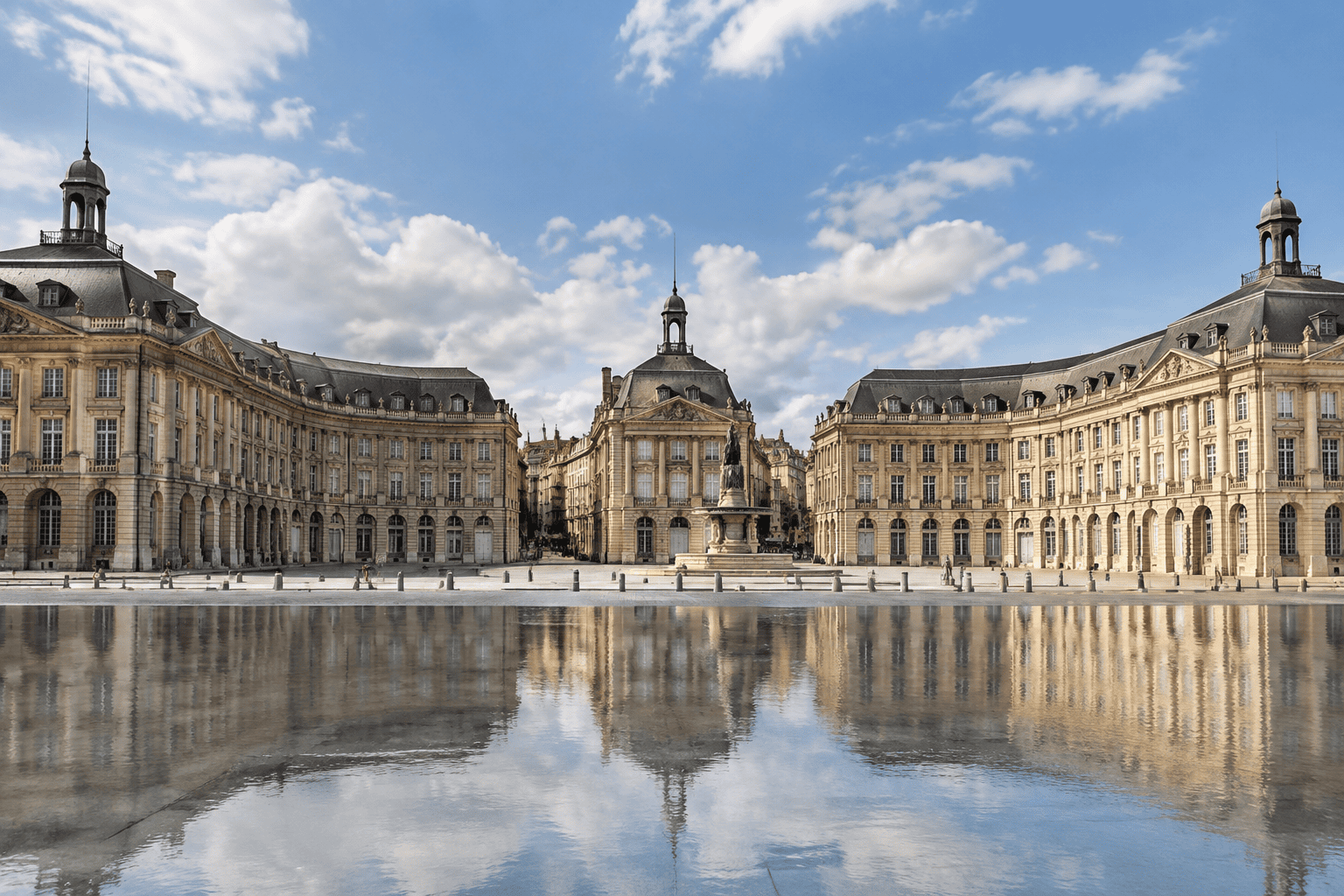
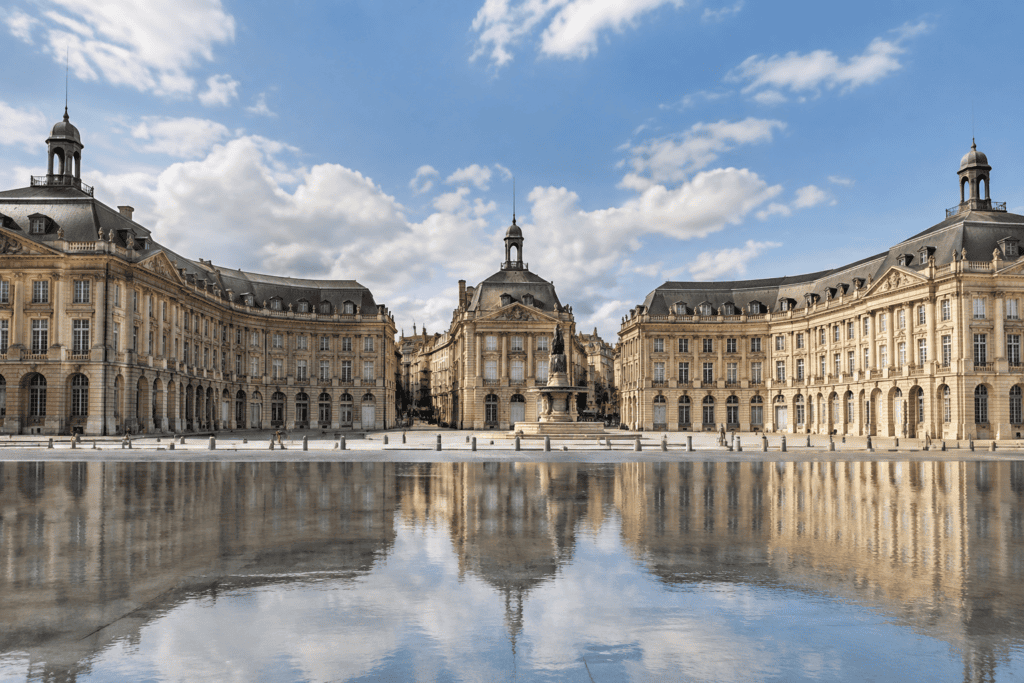
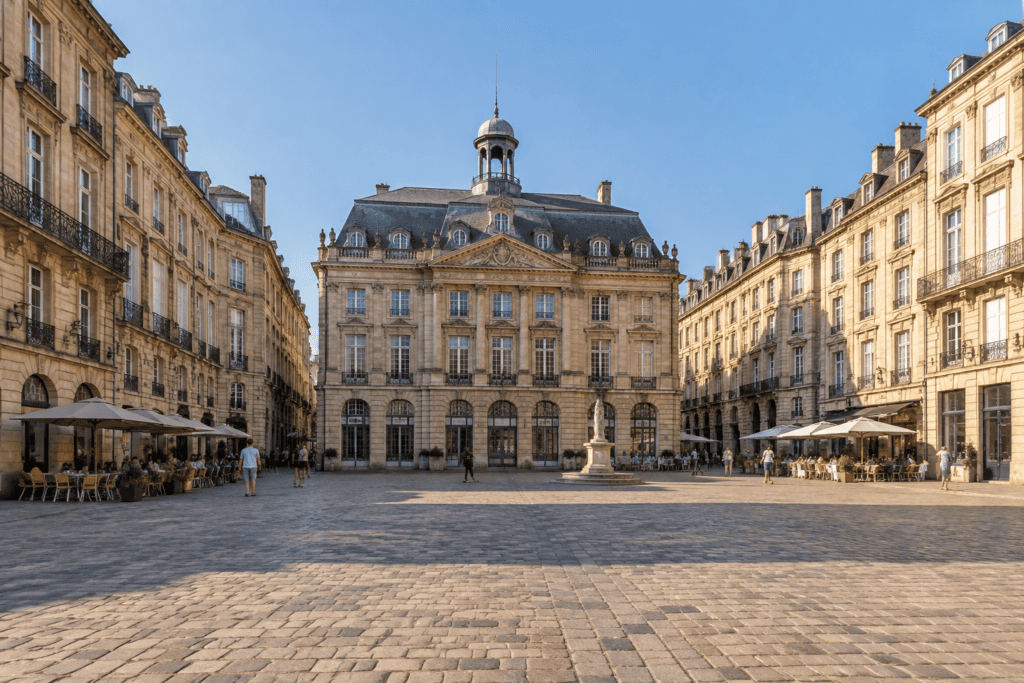
Place de la Bourse is one of Bordeaux’s most recognizable architectural ensembles. Built in the 18thth century facing the Garonne, it brings together classical façades, the Hôtel des Douanes, the Chamber of Commerce, and numerous sculpted decorations.
From the riverfront, take time to observe the mascarons, balconies, and uniformity of the buildings. The Water Mirror, installed along the river at the beginning of the 21stth century, completes the view with its reflections and mist effects.
The Water Mirror’s operation may be adjusted or suspended depending on the weather, season, maintenance, or events. Check updated municipal information before planning your visit, and do not limit your exploration of the square to this contemporary installation alone.
Narrow Streets, Squares, and Architectural Details
Part of the charm of the Saint-Pierre district lies in its details. The names of Rue des Argentiers, Rue des Bahutiers, Rue du Chai des Farines, and Rue du Parlement recall the commercial and craft activities once associated with this area near the port.
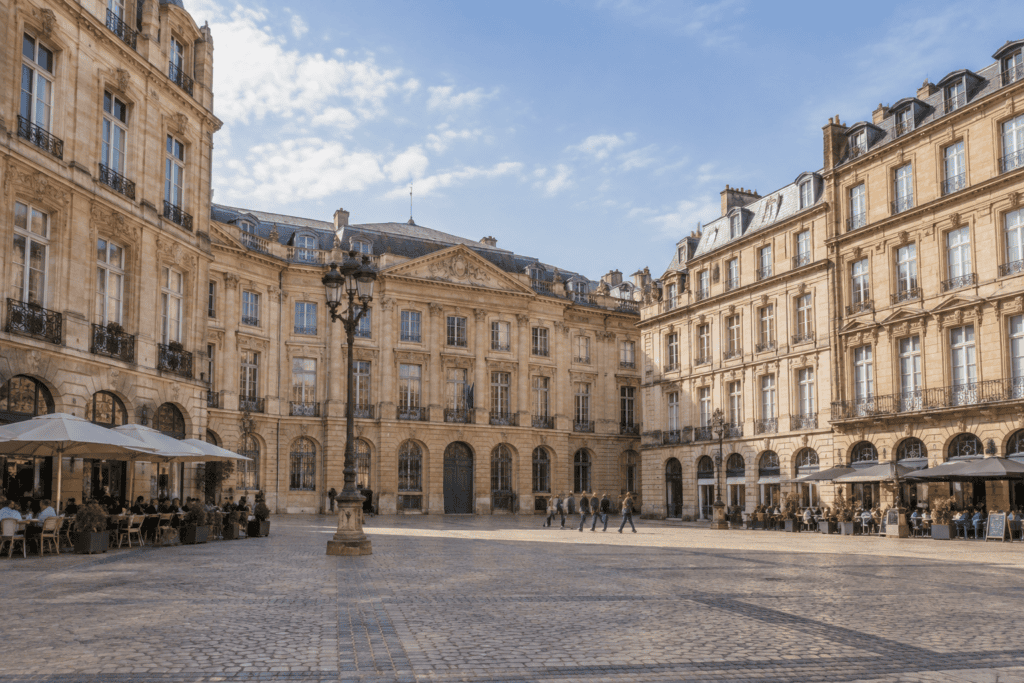
Place du Parlement offers a pleasant space lined with façades and terraces. More intimate, Place Saint-Pierre leads toward the church and the riverfront. As you walk slowly, you will notice ironwork, porches, balconies, and mascarons that sometimes blend into the façades.
To better understand the district, alternate between busy streets and secondary routes. Street names offer interesting clues about Bordeaux’s commercial history, but a guided tour or heritage documentation is still needed to interpret every detail accurately.
Porte Cailhau and Traces of the Medieval City
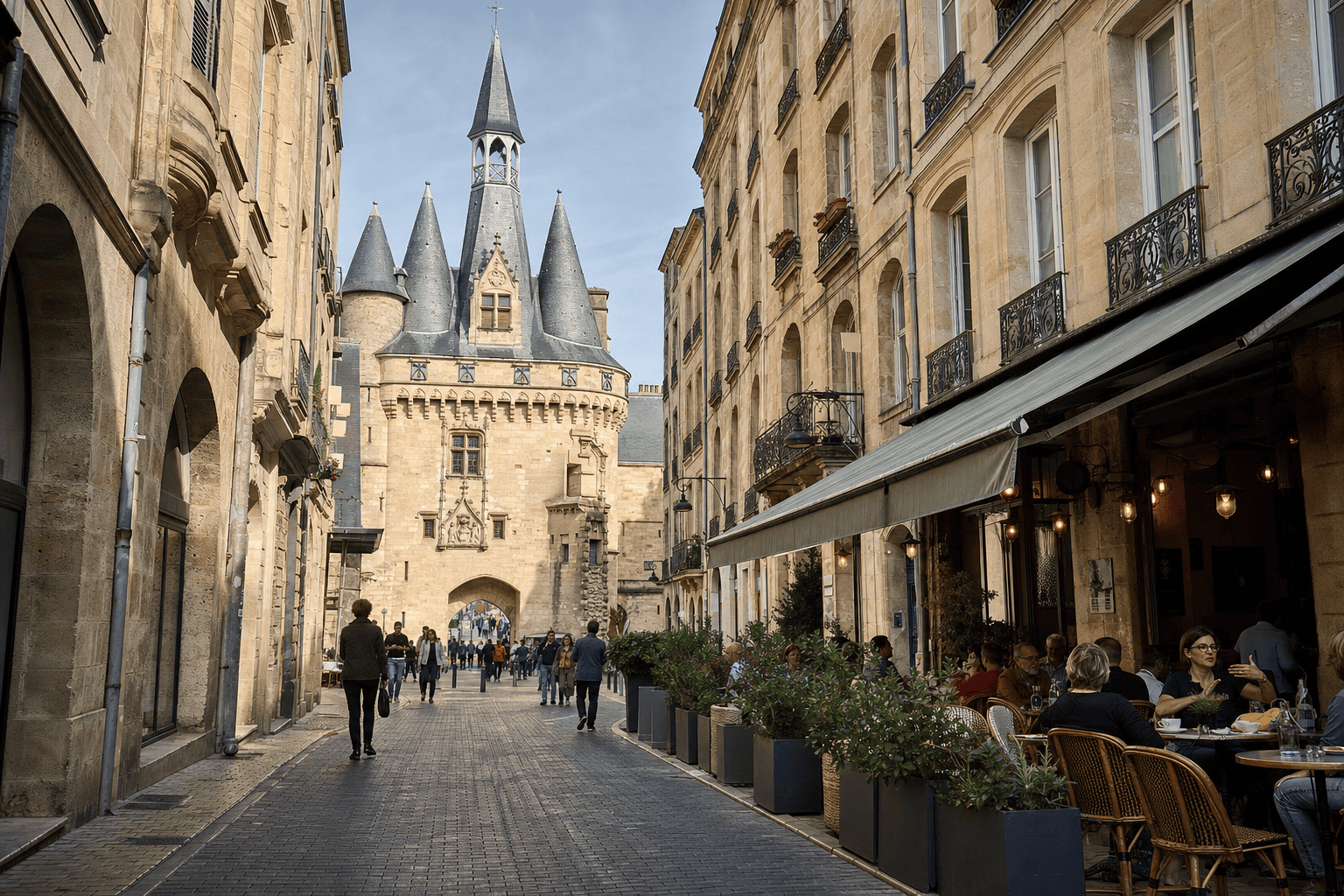
Built at the end of the 15thth century near the Garonne, Porte Cailhau recalls the time when Bordeaux was a fortified city. Its silhouette, with turrets and ornaments, contrasts with the long classical façades of Place de la Bourse.
From the public area, it is a major architectural landmark between Saint-Pierre and the riverfront. An interior visit or heritage presentation may be available depending on the period and current conditions. Check opening hours, prices, and access arrangements with official sources before setting out.
After passing through the gate, you can continue toward Pont de Pierre or return to the district via Rue du Palais. This loop brings the traces of the medieval city into contrast with the urban transformations of later centuries.
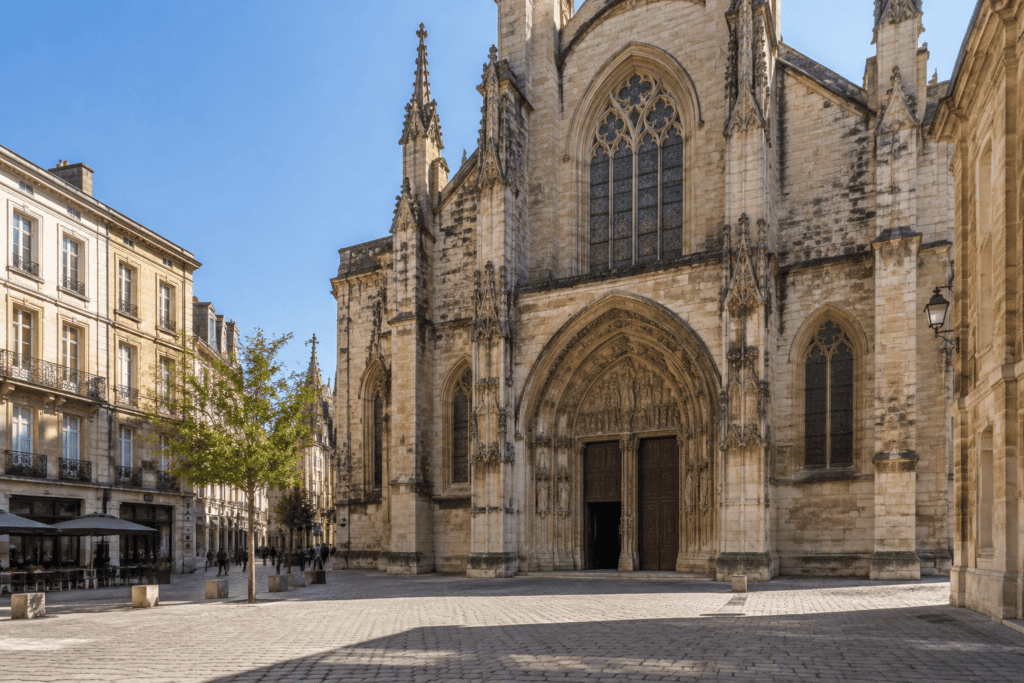
Saint-Pierre Church and Nearby Landmarks
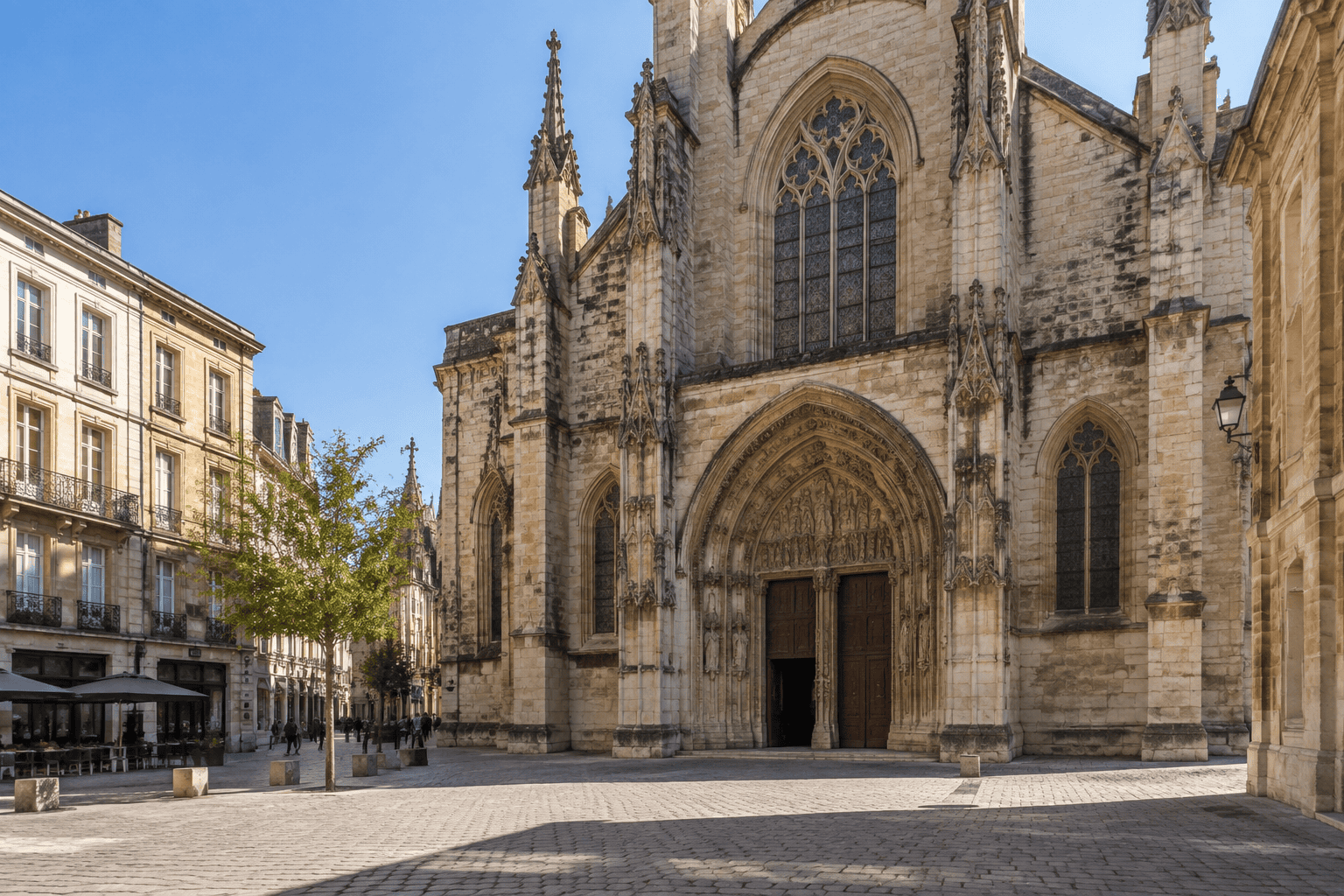
Saint-Pierre Church is a central landmark in the district. It stands at the heart of the streets connecting the central squares with the riverfront and can serve as a stopping point on an architectural walk.
If you have more time, extend your itinerary to the Grosse Cloche, Saint-André Cathedral, Pey-Berland Tower, or Basilica of Saint Michael. These landmarks are not all within the immediate Saint-Pierre area, but they can be included in a broader exploration of central Bordeaux.
At Place de la Bourse, the National Customs Museum offers insight into the history of trade and the port. Museums and landmarks have their own opening hours and admission requirements, so check their official websites before planning an interior visit.
Terraces, Riverfront, and the District’s Atmosphere
Places du Parlement and Saint-Pierre are home to numerous terraces, cafés, and restaurants. The options change regularly; choose where to take a break based on crowd levels, shade, noise, and the ability to sit comfortably rather than relying on a specific address.
The riverfront offers a welcome break after the narrow streets. From the Garonne, it is easier to understand the connection between the historic center, the monumental façades, and the former port. On pleasant days, the Water Mirror is very busy; the riverfront may be more enjoyable outside peak periods.
The district remains lively in the evening around the squares and dining streets. For a quieter walk, choose early morning and be considerate of residents in the narrow streets.
Suggested Itinerary for a First Visit
Start at Place de la Bourse and take in the ensemble from the riverfront. Then cross the Water Mirror area before continuing to Place du Parlement and Place Saint-Pierre. Continue to Saint-Pierre Church, take Rue des Bahutiers and Rue des Argentiers, then head toward Porte Cailhau.
From the gate, you may continue to Pont de Pierre or return to Place de la Bourse. This loop lets you compare views of the river and different periods of Bordeaux architecture. Allow at least two hours at a leisurely pace, and more if you include an interior visit or a break.
Wear comfortable shoes and bring water in hot weather. Before setting out, check information about the Water Mirror, landmarks, transportation, and any construction work. If your trip begins in Paris, Île-de-France, CDG, or ORY, Booking Paris Transfer can arrange a private transfer to Bordeaux, with a return route to Paris based on your needs. This service covers transportation and includes neither admission tickets nor a local guided tour.
Useful sources
Frequently Asked Questions
How long does it take to visit Old Bordeaux and the Saint-Pierre district?
Is the Saint-Pierre district easy to explore on foot?
What is the best time to see Place de la Bourse?
Can you visit Porte Cailhau?
Is Old Bordeaux listed as a UNESCO World Heritage Site?
How can I get to Bordeaux from Paris with Booking Paris Transfer?
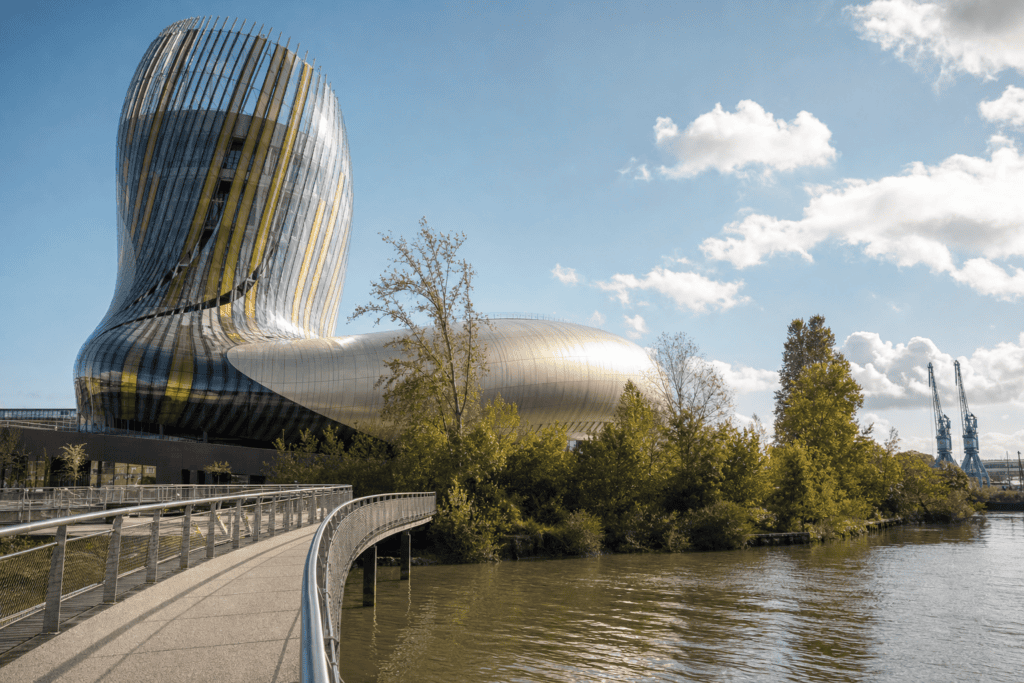 Cité du Vin An interactive cultural journey through the civilizations of wine, housed in an iconic building in Bacalan,…
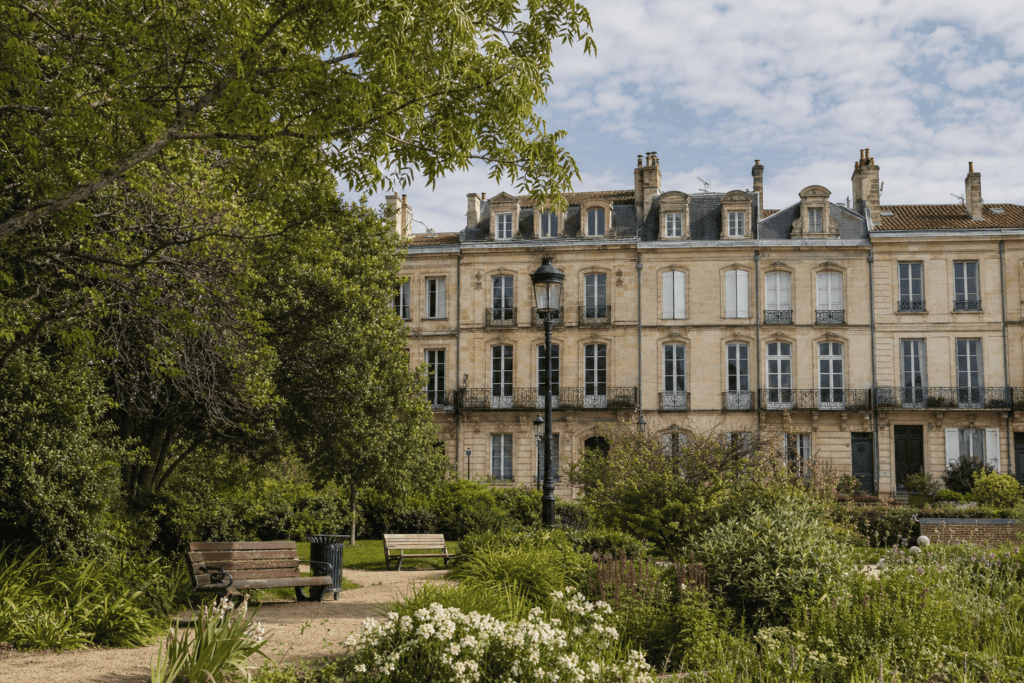 Jardin Public and the Chartrons district A Bordeaux stroll through the paths of Jardin Public, the streets of Chartrons and the quays…
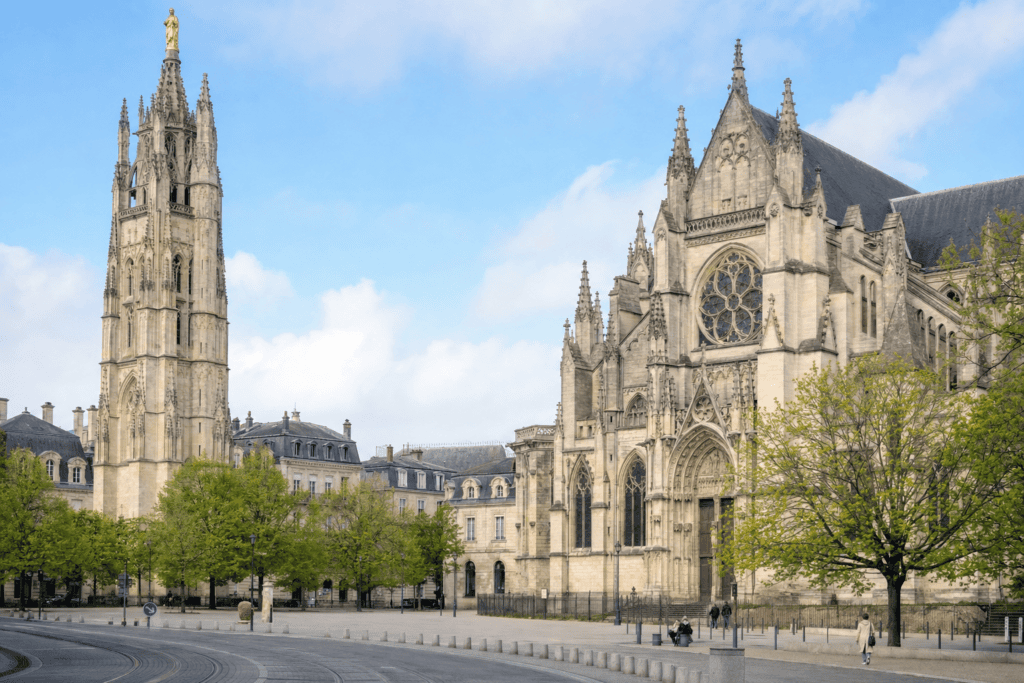 Pey-Berland Tower and Saint-André Cathedral An unmissable monumental ensemble in Bordeaux: Gothic cathedral, independent 15th-century bell tower, Palais Rohan…
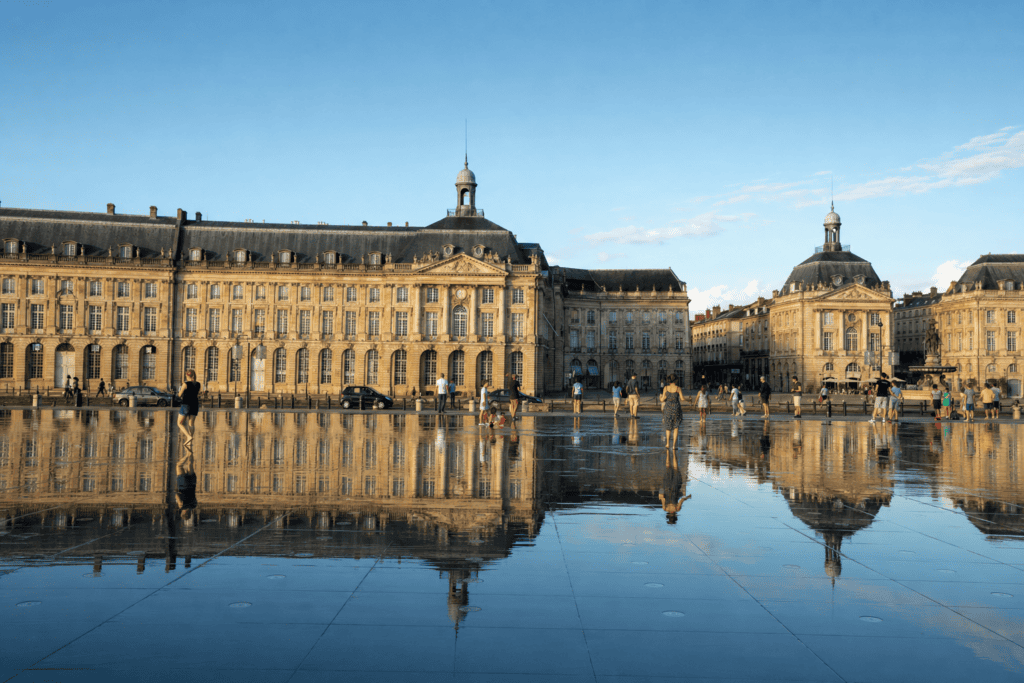 Bordeaux’s Water Mirror and quays Facing Place de la Bourse, the water mirror offers a spectacle of reflections and…
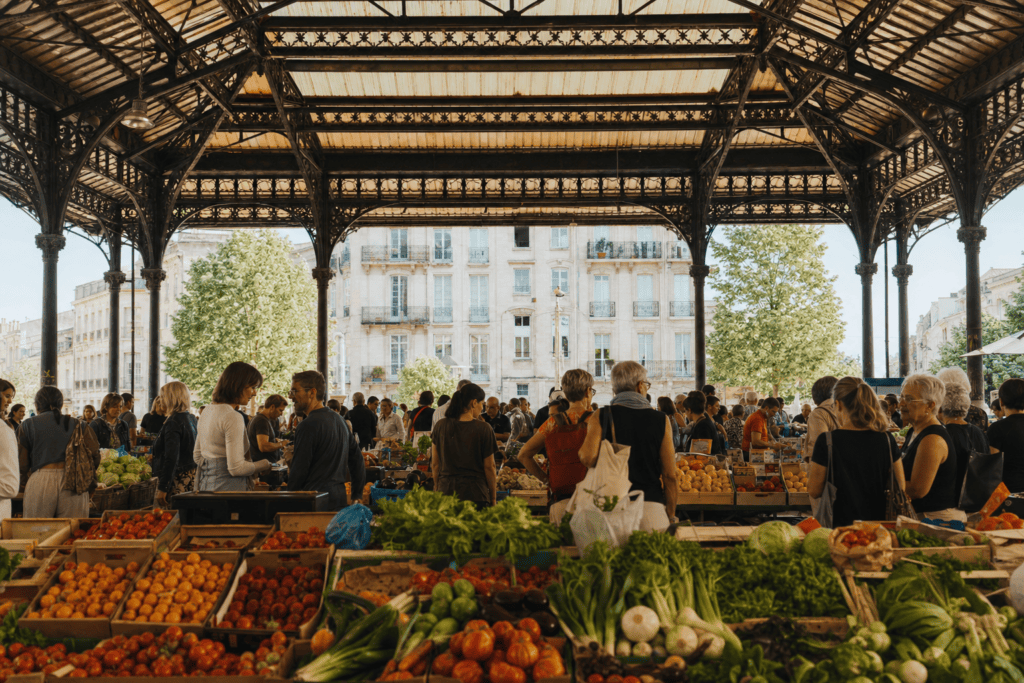 Marché des Capucins In the Saint-Michel neighborhood, the Capucins Market brings together fresh-produce stalls, seafood,…
 CAPC Bordeaux Museum of Contemporary Art Housed in the Entrepôt Lainé, CAPC combines contemporary art, striking architecture, and an opportunity to explore the Chartrons district.
Online booking · Paris → Saint-Pierre district, historic center of Bordeaux, 33000 Bordeaux, France
Choose your pickup date and time
Your departure and arrival details are already pre-filled. You can adjust them in the fare calculator before viewing the vehicles and fare.