



Notre-Dame de Chartres Cathedral: Visitor Guide
Chartres
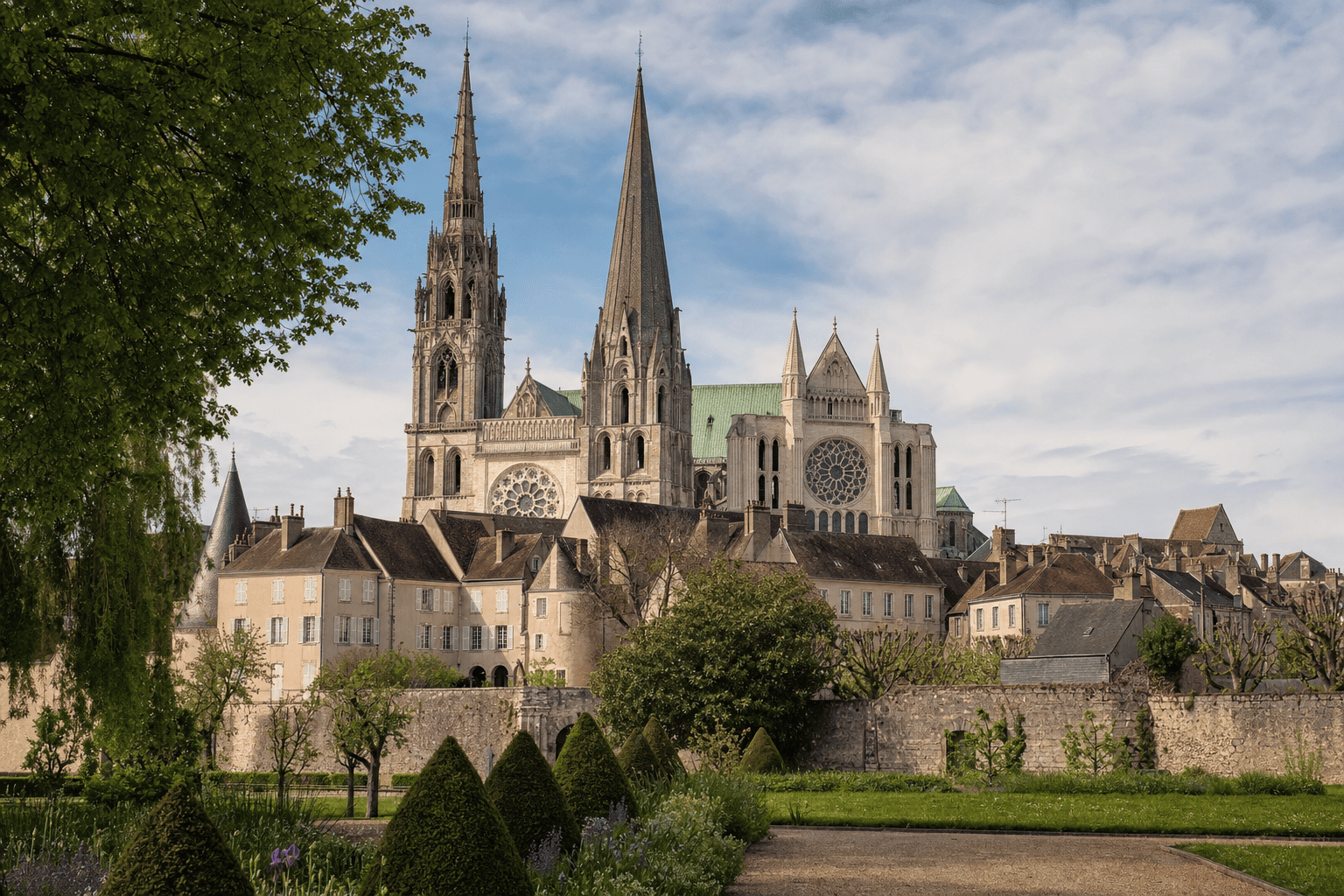
Perched on the hill overlooking the historic center, Notre-Dame de Chartres Cathedral is one of France’s great masterpieces of Gothic architecture. Its silhouette, sculpted portals, medieval stained-glass windows, and labyrinth make it a major attraction less than two hours from Paris. Listed as a UNESCO World Heritage Site, it can be experienced both as a place of worship and as a monument to art, history, and pilgrimage. Allow time to take in the details, look up at the stained-glass windows, and explore the area around the cathedral.
Practical information
Bring compact binoculars or use your phone’s zoom to view the scenes high above. A guided tour can help you understand the stained glass and sculptures.
Travel to Chartres from Paris with a private driver
Plan your trip from Paris to Notre-Dame de Chartres Cathedral with private transportation from your hotel, Charles de Gaulle Airport, or Orly Airport. Depending on your itinerary, plan a round trip to Paris or include Chartres as a stop on a longer route from the capital. Booking Paris Transfer provides the transportation; admission, guided tours, and any tickets must be booked separately with the official organizations.
Private transportation from Paris, a Paris hotel, CDG, or ORY; admission ticket not included.
Why visit Notre-Dame de Chartres?
Notre-Dame de Chartres Cathedral is well worth visiting even if you do not consider yourself passionate about religious architecture. Within an exceptionally cohesive space, it brings together several centuries of the city’s history and Western art. Its main construction belongs to the great Gothic movement of the early 13thth century, following the fire that damaged the earlier building in 1194. The speed of the reconstruction partly explains the remarkable unity of the whole.
The monument first impresses with its proportions: the nave, pointed arches, vaults, and elevations draw the eye toward the choir and upper windows. But Chartres is best appreciated through its details. The portal sculptures depict biblical episodes, saints, and a medieval vision of the world. The stained glass adds an almost ever-changing dimension to the building: depending on the time of day and the weather, the same scenes take on different shades.
Listed as a UNESCO World Heritage Site, the cathedral is also a living sanctuary. It should therefore be approached with curiosity, but also with discretion and respect.
Understanding Gothic architecture
From the forecourt, the west façade offers a first glimpse into Chartres’s history. The Royal Portal, created in the mid-12thth century, still belongs to a period of transition between Romanesque forms and Gothic innovations. Its column statues, arranged around the three doors, give the figures a vertical presence that echoes the building’s overall upward movement. Above them, the three large windows and rose window structure the façade.
The two towers are not identical, one of the cathedral’s most recognizable features. The south tower retains an older silhouette, while the north tower has a Flamboyant Gothic spire completed during the Renaissance. This difference is not a flaw: it reflects the building campaigns and transformations that shaped the monument.
Inside, view the nave from the entrance before moving closer to the transept. The arches, columns, and galleries organize a space designed to draw the eye toward the light. The cathedral thus illustrates the Gothic principle of lightening walls, increasing the number of openings, and making light an architectural element in its own right.
Chartres’s medieval stained-glass windows
The stained glass is one of the main reasons for Chartres’s international renown. The cathedral preserves an exceptionally extensive and remarkably well-preserved medieval collection, featuring biblical scenes, saints’ lives, legendary stories, and depictions connected to the trades that funded some of the windows. Color serves more than a decorative purpose: it guides the narrative, distinguishes the figures, and creates a distinctive luminous atmosphere.
The famous Notre-Dame de la Belle Verrière, recognizable by its deep blue, is one of the best-known panels. It is among the older works preserved in the building and often draws visitors toward the ambulatory. The three large bays of the west façade, older than the Gothic reconstruction, also deserve close attention.
To get a better look at the stained glass, avoid staying only in the center of the nave. Walk along the aisles, alternate between broad views and close-up details, then return your attention to the upper windows. The small figures, gestures, and objects depicted often tell as much as the main scenes. A guide or official booklet can be very useful for identifying the episodes.
The labyrinth in the nave
The Chartres labyrinth lies on the floor at the center of the nave, between the third and fourth bays. It may be partly hidden by chairs or by the arrangement of services, so look down at the pavement rather than only up at the vaults. With its circular design and winding path, it is one of the cathedral’s most distinctive features.
Its interpretation has given rise to many theories. In medieval Christian tradition, church labyrinths could evoke a symbolic path, an act of meditation, or a pilgrimage completed within the sanctuary itself. It is wise to distinguish documented interpretations from later stories: not all the meanings associated today with the path are supported by evidence in the same way.
The labyrinth is particularly interesting when considered within the layout of the nave. Its orientation, location, and dimensions engage in a dialogue with the surrounding architecture. If specific access or an opportunity to walk the path is available, it may depend on the liturgical calendar and visitor arrangements. Check the cathedral’s information before planning your visit around this feature.
The portals and sculptures
Chartres’s façades form a true sculptural program. The Royal Portal on the west is the best known, but the transept portals are also exceptionally rich. As you approach, take time to examine the archivolts, the figures around the doors, and the scenes arranged across different levels of meaning. The sculptures are not mere ornaments: they conveyed religious stories and references to an audience that did not necessarily read the texts.
The south façade is particularly admired for its depictions related to the Last Judgment and the lives of the saints. The north façade presents another group of themes, with figures and episodes that complement the vision developed around the building. Comparing the three façades helps show that the cathedral is meant to be read as a journey, from arrival on the forecourt to the liturgical heart of the building.
To appreciate the sculptures, choose a time when the forecourt is relatively clear. Low morning or late-afternoon light can bring out the reliefs. Guided tours are offered regularly, but their dates and arrangements change, so consult the official schedule rather than relying on an old program.
Planning your visit to Chartres
The cathedral is located in Chartres’s historic center, near the Notre-Dame cloister and the Bishop’s Gardens. From the forecourt, several streets lead toward the old town, historic houses, and viewpoints over the Eure Valley. A visit to Notre-Dame can therefore easily be included in a day devoted to Chartres’s heritage.
The cathedral currently indicates that it welcomes visitors daily, but exact hours, access conditions, and any adjustments may change depending on services, ceremonies, security, or construction. Before setting out, check the official hours page and visit schedule. Access to the crypt, towers, treasury, or certain guided tours may be subject to separate arrangements.
Wear attire appropriate for a religious site and keep noise to a minimum. Large groups may be subject to special instructions. Visitors with reduced mobility should check accessibility arrangements before traveling, as a medieval monument may present limitations depending on the areas visited.
A day trip from Paris
Chartres is an easy cultural day trip from Paris, especially for travelers who want to discover a major monument outside the capital without organizing an extended tour. One day allows time to visit the cathedral, have lunch in the historic center, and explore a few old streets. For a more complete experience, add the crypt, a museum, or a walk along the Eure, depending on available hours.
Plan the journey with plenty of time to spare: visiting a cathedral is more than a quick stop on the forecourt. Allow time to reach the center, check the day’s information, and view the stained glass under good conditions. Visitors interested in photography may prefer the hours when light enters directly through the windows, while respecting the site’s rules.
For private transportation, Booking Paris Transfer can arrange a trip from Paris, a Paris hotel, Charles de Gaulle Airport, or Orly Airport to Chartres, with a return to Paris or continuation of an itinerary that began in the capital. The service covers transportation, not admission or tour tickets.
Frequently Asked Questions
Is Notre-Dame de Chartres Cathedral open every day?
Can you walk the Chartres labyrinth year-round?
How much time should I allow to visit the cathedral?
Is the cathedral suitable for children?
How do you get to Chartres from Paris?
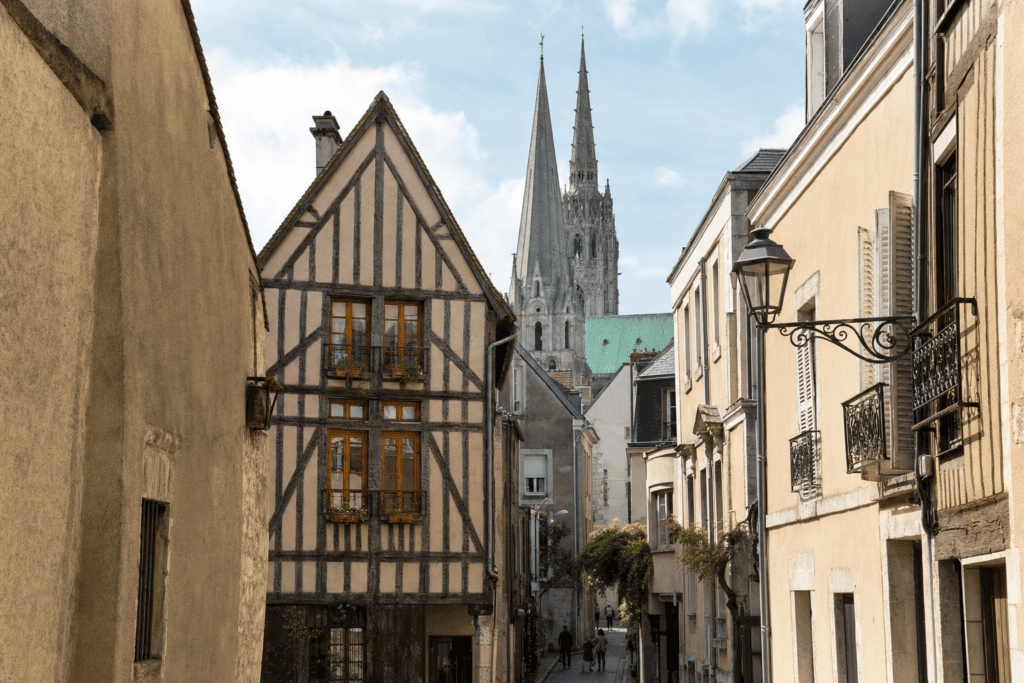 Chartres Historic Center A walk among the cathedral, historic houses, stepped streets, and the banks of the Eure, along…
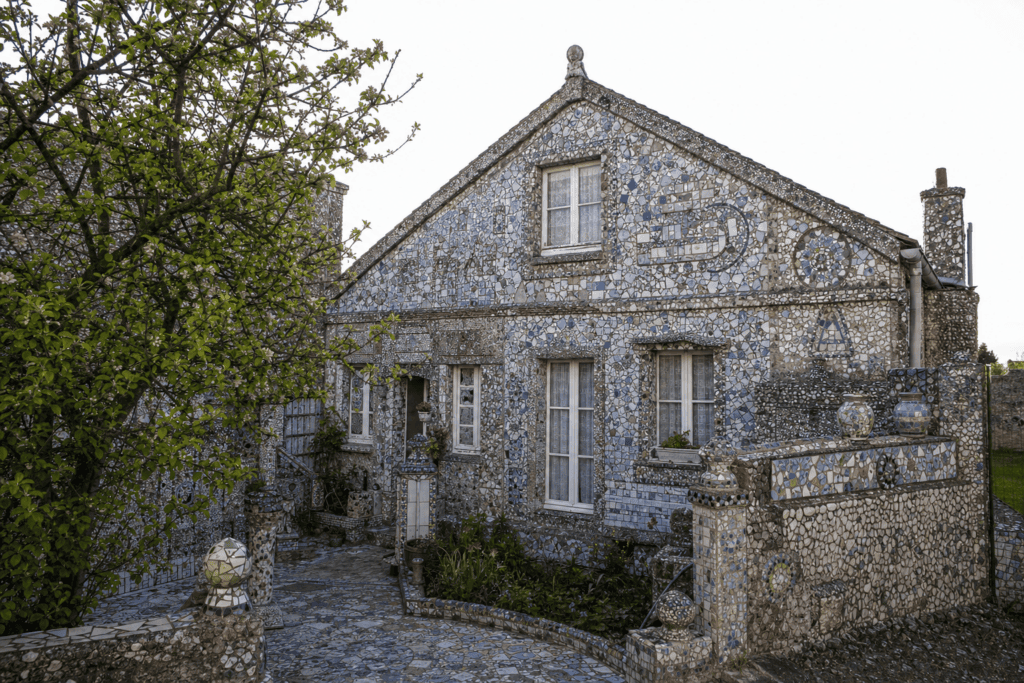 Maison Picassiette An extraordinary house and garden, listed as a historic monument, where Raymond Isidore transformed fragments of dishes into…
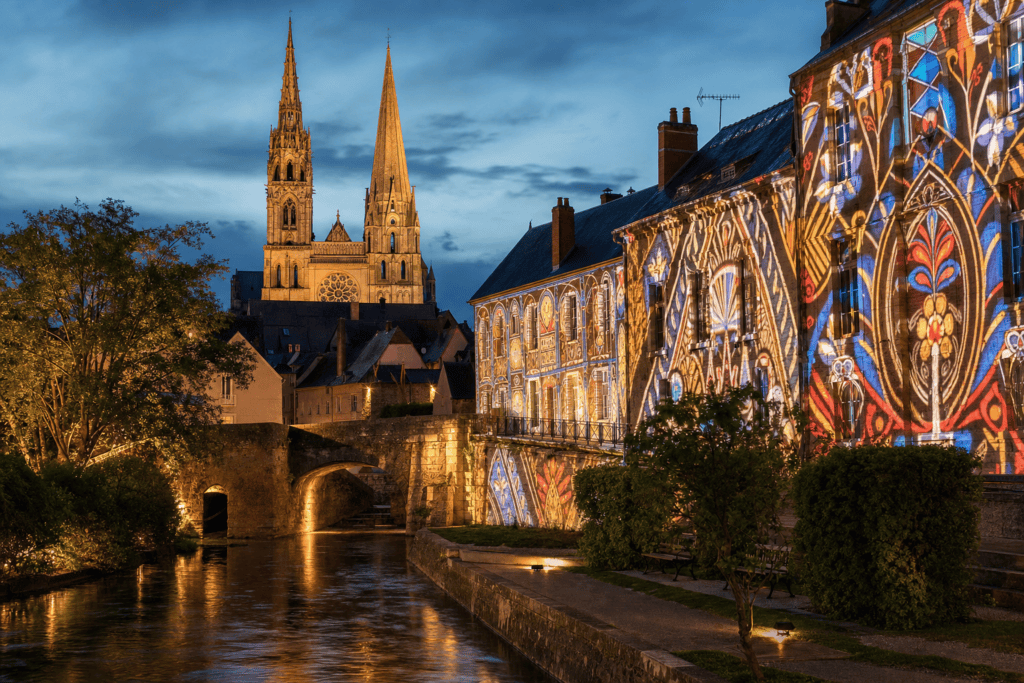 Chartres en lumières A free nighttime stroll among the cathedral, upper town, banks of the Eure, bridges and illuminated washhouses.
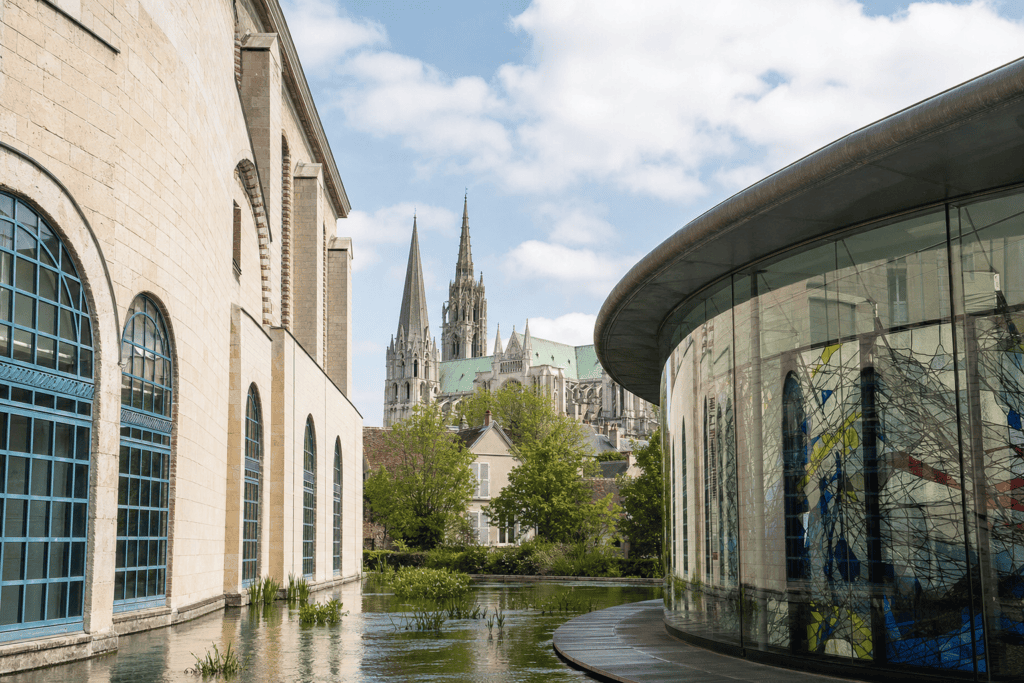 International Stained-Glass Center A cultural venue dedicated to the history, techniques, and contemporary creation of stained glass, near…
Online booking · Paris → 16 Notre-Dame Cloister, 28000 Chartres, Eure-et-Loir, Centre-Val de Loire
Choose your pickup date and time
Your departure and arrival details are already pre-filled. You can adjust them in the fare calculator before viewing the vehicles and fare.