



Maison Picassiette: Chartres’ One-of-a-Kind Mosaic Masterpiece
Chartres
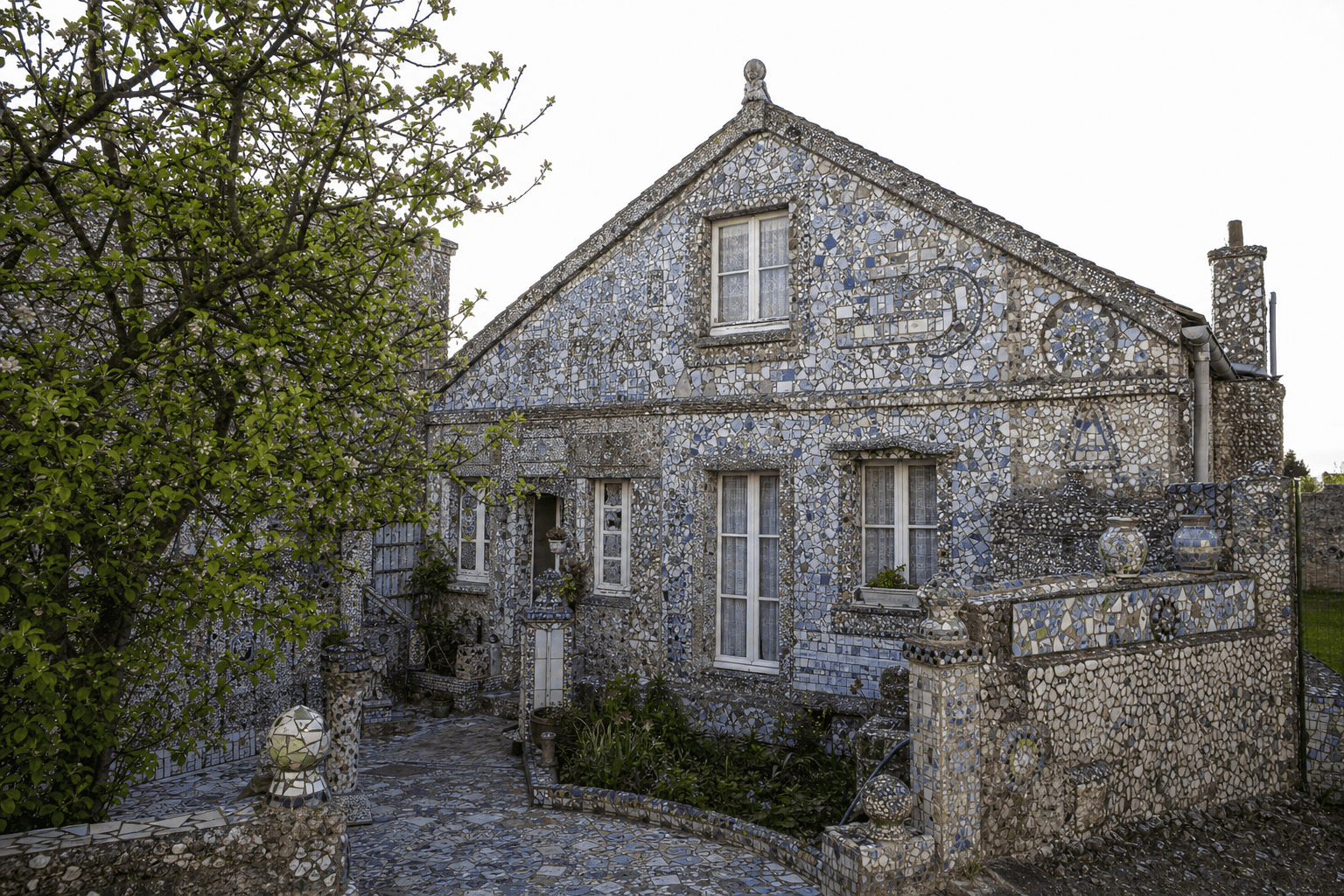
In Chartres, Maison Picassiette is a world unto itself: a modest home entirely covered in mosaics made from fragments of tableware, glass, and ceramics. Patiently created by Raymond Isidore, it brings together local memories, religious motifs, imaginary scenes, and references to the city. The visit feels like a stroll through a complete work of art, combining outsider art, folk art, and personal poetry.
Practical information
Look at the mosaics at eye level, but also take time to look up: the floors, walls, ceilings, furnishings, and garden all contribute to the work.
Getting to Chartres from Paris with peace of mind
From Paris, a private transfer can make it easier to spend a day exploring Maison Picassiette and Chartres’ heritage, with pickup from your hotel, CDG, or ORY, followed by a return trip to Paris. Booking Paris Transfer provides transportation for your itinerary; admission to the site must be booked separately through the official organizations.
Transportation service departing from Paris, Île-de-France, CDG, or ORY; admission tickets are not included.
A home born from a personal passion
Maison Picassiette is inseparable from Raymond Isidore, who was born in Chartres in 1900. After working in several trades, he became a municipal employee, bought a plot of land with his wife, and gradually built their home there. His artistic journey began when he used fragments of tableware and glass to create decorative patterns. Over time, this activity became a true creative obsession: the walls, floors, ceilings, furnishings, courtyards, and garden were all incorporated into his project.
The décor was therefore not commissioned or based on a conventional architectural plan. It took shape over the years through salvaged materials and the creator’s imagination. Local sources describe several decades of work, continuing until Raymond Isidore’s death in 1964. This biographical dimension gives the visit a distinctive character: you are discovering not just a museum, but the tangible trace of a life devoted entirely to a personal vision.
The Ministry of Culture notice lists the house and garden as a designated historic monument.
A masterpiece of mosaic and outsider art
Maison Picassiette’s uniqueness begins with its materials. Raymond Isidore did not work with regular tesserae purchased for the occasion, but with broken pieces and fragments of earthenware, porcelain, pottery, and glass. These irregular pieces were set in mortar to create highly colorful surfaces. The breaks, varied textures, and changing light thus became elements of his artistic language.
The work is often associated with outsider art or naïve art, although no single label fully captures the experience. It defies conventional categories, belonging simultaneously to architecture, sculpture, mosaic, domestic décor, and imaginary garden design. The house functions as a complete work of art in which any surface can receive a motif.
To appreciate the site, don’t immediately try to take in the overall composition. Start with the details: an outline, a face, a flower, or a recognizable piece of tableware. The accumulation then creates a broader, almost immersive impression that explains this Chartres site’s exceptional reputation.
Symbols and landscapes of Chartres
Maison Picassiette is more than abstract decoration. It preserves numerous references to Raymond Isidore’s world, his faith, and his everyday surroundings. Religious motifs play an important role in a city deeply shaped by Notre-Dame Cathedral and its spiritual heritage. The compositions sometimes feel like an inner narrative made up of signs, figures, and scenes that echo one another.
Chartres’ heritage also appears in the décor. The cathedral, Porte Guillaume, and other familiar features are reimagined in this world of colorful fragments. Maison Picassiette also includes more distant evocations, including a depiction of the Eiffel Tower, as well as images that reflect its creator’s imagination. These references make the visit especially worthwhile before or after exploring the historic center.
Rather than viewing these representations as exact reproductions, see them as reassembled memories. Raymond Isidore was not seeking academic precision; he transformed familiar places into personal symbols. The result is an intimate geography in which Chartres becomes the starting point for a much larger mental world.
A tour through the house, courtyard, and garden
The visit takes place across an environment where indoors and outdoors are closely connected. The house naturally draws the eye, but the courtyards, walls, floors, and garden extend the décor. This continuity is essential to understanding Raymond Isidore’s project: he did not simply want to embellish a few rooms, but to surround his everyday life with an entirely composed environment.
Some household items, including the furnishings, were decorated as well. The presence of mosaics on ordinary objects reinforces the site’s intimate, folk-art character. A chair, bed, or everyday fixture ceases to be a mere accessory and becomes part of a coherent whole, built with remarkable patience.
Plan on an attentive visit rather than a quick stop. The surfaces are rich and the motifs numerous, so your eyes need time to adjust. Since part of the tour is outdoors, wear clothing suited to the weather. Booking information generally indicates a visit lasting between 30 minutes and 1 hour, but visitors who enjoy examining details may want to stay longer.
Planning your visit to Chartres
Maison Picassiette is located at 22 rue du Repos in Chartres, in the Eure-et-Loir department of the Centre-Val de Loire region. The site is on the outskirts of the historic center, about 3 km from the cathedral. It may therefore make sense to include it in a broader day exploring Chartres rather than relying on an improvised visit between stops in the city center.
Opening hours, operating periods, prices, and booking procedures may change depending on the season or events. First consult the C’Chartres Tourism website or the Maison’s official website before setting out. Booking may be recommended, especially when visitor numbers increase or guided tours are offered.
For transportation, the tourist office indicates service on the Filibus network, with a stop called Picassiette. Available information also indicates that there is no dedicated parking. If you drive, check parking conditions in the neighborhood and use only authorized spaces. Once there, plan on a calm, respectful visit to this fragile décor.
Combining Picassiette with other must-see sights
Maison Picassiette makes the most sense as part of an itinerary focused on Chartres’ heritage. Notre-Dame Cathedral is the most obvious pairing: the two sites offer very different visions of color, the sacred, and architecture. On one side is a monumental medieval landmark; on the other, a home built on the scale of a lifetime and transformed with humble materials.
You can also extend the day with a walk through the old streets, around half-timbered houses, stairways, and traces of the city’s former urban landscape. Depending on the season and schedule, light shows, guided tours, and stained-glass-related activities may round out your visit. It’s best to check current events with the tourist office, as programs change regularly.
For a comfortable pace, start with Maison Picassiette if you want to explore it attentively, then head to the historic center. Another option is to visit the cathedral in the morning, have lunch in Chartres, and spend the afternoon at this more intimate site. In either case, allow time for travel: the house is not right next to the cathedral.
Why this visit is worth the detour
Maison Picassiette appeals because it resembles no other monument in Chartres. Its significance comes neither from monumental scale, nor from the rarity of a precious material, nor from sophisticated architecture. Its power lies in the accumulation of simple gestures, repeated over many years until an ordinary home was transformed into a complete work of art. This origin gives it a deeply human presence.
The site will appeal to enthusiasts of outsider art, mosaics, unusual architecture, and folk heritage, as well as to visitors who enjoy individual stories. The visit invites reflection on the boundary between art and everyday life: what becomes of a house when every object, wall, and outdoor space contributes to a single vision?
It is also suitable for families, provided children understand that this is a fragile heritage site and are encouraged to observe rather than touch. Photographs can capture the colors, but they do not always convey the depth of the surfaces or the changing light. It is precisely this direct experience, made up of details and close observation, that makes Maison Picassiette memorable.
Frequently Asked Questions
Where is Maison Picassiette located?
Who created Maison Picassiette?
How much time should I allow for the visit?
Can you get there by public transportation?
Are the hours and prices fixed?
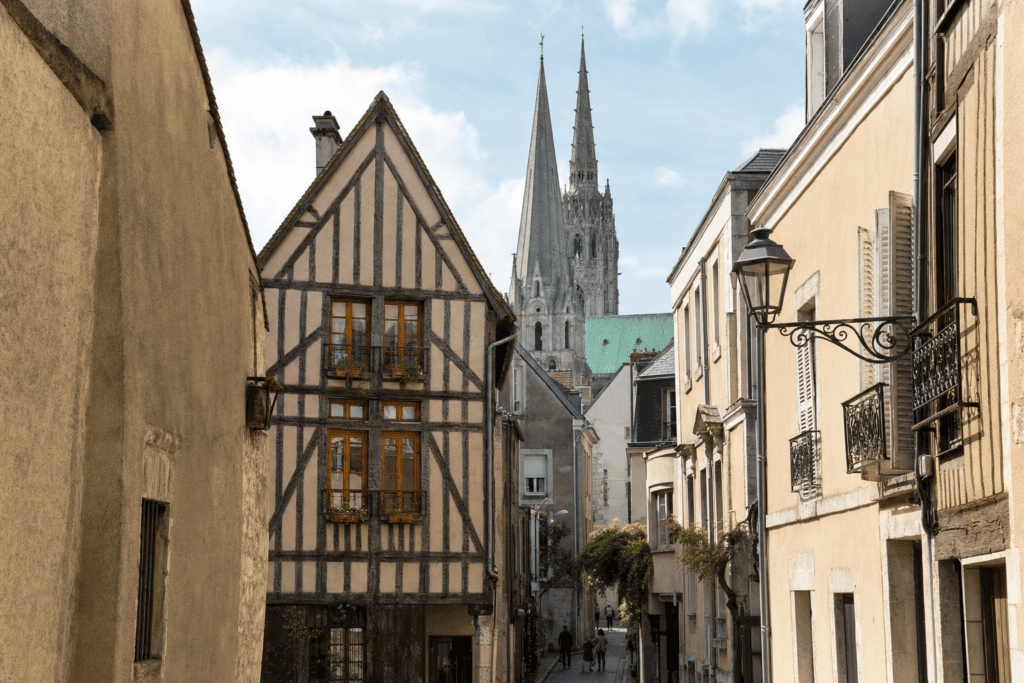 Chartres Historic Center A walk among the cathedral, historic houses, stepped streets, and the banks of the Eure, along…
 Notre-Dame Cathedral of Chartres A UNESCO-listed Gothic masterpiece, renowned for its medieval stained glass, sculpted portal, and…
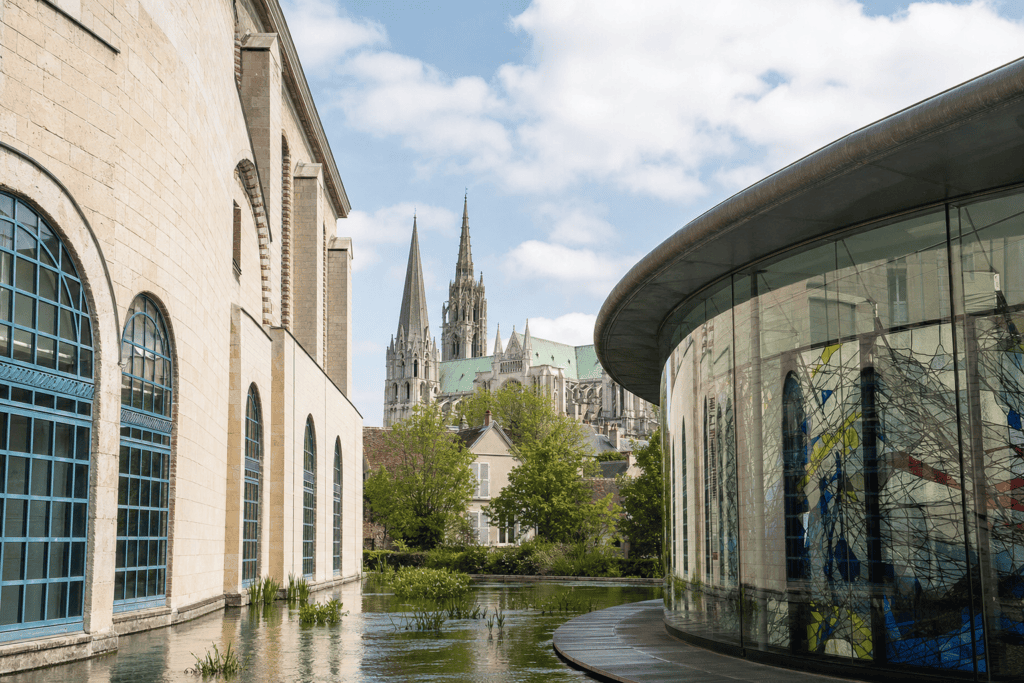 International Stained-Glass Center A cultural venue dedicated to the history, techniques, and contemporary creation of stained glass, near…
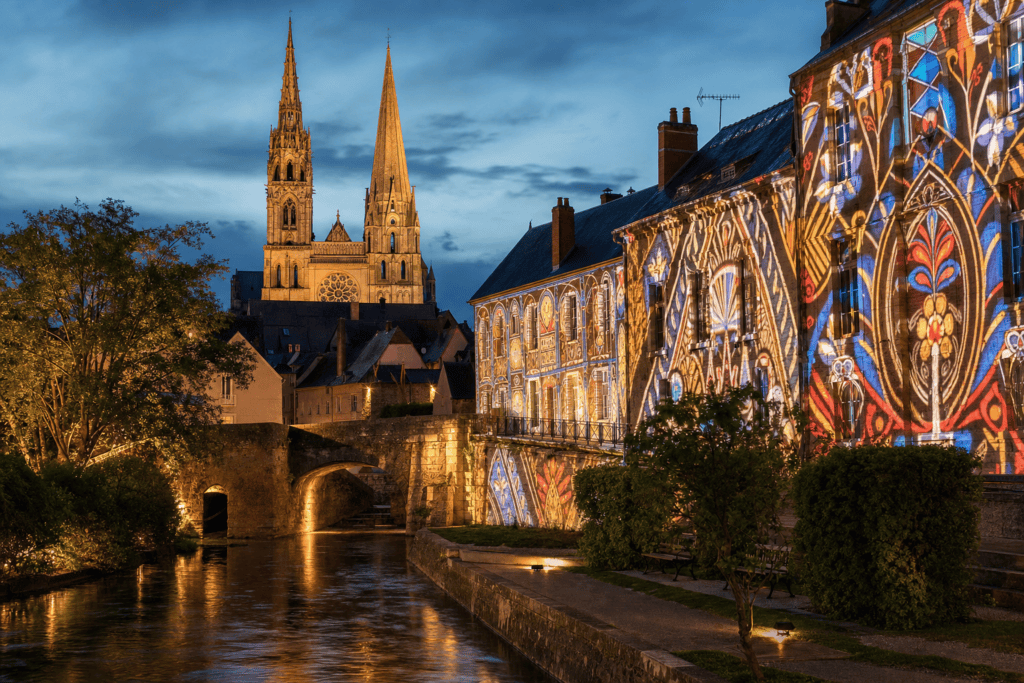 Chartres en lumières A free nighttime stroll among the cathedral, upper town, banks of the Eure, bridges and illuminated washhouses.
Online booking · Paris → 22 rue du Repos, 28000 Chartres, France
Choose your pickup date and time
Your departure and arrival details are already pre-filled. You can adjust them in the fare calculator before viewing the vehicles and fare.