



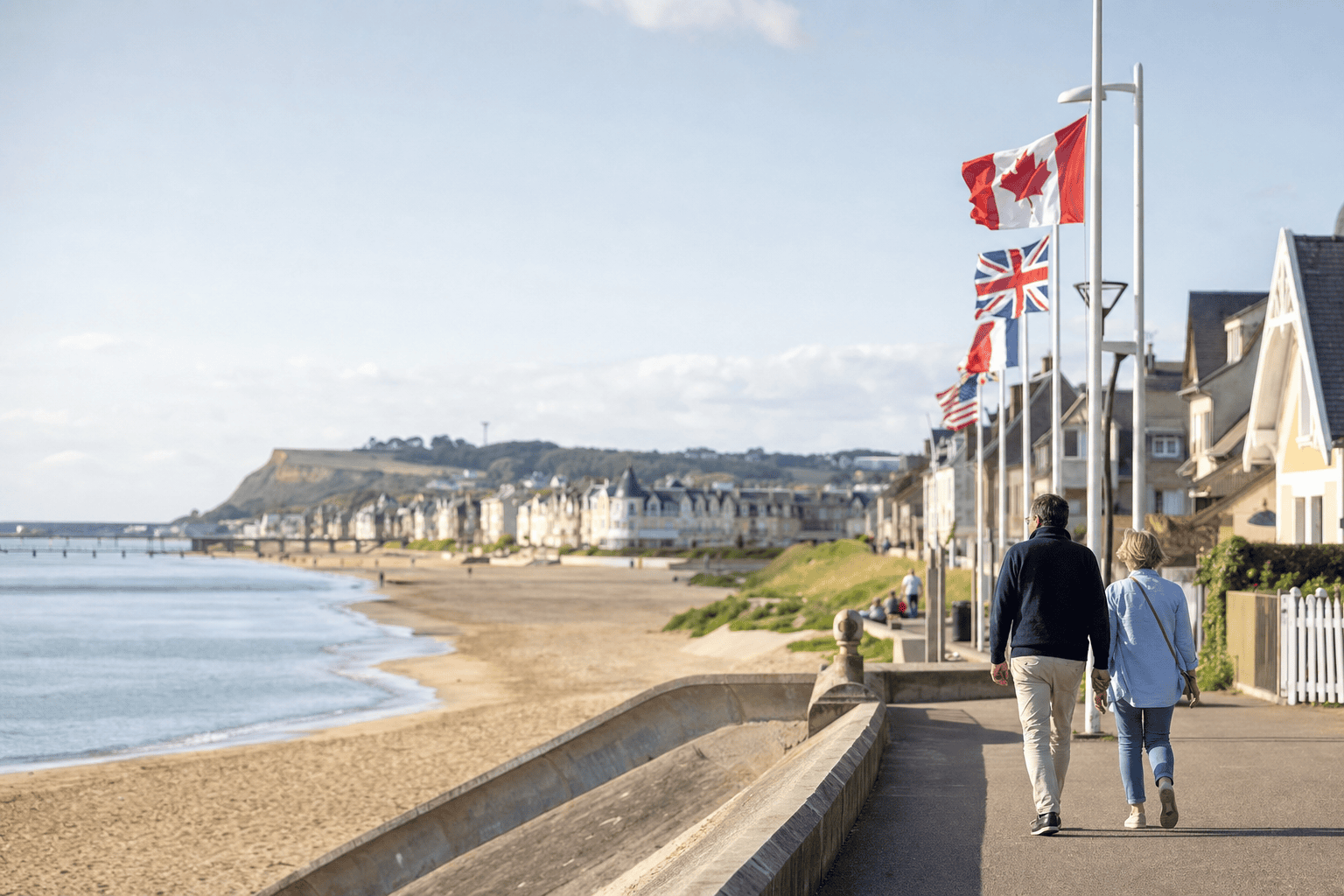
D-Day in Courseulles-sur-Mer: Visitor's Guide
Courseulles-sur-Mer
D-Day in Courseulles-sur-Mer centers on Juno Beach, the Juno Beach Centre, the harbor, and memorial sites that recall Canada's role on June 6, 1944. The town is a convenient stop for understanding the D-Day beaches: the museum, seafront, mouth of the Seulles, and several wartime remnants are all located within a relatively compact area. By extending your itinerary to Graye-sur-Mer, Bernières-sur-Mer, Ver-sur-Mer, or Arromanches-les-Bains, you can compare different sectors of the operation. This visit combines military history, Canadian remembrance, coastal scenery, and the discovery of a seaside resort on the Côte de Nacre.
Practical information
Start at the Juno Beach Centre, then continue to the beach, harbor, and monuments. Wear appropriate footwear for the seashore, check official information before setting out, and never enter a closed or unsecured wartime structure.
Getting to Courseulles-sur-Mer from Paris
A private transfer can connect Paris, the Île-de-France region, Charles de Gaulle or Orly Airport with Courseulles-sur-Mer, with a return to Paris or onward travel to the D-Day beaches. The service covers transportation only and does not include tickets, a guide, or restaurant or hotel reservations.
Departure from Paris, the Île-de-France region, CDG or ORY; return to Paris or an itinerary through Normandy. Transportation only, with no ticketing or guided tour.
Understanding Courseulles' place on Juno Beach
Courseulles-sur-Mer lies at the heart of Juno Beach, the sector assigned primarily to Canadian forces during the June 6, 1944, landings. Juno does not refer to a single isolated beach, but to a coastal area that includes Courseulles-sur-Mer, Graye-sur-Mer, Bernières-sur-Mer, and Saint-Aubin-sur-Mer. This geographic scale matters: the fighting, shoreline obstacles, and troops' advance unfolded across a continuous landscape of beach, seawall, harbor, homes, and roads leading inland.
At Courseulles, the mouth of the Seulles and the harbor approaches played a role in the layout of the sector. The maps, testimonies, and objects displayed at the Juno Beach Centre place the town within the broader operation, without reducing the history to a single monument. From the seafront, observe the distance between the shoreline and the first streets: reading the terrain this way helps convey the difficulties faced by soldiers and civilians.
For a first visit, start at the museum before retracing the same landmarks outdoors. The historical documents will give the present-day landscape greater meaning and help you distinguish events specific to Courseulles from those that took place in neighboring towns.
Explore the Beach, Harbor, and Seulles
Courseulles-sur-Mer Beach offers a tangible starting point for observing the geography of Juno Beach. From the seawall, your view takes in the shoreline, routes into town, the mouth of the Seulles, and the harbor. The landscape has changed since 1944, but the proximity of the sea, homes, and transportation routes helps show that crossing the coast was only the first step in a much larger operation.
The harbor adds a maritime dimension to the walk. Today, Courseulles is a lively seaside resort, with quays, water activities, and shops. By following authorized paths, you can alternate between sites devoted to remembrance and observations of the town's present-day life. The mouth of the Seulles forms an environment distinct from the open seafront and can provide a pleasant break, especially during a family visit.
The tide significantly changes the width of the beach and the appearance of access points. Check tide times before taking a long walk, keep away from marked areas, and be mindful of the wind. A waterproof jacket and closed-toe shoes are useful even during the warmer months, as conditions can change quickly along the coast.
Visit the Juno Beach Centre Without Missing the Essentials
The Juno Beach Centre, located on Voie des Français Libres near the shore, is the main stop for exploring Courseulles' history. The museum presents Canada's role in World War II and places the landings in a broader context: the mobilization of Canadian society, military preparation, soldiers' experiences, operations in Normandy, and the enduring relationship between Canada and the local population.
Personal testimonies complement the maps and strategic explanations. They give space to individual stories, civilians, and the human consequences of the fighting. Take time to explore the areas devoted to the Canadian context before heading back outside to the beach. The access points, seawall, and relationship between the harbor and coastline then become easier to interpret.
Hours, temporary exhibitions, guided tours, and arrangements for groups may change. Check the Juno Beach Centre's official website directly before your visit, especially if you are traveling with children, a group, or someone who requires specific accommodations. Around June 6, ceremonies may affect attendance and the day's organization: allow extra time and do not assume that a particular access point will automatically be available.
View the Wartime Remnants and Monuments Respectfully
The wartime remnants visible near the seafront give a tangible sense of the Atlantic Wall's defensive system. Their condition, function, and accessibility are not always the same. Some local names are commonly used, but it is best to rely on signs, local information, and recognized historical sources rather than attributing to Courseulles an event that occurred in a neighboring town.
The monuments and plaques honor the Allied forces and, in particular, preserve the Franco-Canadian connection. Voie des Français Libres, the seafront developments, and commemorative inscriptions are best explored slowly, noting the dates, names, and units mentioned. This attention helps distinguish the different episodes of the battle and avoid an overly general reading of the D-Day beaches.
Respect fences, signs, and private property. A bunker that is closed or not marked as accessible may be unstable, flooded, or dangerous. Do not climb on the structures, move any objects, or take away fragments. Photography remains compatible with remembrance when it is discreet and avoids inappropriate staging in front of monuments or ceremonies.
Continue Exploring the Juno Towns
A visit to Courseulles-sur-Mer does not cover the full extent of Juno Beach. To the west, Graye-sur-Mer extends the discovery toward the mouth of the Seulles and more open coastal areas. To the east, Bernières-sur-Mer and Saint-Aubin-sur-Mer show a different relationship between beach, seawall, houses, and village streets. Each town offers a different perspective; the value lies in comparing the landscapes and routes leading inland.
For a realistic day, spend the morning in Courseulles and at the Juno Beach Centre, then choose one or two stops depending on your transportation. Distances look short on a map, but stops, traffic, tides, and opening hours can quickly lengthen the schedule. Cycling may suit visitors accustomed to coastal routes, provided they check the exact itinerary, sections shared with traffic, weather, and secure parking options. Do not assume that a continuous, separated bike route exists between all the sites.
Outside the peak season, some shops, cafés, and restaurants may operate on reduced hours. Check directly with establishments before relying on a specific place for lunch. In June, ceremonies may bring heavy crowds, detours, or temporary restrictions.
Add Ver-sur-Mer or Arromanches to Your Itinerary
Ver-sur-Mer is a logical extension from Courseulles for discovering Gold Beach. The British Normandy Memorial, located on the heights above the town, offers a different approach to remembrance from the Juno Beach Centre. Its location also provides a view of the coastal landscape and reinforces that the D-Day beaches form a group of complementary sectors, with distinct objectives, commands, and national narratives.
Arromanches-les-Bains offers another perspective through the history of the artificial harbor built after the landings. The sections of the Mulberry harbor still visible at sea recall the importance of logistics: after the initial assault, vehicles, fuel, supplies, and reinforcements had to be brought ashore. This stop therefore complements Juno with a look at the infrastructure essential to continuing the battle.
From Courseulles, Ver-sur-Mer is generally easier to fit into a day than a schedule covering every site in the Bessin area. Arromanches requires more driving time and can be combined with Bayeux or a dedicated itinerary. Check traffic conditions, parking, official hours, and access arrangements for each site before adding multiple stops. A shorter program often allows you to understand the places better and give remembrance the time it deserves.
Planning Access from Paris and Getting Around Locally
Without a car, the journey from Paris generally begins with a train to Caen. Caen station is then connected to Courseulles-sur-Mer by the NOMAD Car network, but service may vary by school day, weekend, holiday, and tourist season. Check the network's official website before departure to confirm the route, stop, day's schedule, and any connections. Connections from Bayeux should also be checked separately: do not automatically count on a direct or frequent service.
By car, the roads from Caen and Bayeux are convenient, but traffic can slow along the Côte de Nacre in July, August, and around June 6. Parking spaces near the seafront are in demand; use only authorized spaces and do not block residents' access, reserved lanes, or emergency entrances. When visiting several towns, allow time to find another space rather than moving your car frequently.
Between Courseulles, Graye-sur-Mer, Bernières-sur-Mer, and Ver-sur-Mer, distances are modest, but regular connections are not guaranteed as they would be on an urban transit network. Cycling is possible for equipped visitors who pay attention to the weather, with a route checked in advance. Visitors with reduced mobility should confirm directly the paths, surfaces, restrooms, and access conditions at each site. From Paris, a private transfer can also arrange a round trip or an itinerary covering several beaches, without including tickets, tours, meals, or a guide.
Frequently Asked Questions
How Much Time Should You Allow for D-Day in Courseulles-sur-Mer?
How Do You Get to Courseulles-sur-Mer Without a Car?
Is the Juno Beach Centre Close to the Beach?
Which Sites Can You Visit from Courseulles-sur-Mer?
Can You Enter the Bunkers in Courseulles-sur-Mer?
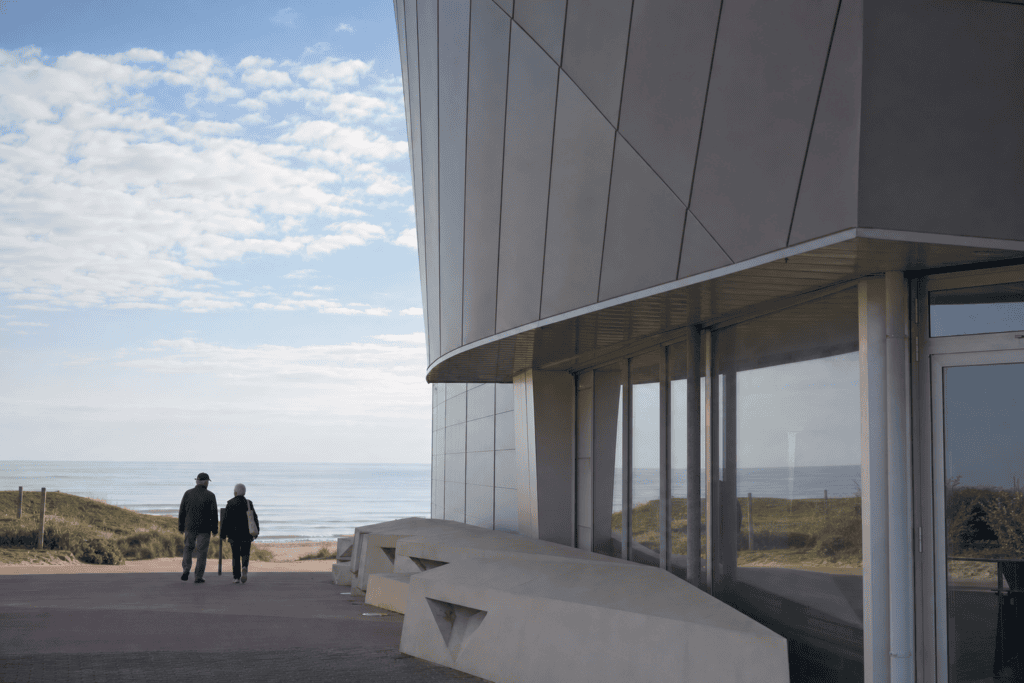 Juno Beach Centre The leading Canadian museum at Juno Beach, exploring D-Day history, personal testimonies, and the discovery of…
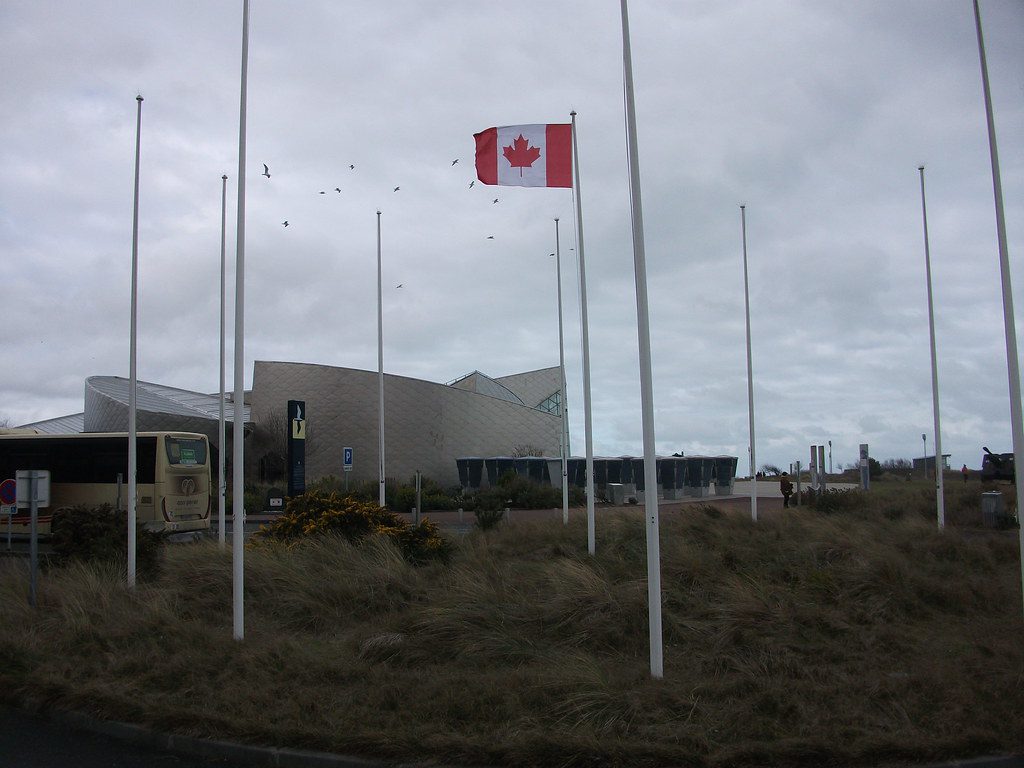 Courseulles-sur-Mer Market A Côte de Nacre market to combine with the harbor, local products, and the…
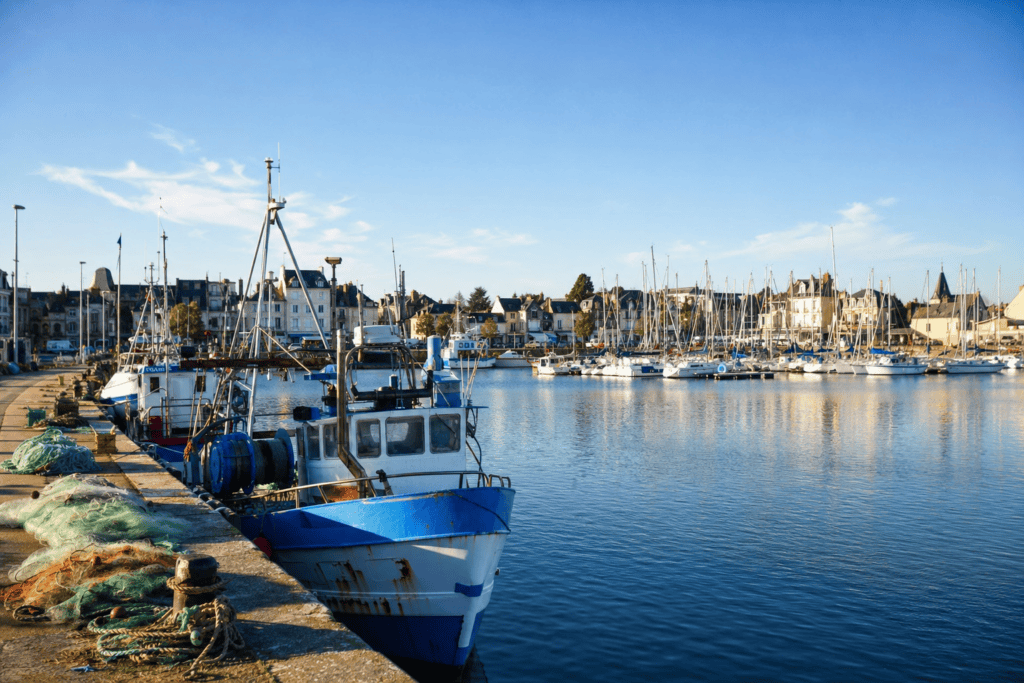 Courseulles-sur-Mer Marina and Fishing Port A lively Côte de Nacre harbor, combining fishing, boating, Plage Plaisance, and Canadian remembrance…
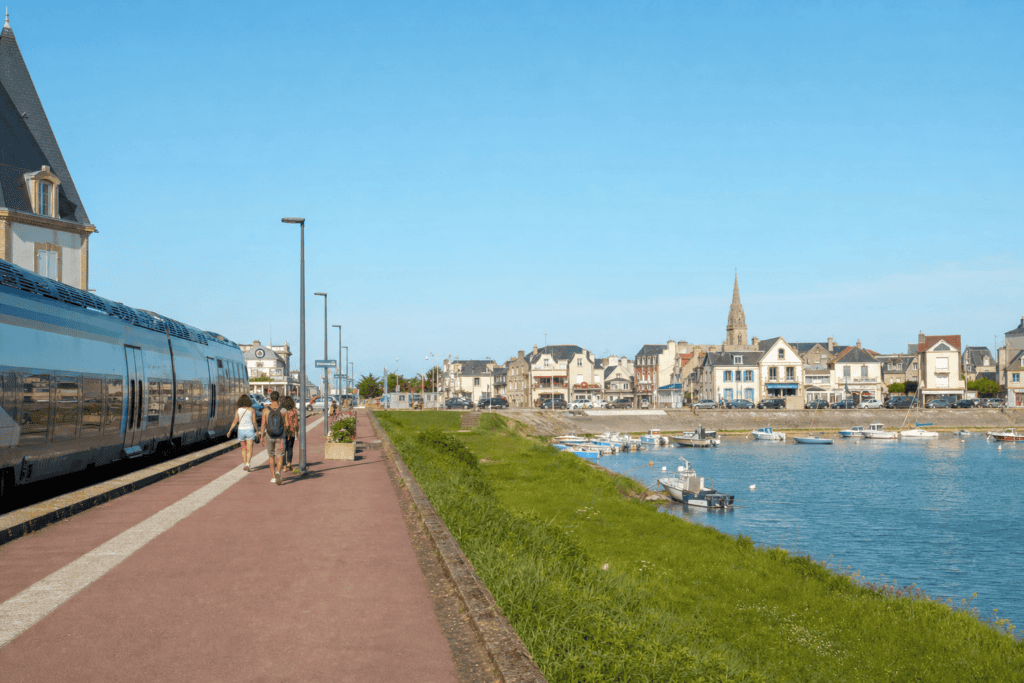 Getting to Courseulles-sur-Mer from Caen, Bayeux and Normandy train stations Train stations, the Nomad network, airports, and driving: every option for getting to Courseulles-sur-Mer and Juno Beach…
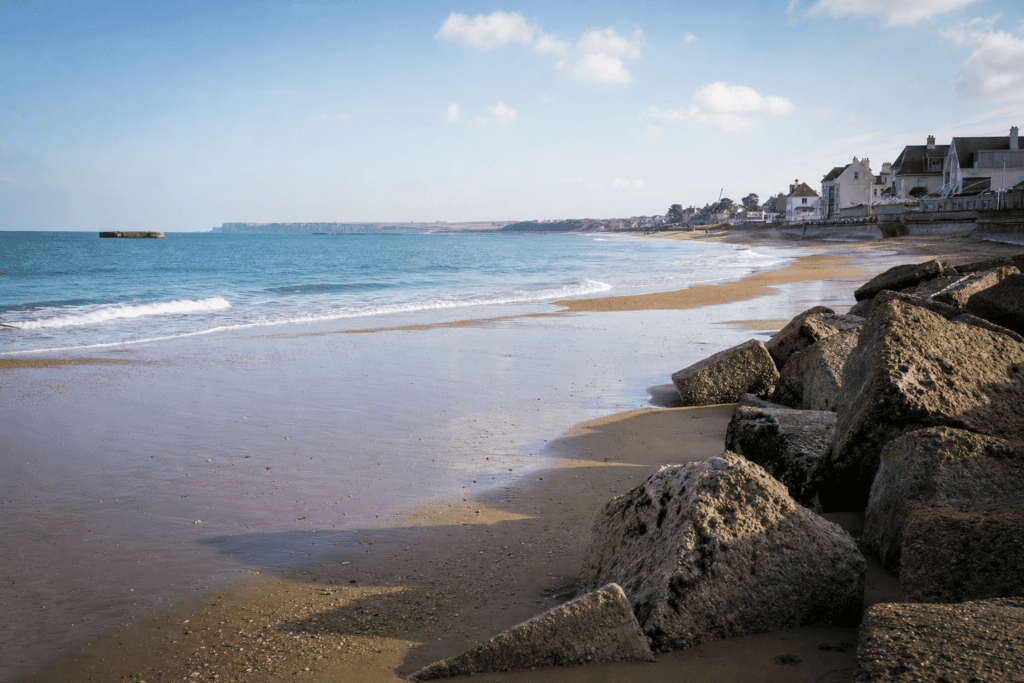 Juno Beach In Courseulles-sur-Mer, Juno Beach brings together the memory of the Canadian D-Day landings, the Juno Beach Centre, bunkers, the beach, and the harbor.
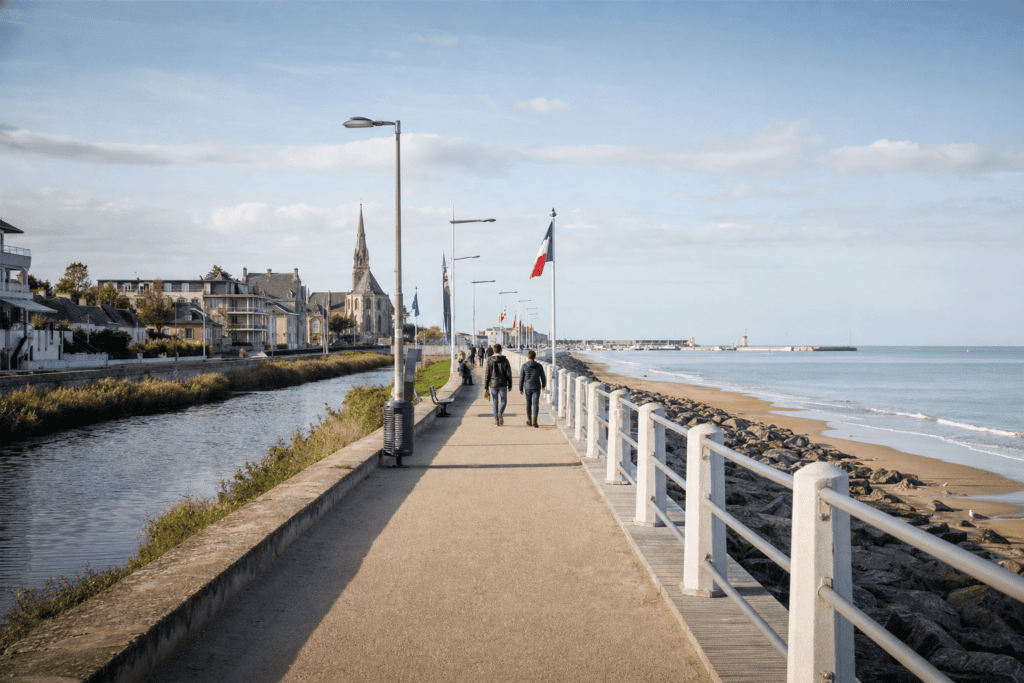 Seulles Riverside Walk and Seafront A walk along the Seulles, the port, Plage Plaisance, and the seawall of Courseulles-sur-Mer.
Online booking · Paris → Courseulles-sur-Mer, 14470, Calvados, Normandy, France
Choose your pickup date and time
Your departure and arrival details are already pre-filled. You can adjust them in the fare calculator before viewing the vehicles and fare.