



Juno Beach in Courseulles-sur-Mer: Visitor's Guide
Courseulles-sur-Mer
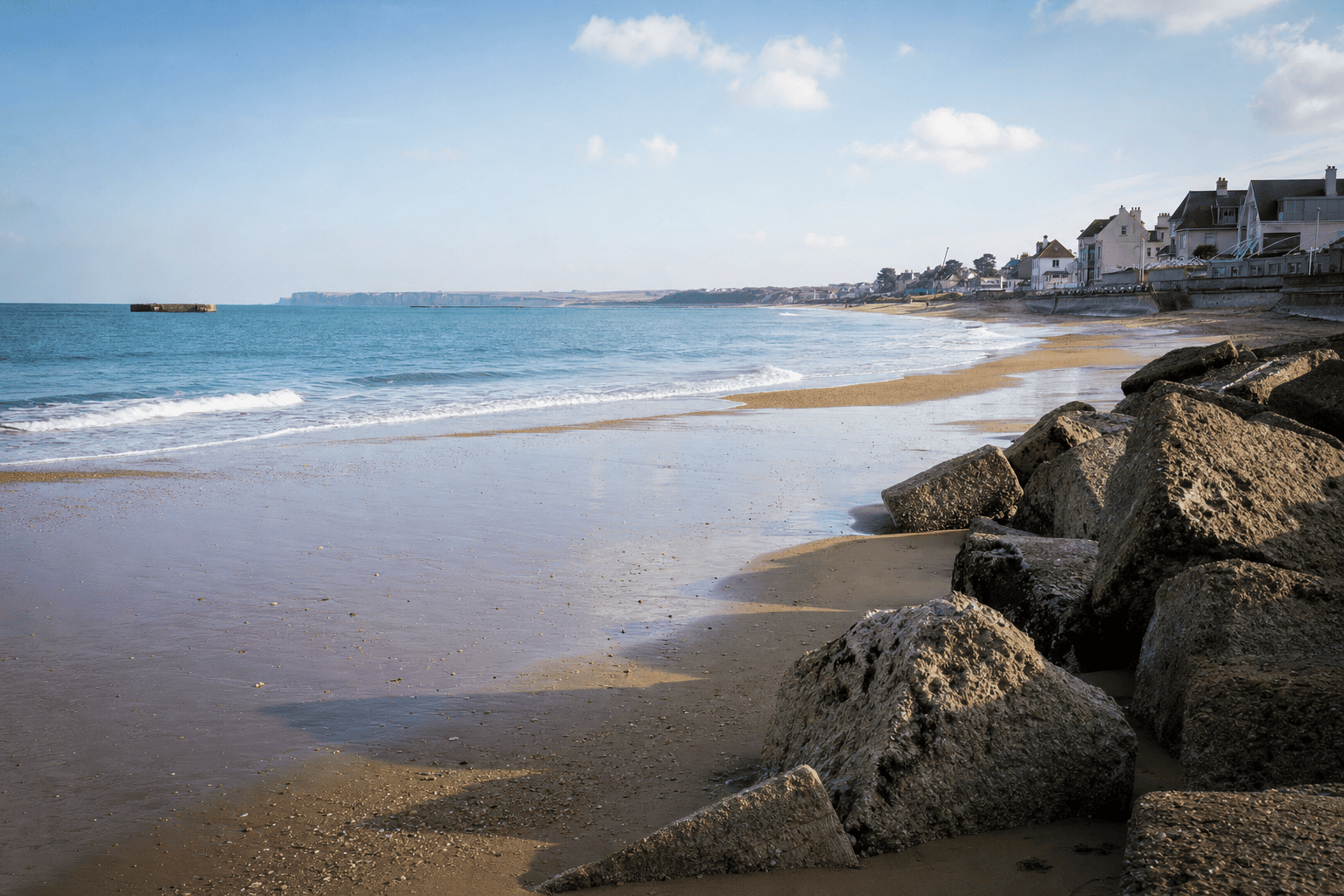
In Courseulles-sur-Mer, Juno Beach brings together a beach on the Côte de Nacre, the Juno Beach Centre, Juno Park, and the remains of a former fortified sector. The site offers insight into Canada’s role in the D-Day landings on June 6, 1944, while showcasing a lively seaside resort, its harbor, and its seafront. The area is easy to explore on foot, with the museum, beach, and harbor basins all nearby. From Caen or Bayeux, Courseulles-sur-Mer is a natural stop on a D-Day beaches itinerary; from Paris, a full day or an overnight stay in Normandy allows you to enjoy the coast and nearby sites at a more relaxed pace.
Practical information
Start by checking the official information from the Juno Beach Centre, then combine the museum, Juno Park, the beach, and the harbor. Wear suitable shoes, bring protection from the wind, and respect marked areas and memorial sites.
Getting to Juno Beach from Paris
Booking Paris Transfer can arrange a private ride from Paris, a hotel in the Île-de-France region, CDG, or ORY to Courseulles-sur-Mer, with a return to Paris or onward travel to Bayeux, Caen, and other D-Day sites. Tours and tickets must be booked directly with the relevant establishments.
Transportation from Paris, the Île-de-France region, CDG, or ORY. Booking Paris Transfer does not sell museum tickets and does not present itself as a local operator based in Courseulles-sur-Mer.
Understanding Juno Beach’s Role
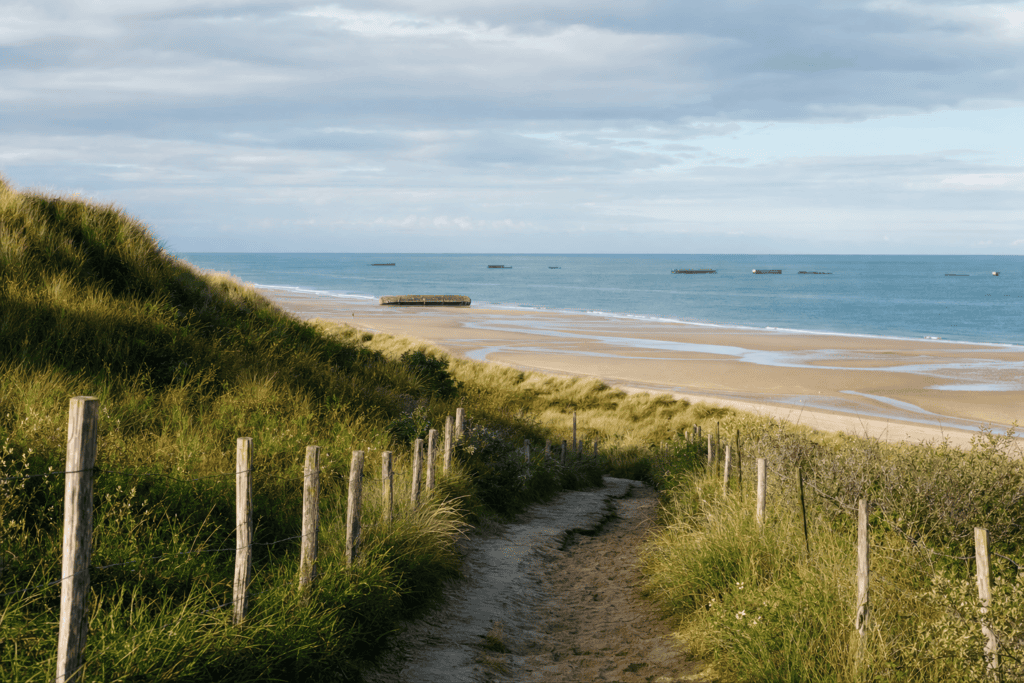
Juno Beach was the sector assigned to Canadian forces during the D-Day landings on June 6, 1944. It stretched along the coast between Courseulles-sur-Mer and Saint-Aubin-sur-Mer, at the center of the Allied operation in Normandy. At Courseulles, the beach met a harbor, a channel, and German defensive positions. This geography helps explain some of the difficulties faced by the soldiers: the tide, shoreline obstacles, fortified structures, and routes inland created a complex environment.
The visit becomes much more meaningful when you observe the terrain rather than relying on a map alone. From the seafront, you can visually connect the beach, channel, and present-day urban areas. The landscape has changed, but the proximity of the remains and interpretation sites helps explain the advance of the Canadian troops and the intensity of the fighting.
Juno Beach is also a Canadian memorial site. The Juno Beach Centre recalls the role of military personnel, as well as Canadian society’s contribution to the war and the experiences of civilians. It is therefore more than a historic beach: it is a site connecting military history, family memory, and the Normandy landscape.
Visiting the Juno Beach Centre
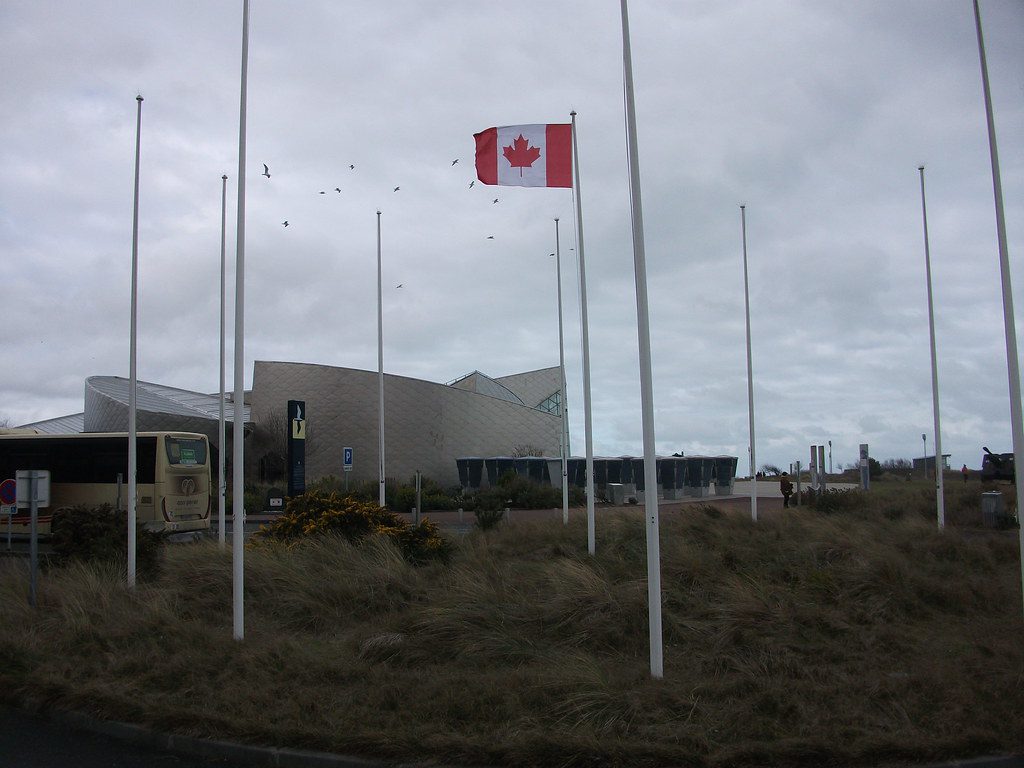
The Juno Beach Centre is the sector’s main interpretation center. Located on Voie des Français Libres, facing the sea, it presents Canada’s participation in World War II, the D-Day landings, and the lives of Canadians during the conflict. The exhibits draw on documents, objects, images, and personal accounts to give the history a human dimension.
Allow time to read the displays and place the events in context. The museum helps show that June 6, 1944, does not by itself sum up Canada’s wartime contribution: Canadian soldiers, sailors, and airmen had already served on various fronts, while the war effort also involved families and workers who remained at home.
A temporary exhibition, film, or activities may complement the visit, depending on the season. Details change with the schedule and programming. Before visiting, check the official website for opening hours, access conditions, any required reservations, and available guided tours. The Centre is also the best starting point for planning your visit to Juno Park.
Exploring Juno Park and the Bunkers
Juno Park, located in front of the Centre, preserves elements of a former strongpoint on the Atlantic Wall. The bunkers and other remains offer a tangible look at German defensive organization and how the coastline was developed before D-Day. Their presence gives the museum’s explanations a real-world scale: you can better understand the structures’ height, placement, and relationship to the beach.
The outdoor area can be explored on foot, but access to certain sections and guided tours depends on the Juno Beach Centre’s programming. A guided tour can provide information that is difficult to grasp during an independent walk, particularly about the function of the rooms, fields of fire, and constraints imposed by the terrain. However, check the conditions for the day, as weather or conservation requirements may alter the program.
The remains are not structures to climb on. Stay on authorized paths, do not cross barriers, and do not move any objects found on the sand or near the structures. These precautions protect both the site and visitors. They are especially important because the area remains a place of remembrance visited during commemorations.
Enjoying the Beach and Seafront
After the museum, the beach offers another way to experience Courseulles-sur-Mer. The seafront is ideal for walking along the English Channel, observing how the landscape changes with the tide, and taking a break between historical exhibits. The beach is also a contemporary leisure area frequented by residents and visitors, but its history remains visible in the displays, monuments, and proximity of Juno Park.
Conditions can change quickly on the Côte de Nacre. Winds may be strong, the light shifts with the clouds, and the tide changes the width of the foreshore. Check local information if you plan to swim or take part in a water activity, respect supervised areas where available, and do not enter prohibited zones. Comfortable shoes are recommended for alternating between an urban walk and the seafront.
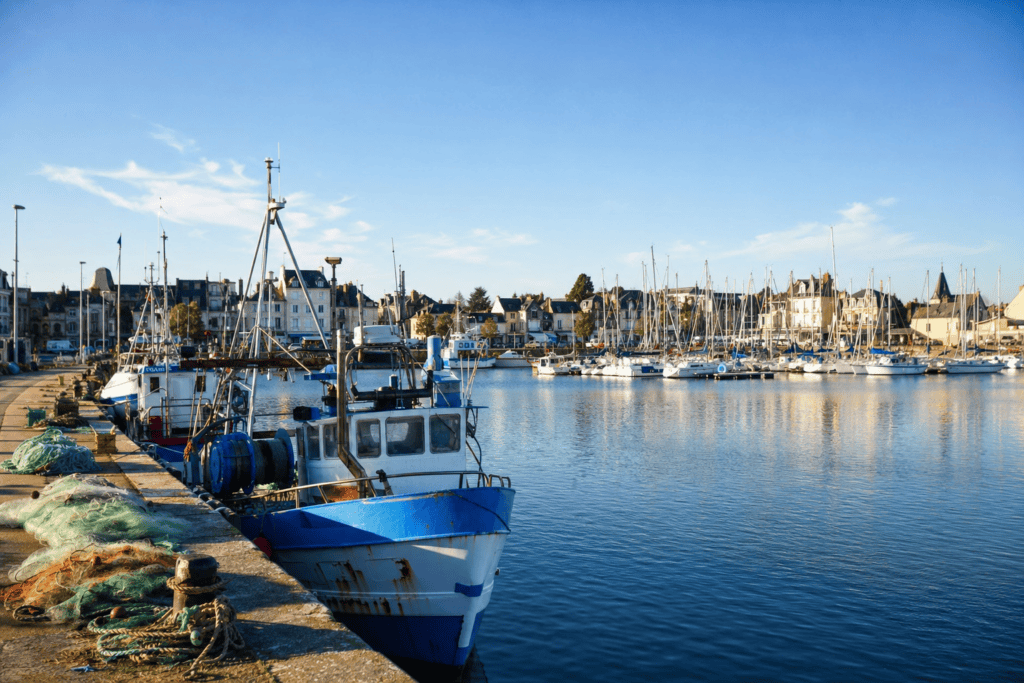
The walk can continue toward the fishing and pleasure harbor. The basins, boats, and maritime activity are reminders that Courseulles-sur-Mer is more than a memorial destination. This continuity between the beach, harbor, and town center makes it easy to explore the town without a car once you arrive, provided you use authorized parking and follow local signs.
Getting to Courseulles-sur-Mer
Courseulles-sur-Mer does not have a passenger railway station providing direct service to the Juno Beach Centre. Most visitors arrive via Caen or Bayeux, then continue by road, regional coach, taxi, or another prearranged form of transportation. NOMAD Car routes and stops should be checked before departure on the network’s official website, as schedules may vary by day, holiday period, and service changes.
From Caen, the town fits easily into an excursion along the Côte de Nacre. From Bayeux, it is a natural addition to a day devoted to the D-Day beaches and Calvados military cemeteries. By car, the route from Paris generally follows the A13 toward Caen, then roads toward Courseulles-sur-Mer; actual travel time depends on traffic and the season.
The harbor and Juno Beach Centre are close to the seafront, but parking can be in high demand during good weather and ceremonies. Do not assume that roadworks, detours, or temporary restrictions will be unchanged: check information from the town, the Juno Beach Centre, and, if necessary, Ports du Calvados.
Including Juno Beach in a D-Day Itinerary
A half-day in Courseulles-sur-Mer allows you to visit the Juno Beach Centre, Juno Park, the beach, and the harbor without spending the day driving between sites. For a broader day trip, the area can be combined with Sword Beach and Ouistreham to the east, or Arromanches-les-Bains and Gold Beach to the west. These itineraries still require consideration of distances, traffic, and the time spent at each museum or monument.
Bayeux is a convenient base for exploring several D-Day sites. You can also complement the visit with the town’s medieval heritage and the Bayeux Tapestry. In Caen, the Caen Memorial offers a broader perspective on World War II, the D-Day landings, and the Battle of Normandy. The Canadian cemetery at Bény-sur-Mer can also enrich an itinerary focused on Canadian forces, while respecting the rules specific to each site.
From Paris, it is best to choose a few stops rather than trying to cover the entire coast in a single day. Courseulles-sur-Mer can be the main destination on a round trip, or one stop on a circuit beginning in Paris and continuing toward Bayeux, Caen, or other beaches. Check the opening hours and access conditions for each site separately.
When to visit and how to plan your trip
The best season depends on the type of experience you are looking for. In summer, long days are ideal for walks and coastal activities, but visitor numbers may be higher. Spring and fall often offer a quieter atmosphere and interesting light for photography, along with more changeable weather. In winter, the seafront can be very exposed to the wind; the museum is then an especially welcome complement to the visit.
Check the Juno Beach Centre’s official hours before setting out, especially if you would like to join a guided tour of Juno Park or the bunkers. Wear suitable clothing, bring rain protection, and allow enough time so the visit does not become a series of photographs. Families can alternate between the indoor exhibits and the beach while explaining to children the difference between a leisure area and a memorial site.
Finally, be respectful. Do not climb on the remains, cross prohibited areas, or pick up objects, and remain discreet near monuments or during ceremonies. Visitors with reduced mobility should check accessibility information for the Centre and paths before arriving, as conditions may differ between the museum, beach, and outdoor areas.
Useful sources
Frequently Asked Questions
Where is Juno Beach located?
Can you visit Juno Beach without visiting the museum?
How do you get there from Caen or Bayeux?
How much time should I allow for a visit?
Are the bunkers always accessible on guided tours?
 Courseulles-sur-Mer Market A Côte de Nacre market to combine with the harbor, local products, and the…
 Courseulles-sur-Mer Marina and Fishing Port A lively Côte de Nacre harbor, combining fishing, boating, Plage Plaisance, and Canadian remembrance… Caen Memorial A historical excursion from Courseulles-sur-Mer to understand D-Day, the war, the Occupation, and the Battle of…
 D-Day Beaches from Courseulles-sur-Mer From Courseulles-sur-Mer, discover Juno Beach, the Juno Beach Centre, Ver-sur-Mer, Arromanches, and the main sites of…
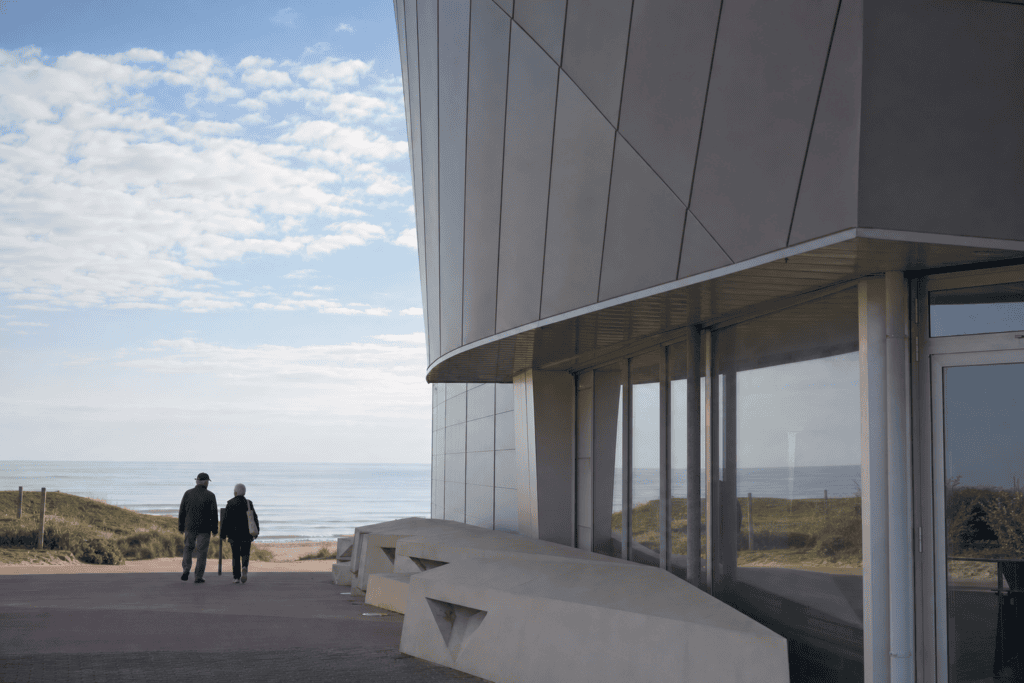 Juno Beach Centre The leading Canadian museum at Juno Beach, exploring D-Day history, personal testimonies, and the discovery of…
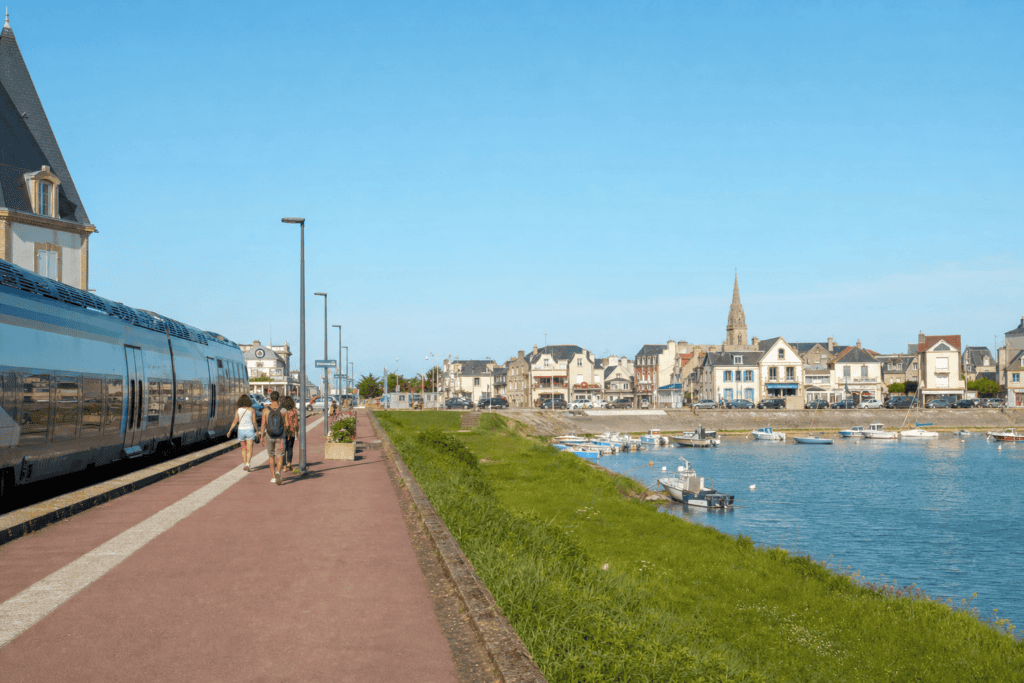 Getting to Courseulles-sur-Mer from Caen, Bayeux and Normandy train stations Train stations, the Nomad network, airports, and driving: every option for getting to Courseulles-sur-Mer and Juno Beach…
Online booking · Paris → Juno Beach Centre, Voie des Français Libres, 14470 Courseulles-sur-Mer, Calvados, Normandy, France
Choose your pickup date and time
Your departure and arrival details are already pre-filled. You can adjust them in the fare calculator before viewing the vehicles and fare.