



Saint-Éloi Belfry in Dunkirk: Visit and Panorama
Dunkirk
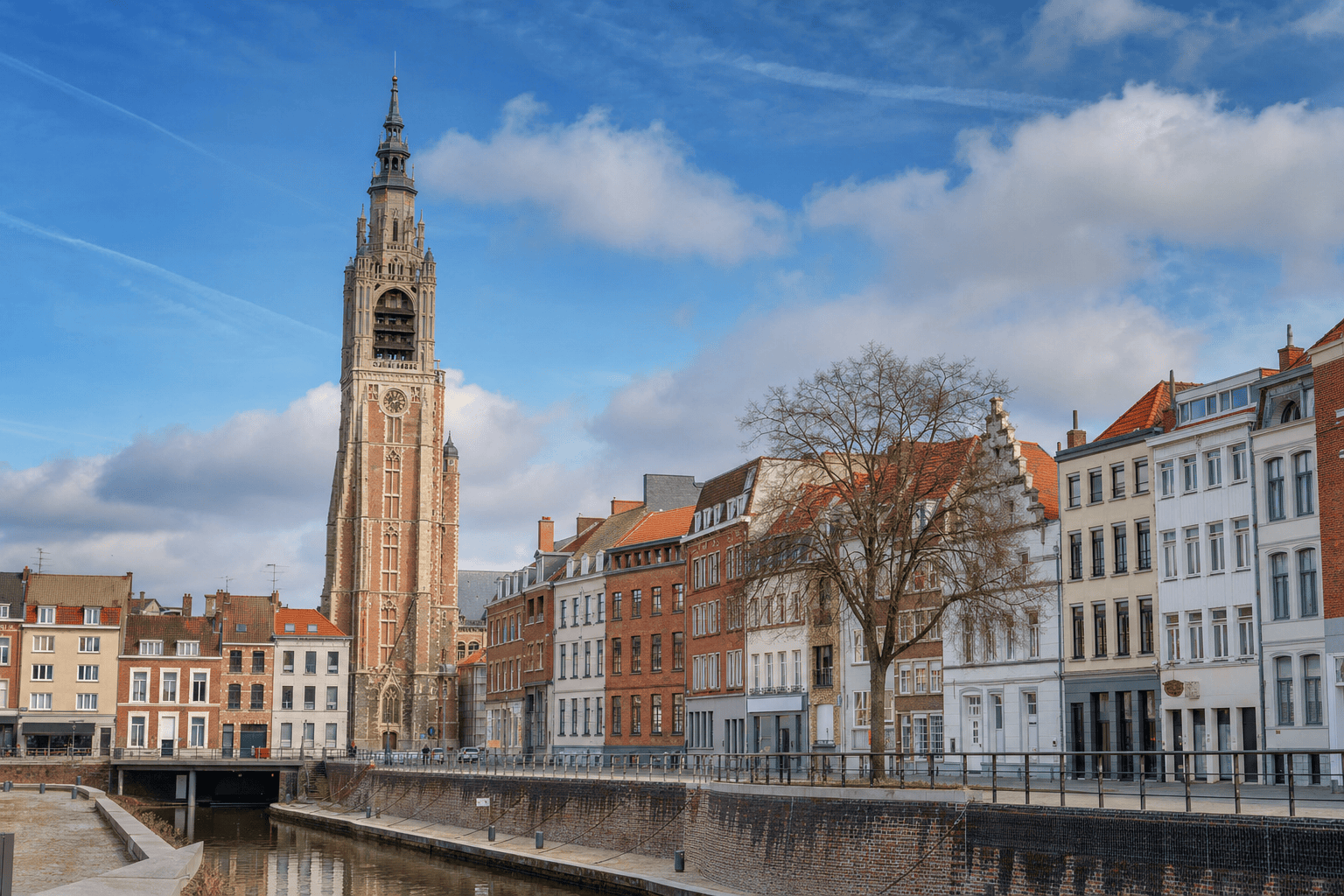
Saint-Éloi Belfry dominates central Dunkirk and offers an excellent starting point for understanding this port city in Hauts-de-France. Built in the 15th century as the bell tower of Saint-Éloi Church, the tower was separated from it after the 1558 fire. It is part of the “Belfries of Belgium and France” World Heritage property, listed by UNESCO. A visit offers views of the docks, the North Sea, and the surrounding countryside, before continuing to the nearby church, Place Jean Bart, and the neighborhoods rebuilt after World War II.
Practical information
The ascent generally includes an elevator to an intermediate level, followed by stairs to the terrace. The final section may be narrow. After visiting the belfry, cross to Saint-Éloi Church, continue to Place Jean Bart, then choose between the port docks and Malo-les-Bains.
Travel from Paris to Dunkirk with peace of mind
Booking Paris Transfer can arrange a private ride from Paris, a Paris hotel, CDG, or ORY to Dunkirk, with a return to Paris or continuation of an itinerary in mainland France. The service covers transportation only; tickets, tours, and any port services must be booked directly with the relevant sites or operators.
Possible departure from Paris, a Paris hotel, CDG, or ORY; return to Paris or a custom itinerary in mainland France.
A medieval belfry in the heart of Dunkirk
Saint-Éloi Belfry is one of Dunkirk’s most recognizable landmarks. Its construction dates to the first half of the 15th century, when cities in the former Low Countries asserted their importance with tall towers visible from the surrounding area. The tower then served as the bell tower of Saint-Éloi Church. The 1558 fire separated the two buildings, explaining their current position facing each other in the center.
The monument is part of the serial property Belfries of Belgium and France, listed as a UNESCO World Heritage property. This distinction recalls the role these towers played in civic life, surveillance, and the representation of urban power. In Dunkirk, the belfry also evokes a mercantile and maritime city, repeatedly exposed to wars and changes along the coast.
It should not be confused with the town hall belfry, another Dunkirk landmark that is also included in this heritage property. The two towers reflect different moments in local history.
Panoramic views of the docks and the North Sea
The belfry terrace offers a clear view of Dunkirk’s geography. From above, you can see the rooftops of the center, the docks, port infrastructure, the beach, and, on clear days, the North Sea. The city appears as a stretch between a dense urban core, a major industrial port, and a seaside resort coastline.
The visit generally includes an elevator to an intermediate level, followed by a final section on foot. The last staircase may be narrow and requires caution. Access conditions, visitor capacity, and reservations may change: check the information from Dunkirk Tourism before setting out, especially with young children or someone with reduced mobility.
Light changes quickly along the coast. Morning often provides clearer views of the docks; late afternoon can create striking contrasts among port silhouettes and rooftops. The wind can be noticeable on the terrace, even when the center feels sheltered.
Saint-Éloi Church and the memory of Jean Bart
Located directly across from the belfry, Saint-Éloi Church is a natural complement to the visit. Its imposing scale reflects the importance of this parish in Dunkirk’s history. Like much of the local heritage, the building has undergone destruction, restoration, and alteration. By observing its materials, volumes, and stained glass, you can see that the monument does not belong to a single architectural period.
The choir contains the tomb of Jean Bart, a privateer born in Dunkirk who became an officer serving Louis XIV. His memory remains deeply present in the city: the main central square bears his name, and several local symbols evoke his maritime activities. Jean Bart does not represent the whole of Dunkirk’s history, but he embodies the connection between the city, the sea, and the defense of the kingdom.
The belfry and church form a complementary ensemble. The visible, civic tower served as a landmark and bell tower; the church preserves the neighborhood’s religious and commemorative dimension. Follow the site’s rules when visiting this place of worship.
Understanding the center rebuilt after 1945
Dunkirk is not a medieval center preserved without interruption. Bombing and fighting during World War II profoundly transformed the city. Reconstruction then created new perspectives, regular alignments, and buildings suited to a modern port city. Around the belfry, historic monuments therefore interact with more recent architecture rather than with a uniformly historic district.
As you walk from Rue de l’Amiral Ronarc’h to Place Jean Bart, observe the building proportions, the width of the streets, the facades, and the open spaces. The materials and volumes reveal the ambition to rebuild a functional city quickly. Some older elements nevertheless remain in the street layout, religious buildings, and monuments connected with trade or defense.
Dunkirk Tourism’s heritage routes can link the belfry, the town hall, Leughenaer Tower, Porte de la Marine, and the Shipowner’s House. This layered approach gives the walk greater depth and avoids reducing Dunkirk to its medieval remains alone.
From the center to Malo-les-Bains and the coast
After visiting the belfry, head to Place Jean Bart and the shopping streets in the center. You can then follow a route focused on monuments, view the port docks from authorized areas, or continue toward Malo-les-Bains. These areas belong to the same municipality, but their atmospheres differ: civic center, industrial port, and seaside resort.
Malo-les-Bains offers a long beach, a promenade, and villas that reveal another side of Dunkirk. At ground level, you can rediscover the maritime horizon seen from the tower. The Dunes de Flandre also provide an appealing natural setting, provided you adapt your walk to the weather, wind, and trail conditions.
For lunch, the center and seafront offer restaurants and shops with varied offerings, including seafood and regional specialties. Opening days vary by establishment and season, so check directly before planning a specific stop. Active port areas are not open spaces for unrestricted strolling; follow signs and operators’ instructions.
Getting to Dunkirk from Paris and the port
Dunkirk train station is the most convenient arrival point for visiting the center from Paris, Lille, or other regional cities. From Paris-Nord, the rail journey to Dunkirk generally takes around two hours when connections and schedules are favorable; some services require a change, often in Lille or another station on the network. Actual travel times depend on the service and date: check SNCF Connect before booking.
From the station, the belfry is about a 20-minute walk depending on the route, or you can take a local bus or taxi. By car, the A16 provides direct access to the urban area. From Paris, the drive generally takes several hours and varies considerably with traffic, roadwork, and weather conditions.
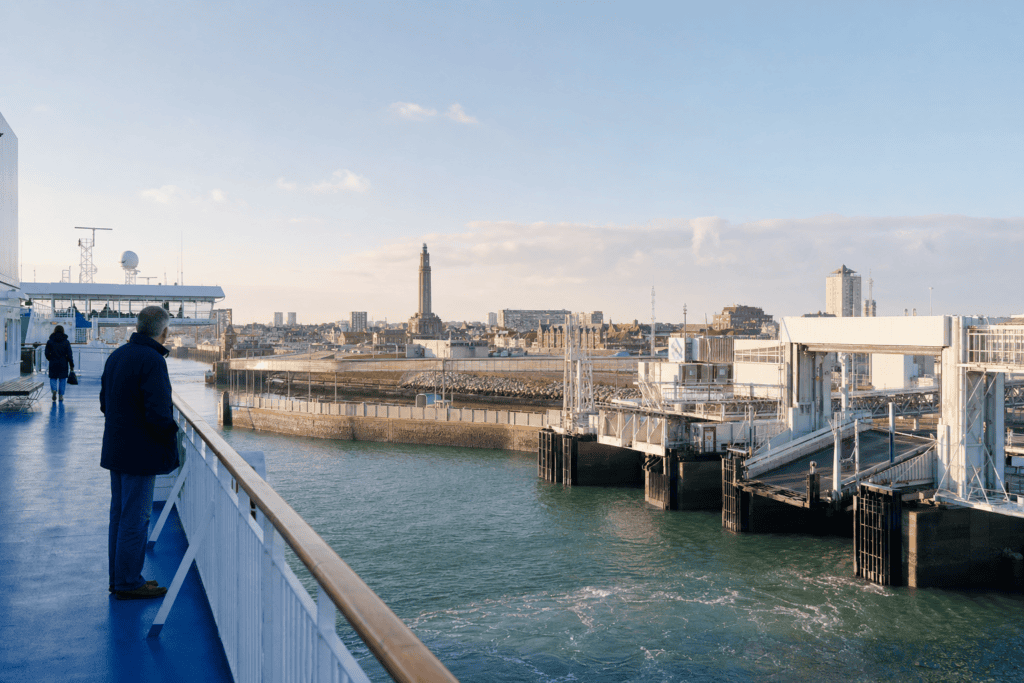
The port requires an important distinction. Ferry terminals serve passenger and vehicle connections; they are not located at the foot of the belfry. Quays and areas used for cruise calls, when applicable, follow a different arrangement. Industrial docks, terminals, and the historic center are separate areas: identify your exact arrival point and check instructions with the ferry company or relevant operator.
Carnival, seasons, and itinerary ideas
A clear day significantly improves the belfry experience, as the sea, port, and surrounding countryside are easier to distinguish. Wind can be strong on the terrace and promenade. In summer, combining the center with Malo-les-Bains lets you enjoy both heritage and the seashore. In spring or fall, museums, urban routes, and reconstruction-era architecture offer a more history-focused experience.
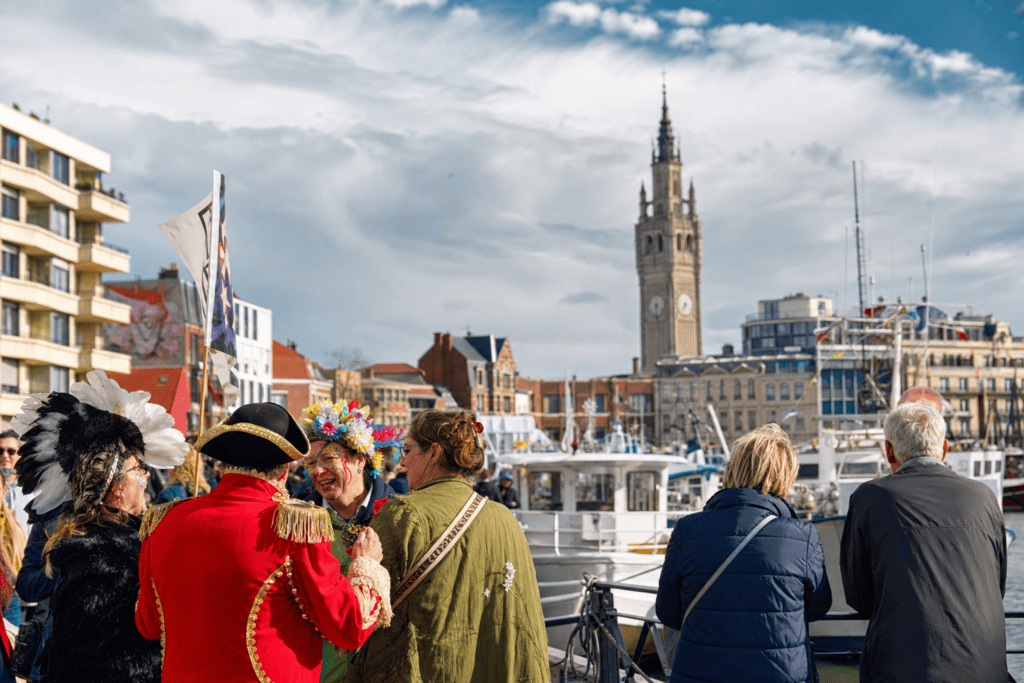
Dunkirk Carnival is a major event in local life. It changes the atmosphere, traffic, and number of visitors in the center. If you come during this period, check municipal and tourist information before scheduling your belfry visit or travel from the station. For a quieter visit, choose a regular day outside the major gatherings.
Dunkirk can be included in a Hauts-de-France itinerary featuring Bergues, Gravelines, Calais, the Opal Coast, or Lille. Half a day is enough for the belfry and center; a full day allows you to add the church, reconstruction monuments, Malo-les-Bains, and a coastal walk. The belfry remains the best starting point for connecting Flemish heritage, maritime history, and views toward the North Sea.
Frequently Asked Questions
Is Saint-Éloi Belfry listed by UNESCO?
Can you climb to the top of the belfry?
What is the difference between the port and the historic center?
How much time should I allow for a visit?
How do I get there from Paris?
 Arriving in Dunkirk via the Port and Ferry Terminal The essential landmarks for getting from the Loon-Plage ferry terminal to the station, city center…
  Dunkirk Port Museum and the three-masted Duchesse Anne An itinerary focused on Dunkirk’s maritime history, complemented by the Duchesse Anne and other ships…
  What to Do in Dunkirk: Carnival, Museums, and Port A practical itinerary in Dunkirk between belfries, the port, museums, Malo-les-Bains beach, and carnival.
 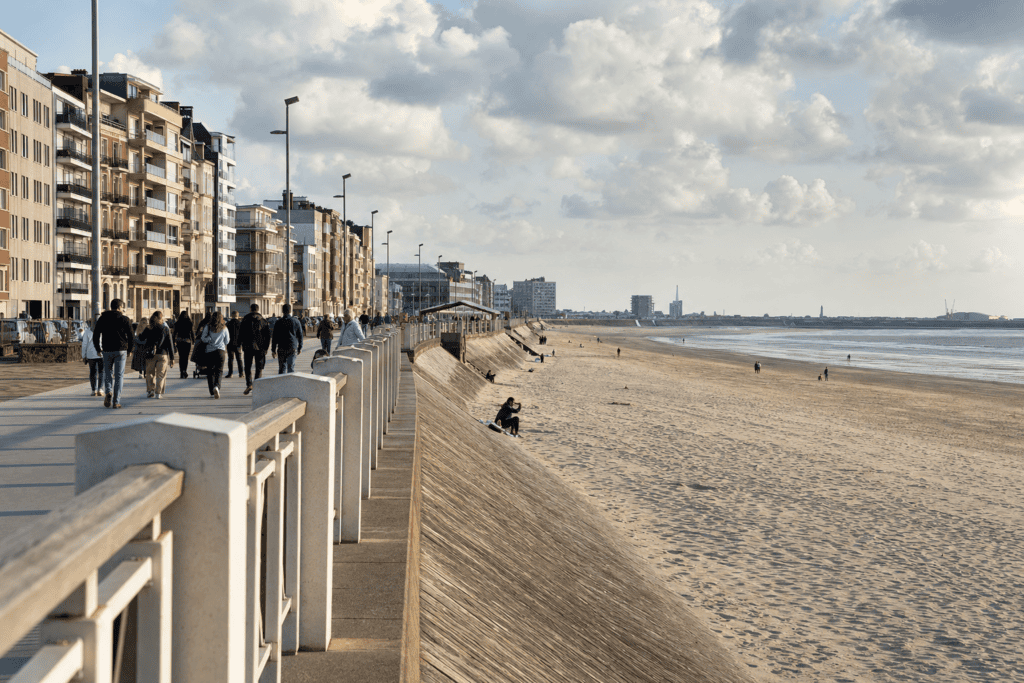 Malo-les-Bains Beach and Seawall A vast Dunkirk beach lined with seaside villas, a seawall, sand, water activities, and maritime heritage.
 Online booking · Paris → Saint-Éloi Belfry, Rue de l’Amiral Ronarc’h, 59140 Dunkirk, France
Choose your pickup date and time
Your departure and arrival details are already pre-filled. You can adjust them in the fare calculator before viewing the vehicles and fare.