



Notre-Dame-de-la-Garde Chapel in Étretat: Guide
Étretat
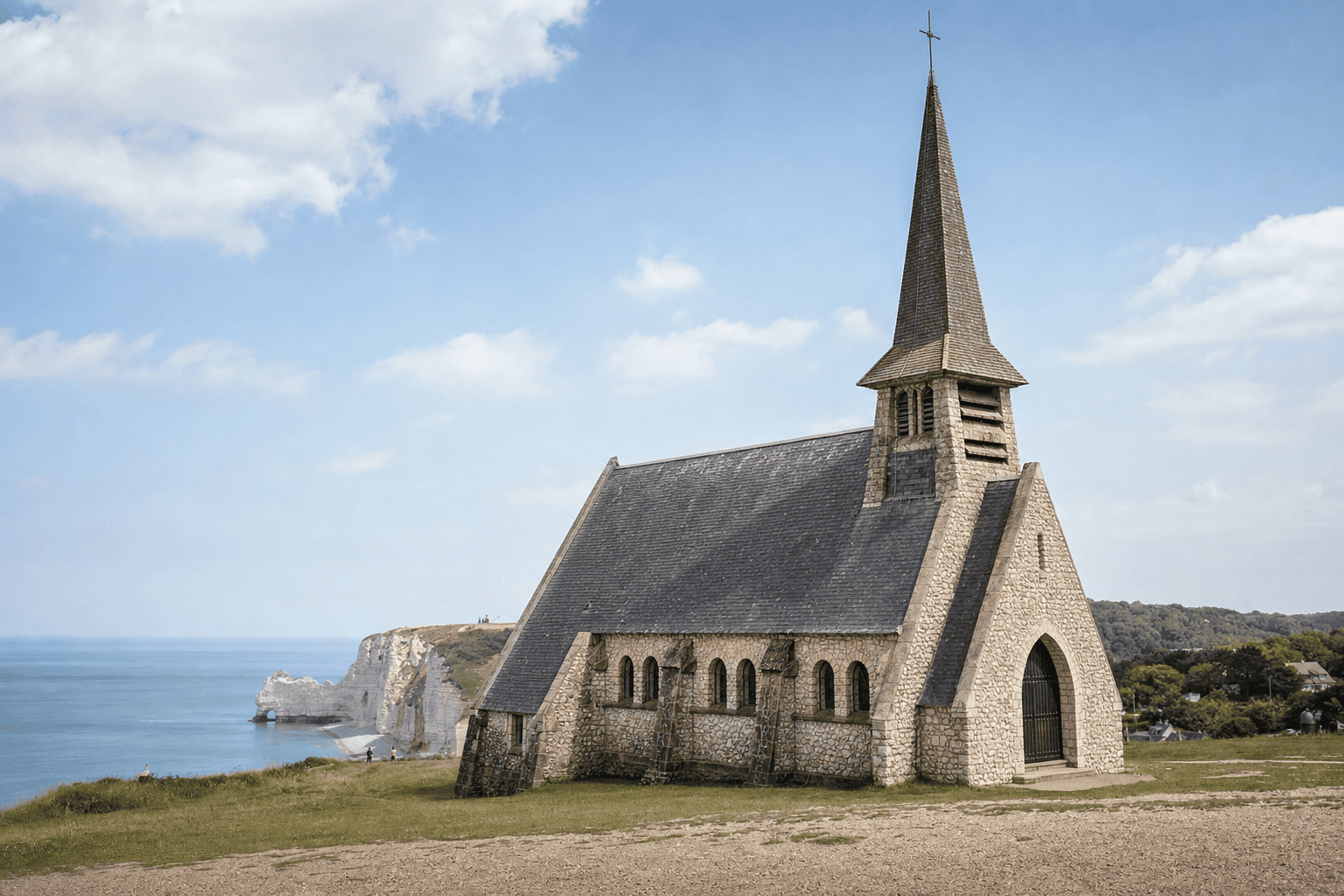
Perched on Amont Cliff, Notre-Dame-de-la-Garde Chapel in Étretat combines maritime heritage, Neo-Gothic architecture, and sweeping views over the English Channel. Dedicated to fishermen and sailors, it offers a peaceful stop away from the bustle of the seafront. The visit is best experienced as a heritage walk: climb up from the village, take time to admire the building’s silhouette, then continue along the cliff paths while respecting protected areas and local guidelines.
Practical information
Wear closed-toe shoes, bring water, and protect yourself from the wind. Keep away from the cliff edges and stay on authorized routes, even when trying to get a better photograph.
Getting to Étretat from Paris by private transportation
Arrange your Paris → Étretat trip with a private driver departing from a Paris hotel, Paris, CDG, or ORY. You can then enjoy your time climbing to the chapel and exploring the cliffs before returning to Paris according to your itinerary.
Private transportation departing from Paris, a Paris hotel, CDG, or ORY. Admission tickets and local guide services are not included.
A chapel dedicated to seafarers
Notre-Dame-de-la-Garde Chapel reflects Étretat’s long-standing relationship with the sea. The first building was constructed on Amont Cliff in the 19th century, when the coastal resort was still closely tied to fishing and navigation. Its purpose was clear: to place sailors and fishermen under the protection of the Virgin Mary. The chapel was blessed on August 6, 1856, after a local effort to transport materials to the top of the cliff.
Destroyed in 1942 during World War II, it was rebuilt in 1950. This reconstruction explains the monument’s current appearance and its place in Étretat’s contemporary history. The chapel is therefore more than a lookout point: it bears witness to a collective memory shaped by departures to sea, danger, and attachment to the coast. To understand the site, observe its position: it directly overlooks the coast, like a landmark visible from offshore.
Neo-Gothic architecture with maritime details
The chapel stands out with its compact stone silhouette, slate roof, and slender bell tower. Its Neo-Gothic architecture follows 19th th-century religious conventions while incorporating references to the sea. The gargoyles notably evoke fish, while nautical elements give the building an identity particularly suited to its role as a sailors’ chapel.
Inside, the nave takes a shape reminiscent of a boat’s hull. This reference is not merely decorative: it extends the meaning of the sanctuary and connects the prayer space with Étretat’s maritime life. The slab-glass windows, created in the 1960s from designs by painter Maurice Rocher by the Degusseau workshop, add colorful light to the interior. If the building is open during your visit, take time to look at the volumes, windows, and sculpted details rather than limiting your visit to an exterior photograph.
The climb to Amont Cliff
From central Étretat, the chapel is reached on foot by climbing toward Amont Cliff. The walk requires moderate effort, but the slope, stairs, and uneven sections may be challenging for people with walking difficulties. Suitable footwear is recommended, especially after rain, when surfaces can become slippery.
The climb is an integral part of the experience. As you gain elevation, the view gradually opens onto Étretat’s rooftops, the beach, and the cliffs surrounding the bay. It is best not to rush and to keep your distance from exposed areas. The cliffs are unstable in places: rockfalls and falling stones are real risks, and paths or access points may change depending on construction, weather, or site protection measures. Before setting out, check information from the town hall or tourist office.
Panoramic views of Étretat and the Alabaster Coast
The chapel’s position provides one of the most interesting viewpoints over Étretat. From Amont Cliff, the village lies below, framed by the Porte d’Aval, Porte d’Amont, and the beach. This perspective offers a better understanding of the site’s geography than the seafront: the arches, valleys, and plateaus of the Pays de Caux form a continuous landscape shaped by erosion.
On a clear day, the view stretches far across the English Channel and the Alabaster Coast. Light changes particularly quickly: overcast skies, low sun, and sea mist successively transform the color of the chalk and the appearance of the sea. For photography, quieter times are more pleasant, but safety should always take priority over finding the perfect composition. A telephoto lens is not necessary to enjoy the panorama; the important thing is to remain in authorized areas and respect other visitors.
What can you see around the chapel?
The chapel can be included in a broader exploration of Amont Cliff. Nearby, walkers encounter Étretat’s iconic landscapes as well as several heritage and scenic landmarks. The monument dedicated to aviators Nungesser and Coli is located in the cliff area, as are the Étretat Gardens, whose visit is subject to separate conditions. The Étretat Heritage Museum also offers a way to learn more about local history, particularly fishing, the seaside resort, and everyday life.
A loop can begin in the village, climb to the chapel, continue along authorized cliff paths, and then descend toward the seafront. It is important not to confuse walking routes with direct access to the arches or beach: the cliffs cannot be crossed freely, and some areas are dangerous. Ask locally for information if weather or construction changes the usual route.
Tips for a respectful visit
Notre-Dame-de-la-Garde Chapel is a heritage monument, a place of remembrance, and a religious building. If it is open, behave respectfully: speak quietly, respect any services taking place, and do not damage objects or fixtures. Interior access may be occasional or depend on locally posted hours, so do not assume the chapel will be open every time you visit.
The outdoor site also requires care. Amont Cliff is exposed to wind, and surrounding areas can become slippery. Dogs must remain under control, and all trash should be taken with you. Do not cross barriers, sit at the edge, or descend into unmarked areas. For a comfortable visit, choose stable weather, allow plenty of time, and leave a buffer before sunset. On-site instructions and municipal information always take precedence over a guide’s general recommendations.
Planning a day trip from Paris
Étretat is well suited to a day trip from Paris, provided you plan for travel time and visitor numbers in the village. To make the most of the chapel, plan to arrive early or choose a less busy period. A day can combine Amont Cliff, the chapel, the seafront, viewpoints of Porte d’Aval, and a walk through central Étretat. Keep your schedule flexible: wind, rain, and trail conditions can greatly affect the comfort of your visit.
Booking Paris Transfer can arrange private transportation from a Paris hotel, Paris, Charles de Gaulle Airport, or Orly to Étretat, with a return to Paris according to your chosen itinerary. The service covers transportation only and does not include admission tickets or a local guide service. For a smooth day trip, provide your departure point, preferred time, and the amount of time you plan to spend on the cliffs. Being dropped off near the center allows you to explore the chapel on foot, subject to the site’s access conditions.
Frequently Asked Questions
Where exactly is the chapel located?
Is the chapel always open to visitors?
How much time should I allow?
Can you access the cliff edge near the chapel?
Can you travel to Étretat with a driver from Paris?
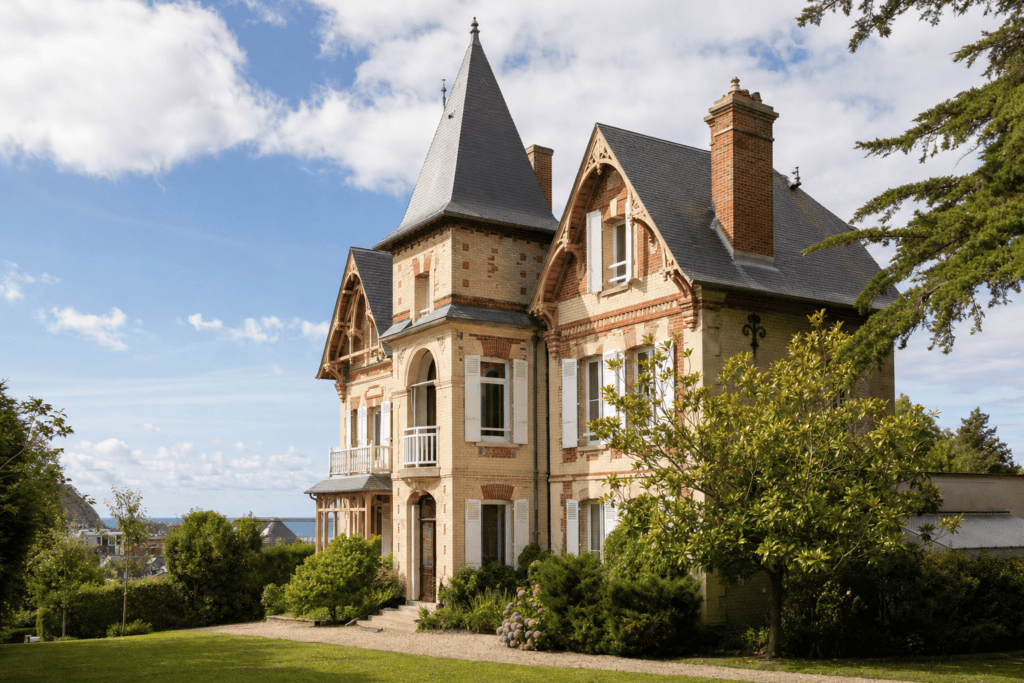 Le Clos Arsène Lupin – Maurice Leblanc House A theatrical visit in Maurice Leblanc’s former home, in the heart of Étretat, following in the footsteps of Arsène…
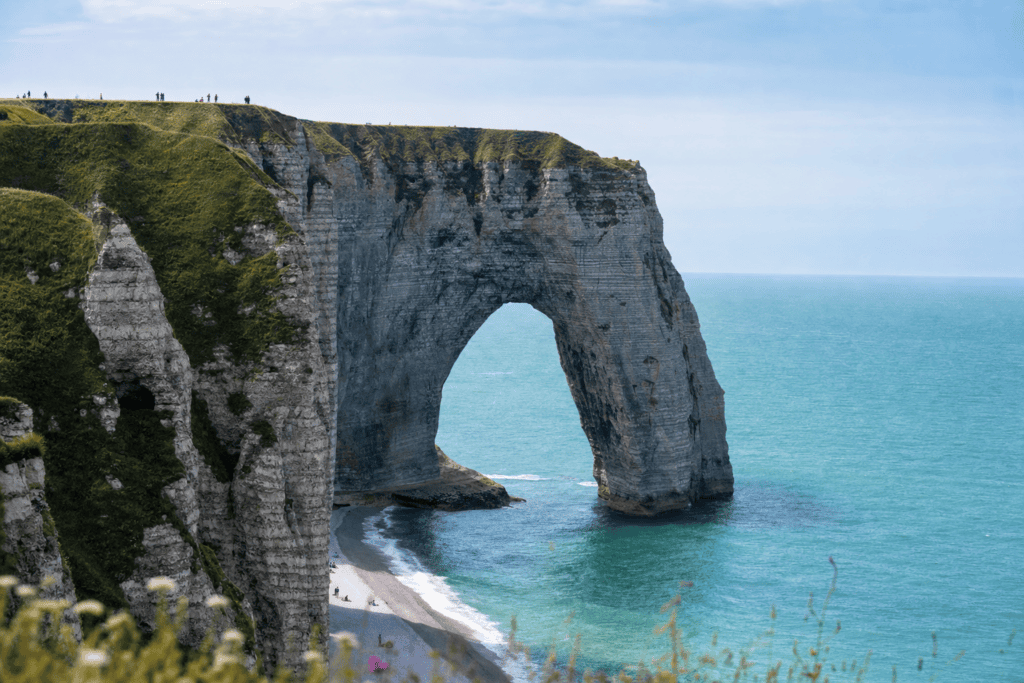 Étretat Cliffs and the Porte d’Aval Natural Arch A sweeping Normandy landscape to explore from Étretat, among chalk cliffs, a natural arch, coastal trails…
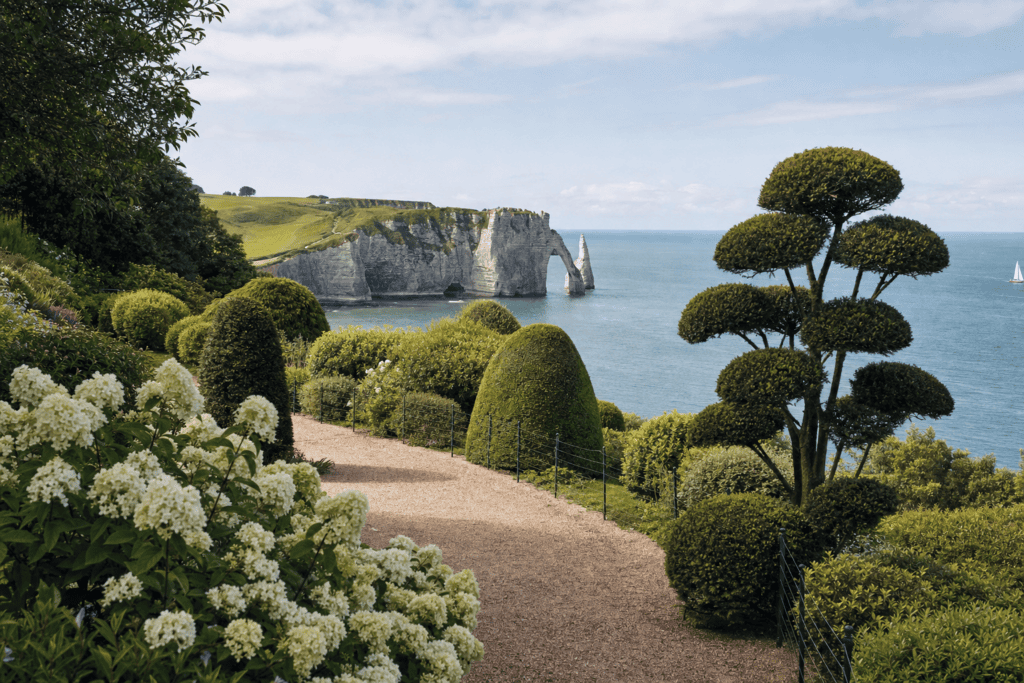 The Étretat Gardens A contemporary, poetic garden on the heights of Étretat, featuring plant sculptures, art and views of…
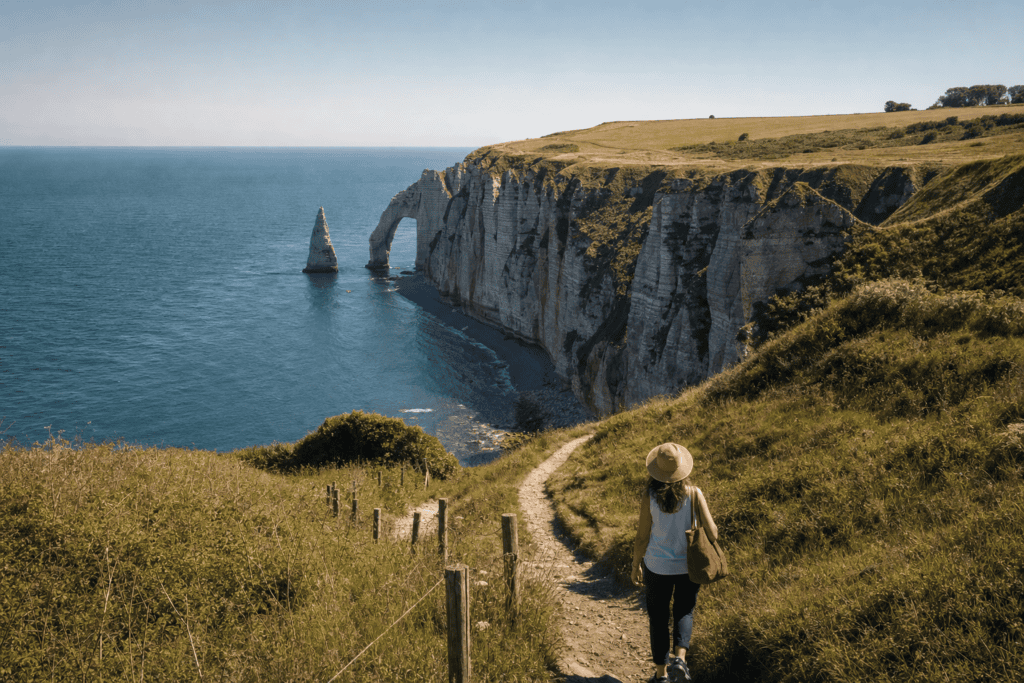 Coastal Hike Between the Cliffs of Étretat and the Antifer Valley A panoramic hike between the Étretat cliffs, the Pays de Caux plateau, and the Antifer valleuse, to plan…
Online booking · Paris → Avenue Damilaville, 76790 Étretat, Seine-Maritime, Normandy
Choose your pickup date and time
Your departure and arrival details are already pre-filled. You can adjust them in the fare calculator before viewing the vehicles and fare.