



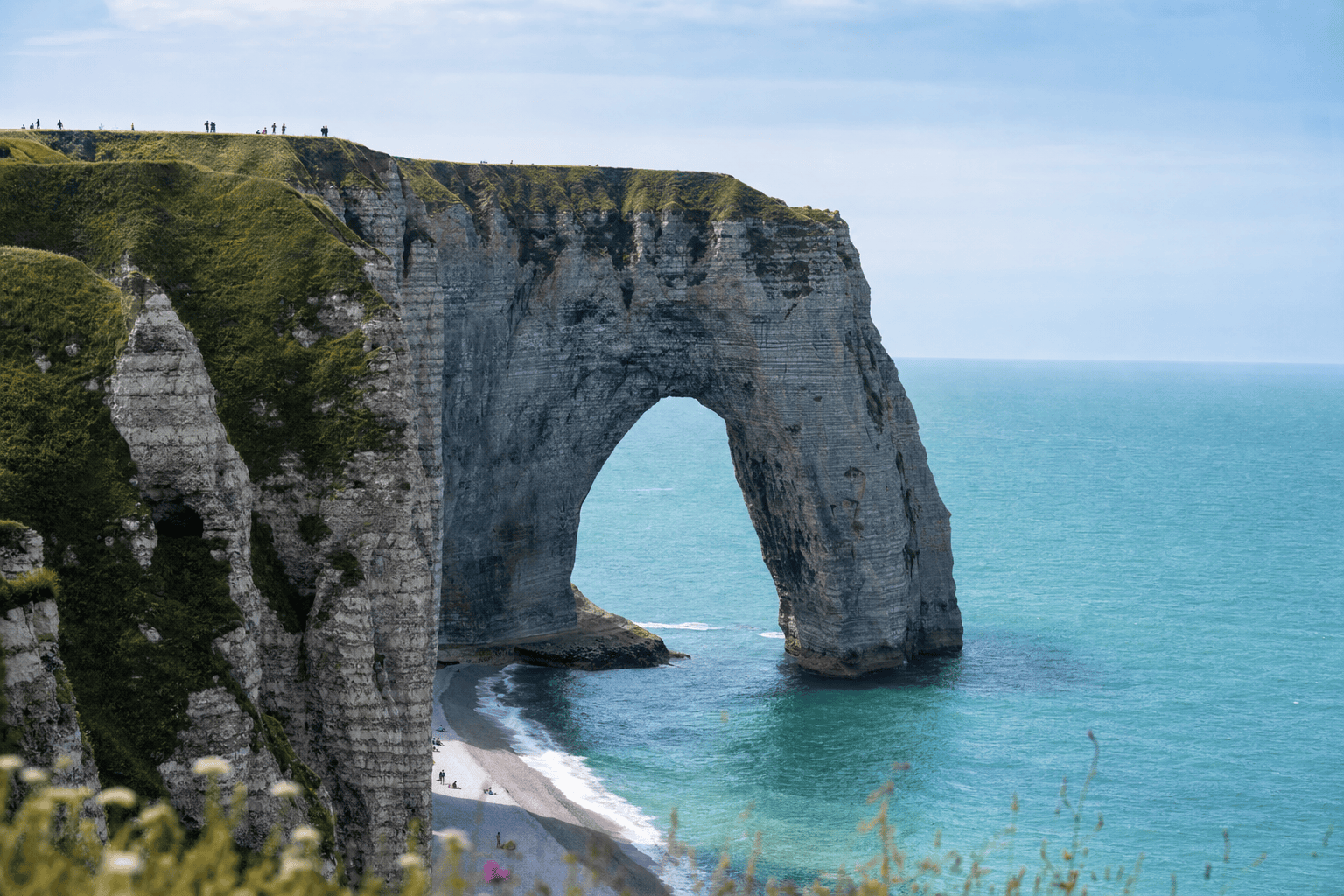
Étretat Cliffs: Porte d’Aval and the Needle
Étretat
The Étretat Cliffs form one of the most recognizable landscapes on the Alabaster Coast. From the pebble beach, Porte d’Aval forms a vast natural arch at the foot of the cliff, while the Needle, standing about 51 meters high, rises from the sea. The trails along the Aval and Amont cliffs offer several viewpoints of this spectacular landscape, which should be explored carefully and with respect for this fragile natural site.
Practical information
Wear suitable shoes for uneven paths, stay away from the edge and never venture beneath the cliffs or into closed areas.
Reaching Étretat from Paris with peace of mind
For a trip from Paris, Booking Paris Transfer can arrange private transportation between Paris, a Paris hotel, Charles de Gaulle or Orly Airport, and Étretat, with a return to Paris or integration into a Normandy itinerary. Transportation does not include an admission ticket or a guided tour on site: you remain free to explore the cliffs according to local conditions.
Possible departure from Paris, the Île-de-France region, CDG or ORY; return to Paris according to your itinerary.
Understanding the Porte d’Aval landscape
From Étretat beach, look to the left: the Aval cliff extends into the sea and opens onto Porte d’Aval, a natural arch carved by erosion. Beyond this large opening stands the Needle, a spectacular pillar of chalk and flint that appears isolated from the rest of the coast. Its silhouette changes with the light, mist and sea conditions, which helps explain why the site has inspired so many painters and writers.
The cliff is part of the Alabaster Coast, famous for its white cliffs stretching along much of the Seine-Maritime coastline. The chalk layers formed from ancient marine deposits, then were uplifted and gradually cut into by waves, runoff, frost and ground movement. The arch may appear unchanging, but it is constantly evolving: rockfalls and coastal retreat are reminders of the power of the elements.
To appreciate the site, take time to observe the contrasts between the white chalk, dark bands of flint, green plateaus and gray pebbles on the beach.
The best viewpoint from the Aval cliff
The most iconic route generally begins near the beach and climbs to the Aval cliff along the maintained path. The incline requires some effort, but is quickly rewarded with a sweeping view over Étretat, Porte d’Aval and the Needle. As you gain elevation, the arch stands out more clearly from the cliff, revealing the distinctive shape of this rugged coastline.
The summit is an excellent place to photograph the landscape, but do not try to approach the edge of the slope. Cliff edges remain unstable, even when the ground appears dry and solid. Local guidelines call for maintaining a safe distance and respecting barriers, fences and rewilding areas.
Beyond the first viewpoint, coastal trails allow you to extend the walk toward Manneporte and the valleys, depending on access conditions and the route chosen. The hike then becomes more rural: fields of the Pays de Caux, windblown grass and open views over the English Channel follow one another. Bring water, as facilities are limited on the plateaus.
The beach, pebbles and views from the sea
Étretat beach offers the most direct starting point for admiring the cliffs. It is covered with rounded pebbles, polished by the waves and held between the Amont and Aval cliffs. Their presence is not merely aesthetic: they help naturally protect the coastline and must not be taken away. A walk along the perrey lets you enjoy the panorama without leaving village level.
The view from the water differs from that of the trails. When conditions are suitable and a supervised activity is available, kayaking, paddleboarding or a boat trip can reveal the bases of the arches and the verticality of the cliffs. These activities nevertheless require a good understanding of the tides, weather and currents. Never attempt to reach the foot of the cliffs alone or pass through an arch as the tide is coming in.
The beach is not simply a backdrop: the tidal range can quickly change access. Before any coastal activity, check the latest schedules and instructions from the municipality or tourist office. If in doubt, stay on the promenade and officially accessible trails.
Amont Cliff and panoramic views over Étretat
To the right of the beach when facing the sea, the Amont cliff offers another perspective on Étretat. The climb leads to the Notre-Dame-de-la-Garde chapel and the Étretat Gardens, while the summit opens onto an overall view of the beach, seawall, Aval cliff and Needle. It is one of the best places to understand the landscape’s composition: the village lies between two rocky promontories framing the sea.
The silhouette of the Amont arch has often been compared to an elephant dipping its trunk into the water. This imaginative interpretation adds a literary dimension to the discovery, but the panorama remains especially remarkable for its geological forms and changing colors. On clear days, the coast extends toward the cliffs of the Alabaster Coast.
This loop covering both cliffs is suitable for a half-day if you walk at a relaxed pace and plan breaks. Stairs and changes in elevation can be challenging for young children, people with reduced mobility or visitors unaccustomed to coastal paths. Check local conditions before setting out, especially after heavy rain or windy weather.
Coastal hiking and longer routes around Étretat
The Étretat Cliffs are part of a broader network of coastal paths. The GR21 follows much of the Alabaster Coast between Le Tréport and Le Havre, with sections passing near Étretat. From town, some hikers extend their route toward Manneporte, Jambourg Beach, Le Tilleul or the nearby valleys. These landscapes are less urban and reveal the connection between the agricultural plateau and the cliffs.
Before choosing a distance, distinguish between a scenic walk and a true hike. Trails can be muddy, windy and uneven. A recent map or verified track is useful, as detours and restrictions may change to protect visitors and natural habitats. Do not leave authorized routes to get closer to the drop-off for a better viewpoint.
Nature walks led by a professional can be a valuable way to understand the formation of the chalk, the role of flint, seaside plants and cliff-dwelling birds. Programs, dates and booking requirements vary by season, so check the organizer’s or tourist office’s latest information directly.
Safety and respect for a fragile site
The beauty of the Étretat Cliffs should not make us forget how fragile they are. The cliffs are subject to marine and continental erosion, and falling rocks or landslides can occur without obvious warning. Walking along the edge of the drop-off is prohibited, and stopping beneath the cliffs is dangerous. Always respect barriers, signs, fences and temporarily closed areas.
The tide is another major risk. A beach or passage accessible at low tide can become impassable a few hours later. Do not descend into a valley or beneath an arch without checking the relevant tide times and allowing a safety margin. Weather can also change conditions quickly: strong winds, rain, fog and heavy seas reduce visibility and make trails slippery.
To help preserve the site, stay on the trails, do not collect pebbles, take your trash with you and keep your dog under control when required. Avoid drones and behavior that disturbs wildlife. A site this popular can remain exceptional only if every visitor minimizes their impact.
Planning a successful visit to Étretat
For a first visit, start at the beach and waterfront to get your bearings and see both cliffs. Then climb toward the Aval cliff to admire Porte d’Aval from several angles, return through the village and, if your legs and the weather allow, continue toward the Amont cliff. This plan avoids focusing the entire visit on a single viewpoint and offers complementary perspectives.
The most pleasant times are often morning or late afternoon, when the light highlights the contours and crowds may be lighter. During peak season, allow extra time to reach the village and find parking. Since practical arrangements may change, check official traffic, parking, weather and tide information before departing.
Bring closed-toe shoes, a windbreaker, water and sun protection, even in cool weather. For photography, a wide-angle lens is useful from the heights, while a telephoto lens can capture details of the Needle and cliff strata. Finally, make time for Étretat itself: its narrow streets, seaside heritage and cultural venues naturally complement your exploration of the coastline.
Frequently Asked Questions
Is access to the Étretat Cliffs free?
Can you go beneath Porte d’Aval?
How much time should you allow to visit the cliffs?
Are the cliffs suitable for children?
When should you check the tide times?
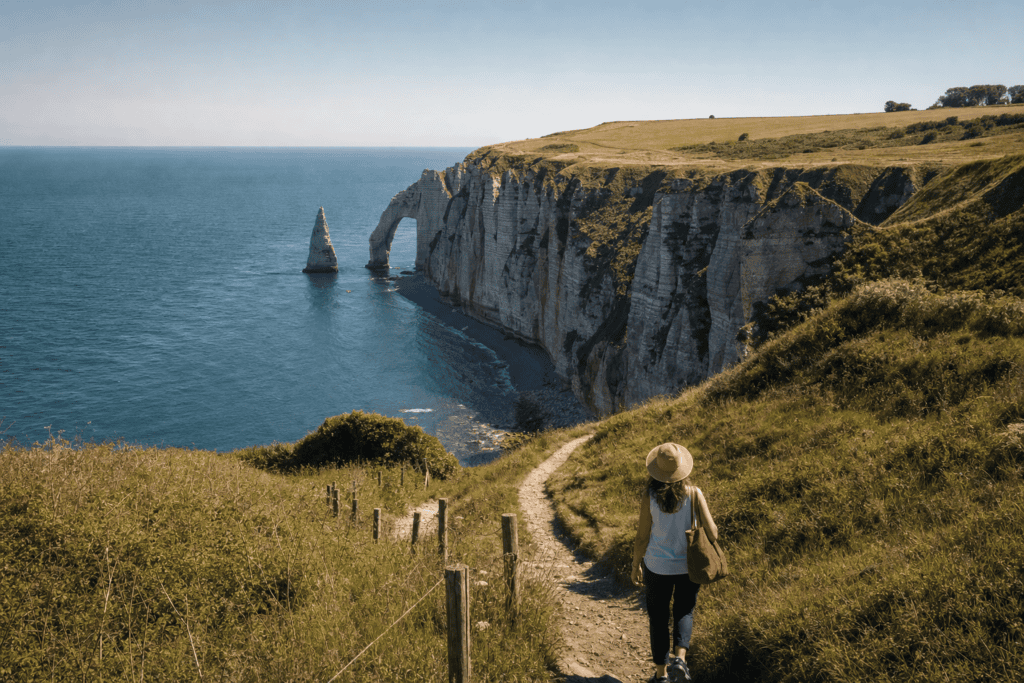 Coastal Hike Between the Cliffs of Étretat and the Antifer Valley A panoramic hike between the Étretat cliffs, the Pays de Caux plateau, and the Antifer valleuse, to plan…
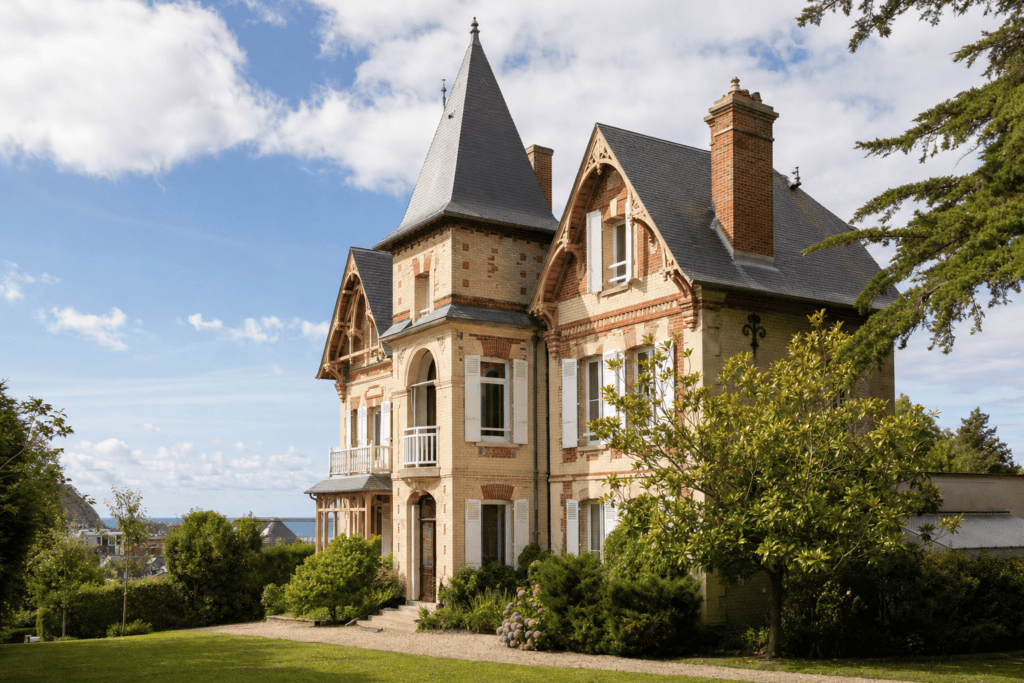 Le Clos Arsène Lupin – Maurice Leblanc House A theatrical visit in Maurice Leblanc’s former home, in the heart of Étretat, following in the footsteps of Arsène…
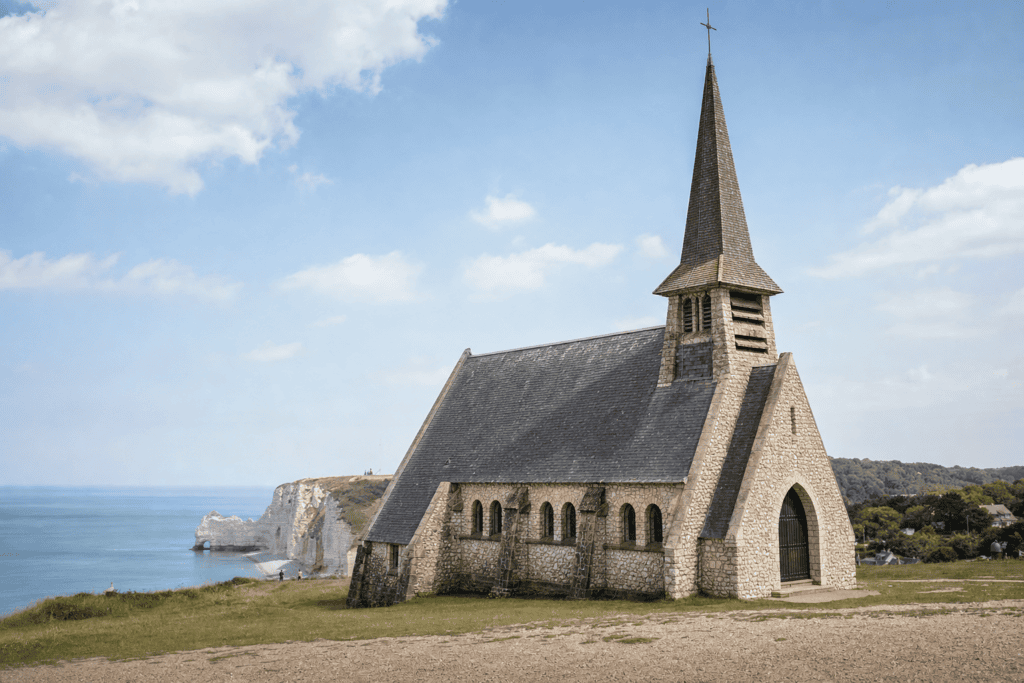 Notre-Dame-de-la-Garde Chapel in Étretat A remarkable seaside chapel on the Amont cliff, with evocative architecture and sweeping views…
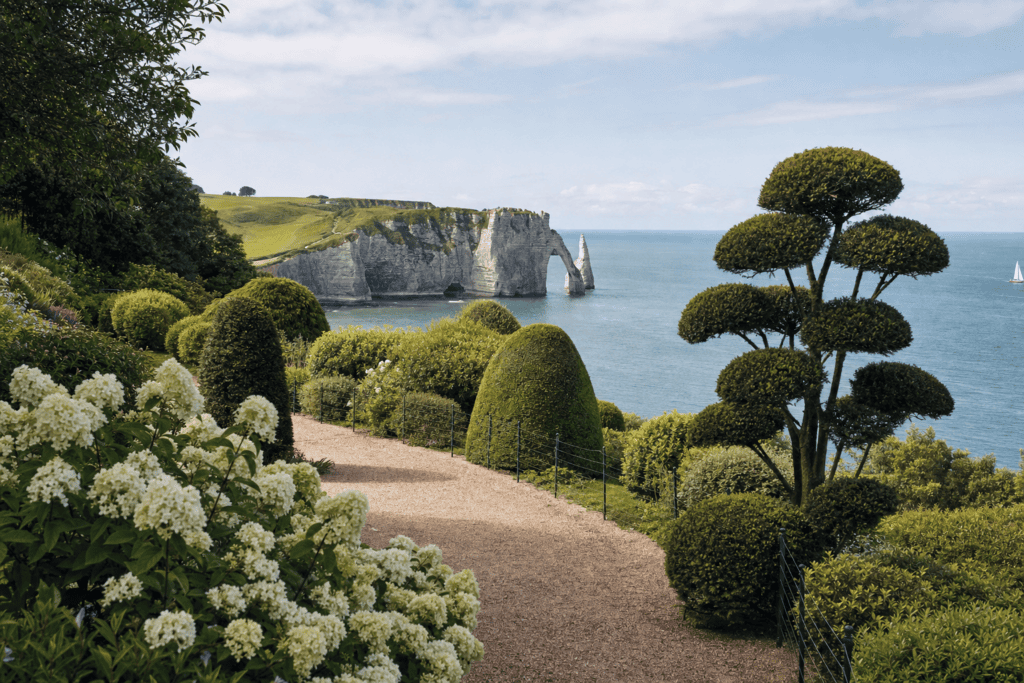 The Étretat Gardens A contemporary, poetic garden on the heights of Étretat, featuring plant sculptures, art and views of…
Online booking · Paris → Étretat Cliffs, 76790 Étretat, Seine-Maritime, Normandy, France
Choose your pickup date and time
Your departure and arrival details are already pre-filled. You can adjust them in the fare calculator before viewing the vehicles and fare.