



Moustiers-Sainte-Marie: Lanes, Faience, and Views over the Verdon
Gorges du Verdon
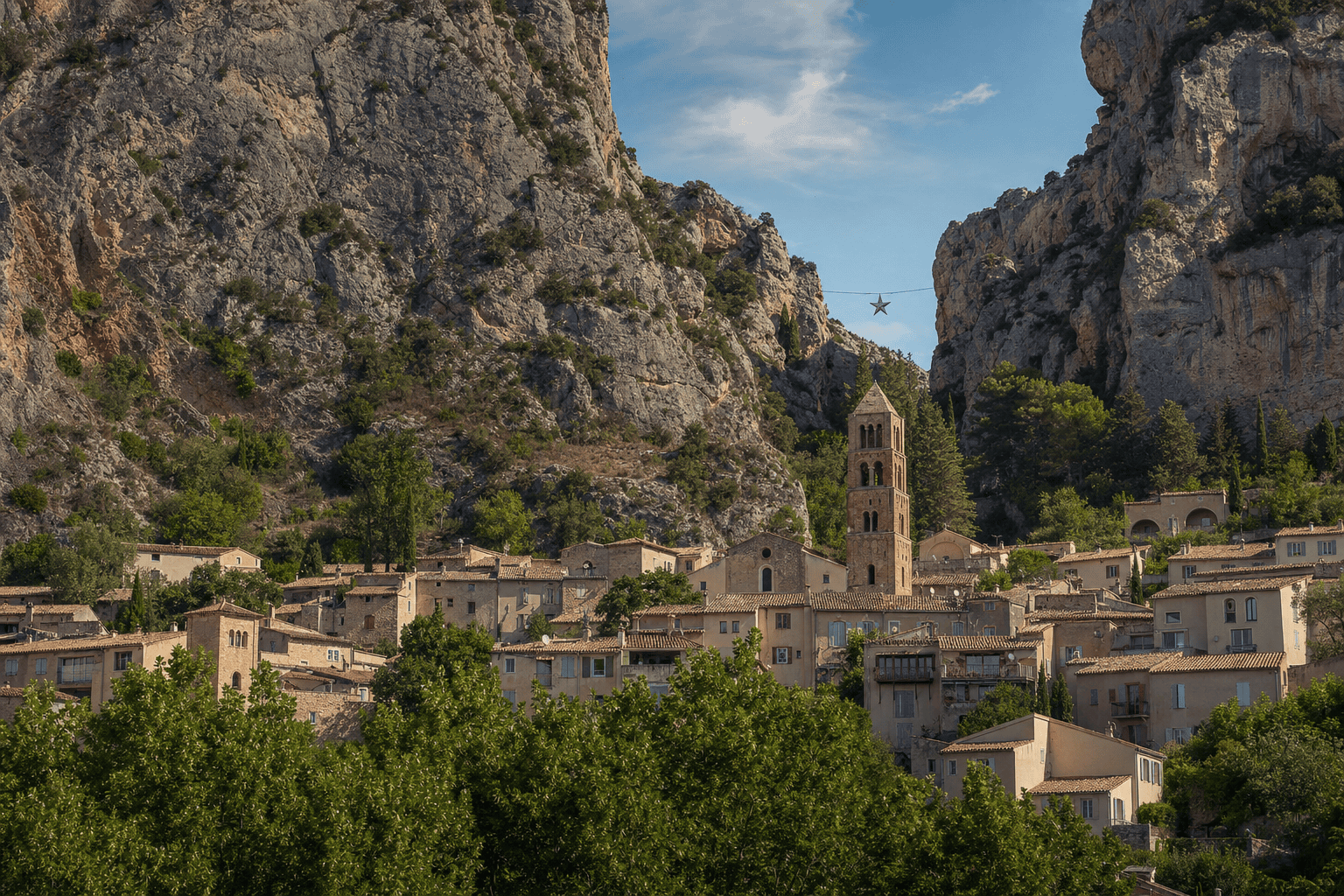
Set at the foot of two limestone cliffs, Moustiers-Sainte-Marie is one of the Verdon’s iconic villages. A visit takes you through an old town known for its vaulted passageways and fountains, introduces you to the local faience tradition, and, conditions permitting, leads up to Notre-Dame de Beauvoir Chapel. Allow half a day for the village’s main sights; a full day gives you time to add the Faience Museum, a meal, and a stop at Lake Sainte-Croix.
Practical information
Use the designated parking areas outside or on the outskirts of the center, then continue on foot. Wear closed-toe shoes and bring water, especially for the climb to the chapel and for summer visits.
Getting to the Verdon from Paris
Moustiers-Sainte-Marie is far from Paris and is easier to visit as part of a multi-day Provence itinerary. Booking Paris Transfer can consider a private journey departing from Paris, a Paris hotel, CDG, or ORY, with stops in the Verdon and a return to Paris or another stop on your itinerary. Transportation is separate from any visits, meals, activities, and tickets.
Transportation considered from Paris, a Paris hotel, CDG, or ORY. Return to Paris or an itinerary starting in Paris, depending on the route. No admission tickets included.
1. Understanding Moustiers-Sainte-Marie
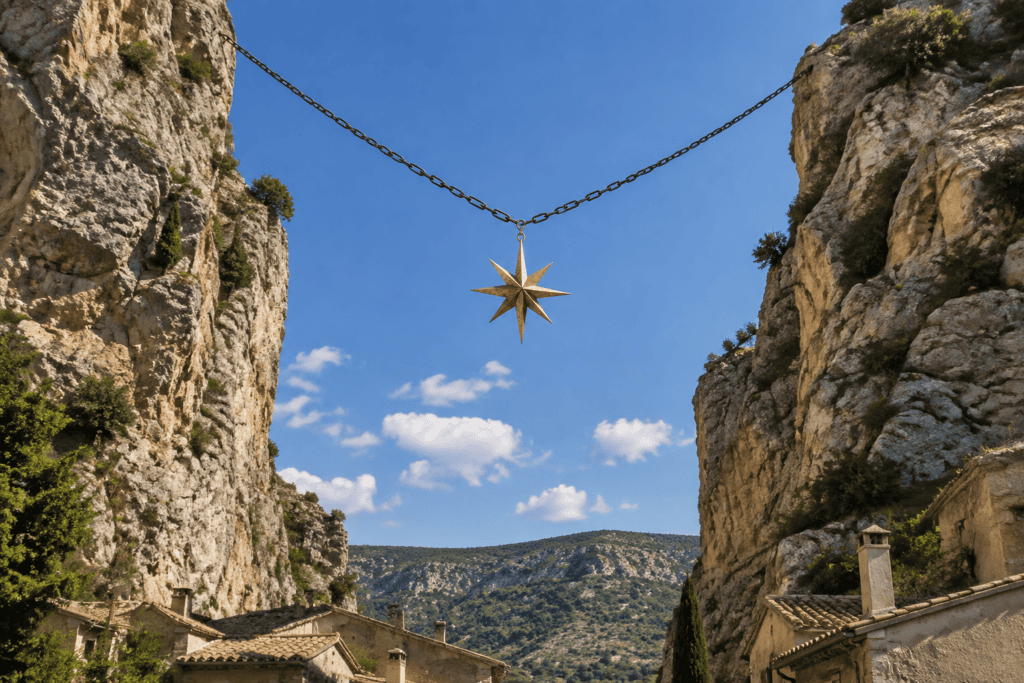
Moustiers-Sainte-Marie is in Alpes-de-Haute-Provence, at the heart of the Verdon Regional Natural Park and near Lake Sainte-Croix. The village is built in a narrow setting between two limestone formations, which explains its vertical layout and numerous viewpoints.
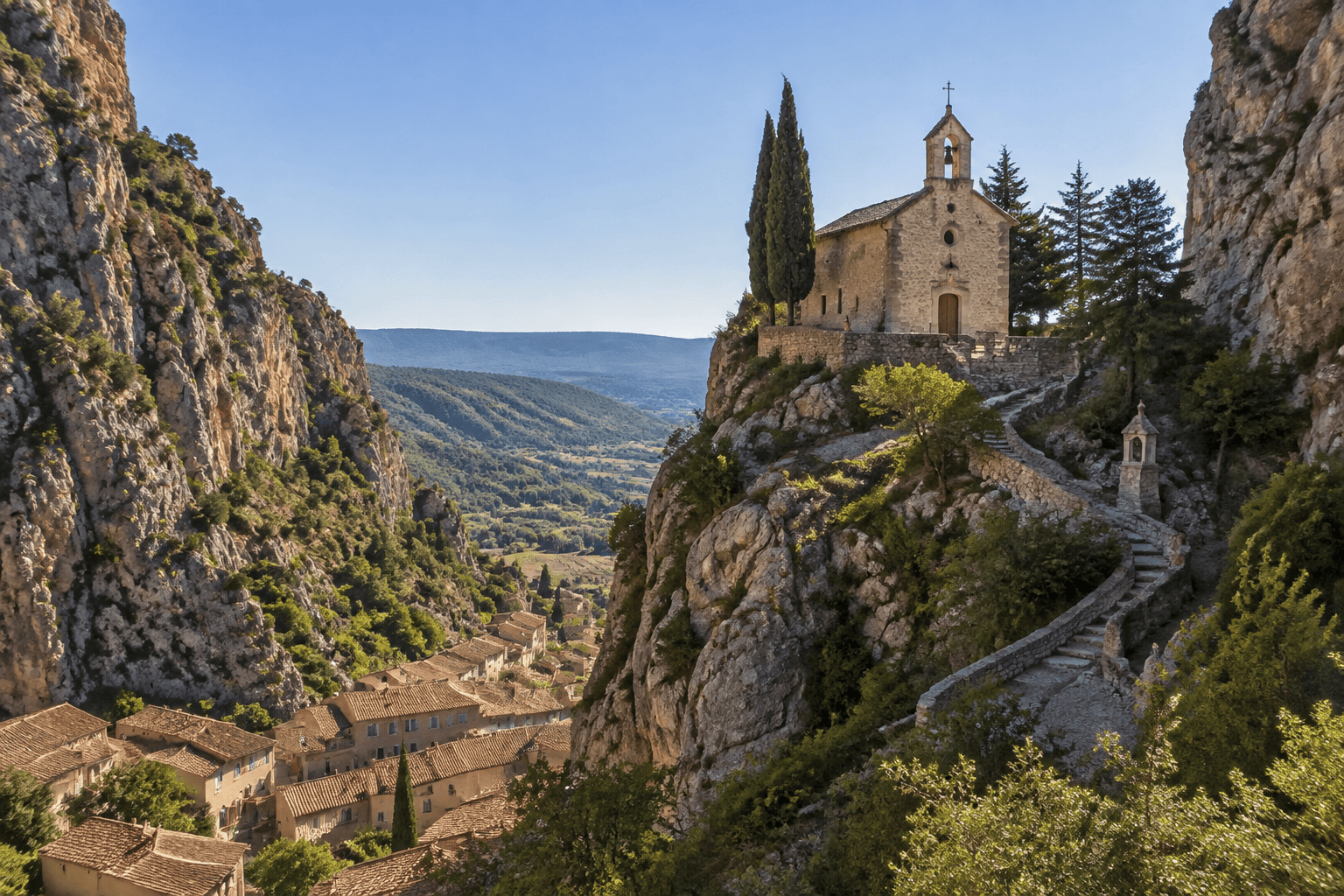
From the center, the cliffs frame the rooftops, bell tower, and Notre-Dame de Beauvoir Chapel. As you climb higher, the view stretches toward the hills, plateaus, and landscapes of the Verdon. Moustiers-Sainte-Marie is also a member of the association Les Plus Beaux Villages de France.
This setting makes it a great stop for combining built heritage with scenic exploration. The village can be visited on its own, but it also fits easily into an itinerary including Lake Sainte-Croix, viewpoints, and the Verdon’s scenic roads.
2. Explore the Old Town
Start by exploring the old town on foot, without trying to follow an overly fast itinerary. The narrow lanes, vaulted passageways, small squares, and fountains offer a close-up view of the village’s architecture.
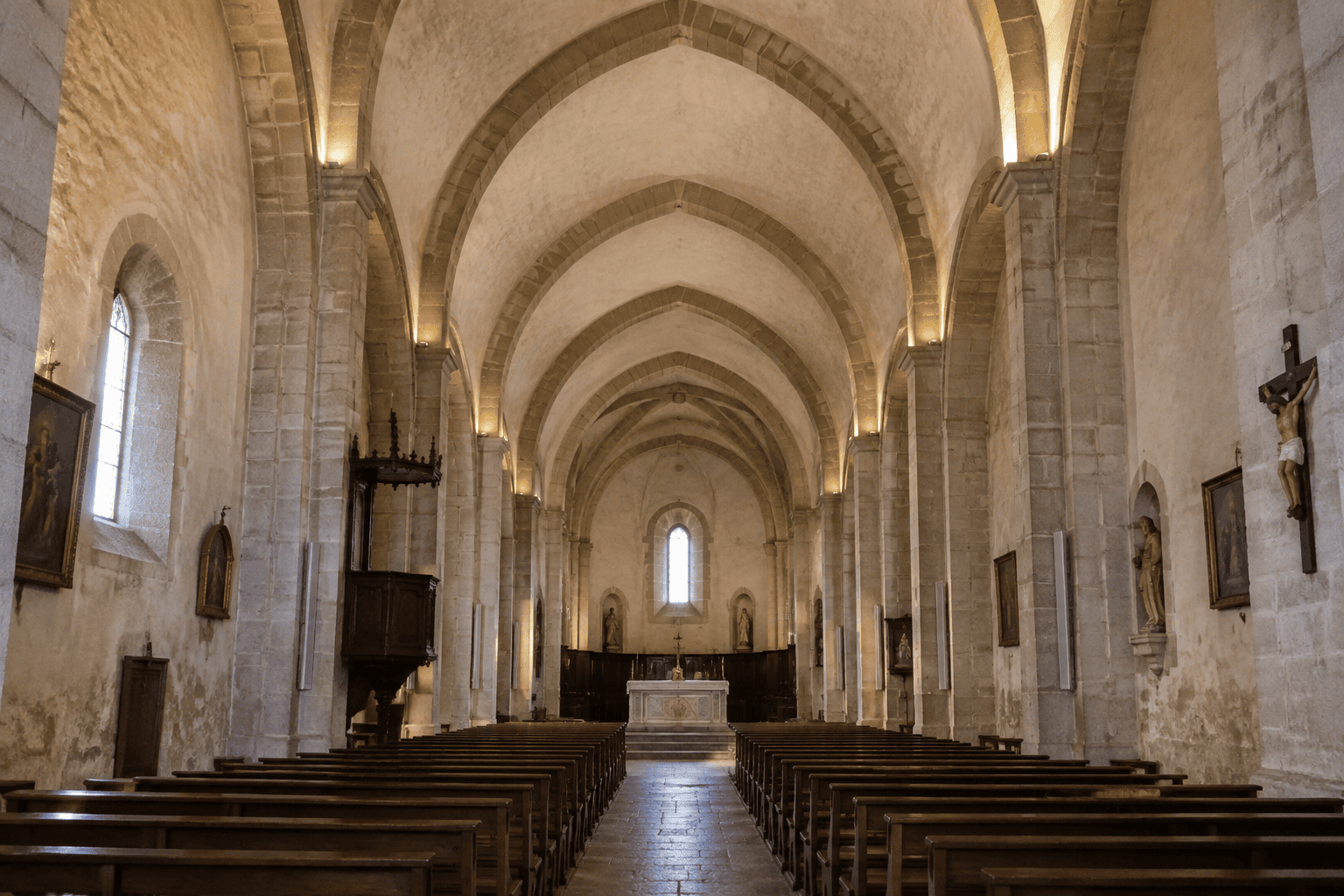
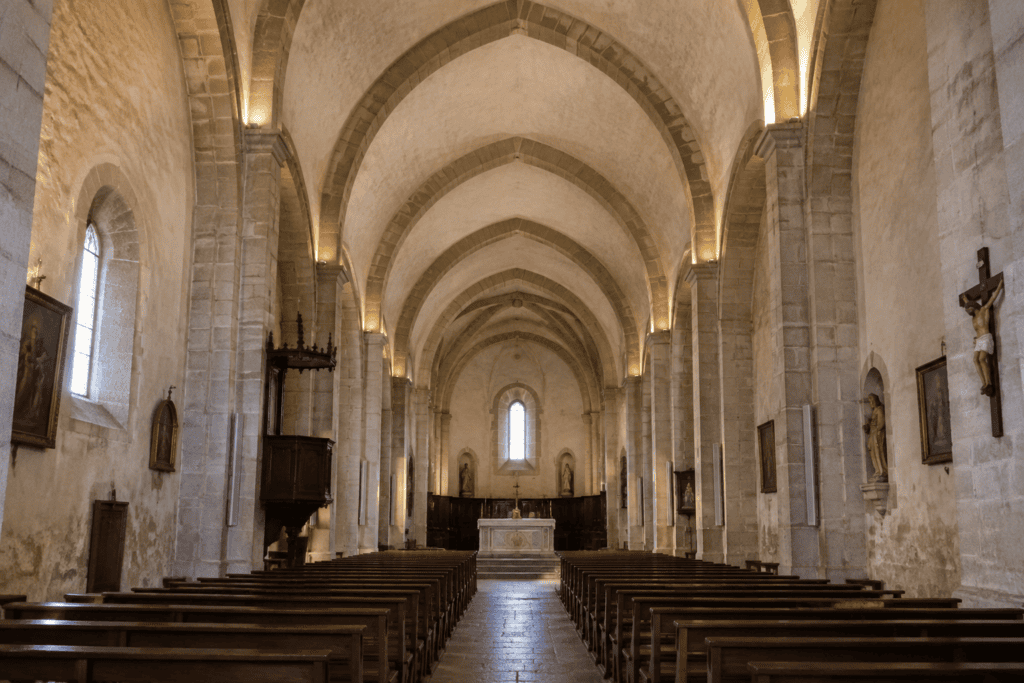
Notre-Dame de l’Assomption Church is one of the old town’s main landmarks. Its Romanesque bell tower rises above the houses and recalls Moustiers’ long history. Heritage signs and guided tours may add context to your walk when available.
Allow about two hours to stroll, photograph the façades, and take a few breaks. Morning light highlights the terrain and quieter streets; later in the day, the cliffs and rooftops take on softer colors.
3. Climb to Notre-Dame de Beauvoir Chapel
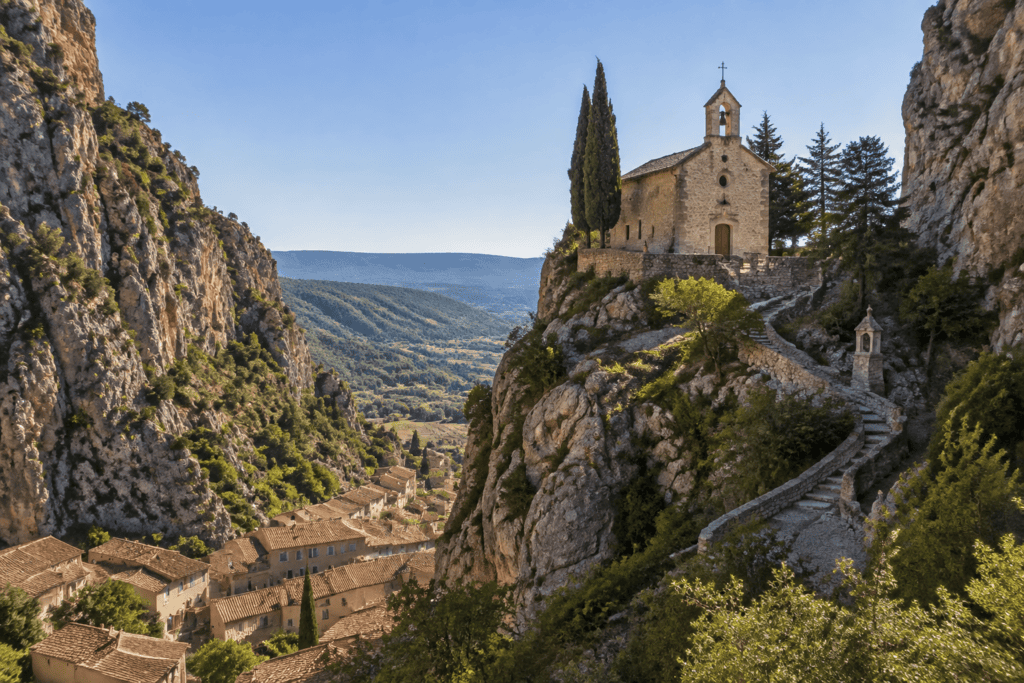
The path to Notre-Dame de Beauvoir begins in the village and follows an old Stations of the Cross route. The climb is short by hiking standards, but includes steps, steep sections, and uneven surfaces. It calls for comfortable walking rather than technical equipment.
As you climb, the view gradually changes: Moustiers’ rooftops gather below, the bell tower appears between the cliffs, and the ravine comes into view. The chapel itself is a place of reflection; whether its interior is open may depend on the season, construction work, or locally established arrangements.
Wear closed-toe shoes and adjust your pace to the heat. Some sections may be slippery after rain. People with walking difficulties should inquire in advance, as the path is not flat or fully developed.
4. Discover the Faience Tradition
Faience is part of Moustiers-Sainte-Marie’s cultural identity. Local production is particularly associated with painted designs, floral patterns, and decorative or functional pieces made by specialized workshops.
The Faience Museum displays works and materials that help explain the history of this craft. The village’s workshops and stores also offer access to contemporary creations. If you make a purchase, check the piece’s origin, production conditions, and the packaging precautions needed for transport.
Museum hours and visiting conditions, like those of the workshops, may vary by season. Check official information before you go, especially outside the summer season.
5. Take a Break in the Village
The visit is well suited to a break at a restaurant, café, or place serving regional products. Depending on the establishment and season, menus may feature Provençal vegetables, aromatic herbs, olive oil, cheeses, and specialties from southern France.
In summer, terraces and lunch tables can fill up quickly. Reservations are recommended if you want to eat at a specific time. For a more flexible break, village shops let you put together a meal to go and eat it where permitted.
Moustiers is still a lived-in village: keep passageways clear, respect façades, and limit noise in the narrow streets. This consideration is especially important when visitor numbers increase.
6. Extend Your Visit to the Lake and the Verdon
From Moustiers-Sainte-Marie, you can continue to Lake Sainte-Croix, the scenic roads, and the Verdon viewpoints. Choose a few stops suited to the time available rather than trying to cover the entire region in a single day.
The roads in this area are winding. In summer, traffic, stops at viewpoints, and parking difficulties can lengthen travel times. Before setting out, check the weather, road conditions, and recommendations issued by local authorities and organizations.
For a hike or activity around the lake, bring water, sun protection, and appropriate shoes. Stay on authorized trails and follow safety instructions, which may change depending on weather conditions or wildfire risk.
From Paris, Moustiers-Sainte-Marie fits more naturally into a multi-day itinerary than a same-day round trip. Private transportation can be considered from Paris, Charles de Gaulle Airport, or Orly, with stops in Provence and the Verdon before returning to Paris or continuing your journey.
7. Plan a Comfortable, Respectful Visit
Wear footwear suited to cobblestones, stairs, and the chapel path. In hot weather, bring a water bottle, hat, and sun protection. Strollers and wheelchairs may be difficult to use on some streets and on the path to Notre-Dame de Beauvoir.
Park your vehicle in marked areas and avoid entering narrow lanes when traffic is restricted or unsuitable. If you are dropped off near the center, choose a location that does not block residents or deliveries.
Before you leave, check updated information for the Faience Museum, any guided tours, restaurants, and access conditions for the chapel. Do not pick flowers or remove stones, stay on authorized routes, and take your trash with you.
Useful sources
Frequently Asked Questions
How much time should you allow to visit Moustiers-Sainte-Marie?
Is the climb to Notre-Dame de Beauvoir accessible to everyone?
Which museum should you visit to discover local faience?
Is Moustiers-Sainte-Marie suitable for a family visit?
Can you visit Moustiers-Sainte-Marie without a car?
What is the best time of year to visit the village?
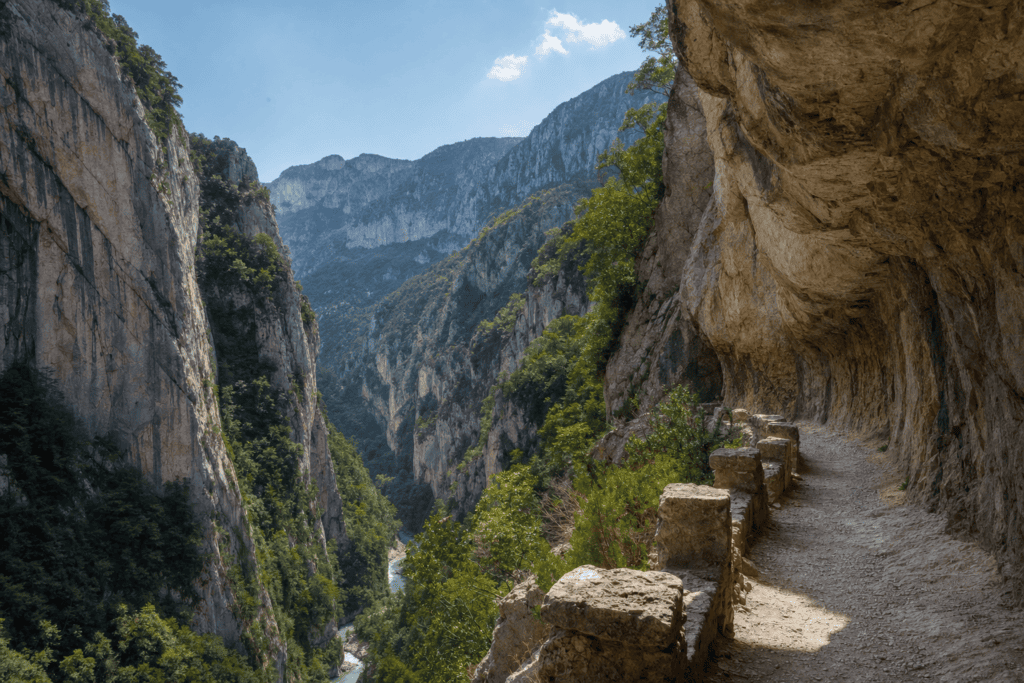 Sentier Blanc-Martel A spectacular one-way hike through the Gorges du Verdon, with stairs, tunnels, and technical sections. Prepare…
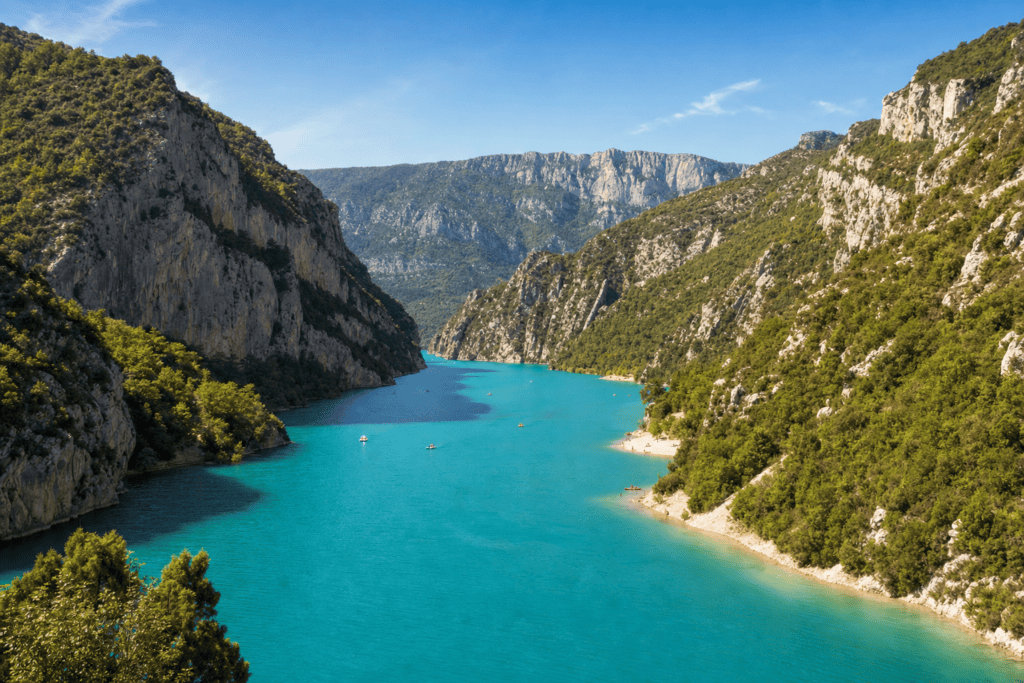 Lake Sainte-Croix A vast turquoise lake at the gateway to the Verdon Gorge, ideal for swimming, paddleboarding,…
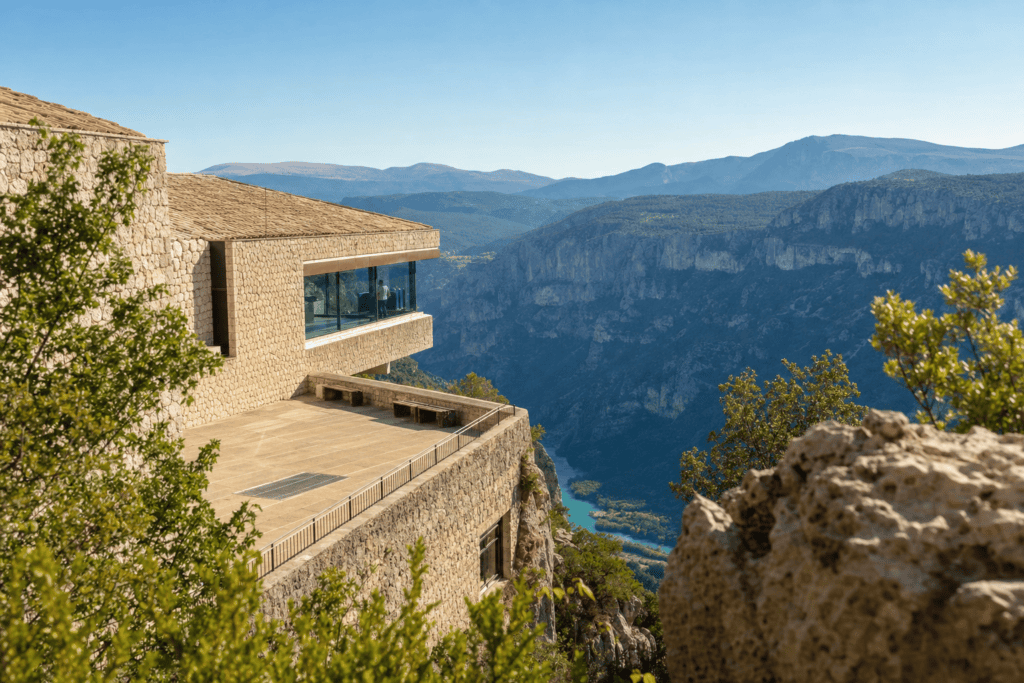 Verdon Gorge Prehistory Museum In Quinson, a museum dedicated to the Prehistory of Provence, featuring archaeological collections, family programs, and…
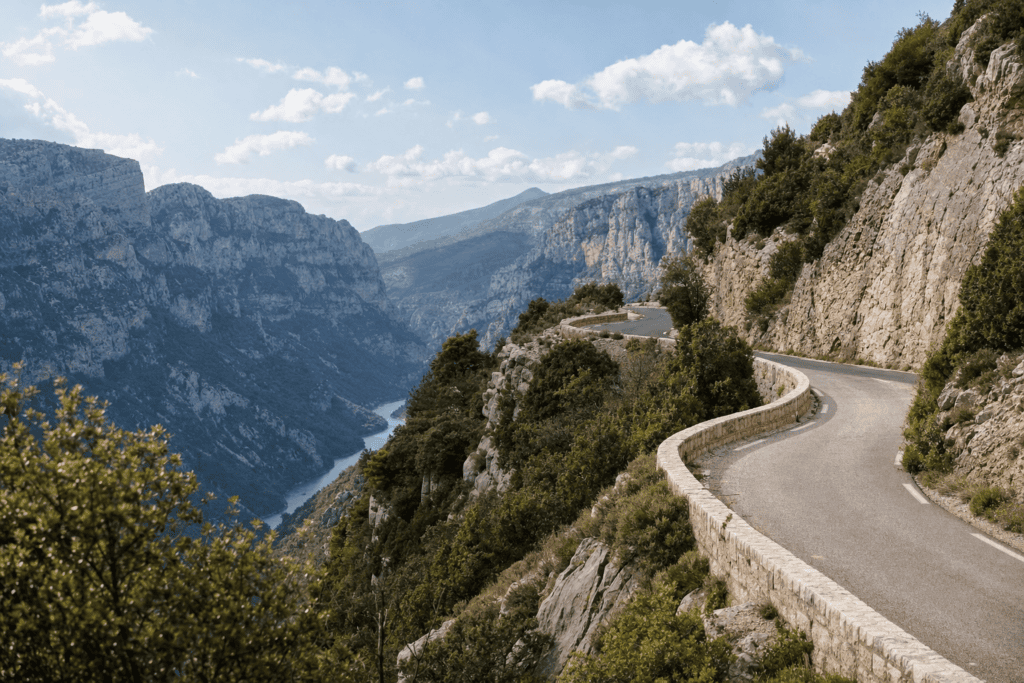 Verdon Ridge Road A scenic route above the Grand Canyon of the Verdon, dotted with viewpoints and limestone landscapes…
Online booking · Paris → Moustiers-Sainte-Marie, 04360, Alpes-de-Haute-Provence, France
Choose your pickup date and time
Your departure and arrival details are already pre-filled. You can adjust them in the fare calculator before viewing the vehicles and fare.