



Museum of Prehistory of the Verdon Gorge in Quinson
Gorges du Verdon
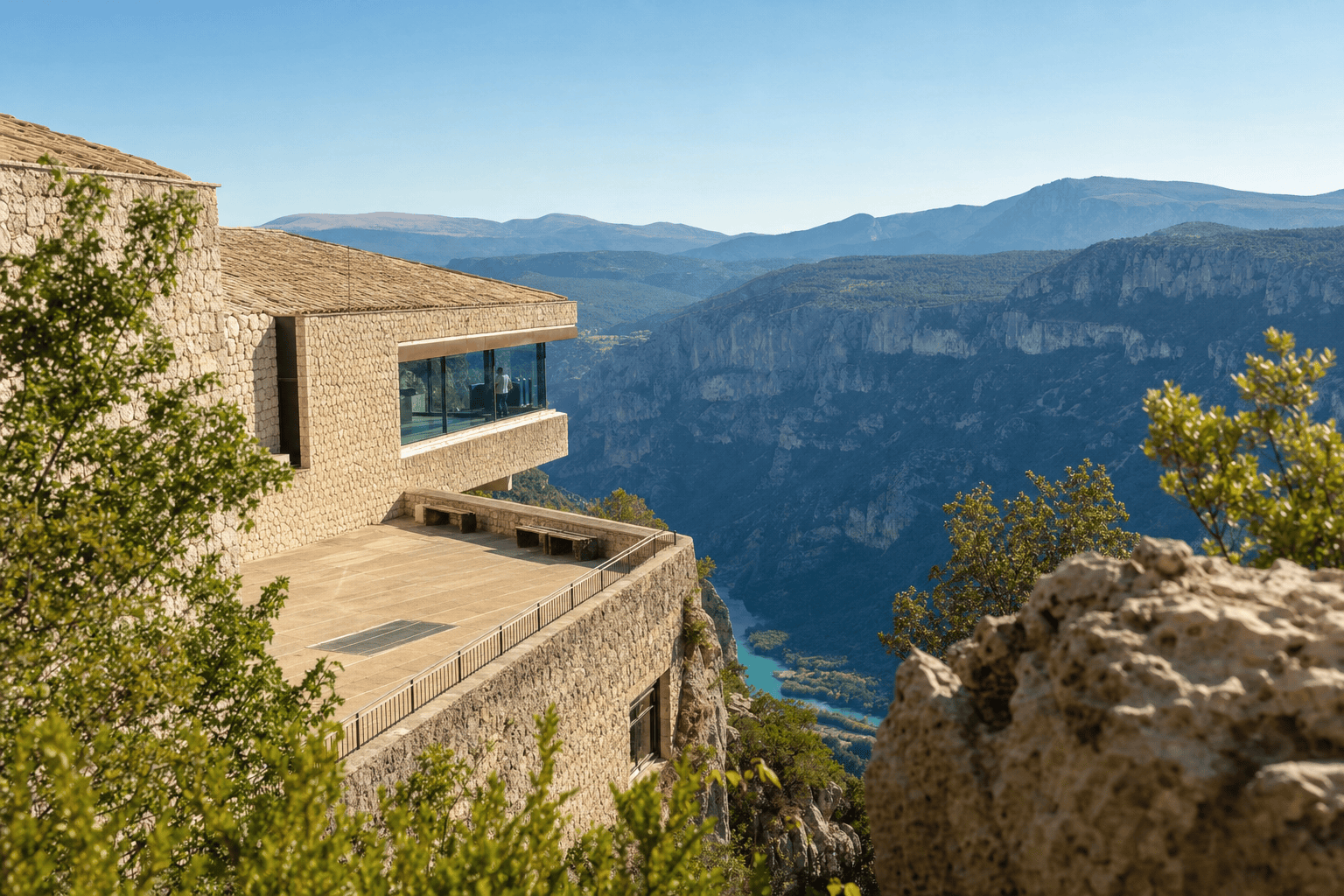
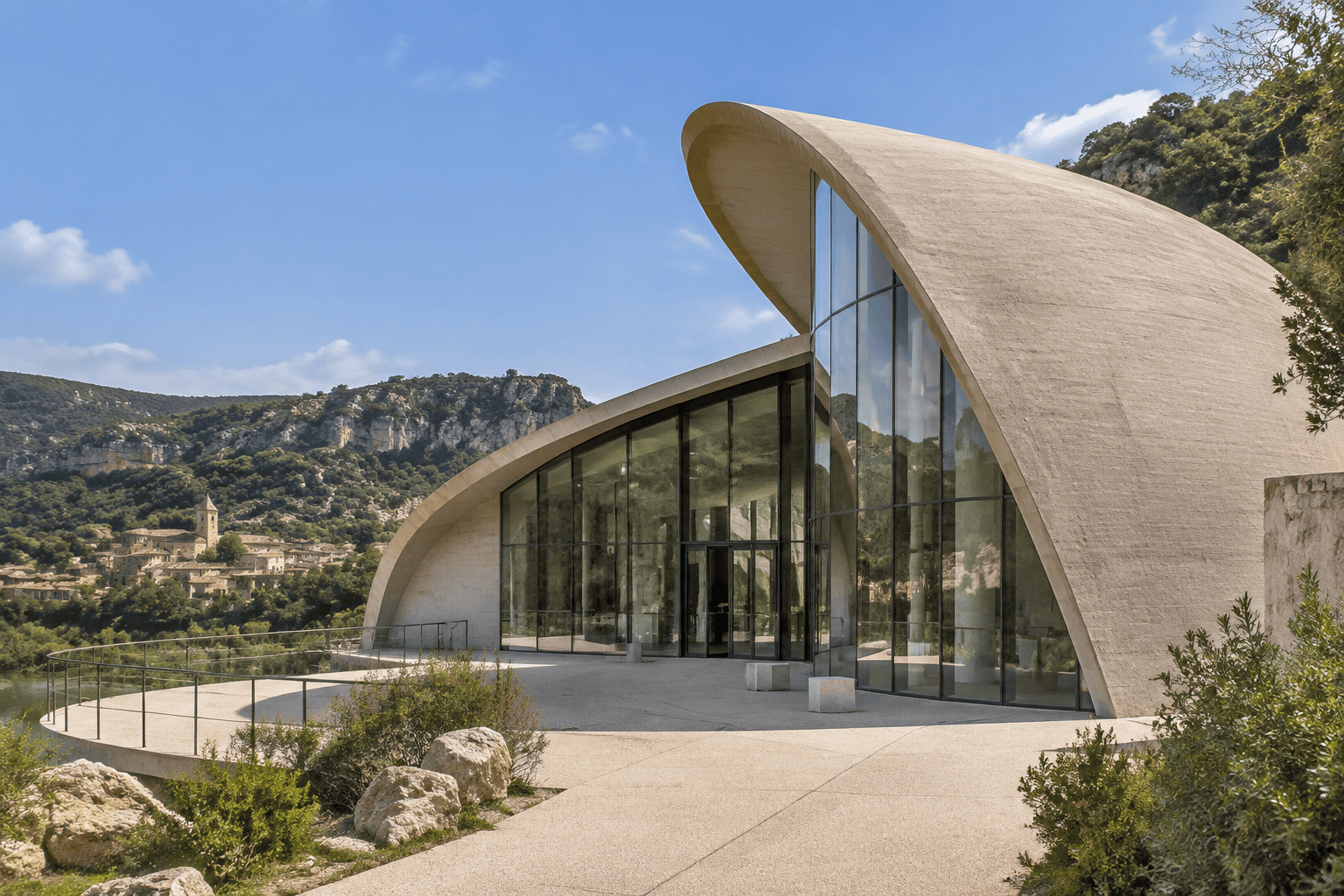
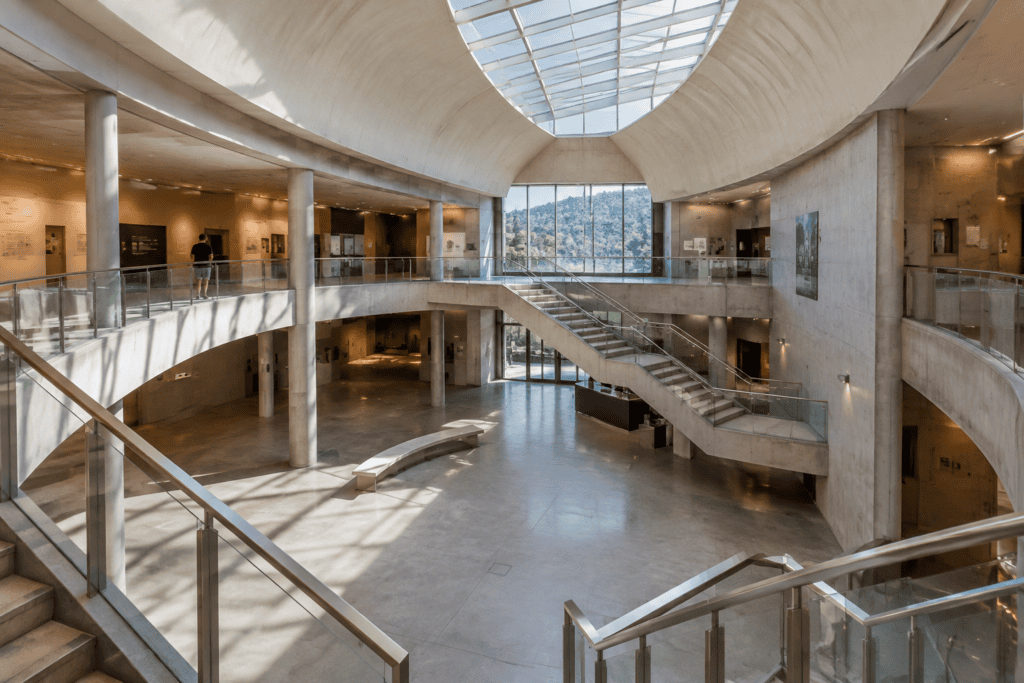
In Quinson, in the Alpes-de-Haute-Provence, the Museum of Prehistory of the Verdon Gorge offers an in-depth look at human settlement in Provence. Its collections, interpretive displays, and reconstructions trace the development of techniques, dwellings, and ways of life over a very long period. The contemporary building, created with the involvement of architect Norman Foster, forms part of a cultural itinerary that can be extended with a visit to the Prehistosite or an organized tour of Baume Bonne Cave, depending on the program. This stop is especially suitable for families and visitors who want to better understand the landscapes of the lower Verdon Gorge. Since opening hours, activities, reservations, and access conditions may change, check the official information before traveling.
Practical information
Before setting out, check the opening hours, last admission, reservations, workshops, field visits, and any special instructions announced by the museum.
Planning an itinerary from Paris to Provence
If Quinson is part of a trip departing from Paris, Booking Paris Transfer can arrange a private transfer from Paris, the Île-de-France region, CDG, or ORY, with onward travel to Provence and a return to Paris. The service covers transportation only; tickets, visits, and activities must be arranged directly with the museum. For local travel around Quinson, ask about the transportation options available on site.
Service limited to an itinerary starting in Paris, the Île-de-France region, CDG, or ORY; this is not a local chauffeur service in Quinson.
Understanding the museum’s place in the Verdon
The Museum of Prehistory of the Verdon Gorge is located in Quinson, in the lower-gorge area, southwest of the Alpes-de-Haute-Provence. It offers a cultural alternative to the Verdon’s better-known activities, such as hiking, water excursions, and scenic viewpoints. A visit places today’s landscapes within a much older human history.
The exhibits draw on archaeological research conducted in the Verdon Gorge and Haute-Provence. Caves, shelters, limestone plateaus, and valleys provided resources, refuge, and travel routes for many populations. The landscape is therefore more than spectacular scenery: it also explains the settlement choices, practices, and adaptations of ancient societies.
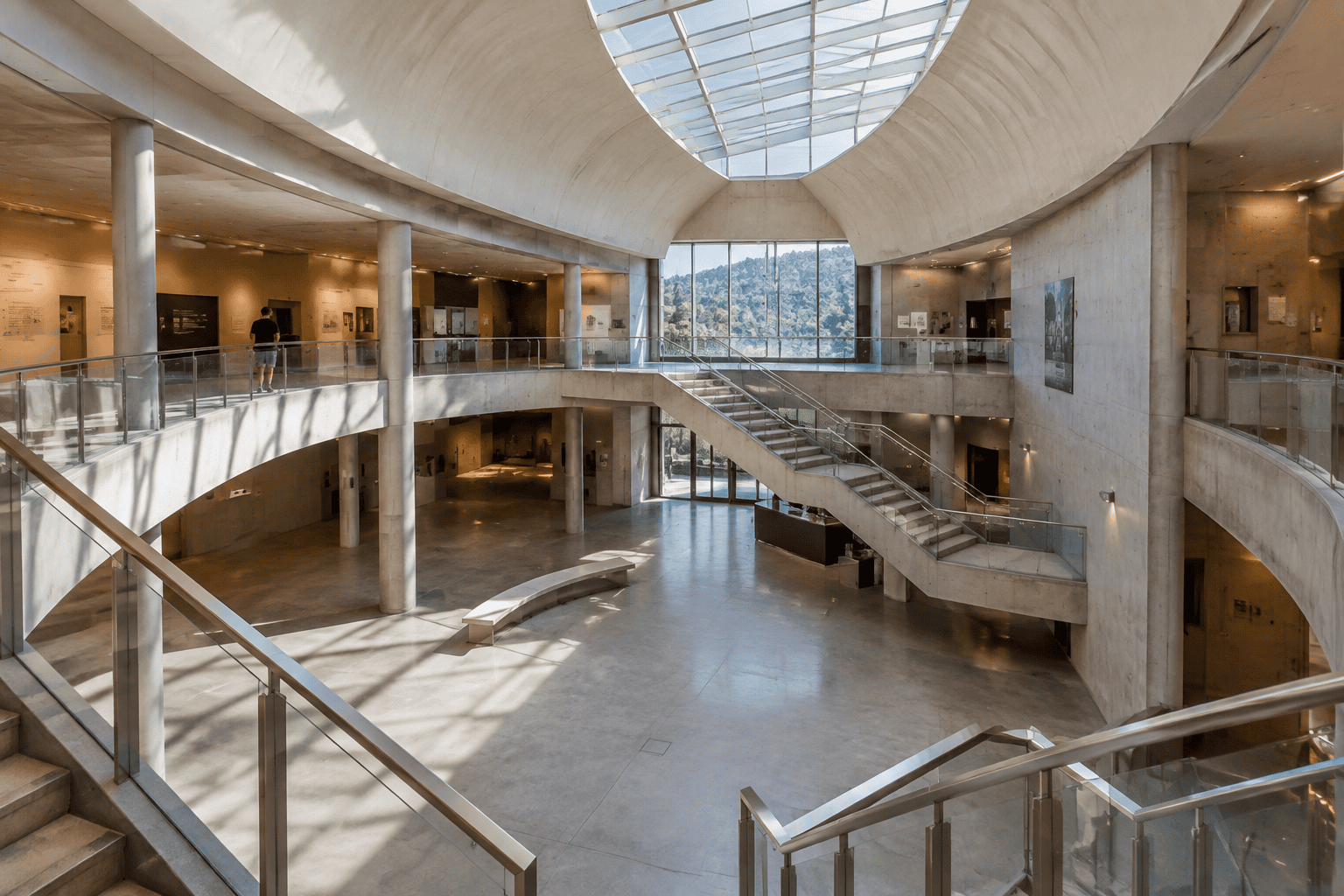
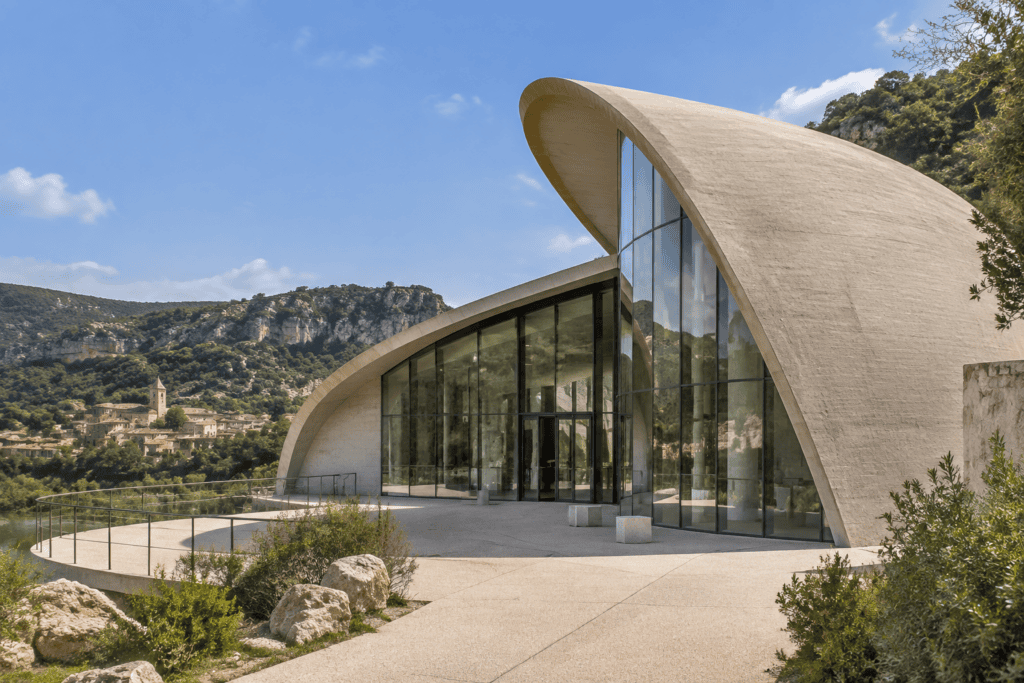
The contemporary building, associated with architect Norman Foster, creates a striking contrast with the landscape. The architecture is a landmark in its own right, but the main interest remains the conservation, research, and educational work presented throughout the museum.
Collections rooted in regional archaeology
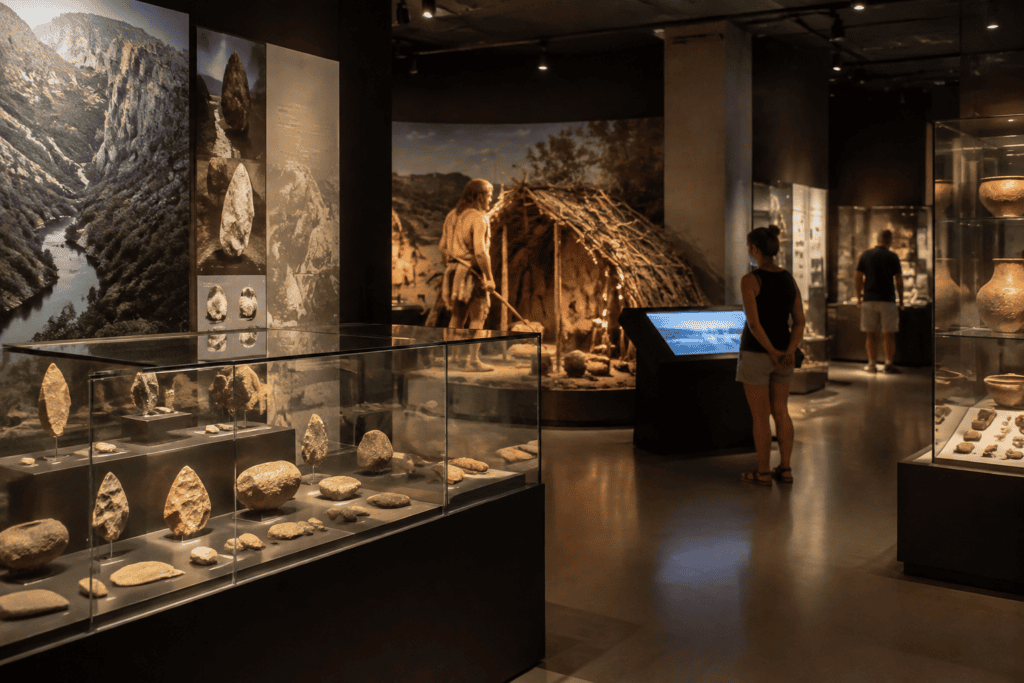
The collections bring together objects from archaeological sites in the region, including caves, shelters, and settlements. Stone tools, personal ornaments, everyday artifacts, and items connected with funerary practices offer insight into the actions of ancient populations. Their significance lies as much in their age as in the context in which they were made, used, and later discovered.
The exhibits follow the major transformations of human life in Provence. Visitors can observe the evolution of techniques, the use of different materials, and changing relationships with the environment. Sedentary living, agriculture, and animal husbandry show in particular how societies gradually changed their organization and needs.
To make the visit easier to follow, choose a few simple themes: eating, making, sheltering, traveling, or burying the dead. First look at the objects and their forms, then use the texts to understand their function and context. This approach works well for visitors who are unfamiliar with archaeology.
A visit suited to different ages
The exhibits combine display cases, models, reconstructions, and interpretive tools. This variety keeps the visit from being limited to reading texts and makes ancient periods more tangible. A reconstructed scene can help explain how a dwelling was organized, while an original object highlights archaeology’s documentary value.
With children, encourage active observation rather than exhaustive reading. They can identify the materials used, compare several tools, look for signs of everyday activities, or imagine the purpose of a space. Adults can then refine the answers using the explanations available in the galleries.
Pacing matters greatly. It is better to select a few displays and plan a break than to rush through every section. Since the available interpretive materials and languages may vary, ask the museum which options are available for your date and group.
Discovering the Prehistosite outdoors
The Prehistosite complements the indoor visit with outdoor spaces and reconstructions. It helps visitors visualize the dimensions, materials, and uses associated with different types of dwellings. Moving from an object on display to a reconstructed space makes it easier to understand the practical constraints faced by ancient populations.
This approach is especially engaging for families. Children can compare the structures, observe the materials, and connect the outdoor installations with objects seen in the display cases. The Prehistosite adds a more sensory dimension to the experience while reminding visitors that an educational reconstruction does not replace the study of original remains.
Opening hours, activities, and operating conditions may differ from those of the museum. Check the official program before planning your day. In hot weather, bring water, a hat, sunscreen, and suitable shoes. If you use a stroller or have specific needs, ask which areas will be accessible on the planned date.
Workshops and activities: check the program
The museum may organize workshops and activities for children, families, school groups, or other audiences. These events often focus on hands-on exploration, introducing a technique, material, or aspect of daily life through observation and practice. They are a useful complement to the collections but do not replace the permanent exhibition.
Each activity has its own conditions, including recommended age, duration, participant limit, possible fee, and reservation requirements. Do not assume these details based on a previous visit, as the program changes by season. Check the official calendar and contact the museum if you are planning a visit for a large group.
If there is no workshop on your chosen date, a self-guided visit is still easy to arrange. Start in the galleries, take a break, then continue to the Prehistosite if it is open. This flexible approach lets you adjust the duration for children and focus on the content that genuinely sparks their curiosity.
Baume Bonne Cave, a different kind of outing
Baume Bonne Cave is an archaeological site connected with the history of Quinson, but it is not simply an additional museum gallery. A visit takes place in a natural environment and is subject to specific conditions. It may depend on the program, reservations, and the arrangements announced by the institution.
Before committing, check the duration, difficulty level, recommended equipment, any age restrictions, and weather conditions. Trails, elevation changes, and natural surfaces differ from those in the main building. Depending on the proposed route, sturdy shoes, water, and sun protection may be necessary.
The museum’s accessibility does not imply that the cave or trails are accessible. Visitors with young children, reduced mobility, or little experience on natural trails should ask the museum directly for details. Do not set out on an unconfirmed route, and follow the instructions of the supervising staff.
Planning a day in Quinson
The museum is located on Route de Montmeyan in Quinson. Before arriving, check the official website for seasonal hours, closing days, last admission, ticket conditions, and required reservations. Also confirm which services are actually open if you want to add an activity, an outdoor area, or a visit to Baume Bonne Cave.
A half-day generally allows you to combine the museum and the Prehistosite without rushing. A field outing requires more planning and may change the total duration. You can then explore Quinson or continue toward the lower Verdon Gorge, taking travel times, summer heat, and traffic conditions into account.
From Paris, this destination is best included in a multi-day Provence itinerary. Booking Paris Transfer can arrange a private transfer starting in Paris, the Île-de-France region, Charles de Gaulle Airport, or Orly, with a return to Paris. This solution covers transportation only; tickets, activities, and visits must be arranged directly with the relevant establishments.
Frequently Asked Questions
Where is the Museum of Prehistory of the Verdon Gorge located?
How much time should I allow?
Is the museum suitable for children?
Can Baume Bonne Cave be visited independently?
Are the hours the same all year?
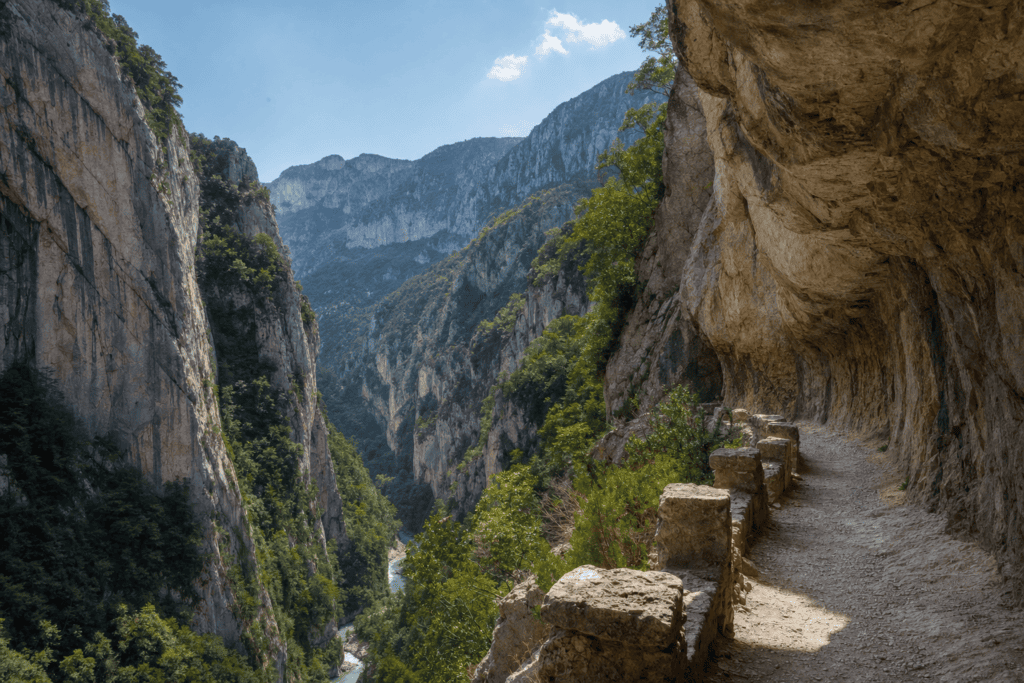 Sentier Blanc-Martel A spectacular one-way hike through the Gorges du Verdon, with stairs, tunnels, and technical sections. Prepare…
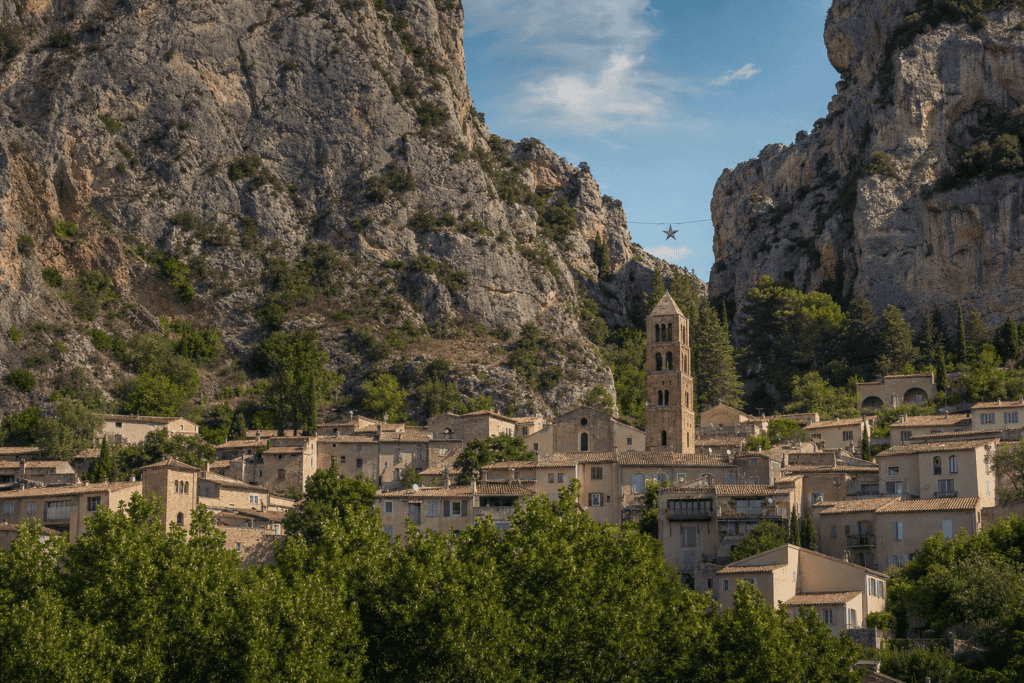 Moustiers-Sainte-Marie A spectacular Provençal village nestled between two cliffs, known for its narrow streets, faience pottery, and panoramic views…
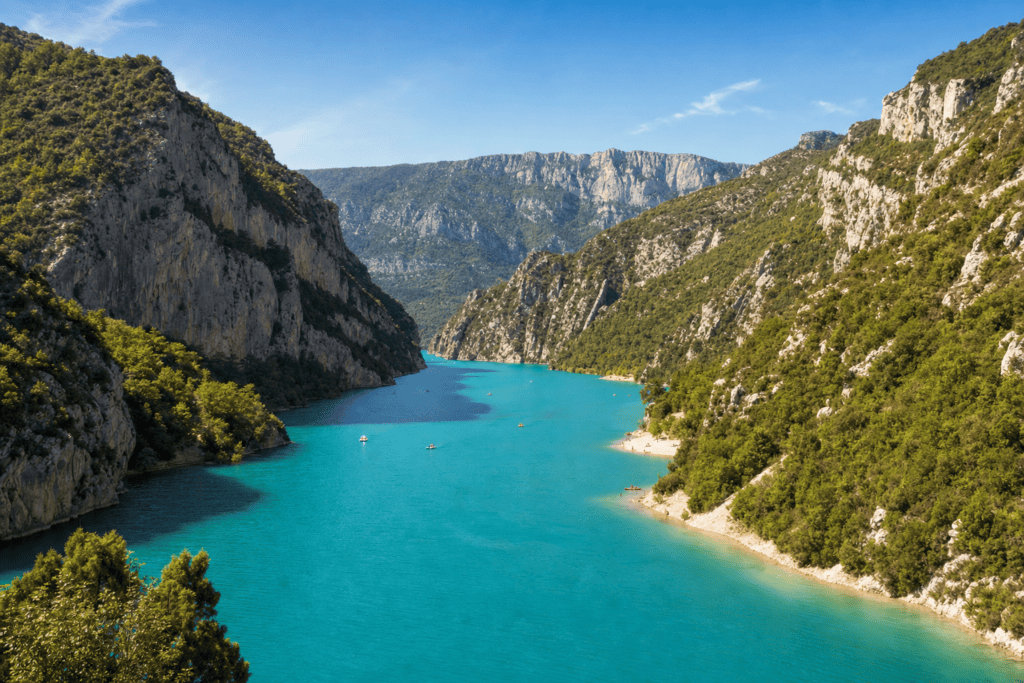 Lake Sainte-Croix A vast turquoise lake at the gateway to the Verdon Gorge, ideal for swimming, paddleboarding,…
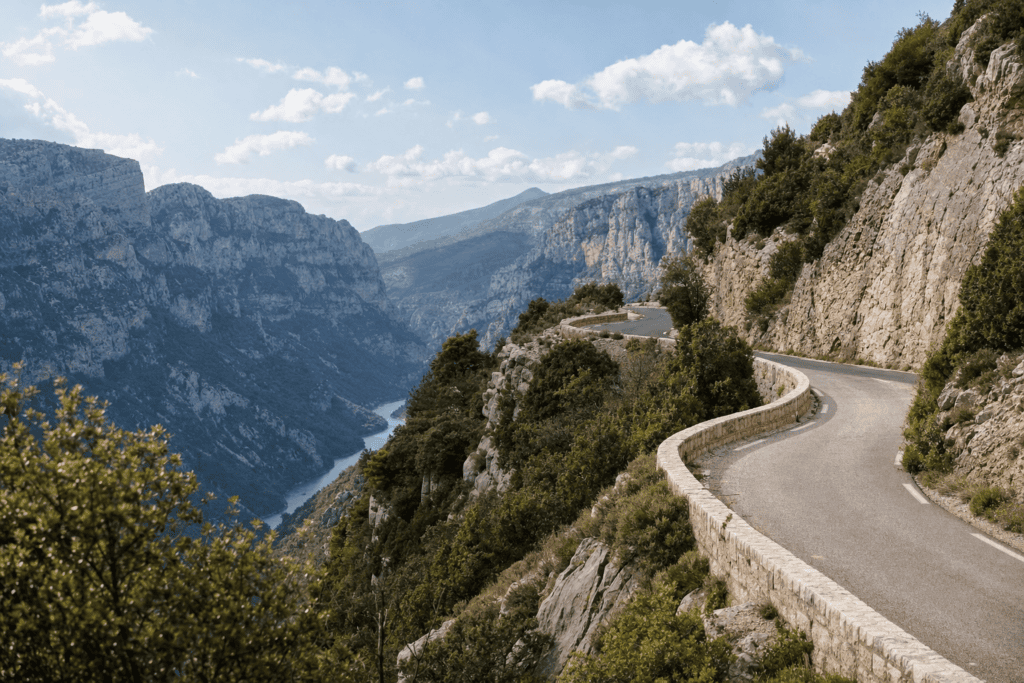 Verdon Ridge Road A scenic route above the Grand Canyon of the Verdon, dotted with viewpoints and limestone landscapes…
Online booking · Paris → Route de Montmeyan, 04500 Quinson, Alpes-de-Haute-Provence, Provence-Alpes-Côte d’Azur
Choose your pickup date and time
Your departure and arrival details are already pre-filled. You can adjust them in the fare calculator before viewing the vehicles and fare.