



Saint-Julien Cathedral of Le Mans: Visitor Guide
Le Mans
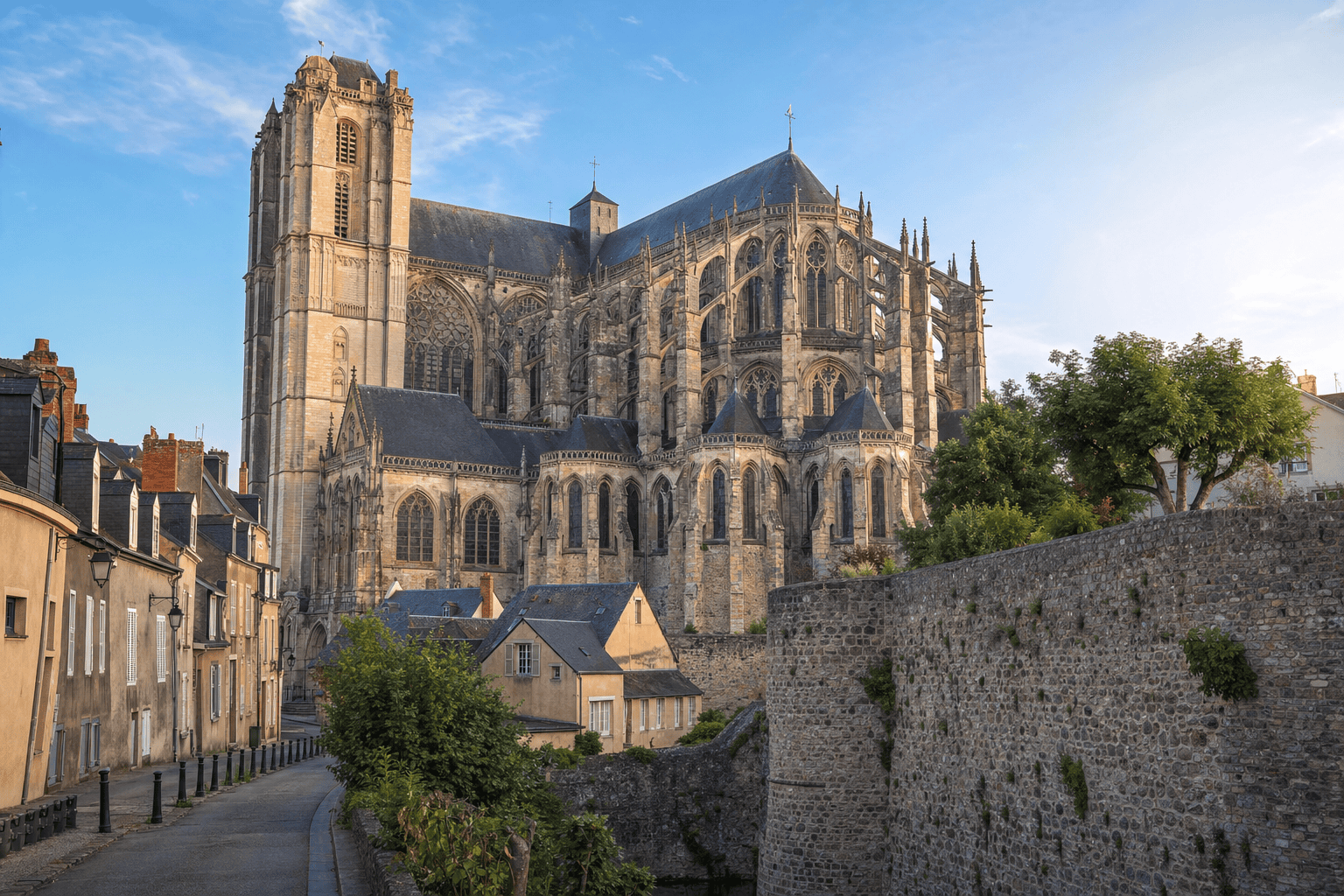
Overlooking the Plantagenet City, Saint-Julien Cathedral of Le Mans is one of the most impressive landmarks in the historic center. Its architecture brings together several centuries of construction, from the Romanesque nave to the Gothic spaces of the choir, while its stained-glass windows and vaulted ceilings create a particularly striking atmosphere. A visit offers insight into Le Mans’s religious and political history while showcasing a monumental building set on Place Saint-Michel.
Practical information
From the cathedral, continue on foot through the lanes of the Plantagenet City, and bring binoculars if you would like a closer look at the higher stained-glass windows.
Travel to Le Mans from Paris with peace of mind
For a cultural day trip to Le Mans, Booking Paris Transfer can arrange transportation from Paris, a Paris hotel, Charles de Gaulle Airport, or Orly, with a return to Paris or onward travel depending on your itinerary. The service covers transportation only: cathedral tickets and guided tours must be arranged separately with the official organizations.
Departure is possible from Paris, Île-de-France, CDG, or ORY; plan your return to Paris according to your itinerary.
A landmark in the heart of the Plantagenet City
Saint-Julien Cathedral stands on Place Saint-Michel, in the upper part of Le Mans, immediately beside the Plantagenet City. This location partly explains its visual impact: from the old streets, its volumes rise above the rooftops, ramparts, and half-timbered houses. It is an excellent starting point for exploring the historic center, as a visit to the building can easily be combined with a stroll through the medieval lanes.
The site also reflects Le Mans’s longstanding importance as an episcopal city and political crossroads. The cathedral was connected with the history of the Plantagenets, a dynasty that profoundly shaped western France and medieval England. Local historical tradition particularly recalls the building’s links with Geoffrey the Fair, Empress Matilda, and Henry II. Even without a guided tour, this historical dimension gives the walk a special depth.
Before going inside, take time to observe the chevet and the buttresses. The exterior silhouette already reveals the different construction campaigns and the search for balance between Romanesque masses and Gothic upward momentum.
Architecture Between Romanesque and Gothic
Saint-Julien’s main distinctive feature is the coexistence of several architectural styles. The nave retains an arrangement rooted in the Romanesque period, while some vaults anticipate or develop Gothic solutions. The monument is therefore not a homogeneous building designed in a single period; rather, it is a vast complex formed and transformed over the centuries.
The nave is particularly interesting for visitors who want to understand the transition from Romanesque to Gothic. Its so-called Plantagenet vaults, characteristic of Angevin architecture, feature complex lines and a sense of movement. The eye is naturally drawn to the arches, ribs, and piers that organize the space. This structure gives the interior an almost theatrical breadth, enhanced by the height of the nave.
The choir, built in a more pronounced Gothic style, contrasts with the older sections. Its considerable depth, radiating chapels, and double ambulatory reflect an ambitious liturgical and architectural design. To appreciate the whole, move slowly from the nave toward the choir rather than trying to take everything in at once.
The Gothic choir and monumental chevet
The Gothic choir is one of the cathedral’s most spectacular spaces. It is arranged around a double ambulatory and a ring of radiating chapels, allowing visitors to circulate around the liturgical space while offering multiple perspectives on the stained-glass windows and decoration. The verticality is especially striking here: the piers, arches, and windows draw the eye upward.
Outside, the chevet is supported by a series of flying buttresses that illustrate the technical mastery of medieval builders. Some feature an inverted Y-shaped configuration, often cited among the cathedral’s notable characteristics. These structures are not merely decorative; they help stabilize the building by transferring the thrust of the vaults to the exterior supports.
The transept completes this chronological reading. Its construction continued in several stages, particularly during the 14th and 15th centuries. Walking around the building allows you to observe a succession of forms, volumes, and rhythms that make the cathedral especially interesting for architecture enthusiasts and less specialized visitors alike.
Stained-glass windows: color, light, and memory
The stained-glass windows are among the main reasons to visit Saint-Julien. They do not form a uniform decoration: some date from the medieval period, while others reflect later restorations or creations. This diversity allows visitors to follow the evolution of stained-glass art and religious tastes over the centuries. Depending on the time of day and the weather, the light significantly changes the colors cast onto the stone.
The cathedral notably preserves a stained-glass window often described as one of the oldest in Europe still preserved in its church. To see it, look up toward the higher parts of the building. Binoculars can be useful, especially for distinguishing the figures, gestures, and details of the compositions. Themed tours occasionally offered by Le Mans heritage services provide further insight into this interpretation.
Do not limit your attention to the large colorful scenes: also observe the borders, geometric patterns, variations in transparency, and effects created by restoration work. A morning visit followed by a second look at another time of day can reveal a very different atmosphere, even though the architecture has not changed.
Works of art, chapels, and details to look for
The cathedral houses a significant collection of furnishings and works, including sculptures, statues, liturgical objects, and pieces protected as historic monuments. Not all of them are immediately visible in the same level of detail: some are located in chapels or secondary spaces, and their display may change according to the needs of worship, conservation, or restoration work.
As you explore, look at the capitals, tombs, altars, and sculpted groups. Religious representations are not merely decorative; they help explain ancient devotions, episodes from the lives of the saints, and the role of imagery in the liturgy. The reliquary shrine of Saint Julian, whose origins are associated with the former Saint-Julien-du-Pré Abbey, is among the pieces documented in the building’s heritage collections.
The best approach is to alternate between taking in the overall space and pausing to examine details up close. After admiring the nave or choir, choose one specific feature: a statue, stained-glass window, vault boss, or chapel decoration. This method makes the visit more personal and prevents you from leaving with only the impression of a vast space that is difficult to remember.
Practical tips for planning your visit
The cathedral is generally open to visitors free of charge, but conditions may vary depending on services, ceremonies, restoration work, or special events. Information provided by tourist guides should therefore be treated with caution: before setting out, check the information from the Diocese or the Le Mans Tourist Office. This is particularly important if you are planning a visit on a specific date.
Wear clothing appropriate for a place of worship and be discreet during your visit. Photography may be subject to occasional restrictions; always follow the instructions posted on site and avoid using a flash when advised against. Visitors with reduced mobility may also want to check access conditions before arriving, as the historic area around the cathedral includes old and sometimes cobbled streets.
For a full visit, allow at least 45 minutes, then add time for the Plantagenet City. A walking itinerary combining the cathedral, Roman ramparts, historic houses, and either the Musée de Tessé or the Carré Plantagenêt makes for an excellent cultural day in Le Mans.
What to see around Saint-Julien?
The cathedral is ideally located for exploring the old town on foot. From Place Saint-Michel, head into the lanes of the Plantagenet City, recognizable by their colorful houses, half-timbered façades, and grand townhouses. The walk becomes especially enjoyable when you leave the main routes behind and follow the quieter passages and small squares.
The Roman ramparts are another highlight. Their decorated facings and towers recall the city’s importance in Late Antiquity. They also offer beautiful views over the rooftops of the historic center. Depending on how much time you have, continue to the Jean-Claude-Boulard – Carré Plantagenêt Museum, dedicated to the history and archaeology of Le Mans, or to the Musée de Tessé.
The cathedral can also be part of a broader itinerary from Paris, with time in Le Mans devoted to heritage, gastronomy, and the atmosphere of the old town. For a first visit, choose a walking loop rather than a succession of transfers: the close proximity of the monuments is one of the great advantages of central Le Mans.
Frequently Asked Questions
Where is Saint-Julien Cathedral of Le Mans located?
How much time should I allow to visit the cathedral?
Can you visit the cathedral year-round?
What are the most remarkable features?
What can you visit near the cathedral?
 Museum of the 24 Hours of Le Mans M24 – Automobile Sports Museum showcases cars, archives, and innovations at the heart of the circuit…
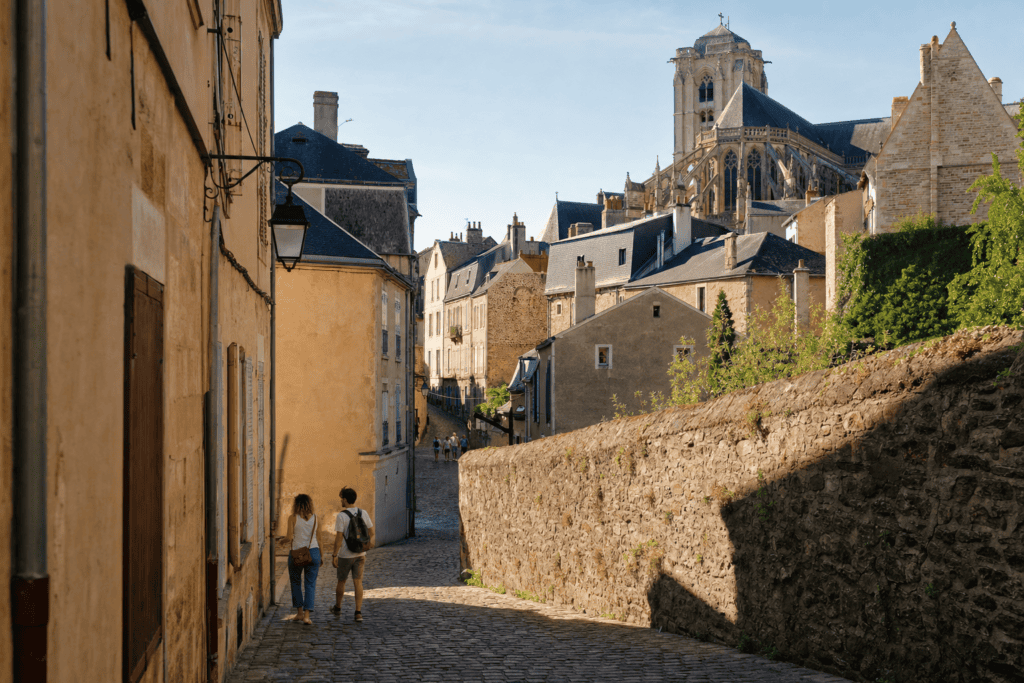 Cité Plantagenêt Cobblestone streets, half-timbered houses, the cathedral, and Roman walls: the historic heart of…
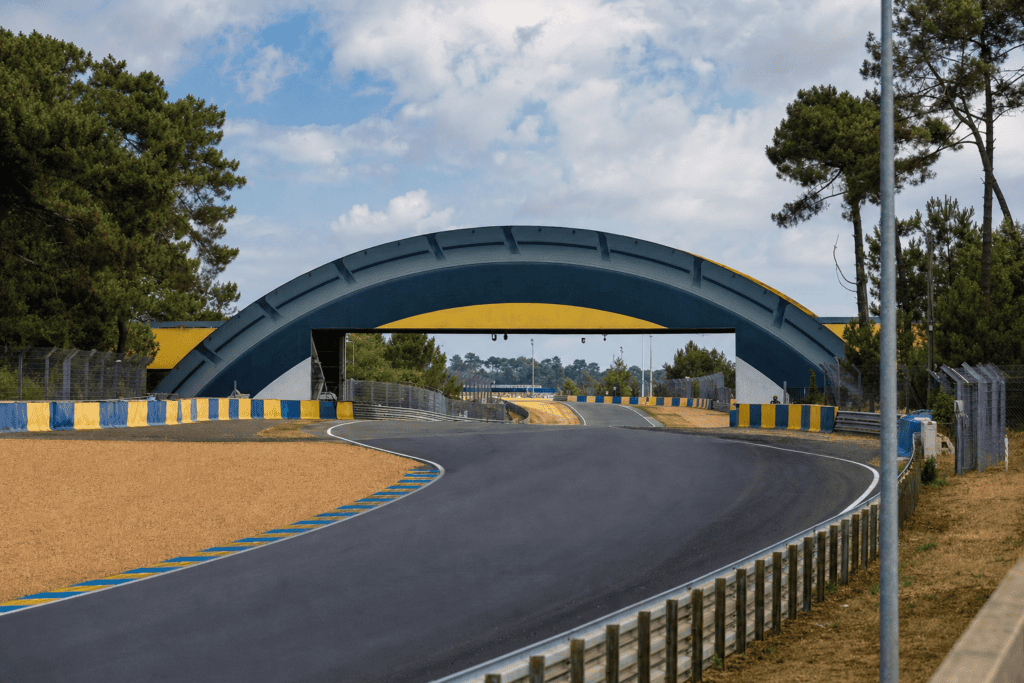 24 Hours of Le Mans Circuit A legendary circuit to explore through automotive history, famous turns, and the landscapes of the Sarthe.
 Arche de la Nature A nature destination in Le Mans, with woodlands, the Huisne River, gardens, an educational farm and discovery areas.
Online booking · Paris → Place Saint-Michel, 72000 Le Mans, France
Choose your pickup date and time
Your departure and arrival details are already pre-filled. You can adjust them in the fare calculator before viewing the vehicles and fare.