



Île de Nantes: Art, the Loire, and Contemporary Architecture
Nantes
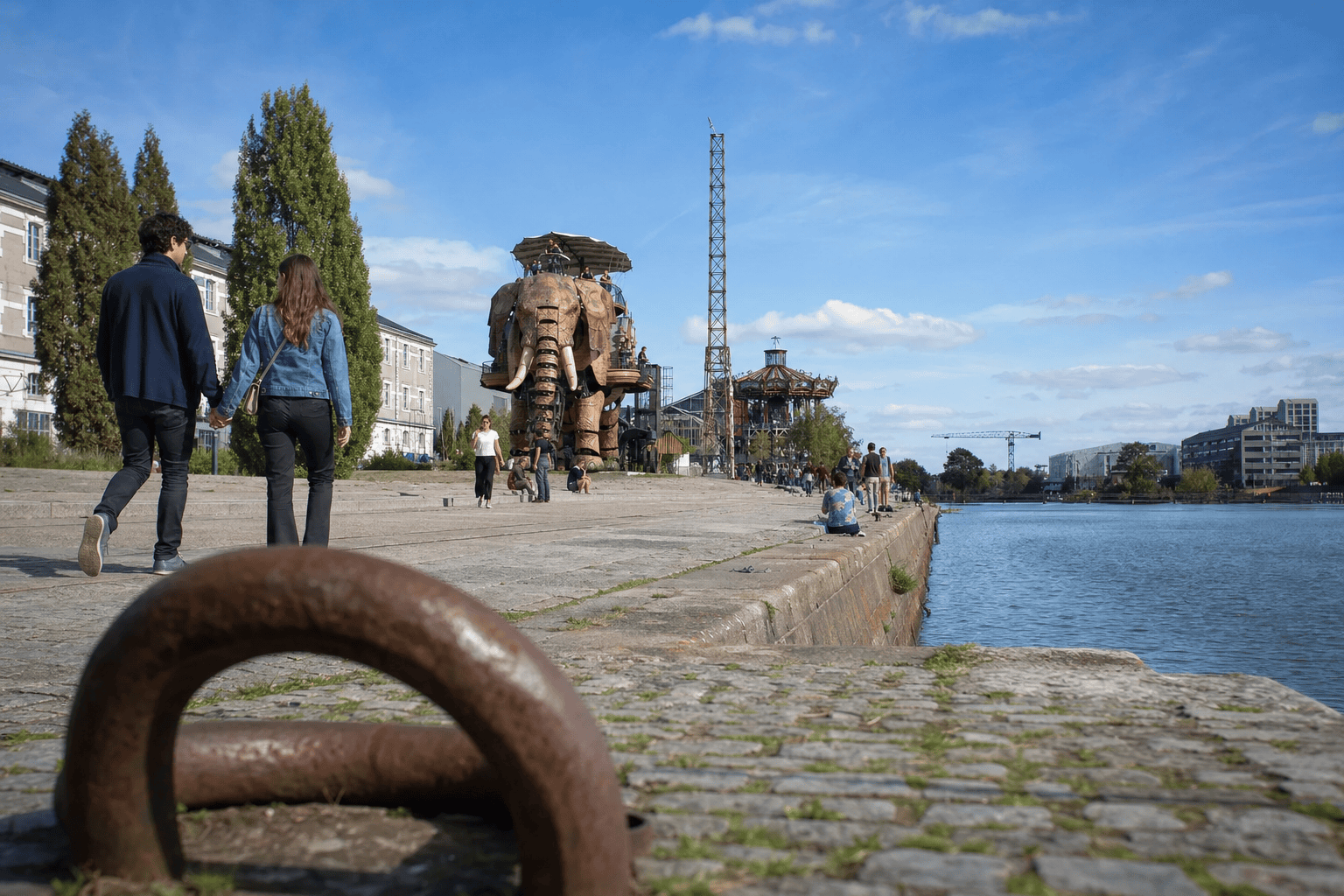
Across from Nantes’ historic center, Île de Nantes forms a distinctive neighborhood where former industrial halls stand alongside contemporary buildings, monumental artworks, and promenades overlooking the Loire. It is a place to explore on foot, taking time to move from one world to another: Les Machines de l’île, Daniel Buren and Patrick Bouchain’s Rings, the Jardin des Fonderies, the former Alstom halls, and the quays of Prairie-au-Duc. The neighborhood is still evolving, which is part of its appeal: some areas are established, while others continue to change as urban projects progress. For a first visit, allow half a day, or longer if you would like to visit Les Machines de l’île or combine your walk with Nantes city center.
Practical information
Start near Prairie-au-Duc, wear comfortable shoes, and check the visiting arrangements for Les Machines de l’île in advance if it is part of your itinerary.
Getting to Nantes from Paris with a private chauffeur
To include Île de Nantes in a Loire Valley trip, Booking Paris Transfer can arrange private transportation from Paris, a Paris hotel, CDG, or ORY, with arrival in Nantes and the option of returning to Paris. The driver handles the journey; visits and tickets for Les Machines de l’île must be arranged directly with the official sites.
Transportation service departing from Paris and the Île-de-France region; admission tickets are not sold.
Understanding Île de Nantes
Île de Nantes is not a uniform neighborhood: it brings together several areas, atmospheres, and chapters in Nantes’ urban history. Its current identity was shaped by an important port and industrial past, particularly around the former shipyards. After naval activities ended, a major urban transformation gradually introduced new housing, cultural facilities, schools, businesses, and public spaces.
This evolution explains the highly visible contrast between preserved metal structures, recent buildings, and areas still undergoing change. The neighborhood has also become one of the symbols of Nantes’ creativity, thanks to the strong presence of art in public spaces. As you walk around, you are therefore discovering more than a succession of monuments: you are observing a city reusing its industrial heritage to create new uses. The best approach is to embrace this diversity and explore the neighborhood without looking for one dominant historical period.
Les Machines de l’île, an iconic attraction
Les Machines de l’île is Île de Nantes’ best-known attraction. Housed in the former shipyard construction halls, this artistic and cultural project imagines a world populated by mechanical animals inspired by Jules Verne, Leonardo da Vinci, and local industrial history. The Grand Éléphant has become the neighborhood’s most recognizable image: its monumental form moves between the buildings and offers visitors a spectacular experience.
The site also includes the Galerie des Machines and the Carrousel des Mondes Marins, whose visiting arrangements vary depending on the program and calendar. It is recommended that you check the official website before visiting, particularly for opening hours, availability, and possible seasonal adjustments. Even without a ticket, the area around the halls and Rue de la Galerie offers an interesting perspective on the industrial architecture. For a complete visit, allow extra time beyond a simple walk around the outside.
Public art and open-air routes
Île de Nantes can also be explored as an open-air art gallery. Several works are integrated into the streets, squares, and quays, extending the artistic trail of Le Voyage à Nantes. The Rings, installed along Quai des Antilles, are among the most photographed creations: by day, they frame the port landscape and the Loire; at nightfall, their lighting transforms the view over the river.
The route is not limited to a single work. As you continue toward Prairie-au-Duc, the former halls, the area around Les Machines, and the neighborhood’s public spaces, you will encounter installations and architectural details that encourage you to see an ordinary urban environment differently. The experience is often richer if you take time to read the captions or information available on-site. Depending on the season, some works or activities may change: the official Le Voyage à Nantes program remains the best reference for planning an up-to-date art itinerary.
Industrial heritage and contemporary architecture
Industrial heritage gives Île de Nantes much of its character. The former halls, shipyard structures, and other remnants of naval activity bear witness to a past when work, the port, and mechanical construction played a central role. Rather than erase everything, the urban project has often chosen to preserve, transform, or reinterpret these traces. This approach to adaptive reuse makes the walk especially easy to follow for visitors interested in architecture.
Around the Alstom halls, the change in use is clear: former industrial buildings now house activities related to education, digital technology, creative work, and dining. In newer areas, contemporary buildings seek to work with the existing volumes and the river’s proximity. The result is not a uniform setting, but rather a succession of urban scenes. To appreciate the details, look at the materials, heights, passages between buildings, and the way public spaces connect the former halls with the new neighborhoods.
Quays, the Loire, and walks on foot
The Loire is one of the main threads running through a visit to Île de Nantes. The quays offer a broader perspective on the neighborhood and help you understand its relationship with Nantes’ other riverbanks. Quai des Antilles provides a pleasant walk around the Rings, while the areas near Prairie-au-Duc have an atmosphere more closely linked to cultural facilities and former port spaces.
The walk can be extended depending on your energy, the weather, and the condition of the facilities. The river creates wide-open views, but the surroundings remain urban: you will alternate between quays, streets, and squares. At the end of the day, the light can be particularly striking on the metal structures and artistic installations. Families will appreciate the open spaces, but should remain attentive to traffic, construction areas, and the riverfront. For a comfortable visit, wear suitable shoes and plan a break in one of the neighborhood’s lively areas.
A neighborhood still undergoing change
The transformation of Île de Nantes is continuing over the long term. The urban project concerns housing, public spaces, transportation, facilities, and the role of nature in the city. New areas are expected to evolve, while some existing developments may be modified, relocated, or temporarily made less accessible. This explains why a visit can differ from one year to the next.
Recent and upcoming projects aim in particular to strengthen green connections, diversify uses, and better link neighborhoods to the Loire. The future urban landscape is therefore not limited to adding buildings: it also relies on parks, paths, local spaces, and the reuse of already developed sites. For visitors, this evolution adds an interesting dimension: Île de Nantes is not a static neighborhood, but a place where you can observe the planning choices of a contemporary metropolitan area taking shape.
Tips for Planning Your Visit
For a first visit, start at Prairie-au-Duc and Les Machines de l’île, then continue toward the former halls and the quays. If you would like to visit a paid attraction, check the official information before setting out: opening hours, calendar, prices, and access conditions may change. An outdoor walk can nevertheless be enjoyed without organizing your entire day around a single site.
Île de Nantes combines easily with the historic center, the creative district, or a crossing to the opposite bank. Walking is enjoyable, but distances may be greater than they appear on a map. Public transportation and cycling routes can complement your visit; check local information in case of construction work or an event. Photographers should plan to visit Quai des Antilles at the end of the day. Families can alternate sightseeing with breaks in the public spaces. Finally, leave some flexibility in your schedule: the neighborhood’s appeal often lies in its detours and changing atmospheres.
Frequently Asked Questions
Exactly where is Île de Nantes located?
How much time should I allow to visit Île de Nantes?
Can Île de Nantes be explored without visiting Les Machines?
Are the opening hours for Les Machines de l’île fixed?
What is the best place to see the Rings?
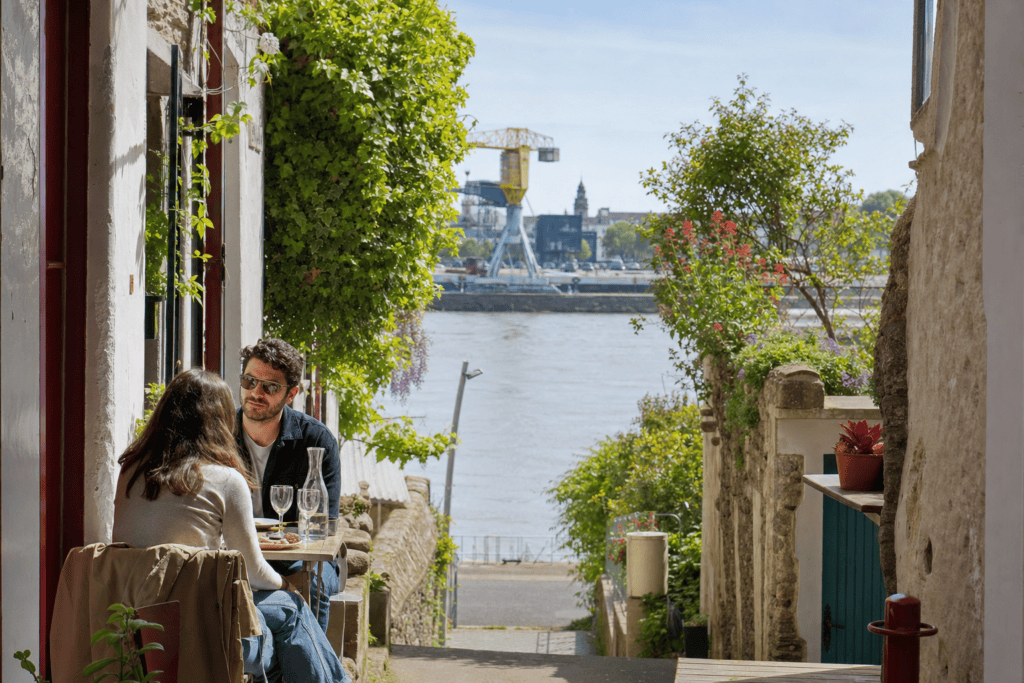 Trentemoult A former fishing village with colorful houses, discoverable on foot from the Loire quays…
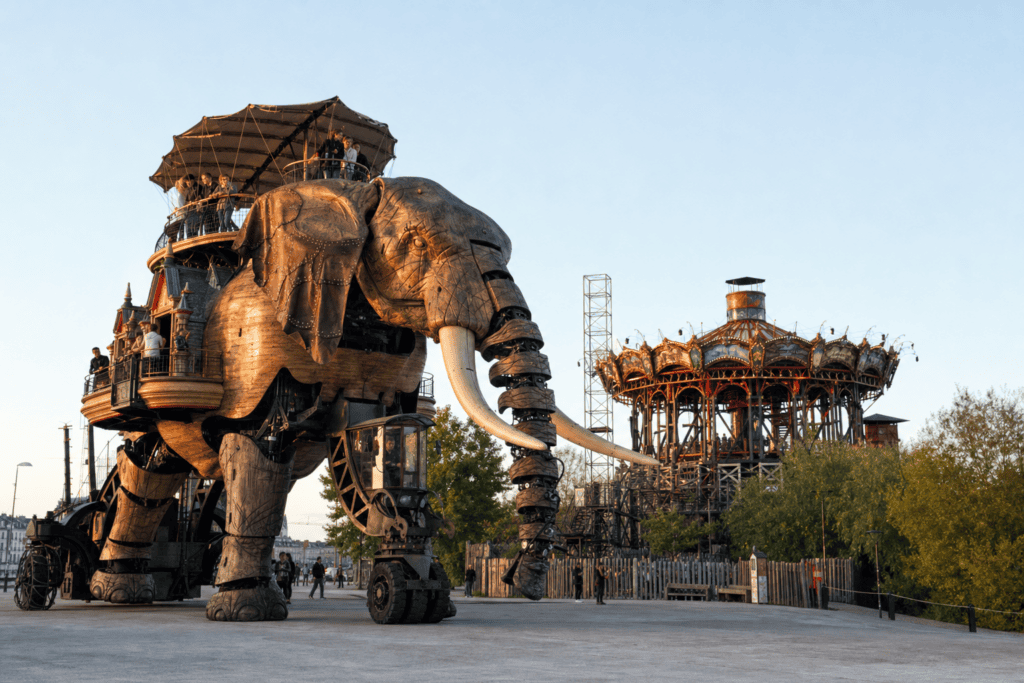 Les Machines de l’île A unique mechanical menagerie in Nantes, combining industrial heritage, Jules Verne’s imagination, and a spectacular experience…
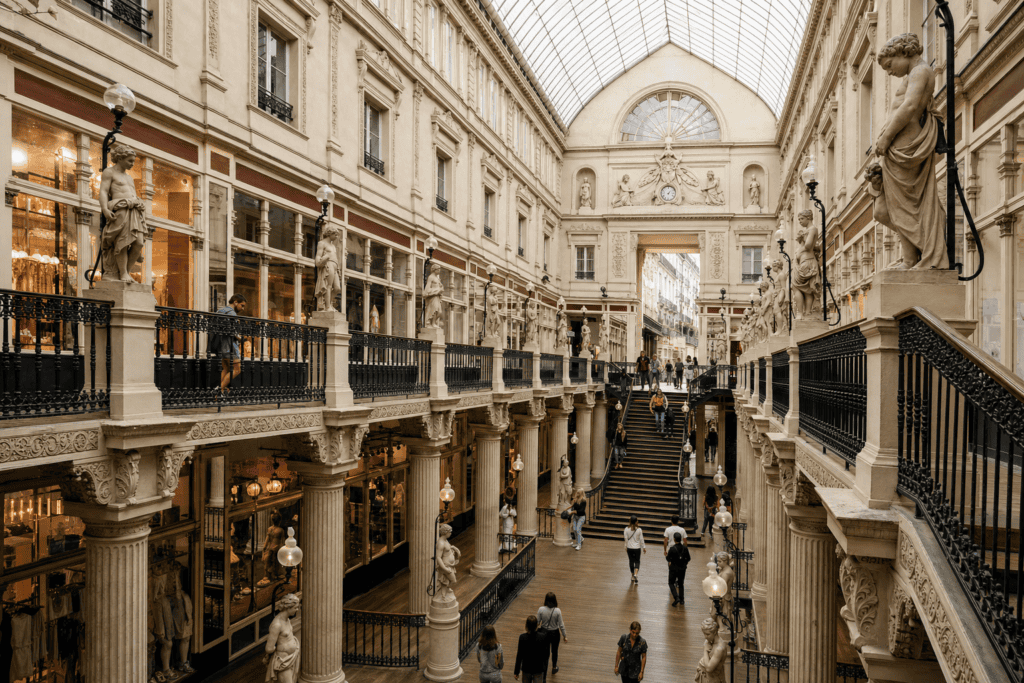 Passage Pommeraye A 19th-century covered passage, famous for its monumental staircase, glass roof, and decorative details…
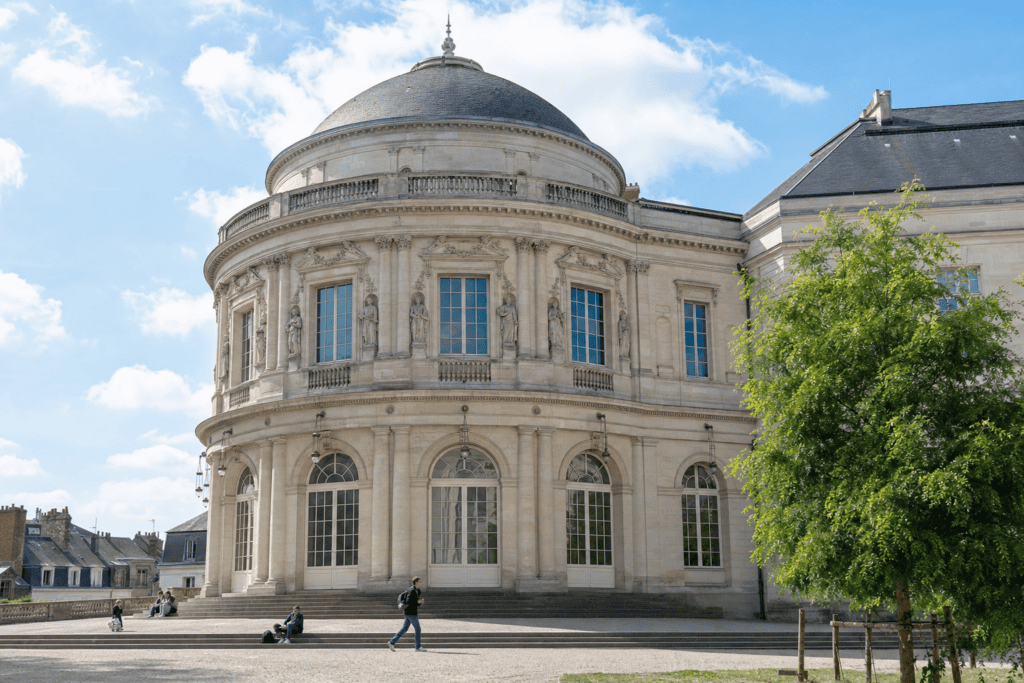 Nantes Museum of Art A Nantes art trail from old masters to contemporary creation, combining heritage, landmark works, and architecture…
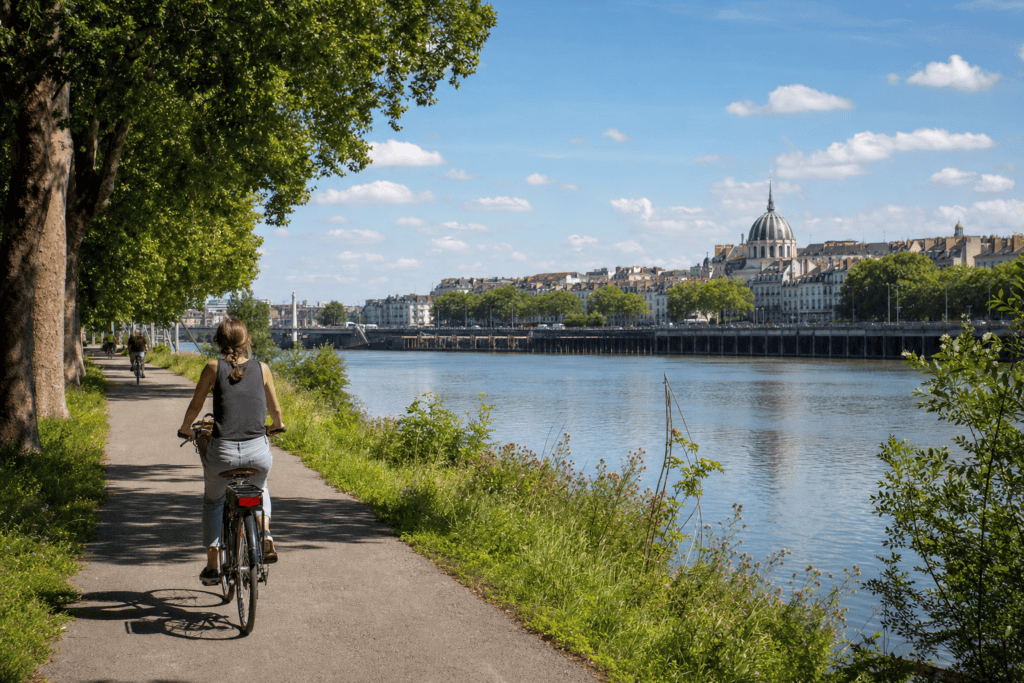 Cycling Along the Loire in Nantes A flexible bike ride between the Île de Nantes, Trentemoult and the first landscapes of the estuary.
 Talensac Market Nantes’ iconic covered market, where you can discover fresh produce, the flavors of Loire-Atlantique, and…
Online booking · Paris → Île de Nantes, 44200 Nantes, France
Choose your pickup date and time
Your departure and arrival details are already pre-filled. You can adjust them in the fare calculator before viewing the vehicles and fare.