




Promenade des Anglais and Nice Beaches: Practical Guide
Nice
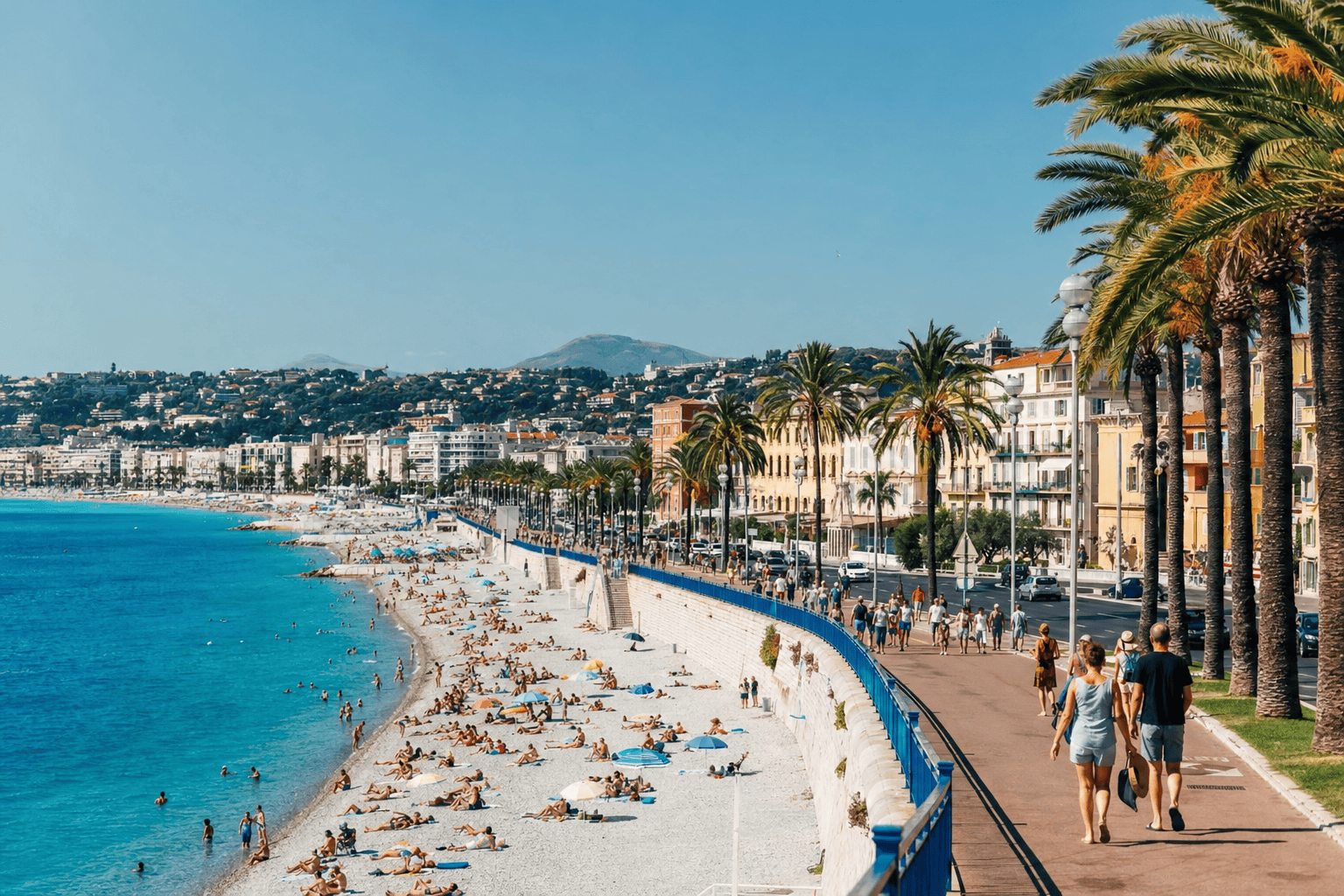
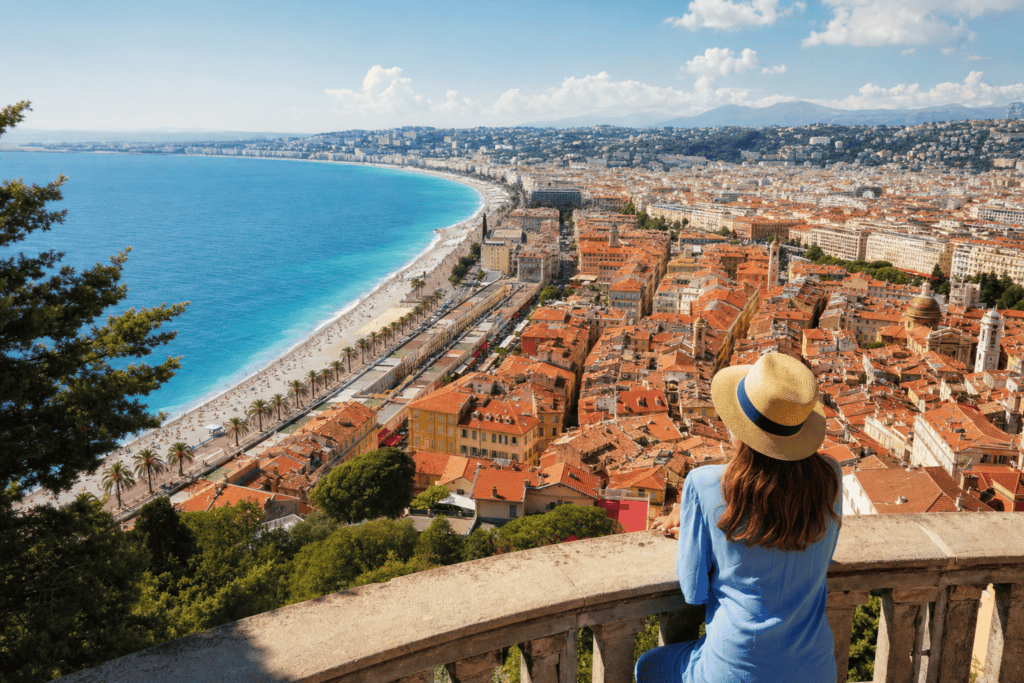
In Nice, the Promenade des Anglais follows the Baie des Anges for several miles, creating one of the French Riviera’s most recognizable urban landscapes. With white pebbles, grand hotels, bike lanes, public beaches, and private beach clubs, it is ideal for a morning walk, a swim, or sunset. Its history is linked to the British winter visitors who helped develop it in the 19th century. Nice’s cultural landscape is now a UNESCO World Heritage Site. Before your visit, check municipal information about swimming conditions, access, and any temporary restrictions.
Practical information
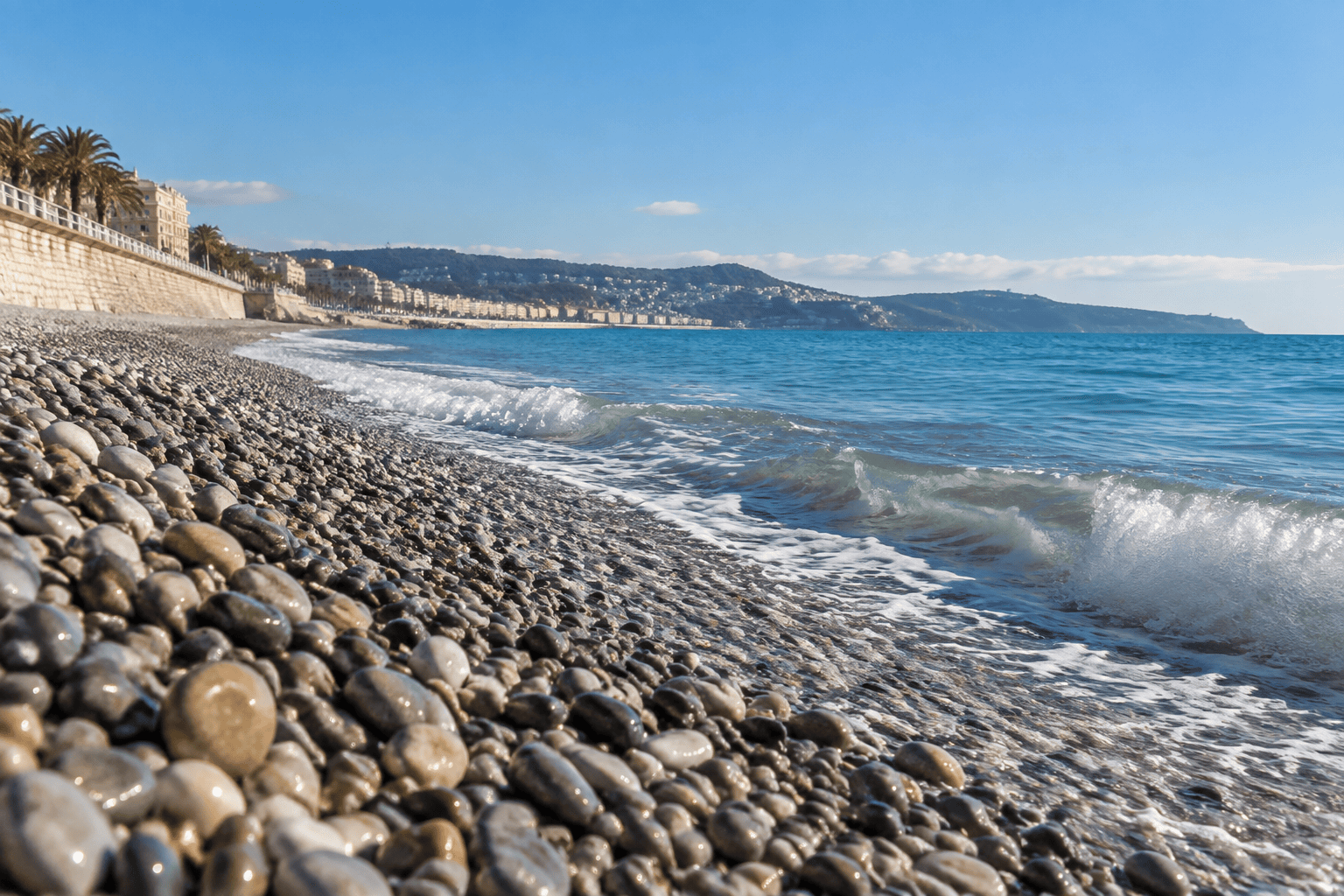
Nice’s beaches are mainly made up of pebbles: water shoes and a thick towel make getting into the water more comfortable. Keep your belongings with you and follow the instructions posted on-site.
Getting to Nice from Paris by Private Chauffeur
To include the Promenade des Anglais in an itinerary from Paris, Booking Paris Transfer can arrange private transportation from a Paris hotel, CDG, or ORY, with arrival in Nice and the option to arrange a return trip to Paris. The service covers transportation only; beaches, tours, and activities must be booked separately with the relevant providers.
Possible departure from Paris, a Paris hotel, CDG, or ORY; return to Paris or a private itinerary from Paris, depending on your plans.
Understanding the History of the Promenade des Anglais
The Promenade des Anglais is more than a spectacular avenue facing the sea: it tells the story of Nice’s transformation into a major resort city. In the early 19th century, British visitors spending the winter on the Riviera helped fund a path along the shore. This initially modest route gradually became a sought-after urban promenade and then one of the city’s symbols. Its development accompanied the arrival of European winter visitors drawn by Nice’s climate, light, and setting between the sea and mountains.
The boulevard has evolved over the years, notably with the growth of tourism, improved roads, and the construction of prestigious hotels. As you walk, observe the variety of the city-side facades: Belle Époque buildings, grand hotels, more contemporary residences, and buildings connected to the history of seaside tourism. The promenade forms a long architectural tableau, while the bay opens onto an especially unobstructed horizon.
To better understand this history, combine your walk with Albert-Ier Garden, the Quai des États-Unis, and the Baumettes neighborhood. The landscape then becomes easier to read: Nice was built with its gaze toward the sea, while also welcoming styles and cultures from across Europe. The designation of Nice’s cultural landscape as a UNESCO World Heritage Site highlights this relationship between urban planning, resort life, and the Mediterranean environment.
Choosing Your Route Along the Baie des Anges
For a first visit, start near Albert-Ier Garden or Place Masséna, then head toward the waterfront. You will reach the Quai des États-Unis and the eastern section of the promenade before continuing toward the Hôtel Negresco and the more residential neighborhoods to the west. This route alternates views of the bay, remarkable facades, and more open waterfront areas.
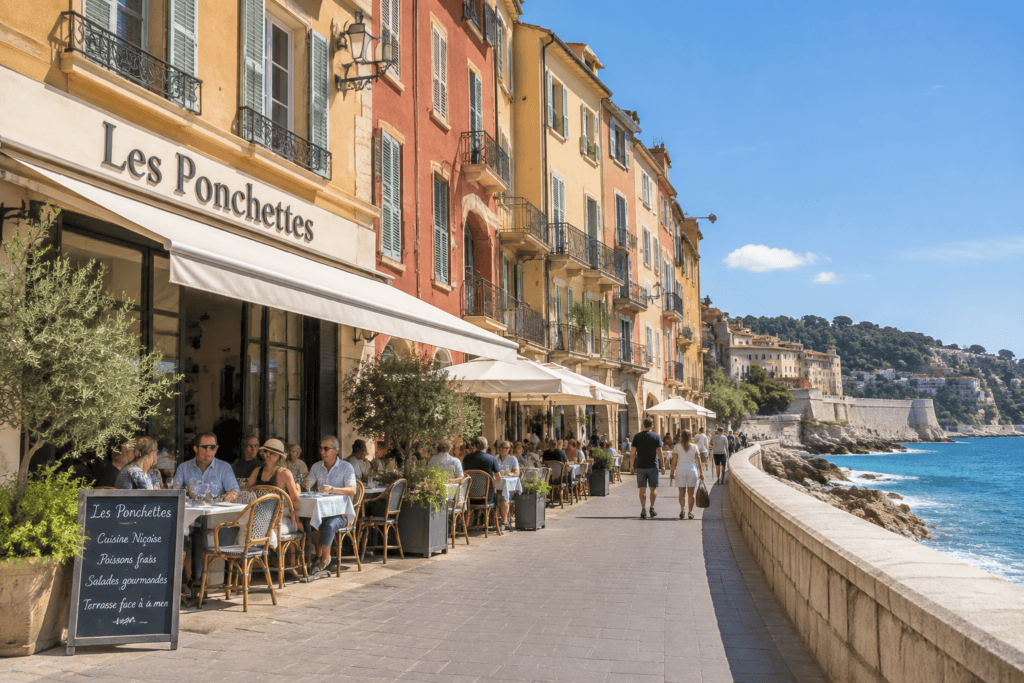
In the opposite direction, start near the Negresco or Plage du Centenaire and walk toward the historic center. You will gradually move from a broad avenue to a more mineral landscape marked by Les Ponchettes, the terraces of the Quai des États-Unis, and the approach to Rauba-Capeù. This direction is appealing late in the day, when the light falls across the facades and sea.
You do not need to walk the entire promenade to enjoy it. A central section is enough to experience Nice’s atmosphere, while a longer route suits visitors who want to observe the changing perspectives. Plan regular breaks: the distance, sun, and wind can make the walk more tiring than it appears. Cyclists and other users also have designated areas, so stay alert when crossing.
Nice’s Beaches: Pebbles, Swimming, and Atmosphere
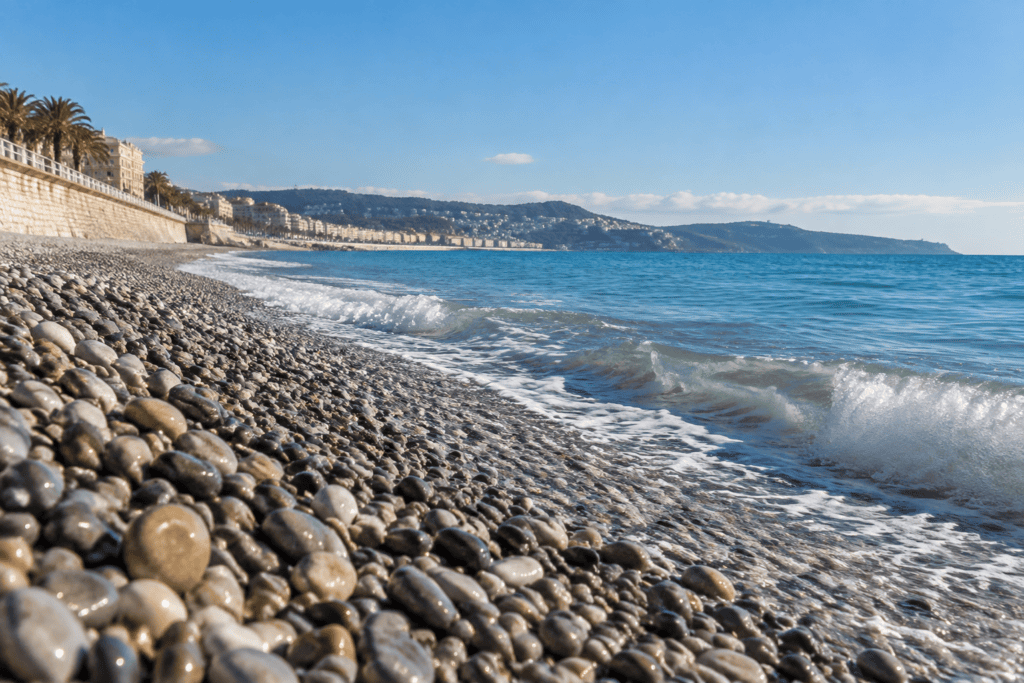
The beaches along the Promenade des Anglais are recognizable by their pebbles, polished by the sea and coastal currents. This feature gives the bay a very different appearance from sandy beaches while providing immediate access to the water from the city. Enter the sea carefully: the pebbles can be unstable, especially when waves cover the shoreline. Appropriate footwear is useful for people with sensitive feet and for children.
Nice’s coastline includes public beaches and privately operated beach establishments. Public beaches are free to use in accordance with local regulations; private establishments offer additional services whose terms vary by location and season. Facilities, swimming areas, and amenities may change, so check the signs on-site before settling in.
Before entering the water, check information about lifeguard supervision, sea conditions, and any temporary restrictions. Calm water from the promenade does not always mean swimming is risk-free: the slope, currents, and swells can change quickly. Keep children close and avoid leaving your phone, wallet, or camera unattended while swimming.
The Best Viewpoints and Photo Stops
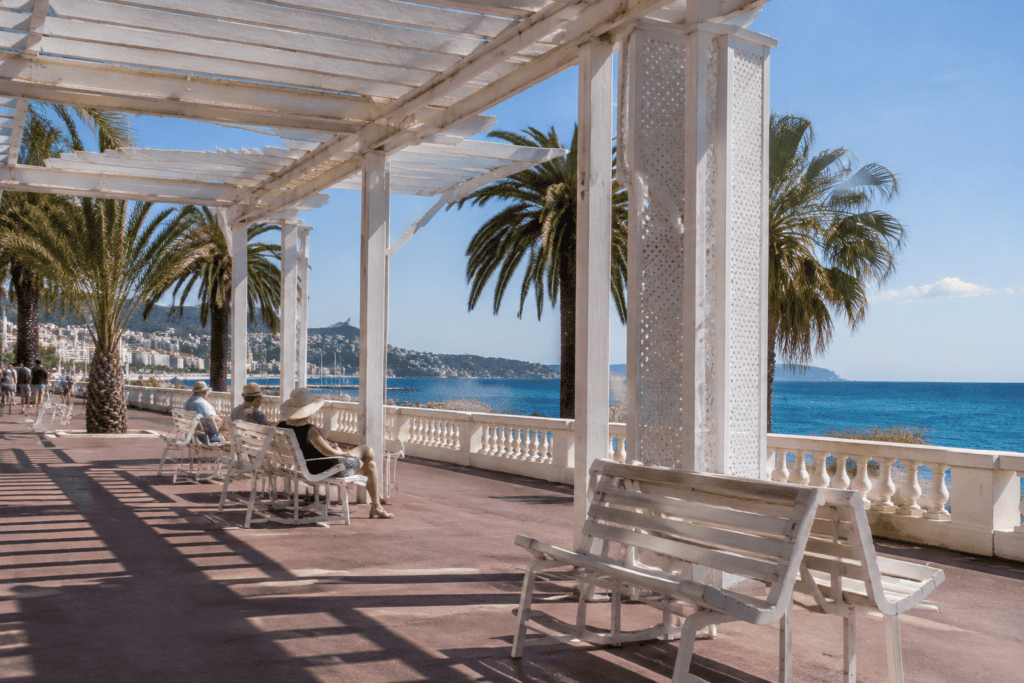
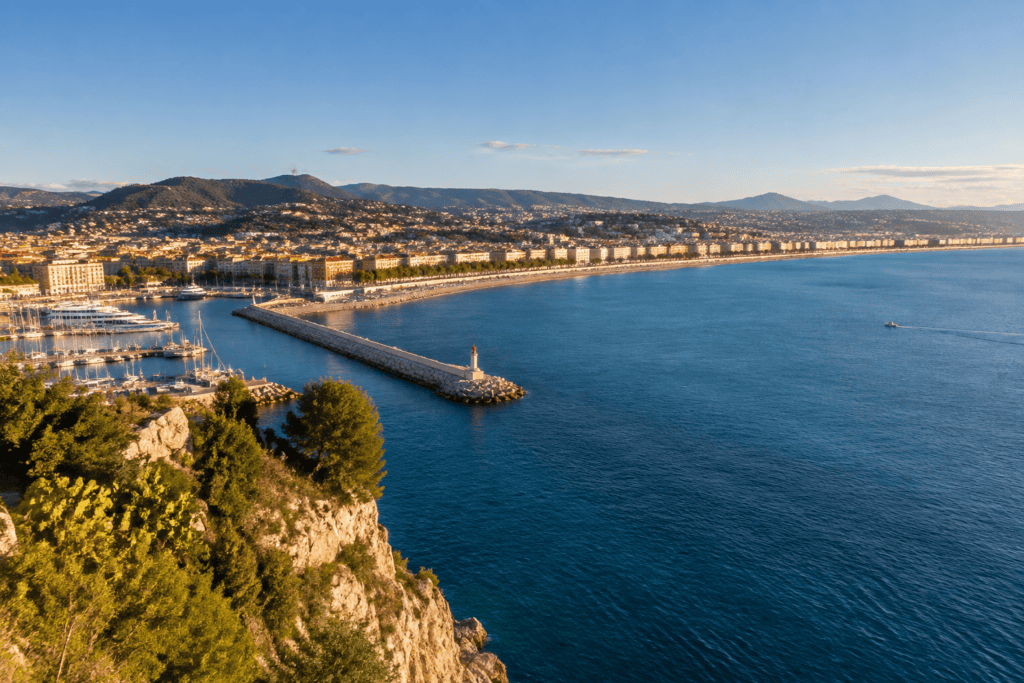
The Promenade des Anglais is photogenic at any time of day, but the light truly changes the experience. In the morning, look west from the center: the bay opens into an often softer atmosphere, with hills closing the horizon. In late afternoon, warmer tones fall across the facades and pebbles. The blue chairs, pergolas, palm trees, and balustrade provide visual landmarks immediately associated with Nice.
For a broader view, continue toward Rauba-Capeù and Castle Hill, at the boundary between the Quai des États-Unis and the port. From there, you can take in the curve of the bay, the city center, and the succession of beaches. The Ponchettes terrace is also an excellent spot to observe the contrast between the sea, Old Nice’s colorful houses, and the promenade’s grand hotels.
On windy days, protect your phone or camera, as sea spray can be strong near the water. Respect circulation areas, bike lanes, and temporary installations: a good photo should not inconvenience other users. For a more balanced composition, step slightly away from the balustrade and include an urban element in the foreground to show the relationship between the city and the bay.

Accessibility, Families, and On-Site Comfort
The promenade is easy to incorporate into a visit to Nice because it connects directly with the city center, gardens, and several tourist neighborhoods. For families, the appeal lies in alternating walking with bench breaks, boat-watching, and time by the water. Children should be supervised near the road, bike lanes, and sea, especially when the pebbles become slippery.
The accessible beach at Centenaire, located at 1 Promenade des Anglais, is one of the municipal facilities designed to make the waterfront more accessible for people with disabilities and seniors. The accessible beach at Carras is another dedicated site. Confirm services, facilities, and operating periods with the City before traveling, as they may depend on the season or specific conditions.
People with reduced mobility should plan their route by consulting official guidance, particularly to identify the most suitable access points and account for possible construction work. Everyone should bring water, sunscreen, a hat, and comfortable shoes. A stroller or wheelchair may be easier to use on developed sections than on the pebbles themselves; ask for information before planning to swim.
What to See Around the Promenade des Anglais
The promenade is best visited with several nearby stops. To the east, the Quai des États-Unis leads to Les Ponchettes, Cours Saleya, and the lanes of Old Nice. This is the most natural combination for a half-day: start by the sea, then head toward the colorful facades, squares, and Niçoise specialties. Castle Hill offers a remarkable view of the bay and Old Town; check access conditions before going.
To the west, the area around the Negresco and Baumettes extends the discovery of resort architecture. Culture lovers can add a museum or heritage visit in the surrounding neighborhoods. For a quieter break, relax in a garden before returning to the waterfront.
The best approach is not to try to see everything. Choose one stretch of promenade, one beach, and one viewpoint, then leave time simply to take in the bay. If you have a full day, add Old Nice and Cours Saleya rather than multiplying your transfers. This plan lets you enjoy the scenery without turning your visit into one long continuous walk.
Practical Tips Before Your Visit
Before you come, check official information from the City of Nice and the tourist office, especially if your stay coincides with a sporting, cultural, or festive event. Installations may affect sidewalks, beach access, and traffic along the promenade. This check is especially important if you are arriving with luggage, a stroller, or a vehicle.
For swimming, bring a thick towel, beach shoes, water, and a bag to keep your belongings dry. In hot weather, choose early morning or late afternoon and take breaks in the shade. Reapply sunscreen regularly, even when the wind makes it feel cool. Follow the flags, signs, and instructions from staff on the waterfront.
Finally, remember that the Promenade des Anglais is a shared space: pedestrians, cyclists, skaters, strollers, and vehicles all use it. Stay alert when crossing and use designated crossings. From Paris, CDG, or ORY, private transportation can simplify a trip to Nice, with a return to Paris or onward travel arranged from the outset. This service covers transportation only; beaches, tours, and activities must be arranged separately.
Useful sources
Frequently Asked Questions
Are Nice’s Beaches Sandy?
Can You Swim at the Promenade des Anglais?
How Much Time Should You Allow to Visit the Promenade des Anglais?
Is the Promenade des Anglais Accessible to People with Reduced Mobility?
What Is the Best Time to Explore the Promenade?
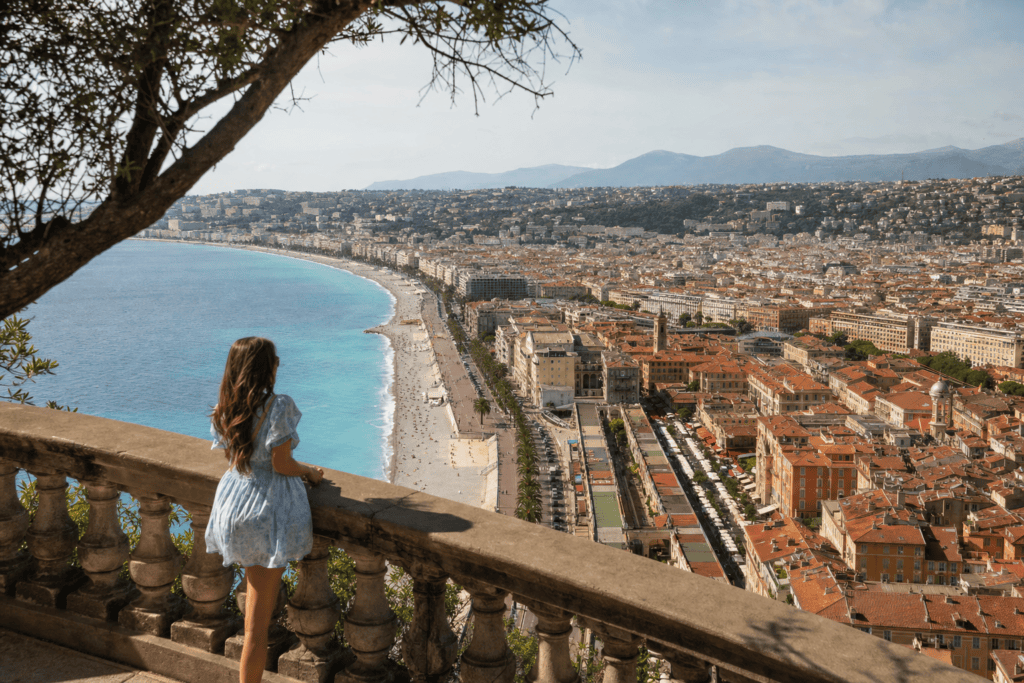 Castle Hill A panoramic park between Old Nice and the port, with a waterfall, gardens, historic remains and views…
 Nice’s Matisse Museum A collection dedicated to Matisse in the Villa des Arènes, at the heart of the historic olive grove of…
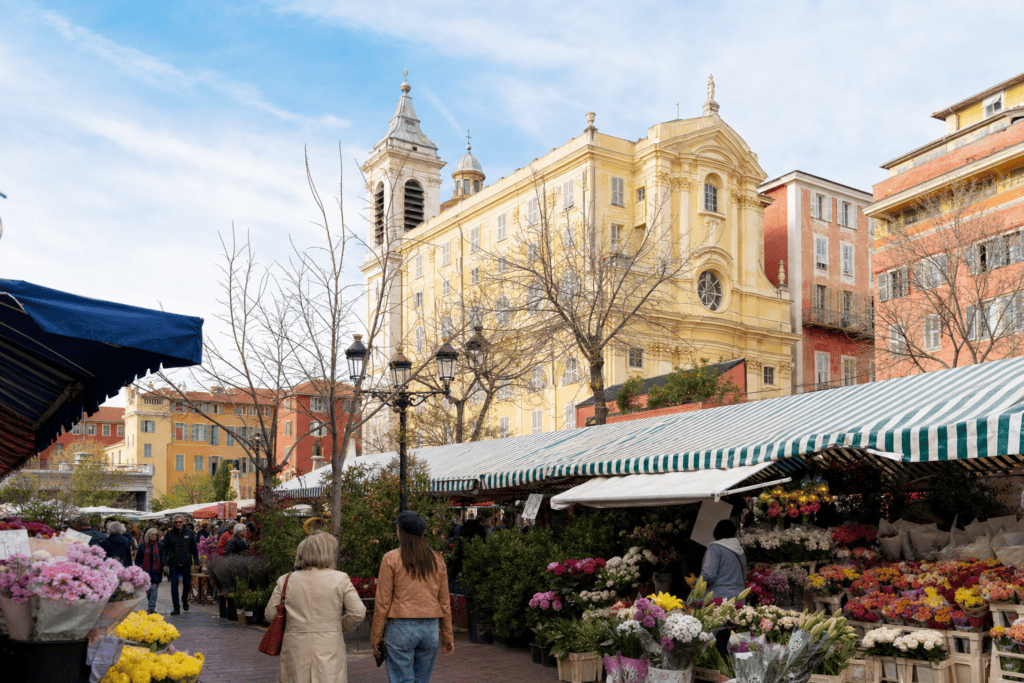 Vieux-Nice and the Cours Saleya Market Explore the Cours Saleya Market, the narrow streets of Old Nice and the specialties that define the city…
 Things to Do in Nice: Essential 1- to 3-Day Itinerary A practical itinerary for visiting Nice in 1 to 3 days: Vieux-Nice, the Cours Saleya, Castle…
Online booking · Paris → Promenade des Anglais, 06000 Nice, France
Choose your pickup date and time
Your departure and arrival details are already pre-filled. You can adjust them in the fare calculator before viewing the vehicles and fare.