



Things to Do in Nice: The Essential 1- to 3-Day Itinerary
Nice
Nice is best discovered by alternating between different atmospheres: the narrow streets of Old Nice, the views from Castle Hill, the light of the Bay of Angels, the museums of Cimiez, and the flavors of Niçoise cuisine. In one day, you can see the main highlights. With two or three days, add the artistic neighborhoods, markets, and an excursion to Villefranche-sur-Mer, Èze, or Saint-Jean-Cap-Ferrat. This guide helps you plan a well-paced trip on foot and by public transportation, without rushing from one visit to the next.
Practical information
Group attractions by area: Old Nice, Cours Saleya, Castle Hill, and the waterfront on the first day; Cimiez and the museums on the second; and a coastal excursion on the third. Wear comfortable shoes and leave time for breaks.
Paris → Nice: Planning a Private Transfer
To reach Nice from Paris, Booking Paris Transfer can arrange a private transfer departing from Paris, a Paris hotel, CDG, or Orly. The service covers transportation only and can be arranged with a return to Paris or as part of an itinerary beginning in Paris. Tickets, tours, and activities at the destination must be booked separately.
Departure from Paris, a Paris hotel, CDG, or ORY; return to Paris or an itinerary from Paris, depending on your needs.
1. Understanding Nice Before You Begin
Nice brings together several distinct sides: an old town shaped by Italian influences, a waterfront associated with the history of winter resorts, Belle Époque palaces, Baroque churches, residential neighborhoods, and a strong artistic tradition. Its geography also defines its character: the city stretches between the Bay of Angels, the port, the hills of Cimiez, and Mont Boron.
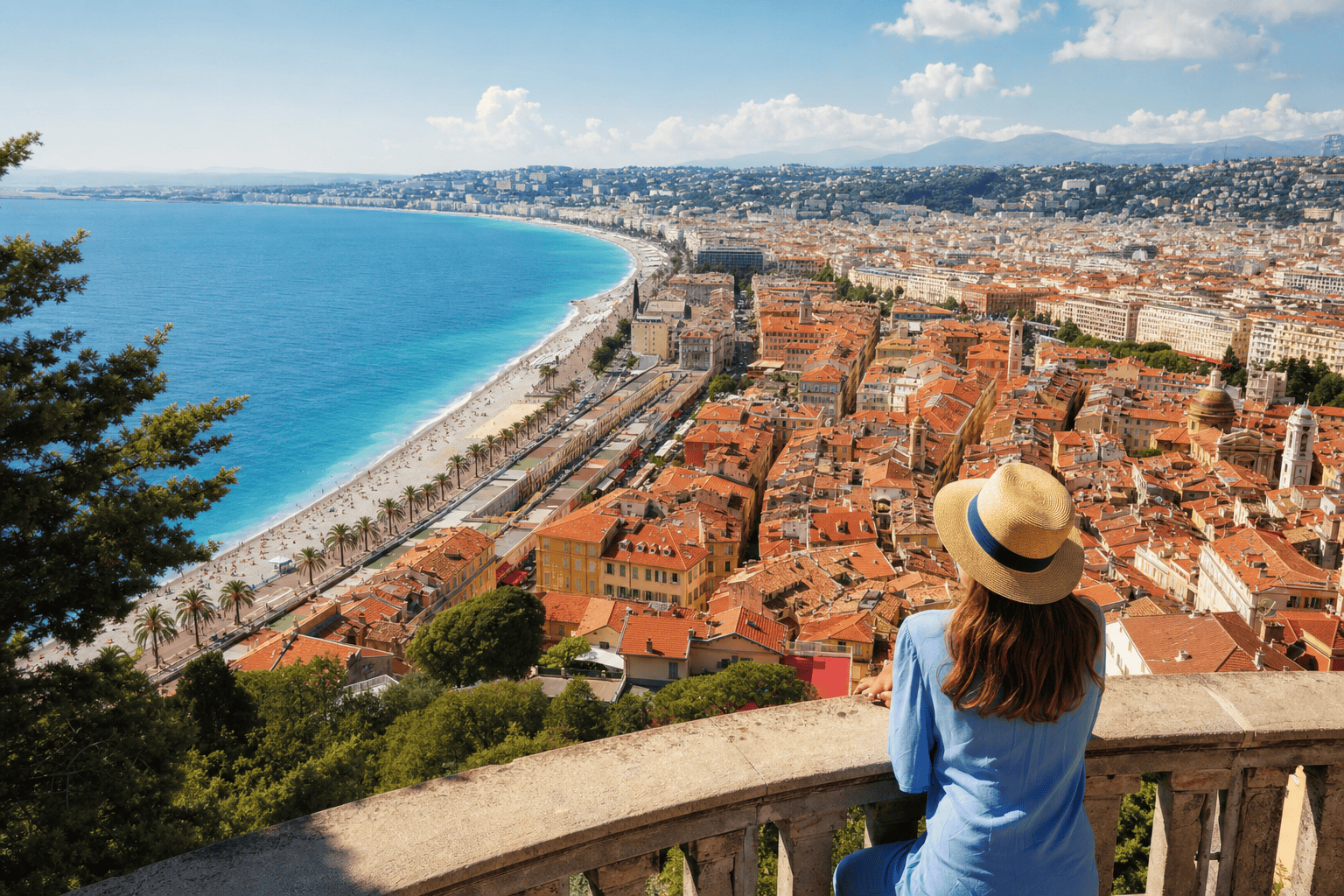
For a first visit, start in the old town and along the coast, then head uphill. From Castle Hill, the layout of the city becomes immediately clear: Old Nice to the west, the port to the east, and the Promenade des Anglais following the curve of the bay.
The historic waterfront of Nice is part of the UNESCO World Heritage site known as “Nice, Winter Resort Town of the Riviera.” This designation applies to an urban and landscape ensemble, not to a single monument. For details about the boundaries and heritage significance, consult information from UNESCO or the tourism office.
Wear suitable shoes: the cobblestones of Old Nice, stairs, and some of the climbs to viewpoints are all part of the route.
2. Day 1: Old Nice, Cours Saleya, and Castle Hill
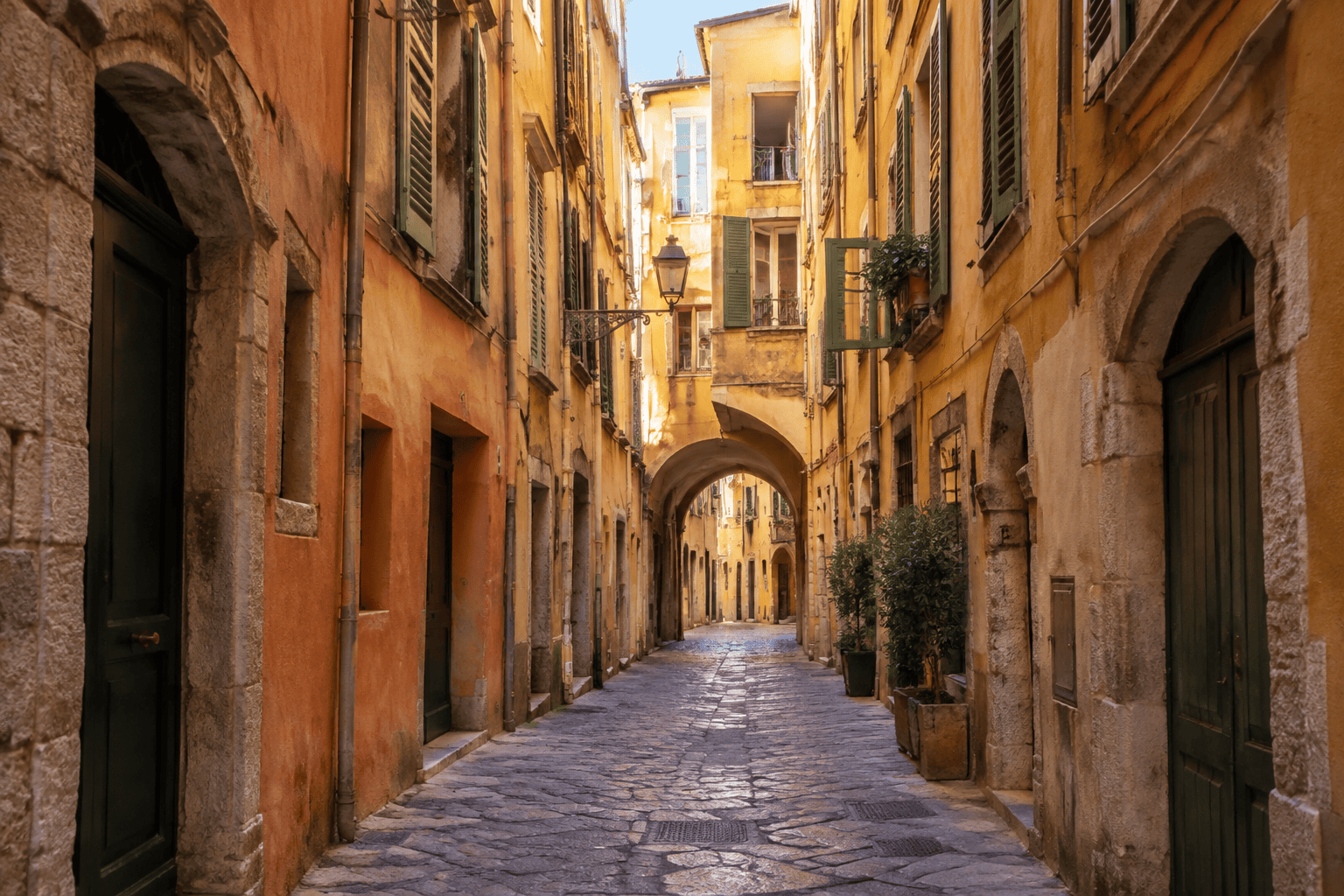
Start in Old Nice, ideally in the morning. Its narrow streets, colorful façades, vaulted passageways, and lively squares form the historic heart of the city. Cours Saleya is a good starting point: depending on the day, it hosts flower and food markets, among others. Market days and hours may change, so check the municipal schedule before setting out.
Continue to Place Rossetti and Sainte-Réparate Cathedral, then make your way to Quai des États-Unis through the narrow streets. Take time to notice the façades, shutters, chapels, and small shops rather than following an overly rigid itinerary.
After lunch, head up to Castle Hill. The stairs from the old town are the most obvious access route, while a public elevator generally allows you to avoid part of the climb when it is operating. The park includes changes in elevation and paths that are not all equally accessible to people with reduced mobility; check access conditions, elevator hours, and any restrictions with the municipal services before your visit.
Go back down toward Quai Rauba-Capeù for views over the bay, then return leisurely to the waterfront or the terraces of Old Nice. The late-afternoon light is often especially beautiful.
3. Promenade des Anglais and the Bay of Angels
The Promenade des Anglais is both an iconic landscape and a vibrant public space. People walk, run, cycle, or sit facing the Mediterranean, among pebble beaches, palm trees, and blue chairs. You do not need to walk its entire length: the area between Quai des États-Unis, Albert I Garden, and Théâtre de Verdure is already enough to experience the atmosphere of the waterfront.
In the morning, the light is often crisp and the atmosphere quieter. Toward the end of the day, the bay quickly changes color. Quai des États-Unis naturally extends the promenade between Old Nice, Castle Hill, and the port, allowing you to connect several sights without transportation.
Swimming is possible at Nice’s beaches when conditions are favorable, but the shoreline consists of pebbles. Water shoes may be useful. Water quality, supervised areas, restrictions, and sea conditions can vary: check local information before swimming, especially after heavy rain.
4. Day 2: Cimiez, Matisse, Chagall, and the Quieter Neighborhoods
Devote a second day to the hills and Nice’s artistic heritage. Cimiez has a more residential atmosphere than the historic center, with gardens, Roman ruins, religious buildings, and several cultural sites.
The Matisse Museum is located in the Villa des Arènes in Cimiez and explores the artist’s enduring connection with Nice. The Marc Chagall National Museum, in another part of the city, complements the visit with a body of work largely devoted to biblical themes. The two museums are not in the same location: allow time to travel between Cimiez and the Chagall neighborhood by public transportation or on foot, depending on your starting point.
If time allows, add the gardens and archaeological remains of Cimiez. Museum hours, weekly closures, temporary exhibitions, and access arrangements may change; check the official websites before planning your itinerary.
For lunch in a more local atmosphere, explore the Libération and Malausséna areas. Libération Market and Gare du Sud are useful landmarks, but their opening days and the businesses operating there should be checked for your travel period.
5. What to Try in Nice
Niçoise cuisine deserves a proper place in your itinerary. Socca, a hot flatbread made with chickpea flour, is easy to enjoy on the go. Pan bagnat is a sandwich filled with raw vegetables and, depending on the recipe, tuna or anchovies. Salade niçoise has many interpretations; for a more traditional approach, look for establishments participating in the local “Cuisine Nissarde” program.
Also try petits farcis, pissaladière, Niçoise stockfish, and zucchini flower fritters when they are in season. Tourte aux blettes comes in savory or sweet versions and is an interesting treat to discover at snack time.
Cours Saleya is convenient for a first taste, but the Libération, port, and Rue Bonaparte areas also offer interesting places to eat. Menus, restaurants, and designations change over time, so check current information before choosing a table.
6. Day 3: Choosing an Excursion Around Nice
With three days, choose a nearby excursion rather than several longer journeys. Villefranche-sur-Mer is one of the easiest options without a car: trains connect Nice-Ville or Nice-Riquier with Villefranche-sur-Mer station in just a few minutes, after which the historic center and citadel can be reached on foot. The station is uphill from the waterfront, with sloping streets.
Saint-Jean-Cap-Ferrat can extend this outing. From Villefranche or Nice, regional buses reach the peninsula, but schedules and frequency vary. The coastal path includes stairs and uneven sections; check whether it is open, the weather, and the walking time before setting out.
Èze requires an important distinction: Èze-sur-Mer is the coastal village served by train, while the village d’Èze is located uphill. From Èze-sur-Mer, the Nietzsche Path climbs steeply to the village and is not suitable for every visitor. Buses also connect Nice with the hilltop village, but connections and schedules should be checked on the day of departure.
For a closer hike, Mont Boron offers views of Nice, the port, Villefranche harbor, and Cap Ferrat. The routes include slopes and varied surfaces: bring water, wear suitable shoes, and check local conditions.
The three coastal corniches and boat trips are other possibilities, but they depend more heavily on traffic, weather, and seasonal schedules. Departures, prices, and conditions should be checked directly with the relevant operators.
7. Practical Tips for a Successful Stay
Central Nice is easy to explore without a car: Old Nice, Cours Saleya, Castle Hill, Place Masséna, and the Promenade des Anglais are relatively close together. For Cimiez, Mont Boron, and nearby towns, use public transportation and check the network’s official information before departure, as routes and stops may change.
In summer, start walking tours early, bring water, and protect yourself from the sun. Pebbles make waterfront breaks less comfortable than on a sandy beach. In winter, temperatures often remain mild, but some museums, boats, and excursions may operate on reduced schedules.
If it rains, prioritize museums, churches, covered markets, and shopping districts. With one day, focus on Old Nice and the waterfront. With two days, add Cimiez and a museum. With three days, choose just one excursion so you still have time for breaks and spontaneous discoveries.
Frequently Asked Questions
What can you do in Nice in one day?
How many days do you need to visit Nice?
Which neighborhood should you choose to explore Nice on foot?
Can you swim in Nice?
Which excursion should you choose from Nice without a car?
Are excursions around Nice accessible to everyone?
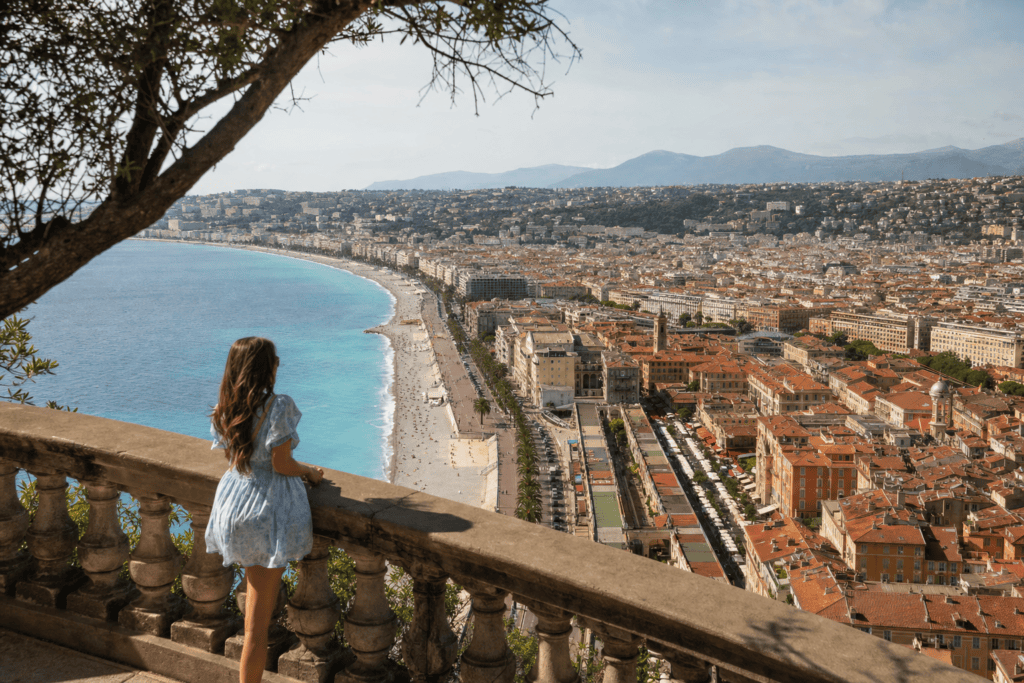 Castle Hill A panoramic park between Old Nice and the port, with a waterfall, gardens, historic remains and views…
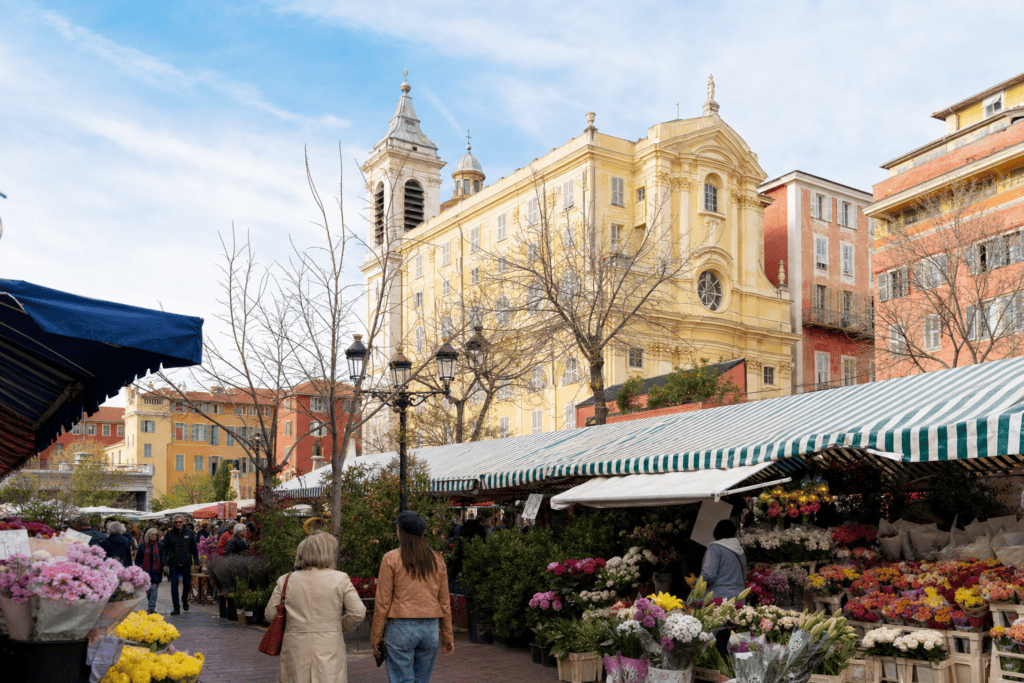 Vieux-Nice and the Cours Saleya Market Explore the Cours Saleya Market, the narrow streets of Old Nice and the specialties that define the city…
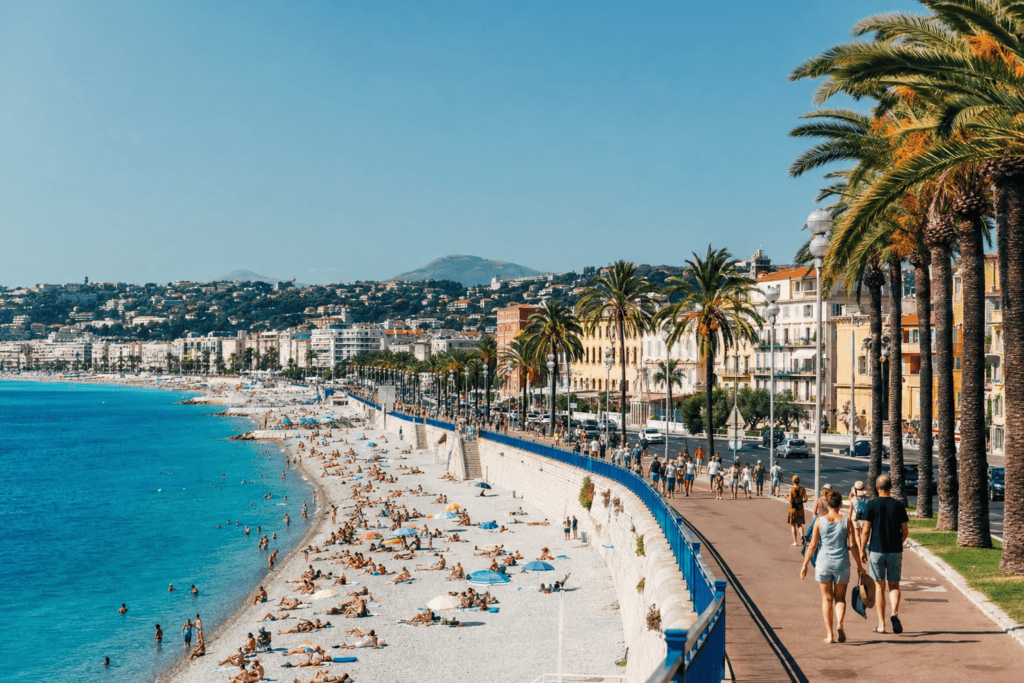 Promenade des Anglais and Nice Beaches A legendary promenade overlooking the Bay of Angels, combining heritage, pebble beaches and sweeping…
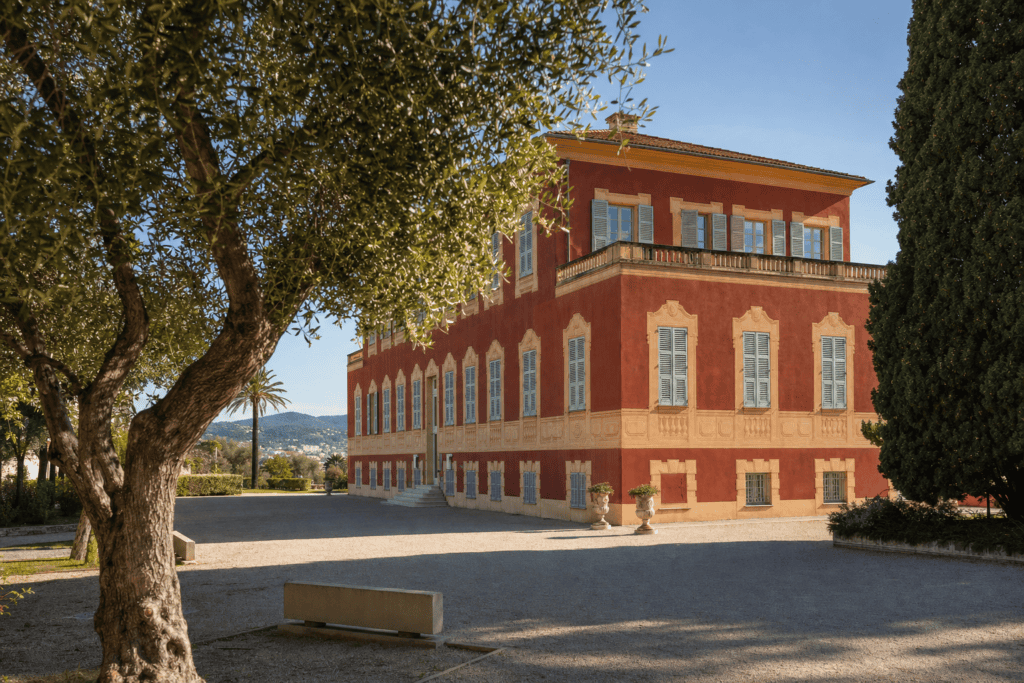 Nice’s Matisse Museum A collection dedicated to Matisse in the Villa des Arènes, at the heart of the historic olive grove of…
Online booking · Paris → Nice, Alpes-Maritimes, Provence-Alpes-Côte d’Azur, France
Choose your pickup date and time
Your departure and arrival details are already pre-filled. You can adjust them in the fare calculator before viewing the vehicles and fare.