



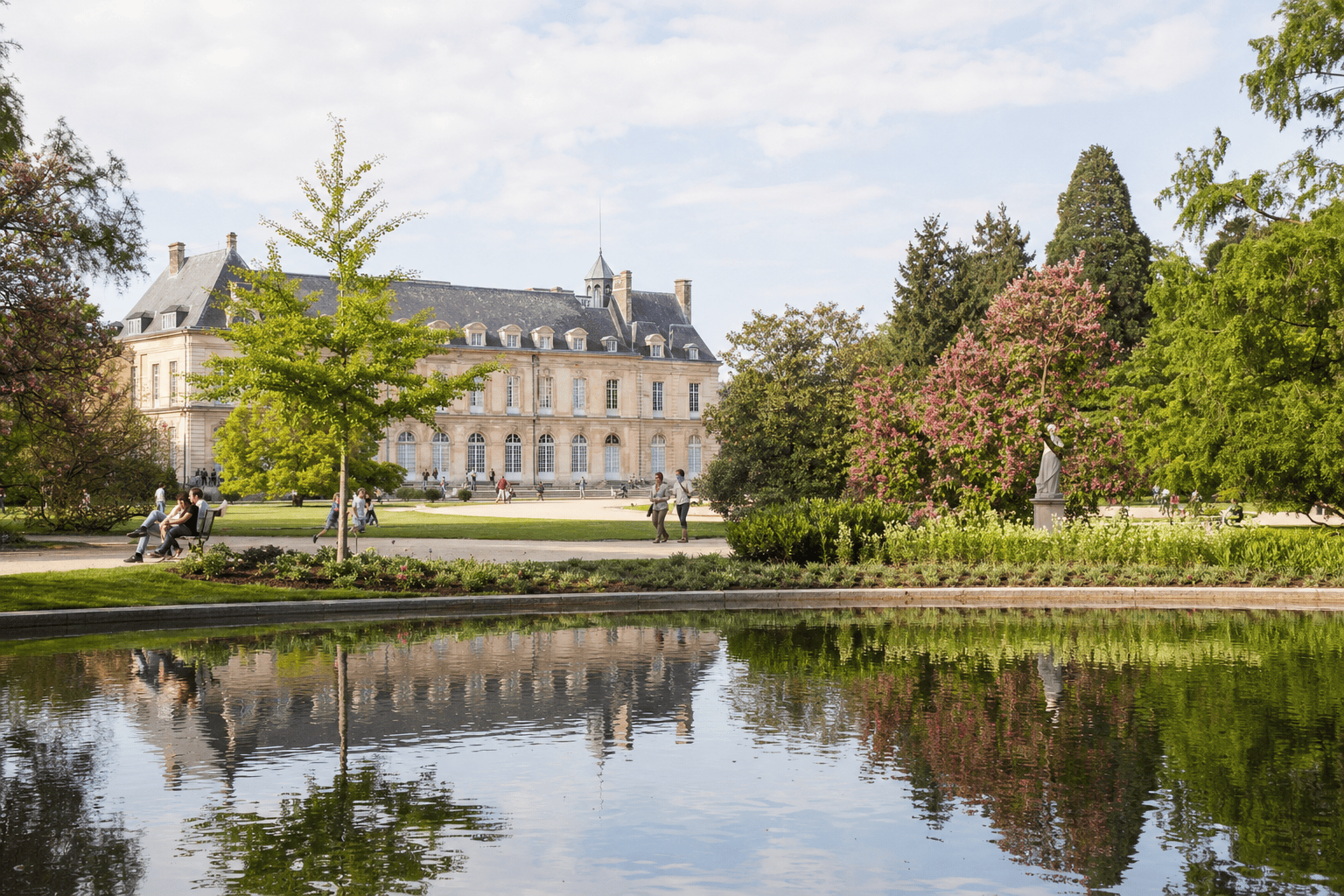
Parc du Thabor: Gardens and a Stroll in Rennes
Rennes
Just steps from Rennes’ historic center, Parc du Thabor offers a remarkable stroll through formal gardens, landscaped areas, a rose garden, a botanical garden, and architectural features. Easy to include in a day of sightseeing, it offers a peaceful break while showcasing an especially varied botanical and landscape heritage. Depending on the season, a visit may focus on blooms, foliage, vistas, or the details of the garden structures.
Practical information
Start with the formal gardens near Saint-Melaine, continue to the rose garden and botanical garden, then explore the wooded areas, waterfalls, and garden structures.
Getting to Rennes from Paris
Booking Paris Transfer can arrange transportation from Paris, the Île-de-France region, Charles de Gaulle, or Orly to Rennes, with a return to Paris or continuation of your itinerary. The park visit and admission remain separate.
Transportation from Paris and the Île-de-France region; admission ticket not included.
A Historic Park in the Heart of Rennes
Parc du Thabor enjoys a prime location northeast of Rennes’ historic center, near the former Saint-Melaine Abbey. Its history explains the diversity of its atmospheres. The site was first associated with the abbey’s gardens before gradually being transformed into a public garden in the 19th century. Landscape designers Denis and Eugène Bühler then created a setting combining formal designs, a landscaped park, and plant collections.
This evolution can still be seen along the route. The same stroll takes you from geometric flower beds to freer-flowing paths, then to planted areas reminiscent of a botanical garden. Thabor is therefore both a place for everyday walks and a landscape heritage site. Don’t expect a single monument to visit quickly: its appeal lies in the succession of vistas, plantings, sculptures, and small buildings that punctuate the route.
Formal Gardens and Vistas
The French formal gardens give Thabor its most orderly appearance. Paths, flower beds, and borders create clear vistas that are particularly enjoyable to observe from the main axes. This area invites you to slow down: take time to notice the rows of trees, sculptures, and transitions between open spaces and shadier areas.
Carré Duguesclin and the formal sections offer beautiful viewpoints for photography, especially when the light emphasizes the symmetry of the pathways. The appearance of the flower beds changes throughout the year: fresh foliage in spring, blooms during the warmer months, richer colors in fall, and bare silhouettes in winter. Visitors may pause here as long as they respect accessible areas and posted instructions. This section is a good starting point for understanding the park’s overall layout before heading to the more landscaped areas.
The Rose Garden and Botanical Garden
The rose garden is one of Thabor’s most popular areas when the roses are in bloom. It features numerous varieties in a structured layout, with colors, shapes, and fragrances changing throughout the season. Rather than citing a precise number of varieties that may change, it is best appreciated as a horticultural display. Visitors can observe the differences between the flowers and follow the borders that organize the collection.
The botanical garden adds another dimension to the visit. Its plantings and labels invite visitors to explore the diversity of species, their foliage, and their forms, even when fewer flowers are in bloom. To make the most of both areas, plan a daytime visit and take your time. Late spring and early summer are generally the most anticipated periods for the roses, but the weather can significantly affect the bloom schedule.
Waterfalls, Grotto, and Garden Structures
The route features several decorative elements that give the garden an almost theatrical quality. The grotto and waterfalls create a cooler, shadier atmosphere, distinct from the formal vistas. These features belong to the tradition of garden structures: they create changes of pace, moments of surprise, and stopping points in a landscape designed to be explored.
The aviary, bandstand, orangery, and greenhouses complete the ensemble. Not all areas are necessarily accessible or open in the same way, but their forms contribute to the park’s identity. The sculptures and architectural details also deserve a closer look. For families, these landmarks can divide the walk into short stages. For a more contemplative visit, occasionally leave the main path to observe the contrasts between the wooded areas, lawns, buildings, and flower beds.
A Stroll to Suit Every Season
Thabor’s atmosphere changes significantly throughout the year. In spring, fresh leaves and the first blooms highlight the formal gardens and flower beds. During summer, the wooded areas offer a shadier stroll, while the rose garden draws more attention. In fall, the foliage brings new colors to the paths and makes the vistas especially photogenic.
Winter has a quieter charm: the structure of the trees, the outlines of the flower beds, and the buildings stand out more clearly. A first visit can take an hour and a half, but it is better to allow up to two hours if you want to explore the different sections. The park is easy to combine with the old town, Place Sainte-Anne, Saint-Pierre Cathedral, or the half-timbered streets. However, check opening conditions before an early-morning or late visit, as they may vary by season.
Getting There and Practical Tips
Several entrances make it easy to include the park in a Rennes itinerary. Place Saint-Melaine is convenient from the historic center; other entrances are located on Rue de Paris, Rue de la Palestine, and Boulevard de la Duchesse Anne. Public transportation serves the surrounding area, but the final stretch may require a few minutes on foot. To choose the most suitable entrance, consider your starting point and the area you want to explore first.
Amenities, dog rules, accessibility conditions, restrooms, and any play areas may depend on city regulations and the time of year. Do not assume they are guaranteed without checking: consult the information posted on-site as well as details from the City of Rennes or the Tourist Office. Visitors with reduced mobility should also check the surfaces, slopes, and most accessible entrance before arriving. Comfortable shoes are recommended for exploring the entire garden.
Including Thabor in a Day in Rennes
Parc du Thabor can open or punctuate a day devoted to Rennes. From the old town, make your way to your chosen entrance, explore the formal gardens first, then head toward the rose garden and botanical garden. After your stroll, walk back down toward the squares and historic streets for lunch or to continue sightseeing. This plan avoids concentrating all your heritage discoveries in one area.
Another option is to visit Thabor in the late afternoon, when the light highlights the paths and foliage, then continue toward the center. Families, photography enthusiasts, and travelers looking for a peaceful break will find different paces for their visit. From Paris or the Île-de-France region, Booking Paris Transfer can arrange transportation to Rennes; the park visit remains free and independent. Transportation can be arranged with a return to Paris or continuation of your itinerary, without including an admission ticket.
Useful sources
Frequently Asked Questions
Is admission to Parc du Thabor free?
How much time should I allow?
When can I see the roses in bloom?
Are dogs allowed?
Is the park suitable for people with reduced mobility?
 Les Champs Libres A major cultural hub in Rennes bringing together a museum, science facilities, a library, exhibitions, lectures, and a planetarium.
 Marché des Lices On Saturday mornings, discover the stalls, the Halles Martenot, and the famous galette-saucisse in the historic center…
 Parliament of Brittany A historic palace in central Rennes, famous for its Grand’Chambre, restored decorations, and…
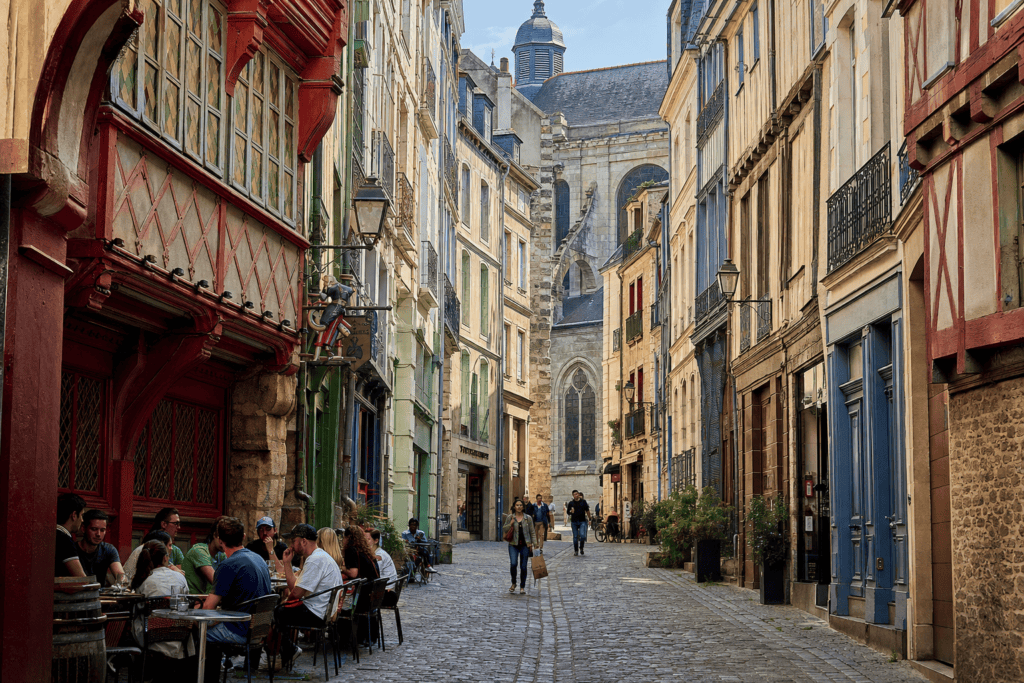 Rennes Historic Center A walking route through Old Rennes, among half-timbered houses, historic squares,…
Online booking · Paris → Place Saint-Melaine, 35000 Rennes, France
Choose your pickup date and time
Your departure and arrival details are already pre-filled. You can adjust them in the fare calculator before viewing the vehicles and fare.