



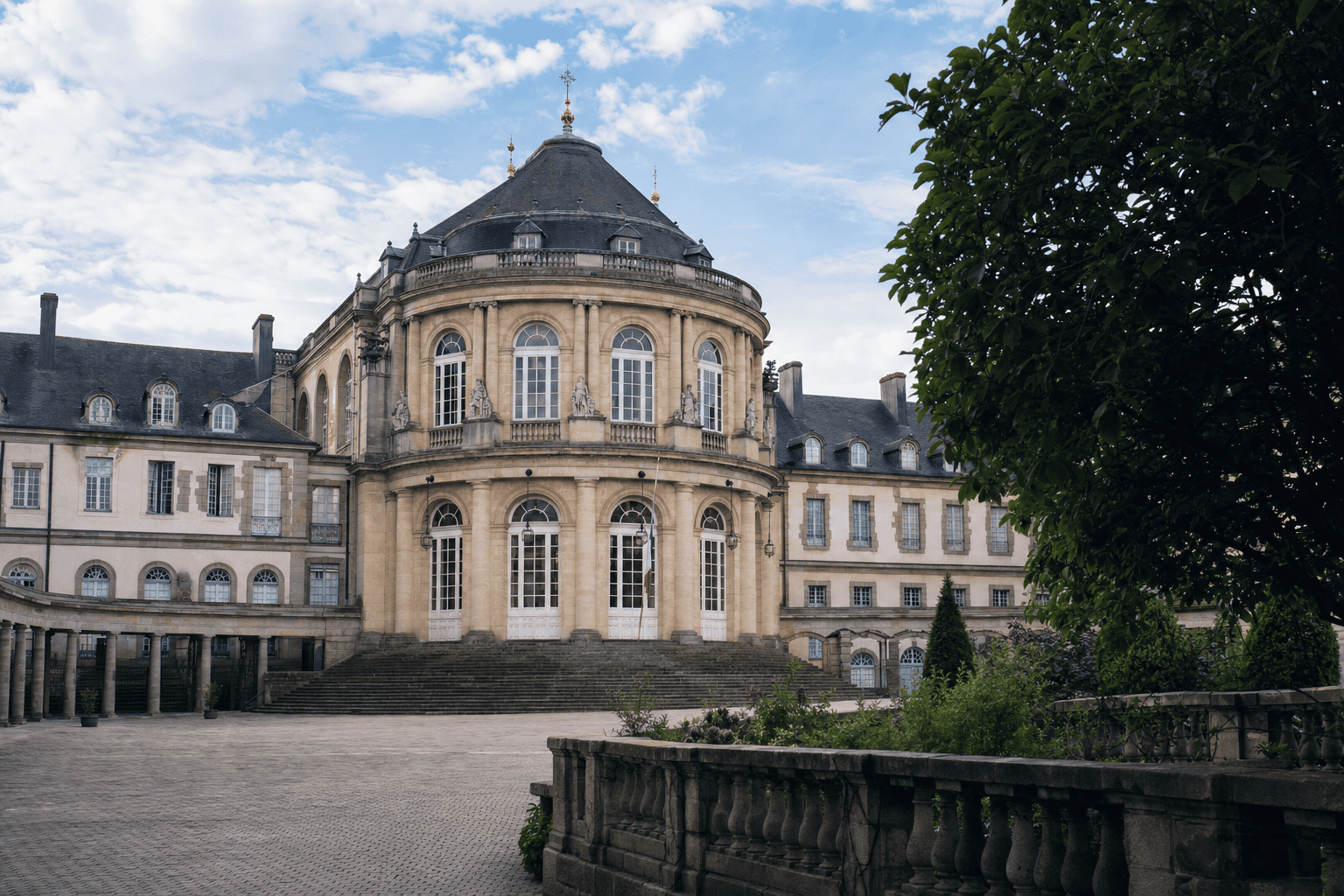
Visiting the Parliament of Brittany in Rennes
Rennes
In the heart of Rennes’ historic center, the Parliament of Brittany is a major monument in Breton history and a working courthouse. Its classical architecture, Grand Chamber, and restored interiors make it an essential stop for understanding the political, judicial, and artistic role of Brittany’s capital. The interior is not freely accessible: visits are organized according to the time slots and conditions announced by the Rennes Tourist Office. Before you go, check the official information, meeting point, and any restrictions related to judicial activity.
Practical information
Before setting out, check the time slot, meeting point, rooms open to visitors, and photography guidelines. The meeting point may be listed under the arcades on Rue de Brilhac; confirm it when booking.
Getting to Rennes from Paris
To include the Parliament of Brittany in a Brittany itinerary, Booking Paris Transfer can arrange a private trip from Paris, your accommodation in the Île-de-France region, Charles de Gaulle Airport, or Orly to Rennes. A return trip to Paris can also be arranged. This service covers transportation only: guided tours, reservations, and monument access are separate and must be confirmed with the official organizer.
Transportation from Paris, the Île-de-France region, CDG, or ORY, with a possible return to Paris. No admission ticket, tour reservation, or independent local chauffeur service in Rennes is included.
A palace at the heart of Breton history
The Parliament of Brittany is closely linked to the political and judicial history of the province. After Brittany was united with the Kingdom of France, the parliamentary court became an essential institution: it helped administer justice and played a role in registering royal decisions. Rennes thus established itself as Brittany’s main judicial center.
The current palace was built in the 17th century to house this institution in a setting befitting its importance. Its architecture served more than practical needs. It also expressed the power of justice, the authority of the state, and Rennes’ status as a parliamentary capital.
After the French Revolution, administrative and judicial functions evolved, but the building’s judicial purpose continued. The palace now houses the Rennes Court of Appeal and the Ille-et-Vilaine Assize Court. This continuity gives it a distinctive character: it is both a heritage monument and a living institution.
The visit therefore takes on its full meaning when you view the decorations with their original purpose in mind. They were intended to impress, organize ceremonies, and convey a solemn image of justice.
Admiring the architecture from the square
Located on the square that bears its name, the Parliament of Brittany is recognizable by its regular stone façade and imposing volumes. The building is arranged around an inner courtyard, with several wings connected by pavilions. This design gives the palace a monumental presence while integrating it into the urban fabric of central Rennes.
Before entering, take time to observe the façade’s proportions, frames, reliefs, and sculpted features. The square offers a good vantage point for understanding the building’s scale and how it towers over the surrounding streets. Details can sometimes be easier to appreciate from beneath the arcades or by stepping slightly away from the entrance.
The area also provides an opportunity to compare several periods of Rennes’ history. A few minutes away on foot, the half-timbered houses of the old town contrast with the palace’s classical symmetry. The 1720 fire in Rennes also transformed part of the city and helped create more orderly spaces around public buildings.
This initial look at the exterior prepares you for the interior visit: the palace was designed to organize circulation, hearings, and ceremonial spaces with careful attention to the hierarchy of each area.
The Grand Chamber and its interior decorations
The Grand Chamber is generally the highlight of the visit. Its coffered ceiling, paintings, woodwork, and gilded details create an exceptionally rich setting. The overall design was intended to affirm the institution’s dignity and provide a solemn backdrop for hearings and ceremonies.
Look up to examine the painted compositions, then observe the joinery, ornaments, and relationships between the room’s different elements. The decorations are more than embellishments: they contribute to a visual statement about order, justice, and authority. The guide’s explanations help place the works and symbols in context.
The visit may also include other areas of the palace, depending on the available itinerary and judicial activity. The Salle des Pas Perdus or certain historic rooms may be mentioned or opened, but access should not be considered guaranteed at every session.
To appreciate the Grand Chamber, it is better to take time to examine the details than to settle for an overall photograph. Differences in materials, traces of restoration, and the ceiling’s composition gradually reveal themselves, especially when the guide points out details that are easy to miss at first glance.
The 1994 fire and restoration
During the night of February 4–5, 1994, a fire severely damaged the Parliament of Brittany. The disaster left a lasting mark on Rennes and led to an extensive restoration project. The interior decorations, created using a variety of materials and techniques, required specialized work in several fields.
Paintings, woodwork, gilding, and textiles cannot be restored in the same way. Teams must study historic materials, archives, photographs, and traces preserved in the building to understand the earlier condition of the rooms. The project therefore combines conservation, historical research, and traditional craftsmanship.
Restoration does not simply mean rebuilding everything exactly as it was. It seeks to restore the coherence of the decorative scheme while taking into account the elements that bear witness to the monument’s history. Some losses or alterations cannot be erased, and they form part of our understanding of the palace as it has been passed down to the present day.
This recent history adds another dimension to the visit. The Parliament of Brittany highlights the fragility of historic heritage, as well as the importance of conservation trades. The decorations you see are the result of a long tradition, interrupted and then painstakingly restored.
Planning your guided tour
The interior of the Parliament of Brittany is not open for independent visits. You must join a guided tour offered according to the Rennes Tourist Office’s availability. Time slots, languages, prices, booking conditions, and cancellation policies may change, so check the official page before planning your visit.
The stated duration is usually about one and a half hours, but the itinerary may vary. The palace remains a working courthouse; a hearing, security measure, or operational requirement may lead to changes in the route or temporary closure of a room.
Arrive a few minutes before the scheduled time to locate the meeting point and join the group without rushing. Follow the guide’s instructions regarding security checks, luggage, photography, and movement through the building. These rules may differ from those of a typical heritage site because of the ongoing judicial activity.
For a first introduction to Rennes, this visit fits easily into a walk through the historic center. Allow time before or afterward to see the square, the old streets, City Hall, the Opera House, and the Mordelaises Gates.
Getting there and places to see around the palace
The Parliament of Brittany is located in central Rennes, on a square that is easily reached on foot from the main tourist areas. The train station and central neighborhoods are served by Rennes’ public transportation; check the current route based on your starting point and any ongoing construction.
If you are driving, plan ahead for parking. Central streets can be busy and are not always suitable for an extended drop-off in front of the monument. Allow extra time to walk to the square and arrive at the meeting point early enough.
Several routes are possible after your visit. You can walk to City Hall and the Opera House, explore streets lined with half-timbered houses, then continue to Saint Peter’s Cathedral and the Mordelaises Gates. The Museum of Fine Arts is another option for extending your cultural exploration.
If you have more time, Thabor Park offers a pleasant break in landscaped surroundings. Restaurants, cafés, and shops in the city center also make it easy to stop without leaving the neighborhood. The palace is therefore an excellent starting point for a half-day devoted to Rennes’ heritage.
Tips for a Successful Visit
Check the official information before setting out and keep the meeting-point details handy. Since the palace is a working courthouse, be discreet and follow the guide’s instructions. Comfortable, appropriate clothing that allows you to take the tour comfortably is suitable for this type of institutional setting.
Art history enthusiasts may want to allow a few extra minutes to examine the Grand Chamber. The paintings, gilding, woodwork, and restored elements are best appreciated without rushing. When visiting with children, explain that the building is also a working courthouse: this distinctive feature makes the visit more tangible and helps them understand why certain rules apply.
Photography may be restricted in certain areas. Do not take photographs where it is prohibited, and avoid using your device in a way that might disturb the group or the operation of the palace. The day’s instructions always take precedence over usual visiting habits.
Finally, keep some flexibility in your schedule. The itinerary may be adapted to judicial requirements, and not all rooms are necessarily accessible at every time slot. This constraint is part of the identity of the Parliament of Brittany: you are visiting a historic monument that still serves a very real public function.
Useful sources
Frequently Asked Questions
Can you visit the Parliament of Brittany independently?
How long does the visit take?
What can you see during the tour?
Is the palace still a courthouse?
How do you get to Rennes from Paris?
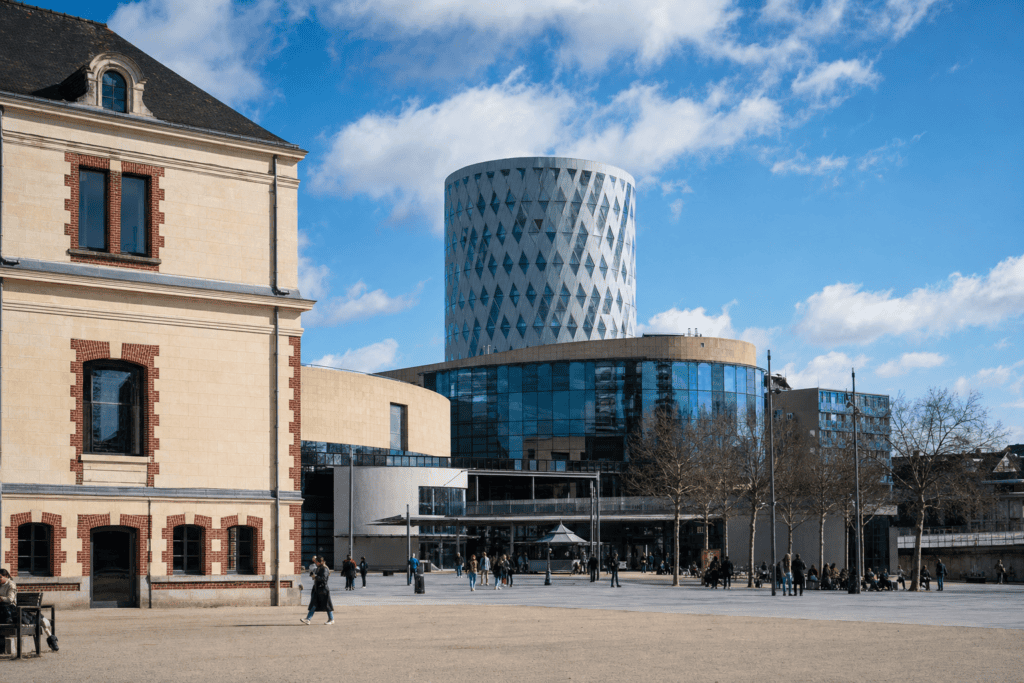 Les Champs Libres A major cultural hub in Rennes bringing together a museum, science facilities, a library, exhibitions, lectures, and a planetarium.
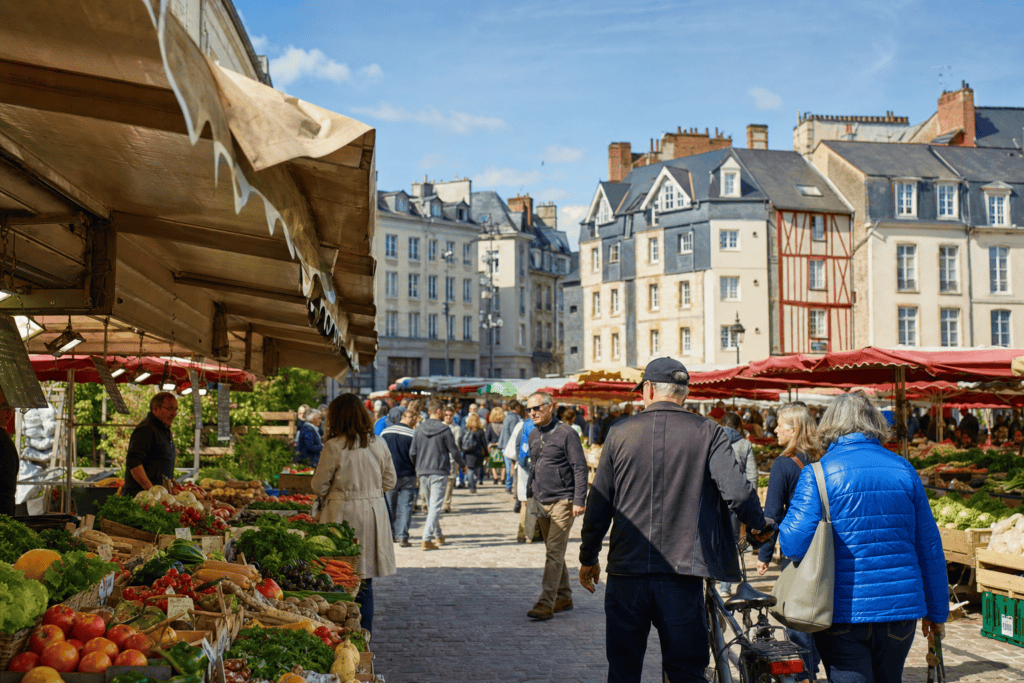 Marché des Lices On Saturday mornings, discover the stalls, the Halles Martenot, and the famous galette-saucisse in the historic center…
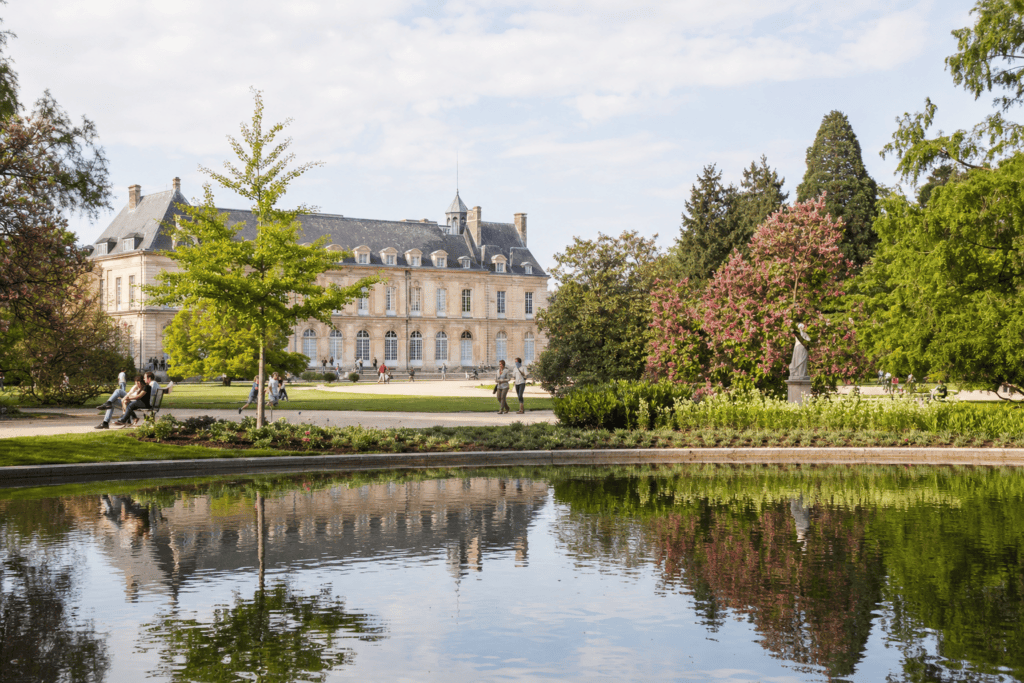 Thabor Park A nearly ten-hectare public garden in Rennes featuring a rose garden, botanical garden, waterfalls, aviary, and…
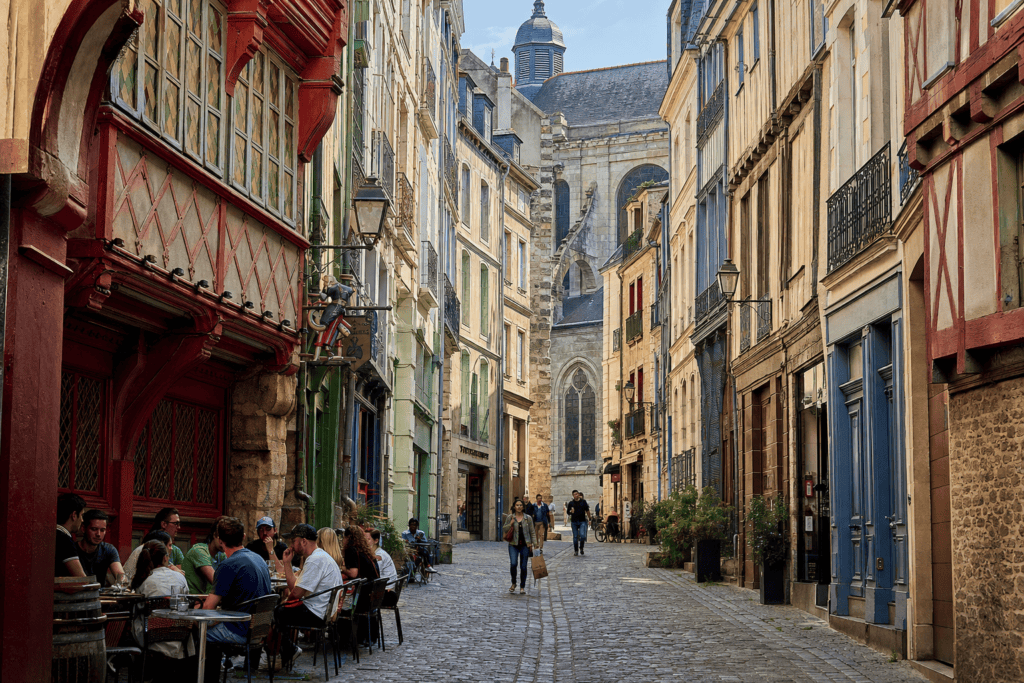 Rennes Historic Center A walking route through Old Rennes, among half-timbered houses, historic squares,…
Online booking · Paris → Place du Parlement de Bretagne, 35000 Rennes
Choose your pickup date and time
Your departure and arrival details are already pre-filled. You can adjust them in the fare calculator before viewing the vehicles and fare.