



Amboise Historic Center and Quayside Walk
Loire Valley
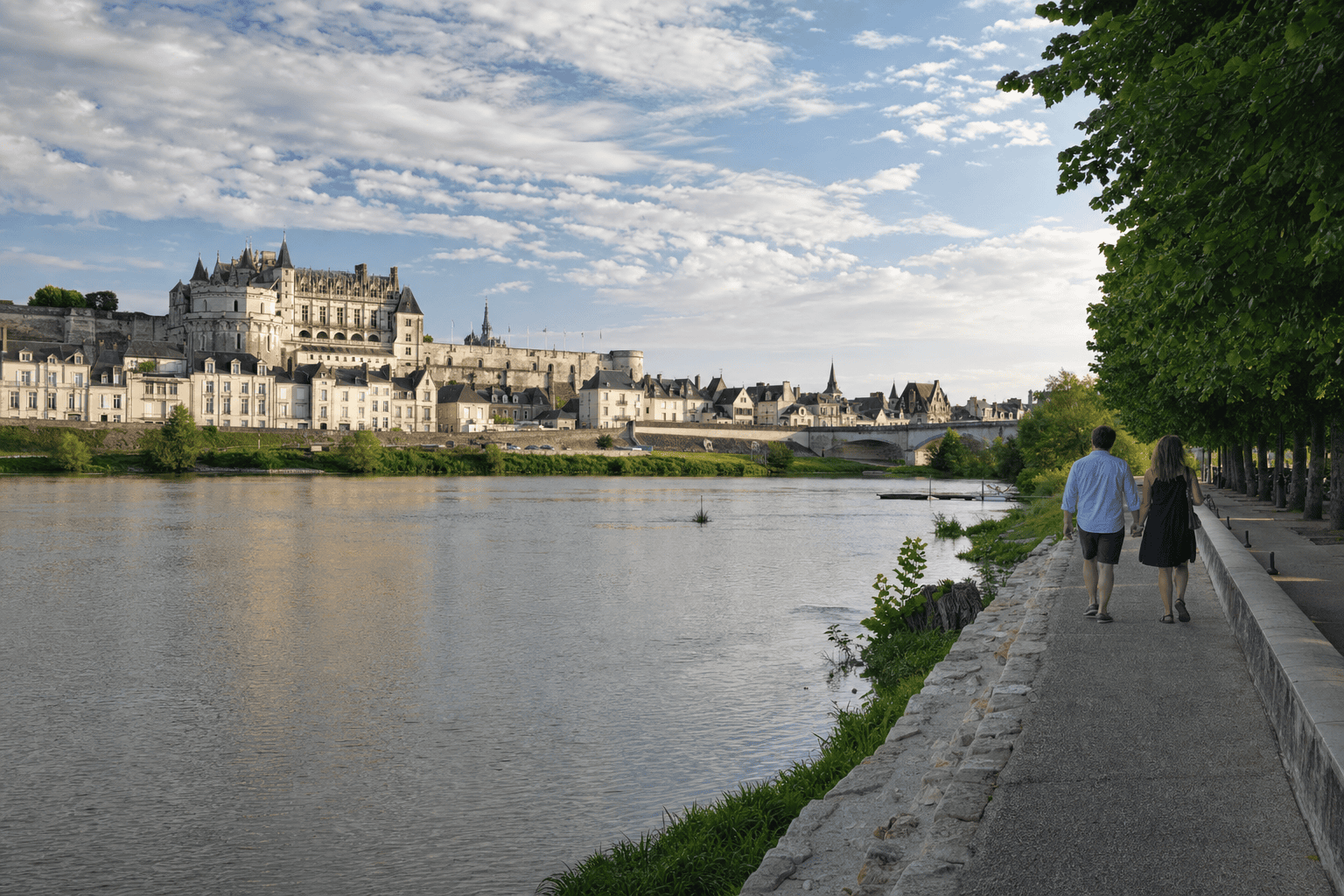
Between the royal château, historic homes and the Loire, Amboise is especially enjoyable to explore on foot. From Place Michel Debré and Rue Nationale, the route leads to the Clock Tower and the area around the château before descending toward the quays and Île d’Or. This 2- to 4-hour walk combines heritage, river landscapes, shops, gastronomy and the atmosphere of a Loire Valley town.
Practical information
Start at Place Michel Debré, continue to Rue Nationale and the Clock Tower, then head uphill toward the château. Descend toward the quays and cross the bridge to Île d’Or. Wear comfortable shoes.
Paris – Amboise: Planning a Private Excursion
Private transportation can simplify an excursion between Paris and Amboise, with departure from a Paris hotel, the Île-de-France region, Charles de Gaulle or Orly, followed by a return to Paris. The service covers transportation only; site admission and reservations must be arranged separately.
Transportation from Paris, the Île-de-France region, CDG or ORY; admission tickets not included.
1. Why explore Amboise on foot?
Amboise’s center brings together several sides of the city within a relatively compact area: a shopping street, historic lanes, the château promontory and the open landscapes of the Loire. The walk gradually takes you from the bustle of town to the riverbanks, without requiring a rigid route.
The City of Amboise offers several discovery routes focusing in particular on the façades, the city’s history and the Loire riverfront. Their durations are approximate: a break, a monument visit or a detour to Île d’Or can easily extend the walk. These local resources are useful for planning your outing.
Amboise is also appealing for its lively character. Cafés, restaurants, shops and the market complement the heritage experience and give the center the atmosphere of a lived-in town, especially lively during tourist season.
2. Historic Lanes at the Foot of the Château
From Place Michel Debré and Rue Nationale, the terrain gradually rises toward the Royal Château. Look for stone houses, historic surrounds, carved details and narrower passages that recall the city’s historic layout. Some streets are steep and offer glimpses of the Loire between the façades.
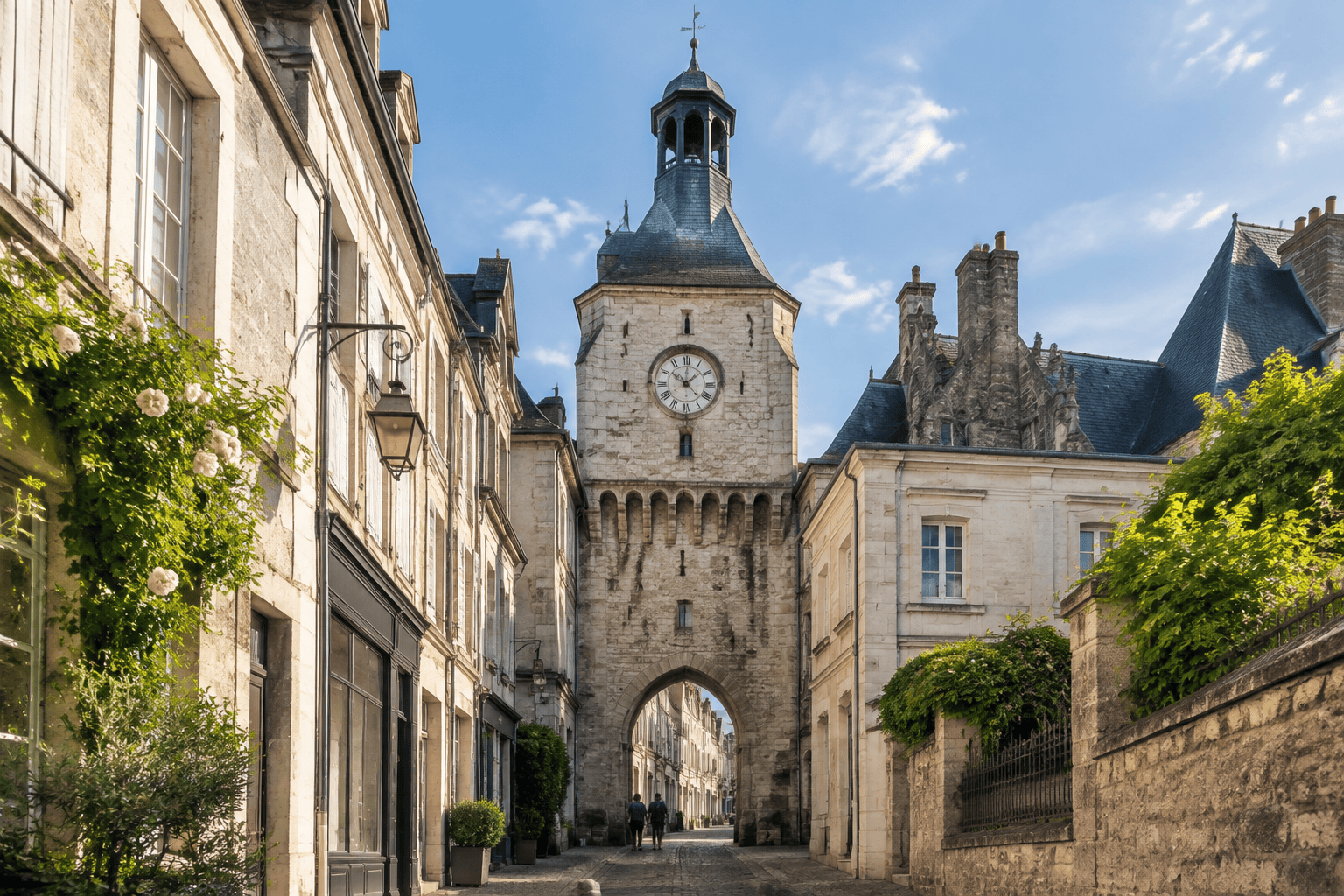
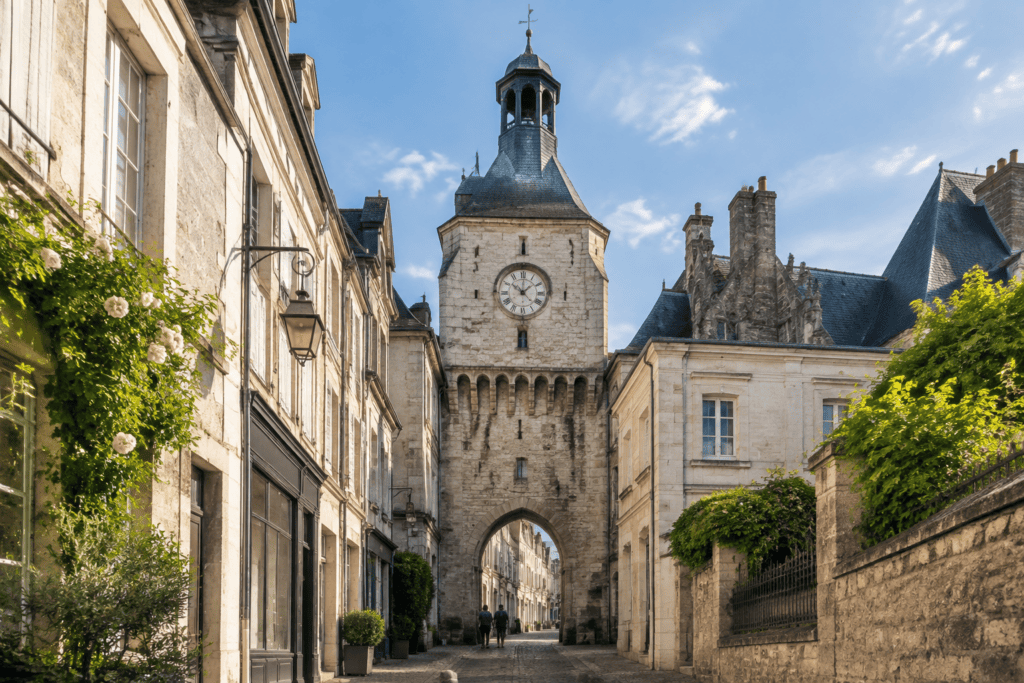
The Clock Tower, once part of the urban fortifications and later converted into a belfry, is one of the center’s iconic landmarks. It marks an important passage through the city and stands near Rue Nationale, now home to shops and places to stop for a break.
In areas near the hillside, the local geology can also be seen in buildings built against the rock and in the presence of troglodyte features. For details about specific buildings and their history, consult information published by the City of Amboise or the tourist office, as names and interpretations may vary between heritage routes.
3. The Royal Château and the Legacy of the Renaissance
Set on a promontory overlooking the Loire, the Royal Château of Amboise shapes the city’s landscape and history. The site was extensively transformed in the late Middle Ages and early Renaissance under the reigns of Charles VIII, Louis XII and Francis I. It was an important residence and setting for the French monarchy.
Visiting the château adds to the experience of exploring the streets: its terraces offer views over the river, bridge and Île d’Or. Saint Hubert Chapel is associated with the tomb traditionally presented as that of Leonardo da Vinci. Clos Lucé, the artist’s former residence in the upper part of town, extends this connection with the Renaissance.
Opening hours, access conditions, admission prices and ticketing arrangements may vary by season. Check the official Royal Château of Amboise website before your visit, especially if you plan to see the interior spaces or attend an event.
4. The Market and the Flavors of the City
The market is a great way to experience Amboise as a lively town. Depending on the day and season, stalls may offer fresh produce, cheeses, Touraine specialties, flowers and prepared foods to take away. It is a convenient opportunity to put together a simple lunch before continuing toward the quays.
Market days, locations and hours may change depending on the season, holidays or local events. Check the schedule published by the City of Amboise or the tourist office before setting out.
Restaurants and cafés in the center are concentrated particularly around Rue Nationale, Place Michel Debré and the surrounding streets. During busy periods, making a reservation may be helpful. For a picnic, follow local rules and leave walking areas clean.
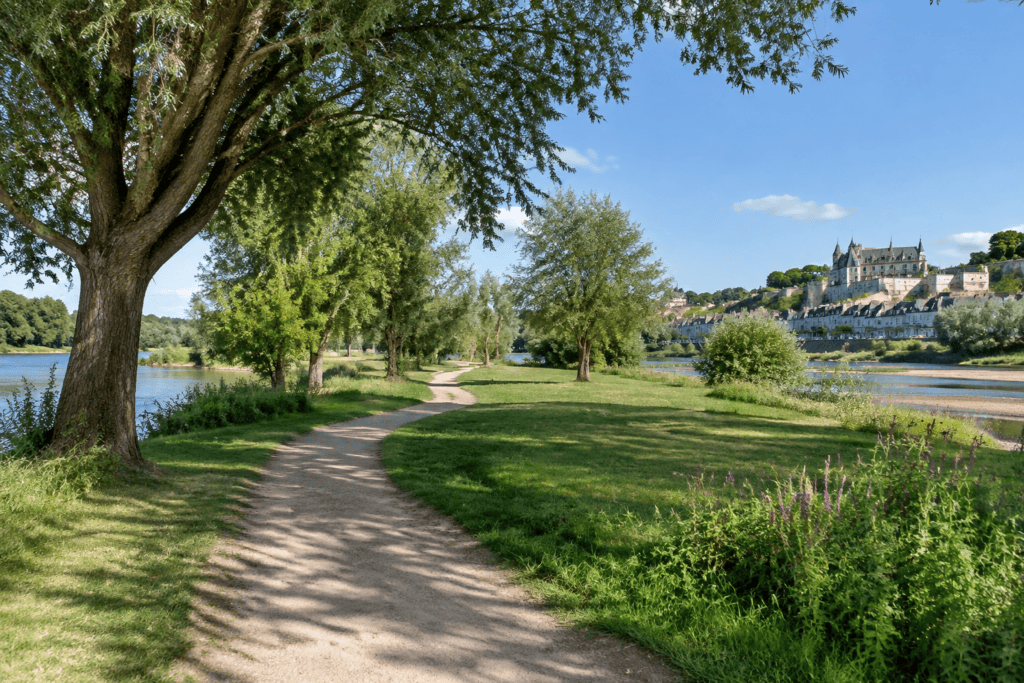
5. Descend to the Loire Quays
The descent to the quays changes the experience. The river broadens the views and lets you see the château from the opposite bank, with the bridge and the town’s historic homes in the same landscape. The quays are especially pleasant for slowing down, photographing the façades or simply watching the water flow.
The Loire has long played a role in Amboise’s travel, trade and economy. The town forms part of the cultural landscape of the Loire Valley, a UNESCO World Heritage Site designation covering a collection of towns, monuments, landscapes and traditions connected to the river.
You can walk along Quai du Général-de-Gaulle and Quai François-Tissard, depending on the condition of the paths and the facilities accessible on the day of your visit. Stay alert near the water, watch for changes in river levels and follow any temporary restrictions.
6. Cross to Île d’Or
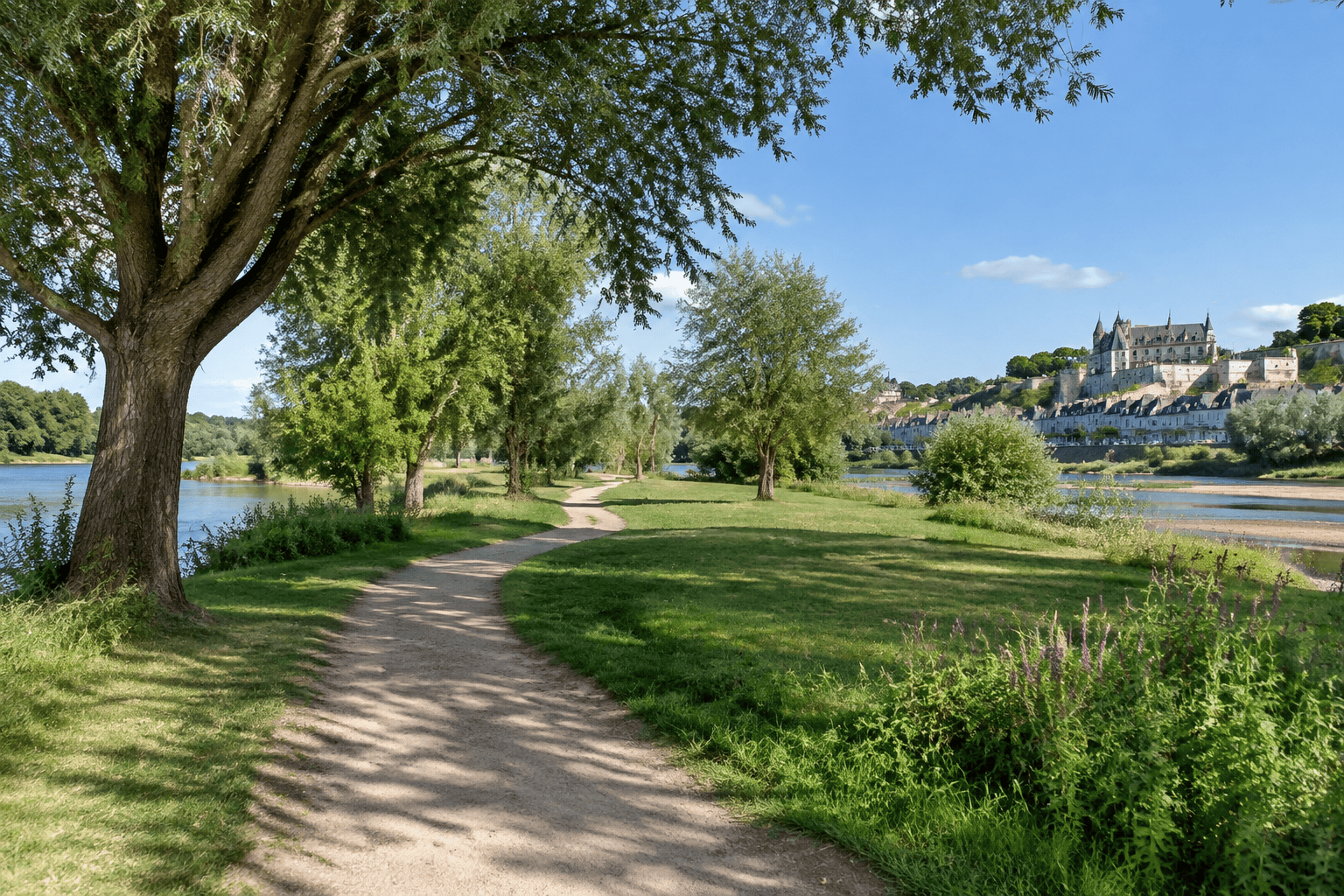
The bridge leads to Île d’Or, a walking area in the heart of Amboise. After the town’s streets, the atmosphere becomes more open and green, with lawns, trees and paths offering different views of the château and riverbanks.
The island is a good place to take a break or photograph the château’s silhouette. Loire birds may be visible, but their presence depends on conditions and the season. Keep your distance from wildlife and do not treat a sighting as guaranteed.
Local routes may identify various heritage features on the island and nearby. Interior access or public opening is not necessarily permanent, so check with local sources before planning a specific visit. Along the banks, supervise children and respect the paths and any protected areas.
7. Practical Tips for Enjoying the Walk
For a first visit, allow 2 to 4 hours for a loop through the center, around the château, along the quays and across Île d’Or. Add time for indoor visits, breaks and meals. The route alternates between cobblestones, sidewalks, stairs and slopes, so appropriate footwear is recommended.
Morning works well for combining the market and heritage, when a market is scheduled. Late afternoon is often ideal for the quays and photography. In hot weather, bring water and seek shaded areas; after rain, some cobblestones and riverfront areas may be slippery.
Amboise is served by train, but routes, connections and travel times from Paris vary depending on the service and date. Check the rail operator’s latest schedules before planning your excursion.
For a private journey, Booking Paris Transfer can explore round-trip transportation from Paris, the Île-de-France region, Charles de Gaulle Airport or Orly to Amboise. Transportation is separate from admission tickets and monument reservations.
Before departure, check site hours, parking conditions, local events and any access restrictions with official Amboise sources and the monuments concerned.
Frequently Asked Questions
How long does it take to visit Amboise’s historic center and quays?
Can you explore Amboise without visiting the château?
Where can you see the château from outside?
Is the walk suitable for families?
Is the Amboise market held every day?
How do you get to Amboise from Paris?
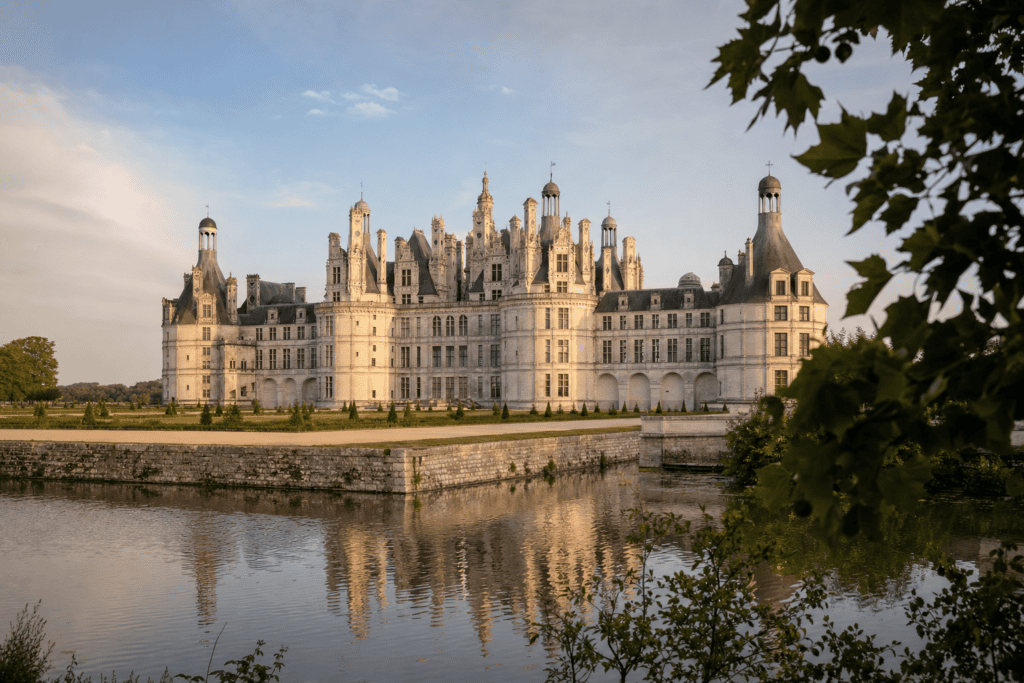 Chambord Castle A Renaissance masterpiece featuring a double-helix staircase, panoramic terraces, gardens…
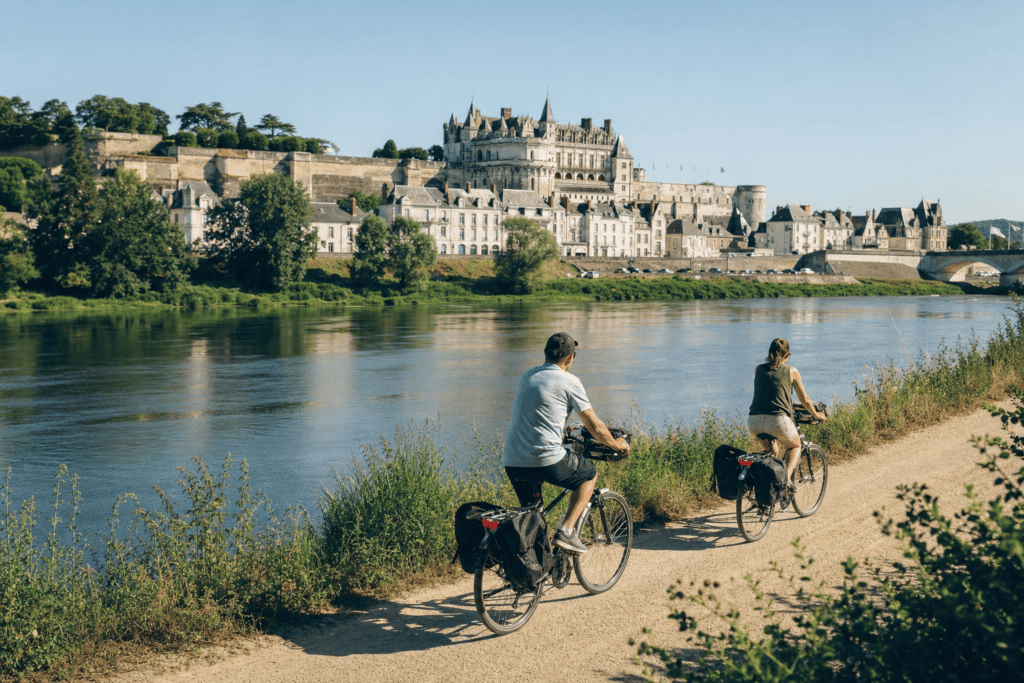 Loire à Vélo A 900 km cycling route connecting Loire châteaux, villages, vineyards and landscapes at your own pace…
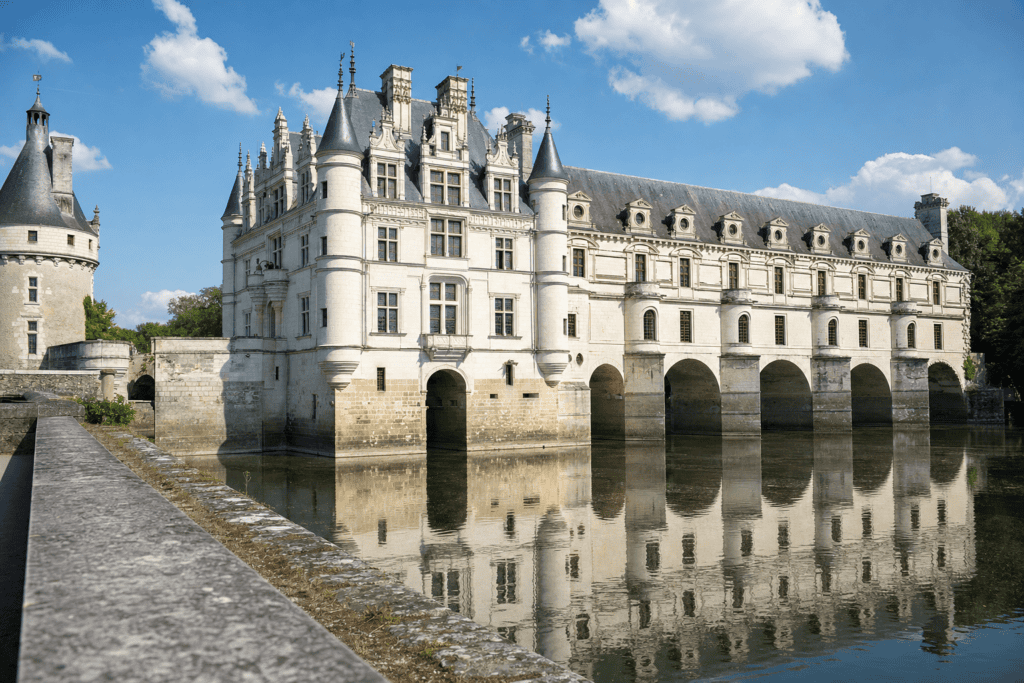 Château de Chenonceau A unique Renaissance château known for its gallery built over the Cher River, elegant gardens and the influence…
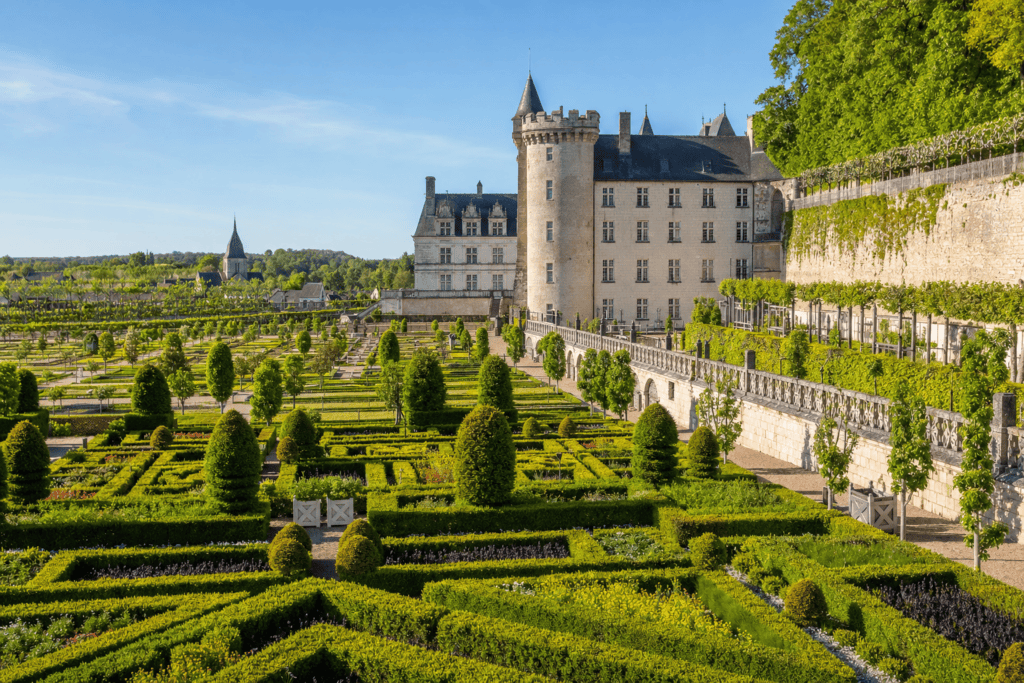 The Gardens of Villandry A vibrant and spectacular Renaissance garden, famous for its ornamental vegetable garden, geometric flower beds and…
Online booking · Paris → Suggested starting point: Place Michel Debré, 37400 Amboise, France. The walk can then continue to Rue Nationale, the Clock Tower, the Loire quays and Île d’Or.
Choose your pickup date and time
Your departure and arrival details are already pre-filled. You can adjust them in the fare calculator before viewing the vehicles and fare.