



Villandry Gardens: A Grand Horticultural Spectacle
Loire Valley
At Villandry, the garden can be experienced as an open-air work of art. Arranged around the Renaissance château, Villandry Gardens combine geometry, color, water, and vegetable plantings in a particularly remarkable composition in the Loire Valley. The estate is equally suited to a first discovery of the Loire châteaux and to a leisurely stroll with a camera in hand. Ideally, allow an hour and a half to explore the gardens, and more if you would also like to visit the château, admire the planting details, or stop in the village.
Practical information
Be sure to check the official website before your visit to confirm seasonal hours, prices, and any changes related to the weather or events.
Getting to Villandry Gardens from Paris
For a private excursion in the Loire Valley, leave directly from Paris, your hotel, CDG, or ORY for Villandry. Your driver can wait during your visit and take you back to Paris, or continue on to another château in the region. The service covers transportation only; admission tickets must be booked separately with the estate.
Departure is available from Paris, a Paris hotel, CDG, or ORY; return to Paris or continue your itinerary through the Loire Valley.
A Renaissance Garden Designed Like a Painting
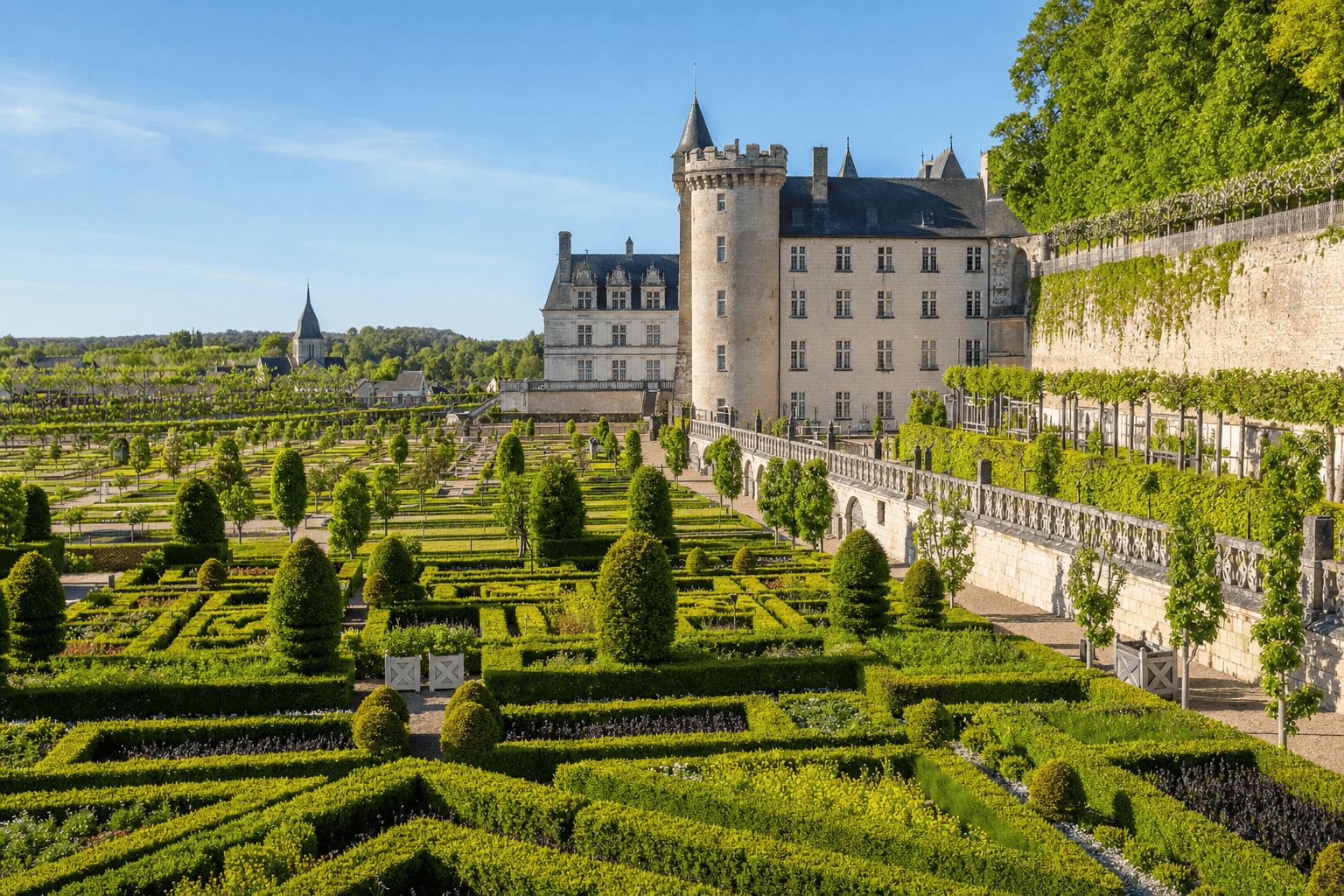
Villandry Gardens are famous for their highly legible design, best viewed from the château terraces. Axes, borders, and pools organize the space into a succession of geometric forms that give visitors a sense of order and balance. Yet this is not a static setting: the plantings change with the seasons, blooming cycles, and the gardeners’ daily work.
The best place to start is by gaining a little elevation before descending into the different gardens. From the terraces, you can understand the estate’s main lines and the relationship between the château, the village, and the Loire landscape. Then, the paths bring you closer to the flower beds, let you compare textures, and reveal details that disappear when you stay only at the panoramic viewpoints.
This layout makes Villandry an enjoyable visit even for people who do not consider themselves botany enthusiasts: its beauty lies as much in perspective, color, and symmetry as in the choice of plant species.
The Ornamental Vegetable Garden, Villandry’s Signature
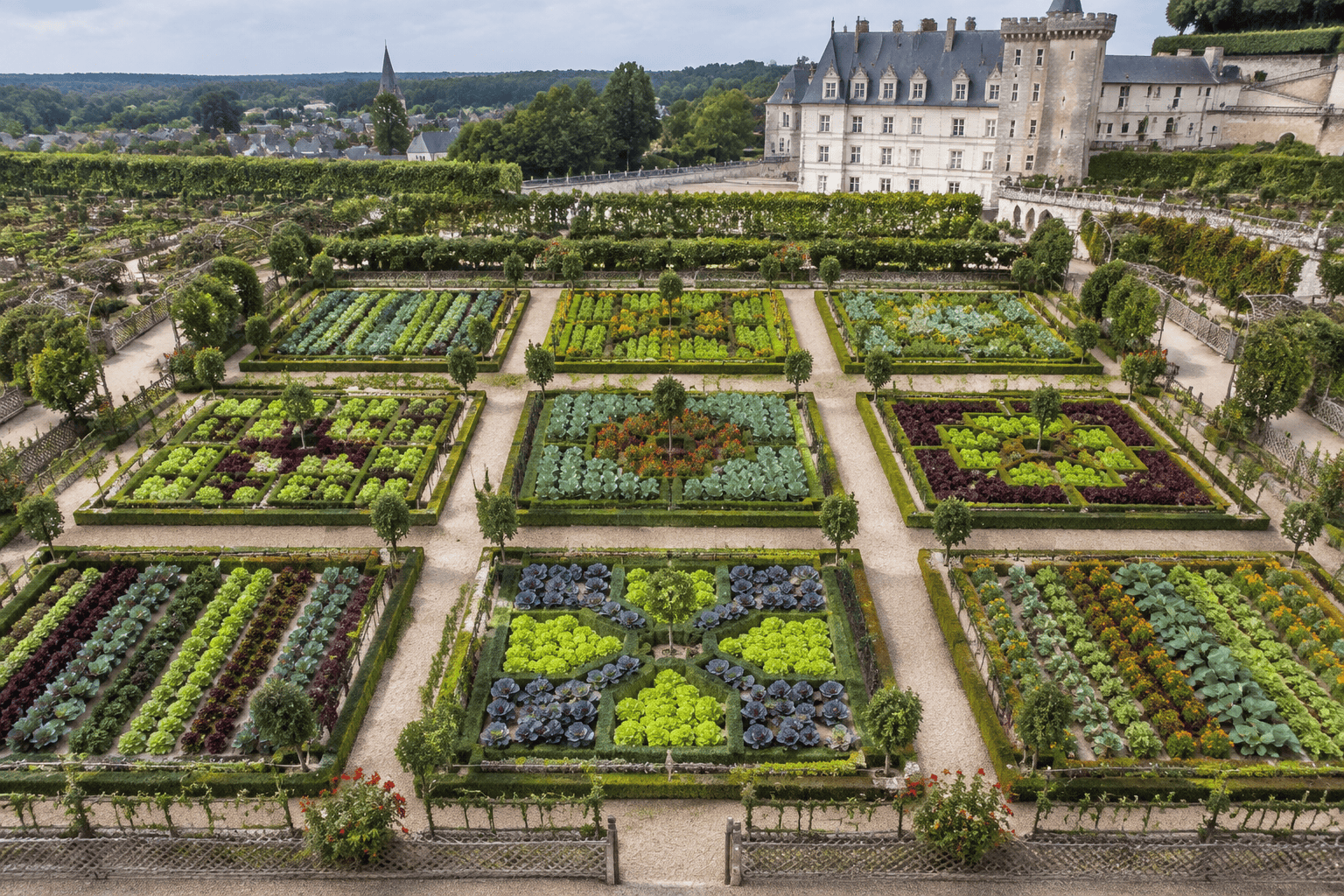
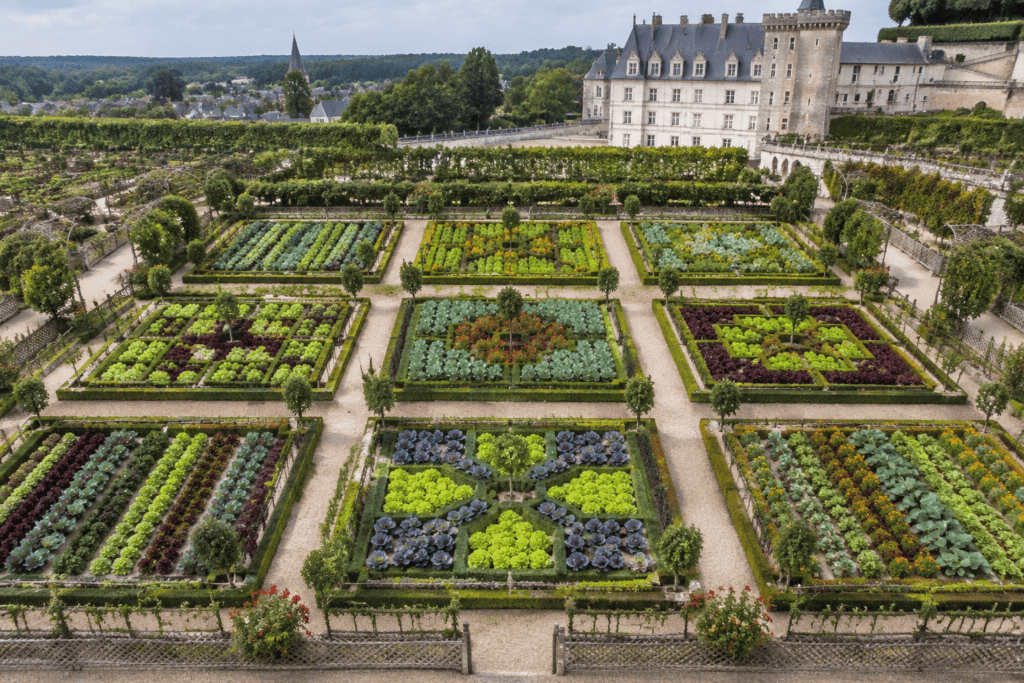
The ornamental vegetable garden is the estate’s most immediately recognizable feature. Vegetables are arranged in squares and regular patterns, like elements of botanical embroidery. The colors come from foliage, flowers, and vegetable crops, in a composition that gradually changes throughout the year. This combination of usefulness and beauty recalls the Renaissance garden tradition, when cultivation and ornament could serve the same purpose.
Take time to observe its different layers. From a distance, the vegetable garden forms a colorful pattern; up close, it reveals the variety of leaves, rows, and companion plants. Blooms punctuate the whole and define the seasons, while trimming and borders preserve the precision of the designs.
To fully appreciate this area, start from a slightly elevated viewpoint, then descend into the paths. Photography enthusiasts will find plenty of compositions here, especially when the planting lines draw the eye toward the château or the village rooftops.
The Ornamental Gardens and Their Symbols
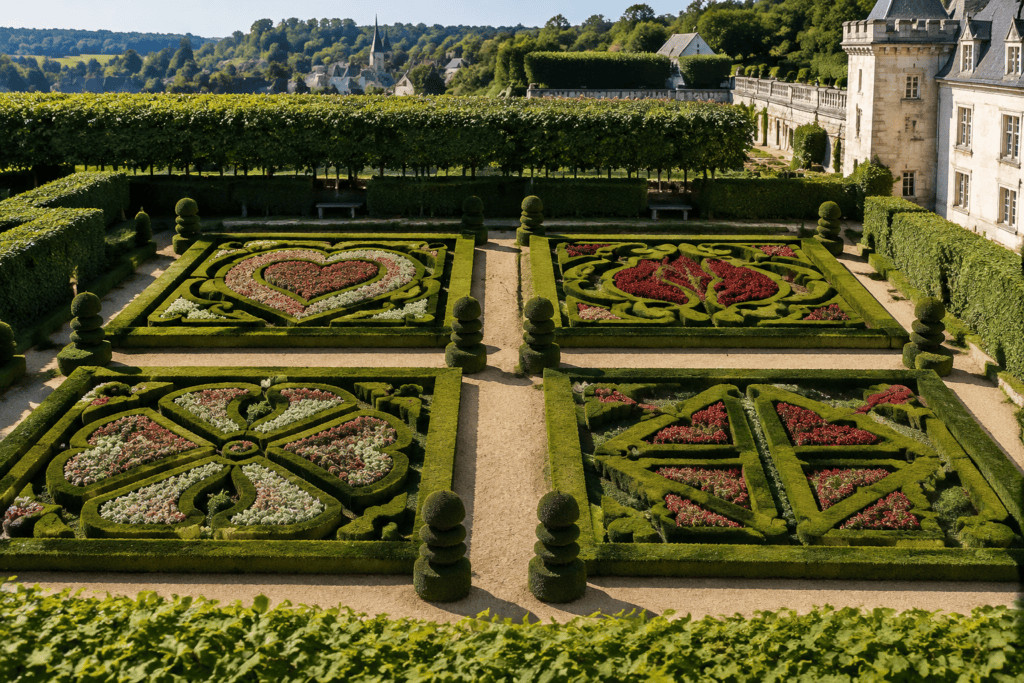
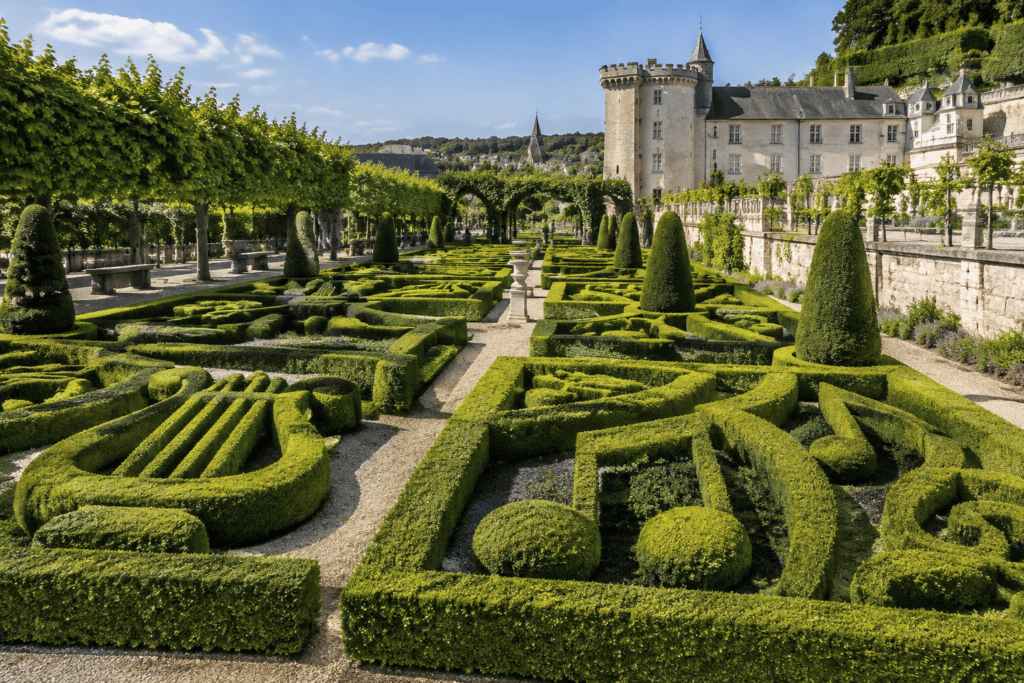
The ornamental gardens extend the experience with a more symbolic and decorative approach. Flower beds are structured by plant forms, topiaries, and floral compositions that evoke different themes. The patterns reveal themselves gradually along the walk: some are easy to read from the terraces, while others appear only as you move between the borders.
This area deserves a leisurely visit. Rather than trying to cover everything quickly, observe the contrasts between clipped masses, flowers, and open spaces. The colors are not chosen at random: they contribute to the garden’s overall legibility and create notably different effects depending on the time of day and the weather.
The ornamental gardens are also a good place to understand the effort to recreate a Renaissance spirit while preserving a living site. Historical forms provide the framework, but the result is maintained and renewed through contemporary horticultural practices. The visit thus becomes a dialogue between heritage, design, and gardening.
The Water Garden, Terraces, and Vistas
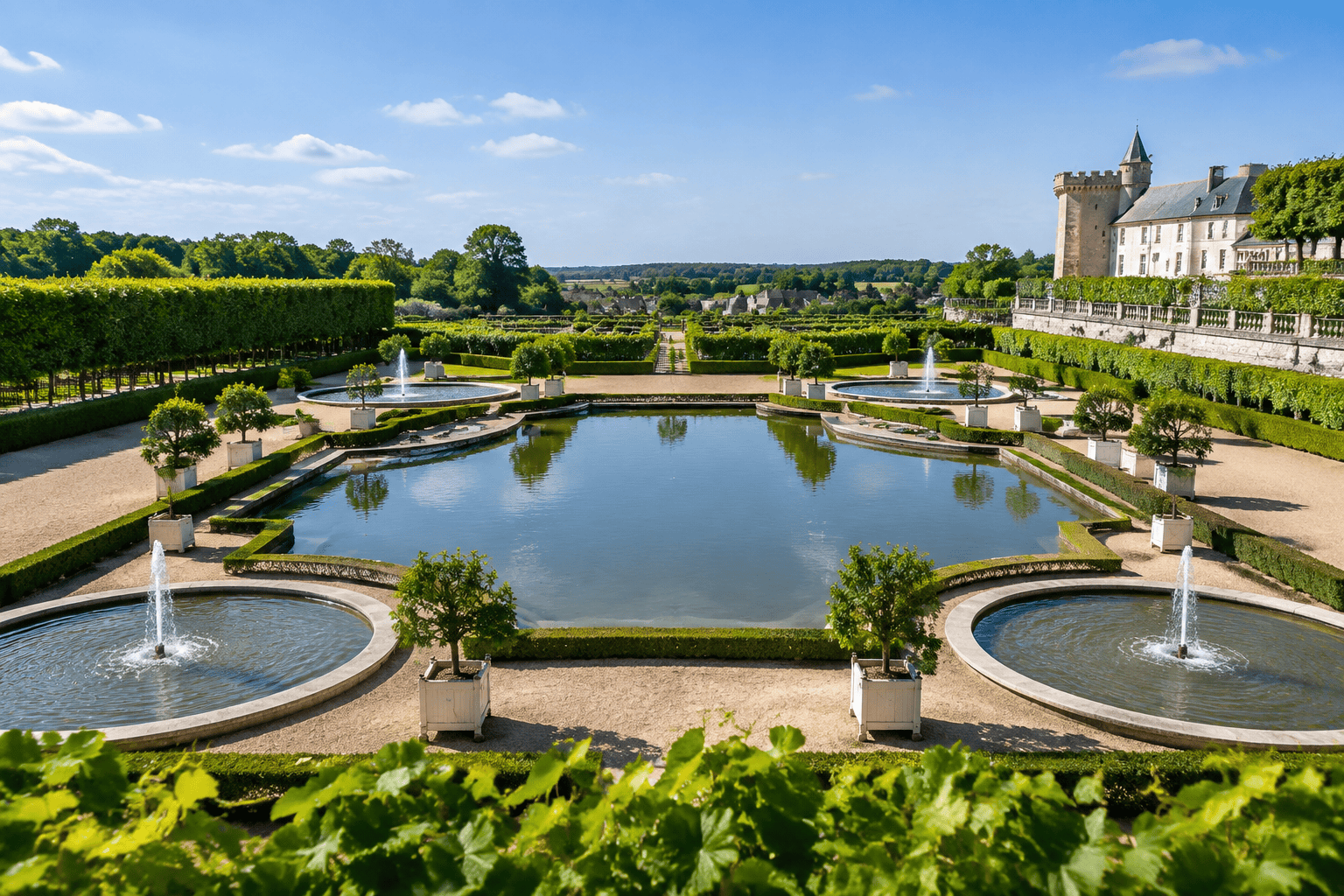
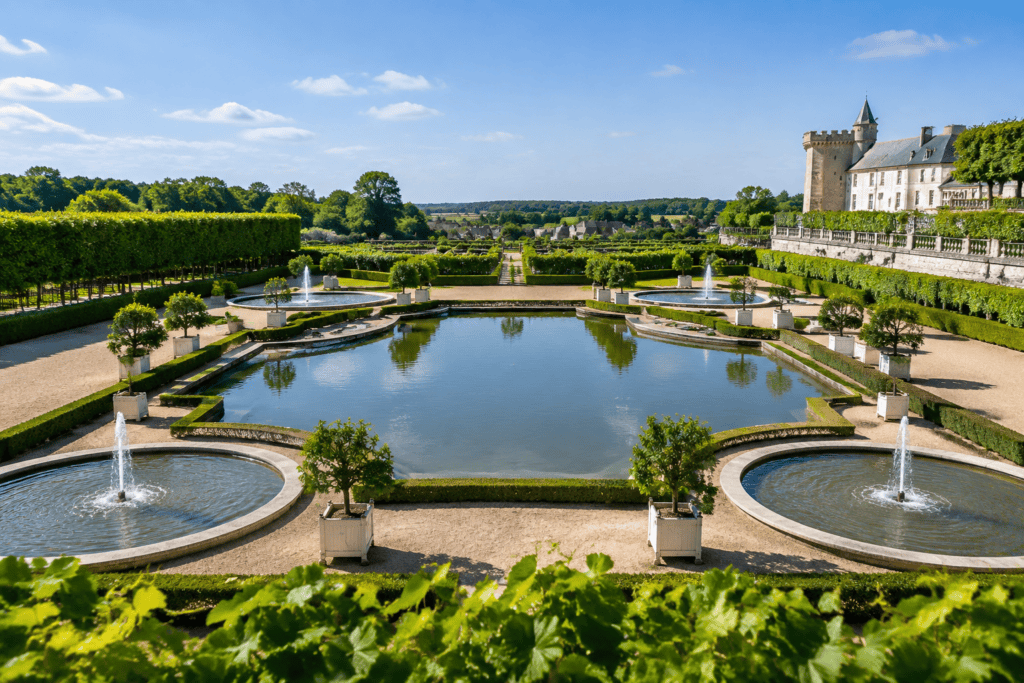
The water garden brings a sense of calm to the overall route. Its pool and regular lines create a more peaceful atmosphere, ideal for observing reflections and perspectives. After the vegetable garden’s visual richness, this area gives you a chance to slow down and see the estate differently, making more room for space, sky, and trees.
The terraces play an essential role in understanding Villandry. They are not merely convenient viewpoints: they explain the estate’s overall design. From above, the gardens appear as one continuous composition; at path level, they become a series of more intimate scenes. This alternation between panorama and proximity gives the walk its rhythm.
For photography, morning light can emphasize the relief and lines of the flower beds, while late afternoon often brings softer tones. Whatever time you choose, wear comfortable shoes: the route is mainly on foot, and the urge to stop often naturally makes the visit longer.
When Should You Visit Villandry Gardens?
Each season offers a different way to experience the estate. In spring, new plantings and blooms herald the arrival of the summer displays. Summer is generally the most spectacular period for colorful flower beds and the ornamental vegetable garden. In fall, foliage and warmer hues transform the perspectives; the visit often becomes more contemplative, with interesting light for photography.
The gardens are listed as open year-round, except for any exceptions announced by the estate, but hours and visiting conditions change depending on the period. The château does not follow exactly the same calendar. Before setting out, check the official page for hours, prices, and visiting options. This is especially useful on public holidays, during events, or in periods of extreme heat.
For a quieter stroll, arrive at the announced opening time or choose a less busy time slot. During peak season, a morning visit also limits exposure to high temperatures, especially in the vegetable garden and terrace areas, which are largely open.
Planning a Family Visit or a Visit with Limited Mobility
Villandry is well suited to a family outing. Children can approach the estate as one big observation game: spotting shapes, comparing colors, following the lines of the paths, or looking for details in the topiaries. The site also offers materials for families during certain periods. For a visit with young children, however, bring water, sun protection in summer, and enough time for breaks.
The estate states that a stroller-friendly route allows visitors to explore all the gardens. Specific arrangements are also available for visitors with disabilities; it is best to consult the accessibility information or contact the site directly if you need details related to your circumstances.
Dogs on leashes are listed as permitted in the gardens, while conditions are more restrictive inside the château. Picnics are not allowed within the gardens, but a nearby area is available for a break. As the rules may change, check the official guidelines before your visit.
Planning Villandry from Paris and Exploring the Region
Villandry is an excellent stop on an excursion from Paris or as part of a longer Loire Valley itinerary. The estate is about 15 kilometers from Tours, and the stations in Tours and Saint-Pierre-des-Corps are the main arrival points by train. From these stations, you will need additional transportation, as the château is in the town of Villandry rather than central Tours.
By car, the route is generally straightforward from Tours, and the estate provides road access information. Free parking is listed near the château, with designated spaces for certain visitors. For a day trip from Paris, however, allow for travel time and avoid overloading your schedule: Villandry, Azay-le-Rideau, Langeais, or Tours can make a coherent itinerary, but two well-visited sites are often better than a rushed succession of monuments.
Booking Paris Transfer can arrange a private journey from Paris, a Paris hotel, CDG, or ORY to Villandry, with a return to Paris or continuation to another stop in the Loire Valley. Transportation does not include admission to the estate: check the official visiting conditions separately.
Frequently Asked Questions
Where are Villandry Gardens located?
How much time should you allow to visit the gardens?
Are Villandry Gardens open year-round?
Can you visit Villandry with a dog?
How do you get to Villandry from Paris?
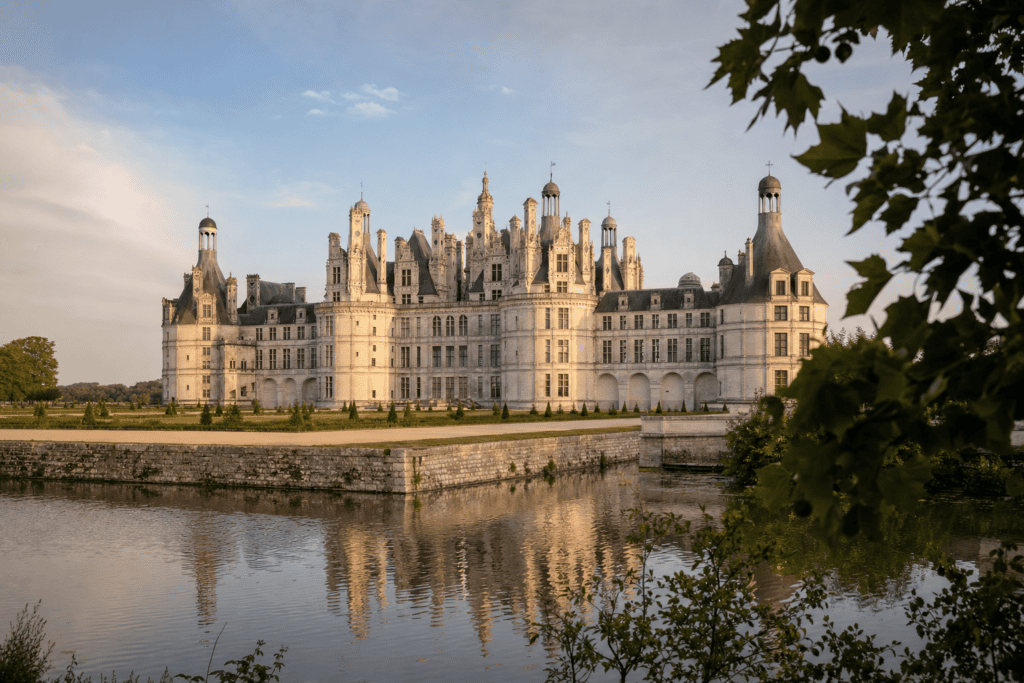 Chambord Castle A Renaissance masterpiece featuring a double-helix staircase, panoramic terraces, gardens…
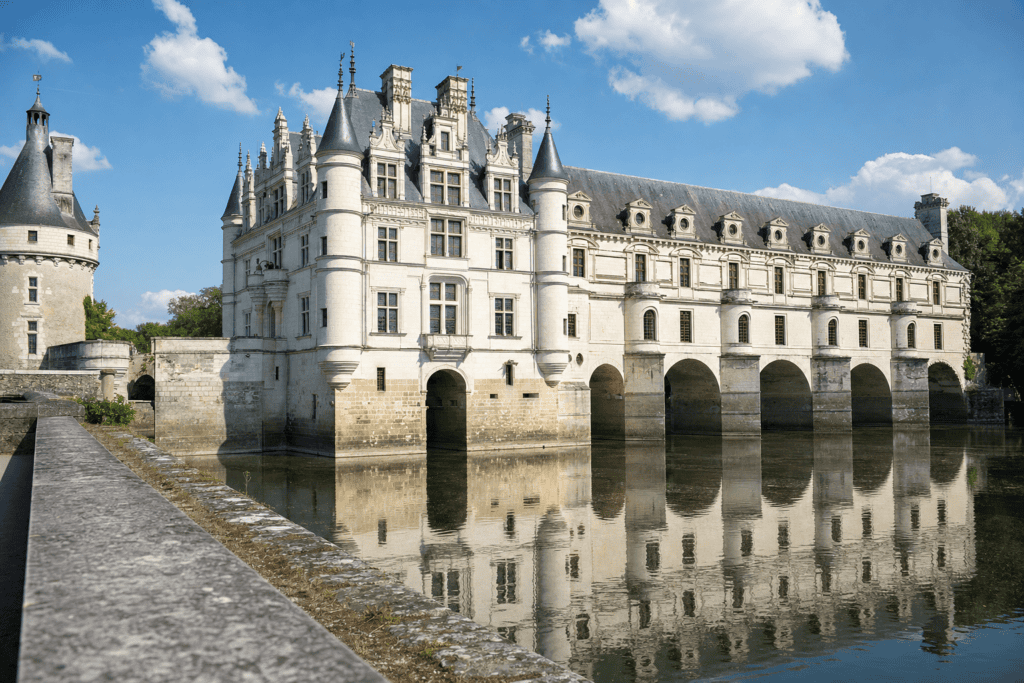 Château de Chenonceau A unique Renaissance château known for its gallery built over the Cher River, elegant gardens and the influence…
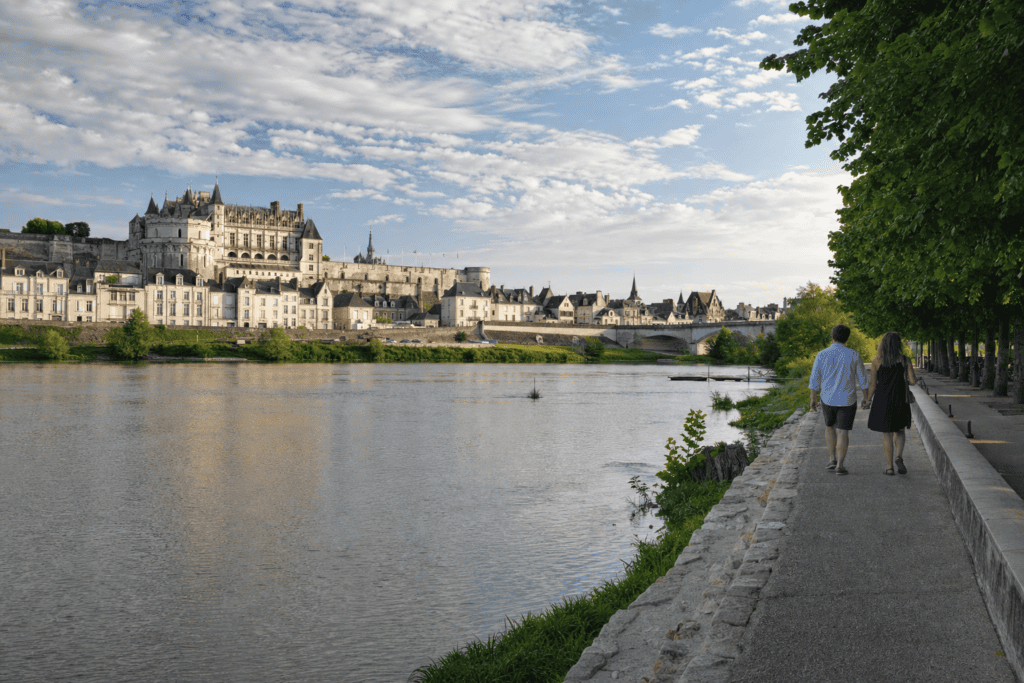 Amboise Historic Center and Quayside Walk A 2- to 4-hour walk through historic lanes, a royal château, Loire riverfronts, and…
 Loire à Vélo A 900 km cycling route connecting Loire châteaux, villages, vineyards and landscapes at your own pace…
Online booking · Paris → Château de Villandry, 3 rue Principale, 37510 Villandry, France
Choose your pickup date and time
Your departure and arrival details are already pre-filled. You can adjust them in the fare calculator before viewing the vehicles and fare.