




Palace of Versailles: Plan Your Visit from Paris
Versailles
The Palace of Versailles is a major cultural destination in the Île-de-France region, easily accessible from Paris. Once a hunting lodge, it was transformed into a royal residence and later a museum. Today, the estate includes the palace, the Hall of Mirrors, the royal apartments, the chapel, the gardens designed by André Le Nôtre and the Trianon estate. To make the most of your visit, distinguish between the indoor spaces, the gardens and the sites farther from the palace. Admission conditions, opening hours, exhibitions, construction work and garden programming may change, so always check the official information before you travel.
Practical information
Start with the palace at your scheduled time, then adapt your route to the gardens or Trianon. Wear comfortable shoes, as the estate is extensive.
Getting to Versailles from Paris with ease
Booking Paris Transfer can arrange a private ride between Paris, a Paris hotel, Charles de Gaulle or Orly Airport, and Versailles, with a return trip to Paris. The service covers transportation only. Tickets, time slots, tours and any options for the gardens or Trianon must be arranged separately through the official Palace of Versailles website.
Departure from Paris, a Paris hotel, CDG or ORY, with a return to Paris or continuation of an itinerary that began in Paris.
Understanding the Versailles Estate
The Palace of Versailles is more than just a palace. The estate includes the main building, gardens, groves, the Grand Trianon, the Petit Trianon and the Queen’s Hamlet. Each of these areas has its own history and atmosphere. A first visit focused on the palace reveals the monarchy’s ceremonial spaces, while a longer route also takes in the walking areas and more intimate residences.
The site grew from a hunting lodge built for Louis XIII before becoming, under Louis XIV, the center of the court and royal government. After the French Revolution, the palace was also transformed into a museum dedicated to the history of France. This succession of uses explains the variety of decorations and collections visible today.
The estate has been listed as a UNESCO World Heritage Site since 1979. Its size nevertheless means you should choose your priorities rather than trying to cover everything in a hurry.
The Palace and the Hall of Mirrors
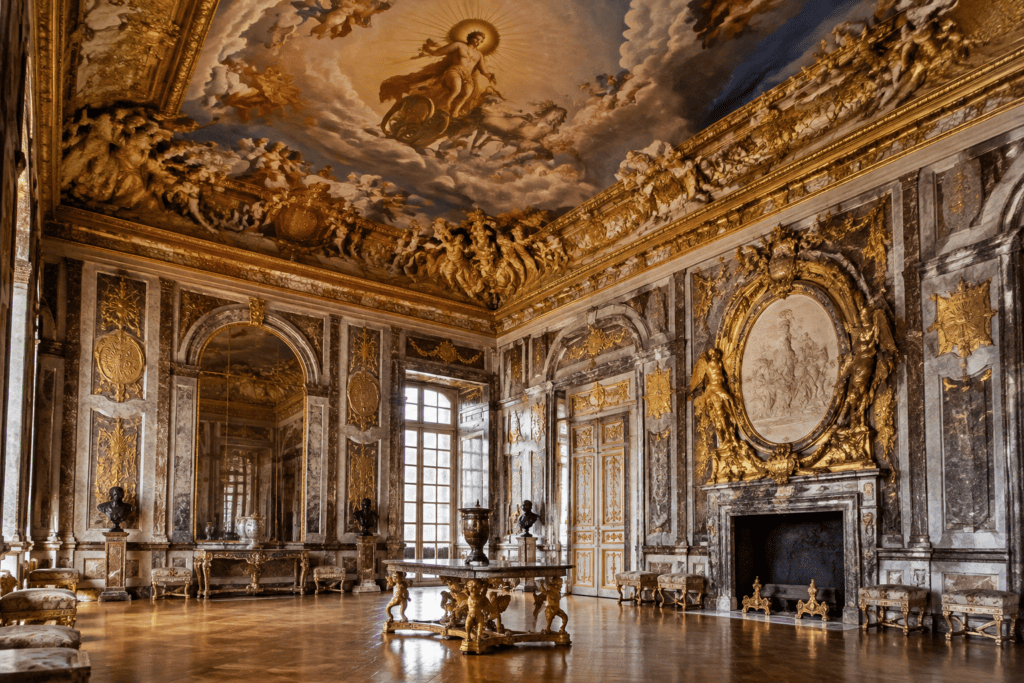
The palace route features the State Apartments, the royal apartments, the Hall of Mirrors and several historic rooms. The salons in the State Apartments combine ceiling paintings, marble, sculptures and decorative arts. Their arrangement around mythological figures contributes to the representation of Louis XIV’s power, particularly in the Apollo Room, dedicated to the sun god chosen as the royal emblem.
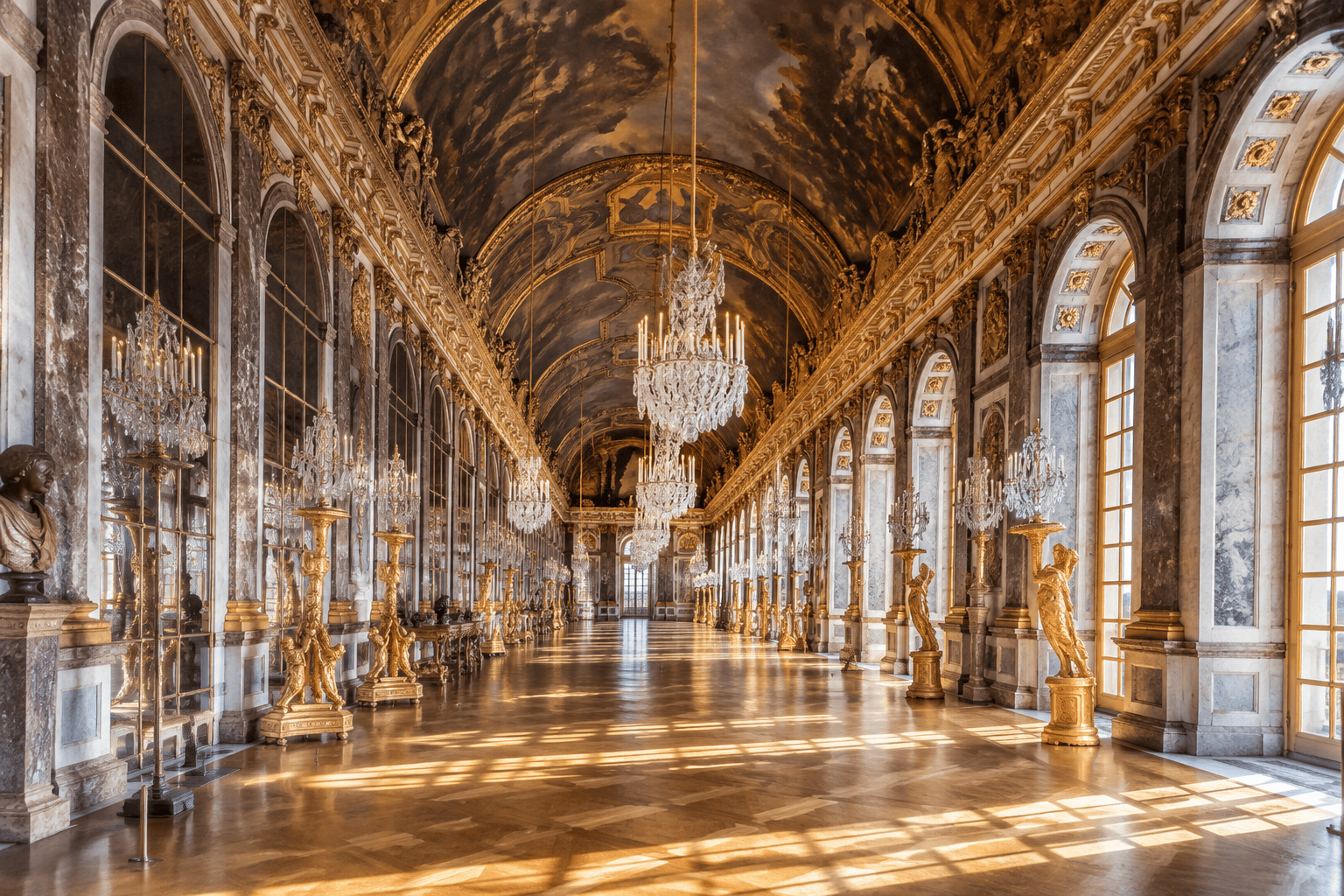
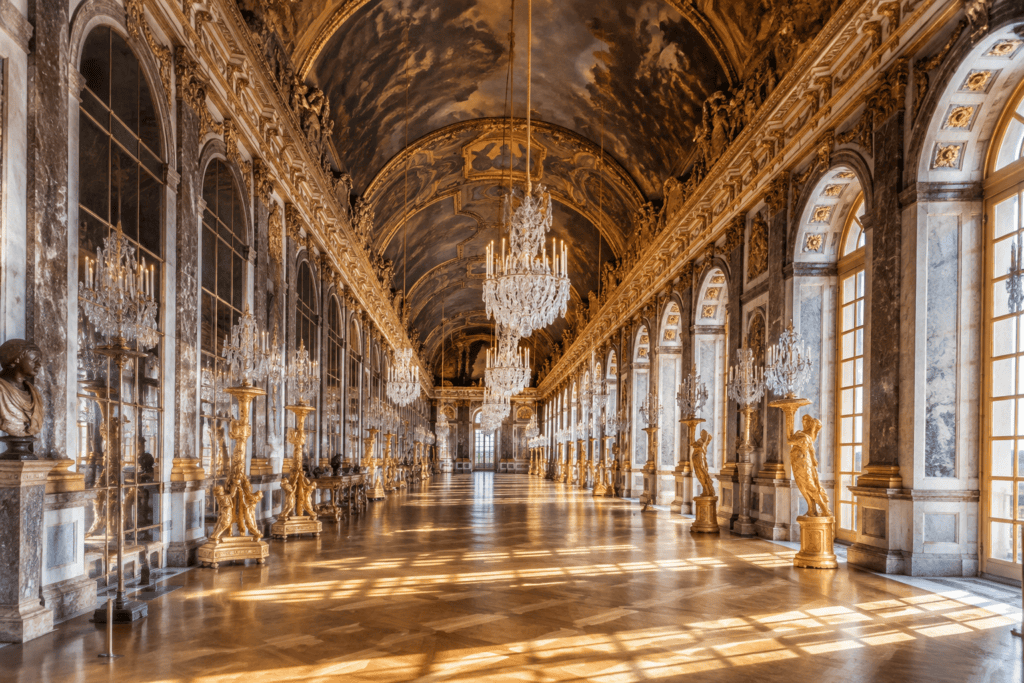
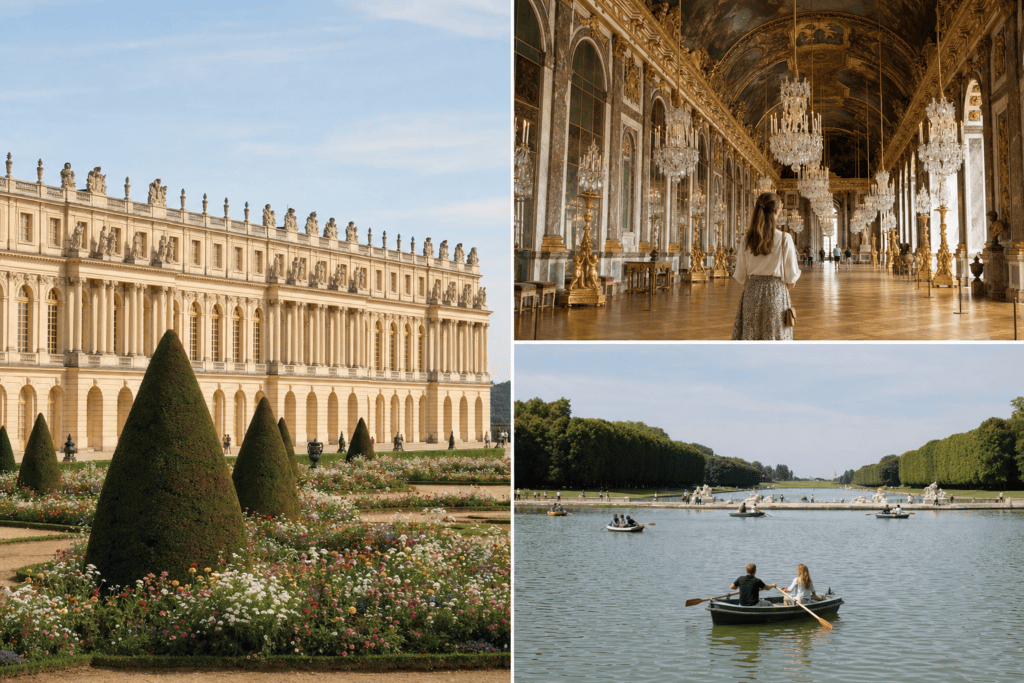
The Hall of Mirrors is the palace’s best-known space. Measuring 73 meters long, it has 17 windows overlooking the gardens and 17 mirror-clad arches. Its ceiling, painted by Charles Le Brun, celebrates the achievements of Louis XIV’s reign. The treaty of Versailles was also signed here on June 28, 1919.
This part of the route can be very busy. Take time to look at the ceilings, mirrors and perspectives rather than walking through the rooms without stopping. The route or access to certain areas may change depending on construction work and programming.
Royal Apartments and Court Life
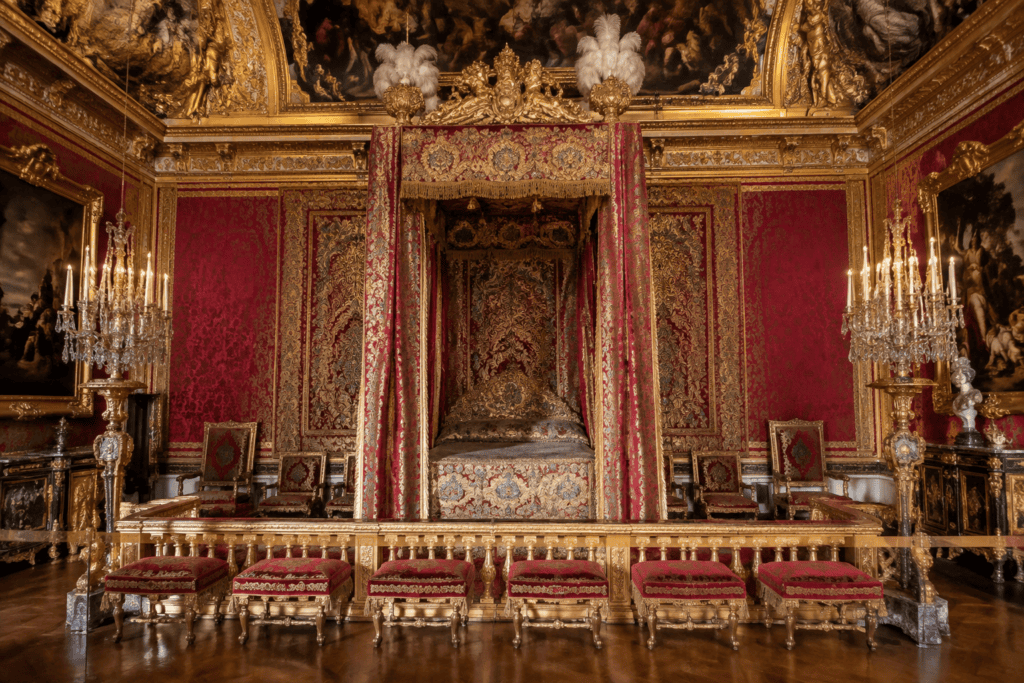
The royal apartments help explain the court’s daily life. At Versailles, rising, retiring, audiences and presentations followed a precise ceremonial routine. Spaces that may appear private were therefore also places of representation. The King’s Bedchamber, installed by Louis XIV in 1701, occupies a central position in the palace’s layout and reflects the sovereign’s place at the heart of political life.
The Queen’s Apartments are associated with several occupants, notably Marie Leszczynska and Marie Antoinette. The visible decorations reflect successive transformations and do not always correspond to a single historical period. This layering makes the visit especially interesting for anyone drawn to interior architecture and decorative arts.
Look closely at the wood paneling, ceilings, connecting doors and enfilades. These details explain the hierarchy of the spaces and how the court moved through them. For a family visit, an official resource or audio guide can help provide context for the rooms you see.
Royal Chapel and Museum of the History of France
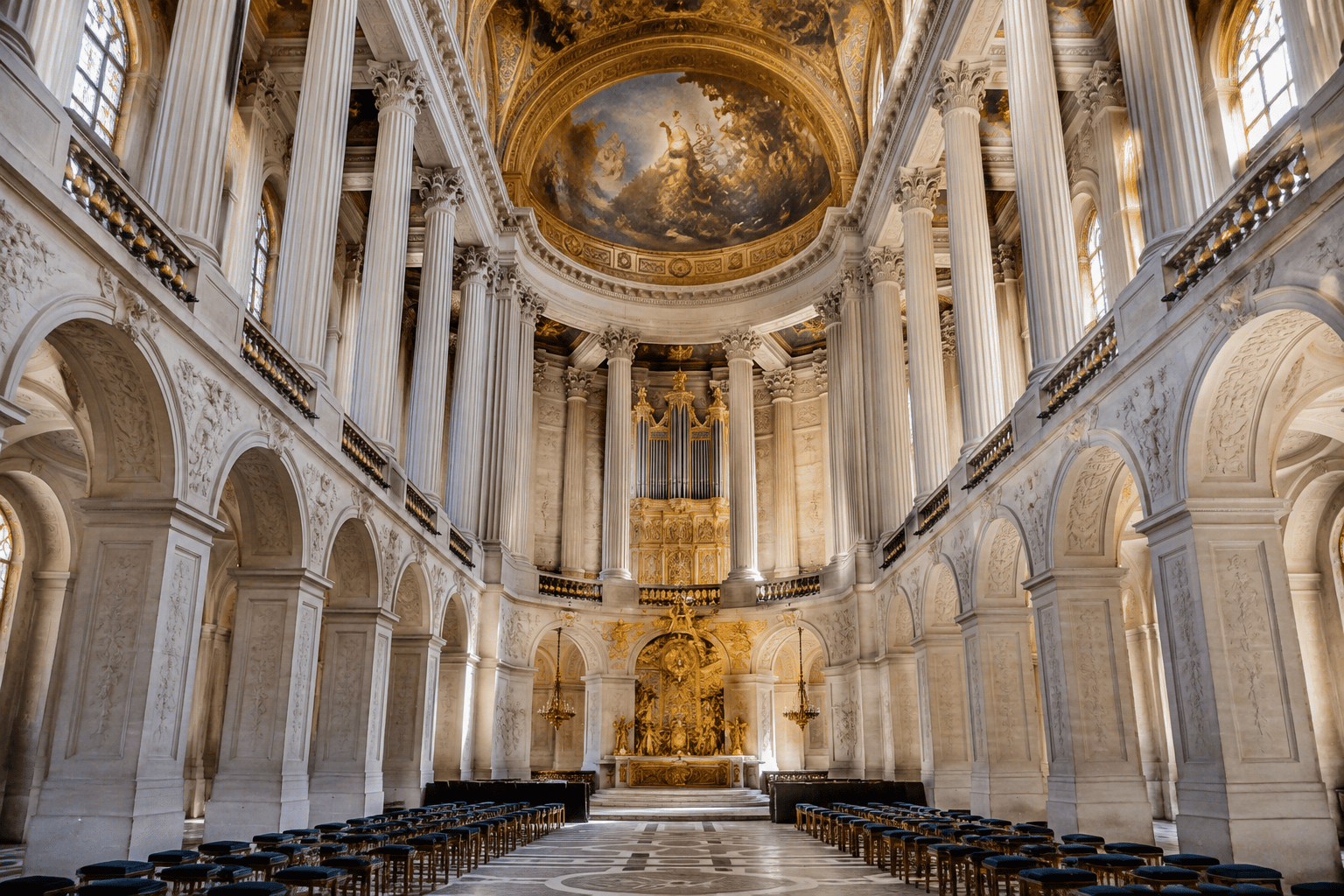
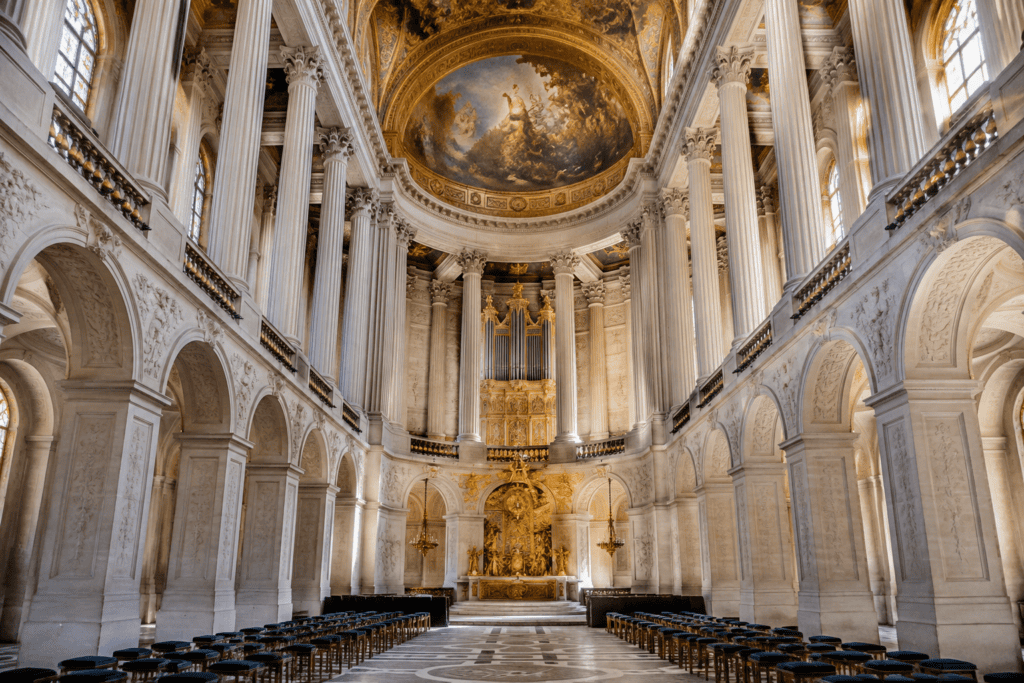
Located at the north end of the palace, the Royal Chapel is one of the estate’s major architectural landmarks. Completed under Louis XIV, it was intended for the court’s daily Mass. Its two-level layout, height and monumental decoration set it apart from the neighboring salons. It reflects the role of religion in royal ceremony and in the representation of power.
The palace also houses spaces connected with the Museum of the History of France, created under Louis-Philippe. The historic galleries broaden the story beyond the reign of Louis XIV and the image associated with Marie Antoinette. They place Versailles within a wider chronology, from the royal estate through the transformations of the 19th century.
The chapel, galleries and certain rooms may be affected by services, construction work or events. Before you leave, check the route announced on the official website. This precaution helps avoid building your visit around an area that is temporarily inaccessible.
Gardens, Groves and Seasonal Programming
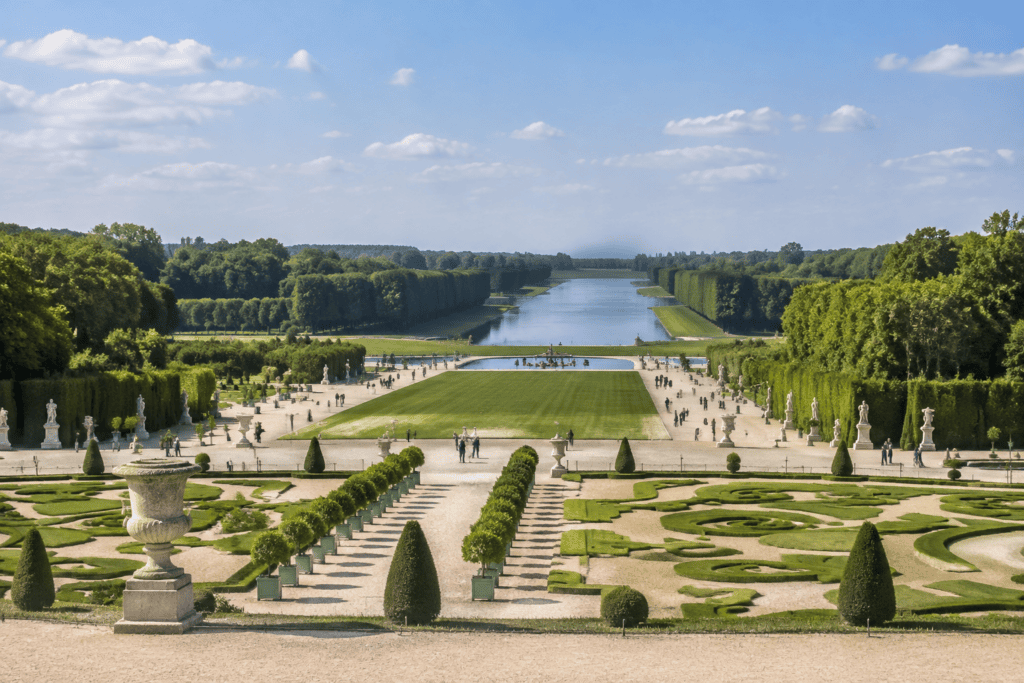
The gardens designed by André Le Nôtre extend the palace’s architecture through grand perspectives, parterres, fountains and groves. The central axis draws the eye toward the Grand Canal, while the Orangery and areas near the palace offer several remarkable viewpoints. The walk can easily take several hours, especially if you want to explore the more distant sections.
The Musical Fountains Shows and musical performances follow a seasonal schedule. The operation of certain fountains, access to groves and entry conditions may therefore differ from one date to another. Check the official calendar before choosing your ticket or itinerary, without assuming that an event takes place every day.
For a first visit, choose a few areas: the parterres near the palace, the Grand Canal axis and one or two groves. Bring water, protection from the sun or rain and suitable shoes. The weather can significantly affect the comfort of your walk.
Grand Trianon, Petit Trianon and the Hamlet
The Trianon estate is located some distance from the palace and should be treated as a separate stop. Built under Louis XIV, the Grand Trianon offers a more residential setting than the State Apartments. Its marble, gardens and interiors illustrate another way of living at Versailles, one more focused on retreat and leisurely walks.
The Petit Trianon is particularly associated with Marie Antoinette. It offers insight into private uses and the estate’s transformations in the 18th century. Nearby, the Queen’s Hamlet features a rural setting imagined for the sovereign. The contrast with the palace’s official façades and grand perspectives is one of the main attractions of this part of the estate.
Be sure to factor the distances into your plans. Half a day is rarely enough to comfortably include the palace, gardens and Trianon. Before setting out, check the opening hours, the areas included with your ticket and any transportation options available within the estate.
Access and Tips for a Successful Visit
The Palace of Versailles is located at Place d’Armes in Versailles, west of Paris. From Paris, allow extra time for the journey, finding your way, security checks and access to your selected time slot. Practical conditions depend on the date, ticket, exhibitions, construction work and programming. Check the official information when booking, then verify it again shortly before you leave.
Large bags and certain items may be subject to special rules. Check the applicable guidelines rather than arriving with bulky equipment. A small bag, comfortable shoes and clothing suited to the weather will make the day easier, particularly if you include the gardens and Trianon.
For a first visit, start with the palace at the stated time. Then assess the time and energy you have left before continuing to the gardens or Trianon. Private transportation from Paris, a Paris hotel, Charles de Gaulle or Orly can simplify the journey, but it does not replace a ticket or a reservation through the official website.
Useful sources
Frequently Asked Questions
How long does it take to visit the Palace of Versailles?
Is the Hall of Mirrors included in the palace route?
Do you need to reserve a time slot to visit Versailles?
Can you visit the palace, gardens and Trianon on the same day?
Do the Musical Fountains Shows take place year-round?
 What to do in Versailles in one day A detailed itinerary for discovering the château, gardens, Notre-Dame Market, and historic neighborhoods…
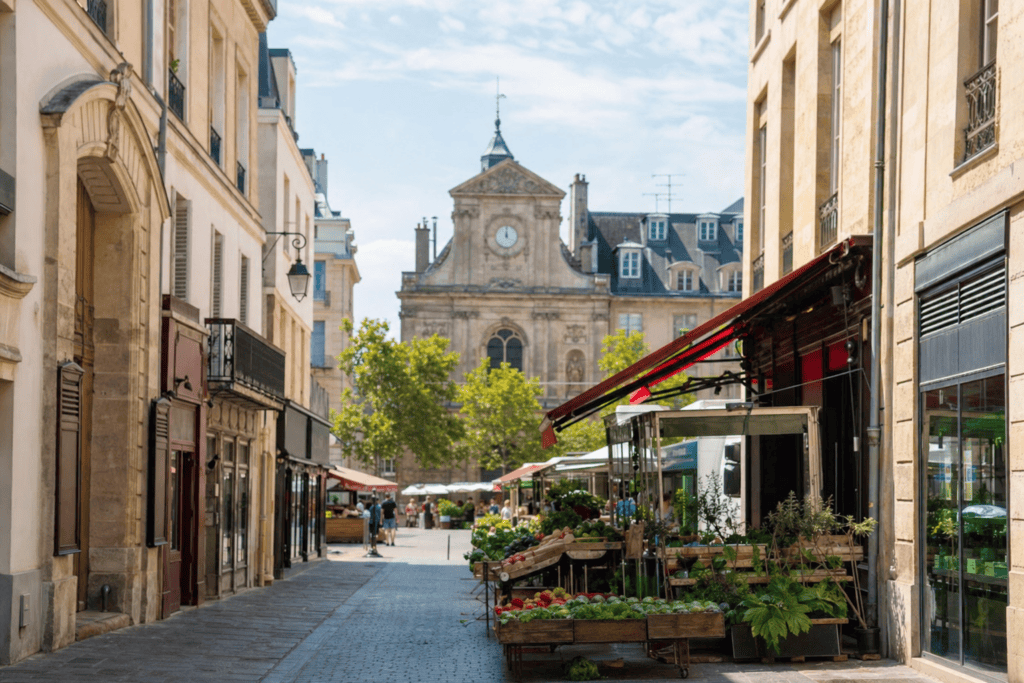 Notre-Dame Neighborhood and Notre-Dame Market A lively walk through Versailles, among market halls, heritage, food shops, and historic streets.
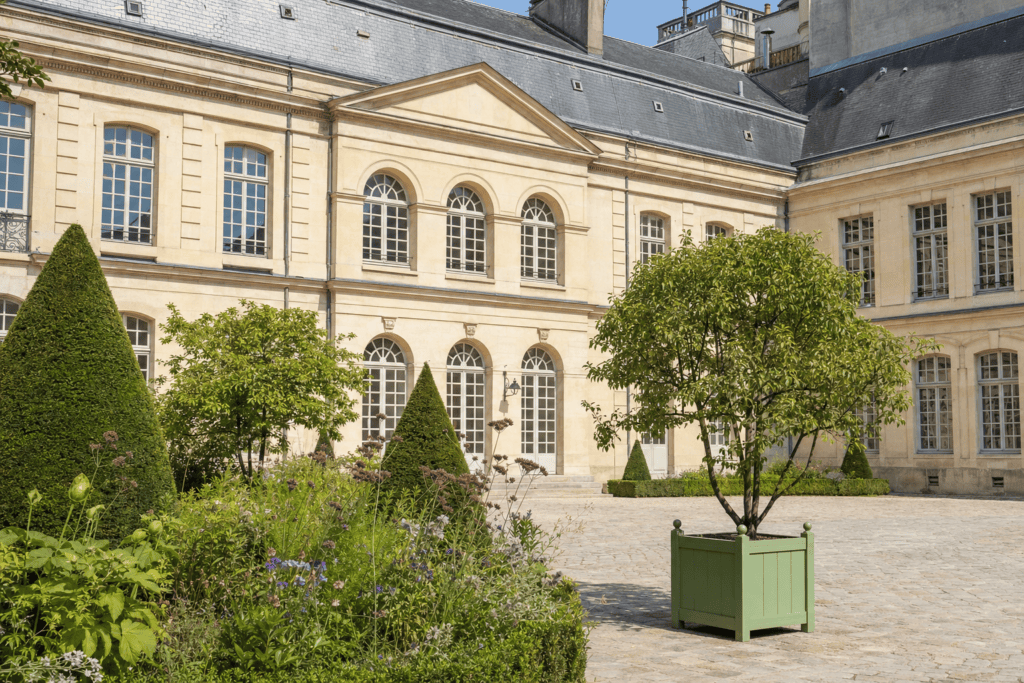 Lambinet Museum A small-scale museum in an elegant private mansion, combining the history of Versailles, decorative arts…
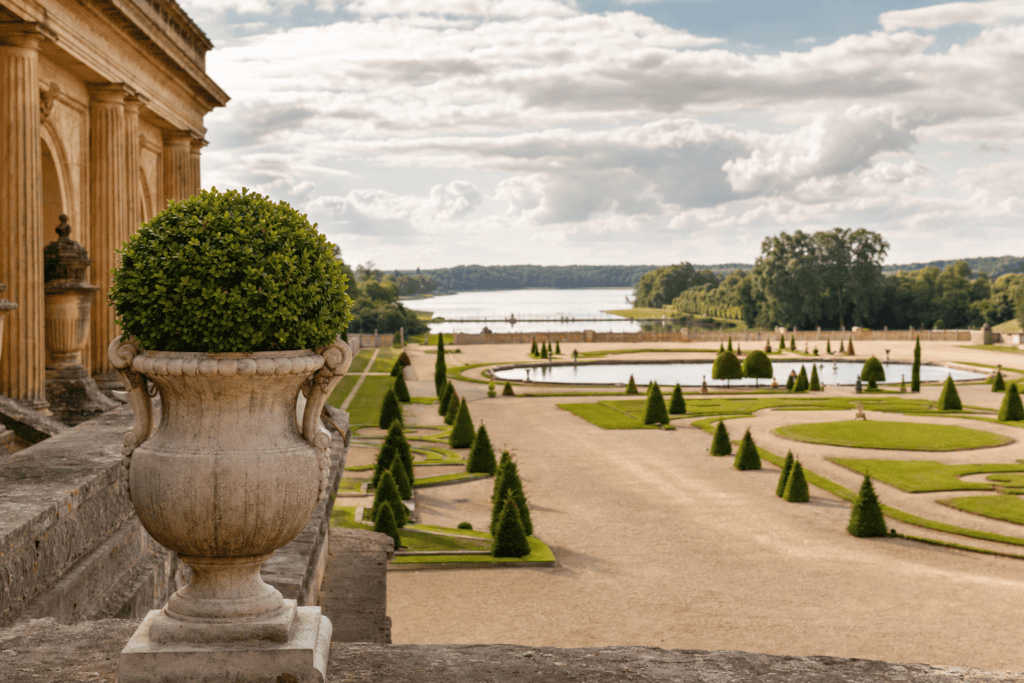 Gardens and Estate of Versailles A royal walk among vistas, groves, fountains, the Grand Canal, and the Trianon estate.
Online booking · Paris → Place d’Armes, 78000 Versailles, France
Choose your pickup date and time
Your departure and arrival details are already pre-filled. You can adjust them in the fare calculator before viewing the vehicles and fare.