



Arras Belfry: Guide to the Historic Squares
Arras
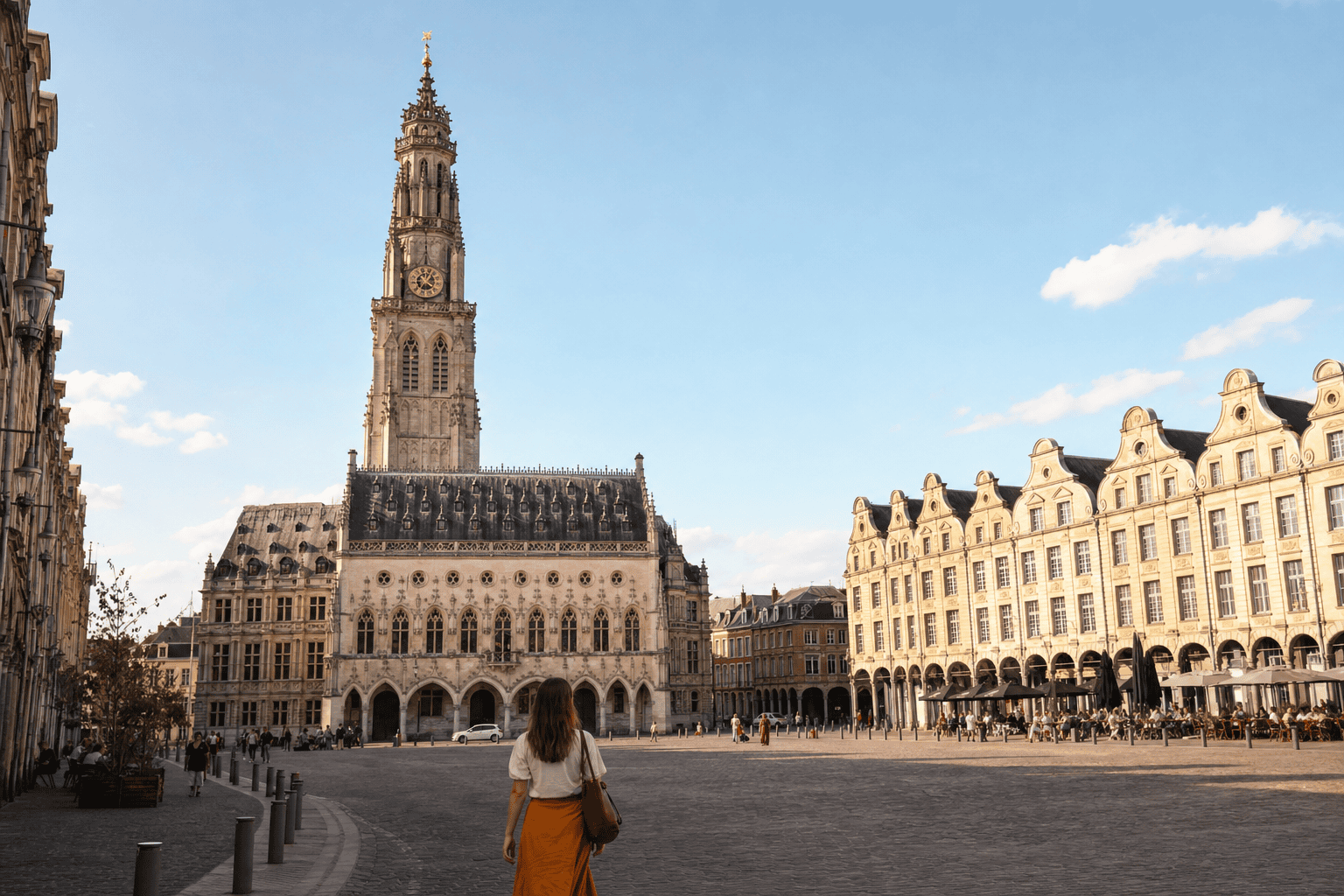
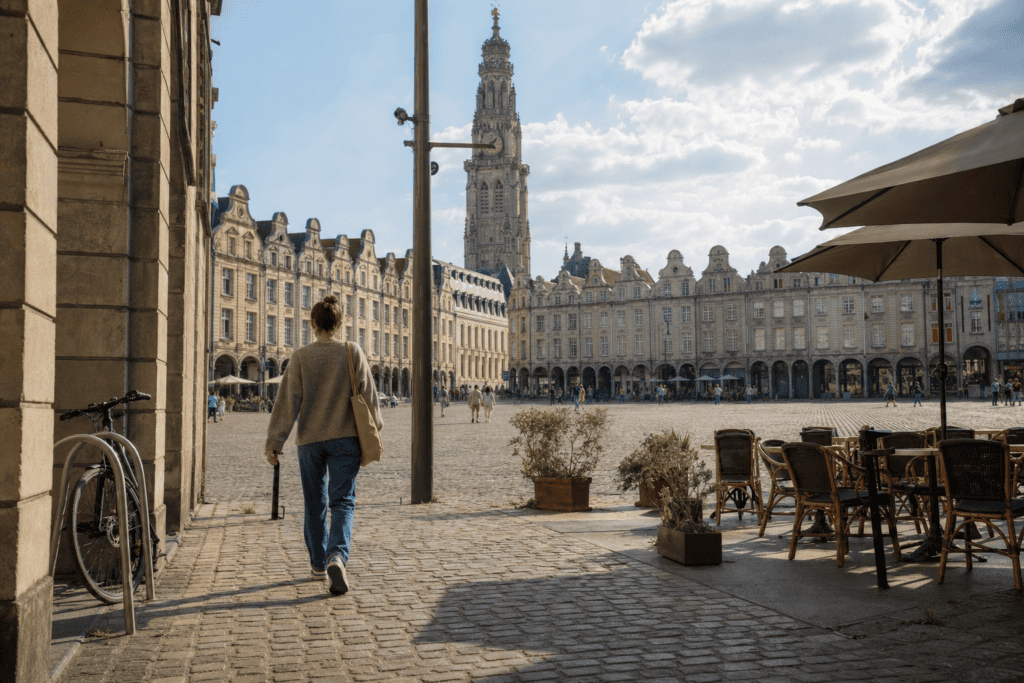
In the heart of Arras, the Arras Belfry overlooks Place des Héros and Grand’Place, two major heritage sites in Hauts-de-France. The first is home to City Hall and a remarkable collection of brick-and-stone façades; the second unfolds as a vast urban composition shaped by the city’s commercial history. Gravely damaged during World War I, the city center was rebuilt around Arras’s distinctive silhouettes, perspectives and architectural identity. A walk here brings together architecture, panoramic views, local life and wartime history. For a first visit, allow one to two hours for the squares and belfry, then more time for Saint-Vaast Abbey, the citadel or the Wellington Quarry. Access conditions for the tower should be checked before departure.
Practical information
Begin with a full circuit of Place des Héros before taking in City Hall and the belfry, then head to Grand’Place via Rue de la Taillerie. Wear comfortable shoes for the cobblestones and ask about the tower’s exact access conditions if you need a stair-free route.
Travel to Arras from Paris with a Private Chauffeur
Booking Paris Transfer can arrange transportation from Paris, an Île-de-France hotel, Charles de Gaulle Airport or Orly to Arras, with a return to Paris or onward travel in Hauts-de-France. This service covers transportation only: it does not include admission tickets or a guided tour. Check monument access conditions with the official organizations.
Transportation service departing from Paris, Île-de-France, CDG or ORY; Booking Paris Transfer is not an independent local service based in Arras.
Understanding the Belfry’s Role
The Arras Belfry is first and foremost a civic building. In the cities of northern France and the former Flemish territories, these towers signaled the existence of an organized community, housed bells and structured collective life. They were also associated with municipal freedoms and the authority of the town aldermen. In Arras, the belfry forms a cohesive ensemble with City Hall and serves as a landmark throughout the historic center.
Its inclusion in the serial property of the Belfries of Belgium and France, inscribed on the UNESCO World Heritage List, is significant. This inscription does not concern a single monument: it brings together several belfries selected for their historical, architectural and civic value. The Arras monument is therefore part of a European history of cities, municipal authorities and urban landscapes.
From Place des Héros, observe its vertical lines, spire and the way the tower rises above the rows of houses. Before looking for decorative details, consider the scale relationships between the belfry, City Hall and the squares. This broad perspective explains why the tower remains Arras’s most immediately recognizable symbol.
Reading the Façades of Place des Héros
Place des Héros offers the most intimate setting of the visit. City Hall and the surrounding houses form an urban ensemble defined by brick, stone and decorative details whose forms vary from one façade to the next. The architecture is often associated with Flemish Baroque, but the square’s appeal lies precisely in the diversity of its buildings and the richness of their composition.
Look for the gables, dormer windows, window surrounds and reliefs. Some elements are curved, while others are more understated; several sections were rebuilt after the destruction of World War I using historic documents as references. As you move toward the corners of the square, you will better notice differences in levels, window rhythms and façade depth.
The square remains an active place, with shops, terraces and public events. Walk around it before choosing your viewpoint: City Hall and the belfry look different from each side. This circular walk also shows how the monumental setting fits into everyday life.
Discovering Arras Grand’Place
A few streets away, Grand’Place changes scale dramatically. Larger and more open, it recalls Arras’s commercial role and its former function as a marketplace. Long rows of houses create a continuous composition, punctuated by gables, openings and variations in brickwork. This repetition creates a strong visual unity without making the façades identical.
Cross the square in several directions to understand its perspectives. From the center, the alignments create a panoramic impression; from the ends, the streets extend the view and add depth. Place des Héros feels more intimate and institutional, while Grand’Place conveys the breadth of a commercial space.
Both sites are best explored on foot, taking time to notice details above eye level. The light changes quickly across façades with different orientations. After rain, the cobblestones can enhance reflections and contrasts, but they also become more slippery. A leisurely walk reveals the continuity between the squares, streets and daily activities of the city center.
Climb the Belfry and Take in Arras
Climbing the belfry offers a different perspective on the city. From above, Place des Héros and Grand’Place appear as two distinct urban compositions linked by the streets of the center. The panorama also helps place Saint-Vaast Abbey, the cathedral, the citadel and the neighborhoods rebuilt around the historic core. In clear weather, the view extends across the landscapes of Artois.
Visiting conditions may change depending on the season, construction work, safety requirements or operating arrangements. Information about the elevator, final staircase, reservations and accessibility should therefore be requested from Arras Pays d’Artois Tourisme before traveling to Arras. Do not plan this step as a completely step-free route without obtaining up-to-date confirmation.
If the climb is open, take time first to study the city’s broad lines before taking photographs. The squares become geometric reference points, while the reconstruction appears in the continuity of the rooftops. Visitors prone to vertigo or with specific needs should carefully check access conditions and any visit restrictions.
Reconstruction and the Memory of World War I
Modern-day Arras is inseparable from the destruction of World War I. The belfry, City Hall and the buildings around the squares were severely damaged. The city you see today is therefore not an old district left intact: it is the result of a reconstruction project that sought to restore the city’s silhouettes, perspectives and architectural identity using surveys, photographs and other documents.
Architect Pierre Paquet played an important role in rebuilding the belfry and City Hall. Historic forms were recreated while meeting the technical constraints of the 20thth century. The façades thus reflect a dual heritage: that of the historic city and that of its revival after the conflict.
The Wellington Quarry extends this story by recounting preparations for the 1917 Battle of Arras in the former chalk quarries. By adding Saint-Vaast Abbey, the cathedral or the citadel, you can connect civic heritage, religious history and military memory in a single day.
Getting Here from Paris and Planning Your Visit
Arras is well suited to a day trip from Paris. Trains departing from Paris-Nord serve Arras station; journey times, stops and schedules depend on the service and date. Check the latest information on SNCF Connect before booking. From the station, exit toward the city center, follow signs to Place des Héros, then reach Grand’Place via Rue de la Taillerie. This route lets you gradually enter the city before reaching the two heritage squares.
Once there, start at Place des Héros and ask about visiting the belfry. Then head to Grand’Place and, if time allows, continue to Saint-Vaast Abbey, the cathedral, the citadel or the Wellington Quarry. A full day is preferable for combining architecture and wartime history without rushing from one site to the next.
If driving from Paris, allow extra time for traffic and check parking options before departure. Markets, ceremonies and events may affect the atmosphere or access to the squares. Booking Paris Transfer can arrange transportation from Paris, Île-de-France, CDG or ORY, with a return to Paris; this is a transportation service without admission tickets or a guided tour.
Choosing the Season and Getting Great Photos
The season strongly influences the experience of the squares. In spring and summer, terraces and long days make strolling enjoyable. Autumn highlights the warm tones of the brick and may bring fewer visitors. In winter, illuminations and year-end events transform the setting, while cold, wind and limited daylight make it advisable to check belfry conditions before departure.
Markets let you experience Place des Héros and Grand’Place as living spaces rather than simply heritage backdrops. Since schedules may change, check the official Arras Pays d’Artois Tourisme calendar. On busy days, avoid blocking passageways and respect the activities of the merchants, residents and professionals present in the squares.
For photography, morning light works well on Place des Héros, while late afternoon can warm the long façades of Grand’Place. A wide composition captures the perspectives; a tighter frame reveals variations in windows, gables and materials. Choose lightweight equipment, especially if you plan to walk to other sites. The best images often combine the belfry with the depth of the façades rather than showing it straight on.
Frequently Asked Questions
Is the Arras Belfry listed by UNESCO?
How much time should I allow?
Is the climb to the belfry accessible to everyone?
How do you get to Arras from Paris?
Which sites can you visit nearby?
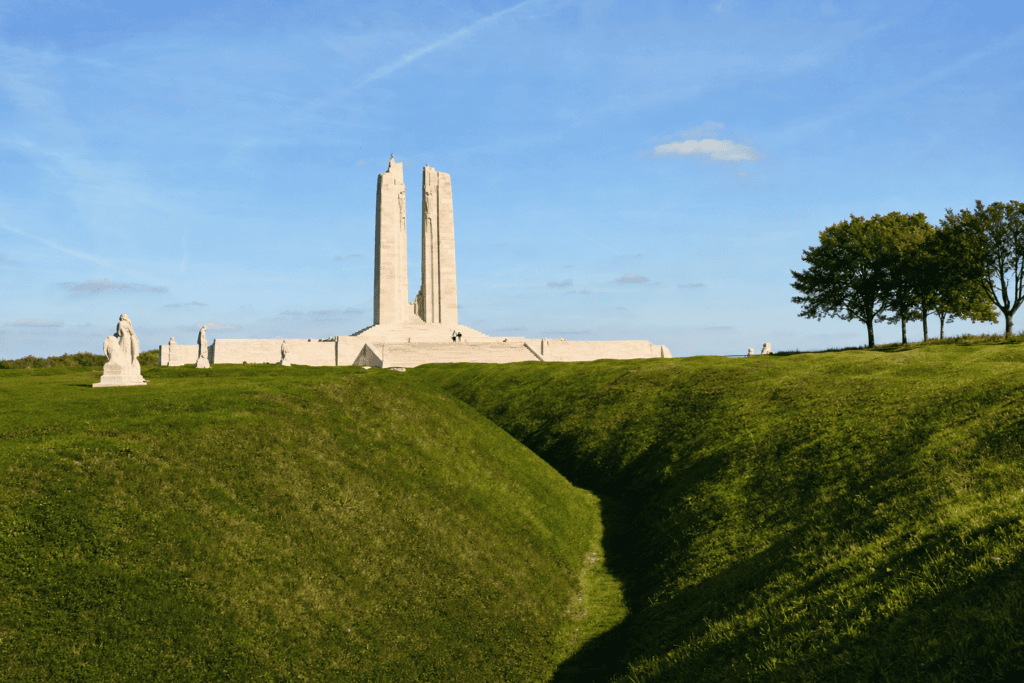 Wellington Quarry, Arras Battle Memorial Go underground in Arras to discover the quarries adapted by Allied tunnellers before the Battle of…
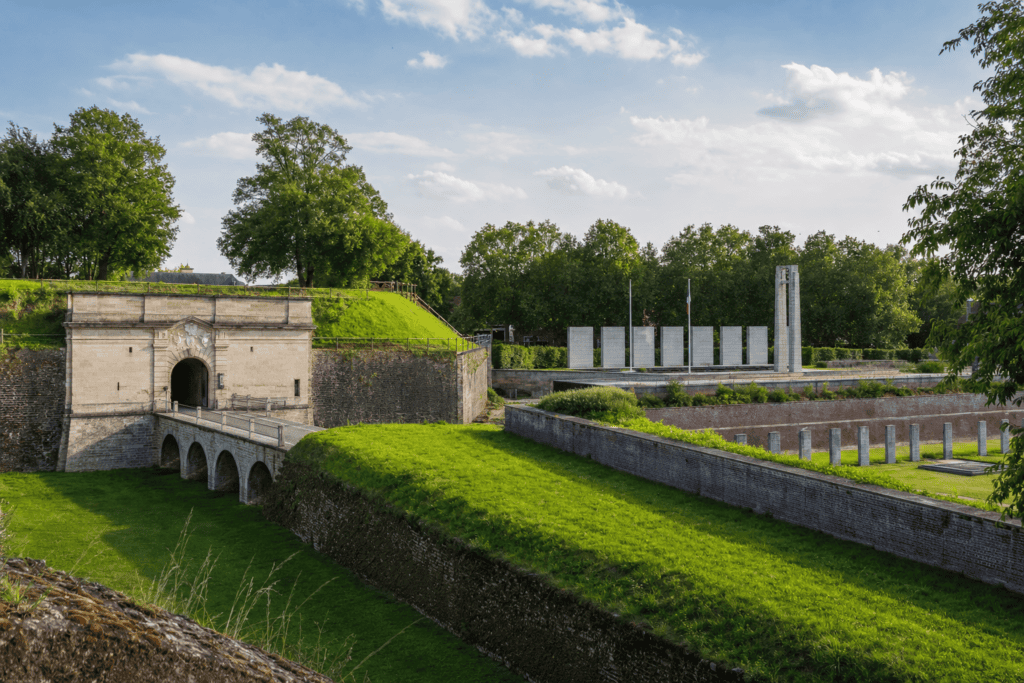 Arras Citadel and Fusillés Wall Memorial A former Vauban stronghold, with tree-lined moats and a memorial dedicated to executed resistance fighters…
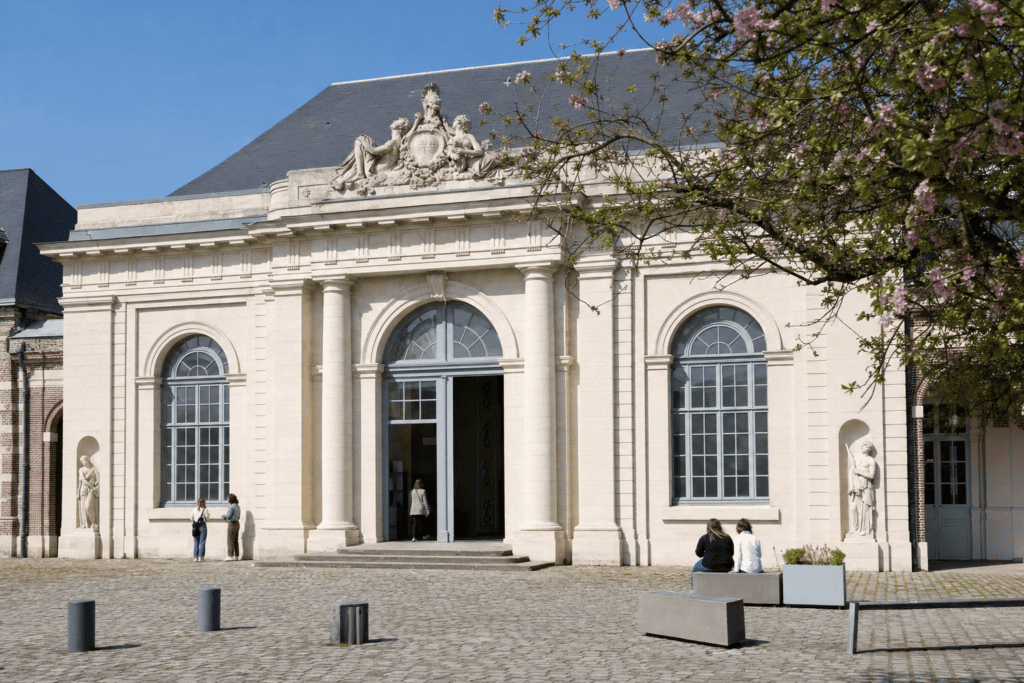 Arras Museum of Fine Arts In the former Saint-Vaast Abbey, a remarkable museum featuring European paintings, Mays, tapestries and…
 Arriving in Arras by train and planning a car-free trip From Arras station, the grand squares, belfry, Saint-Vaast and several memorial sites…
Online booking · Paris → Place des Héros, 62000 Arras, Hauts-de-France — exterior landmark for the belfry and City Hall; check the tour meeting point with the tourist office.
Choose your pickup date and time
Your departure and arrival details are already pre-filled. You can adjust them in the fare calculator before viewing the vehicles and fare.