



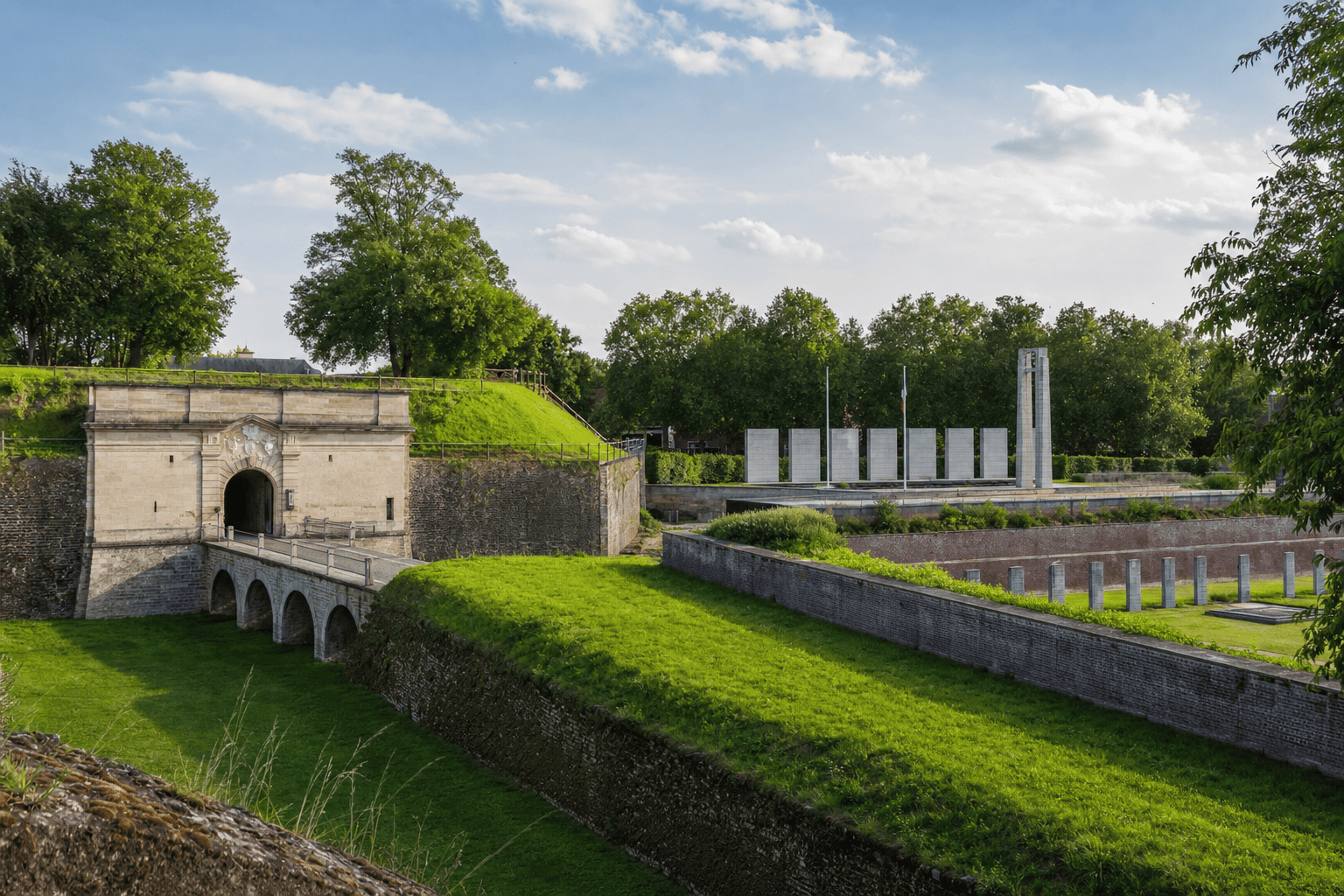
Arras Citadel: Vauban and the Fusillés Wall
Arras
Southwest of central Arras, Arras Citadel brings together military architecture, landscaped grounds and memories of World War II. Built after the city became part of France, it is part of the “Fortifications of Vauban” World Heritage site, inscribed by UNESCO in 2008. The Royal Gate, bastions and ditches help explain the defensive logic of this former stronghold. In the Porte Dauphine area, the Fusillés Wall honors Resistance members executed during the Occupation. The two areas have separate points of interest: before setting out, check local information about paths, events and any access restrictions.
Practical information
Wear closed-toe shoes, especially after rain. From Arras train station, allow about 25 to 30 minutes on foot, depending on the entrance. Transportation and parking may change during the Main Square Festival, ceremonies or other events: check local information on the day of your trip.
Arras from Paris
Arrange a private transfer between Paris, a Paris hotel or CDG/ORY and Arras, with a return to Paris or continuation of an itinerary in Hauts-de-France. The service covers transportation only and does not include tickets or a guided tour.
Departure from Paris, a Paris hotel, CDG or ORY; return to Paris or a regional itinerary to be arranged.
A Stronghold Designed by Vauban
Arras Citadel occupies a strategic position southwest of the historic center. After the city became part of the French kingdom in 1659, Louis XIV sought to strengthen the northern frontier. Construction of the stronghold began in 1668 as part of the Pré Carré, a defensive network designed to protect the north of the kingdom. The project is associated with Vauban and his collaborators, making it a collective engineering achievement designed around the military needs of its time.
The fortress is based on the principles of bastion fortification. Bastions, curtain walls, ditches and embankments organized surveillance of the surrounding area and overlapping fields of fire. As you walk, observe the changes in elevation, the angles of the structures and the relationship between the walls and the terrain. These details make the workings of a stronghold easier to understand than the monumental Royal Gate alone.
World Heritage Read in the Landscape
The citadel is part of the serial “Fortifications of Vauban” World Heritage site, inscribed on the UNESCO World Heritage List in 2008. The site brings together twelve fortified groups representative of Vauban’s military and territorial vision. The inscription recognizes the architectural, historical and landscape value of these structures. It does not mean that every building is a museum open at all times or that a single interior route is available.
In Arras, the site’s heritage value lies in the coherence between the enceinte, bastions, ditches and former military areas. The contrast with the city center is especially striking: the Flemish façades of the Grand-Place and Place des Héros are matched by architecture designed for observation, defense and resistance to gunfire. Over time, the citadel has also undergone changes and taken on new uses, which are part of its contemporary history.
Royal Gate, Bastions and a Walk Through the Ditches
The Royal Gate is a natural landmark from which to begin your visit. Its monumental entrance places the citadel in the Arras landscape and highlights the care given to both defensive features and architectural details. From the surrounding area, paths lead toward the ditches, embankments and landscaped sections. A map or local signage helps connect the bastions and curtain walls visually, as their shapes can be difficult to understand from a single viewpoint.
The outdoor walk offers a quieter atmosphere than the city center. Trees sometimes conceal the masonry before opening up views of the terrain and fortified angles. For photography, a straight-on view of the gate is classic; side perspectives better show the depth of the defensive system. After rain, some paths may be wet, muddy or uneven. Sturdy shoes are therefore recommended, while strollers and wheelchairs should be assessed according to the chosen route.
The Fusillés Wall, a Place of Remembrance
The Fusillés Wall is located in the Porte Dauphine area, away from the Royal Gate. It commemorates Resistance members executed in the citadel’s ditches during the Occupation, between 1941 and 1944. Memorial sources dedicated to the site mention 218 people executed. This figure takes on meaning when considered alongside the lists of names, execution dates and historical research into the repression carried out during this period.
The memorial calls for an attentive and respectful visit. Take time to read the plaques and names rather than treating the site as simply a photo spot. It recalls the commitment of Resistance members and the violence of German repression. This stop should not be confused with the many World War I cemeteries and monuments found throughout Artois. The Porte Dauphine and Fusillés Wall form a distinct memorial sequence in the exploration of the citadel.
A Repurposed Citadel That Is Still Full of Life
Today’s citadel is not a frozen fortress museum. As its military use gradually came to an end, part of the estate was converted into civilian spaces, housing, offices, activity venues and walking areas. This evolution explains the coexistence of heritage, everyday uses and events. It also calls for respecting the boundaries between areas open to the public, private spaces and buildings reserved for specific activities.
The Main Square Festival is the best-known event associated with the citadel. Held in summer, it can bring large crowds, temporary installations, traffic restrictions and changes to parking arrangements. If you are attending the festival, plan your travel in advance and check local instructions before heading to the site. If you are looking for a quiet experience or want to photograph the fortifications without crowds, choose a date outside the event period. Concert or renovated-building hours do not automatically apply to the outdoor areas or the Fusillés Wall.
Access, Transportation and Landmarks Between the Gates
From Arras train station, walking access generally takes about 25 to 30 minutes, depending on the route and entrance chosen. A heritage day can begin at the Grand-Place, Place des Héros, the belfry and city hall before continuing toward Boulevard du Général de Gaulle and the Royal Gate. To reach the Fusillés Wall, do not assume it lies directly beyond the main entrance: check local signs and maps to reach the Porte Dauphine area.
The bus network serves Arras, but the most suitable route and stop may vary by day and according to disruptions. By car, directions toward Boulevard du Général de Gaulle, the Royal Gate or Faubourg d’Amiens lead to the site’s surroundings. During the Main Square Festival, access, parking and traffic may change; public transportation or arriving early may make the day easier.
Plan a Day Between History and Remembrance
The citadel fits easily into a day devoted to Arras’s heritage. From the train station, start at the Grand-Place and Place des Héros, then visit the belfry and city hall before heading to the fortifications. The reconstructed Flemish façades in the center create a striking contrast with Vauban’s defensive geometry. The Boves, an underground network carved into chalk, offer another perspective on the city’s history and are visited under their own arrangements.
To explore the region’s wartime history further, the British cemetery in Faubourg d’Amiens, the Arras Memorial and sites throughout Artois can round out your itinerary. Vimy and Lens require more time and specific transportation planning. Choose a few stops and leave room for travel, breaks and the weather. For arrival from Paris, Booking Paris Transfer can arrange private transportation from Paris, a Paris hotel or CDG/ORY, with a return to Paris or continuation of a regional itinerary. The service covers transportation only, without tickets or a guided tour.
Useful sources
Frequently Asked Questions
Is Arras Citadel a UNESCO World Heritage site?
What does the Fusillés Wall commemorate?
Is the Fusillés Wall near the Royal Gate?
Is the citadel accessible to people with reduced mobility?
How much time should I allow?
Can you travel from Paris to Arras by private transportation?
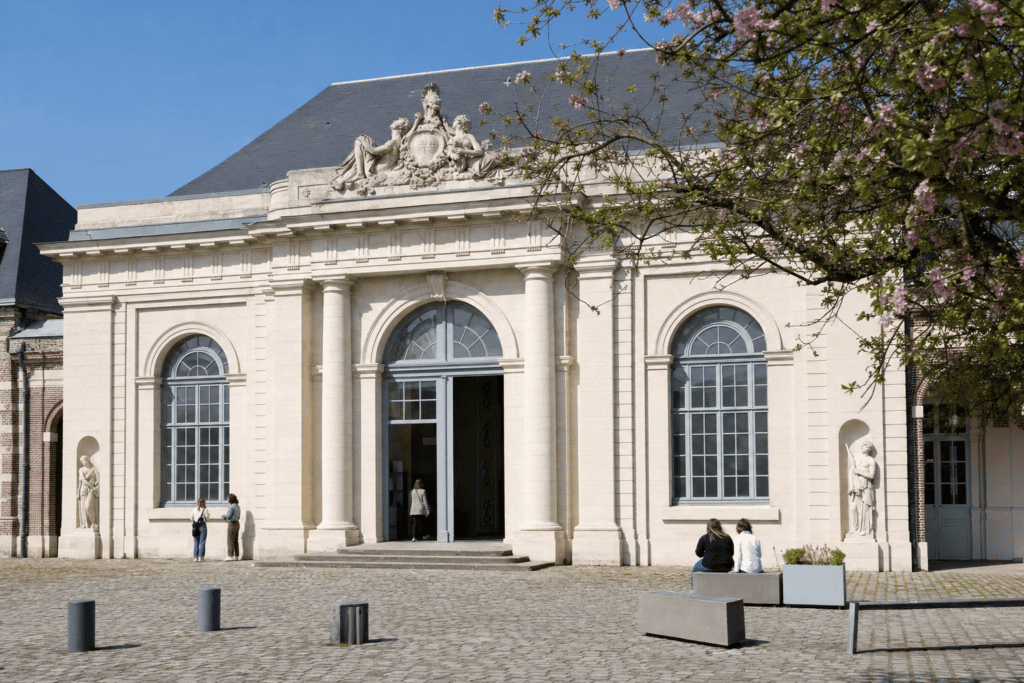 Arras Museum of Fine Arts In the former Saint-Vaast Abbey, a remarkable museum featuring European paintings, Mays, tapestries and…
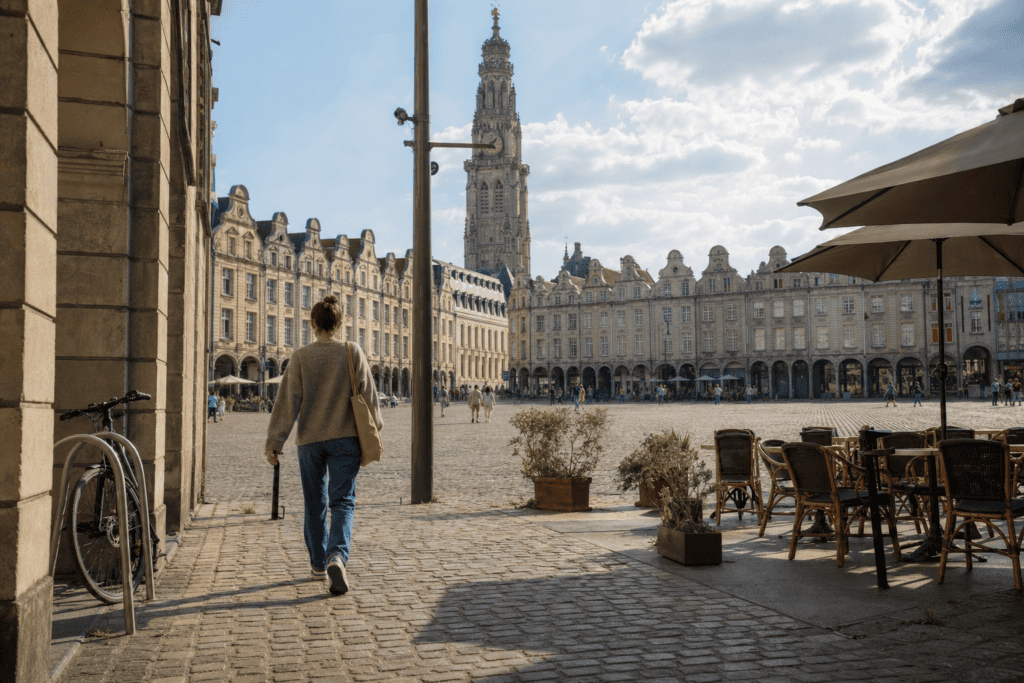 Arriving in Arras by train and planning a car-free trip From Arras station, the grand squares, belfry, Saint-Vaast and several memorial sites…
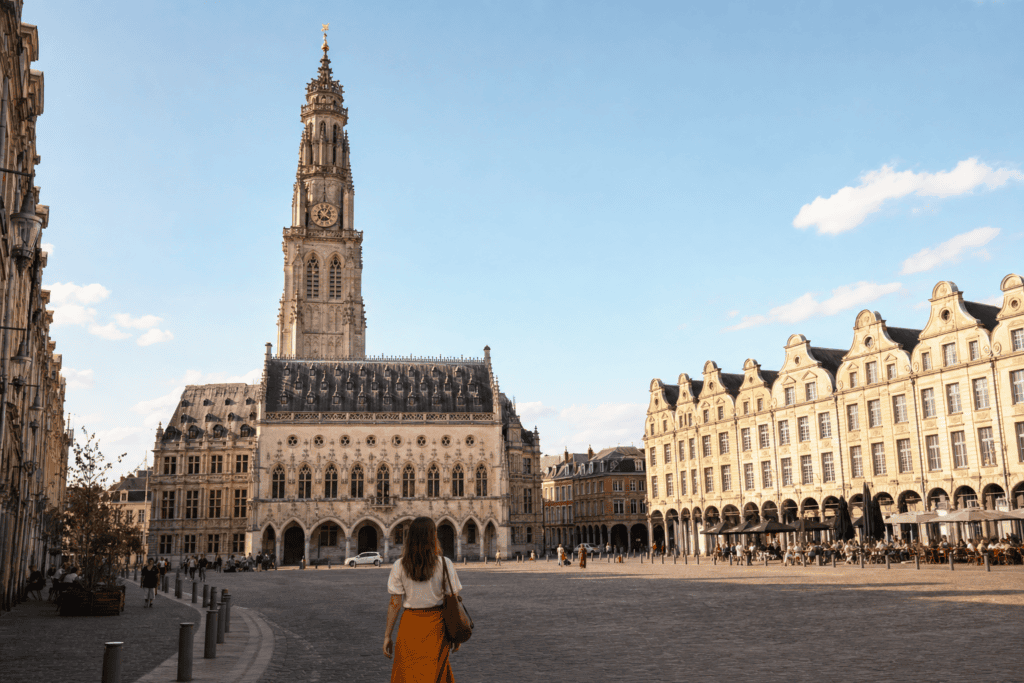 Arras Belfry and Baroque Squares A belfry listed as part of the UNESCO Belfries property, two grand squares and a walk through…
 Wellington Quarry, Arras Battle Memorial Go underground in Arras to discover the quarries adapted by Allied tunnellers before the Battle of…
Online booking · Paris → Boulevard du Général de Gaulle, 62000 Arras, France
Choose your pickup date and time
Your departure and arrival details are already pre-filled. You can adjust them in the fare calculator before viewing the vehicles and fare.