



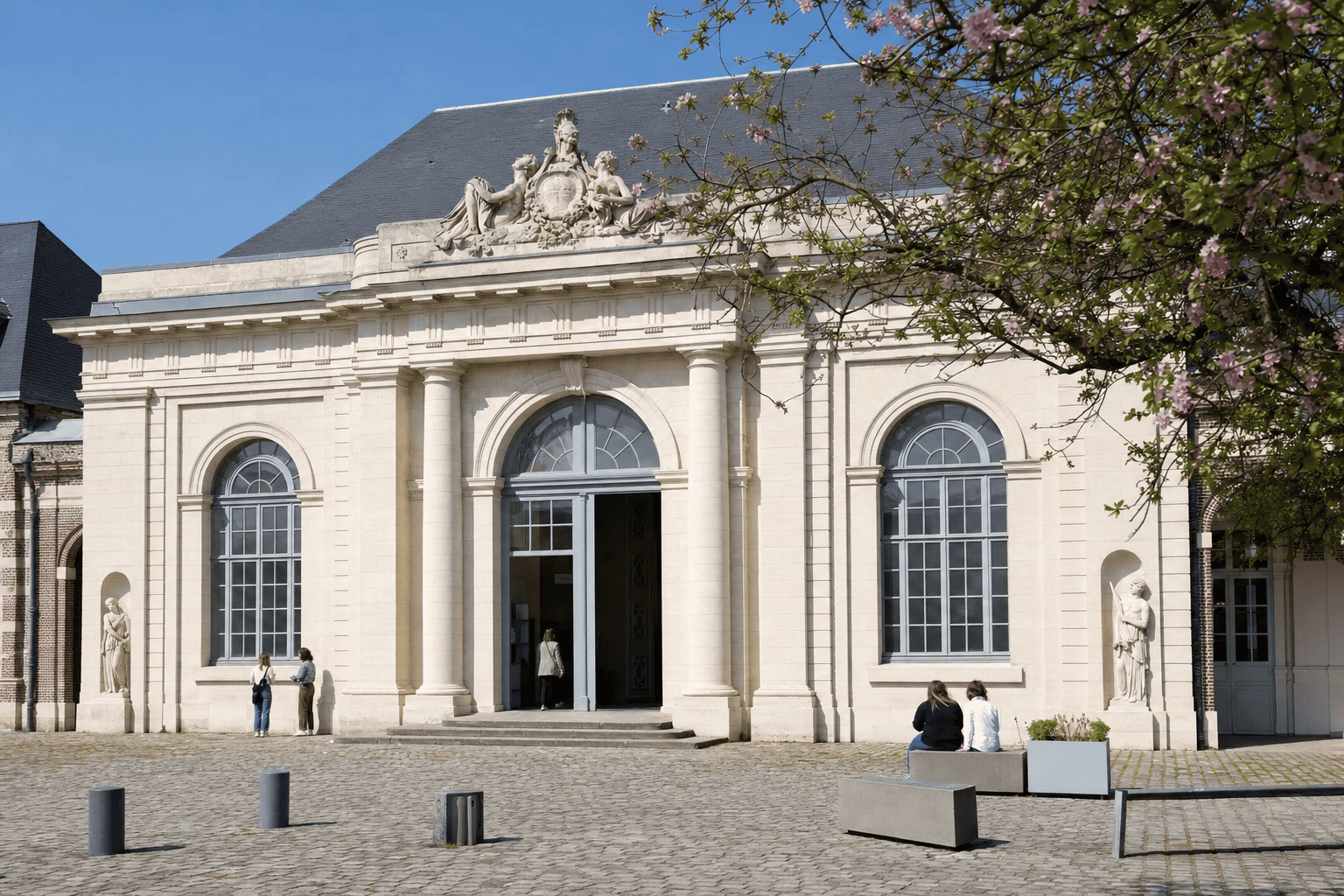
Musée des Beaux-Arts d’Arras: Complete Guide
Arras
Housed in the former Saint-Vaast Abbey, the Musée des Beaux-Arts d’Arras offers a journey from the Middle Ages to modern art. European paintings, sculptures, tapestries, porcelain, and works connected to the history of Artois make for an especially rich visit. The Mays Gallery and collections associated with the Arras School are among its highlights. Because the abbey site is undergoing a transformation project that may affect entrances, open galleries, or the visitor route, check the official information before setting out.
Practical information
Combine the museum with Arras’s squares, the belfry, and Notre-Dame-et-Saint-Vaast Cathedral. If you are driving, check parking, restricted areas, and accessible routes with the City of Arras or the tourist office.
Plan Your Trip from Paris to Arras
Booking Paris Transfer can arrange private transportation from Paris, a Paris hotel, CDG, or ORY to Arras, with a return to Paris or onward travel to another destination in Hauts-de-France. The service covers transportation only; museum tickets and cultural reservations must be obtained from the official institutions.
Departure from Paris, Île-de-France, CDG, or ORY; return to Paris or continuation of an itinerary that began in Paris, subject to availability.
The Former Saint-Vaast Abbey, a Major Heritage Setting
The Musée des Beaux-Arts d’Arras occupies part of the former Saint-Vaast Abbey, one of the most important monumental complexes in the city center. Together with Notre-Dame-et-Saint-Vaast Cathedral, the site forms a true Arts District, where architecture and collections complement one another. Before you even enter the galleries, the abbey’s scale and layout offer a first glimpse into Arras’s religious, cultural, and political history.
The current buildings are the result of transformations begun in the modern era, followed by restorations and reconstructions made necessary after the destruction of World War I. Courtyards, façades, galleries, and monastic vistas create a setting very different from a museum designed within a contemporary building.
The abbey’s transformation project may change entrances, routes, and areas open to the public. It is therefore best to consult the official City of Arras website or information provided directly by the museum before planning your itinerary. Once there, take time to appreciate the site’s proportions before focusing on the artworks.
Collections from the Middle Ages to Modern Art
The museum offers a journey through several centuries of artistic creation. Depending on the current installation, the route may include medieval sculptures, Old Master paintings, works from the 17th and 18th th centuries, 19th th-century works, and more recent creations. This breadth makes it possible to compare techniques, formats, subject matter, and the expectations of patrons.
Religious works recall the role of churches, abbeys, and confraternities in European artistic production. The Old Master paintings then open onto several traditions, particularly French, Flemish, Dutch, and Italian. The museum also holds works attributed to or associated with artists such as Rubens, Philippe de Champaigne, and Charles Le Brun. For precise identification, rely on the labels and institutional descriptions rather than general summaries.
The works on display are not fixed: loans, conservation treatments, rotations, and construction work may change some galleries. This is normal for a collection museum, but it explains why you should check the current route before visiting, especially if a particular work or gallery is the main reason for your trip.
The Mays Gallery and Monumental Painting
The Mays Gallery is one of the most remarkable groups associated with the Musée des Beaux-Arts d’Arras. The Mays are large religious paintings commissioned in the 17th th century for Notre-Dame Cathedral in Paris. After the French Revolution, several works entered public collections outside Paris, including in Arras.
Their scale invites you to adjust your viewing distance. Start farther away to take in the overall composition, diagonals, and movement of the figures, then move closer to observe gestures, expressions, drapery, and narrative details. These paintings were not designed for a neutral setting: their size, subject matter, and presentation were intended to engage with architecture and religious practice.
The gallery may nevertheless be subject to changes in presentation, circulation, or accessibility as part of the Saint-Vaast Abbey project. Its inclusion in earlier displays does not guarantee that it is visible under the same conditions today. Confirm its opening and location with an official source before traveling.
Tapestries, Porcelain, and the Decorative Arts of Arras
The museum’s richness extends beyond paintings. Tapestries, porcelain, and other decorative arts show how artworks were integrated into social, religious, and domestic life. They also reveal the role of workshops, patrons, and trade networks in building a city’s reputation.
Porcelain associated with Arras, particularly pieces connected with the taste for Arras blue, evokes the production and luxury objects of the Ancien Régime. Observe the decoration, motifs, forms, and differences in scale: a tableware piece tells a different story from a monumental painting, but it likewise reveals the level of refinement sought by its owners.
Tapestry has a longstanding connection with Arras’s identity. The city’s name became associated with the production and trade of decorative textiles in several European countries. A tapestry offers an opportunity to explore materials, preparatory designs, the work of artisans, and the movement of artworks. Take time to compare painting, textile, and ceramics: their different techniques shed light on the many functions of art.
The Arras School and the Landscapes of Artois
The 19th th century adds a particularly local dimension to the collection. The Arras School is notably associated with Constant Dutilleux and a circle of artists connected with Camille Corot. Landscapes, light effects, and changing skies play an important role. This approach presents Artois through observations of roads, trees, waterways, and rural landscapes.
Works connected with Constant Dutilleux, Désiré Dubois, Xavier Dourlens, and Charles Desavary invite viewers to see the region differently. They show how the regional landscape could become an artistic subject in its own right, rather than merely a backdrop for a historical or religious scene. For dates, attributions, and connections between artists, consult the museum’s labels and descriptions, which are the most reliable reference.
After your visit, continue this exploration in the streets of Arras. The façades, vistas across the squares, and changing light offer an urban counterpoint to the painted landscapes. This continuity between the built heritage and the surrounding region gives the museum a natural place in a broader discovery of Pas-de-Calais.
Building a Cultural Day in Arras
The museum fits easily into a day in the historic center. Begin with the former abbey and cathedral, then continue to Arras’s squares, whose Flemish façades and arcades contrast with the more restrained volumes of the Saint-Vaast complex. The belfry is a major landmark in the cityscape and can round out your visit, subject to its own opening conditions.
Allow enough time for the large-scale works and the galleries devoted to the decorative arts. A general visit can take less than half a day, but a program combining several monuments requires checking hours, admission fees, any required reservations, and waiting times separately. Families and photography enthusiasts will also appreciate the abbey’s outdoor spaces and views across the city center.
Arras is accessible from Paris or Lille by train, while a road trip makes it possible to add other destinations in Hauts-de-France. The Louvre-Lens or a World War I memorial site could complement your stay, provided you calculate travel times before departing. From Paris, private transportation may be useful for an itinerary with several stops, but it does not replace reservations made directly with cultural sites.
Access from the Train Station and Planning Tips
The commonly listed address is 22 rue Paul-Doumer, 62000 Arras, in the former Saint-Vaast Abbey. From Arras train station, the Arts District can be reached on foot through the historic center. The exact duration depends on the route, construction work, and any detours; use an up-to-date mapping service or local directions on the day of your trip. Bus routes, nearby stops, and parking should also be checked with the local transit network and the City of Arras.
Visitors with reduced mobility should contact the museum or tourist office before their visit. Ask specifically which entrance can be used, which routes are open, whether an elevator serves the relevant galleries, and which facilities are accessible. An old visitor information sheet cannot guarantee current conditions, especially during the abbey’s transformation.
Finally, check opening days, hours, admission fees, accessible areas, and any reservation procedures on the official pages. For an itinerary starting in Paris, Booking Paris Transfer can arrange private transportation from Paris, a Paris hotel, CDG, or ORY, with a return to Paris or onward travel. The service covers transportation only; museum tickets must be obtained from the institution.
Useful sources
Frequently Asked Questions
Is the Musée des Beaux-Arts d’Arras currently open?
What can you see in the collections?
Is the Mays Gallery open to visitors?
How do you get to the museum from Arras train station?
Is the museum accessible to people with reduced mobility?
 Wellington Quarry, Arras Battle Memorial Go underground in Arras to discover the quarries adapted by Allied tunnellers before the Battle of…
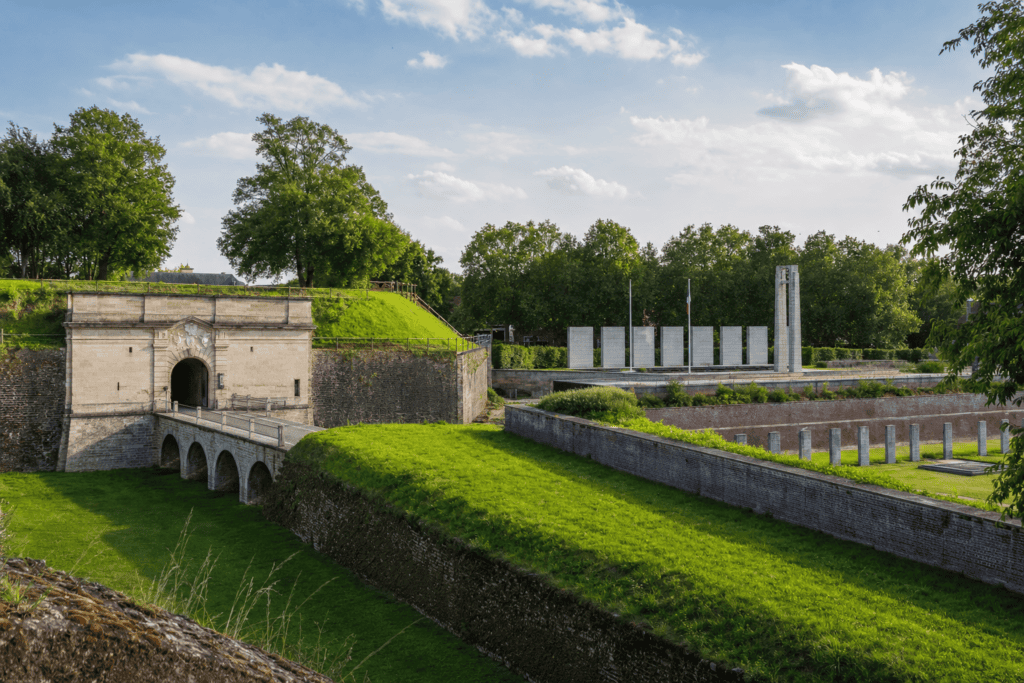 Arras Citadel and Fusillés Wall Memorial A former Vauban stronghold, with tree-lined moats and a memorial dedicated to executed resistance fighters…
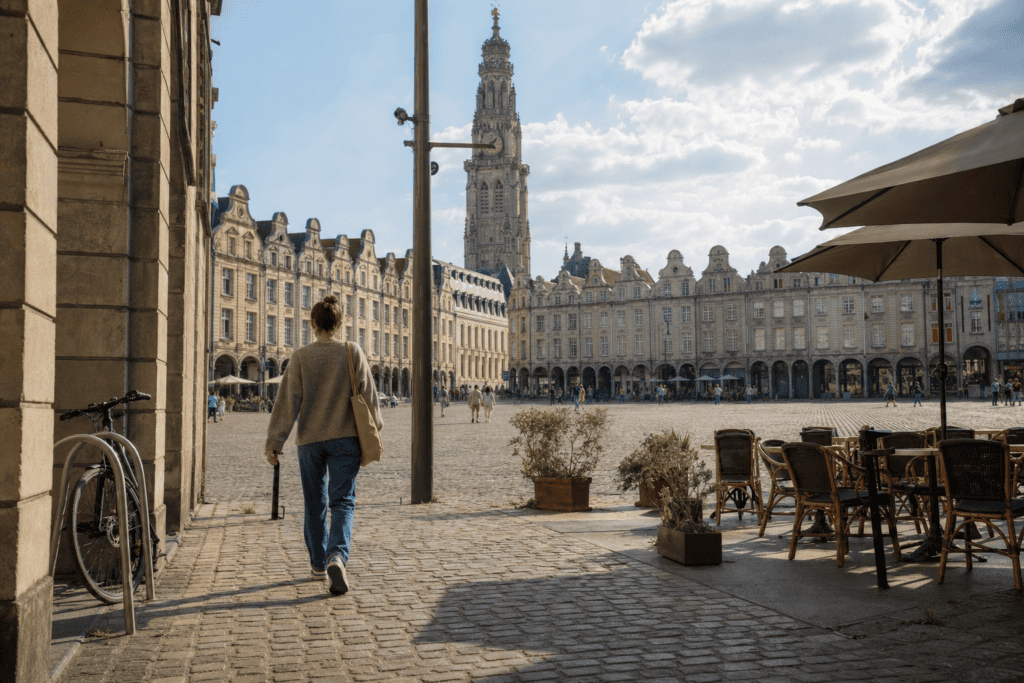 Arriving in Arras by train and planning a car-free trip From Arras station, the grand squares, belfry, Saint-Vaast and several memorial sites…
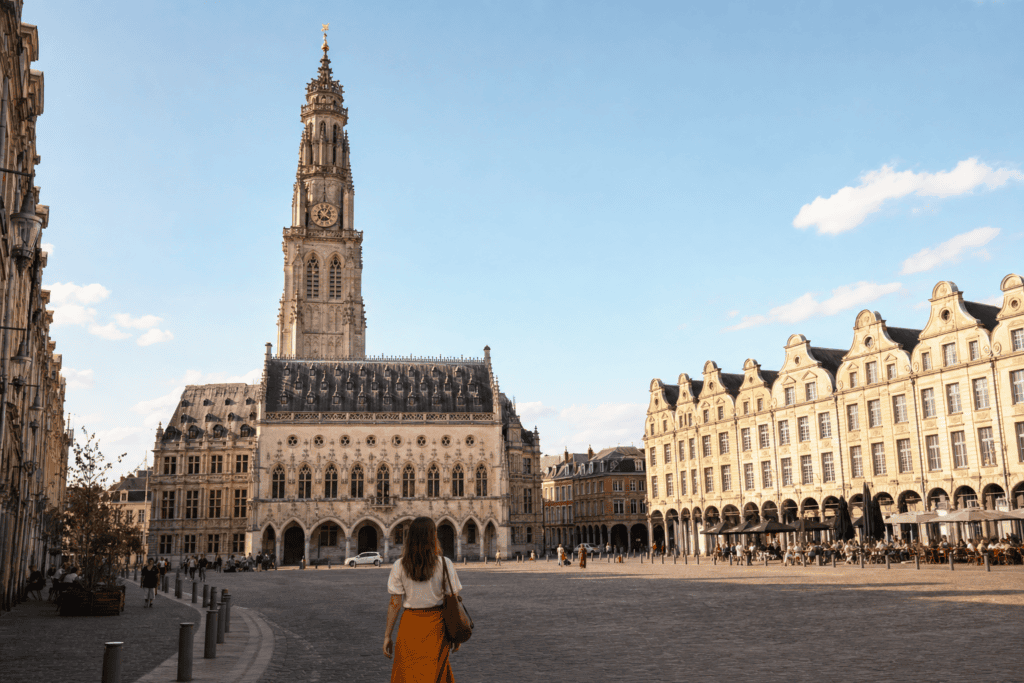 Arras Belfry and Baroque Squares A belfry listed as part of the UNESCO Belfries property, two grand squares and a walk through…
Online booking · Paris → 22 rue Paul-Doumer, 62000 Arras, France. Before your visit, verify which entrance is currently in use and check the access conditions published by the museum or the City of Arras.
Choose your pickup date and time
Your departure and arrival details are already pre-filled. You can adjust them in the fare calculator before viewing the vehicles and fare.