



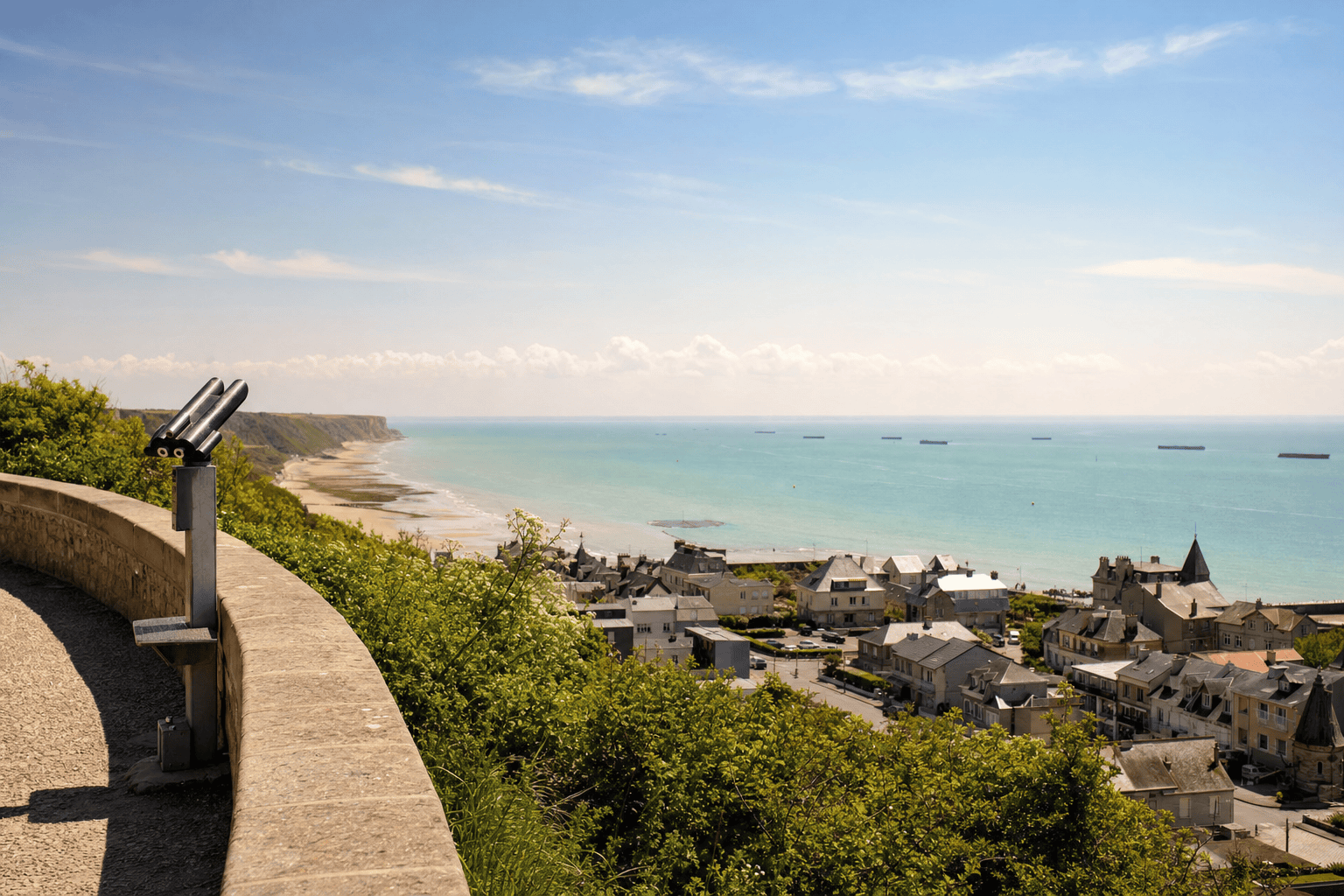
Arromanches Panorama: Understanding Mulberry B from Above
Arromanches-les-Bains
The Arromanches panorama can be viewed from the heights above Arromanches-les-Bains, in Calvados, overlooking Gold Beach. It is not necessarily an official lookout with a single designated name, but rather a series of views accessible from public areas in the upper part of the town, particularly around Arromanches 360°. From this vantage point, the beach, village, and remains of the Mulberry B artificial harbor form an exceptional historic landscape. The visit is especially meaningful when combined with the D-Day Museum, the seafront, and other memorial sites along the Normandy coast. Check the slopes, weather, condition of the paths, and any temporary restrictions before setting out.
Practical information
Start in the upper area to understand the bay, then head down to the seafront if tide conditions and the state of the shoreline allow. Before setting out, check official information about transportation, museums, and tides.
Getting to Arromanches from Paris
Booking Paris Transfer provides transportation only from Paris, the Île-de-France region, CDG, or ORY to Arromanches-les-Bains, with return transportation to Paris or continuation along a historic itinerary that began in Paris. Museum tickets, admission fees, and guided tours must be booked separately.
Departure from Paris, the Île-de-France region, CDG, or ORY; return to Paris or a sightseeing itinerary beginning in Paris.
Locating the Arromanches panorama
The term “Arromanches lookout” generally refers to the open views from the heights above Arromanches-les-Bains. It does not necessarily refer to an official tourist facility with its own entrance, ticketing, and address. For orientation, the Arromanches 360° area is a practical reference point: it overlooks the village and immediately helps visitors understand the relationship between the beach, bay, and remains of the artificial harbor.
Before setting out, consult the tourist map provided by the tourism office or town to distinguish roads, public paths, parking areas, and cultural facilities. The climb from the seafront is fairly steep. The ground may be wet or uneven, and private shortcuts should not be used. Since construction, ceremonies, and parking restrictions may change, check local information on the day of your visit. The viewpoint is particularly valuable for its overall orientation: it lets you read the bay before discovering the remains at water level.
Understanding the Mulberry B artificial harbor
The panorama conveys the scale of the logistical operation established after D-Day. On June 6, 1944, the Allies had to bring in troops, vehicles, fuel, ammunition, and supplies while Normandy’s ports were not yet available. The Mulberry artificial harbors were designed to create temporary unloading infrastructure directly on the beaches. At Arromanches, Mulberry B was assembled offshore from Gold Beach using concrete caissons, pontoons, and floating roadways.
The remaining Phoenix caissons are not always enough on their own to reconstruct the entire system. Their position, the tide, and the light alter the perception of distances. From above, the eye takes in the bay’s overall organization; from the beach, the material scale of the blocks becomes more apparent. The D-Day Museum adds models, maps, and documents about the harbor’s construction and operation. This two-part approach—landscape followed by historical explanation—prevents the site from being reduced to a simple maritime curiosity.
Reading the Gold Beach landscape
Arromanches-les-Bains is located in the Gold Beach sector, one of the five zones assigned to Allied forces during the Normandy landings. The view from the heights should therefore not be reduced to a simple coastal panorama. It connects the village, beach, nearby terrain, and the stretch of sea selected for an infrastructure essential to the Allied advance.
Spending a few minutes observing the landscape first helps you understand the geography before entering a museum. The seafront then shows the remains at a different scale, while Arromanches 360° offers an audiovisual approach to the Battle of Normandy. These sites have access conditions distinct from those of the outdoor areas. Check their official information for opening hours, possible closures, and visiting arrangements during your stay. The bay can also be viewed from various points in town, but stay in public areas and follow the signs.
Getting here from Bayeux, Caen, or Paris
Bayeux is a convenient base for exploring the D-Day beaches. Its train station is served from Paris-Saint-Lazare by the Normandy line, but Arromanches has no train station. The final leg must therefore be arranged separately. NOMAD regional buses may offer service to certain areas of Calvados, with routes, frequencies, and operating periods that vary. Check the official NOMAD trip planner, entering the exact date, stop, and desired time.
Caen offers more connections and services, but you still need to travel on to the coast. Without a car, allow extra time for a connection or a taxi for the last mile. From Paris, a train to Bayeux can be combined with reserved transportation. Booking Paris Transfer can provide transportation from Paris, the Île-de-France region, CDG, or ORY to Arromanches, with a return to Paris or continuation on a tour that began in Paris. Train tickets, museum admission, and guided tours are separate from transportation. For a day trip, allow for travel time and possible summer traffic delays.
Choosing the light and accounting for the tide
Weather strongly affects the panorama. Under clear skies, the caissons and contours of the bay stand out more sharply. Sea mist, low clouds, and showers can instead obscure the horizon and make the artificial harbor harder to read. Morning often brings a calmer atmosphere, while late afternoon can cast interesting low-angle light across the terrain and remains. However, no season guarantees perfect visibility along this exposed coastline.
The tide mainly changes the experience from the beach. The caissons look different depending on the water level, and some parts of the shoreline cannot be walked under the same conditions. Check a reliable tide table if you plan to go down to the water, without treating it as authorization to access every area. A windbreaker, sturdy shoes, and extra care on wet ground are recommended. Avoid lingering in an area that may become difficult to leave as the tide rises, and follow local guidance.
Planning a day around Arromanches
A well-balanced day can begin in the upper area for an overall view of Gold Beach, then continue along the seafront and at the D-Day Museum. Arromanches 360° provides a complementary audiovisual perspective. Asnelles extends the exploration of the nearby coast, while the British Normandy Memorial in Ver-sur-Mer offers another memorial perspective focused on Allied losses during the Battle of Normandy. Each stop has its own hours and access arrangements, so avoid overloading your schedule.
Bayeux can complement the itinerary with its cathedral, historic center, and museums. With more time, add Longues-sur-Mer, Omaha Beach, or the Normandy American Cemetery in Colleville-sur-Mer, taking distances into account. From Paris, a day trip requires realistic planning, particularly for traffic, breaks, and the time needed at memorial sites. A two-day itinerary offers a more relaxed experience, with an overnight stay in Bayeux or on the coast. Those interested in military history will benefit from allowing time to read the signs and testimonies rather than trying to maximize the number of stops.
Visiting respectfully and safely
The heights above Arromanches are a place to explore, but they overlook a landscape marked by a military operation that caused many casualties. A discreet attitude is especially important during ceremonies and commemorations. Photography is appropriate from authorized areas; it never justifies crossing a barrier, climbing on a remnant, or approaching an unstable edge. The caissons are fragile historic structures exposed to waves and currents.
Families should supervise children near roads, steep drop-offs, and the shoreline. Visitors with reduced mobility should ask in advance which route is most accessible, since the slope between the beach and the heights can be challenging. A complete visit combines three perspectives: the panorama from above, the remains viewed at sea level, and explanations from a museum or memorial. This progression makes the site easier to understand without diminishing its historical significance. In strong winds, on slippery ground, or in unfavorable conditions, stay in safe areas and postpone the descent to the shore.
Frequently Asked Questions
Is there an official lookout called the “Arromanches lookout”?
Is viewing the panorama free?
Can you get there from Bayeux without a car?
Is the tide important when visiting the panorama?
Which sites can be combined with the panorama?
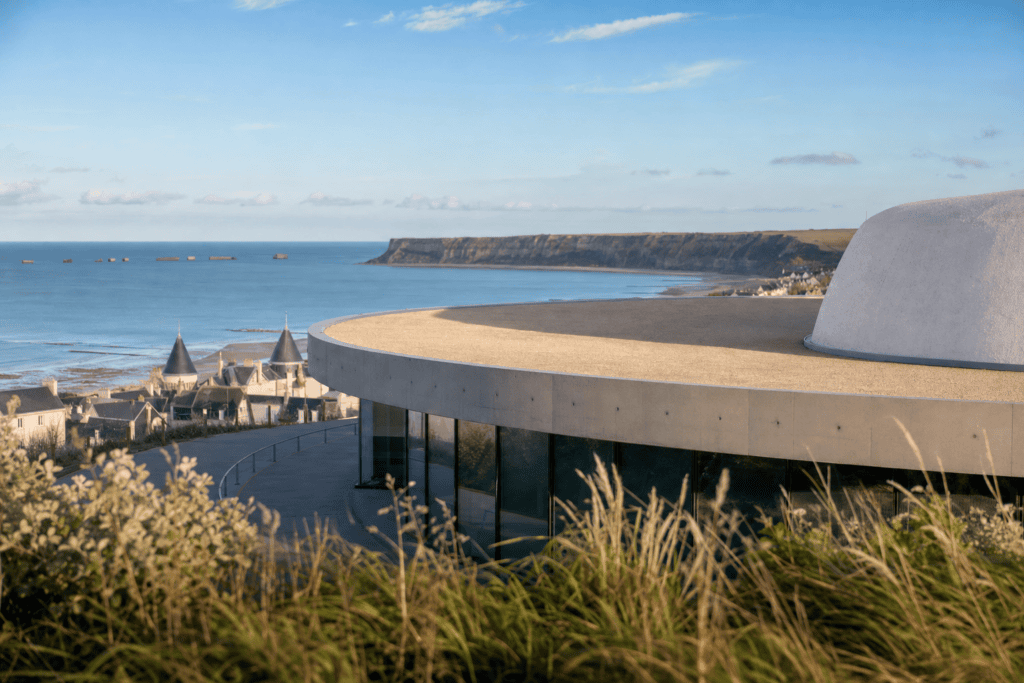 Arromanches 360 – Circular Cinema A panoramic film on nine screens to understand D-Day, Arromanches’ artificial harbor, and the…
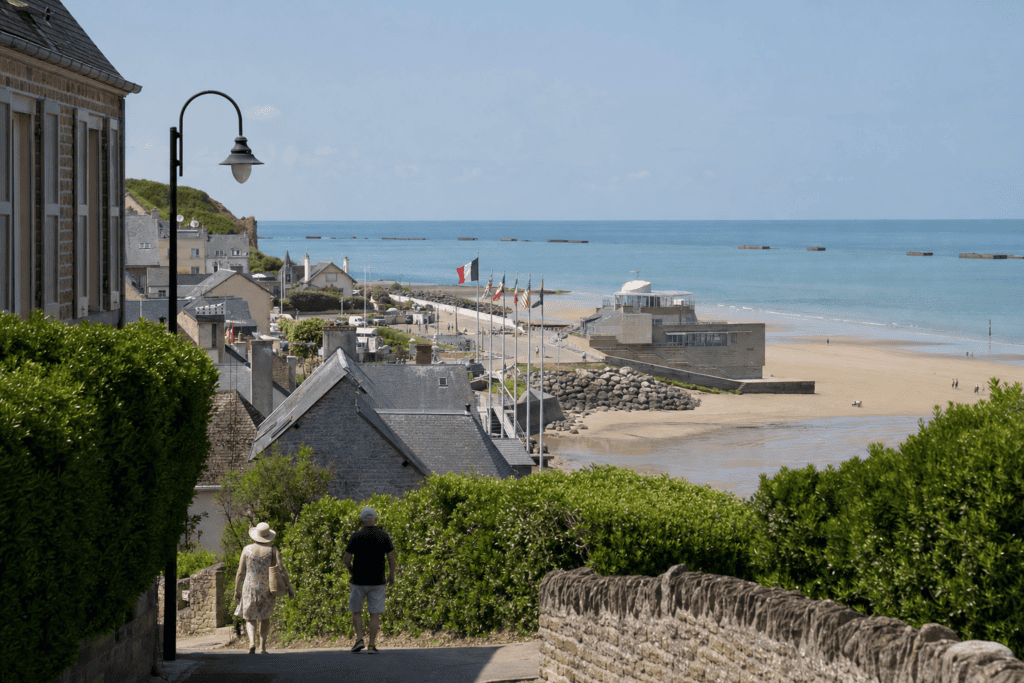 What to do in Arromanches in one day A complete itinerary combining the museum, Gold Beach, the remains of Mulberry B, Arromanches 360, and…
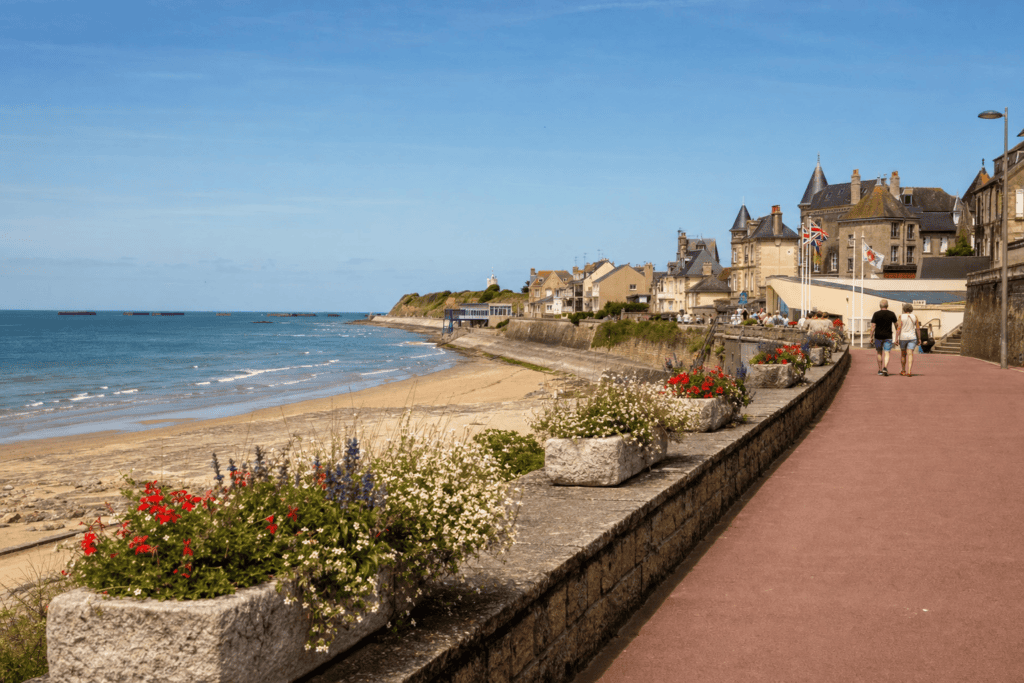 Arromanches-les-Bains Coastal Walk and Heritage A route covering Gold Beach, the remains of Mulberry B harbor, the D-Day Museum, and…
 Getting to Arromanches: Bayeux train station, Caen, and by car Bayeux is the most convenient rail gateway; a vehicle then makes it easier to explore the…
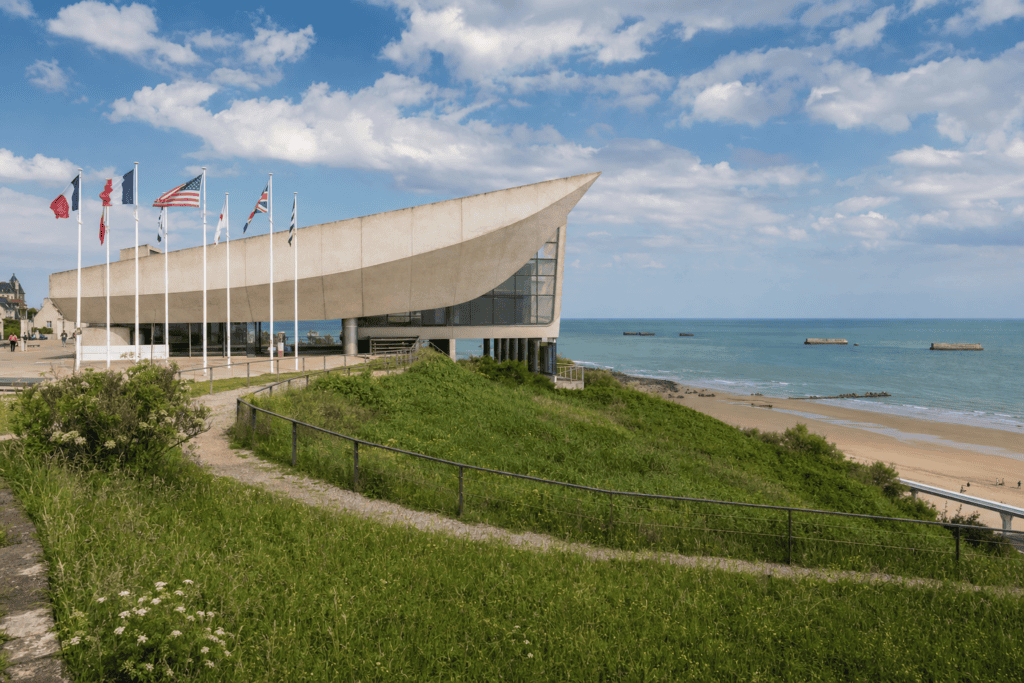 Arromanches D-Day Museum An essential museum for understanding Mulberry B, the Allied artificial harbor installed off Arromanches after…
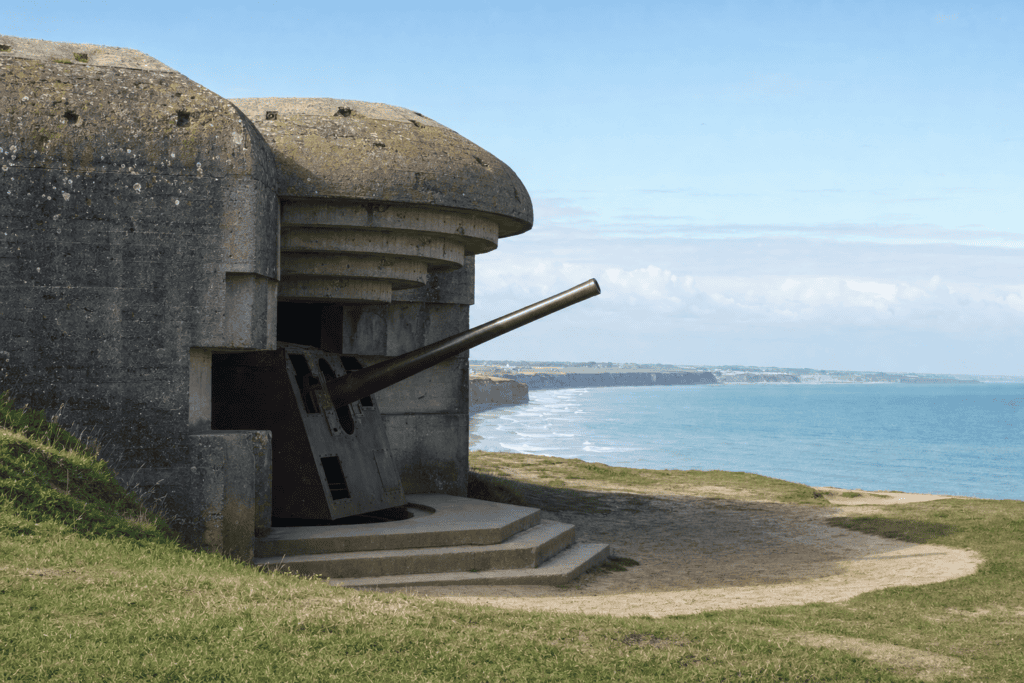 Longues-sur-Mer German Battery Explore the bunkers, guns, and fire-control post at a major D-Day site between…
Online booking · Paris → Upper Arromanches-les-Bains area, around Arromanches 360°, 14117 Arromanches-les-Bains, Calvados, Normandy. There is no single official address for an “Arromanches lookout.”
Choose your pickup date and time
Your departure and arrival details are already pre-filled. You can adjust them in the fare calculator before viewing the vehicles and fare.