



Longues-sur-Mer German Battery: D-Day Guide
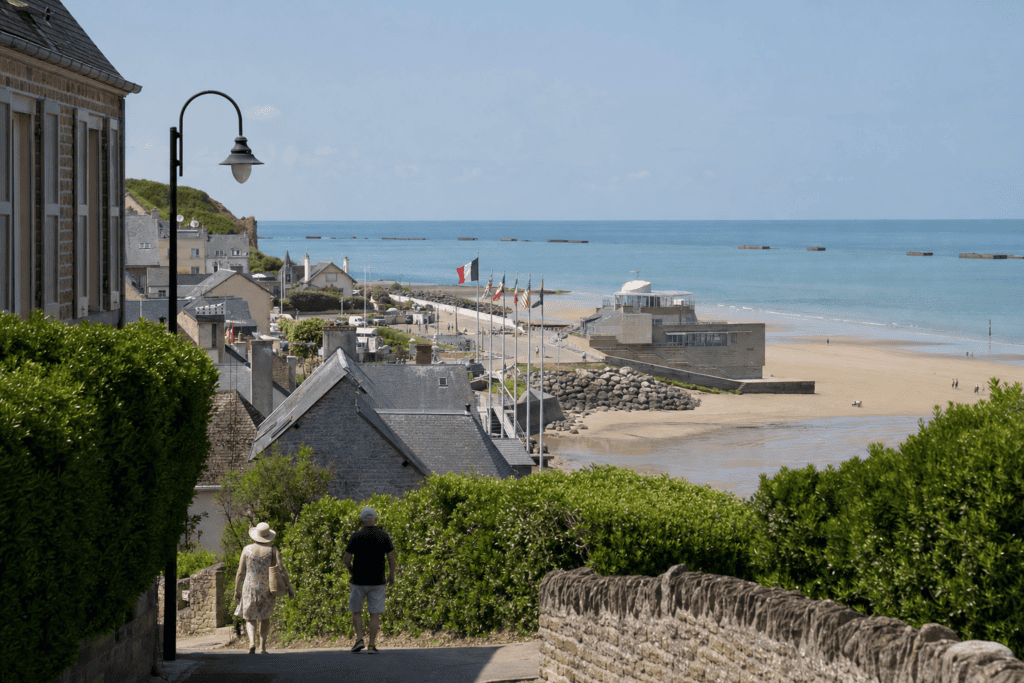
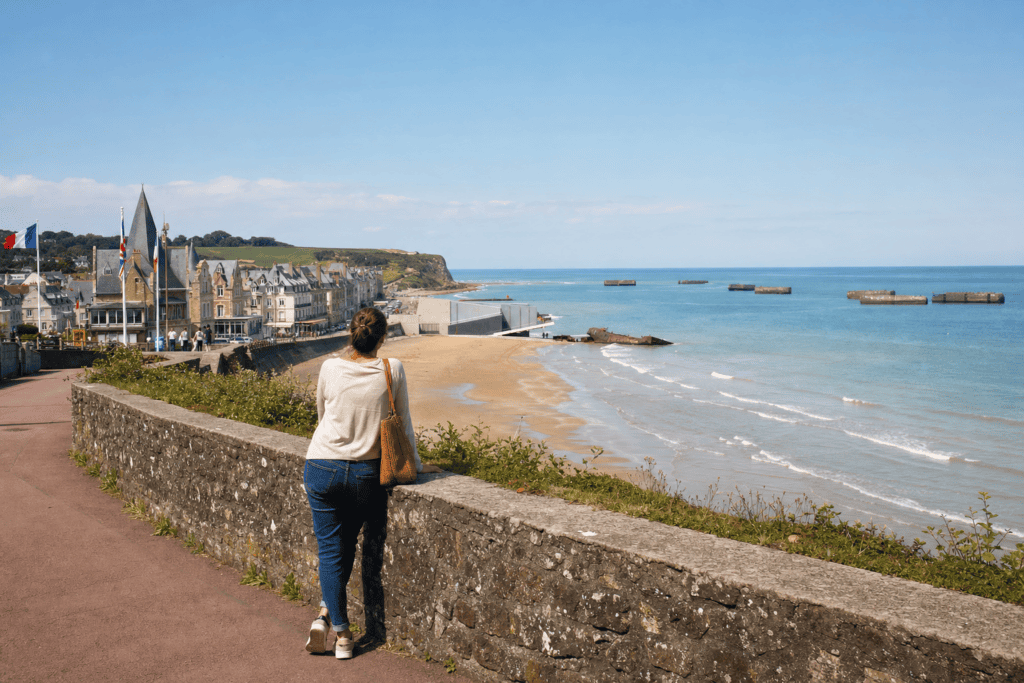
Arromanches-les-Bains
Between Arromanches-les-Bains and Port-en-Bessin-Huppain, Longues-sur-Mer German Battery is one of the best-preserved sections of the Atlantic Wall in Normandy. Its casemates, fire-control post, and artillery pieces help explain German coastal defenses at the time of the Normandy landings. The site naturally complements a visit to Arromanches, Gold Beach, or Bayeux, while offering sweeping views over the English Channel. This guide covers the verified history of the site, approximate distances from the main arrival points, access conditions, and useful precautions for including Longues-sur-Mer in a D-Day itinerary.
Practical information
Wear closed-toe shoes and a windbreaker. Use only designated parking areas, respect barriers, and check local information before setting out, especially during ceremonies, construction work, or temporary restrictions.
Getting to Longues-sur-Mer from Paris
To travel between Paris, Arromanches-les-Bains, Longues-sur-Mer, and Bayeux without multiple connections, Booking Paris Transfer can arrange private transportation from Paris, a hotel in the Île-de-France region, CDG, or ORY. The itinerary can include several D-Day sites, with a return to Paris or continued travel through Normandy. The service covers transportation only and does not replace a local guide or the official organizations responsible for the sites visited.
Transportation from Paris, the Île-de-France region, CDG, or ORY; admission tickets, local guiding, and guided tours not included.
Why visit Longues-sur-Mer after Arromanches?
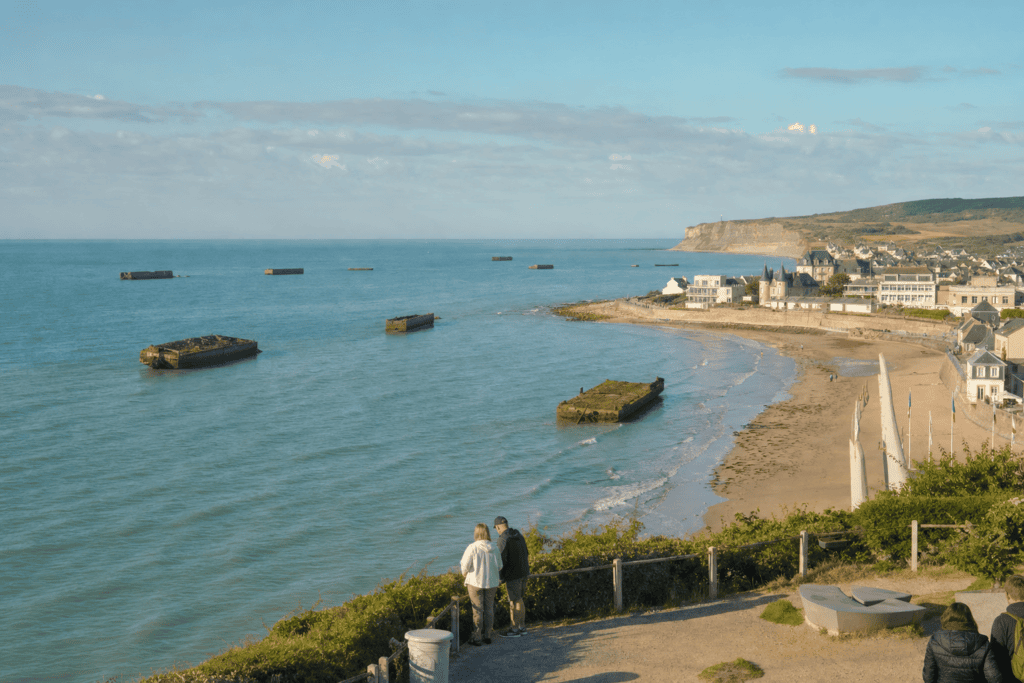
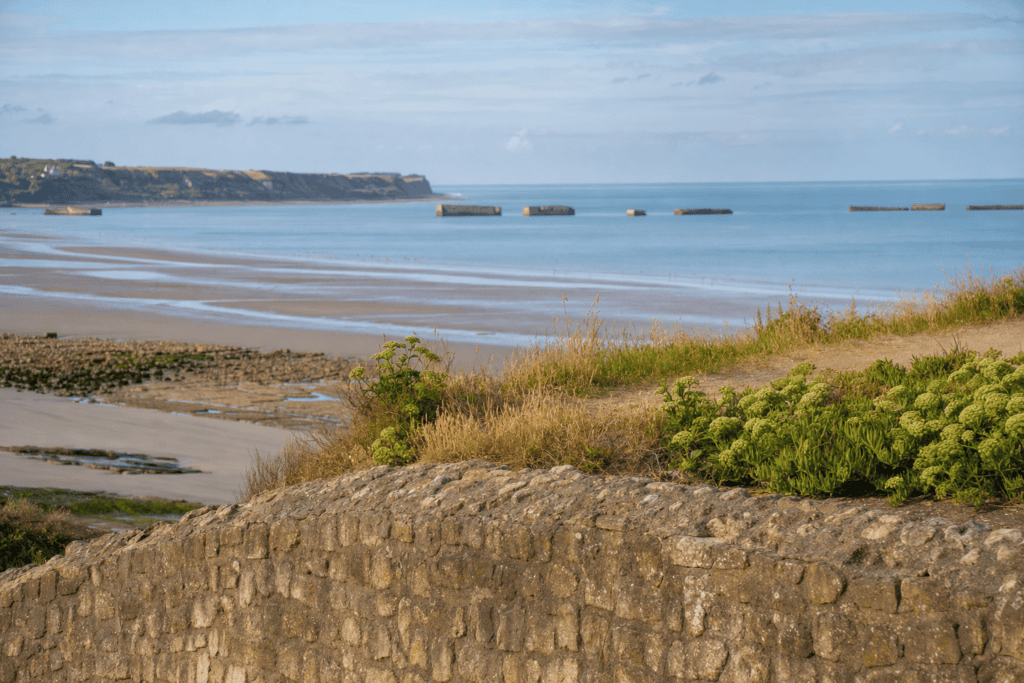
Longues-sur-Mer German Battery is a particularly natural stop after Arromanches-les-Bains. The two sites tell the story of the Normandy landings from contrasting yet complementary perspectives. At Arromanches, the remains of the Mulberry B artificial harbor illustrate Allied logistics and the movement of supplies after June 6, 1944. At Longues-sur-Mer, the casemates reveal a German position designed to observe and fire on the coastline.
This contrast makes the day easier to understand. Visitors discover not just a coastal panorama, but a military landscape in which the structures, fields, roads, and sea formed a single system. The battery also helps explain why D-Day sites are best visited together: the distances between positions, beaches, and ports reflect operational realities.
From Arromanches, the road journey is short—approximately 8 km—but can take more than twenty minutes in summer, on weekends, and during commemorations. From Bayeux, the distance is approximately 10 km. Allow extra time before heading to a museum, restaurant, or another beach.
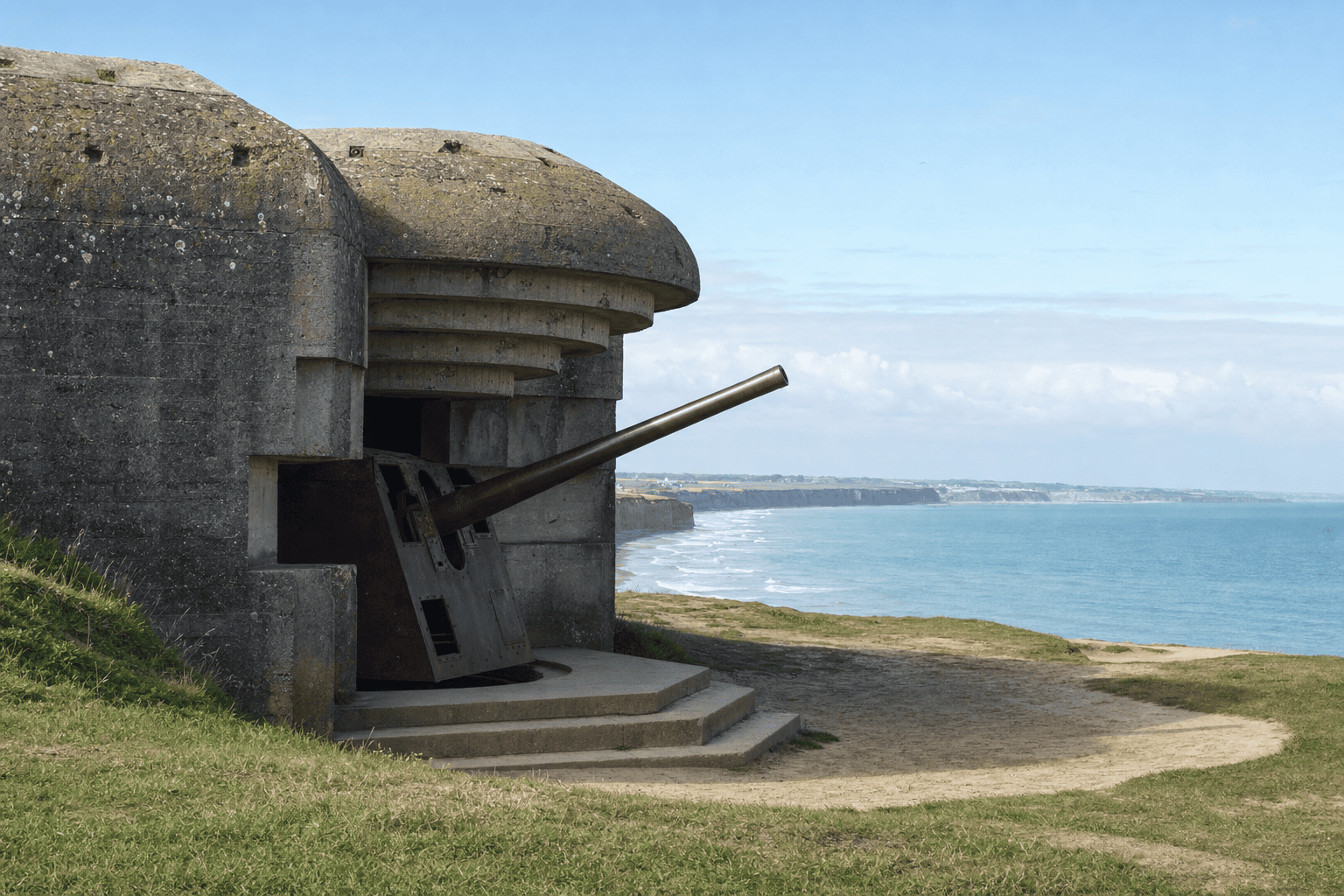
Casemates, Guns, and Fire-Control Post
The site preserves several concrete casemates designed to protect naval artillery pieces. Their layout, gun openings, and structural thickness convey the demands of coastal fortification. Historical information published by local tourism organizations identifies the main pieces as 152 mm guns of French origin, reused by German forces under the German designation 15.2 cm K 418(f). This attribution applies to the guns preserved at the site and should be distinguished from the other equipment added to the Atlantic Wall defenses.
The fire-control post is just as important as the guns. It was used to observe the sea, gather information, and help adjust artillery fire. It was therefore not a casemate designed for firing, but a building associated with directing fire and observing the sector.
The visit is primarily outdoors. Opening conditions and access to the various structures may change depending on conservation, safety, and ground conditions. Do not cross any fences or climb onto the structures to take photographs.
The Battery’s Role on D-Day
On June 6, 1944, Longues-sur-Mer occupied a position between the Allied sectors of Gold Beach and Omaha Beach. Its guns could monitor part of the English Channel and threaten vessels operating offshore. The battery was bombarded before being captured during the day, amid the Allied advance along the coast. For precise details about timings, units, and the course of the fighting, local museums and historical documents remain the most appropriate references.
It would be misleading to present the battery as a site that controlled all the beaches on its own. It formed part of the Atlantic Wall network, alongside observation posts, artillery positions, obstacles, and units responsible for ground defense. Its importance becomes clearer when viewed within this broader coastal system.
On site, the view toward the sea helps connect several dimensions of Operation Overlord: maritime surveillance, bombardments, the arrival of amphibious forces, and the advance from the beaches. The location illustrates the role of terrain, visibility, and distances between objectives without reducing the landscape to a mere commemorative backdrop.
Access from Arromanches and Bayeux
From Arromanches-les-Bains, the battery is generally reached by car via local roads in approximately 15 to 20 minutes, covering about 8 km. From Bayeux, allow approximately 15 to 25 minutes and around 10 km, depending on your starting point and traffic. These times are indicative: in June, on weekends, and during ceremonies, delays can be significant around the D-Day beaches.
Bayeux is the main base for travelers without a car. Its station has rail connections from Paris, but Longues-sur-Mer is not served directly by train. You will therefore need to arrange a rental car, taxi, excursion, or private transportation for the final leg. Check the information from SNCF Connect and theBayeux Bessin Tourist Office before setting out.
Cycling is possible for visitors accustomed to small roads, but the wind, hilly sections, and lack of a continuous cycle path to the remains can make the route demanding. A local map is useful; do not assume that every marked route leads directly to the battery entrance.
Parking and D-Day Route from Bayeux
The battery is located in a rural setting and does not function like a monument in the center of a town. Follow local signs and park only in authorized areas near the site. The number of spaces, paths, and traffic arrangements may change because of construction, events, or security measures. Never block access for farms, residents, or emergency services, and do not park on verges where signage prohibits it.
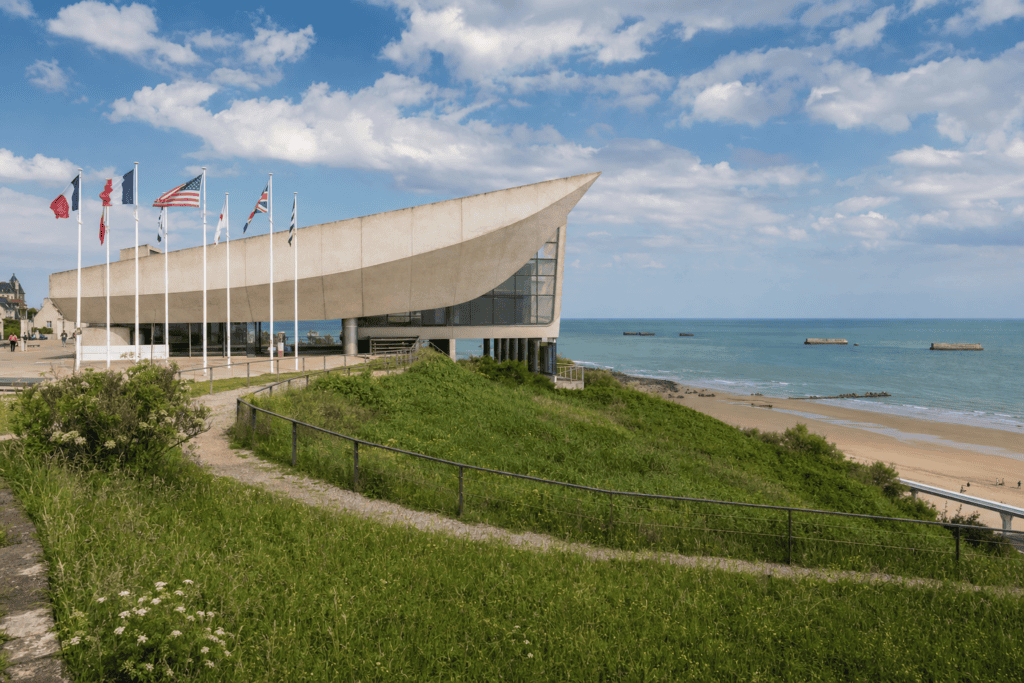
A well-balanced day can begin in Arromanches-les-Bains, approximately 8 km away, with the D-Day Museum and views of the remains of the artificial harbor. Then continue to Longues-sur-Mer, followed by Port-en-Bessin-Huppain, approximately 6 km from the battery by road. Returning to Bayeux allows you to end the day in a town with services, restaurants, and accommodations.
If you continue west, Omaha Beach, the Normandy American Cemetery at Colleville-sur-Mer, and Pointe du Hoc form a major commemorative group. This route often deserves a separate day: driving, walking, parking, and time for reflection quickly add up.
Weather, Accessibility, and Precautions
The battery is visited primarily outdoors, in an area exposed to wind, rain, and sea spray. Bring a waterproof jacket, water, and footwear suitable for grassy or uneven surfaces. After wet weather, some sections may be muddy or slippery. Families should remain vigilant near embankments, structures, and any changes in elevation.
Accessibility depends on which paths are open and their condition on the day of your visit. Visitors with reduced mobility should request up-to-date information from Longues-sur-Mer town hall or the tourist office before traveling. Do not assume that all casemates are accessible inside: concrete preservation, safety, and ground conditions may limit exploration. The outdoor site should not be mistaken for a fully developed museum route.
For photography, morning or late-afternoon light highlights the casemates’ volumes and their relationship with the sea. Respect fences, other visitors, and the site’s commemorative purpose. Do not move any objects, climb on the structures, or approach areas marked as fragile or off-limits.
Extending Your Stay in Calvados
Longues-sur-Mer fits easily into a trip focused on Calvados and the memory of D-Day. Arromanches-les-Bains offers a logistical perspective through the artificial harbor; Bayeux is a convenient base thanks to its station and services; and Port-en-Bessin-Huppain adds a harbor stop between the cliffs and beaches. This arrangement limits backtracking and leaves more time for museums, landscapes, and breaks.
To the west, Omaha Beach, the American cemetery, and Pointe du Hoc form an important commemorative route. To the east, Juno Beach, Sword Beach, and Pegasus Bridge offer insight into Canadian and British operations. Museums provide maps, artifacts, and testimonies that usefully complement the fortifications. Since opening hours, days, and access conditions vary by establishment, check their official websites before planning your route.
June is an important period for ceremonies, but visitor numbers, security checks, and temporary traffic restrictions can be significant. Spring and fall are often quieter, with variable weather. A day trip from Paris is possible; nevertheless, spending a night in Bayeux or on the coast gives you more time and reduces the risk of a rushed return.
Useful sources
Frequently Asked Questions
Where is Longues-sur-Mer German Battery located?
How much time should you allow on site?
Is parking guaranteed nearby?
Can you visit all the casemates?
How can you get there from Paris without a car?
 Mulberry B Artificial Harbor and Arromanches Beach In Arromanches-les-Bains, view the remains of Mulberry B from Gold Beach and complete your visit with…
 Getting to Arromanches: Bayeux train station, Caen, and by car Bayeux is the most convenient rail gateway; a vehicle then makes it easier to explore the…
 Arromanches D-Day Museum An essential museum for understanding Mulberry B, the Allied artificial harbor installed off Arromanches after…
 D-Day Beaches from Arromanches From Arromanches-les-Bains, explore Gold, Juno, and Omaha Beaches with a realistic itinerary, access tips, and…
 What to do in Arromanches in one day A complete itinerary combining the museum, Gold Beach, the remains of Mulberry B, Arromanches 360, and…
 Bayeux and the D-Day sites from Arromanches From Arromanches, Bayeux combines medieval heritage and museums with convenient access to the main D-Day sites.
Online booking · Paris → Longues-sur-Mer German Battery, 14400 Longues-sur-Mer, Calvados, Normandy
Choose your pickup date and time
Your departure and arrival details are already pre-filled. You can adjust them in the fare calculator before viewing the vehicles and fare.