



Normandy · D-Day Beaches · Normandy
Arromanches-les-Bains, a living memory of D-Day
In Arromanches-les-Bains, the remains of the artificial Mulberry B harbor can still be seen in the bay, facing the former British sector of Gold Beach. The village combines a museum dedicated to this logistical feat, a seafront opening onto the English Channel, and an ideal location between Bayeux, Longues-sur-Mer, Omaha Beach, Ver-sur-Mer and Juno Beach. It is a destination of remembrance to visit thoughtfully, as well as a pleasant coastal stop for a two- or three-day stay in Normandy.
Explore Arromanches-les-Bains
Arromanches-les-Bains essentials
 Heritage
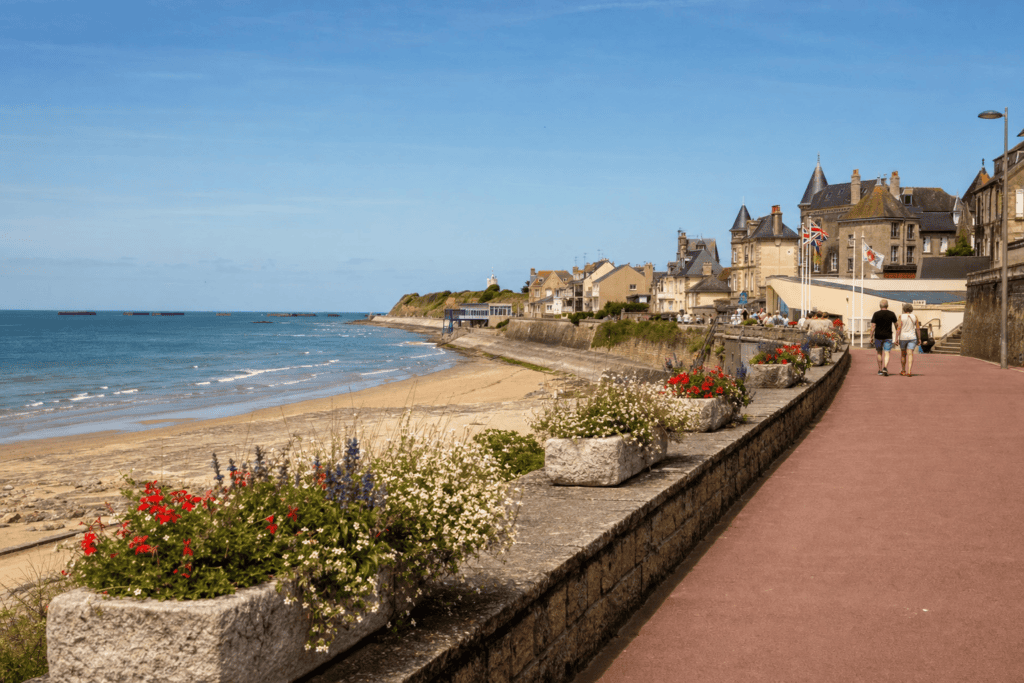
Arromanches-les-Bains Coastal Walk and Heritage
A route between Gold Beach, the remains of Mulberry B harbor, the D-Day Museum, and the heights…
 Experiences
Getting to Arromanches: Bayeux train station, Caen, and by car
Bayeux is the most convenient rail gateway; a vehicle then makes it easier to explore the…
 Must-see
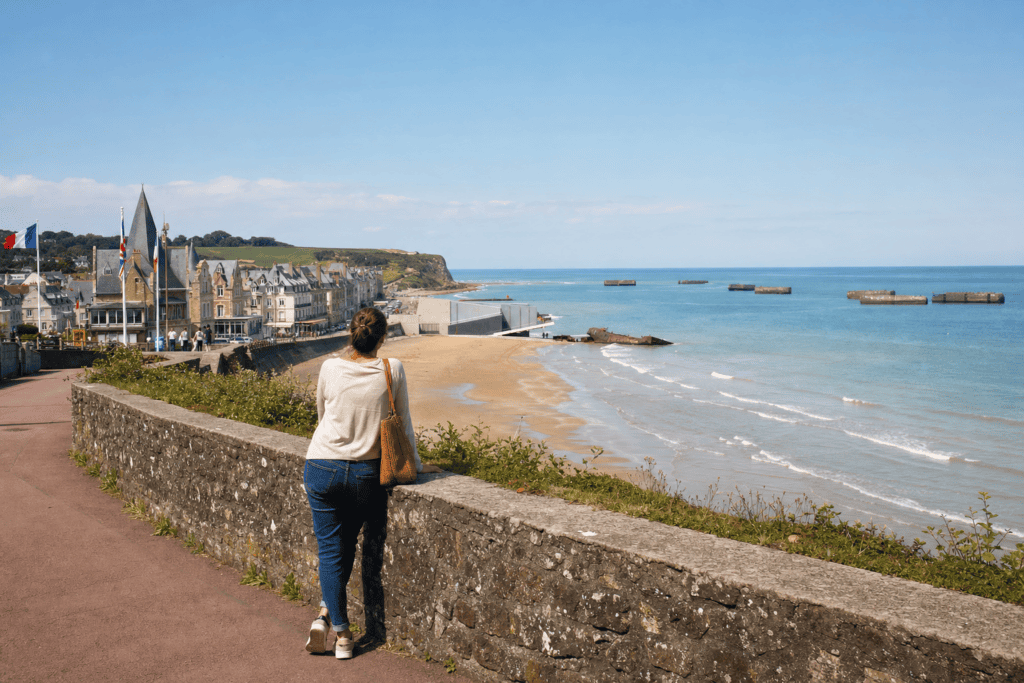
Bayeux and the D-Day sites from Arromanches
From Arromanches, Bayeux combines medieval heritage and museums with convenient access to the main D-Day sites.
 Must-see
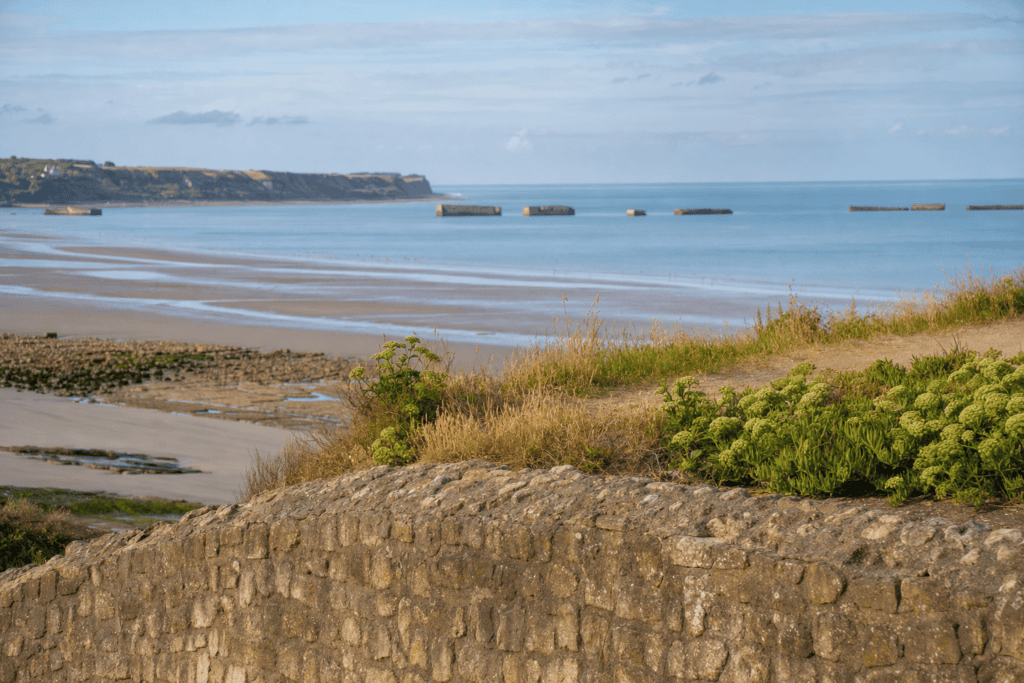
D-Day Beaches from Arromanches
From Arromanches-les-Bains, explore Gold, Juno, and Omaha Beach with a realistic itinerary, access tips, and useful landmarks…
 Must-see
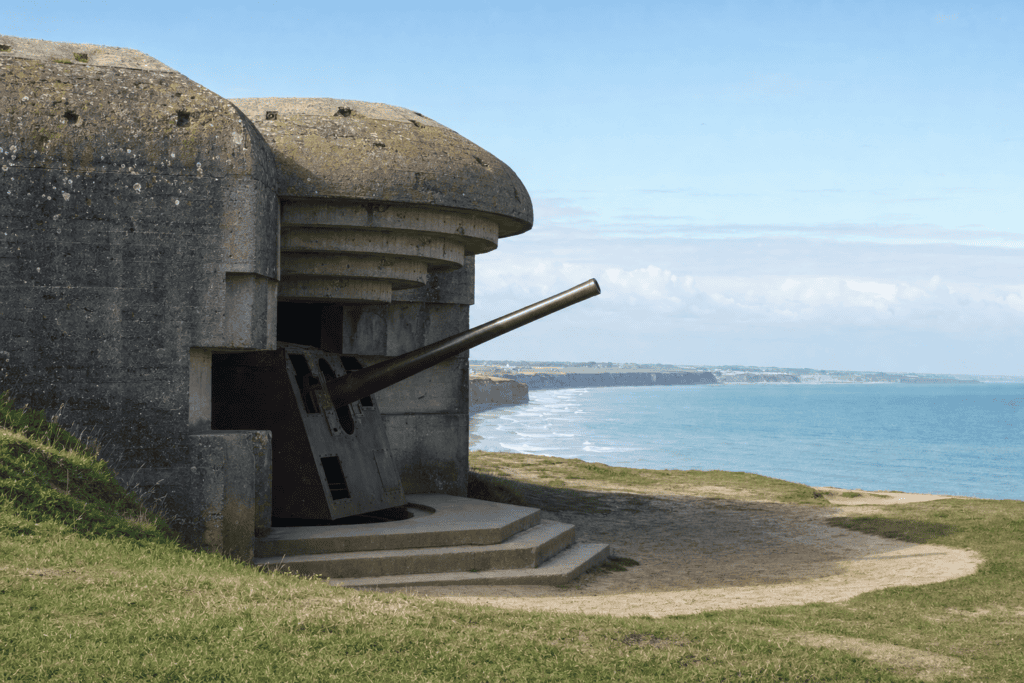
Longues-sur-Mer German Battery
Explore the bunkers, guns, and fire-control post at a major D-Day site between…
 Viewpoints
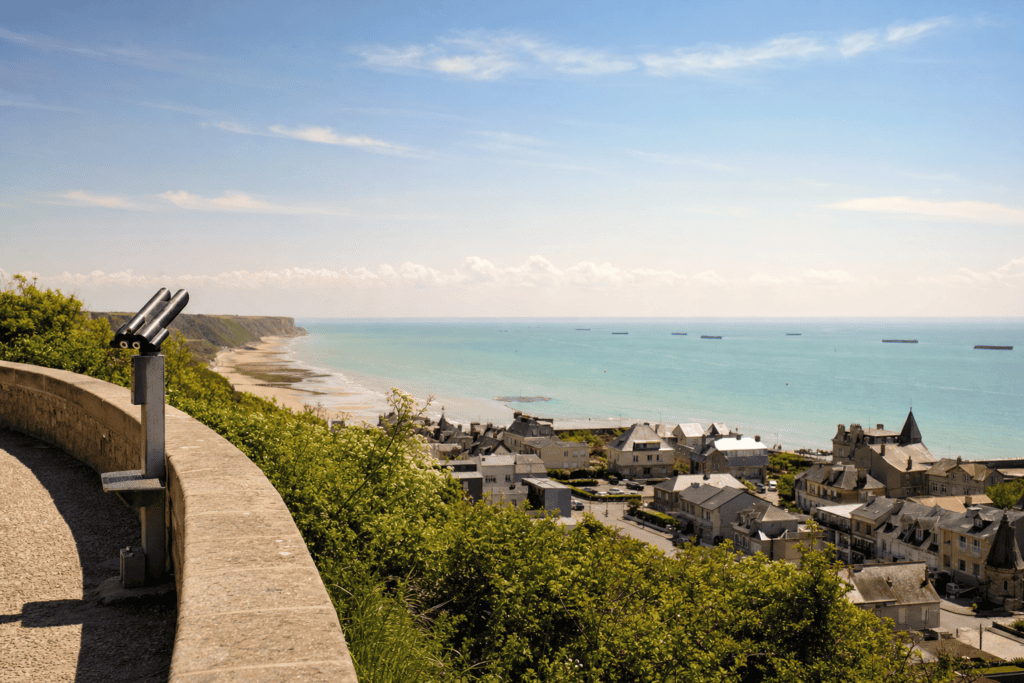
Arromanches Viewpoint and Bay Panorama
A historic panorama over Gold Beach and the remains of the Mulberry B artificial harbor in Arromanches-les-Bains.
 Must-see
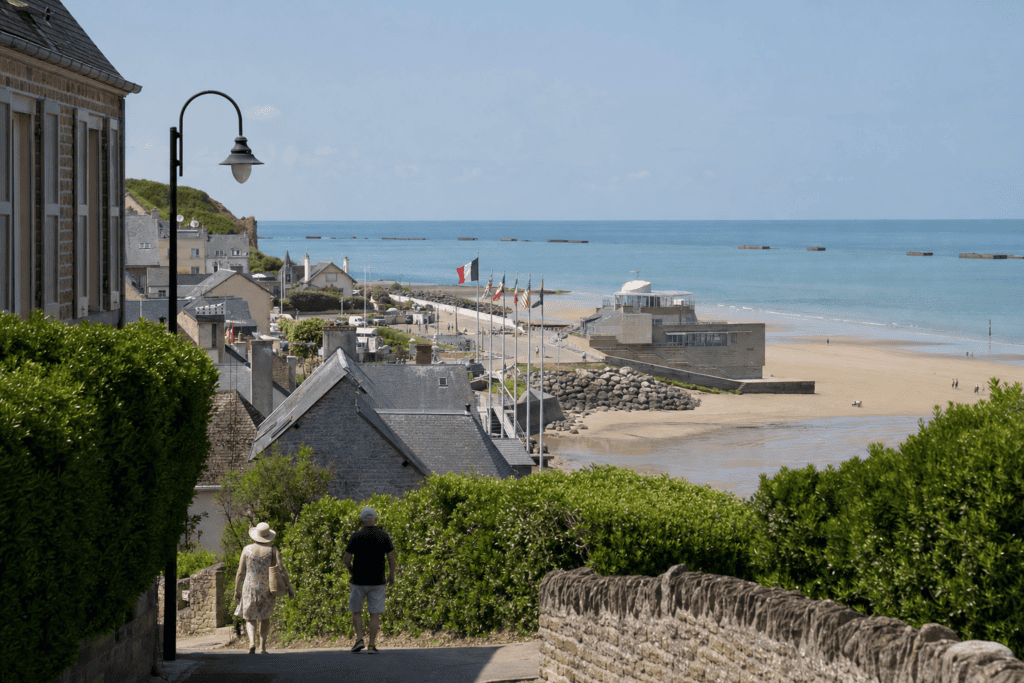
What to do in Arromanches in one day
A complete itinerary covering the museum, Gold Beach, the remains of Mulberry B, Arromanches 360, and nearby sites.
 Must-see
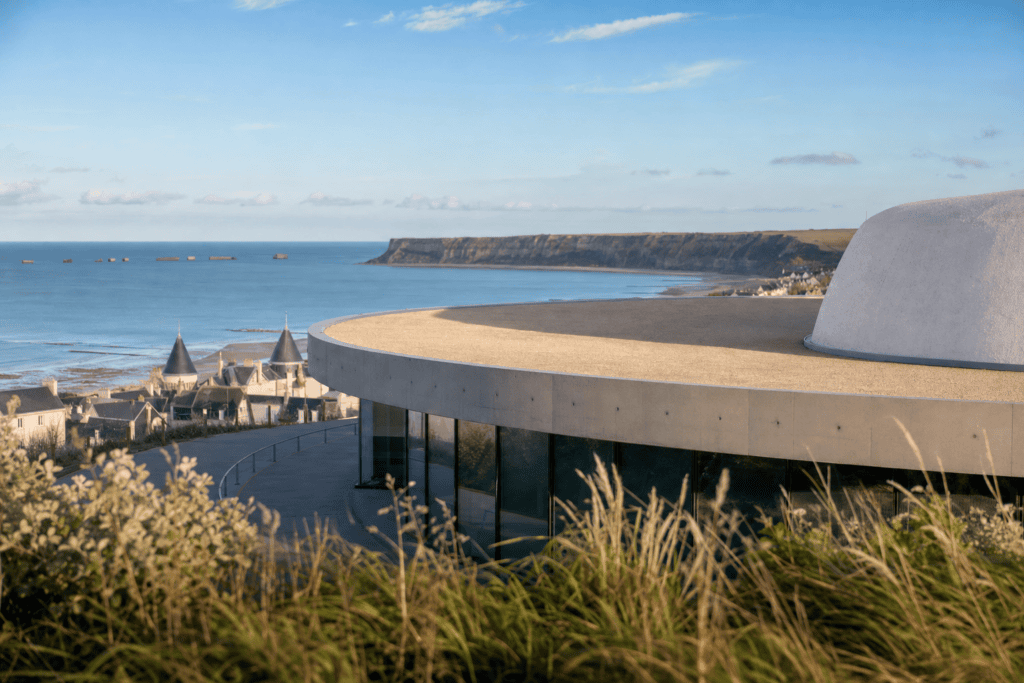
Arromanches 360 – Circular Cinema
A panoramic film on nine screens explaining D-Day, the artificial harbor at Arromanches, and the battle of…
 Must-see
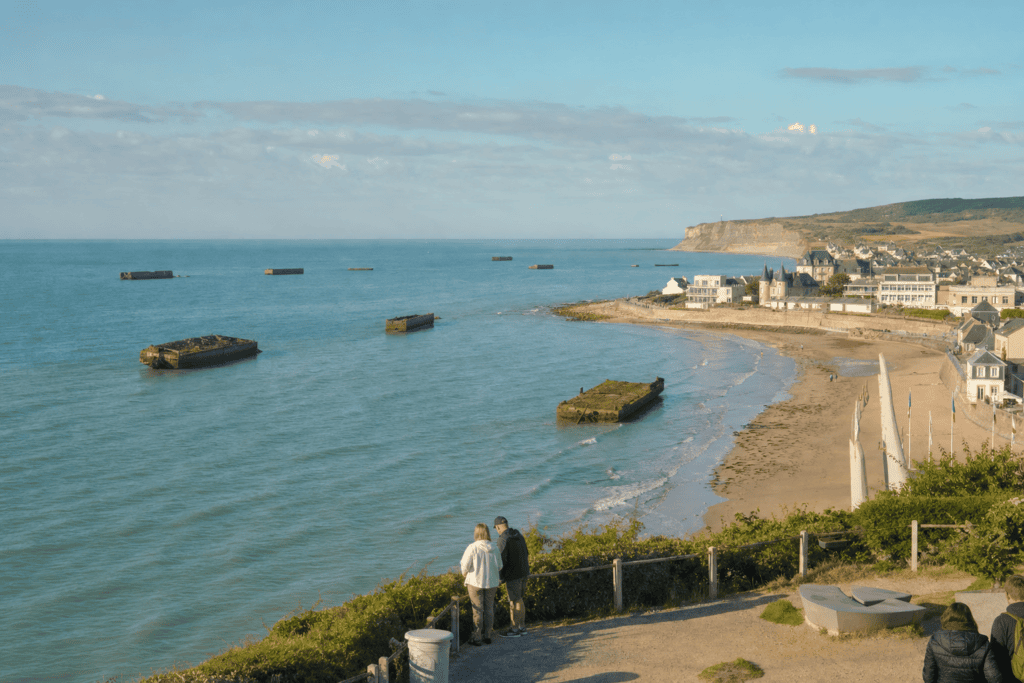
Mulberry B Artificial Harbor and Arromanches Beach
In Arromanches-les-Bains, view the remains of Mulberry B from Gold Beach and complete your visit with the museum…
 Must-see
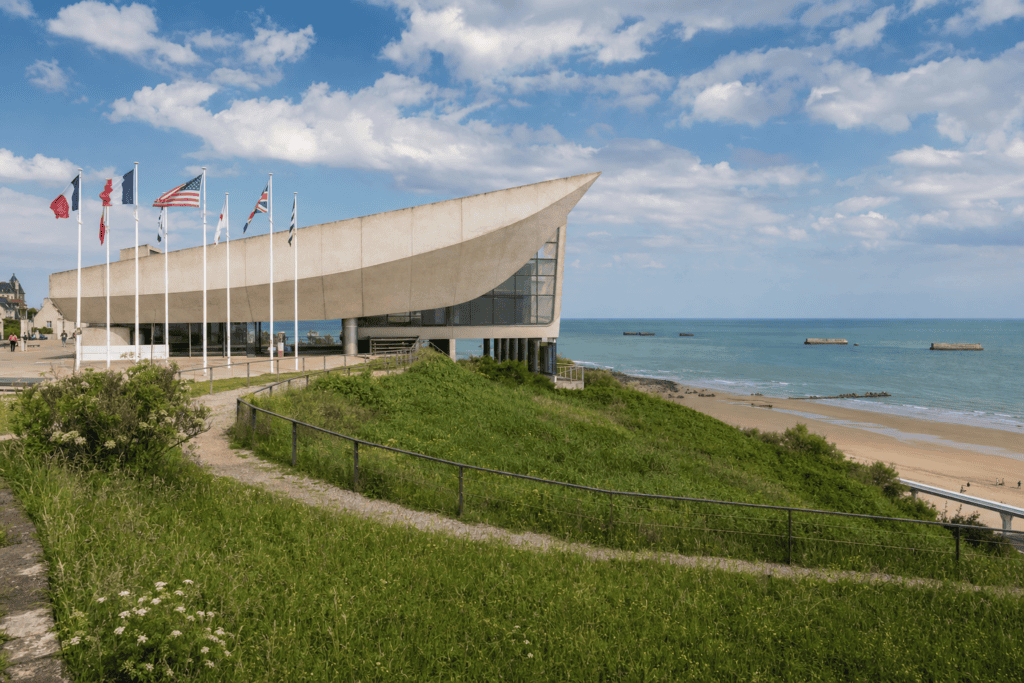
Arromanches D-Day Museum
An essential museum for understanding Mulberry B, the Allied artificial harbor built off Arromanches after D-Day.
Other destinations to discover
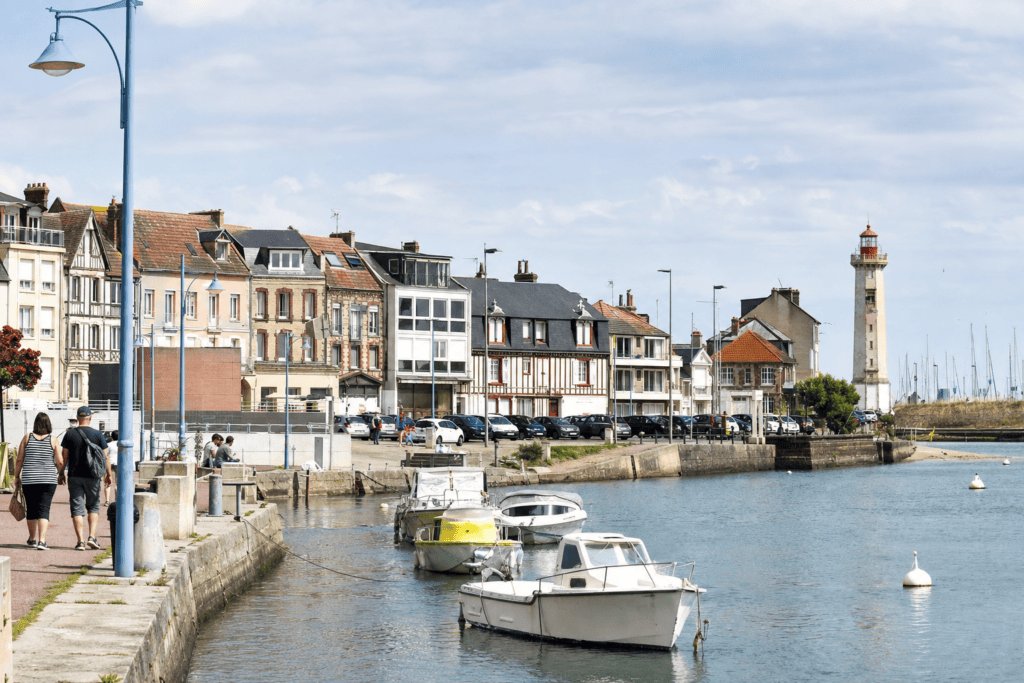
Ouistreham
Discover Riva-Bella Beach, Sword Beach, the Grand Bunker, the harbor and D-Day sites…
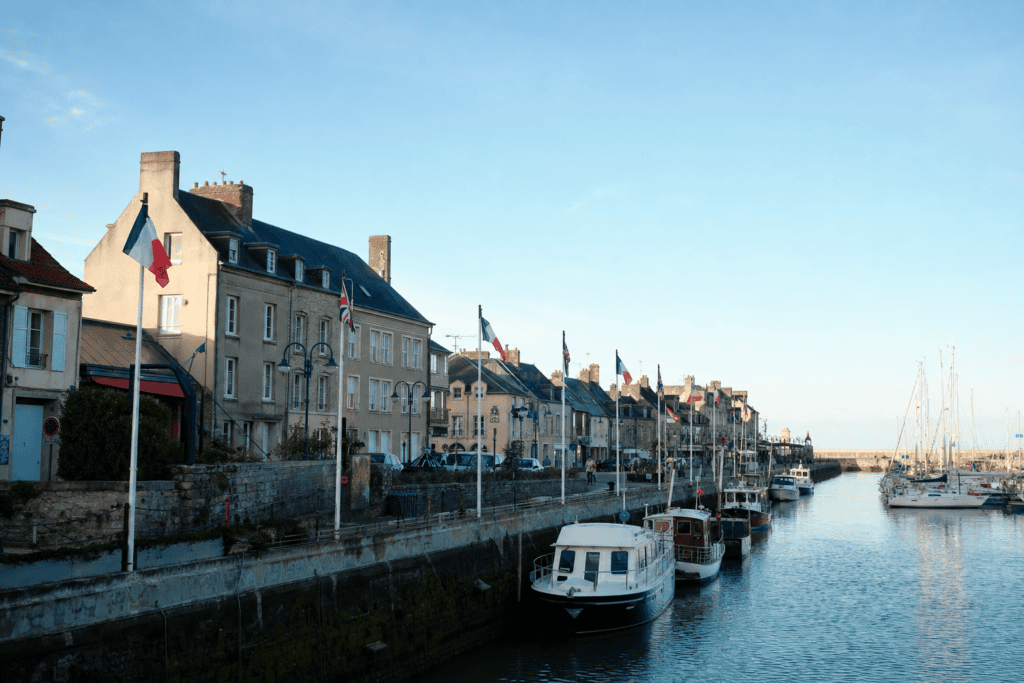
Courseulles-sur-Mer
A Côte de Nacre resort with beaches, a harbor, seafood and Canadian heritage…

Sainte-Mère-Église
Discover the Airborne Museum, John Steele’s church, La Fière, and Utah Beach from Sainte-Mère-Église.
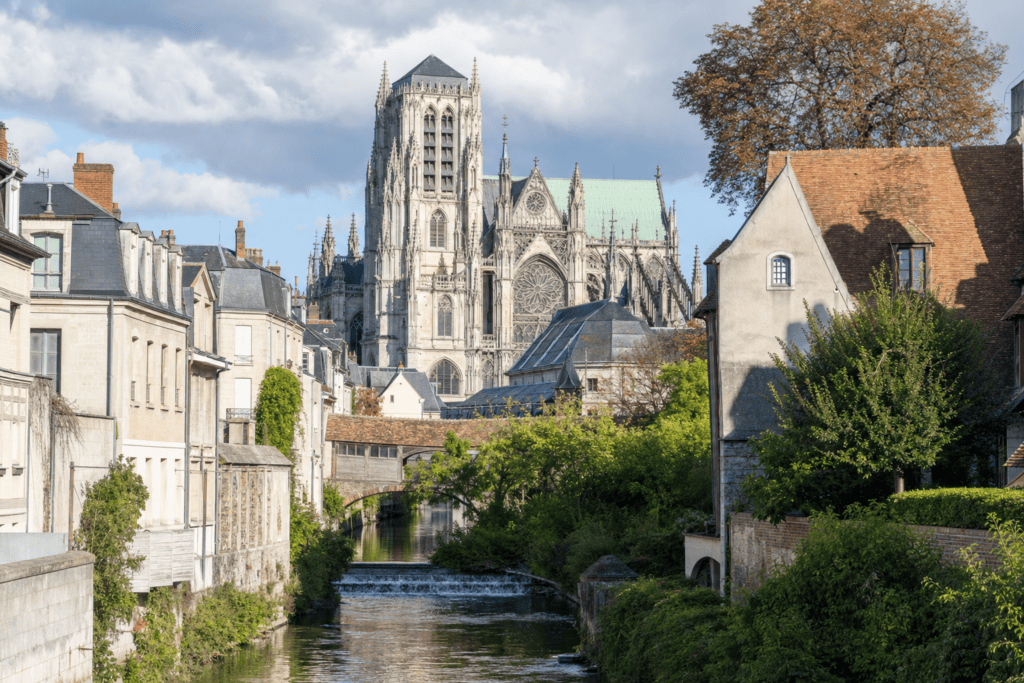
Évreux
A charming Norman town where the cathedral, belfry, museum and banks of the Iton make for a rich and…

Alençon
Alençon charms visitors with its historic heritage, exceptional needle lace, religious legacy and landscapes…
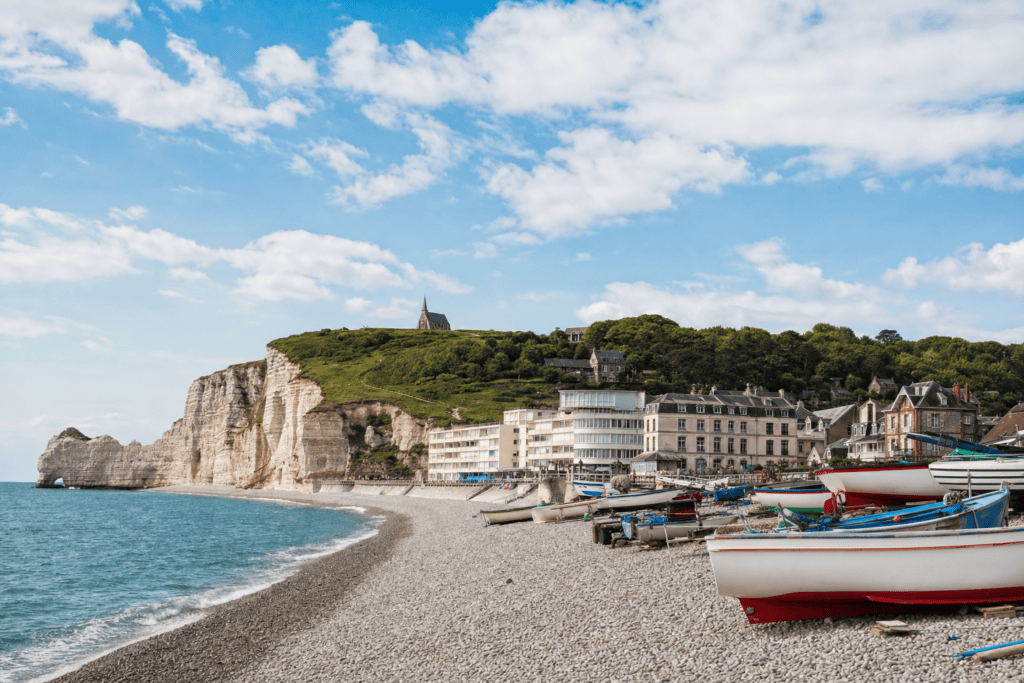
Fécamp
Between its port, cliffs, and heritage, Fécamp reveals an authentic maritime Normandy, ideal for a getaway from Paris.
DESTINATION GUIDE
Arromanches-les-Bains Travel Guide
Understanding Arromanches’ role in D-Day
Arromanches-les-Bains is located in Calvados, at the center of the Gold Beach sector, one of the five beaches where the Allies landed on June 6, 1944. The town is best known for the artificial Mulberry B harbor, built to enable the landing of heavy equipment while the Allies still did not control a major Normandy port. Concrete caissons, pontoons and floating roadways formed an installation capable of receiving ships and moving vehicles, fuel, ammunition and supplies to the front.
This logistical dimension is what makes the site distinctive. In Arromanches, the visit focuses not only on the initial beach assault: it explains how Operation Overlord was extended and supplied in the weeks that followed. The remains visible offshore change appearance depending on the tide, weather and light. A walk along the seafront, combined with a viewpoint above the village, helps visitors better understand the layout of the former harbor.
The D-Day Museum and Arromanches 360
The D-Day Museum presents the design and operation of the Mulberry B harbor through models, maps, documents and objects. It is an especially useful first stop before viewing the remains from the beach. The collections connect the elements visible in the bay with the technical and military constraints of summer 1944.
Arromanches 360, meanwhile, offers an audiovisual experience dedicated to D-Day and the Battle of Normandy. The two attractions do not have exactly the same purpose: the museum emphasizes the historical and material explanation of the harbor, while the screening provides a more panoramic and immersive approach to the conflict. Check the official websites before setting out for opening hours, prices, showtimes and any access requirements, which may vary by season.
The seafront and beach offer a complementary perspective outdoors. The remains should not be climbed or approached in dangerous conditions. The tide is important for viewing them, but it does not exempt visitors from respecting marked areas and local recommendations.
D-Day sites to arrange around the village
Arromanches alone is not enough to understand the entire operation. By car or with a private transfer, it is possible to create a coherent itinerary without trying to cover the entire coastline in one day. To the west, the German battery at Longues-sur-Mer preserves several guns and provides an introduction to the Atlantic Wall. Port-en-Bessin-Huppain offers additional insight into Allied supply operations.
Farther on, Omaha Beach and the Normandy American Cemetery at Colleville-sur-Mer form a major memorial complex. To the east, Ver-sur-Mer and the British Normandy Memorial recall the British role at Gold Beach. Courseulles-sur-Mer is home to the Juno Beach Centre, dedicated to Canada’s contribution. Each site has its own visiting pace: allowing time for museums, cemeteries, beaches and travel is preferable to rushing through a succession of stops.
- Arromanches-les-Bains: D-Day Museum, Mulberry B remains and Gold Beach.
- Longues-sur-Mer: Coastal battery and remains of the German defensive system.
- Ver-sur-Mer: British sector and British Normandy Memorial.
- Courseulles-sur-Mer: Juno Beach Centre and Canadian beach.
- Colleville-sur-Mer: Omaha Beach and Normandy American Cemetery.
Bayeux: where to stay, dine and explore
Bayeux is generally the most convenient base for a stay focused on the D-Day beaches. Its train station, historic center and range of accommodations make planning easier, while Arromanches remains accessible by road. The town has hotels in the center, bed-and-breakfasts and vacation rentals, with more choice than a small coastal village. During peak season and around the June commemorations, booking early is advisable.
Bayeux’s center can be explored on foot around Notre-Dame Cathedral, the old streets and half-timbered houses. The Bayeux Tapestry provides a remarkable medieval interlude, while the Memorial Museum of the Battle of Normandy adds to the understanding of the conflict. For meals, Bayeux offers a wider range than Arromanches: traditional restaurants, crêperies, places around the market and establishments highlighting Norman products. In Arromanches, the selection is more concentrated and depends more on the season; it is useful to check opening days and reserve when you have a particular restaurant in mind.
Staying in Arromanches is better suited to those who prioritize a seaside atmosphere, immediate proximity to the bay and visits early in the morning or late in the day. Bayeux is better for travelers who want to take several excursions, dine easily and have access to urban services. A balanced option is to stay in Bayeux and devote half a day to Arromanches, or split the stay between the two towns.
Taking the train from Paris, then continuing to Arromanches
Bayeux station is the most direct rail gateway for visiting Arromanches. From Paris, trains generally depart from Paris-Saint-Lazare for Normandy, with services to be checked based on the date and any track work. Depending on the service selected, the journey may involve a connection, notably in Caen. You then need to plan the final leg between Bayeux station and Arromanches: taxi, rental car, organized excursion or private transfer. Local and regional buses may be seasonal or infrequent; check official schedules when planning your trip rather than relying on a theoretical connection.
Caen is another useful gateway. Its station is larger, and the city offers more connections, rental cars and transportation options. From Caen, the road journey to Arromanches passes through the Bessin area, and summer traffic should be taken into account. Caen-Carpiquet Airport may be suitable if an air connection fits your itinerary, but it does not replace checking transportation options to the coast.
Le Havre, Ouistreham and ferry arrivals
Le Havre can serve as an arrival point for a trip to Normandy, but it is not the closest base to Arromanches. The city is notable for its architecture rebuilt by Auguste Perret and listed as a UNESCO World Heritage Site, its seafront and its maritime connections. From Le Havre, you must then arrange a road leg to Bayeux or Arromanches; the train does not take you directly to the D-Day beaches, and a connection in Caen may be necessary depending on the itinerary.
Travelers arriving by ferry at Ouistreham, the port of Caen, generally reach Arromanches by road. This option works well for a trip by car, but you need to factor in disembarkation, ferry schedules and the distance to the Bessin area. For a car-free trip, carefully compare connections from the port to Caen, then the onward connection to Bayeux and the final leg to Arromanches. Ferry and transportation schedules change, so check them directly with the operators.
Public transportation, excursion or private transfer: which option should you choose?
Public transportation suits travelers who are willing to limit the number of sites and spend time making connections. A Bayeux–Arromanches itinerary can work with careful planning, but the beaches, batteries and cemeteries are spread out. A guided excursion combines transportation and historical commentary; however, check which sites are included, how long the stops last and where the tour departs.
A private transfer from Paris, Paris-Charles de Gaulle or Paris-Orly offers more flexibility for a group or a customized itinerary. It can include Arromanches, Bayeux and several D-Day sites, with a return to Paris or onward travel to another Normandy destination. This is neither public transportation nor a ticketing service: museum admission and guided tours must be booked directly with the establishments concerned.
When to visit and how much time to allow
Half a day allows time to visit the museum, view the bay and walk along the seafront, depending on the day’s opening hours. A full day adds Bayeux or a nearby site such as Longues-sur-Mer and Ver-sur-Mer. Two or three days are preferable for combining Arromanches, Omaha Beach, Juno Beach, Bayeux and several museums without turning the trip into a long road race.
June has strong commemorative significance around June 6, with potentially heavy visitor numbers and traffic. Spring and early fall often offer a good balance between sightseeing and walks, while summer requires planning ahead for accommodations, parking and restaurants. Bring suitable shoes, protection from the wind and extra time between stops. Travelers with reduced mobility should check the accessibility of each museum, route and outdoor site.
A place of remembrance to visit respectfully
The beaches, batteries, cemeteries and memorials are places of contemplation as well as historic sites. Follow each establishment’s guidelines, respect areas reserved for ceremonies and preserve the quiet of military cemeteries. For a balanced understanding of D-Day, combine a museum, a beach, a defensive position and a cemetery: this combination connects strategy, logistics, combat and individual stories.
Booking Paris Transfer can arrange a private journey from Paris, the Île-de-France region, CDG or ORY to Arromanches-les-Bains, Bayeux and the D-Day beaches, with a return to Paris or onward travel in Normandy. The company is based in Paris and does not present itself as a local driver based in Arromanches. Tickets, opening hours and guided tours must be checked and booked with the official sites.
Getting to Arromanches-les-Bains from Paris
From Paris, CDG or ORY, arrange a private transfer to Arromanches-les-Bains, Bayeux and the D-Day beaches, with a return to Paris or onward travel in Normandy.