



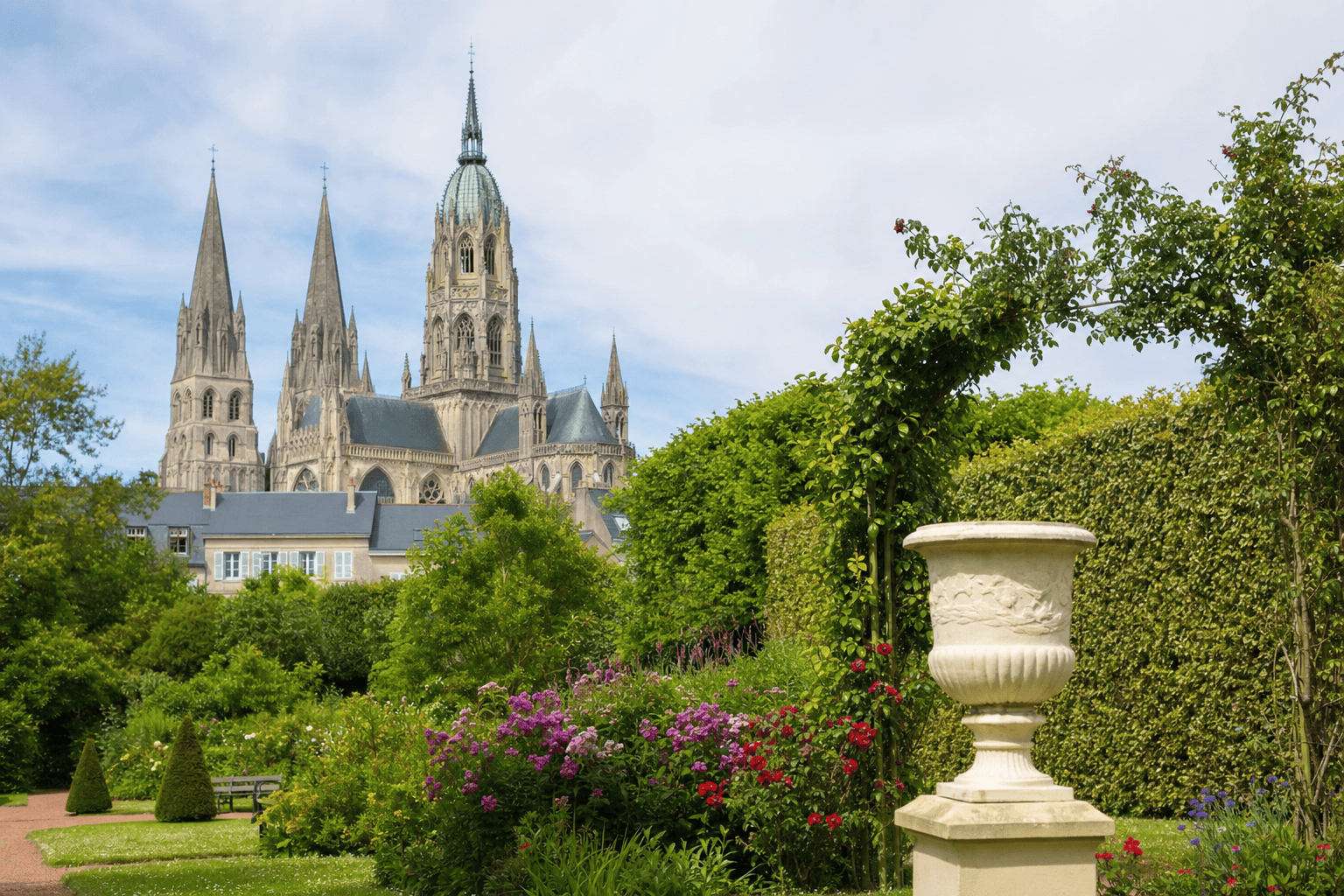
Bayeux Botanical Garden: Visitor Guide
26 km
Bayeux Botanical Garden is a historic 2.6-hectare landscaped park known for its remarkable trees, flower beds and peaceful atmosphere. Created in the 19th century by the Bühler brothers, it is home to a weeping beech that has become one of the city’s botanical symbols. Located at 55 route de Port-en-Bessin in Bayeux, the garden is a pleasant complement to exploring the cathedral, museums and historic streets. Local tourism information describes access as free, but seasonal hours, visitor rules and any restrictions should be confirmed with the city before setting out.
Practical information
After rain, wear suitable footwear. For a more complete visit, combine the garden with Bayeux’s historic center, museums or the banks of the Aure.
Getting to Bayeux from Paris with a chauffeur
Booking Paris Transfer peut organiser un trajet privé depuis Paris, un hôtel en Île-de-France, l’aéroport Charles-de-Gaulle ou Orly vers Bayeux, avec retour à Paris ou poursuite d’un itinéraire dans le Calvados. Le transport est distinct de la visite du jardin : aucun billet d’entrée n’est vendu ni inclus, et le service n’est pas celui d’un chauffeur local basé à Bayeux.
Transportation available from Paris, Île-de-France, CDG or Orly, with a return to Paris or an agreed itinerary; not an independent local service based in Bayeux.
A Landscaped Park in Bayeux’s History
Bayeux Botanical Garden is part of the city’s landscape heritage. It was created in the 19th century, when public parks were becoming increasingly important in French cities. The project is attributed to the Bühler brothers, landscape designers also associated with major urban gardens such as Parc de la Tête d’Or in Lyon and Parc du Thabor in Rennes. Their approach emphasizes vistas, lawns, groves and trees capable of giving the landscape lasting structure.
The park is located at 55 route de Port-en-Bessin in the town of Bayeux. It offers a different kind of experience from the monuments in the center while remaining easy to include in a cultural day out. Its appeal does not depend on a single attraction; it lies in the overall composition, the age of the plantings and the way the paths frame the view. Any claim of heritage protection should be checked against official records before publication or a visit, since different levels of designation, registration or labeling do not have the same legal meaning.
The Weeping Beech, an Iconic Tree
The weeping beech is the garden’s best-known landmark. Its cascading branches form a broad, dramatic silhouette that is especially striking from the paths. Its appearance changes significantly with the seasons: the foliage creates a dense mass in spring and summer, colors become warmer in fall, and the branches are more exposed in winter. This evolution makes the park worth exploring in different ways rather than treating it as a brief photo stop.
Tourist sources associate this tree with protection as a natural monument and with the “Arbre remarquable de France” designation. These references should be confirmed with the relevant official institutions if used in heritage or editorial materials. On site, stay on the paths and avoid sitting at the tree’s base, on its roots or in the planted beds. A more distant view often makes its scale easier to appreciate, while a closer composition reveals the delicacy of its branches and the structure of its form.
Observing the Plantings and Signage
The garden is best experienced as an observation walk. Information markers or signs may help identify certain species, explain the park’s history and highlight differences in tree forms. The availability, content and condition of this signage may change, so it is best viewed as an aid to the visit rather than a feature guaranteed to be available at all times.
A good approach is to take an initial tour without trying to read everything. Notice the broad vistas, more shaded areas and trees that give the landscape its rhythm. Then return to the information that interests you most. Children can observe bark textures, leaf shapes and changes in color; botanical enthusiasts can compare forms and silhouettes. A notebook, lightweight binoculars or an identification app can enhance the walk, provided you do not enter planted areas or disturb other visitors.
Seasons, Hours and Opening Conditions
The garden’s atmosphere changes throughout the year. Spring highlights young leaves and blooms, while summer brings more shade beneath the trees. In fall, foliage adds depth to the vistas; in winter, the structure of the branches and lines of the landscape are easier to observe. Normandy weather can, however, leave the paths wet, especially after a rainy period.
Local information indicates seasonal hours, generally with longer opening times during the warmer months and more limited hours in winter. These hours may change because of construction, events, safety concerns or municipal decisions. Before setting out, check the official Bayeux city website or the tourist office to confirm the day’s opening, any closures and access arrangements. Do not infer that the garden is open based on an old photograph, directory listing or undated publication.
Accessibility, Children, Dogs and Bicycles
The garden is a landscaped park rather than a uniform facility: the condition of the paths may vary by area, season and weather. Visitors who need step-free access should ask the city hall or tourist office in advance which paths are suitable and whether temporary restrictions apply. This is preferable to making a general accessibility promise, especially after heavy rain or during construction.
Play areas have been mentioned in information about the park, but their presence, location and conditions of use should be confirmed on site or with the city. Do not assume the rules for dogs, bicycles, scooters, picnics or games: check the signs at the entrance and follow municipal instructions. If animals are permitted, keep them under control and clean up after them. Bicycles should remain in authorized areas to preserve the peace and protect the lawns and plantings.
A Stop to Combine with Bayeux’s Center
Bayeux Botanical Garden can easily fit into a day spent exploring Bayeux. After your walk, head to the historic center to see Notre-Dame Cathedral, the old streets and half-timbered houses. The banks of the Aure offer another way to explore the city, with a more linear atmosphere and different views of its urban heritage. Alternating between nature, architecture and history keeps the entire day from being spent indoors.
Depending on their respective hours, the Bayeux Tapestry Museum, the Memorial Museum of the Battle of Normandy and the Baron Gérard Museum of Art and History can round out your itinerary. Check each venue’s opening conditions separately, as they are independent of the garden. Bayeux is also a useful base for visiting sites connected with D-Day, but distances and travel times require separate planning. Allow enough time for parking, meals and possible lines rather than turning the garden into a quick stop between two appointments.
Why Visit This Garden in Normandy?
Bayeux Botanical Garden is worth visiting for its balance of heritage and the outdoors. It offers a slower-paced experience than museums and major monuments without requiring a hike or complicated planning. The weeping beech gives the park a striking focal point, but the site’s appeal also lies in its other trees, vistas and the continuity of a public garden designed in the 19th century. Your walk may take less than an hour or extend longer depending on your curiosity, the weather and the time you spend with the signage.
This site is particularly well suited to travelers looking for a break between visits, families seeking an outdoor space and enthusiasts of historic gardens. Since local sources describe access as free, it can also be a simple way to add variety to a stay in Bayeux, subject to confirming the day’s arrangements. From Paris, the garden can be included in a private excursion to Bayeux, with a return to the capital or onward travel to other sites in Calvados. Booking Paris Transfer provides transportation only from Paris and the surrounding region.
Frequently Asked Questions
What is the address of Bayeux Botanical Garden?
Is admission to Bayeux Botanical Garden free?
What are the opening hours for the botanical garden?
Can you see a remarkable tree in the garden?
Are dogs and bicycles allowed?
How much time should I allow?
 What to do in Bayeux for a weekend A weekend in Bayeux combining medieval heritage, the cathedral, museums, and the memory of D-Day, with an itinerary…
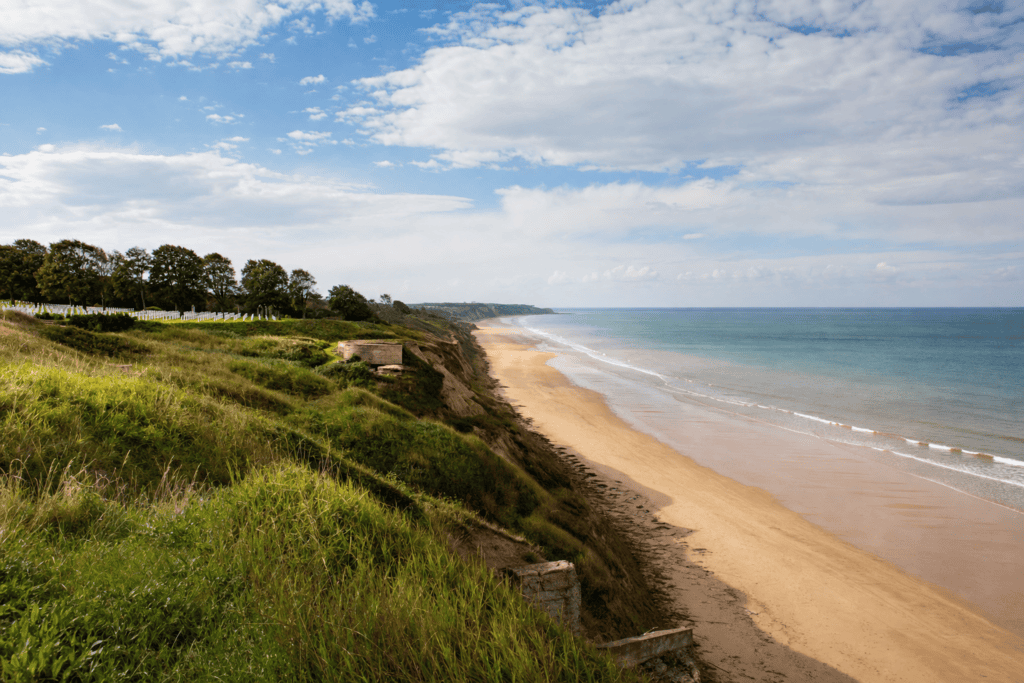 Omaha Beach and the American Cemetery at Colleville-sur-Mer An essential memorial site in Normandy, between Omaha Beach and the American cemetery at…
 Memorial Museum of the Battle of Normandy In Bayeux, a leading museum for understanding the Battle of Normandy before exploring the sites…
 Bayeux British Military Cemetery A major memorial site in Bayeux, with Commonwealth graves, the Bayeux Memorial, and…
 Bayeux Cathedral of Notre-Dame An iconic Bayeux landmark, showcasing Romanesque and Gothic architecture, medieval history, and a stroll…
 Bayeux Market Every Saturday morning, the Saint-Patrice Market brings together producers, merchants, and visitors in the heart of Bayeux…
Online booking · Paris → 55 route de Port-en-Bessin, 14400 Bayeux, Calvados, Normandy
Choose your pickup date and time
Your departure and arrival details are already pre-filled. You can adjust them in the fare calculator before viewing the vehicles and fare.