



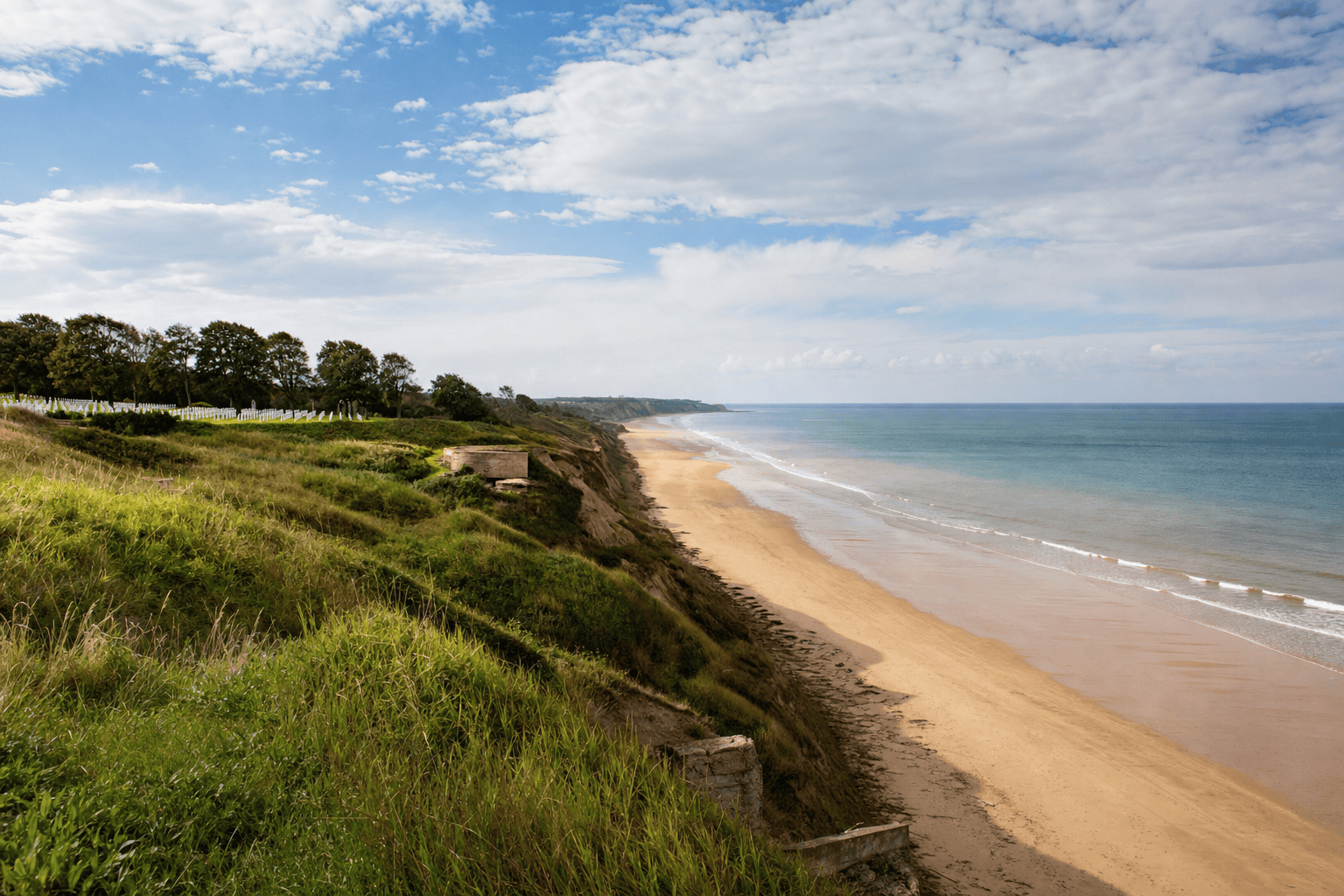
Omaha Beach and American Cemetery: Complete Guide
26 km
Between Saint-Laurent-sur-Mer beach and the long rows of white headstones in Colleville-sur-Mer, this site brings together two essential landscapes of D-Day remembrance. Omaha Beach helps visitors understand the geography of the June 6, 1944, operation, while the Normandy American Cemetery provides a place for reflection overlooking the English Channel. The visit calls for time, solemnity, and ideally some basic historical preparation to appreciate what you are seeing. The two sites are geographically close, but their access points are separate, so plan a driving itinerary rather than a simple walk between the beach and cemetery.
Practical information
Wear suitable shoes, bring water, and dress respectfully. To look up a grave or name, use the official American Battle Monuments Commission database before your visit. Always check the latest information before setting out.
Reach Omaha Beach from Paris with peace of mind
To visit Omaha Beach and the Normandy American Cemetery from Paris, Booking Paris Transfer can arrange private transportation from a Paris hotel, CDG, or ORY, with a return to Paris or a customized Normandy itinerary. The service covers transportation only; admission, guided tours, and site reservations must be arranged separately.
Possible departure points include Paris, a Paris hotel, CDG, or ORY; return to Paris or travel including Bayeux and the D-Day beaches.
Understanding the site and its different access points
Omaha Beach does not refer to a single village or one access point: the historic name covers a vast stretch of the Normandy coast associated with the American landings on June 6, 1944. To plan your visit clearly, distinguish between the beach, the coastal monuments, and the American cemetery. The beach and its main memorial sites are best explored from Saint-Laurent-sur-Mer and Vierville-sur-Mer. The Normandy American Cemetery itself is located in Colleville-sur-Mer, on the plateau and cliff overlooking the eastern part of the site.
The cemetery is administered by the American Battle Monuments Commission. It is a place of burial and remembrance, not a conventional museum. The grounds include the visitor center, memorial, reflecting pool, chapel, Garden of the Missing, and graves. The beach offers a more geographic perspective based on the terrain, distance, tide, and access points. Plan on two separate stops, traveling between them by car, rather than expecting a quick visit connected by a direct path.
The history of D-Day at Omaha Beach
On June 6, 1944, Omaha was one of the sectors assigned to American forces during Operation Overlord. The coast was defended by German positions on the high ground, while the beach offered little protection to the landing troops. Currents, obstacles, terrain, and the resistance encountered made the first hours particularly deadly. The nickname “Bloody Omaha” recalls the scale of the losses, but it should not turn the site into a mere spectacular backdrop: Omaha was also the scene of an advance, the reorganization of units, and the gradual consolidation of a beachhead.
From the beach, focus especially on the relationship between the shoreline and the high ground. The landscape has changed, but the slope, sea horizon, and access points convey a sense of the military topography. To learn more, the Overlord Museum in Colleville-sur-Mer and local museums can complement the visit with maps, artifacts, and testimonies. Because their hours and access conditions may vary, check their official information separately before adding them to your itinerary.
Visiting the Normandy American Cemetery in Colleville-sur-Mer
The Normandy American Cemetery extends across expansive landscaped grounds overlooking Omaha Beach and the English Channel. Rows of Latin crosses and Stars of David are arranged with great regularity, but each name represents an individual story. The central memorial includes a colonnade, operation maps, and the statue Spirit of American Youth Rising from the Waves. The reflecting pool creates a solemn perspective toward the graves, while the chapel and Garden of the Missing invite visitors to slow down.
The American Battle Monuments Commission states that the site honors 9,389 American service members buried there and 1,557 names inscribed on the Walls of the Missing. The organization may update these figures, so check the official page before any publication or commemorative research. Admission is free, and no tourist ticket is required. Remain discreet, respect ceremonies, and do not place objects on graves or monuments.
Adopting a respectful attitude on the site
The power of this visit lies in the connection between the landscape and the names. At the cemetery, begin at the memorial to understand the operations, then walk slowly through the burial plots. There is no need to mechanically cover every path; reading a few inscriptions and taking time to understand the layout is often more meaningful. The American Battle Monuments Commission database can help you find a name, unit, or grave; this preparation can give the visit a personal dimension.
At Omaha Beach, walk carefully and observe the beach in relation to the tide. Sand, pebbles, seawalls, and access points can change the experience from one day to the next. The beach remains a living public space, but its historical importance calls for a measured attitude. Avoid staged scenes, loud behavior, or disrespectful photography. In the event of a ceremony, construction, or temporary restrictions, follow signage and staff instructions rather than any preplanned itinerary.
Getting to the site from Bayeux or Paris
Colleville-sur-Mer lies northwest of Bayeux, while the main access points to Omaha Beach are spread around Saint-Laurent-sur-Mer and Vierville-sur-Mer. By car, the route from Bayeux generally follows departmental roads toward the coast; local signs point to the cemetery and beaches. Traffic can become difficult around June 6 and during peak-season weekends. Parking areas are separate for each site, so do not assume that a space at the cemetery makes it easy to reach the beach on foot.
From Paris, taking the train to Bayeux is an option, but local connections to the beaches are limited and must be planned in advance. For a private excursion, a chauffeur can provide transportation from Paris, a Paris hotel, Charles de Gaulle Airport, or Orly, then arrange the return to Paris. This service covers transportation only: it does not include admission tickets, an automatic guided tour, or an independent local service based in Colleville-sur-Mer.
Choosing the season and length of your visit
Half a day allows you to visit the cemetery without rushing and then continue to Omaha Beach. Allow more time if you want to include the Overlord Museum, Pointe du Hoc, the Omaha D-Day Museum, or other D-Day sites. The cemetery is listed as open to the public every day except December 25 and January 1, according to information from the American Battle Monuments Commission. Hours and access conditions may change; be sure to check the official information on the day of your visit, particularly for ceremonies, construction, or security measures.
Spring and fall often offer a more peaceful pace, but Normandy weather can change quickly. In summer, setting out early makes parking easier and lets you enjoy pleasant coastal light. June 6 is a major date of remembrance, and access, parking, or certain areas may be modified. Families, groups, and people wishing to honor a loved one should contact the ABMC directly to learn about appropriate arrangements.
Planning a D-Day remembrance itinerary in Normandy
Omaha Beach and the Normandy American Cemetery can form the heart of a D-Day itinerary from Bayeux. For a well-structured day, start at the Colleville-sur-Mer cemetery, where the maps and overall orientation help explain the sector. Then continue to the beach at Saint-Laurent-sur-Mer, and if desired, proceed to Pointe du Hoc farther west. This progression moves from the burial site to the operational landscape, then to the fortified positions and cliffs.
Still, avoid overloading your schedule. Distances may look short on a map, but coastal roads, stops, and time for reflection can make for a long day. Bayeux is a convenient base for overnight stays, dining, and visits to other historic sites, but local transportation should be checked for the time of year. From Paris, a private itinerary can include pickup from a hotel, CDG, or ORY, stops throughout Normandy, and the return to Paris. Confirm the available time, desired sites, and official restrictions in advance.
Frequently Asked Questions
Where exactly is the Normandy American Cemetery at Omaha Beach?
Is admission to the Normandy American Cemetery charged?
Can you walk directly from the cemetery to the beach?
How much time should I allow for the visit?
Can you visit from Paris without a car?
 Bayeux Market Every Saturday morning, the Saint-Patrice Market brings together producers, merchants, and visitors in the heart of Bayeux…
 Bayeux Historic Center A walking tour through Bayeux, taking in the cathedral, historic houses, the Tapestry, the banks of the Aure, and wartime history…
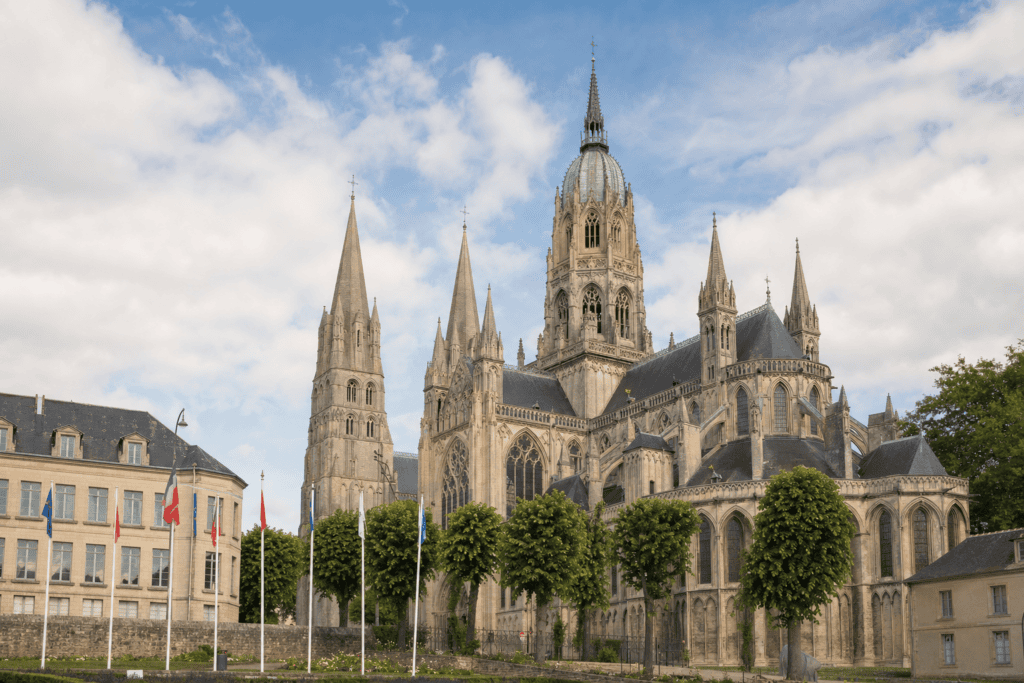 Bayeux Cathedral of Notre-Dame An iconic Bayeux landmark, showcasing Romanesque and Gothic architecture, medieval history, and a stroll…
 Bayeux Botanical Gardens A 2.6-hectare historic landscaped park known for its weeping beech and botanical walk…
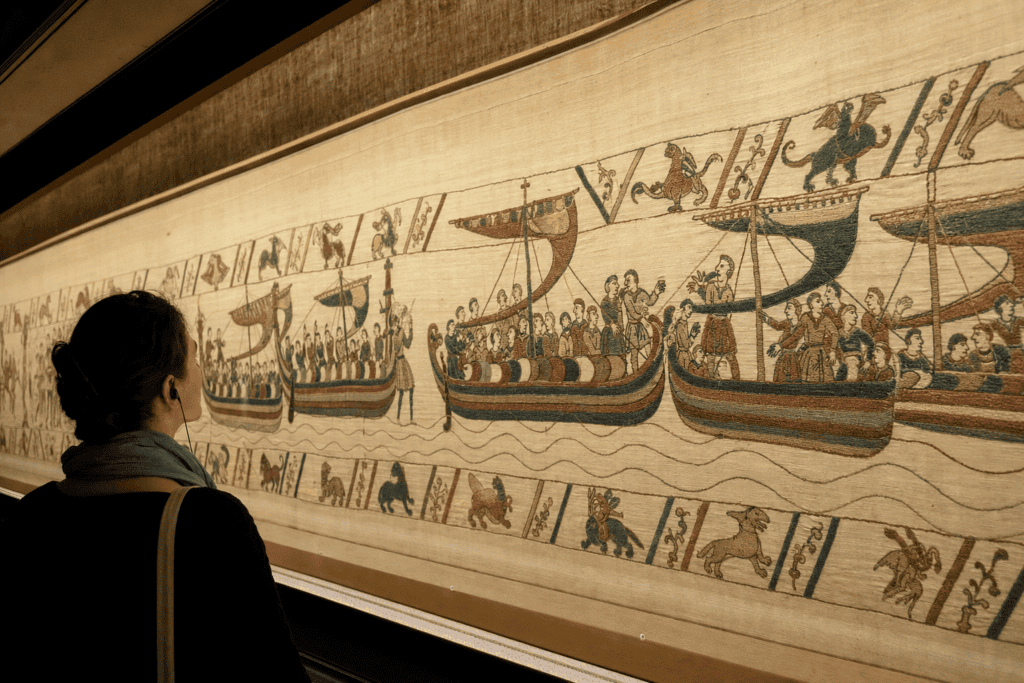 Bayeux Tapestry A narrative embroidery from the 11th century recounts William of Normandy’s conquest of England at…
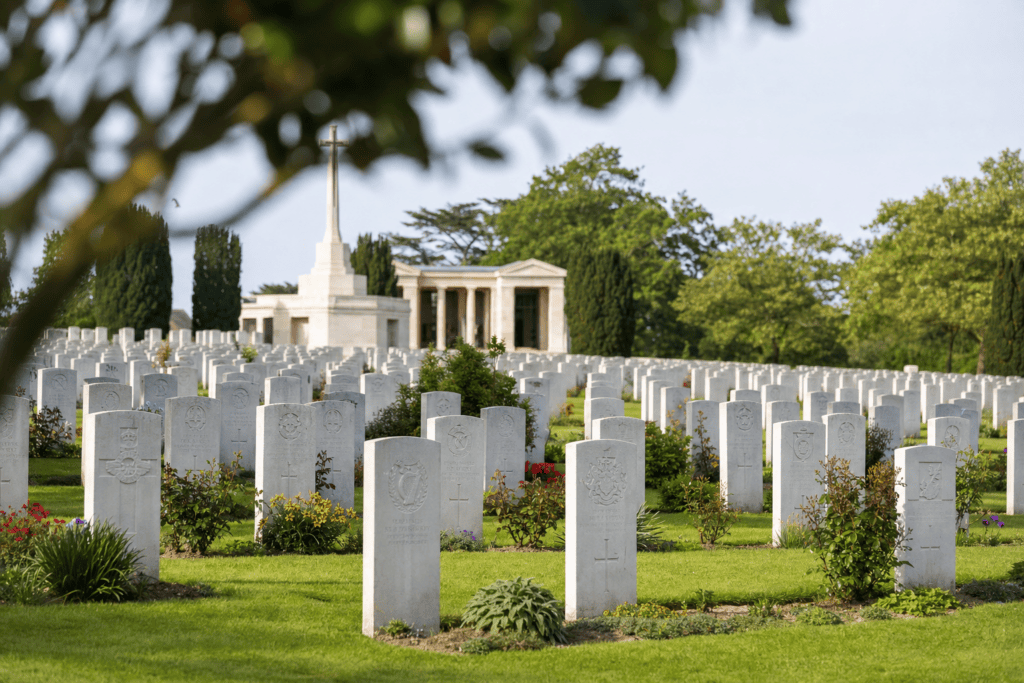 Bayeux British Military Cemetery A major memorial site in Bayeux, with Commonwealth graves, the Bayeux Memorial, and…
Online booking · Paris → Normandy American Cemetery, Route du Cimetière Américain, 14710 Colleville-sur-Mer, France. Omaha Beach stretches mainly around Saint-Laurent-sur-Mer and Vierville-sur-Mer.
Choose your pickup date and time
Your departure and arrival details are already pre-filled. You can adjust them in the fare calculator before viewing the vehicles and fare.