



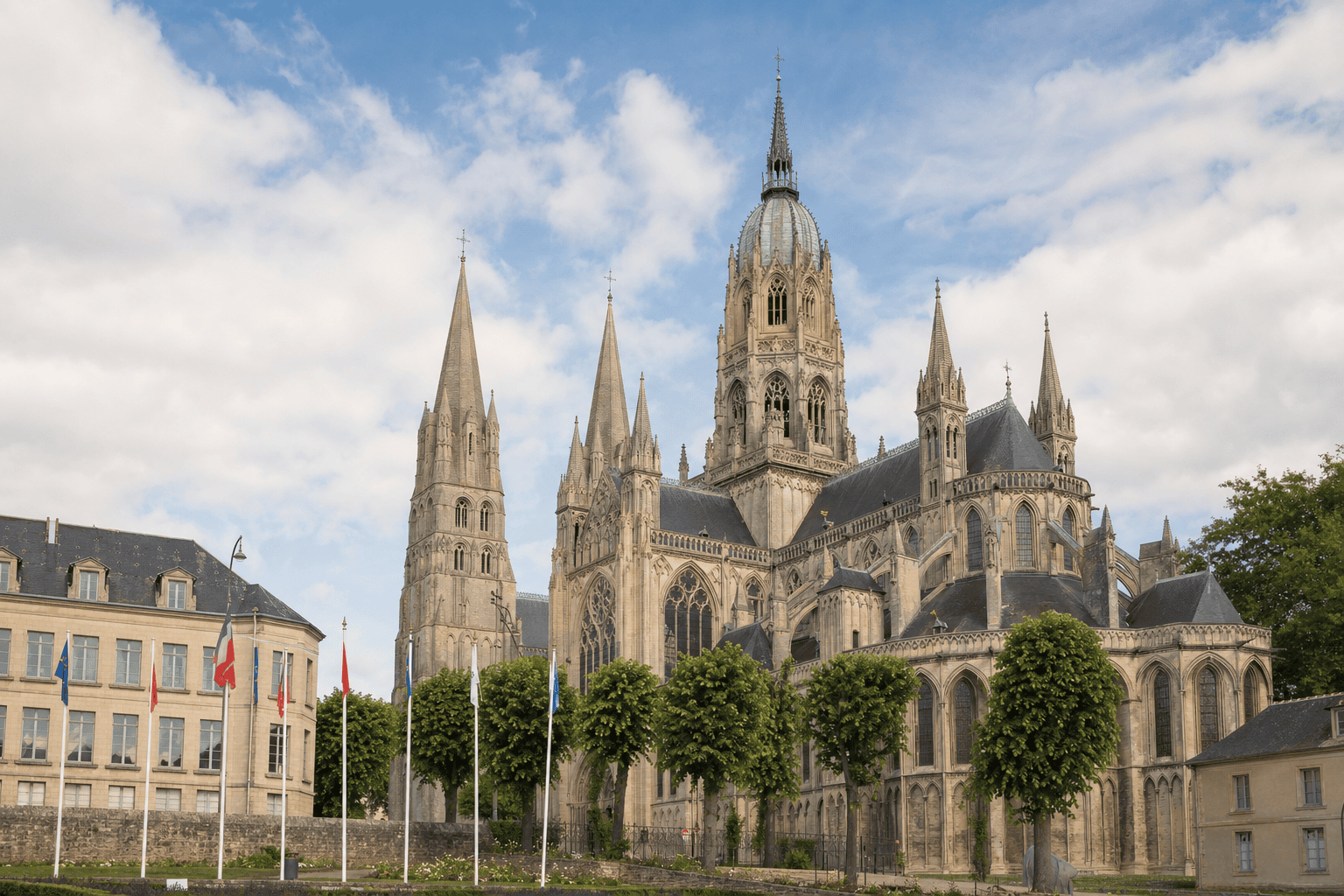
Notre-Dame Cathedral in Bayeux: Visitor Guide
26 km
At the heart of Bayeux’s historic town center, Notre-Dame Cathedral is one of Calvados’s major heritage landmarks. Consecrated in 1077 in the presence of William the Conqueror and Odo of Conteville, the building reflects the city’s religious and political importance in medieval Normandy. Its current silhouette combines Romanesque elements, Gothic alterations, and more recent interventions. The cathedral is also associated with the Bayeux Tapestry, although the work is now displayed in a separate museum. A visit naturally fits into a stroll taking in the old streets, the banks of the Aure, and Bayeux’s main museums.
Practical information
Combine the cathedral with the Tapestry and the banks of the Aure, then follow municipal signs to public parking rather than trying to park at the foot of the landmark.
Planning a Trip to Bayeux from Paris
If Bayeux is part of your Normandy itinerary, a private trip can be arranged from Paris, the Île-de-France region, CDG, or ORY, with a return to Paris or continuation of your itinerary. Transportation is separate from tickets and visits.
Service departing from Paris, the Île-de-France region, CDG, or ORY. Admission tickets and guided tours must be booked separately.
A Cathedral at the Heart of Norman History
Notre-Dame Cathedral in Bayeux holds a central place in the history of the city and Normandy. Its consecration in 1077 took place in the presence of William the Conqueror and Odo of Conteville, Bishop of Bayeux and half-brother of the duke who became king of England. This ceremony highlights Bayeux’s major role in medieval Normandy, both as a religious seat and a center of power.
The current building should not, however, be imagined as a structure that has remained intact since the 11thth century. Cathedrals evolve with liturgical needs, techniques, restorations, and changing tastes. At Bayeux, several campaigns have left their mark on the building’s volumes and decoration.
Before going inside, take time to view the cathedral from the surrounding streets. The towers and roofs rise above the historic urban fabric, explaining why the landmark remains an essential feature of the cityscape.
The Connection to the Bayeux Tapestry
Notre-Dame is closely associated with the Bayeux Tapestry, an embroidered work depicting the events leading up to the conquest of England and the Battle of Hastings. One tradition holds that the tapestry may have been displayed in the cathedral in the 11thth century, probably during a religious feast. This connection strongly contributes to Bayeux’s heritage identity.
However, local tradition should be distinguished from facts definitively established by historians. The exact circumstances surrounding the commission, creation, and initial display of the work remain under discussion. The cathedral remains an important historical setting, but it is not the tapestry’s current exhibition site.
The work is displayed in a dedicated museum, separately from Notre-Dame. The two sites can be combined in one walk, but each has its own admission requirements and practical information. Allow time to walk between them and enjoy the old streets that connect them.
Architecture Between Romanesque and Gothic
The cathedral’s architectural interest lies in the layering of several periods. The Romanesque sections recall the building’s earliest phases, while Gothic transformations changed its volumes, height, and the way light moves through the space. Notre-Dame in Bayeux therefore cannot be confined to a single style: it is the result of several centuries of construction and transformation.
The 13thth century developments were an important stage, but they do not summarize the monument’s entire history. Later interventions also restored, adapted, or reinforced certain elements. Differences in proportions, supports, and decoration make it possible to read this succession of building campaigns.
In the nave, observe the rhythm of the bays and the rise of the supports toward the vaults. Then compare the older areas with the remodeled sections. This simple approach, accessible without specialized knowledge, reveals a cathedral made up of layers rather than a uniform decorative scheme.
What to Look For During Your Visit
The nave is the best starting point for appreciating the building’s dimensions. Move slowly so you can compare the width of the bays, the height of the supports, and the changing quality of the light. Your gaze is naturally drawn toward the eastern sections, but the side chapels and sculpted details also deserve close attention.
The choir and ambulatory help explain the organization of the liturgical space and movement around it. Access may be limited during a service or event. The crypt, treasury, chapter house, and upper sections should not be assumed to be open at all times; access may depend on a specific program.
The stained-glass windows, sculptures, and changing light give the visit a different character depending on the time of day. Respect the site’s religious purpose, speak quietly, and follow instructions regarding photography, bags, and restricted areas. With children, explain these rules before entering.
Preparing for Access and Your Visit
The cathedral can be visited when it is open to the public and no service or event restricts access. Opening hours and accessible areas may change according to the liturgical calendar, concerts, construction, or conservation work. Before setting out, consult the official Bayeux city page dedicated to the cathedral as well as its municipal events calendar.
For services and questions about religious operations, the website of the Bayeux-Lisieux Catholic community may provide additional information. If you need a step-free route, information about restrooms, or details for a person with reduced mobility, contact the relevant service before your visit.
From Bayeux train station, the historic center is generally a 15- to 20-minute walk, depending on the route and pace. As the old streets can be narrow, drivers should follow municipal directions to public parking.
Explore Bayeux’s Historic Town Center
Notre-Dame is best understood within Bayeux’s urban landscape. The nearby streets reveal half-timbered houses, private mansions, historic façades, and traces of the former episcopal quarter. Walk around the cathedral before or after going inside: changing perspectives reveal details that can be missed when viewing it from the square.
You can then head down to the banks of the Aure for a more peaceful walk. The town center is easy to explore on foot, but some uneven surfaces, narrow passages, and old sidewalks require care. Comfortable shoes are useful if you combine heritage sights, photography, and indoor visits.
For half a day, combine the cathedral with the Tapestry and the old streets. A longer day could include the Memorial Museum of the Battle of Normandy or a D-Day site. These places are separate and should be checked individually before your visit.
Including Bayeux in an Itinerary from Paris
Bayeux can be included in a cultural itinerary from Paris, provided you keep your schedule realistic. The cathedral, Tapestry, museum dedicated to the Battle of Normandy, and D-Day beaches are not all within the same area. Trying to fit everything into a few hours leaves less time for each site and increases travel time.
A day focused on Bayeux could begin at Notre-Dame, continue with the Tapestry and the old streets, and end at a museum or along the banks of the Aure. If you add a memorial site, check the distances, parking arrangements, and opening hours for each establishment. Religious, cultural, and historical sites do not follow the same rules.
For transportation, a private trip can be requested from Paris, the Île-de-France region, Charles de Gaulle, or Orly, with a return to Paris or continuation of an itinerary in Normandy. Tickets, guided tours, meals, and reservations are separate and must be arranged with the relevant sites.
Frequently Asked Questions
What is the address of Notre-Dame Cathedral in Bayeux?
How much time should I allow to visit the cathedral?
Is the Bayeux Tapestry displayed in the cathedral?
Are the crypt or upper sections always accessible?
How do I get to the cathedral from Bayeux train station?
 Bayeux Historic Center A walking tour through Bayeux, taking in the cathedral, historic houses, the Tapestry, the banks of the Aure, and wartime history…
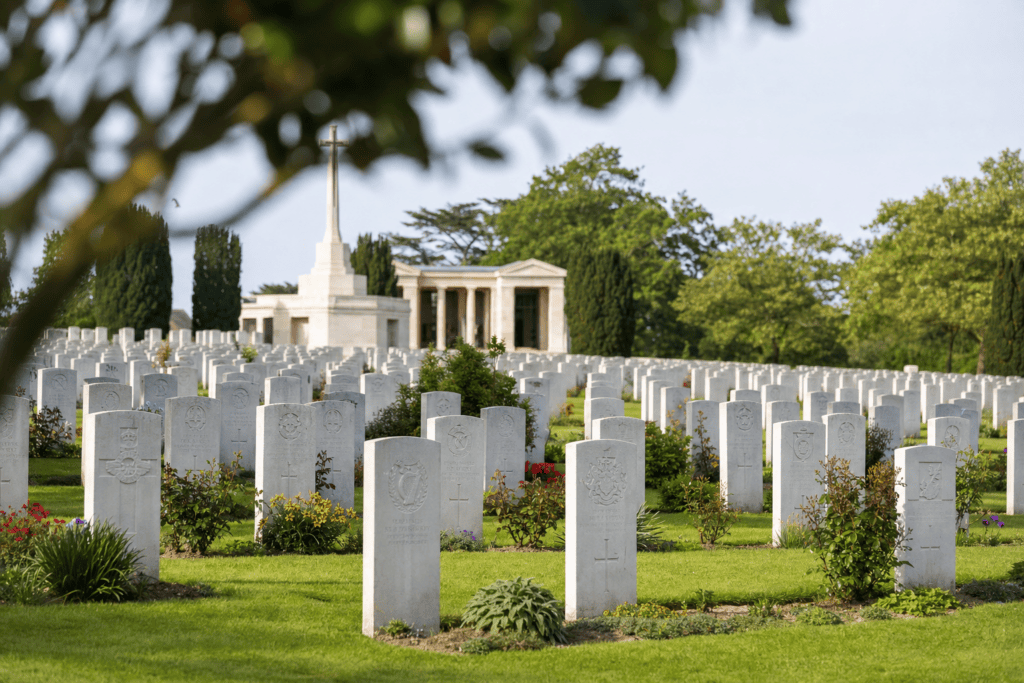 Bayeux British Military Cemetery A major memorial site in Bayeux, with Commonwealth graves, the Bayeux Memorial, and…
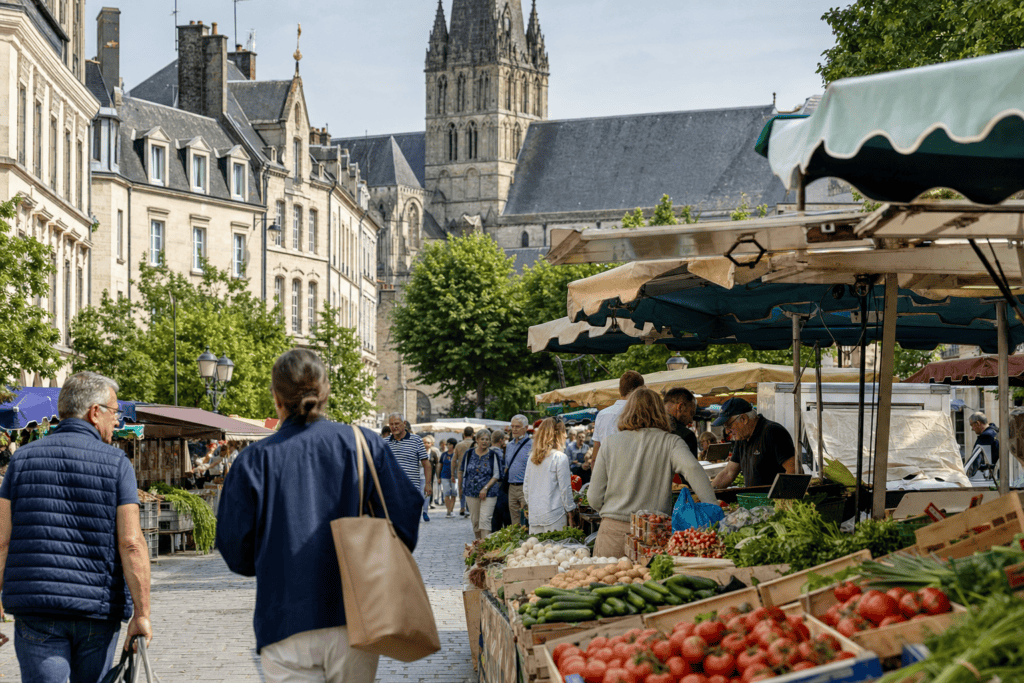 Bayeux Market Every Saturday morning, the Saint-Patrice Market brings together producers, merchants, and visitors in the heart of Bayeux…
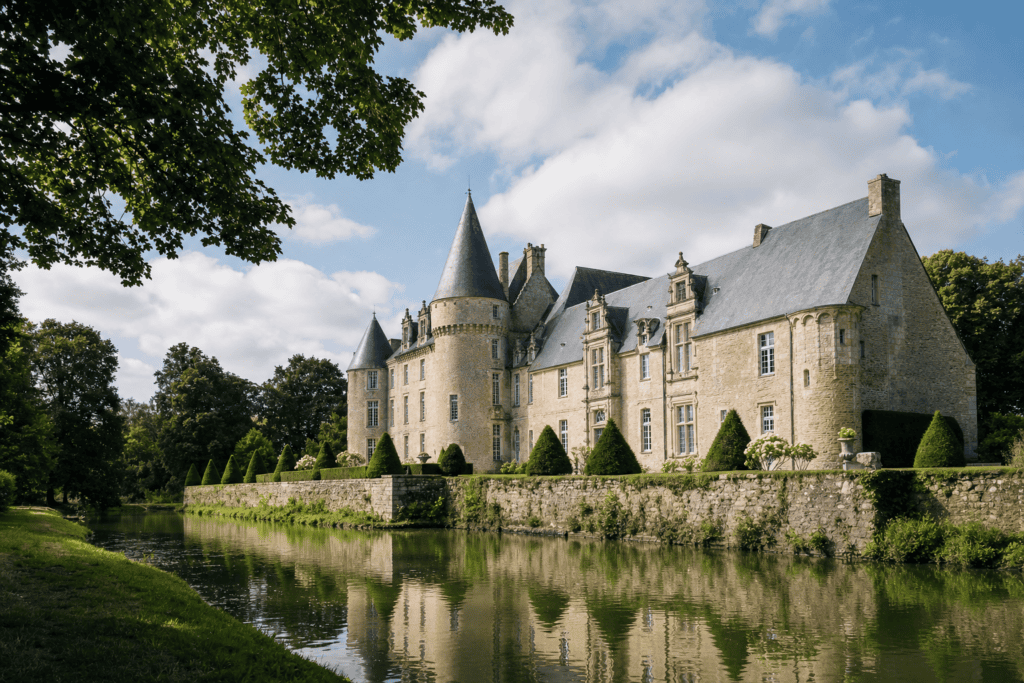 Colombières Castle A medieval fortress in Colombières, near Bayeux, to combine with the heritage of the Bessin area and the…
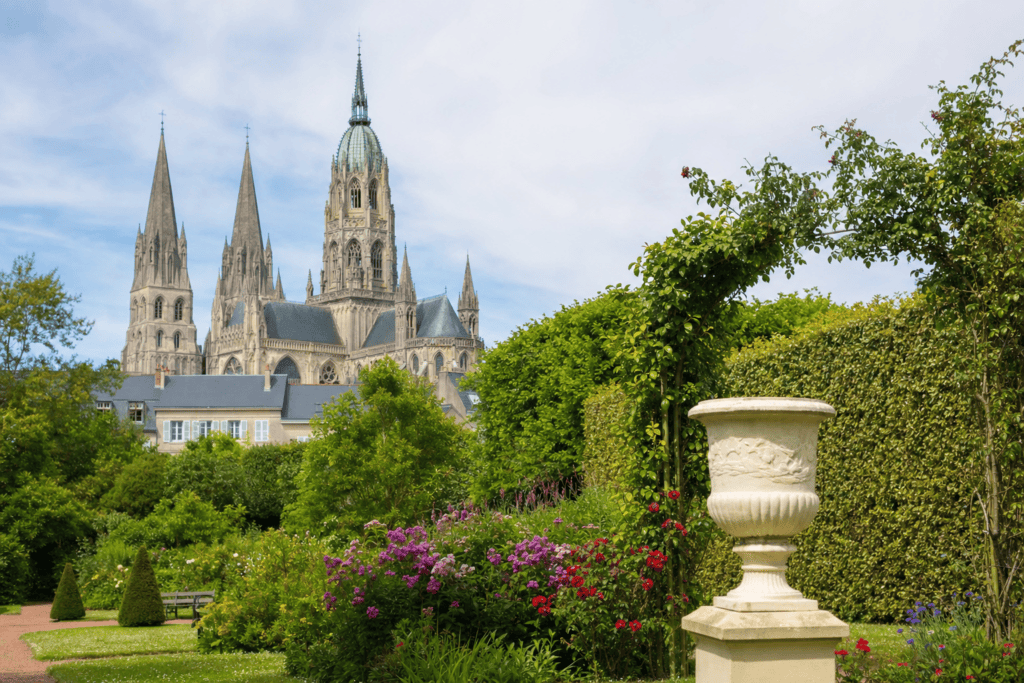 Bayeux Botanical Gardens A 2.6-hectare historic landscaped park known for its weeping beech and botanical walk…
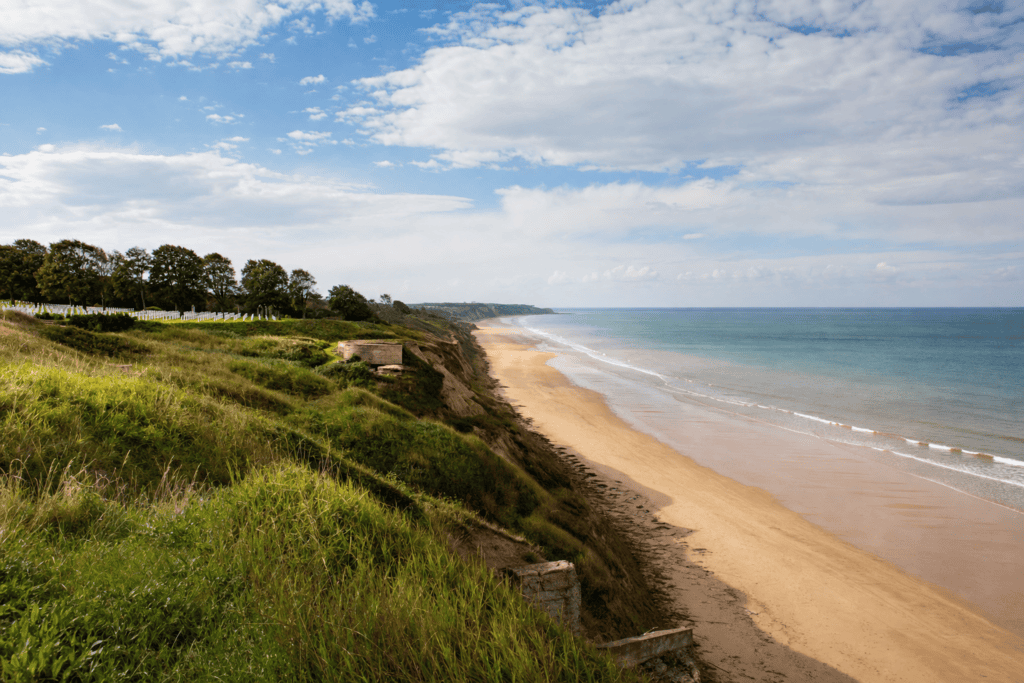 Omaha Beach and the American Cemetery at Colleville-sur-Mer An essential memorial site in Normandy, between Omaha Beach and the American cemetery at…
Online booking · Paris → Rue du Bienvenu, 14400 Bayeux, Calvados, Normandy
Choose your pickup date and time
Your departure and arrival details are already pre-filled. You can adjust them in the fare calculator before viewing the vehicles and fare.