



Nausicaá Boulogne-sur-Mer: Practical Visitor’s Guide
Boulogne-sur-Mer
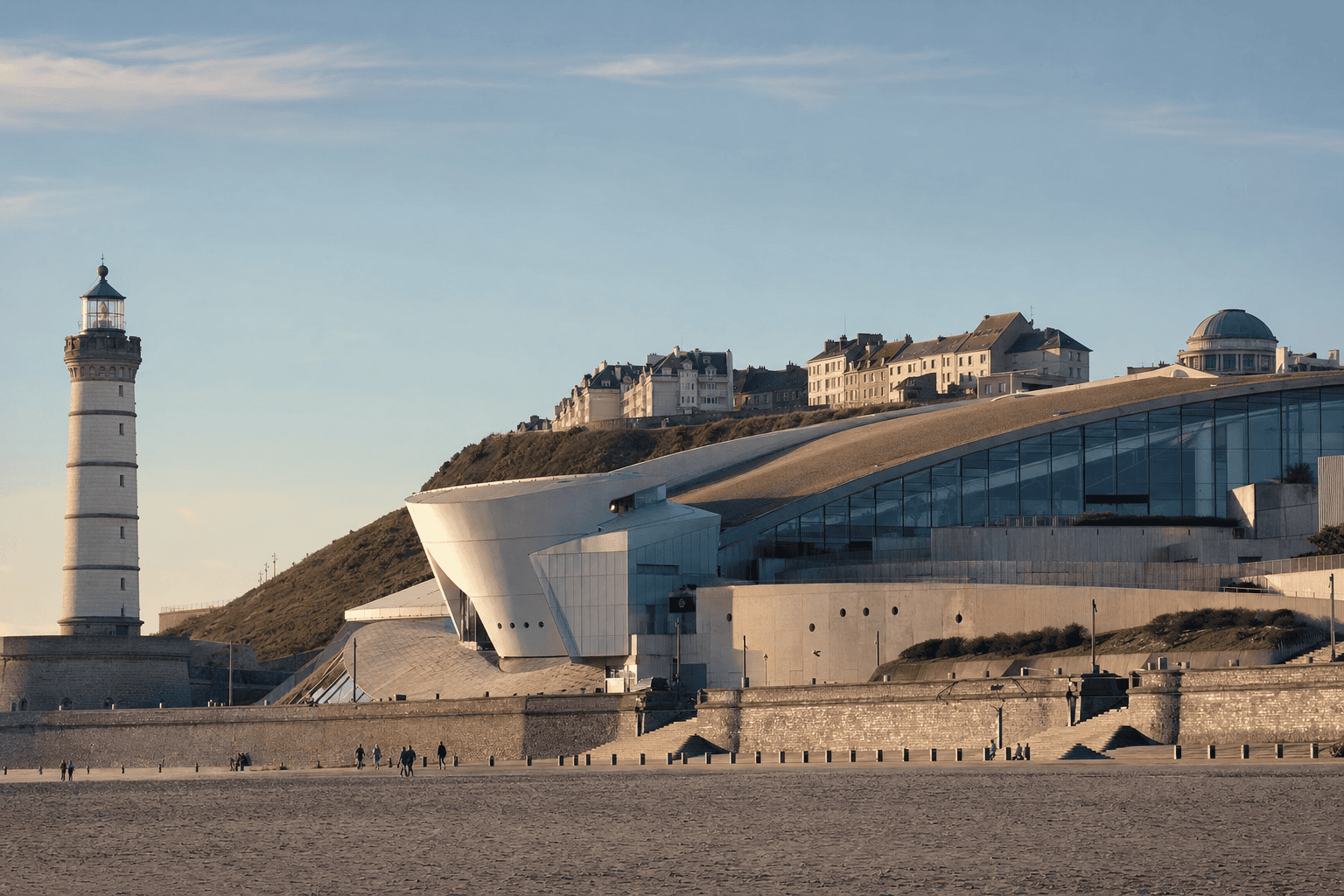
Nausicaá Boulogne-sur-Mer is the National Sea Centre, located near the beach and seawall in the lower town. Its exhibits invite visitors to discover the oceans, their species, habitats, and the challenges involved in protecting them through large aquariums and spaces dedicated to science education. Sharks, rays, penguins, reef fish, and coastal ecosystems appeal to families, while content about climate, biodiversity, and human activities also interests adults. Allow at least half a day for the visit, then easily extend your outing with a walk along the coast, a tour of the fortified old town, or an itinerary along the Opal Coast.
Practical information
Check the official schedule before setting out, wear comfortable shoes, and leave time for the seawall, beach, or fortified old town after your visit.
Getting to Nausicaá from Paris
Private transportation can be arranged from Paris, a hotel in the Île-de-France region, CDG, or ORY to Nausicaá in Boulogne-sur-Mer. The itinerary can include a return to Paris or continue along the Opal Coast. The service covers transportation only; admission to the National Sea Centre must be booked separately through Nausicaá.
Departure from Paris, the Île-de-France region, CDG, or ORY; return to Paris or onward travel according to the agreed itinerary. Admission ticket not included.
Why visit Nausicaá in Boulogne-sur-Mer
Nausicaá is Boulogne-sur-Mer’s iconic attraction and a major stop on the Opal Coast. Its location near the beach adds particular meaning to the visit: after observing recreated marine environments in the aquariums, you immediately reconnect with the English Channel, the seawall, and a port whose history is closely tied to the sea. The center therefore does more than showcase animals; it connects ocean ecosystems, human activities, and major environmental challenges.
The visit alternates between spectacular displays, quiet observation, and educational content. Large animals naturally capture children’s attention, while the signs, educational exhibits, and presentations about marine habitats offer greater depth for adults. Every family member can therefore explore at their own pace.
The center is also a good option when the weather is unpredictable. The Boulogne coastline can be windy or rainy, while most of the route takes place indoors. Nausicaá is therefore suitable both for a first introduction to Boulogne-sur-Mer and as part of a trip focused on the maritime heritage of Hauts-de-France.
The High Seas Journey and the Large Aquariums
The exhibit High Seas Journey is one of Nausicaá’s highlights. It explores the open ocean, an environment that is difficult to observe directly but essential to the functioning of the ocean. The large aquatic volumes create a sense of space and let you follow the animals’ movements in a constantly changing scene.
The different viewing areas, including the large glass windows and underwater spaces, offer complementary perspectives. A ray may glide close to the glass, a school of fish may suddenly change direction, or a large animal may briefly appear in the depths. It is often more rewarding to spend a few minutes in front of one aquarium than to rush through every room.
The exhibit also explores the ocean floor, the deep sea, and the tools used to better understand these environments. The content, presentations, and activities offered may change. If you want to attend a specific educational session, check the official information for the day of your visit rather than relying on an old schedule found online.
Marine Species and Habitats to Discover
Nausicaá’s diversity comes from its presentation of several marine environments, from coastal habitats to tropical settings and open-water zones. This layout reminds visitors that the ocean is not a uniform whole: each habitat depends on factors such as light, temperature, depth, salinity, and currents.
Sharks, rays, penguins, and large fish are often the first animals visitors look for. More inconspicuous species are nevertheless worth observing closely. Corals, small reef fish, deep-sea organisms, and animals adapted to low light illustrate very different survival strategies. The coastal exhibits also echo the landscapes of the North Sea and the Opal Coast.
The aquarium displays and animal presentations may change according to biological needs, births, transfers, or the center’s programming. It is therefore best to consult Nausicaá’s current information if your visit depends on seeing a particular species or area. This precaution avoids turning an outdated program into an unverified promise.
Understanding Ocean Conservation Challenges
Nausicaá combines animal discovery, science education, and awareness-building. Its exhibits connect what is visible in the aquariums with issues such as climate change, pollution, reef degradation, mangrove protection, responsible fishing, and biodiversity conservation. The goal is to extend the sense of wonder through a better understanding of the pressures affecting marine environments.
This approach works well with children because it starts with concrete examples. An animal provides an entry point to its habitat, diet, relationships with other species, and the threats facing its environment. Visitors thus understand that a shark is more than an impressive silhouette and that a coral reef is a complex ecosystem sensitive to changes in its surroundings.
The local context reinforces this message. Boulogne-sur-Mer is a port city where fishing, research, commerce, and coastal activities play an important role. Questions about marine resources, water quality, and the future of the oceans are not abstract. Nausicaá addresses them from natural, scientific, economic, and cultural perspectives.
Getting to Nausicaá from Paris and Boulogne-Ville
By car from Paris, the main route joins the A16 toward Boulogne-sur-Mer. Actual travel time depends on your starting point, traffic, roadworks, and weather conditions. If you have booked admission for a specific time, allow plenty of extra time. As you approach the city, follow local signs toward Boulevard Sainte-Beuve, the beach, and Nausicaá, then check parking conditions before setting out.
By train, Boulogne-Ville is the main station for reaching the town. Journeys from Paris may involve a connection, and schedules vary by date. Check official rail information as well as local transportation options between the station and the center. Nausicaá may also provide information about a shuttle during certain periods; its schedule, operation, and conditions should be checked directly before your trip.
For a private excursion, transportation can be arranged from Paris, a hotel in the Île-de-France region, CDG, or ORY, with a return to Paris or onward travel to another destination in Hauts-de-France. Transportation does not include admission to the center; this must be arranged separately through Nausicaá.
Practical Tips and the Best Time to Visit
Nausicaá is open year-round and is especially well suited to rainy or windy days. In summer, the center can be combined with an outing to the beach and seawall. In fall or winter, it offers an indoor activity when conditions make long walks less enjoyable. The area around the building is still worth exploring, as the coastal atmosphere changes with the light, wind, and season.
School breaks, weekends, and holidays may draw more visitors. Arriving early may make it easier to begin the route, but it does not guarantee smaller crowds. Before you leave, check opening hours, reservation requirements, activities, accessibility, and guidelines concerning strollers or luggage.
The route calls for comfortable shoes. With young children, plan breaks and focus on a few attentive observations rather than reading every sign. Adults can return to favorite aquariums, while children often enjoy short, repeated sequences. Finally, leave time for lunch in Boulogne-sur-Mer or a walk by the water after your visit.
What to See Around Nausicaá in Boulogne-sur-Mer
The beach and seawall are close to Nausicaá. A walk after visiting the aquariums lets you get some fresh air and see the English Channel in a real environment, contrasting with the spaces presented indoors. This proximity gives the excursion particular coherence: coastal landscapes, tides, and port activities naturally extend the themes explored at the center.
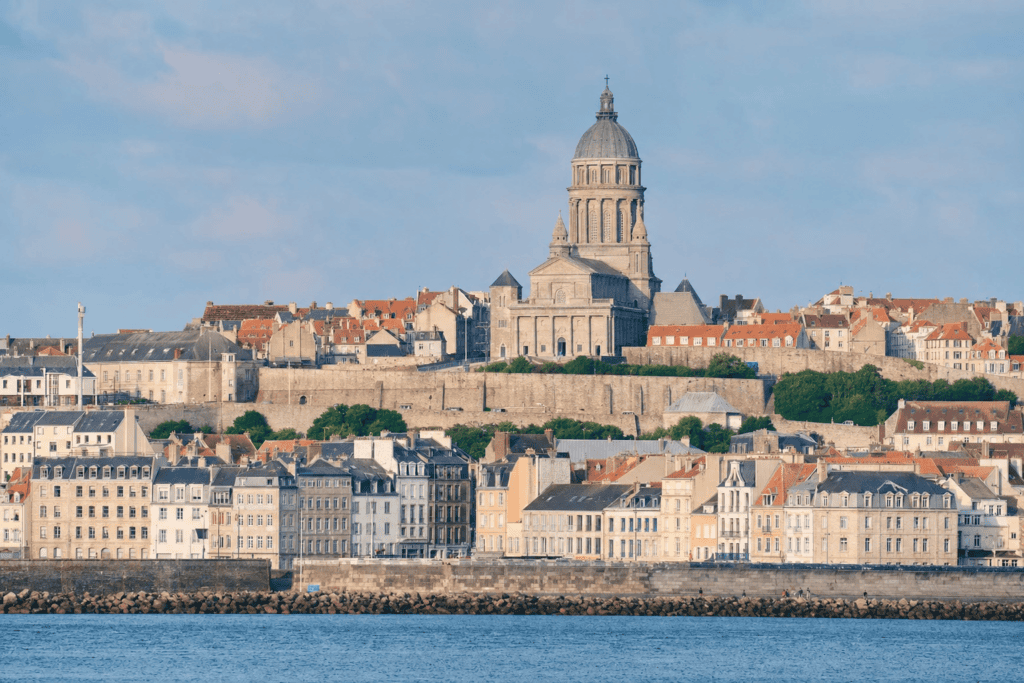
The fortified old town also deserves a visit. Surrounded by ramparts, it features the Basilica of Notre-Dame, historic streets, viewpoints, and several reminders of Boulogne-sur-Mer’s military and port history. Moving from the maritime lower town to the upper town reveals the diversity of the city. The cobblestones and slopes do, however, call for suitable footwear.
To extend your stay, Cap Gris-Nez and Cap Blanc-Nez offer characteristic Opal Coast panoramas, subject to the weather and road conditions. You can combine Nausicaá with coastal sightseeing, but an overly full schedule would reduce the time available for the aquariums. From Paris, these stops fit more comfortably into a well-planned full day or a short stay.
Useful sources
Frequently Asked Questions
How much time should you allow for Nausicaá?
Is Nausicaá suitable for children?
How do you get to Nausicaá from Boulogne-Ville?
Can you visit Nausicaá in bad weather?
Can the excursion be arranged from Paris?
 Old Town, Ramparts and Basilica of Notre-Dame of the Immaculate Conception A historical route through medieval ramparts, a château-museum, Notre-Dame Basilica and an exceptional crypt.
 A getaway to Boulogne-sur-Mer from Calais, the Eurotunnel and the A16 From Calais, Boulogne-sur-Mer is a major stop on the Opal Coast, accessible via the A16 or…
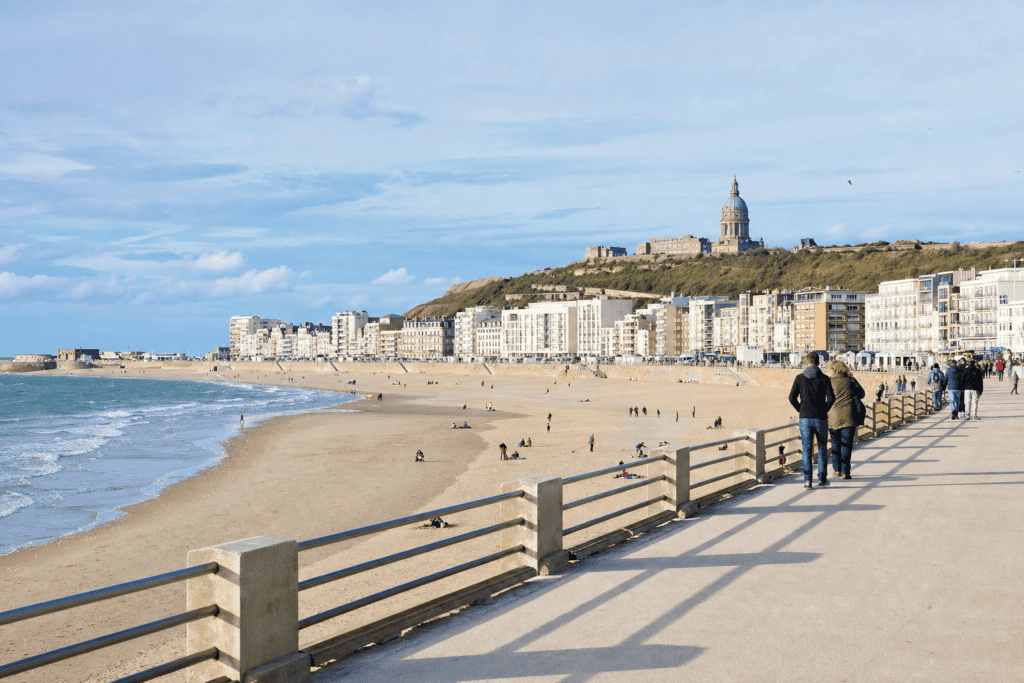 Boulogne-sur-Mer Beach and Seafront Promenade An urban beach on the Opal Coast, ideal for a walk along the seawall, a family outing…
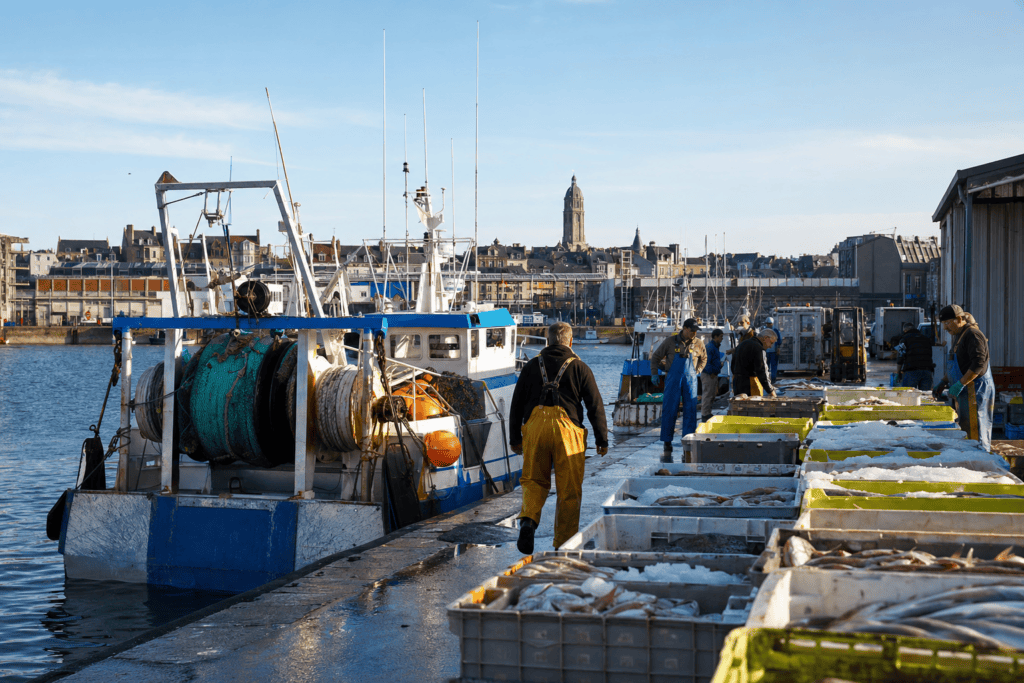 Boulogne-sur-Mer Fishing Port and Fish Market On Quai Gambetta, discover the market stalls, daily catches and maritime culture of Boulogne-sur-Mer, at the…
Online booking · Paris → Boulevard Sainte-Beuve, 62200 Boulogne-sur-Mer, Hauts-de-France
Choose your pickup date and time
Your departure and arrival details are already pre-filled. You can adjust them in the fare calculator before viewing the vehicles and fare.